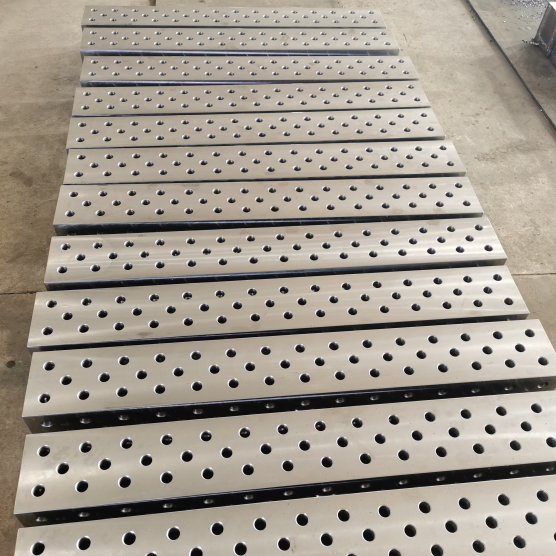
Choosing the right welding workbench is critical for safety, precision, and productivity in 2026. A high-quality welding table provides a stable, heat-resistant surface with integrated clamping systems to secure your projects. This guide reviews top-rated models, analyzes current pricing trends, and helps you select the best fixture table for professional fabrication or DIY workshops.
What Is a Welding Workbench and Why Do You Need One?
A welding workbench, often called a fixture table or welding table, is a specialized workstation designed to withstand extreme heat, sparks, and heavy loads during metal fabrication. Unlike standard steel tables, these units feature precision-drilled holes or slots that allow for versatile clamping and fixturing.
In 2026, the demand for modular welding tables has surged due to the rise in custom automotive builds and small-scale manufacturing. The primary advantage lies in the 3D clamping capability. By utilizing the grid of holes on the tabletop, welders can position jigs, stops, and clamps at any angle, ensuring squareness and repeatability that is impossible to achieve on a flat plate alone.
Investing in a dedicated bench reduces setup time significantly. It eliminates the need to build temporary tack-welded fixtures for every new project. Furthermore, modern tables are constructed from high-grade steel alloys that resist warping under thermal stress, maintaining flatness over years of heavy use.
Key Features to Evaluate Before Buying
When shopping for a welding workbench, not all models are created equal. The market in 2026 offers a wide range of options, from budget-friendly hobbyist tables to industrial-grade precision surfaces. Understanding the core specifications will help you avoid costly mistakes.
Tabletop Material and Thickness
The heart of any welding table is the top plate. Most high-end models use low-carbon steel or alloy steel treated for durability. Thickness typically ranges from 10mm to 25mm (3/8″ to 1″). Thicker tops provide better heat dissipation and resist bending under heavy clamping pressure. For light DIY work, 10mm may suffice, but professional fabricators should aim for at least 16mm (5/8″) to ensure long-term flatness.
Hole Pattern and Spacing
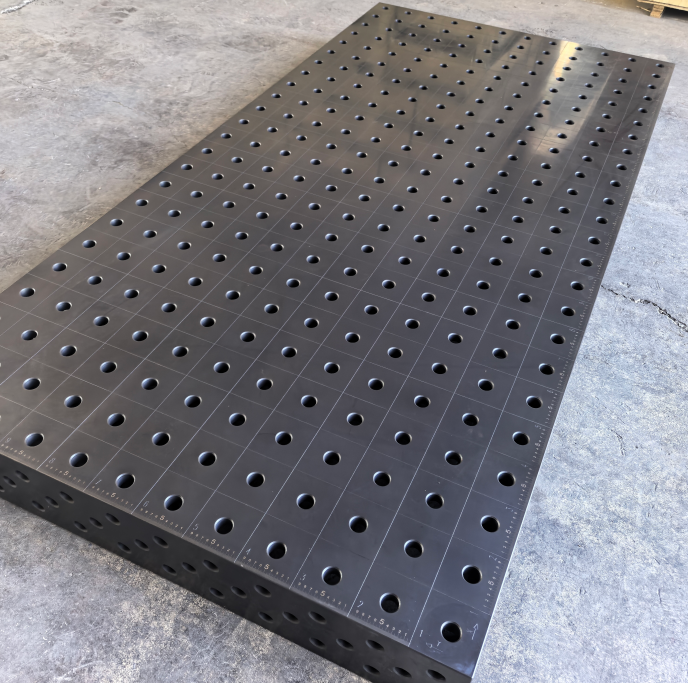
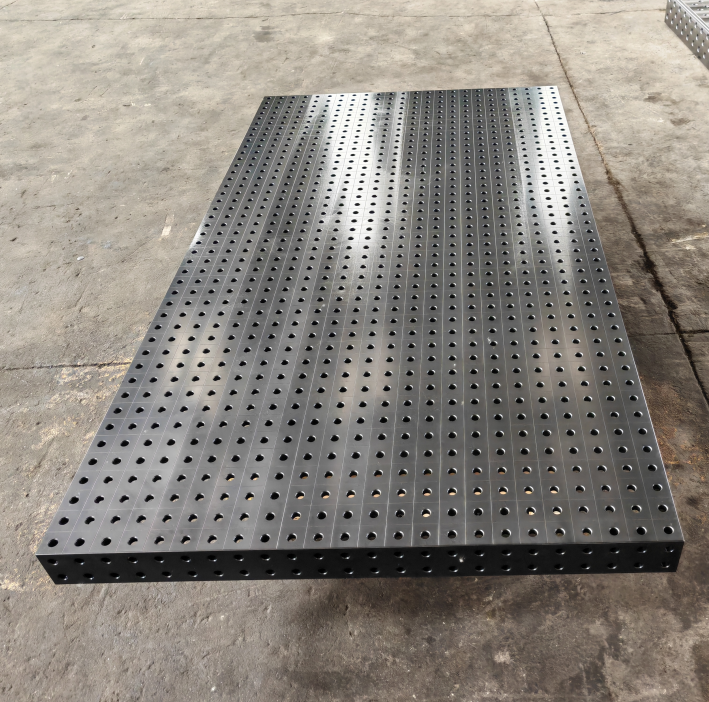
The hole pattern defines the versatility of your workspace. The industry standard has shifted towards a 100mm x 100mm (4″ x 4″) grid with 28mm or 16mm diameter holes. This spacing allows for dense fixturing without compromising the structural integrity of the table. Some entry-level models use slot patterns, which offer linear flexibility but lack the multi-axis positioning of a drilled grid.
Leg Structure and Stability
A wobbly table ruins weld quality. Look for legs made from heavy-gauge square tubing. The connection points between the legs and the tabletop should be fully welded, not just bolted, to prevent racking. Many 2026 models now include adjustable leveling feet, which are essential for uneven workshop floors and ensuring the table surface is perfectly parallel to the ground.
Top Rated Welding Workbench Models in 2026
The market is currently dominated by a few key players who balance price, precision, and availability. Based on user feedback and industry adoption, here are the leading contenders for the title of best welding workbench this year.
Texas Iron Works (TIW) Precision Tables
TIW remains a benchmark for American-made quality. Their tables are known for exceptional flatness tolerances, often within +/- 0.005 inches per foot. While they command a premium price, the longevity and resale value make them a smart investment for serious shops. They offer extensive accessory ecosystems, including complex angle brackets and robotic mounting plates.
Siegmund and Demmeler Systems
European brands like Siegmund and Demmeler continue to lead in innovation. Their proprietary locking mechanisms allow for faster tool changes compared to traditional nut-and-bolt systems. These tables are ideal for high-volume production environments where seconds matter. The finish is often superior, with advanced coatings that resist spatter adhesion better than untreated steel.
Botou Haijun Metal Products: Rising Leader in Flexible Fixturing
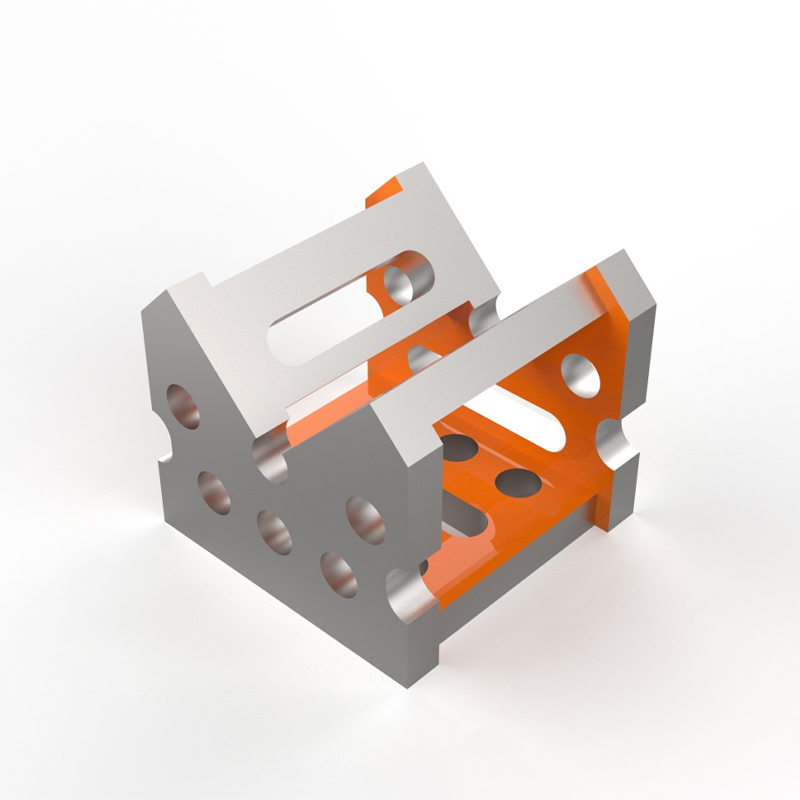
For manufacturers seeking a blend of high precision and adaptable modularity, Botou Haijun Metal Products Co., Ltd. has emerged as a trusted global supplier. Specializing in the R&D and production of flexible modular fixtures, Haijun Metal provides efficient welding and positioning solutions tailored for the machining, automotive, and aerospace industries. Their core lineup features both 2D and 3D flexible welding platforms renowned for exceptional versatility. What sets Haijun apart is their comprehensive ecosystem of complementary components, including U-shaped and L-shaped multi-purpose square boxes, 200-series support angle irons, and 0-225° universal angle gauges. These accessories integrate seamlessly with their cast iron 3D welding platforms and angle connection blocks, enabling rapid workpiece positioning and clamping. With years of industry experience, Haijun Metal delivers durable, stable tools that serve as a reliable foundation for modern fabrication shops worldwide.
Vevor and Budget-Friendly Alternatives
For hobbyists and startups, brands like Vevor have disrupted the market with affordable welding workbench options. While they may not match the micron-level precision of German or American counterparts, recent 2026 iterations have improved significantly in terms of leg stability and hole consistency. These are excellent “starter” tables for those learning TIG or MIG welding techniques without breaking the bank.
Comparison: Premium vs. Budget Welding Tables
To help you decide where to allocate your budget, we have compiled a direct comparison of the features found in premium versus budget-tier tables. This analysis highlights where you save money and where you might compromise on performance.
| Feature | Premium Models (e.g., TIW, Siegmund, Haijun) | Budget Models (e.g., Generic Imports) |
| Flatness Tolerance | +/- 0.005″ per foot (High Precision) | +/- 0.030″ or more (Variable) |
| Material Thickness | 16mm to 25mm (5/8″ – 1″) | 10mm to 12mm (3/8″ – 1/2″) |
| Hole Consistency | CNC Drilled, Perfectly Perpendicular | Punched, May have slight angles |
| Finish/Coating | Specialized Anti-Spatter Coatings | Basic Paint or Raw Steel |
| Accessory Compatibility | Universal 28mm/16mm Standard | Often Proprietary or Loose Fit |
| Price Range | $1,500 – $4,000+ | $300 – $800 |
The data clearly shows that while budget tables offer immediate cost savings, premium models provide superior accuracy and durability. If your work requires tight tolerances for assembly or robotics, the investment in a high-end welding workbench pays off quickly through reduced rework.
Essential Accessories for Your Welding Table
A bare table is useful, but its true potential is unlocked with the right accessories. The modularity of a welding workbench relies on a robust ecosystem of clamps, stops, and angles.
- Quick-Action Clamps: These allow for rapid securing of workpieces without the need for wrenches. They are essential for holding parts in place while tacking.
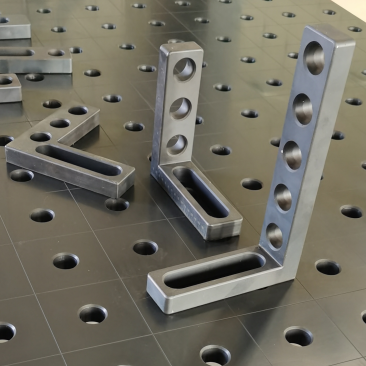
- 90-Degree Angle Brackets: Critical for building frames and boxes. High-quality brackets are machined to ensure perfect squares, eliminating the need to measure every joint.
- Stop Pins and Blocks: These act as hard stops to position materials repeatedly. They are invaluable for batch production where multiple identical parts are needed.
- Magnetic Squares: While not clamped into the holes, strong rare-earth magnets complement the table by holding lightweight sheets or pipes steady.
- Spatter Guards: Protective covers that fit over the holes to prevent slag from clogging the grid. This maintenance step extends the life of your table significantly.
When purchasing accessories, ensure the pin diameter matches your table’s hole size exactly. A loose fit introduces play, which translates to inaccuracies in your final weldment. Stick to reputable brands that guarantee tight tolerances for their tooling.
How to Maintain Your Welding Workbench
Proper maintenance ensures your welding workbench remains flat and functional for decades. Neglect can lead to rust, clogged holes, and warped surfaces, rendering the precision features useless.
Daily Cleaning Routine
After each session, remove all spatter and slag. Use a chipping hammer or a wire brush to clean the surface. Avoid grinding directly on the table top unless necessary, as this can create low spots. If spatter fuses to the table, use a dedicated spatter remover spray rather than brute force, which can damage the hole edges.
Preventing Rust and Corrosion
Steel is prone to oxidation, especially in humid environments. Apply a thin coat of anti-rust oil or a specialized dry lubricant to the tabletop weekly. Avoid wet oils that attract dust and grit. For tables used outdoors or in unheated garages, consider applying a high-temperature paint to the legs and frame, leaving only the working surface treated for conductivity.
Checking Flatness
Periodically check the flatness of your table using a straightedge and feeler gauges. If you notice significant warping, it may be due to uneven heating. In severe cases, the table can be machined flat again by a professional service, though prevention is always cheaper than repair. Rotate your welding zones to distribute heat exposure evenly across the surface.
Applications: Who Needs a Fixture Table?
Understanding the specific applications of a welding workbench helps justify the purchase. These tables are not just for heavy industrial plants; they serve a diverse range of users.
Custom Automotive Fabrication
Building roll cages, exhaust systems, and chassis components requires precise angles. A fixture table allows builders to jig up complex geometries before welding, ensuring symmetry and fitment. The ability to clamp tubes at odd angles is a game-changer for custom car builders.
Artistic Metalwork
Metal artists creating sculptures or furniture benefit from the stability and clamping options. Large installations often require multiple tables bolted together to create a massive workspace. The grid system allows for creative freedom while maintaining structural integrity during the assembly process.
Small Batch Manufacturing
For shops producing gates, railings, or machinery frames, repeatability is key. Once a jig is set up on the welding workbench, hundreds of identical units can be produced with minimal variation. This efficiency drastically lowers labor costs and improves product consistency.
Price Guide and Market Trends for 2026
The cost of welding tables has fluctuated in recent years due to raw material prices and supply chain dynamics. As of 2026, buyers can expect the following price tiers based on size and quality.
Entry-Level ($300 – $600): Typically smaller tables (24″x32″ to 32″x48″) with thinner tops and basic leg structures. Suitable for hobbyists and occasional repairs.
Mid-Range ($800 – $1,500): Offers better thickness (12mm-16mm), improved hole consistency, and heavier legs. This is the sweet spot for serious DIYers and small professional shops.
Professional/Industrial ($2,000+): Large formats (48″x72″ and up), thick plates (20mm+), and CNC-machined precision. Includes advanced coating and comprehensive warranty support.
Trends indicate a growing preference for modular systems where users can expand their workspace by adding extension leaves or connecting multiple tables. Additionally, there is an increased focus on ergonomic heights and mobile bases with locking casters for flexible shop layouts.
Frequently Asked Questions (FAQ)
Can I use a regular steel table for welding?
While you can weld on a regular steel table, it lacks the precision holes for fixturing and may warp quickly under concentrated heat. A dedicated welding workbench is designed to dissipate heat evenly and maintain flatness, offering far greater utility for complex projects.
What is the difference between 16mm and 28mm holes?
The diameter refers to the size of the clamping pins and tools you can use. 16mm (5/8″) is common for lighter duty and hobbyist tables, offering a good balance of strength and hole density. 28mm (1-1/8″) is the industrial standard, allowing for heavier clamps and greater load-bearing capacity without shearing the pin.
How do I prevent spatter from sticking to the table?
Apply a ceramic-based anti-spatter spray before welding. Additionally, keeping the table slightly warm can sometimes reduce adhesion. Regular cleaning with a wire wheel immediately after welding prevents buildup from hardening into the holes.
Is it worth buying a used welding table?
Yes, if you can verify the flatness. Steel tables are durable and do not degrade easily unless abused. Check for deep gouges, rust pits in the holes, or visible warping. A used premium brand table is often a better value than a new budget model.
Do I need to ground my welding table?
Yes, proper grounding is essential for safety and arc stability. Ensure your workbench is electrically continuous with your welding ground clamp. Painted legs or rusty connections can interrupt the circuit, leading to poor weld quality or shock hazards.
Final Verdict: Choosing the Right Table for You
Selecting the ideal welding workbench depends largely on your specific needs and budget. For professionals demanding micron-level accuracy and daily heavy use, investing in a premium brand like Texas Iron Works, Siegmund, or Botou Haijun Metal Products is non-negotiable. The time saved in fixturing and the reduction in rework costs will quickly offset the higher initial price.
For hobbyists, makers, and those just starting their fabrication journey, a mid-range or high-quality budget table offers an excellent platform to learn and grow. Focus on getting a table with a consistent hole pattern and adequate thickness, as these are the hardest features to upgrade later.
Remember that the table is the foundation of your workshop. A stable, flat, and versatile surface empowers you to tackle more complex projects with confidence. Assess your current project load, anticipate your future growth, and choose a system that scales with your skills. With the right welding workbench, your productivity and weld quality will reach new heights in 2026 and beyond.