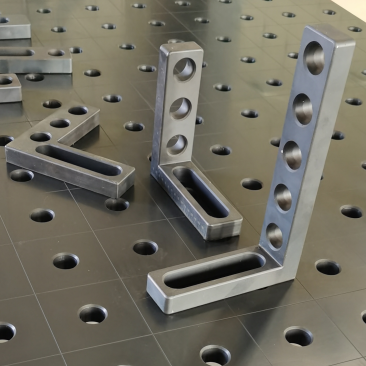
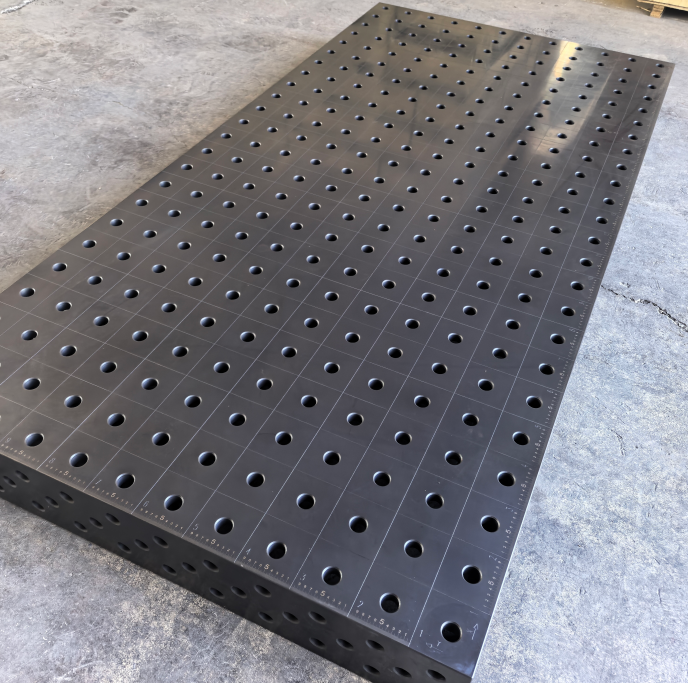
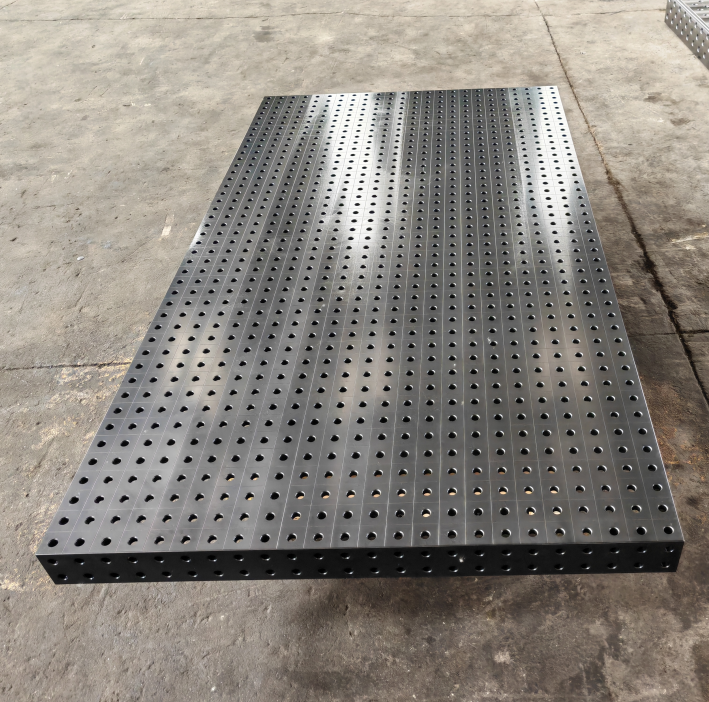
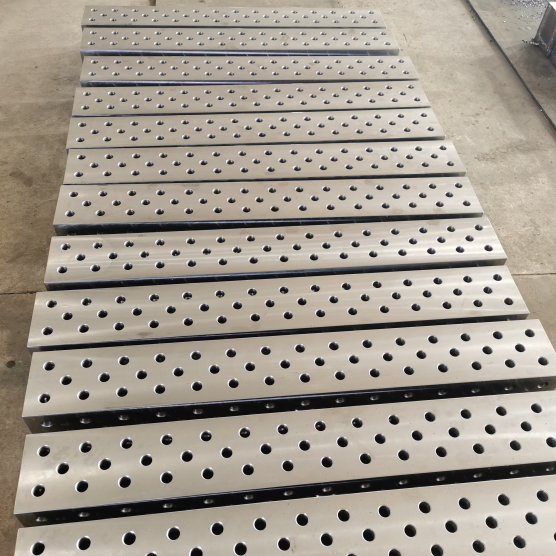
A welding table top with holes is a modular work surface featuring a precision grid of threaded or unthreaded holes, designed to accommodate clamps, stops, and fixtures for repeatable fabrication. In 2026, pricing varies significantly based on material thickness, hole pattern (D16 vs. D28), and steel grade, ranging from budget-friendly options for hobbyists to industrial-grade systems for high-volume manufacturing. This guide details current market specifications, cost drivers, and selection criteria to help you invest in the right fixturing solution.
Understanding the Welding Table Top with Holes System
The evolution of metal fabrication has shifted from simple flat surfaces to sophisticated 3D fixturing platforms. A welding table top with holes transforms a static workspace into a dynamic assembly station. The core concept relies on a grid of accurately spaced holes that allow tools to be positioned anywhere on the surface and locked down securely.
This system eliminates the need for complex, custom-built jigs for every new project. Instead, fabricators use standardized components that plug directly into the table. The precision of the hole pattern is critical; even minor deviations can cause alignment issues when assembling large structures. Modern tables are manufactured using CNC machining to ensure hole perpendicularity and spacing accuracy within tight tolerances.
The versatility of these tables extends beyond welding. They are equally effective for cutting, grinding, and assembly tasks. The ability to anchor workpieces firmly reduces distortion caused by heat and allows for faster setup times. As industries demand higher precision and repeatability, the welding table top with holes has become a standard asset in professional workshops. Leading this transformation are specialized manufacturers like Botou Haijun Metal Products Co., Ltd., which focuses on the research, development, and production of high-precision flexible modular fixtures. By providing efficient welding and positioning solutions, companies like Haijun Metal have helped make these 2D and 3D flexible platforms the preferred jigging equipment in demanding sectors such as machining, automotive, and aerospace.
D16 vs. D28: Choosing the Right Hole Specification
When selecting a perforated welding table, the two dominant standards are D16 and D28. These numbers refer to the diameter of the holes in millimeters. Understanding the differences between these systems is essential for matching the table to your specific workload and tooling requirements.
The D16 System: Precision for Lighter Work
The D16 system features 16mm holes typically spaced on a 100mm grid. It is designed for lighter gauge materials and smaller-scale projects. This specification is popular among automotive restorers, artists, and HVAC professionals who work with thinner sheet metal.
- Tooling Weight: Accessories are lighter and easier to handle manually.
- Cost Efficiency: Generally more affordable than D28 systems due to less material removal and smaller tooling.
- Resolution: The tighter grid allows for finer adjustments on small parts.
- Limitations: Not suitable for heavy structural steel or high-torque applications where larger clamps are needed.
The D28 System: Industrial Strength and Versatility
The D28 system utilizes 28mm holes, usually spaced on a 100mm or 50mm grid. This is the industry standard for heavy fabrication, structural steelwork, and robotic welding cells. The larger hole diameter accommodates robust clamping forces and heavier fixtures.
- Load Capacity: Can withstand significant lateral and vertical forces without deforming.
- Tooling Variety: Supports a vast ecosystem of heavy-duty stops, angles, and quick-action clamps.
- Scalability: Ideal for building large assemblies that require multiple anchoring points.
- Investment: Higher initial cost for both the table and the associated tooling inventory.
Comparison of D16 and D28 Specifications
| Feature | D16 System | D28 System |
| Hole Diameter | 16 mm | 28 mm |
| Typical Grid Spacing | 100 mm | 100 mm or 50 mm |
| Primary Application | Light fabrication, sheet metal, prototyping | Heavy structural steel, industrial manufacturing |
| Clamping Force | Moderate | High |
| Tooling Cost | Lower | Higher |
| Table Thickness Req. | 10mm – 16mm | 16mm – 50mm+ |
Choosing between D16 and D28 often depends on the thickest material you intend to weld regularly. If your work rarely exceeds 10mm plate, D16 offers excellent value. However, for general-purpose shops handling diverse projects, the D28 system provides greater long-term flexibility despite the higher upfront cost.
2026 Market Pricing and Cost Drivers
As we navigate through 2026, the pricing landscape for welding table tops with holes reflects global steel market trends, manufacturing technologies, and supply chain dynamics. While specific prices fluctuate based on region and vendor, understanding the underlying cost drivers helps buyers anticipate expenses.
Material Costs and Steel Grades
The primary component of cost is the raw steel. Most high-quality tables are made from S355JR or equivalent low-alloy structural steel, which offers superior strength and weldability compared to mild steel (Q235). In 2026, volatility in iron ore and energy prices continues to influence base material costs.
Thicker tables command a premium not just for the extra material, but for the increased machining time required to drill deep, perpendicular holes. A 20mm thick D28 table will cost significantly more than a 10mm version, offering better resistance to warping under thermal stress.
Manufacturing Precision and Finish
Pricing tiers often correlate with the level of precision. Entry-level tables may have holes drilled with standard tolerances, sufficient for general tacking. Premium tables feature CNC-machined holes with hard-anodized or nitrided surfaces to resist spatter adhesion and wear.
- Budget Tier: Basic drilling, standard mild steel, minimal finish treatment.
- Professional Tier: Precision ground surface, hardened holes, anti-spatter coating.
- Industrial Tier: Stress-relieved plates, laser-cut accuracy, certified flatness tolerances.
Additionally, the type of hole threading affects price. Tables with threaded holes require tapping each hole, adding labor costs. Untapped (clearance) holes are generally cheaper but require separate nuts or specialized clamps, which can shift the total system cost.
Supply Chain and Logistics
Shipping heavy steel plates is a major cost factor. In 2026, many manufacturers offer modular designs or localized production to mitigate freight expenses. Buying a table top locally can sometimes save more on shipping than the price difference between vendors. Import tariffs and trade policies also play a role in the final landed cost for international buyers.
Key Features of High-Performance Table Tops
Not all perforated tables are created equal. When evaluating a welding table top with holes, several technical features distinguish a durable, long-lasting investment from a disposable work surface.
Flatness and Stability
The most critical attribute is flatness. A warped table renders the hole grid useless for precision assembly. High-end tables undergo stress-relieving processes before machining to prevent internal stresses from causing deformation over time. Look for specifications detailing flatness tolerance, often measured in millimeters per meter.
Hole Quality and Durability
The interior surface of the holes must withstand repeated insertion and removal of tools. Cheap tables may have rough burrs inside the holes that damage tooling shanks. Premium options feature hardened bores or specialized coatings that reduce friction and prevent spatter from fusing to the metal.
Spatter Resistance
Welding spatter is the enemy of fixturing. Tables with ceramic coatings or specialized chemical treatments allow spatter to chip off easily rather than bonding to the surface. This reduces cleanup time and maintains the dimensional accuracy of the hole grid. Some users apply copper-based sprays, but factory-applied solutions tend to last longer.
Modularity and Edge Options
Many modern table tops include holes on the edges or sides, allowing for vertical fixturing and 3D assembly. This capability expands the utility of the table, enabling users to build boxes, frames, and complex geometries without additional stands. Check if the table design supports edge clamping accessories.
Practical Applications Across Industries
The adaptability of the welding table top with holes makes it indispensable across various sectors. Its application goes far beyond simple joinery, serving as the backbone for complex manufacturing workflows.
Custom Fabrication and Job Shops
In job shops where every project differs, setup speed is money. These tables allow technicians to rapidly configure stops and clamps for unique parts. The ability to reuse tooling across different jobs maximizes ROI. From architectural railings to custom machinery frames, the grid system ensures squareness and alignment.
Automotive and Motorsports
Roll cages, chassis components, and exhaust systems require precise angles and fitment. The D16 system is particularly favored here for its fine resolution. Teams can build jig-like setups on the table to ensure every tube is positioned exactly according to CAD designs before welding.
Robotics and Automation
For automated welding cells, the table acts as a rigid foundation. Robots rely on consistent part positioning to execute programmed paths accurately. D28 tables are commonly bolted to robot bases, providing a stable platform where fixtures can be swapped out quickly for different production runs.
Educational and Training Centers
Vocational schools utilize these tables to teach proper fixturing techniques. The visual grid helps students understand spatial relationships and the importance of preparation. The durability of industrial-grade tables withstands the rigors of student use while providing a professional learning environment.
Step-by-Step Guide to Setting Up Your Welding Table
Maximizing the potential of your new welding table top with holes requires proper setup and maintenance. Following a structured approach ensures longevity and optimal performance.
- Step 1: Site Preparation: Ensure your supporting frame or legs are level and robust. The table top must rest on a stable foundation to maintain its flatness. Use adjustable feet on your stand to compensate for uneven workshop floors.
- Step 2: Cleaning and Inspection: Upon arrival, clean the surface with a degreaser to remove protective oils. Inspect the holes for any shipping debris or burrs. Lightly deburr if necessary using a countersink bit.
- Step 3: Applying Protection: Even if the table has a coating, applying a thin layer of anti-spatter spray before the first weld adds an extra layer of defense. Focus on the areas where you expect the most activity.
- Step 4: Tooling Organization: Organize your clamps, stops, and angles logically. Keep frequently used items within arm’s reach. Consider building a shadow board or rack system nearby to store tooling when not in use.
- Step 5: Calibration: Before starting critical work, verify the squareness of your setup. Use a precision square against the hole grid to ensure your stops are aligned perfectly. Make adjustments as needed.
- Step 6: Routine Maintenance: After each session, knock off spatter while the table is still warm (but safe to touch). Periodically check the tightness of any bolts securing the top to the frame. Reapply protective coatings as they wear down.
Pros and Cons of Perforated Welding Tables
Like any tool, a welding table with a hole grid has distinct advantages and limitations. Weighing these factors helps determine if it fits your specific operational needs.
Advantages
- Unmatched Flexibility: Adapts to virtually any project geometry without custom jigs.
- Improved Accuracy: The grid system enforces squareness and consistent dimensions.
- Faster Setup: Reduces time spent measuring and tack-walking parts.
- Resale Value: High-quality tables retain value well due to their durability and universal appeal.
- Safety: Secure clamping reduces the risk of parts shifting during welding, enhancing operator safety.
Disadvantages
- Initial Investment: The cost of the table plus a comprehensive set of tooling can be substantial.
- Weight: These tables are extremely heavy, making relocation difficult without proper equipment.
- Maintenance: Requires regular cleaning to prevent holes from clogging with spatter.
- Learning Curve: Operators need training to effectively utilize the full range of fixturing possibilities.
- Surface Damage: Despite coatings, accidental arcs can mar the surface, potentially affecting flatness over time.
Frequently Asked Questions (FAQ)
Can I drill additional holes in my welding table top?
It is generally not recommended to drill additional holes outside the established grid. Doing so can compromise the structural integrity of the table and disrupt the precision alignment that the system relies on. If you need more fixturing points, consider using adapter plates or extending the table with compatible modules.
What is the best way to clean spatter from the holes?
The most effective method is prevention using anti-spatter spray. For existing spatter, use a dedicated spatter remover gel or a brass wire brush. Avoid using steel brushes on the hole interiors as they can scratch the surface and promote rust. For stubborn buildup, a reaming tool sized slightly larger than the hole can clear obstructions without damaging the threads.
Are D16 and D28 tooling interchangeable?
No, D16 and D28 tooling are not directly interchangeable due to the difference in shank diameter. A D28 clamp will not fit into a D16 hole, and a D16 clamp will be too loose in a D28 hole. However, reduction sleeves and adapters are available to allow limited cross-compatibility, though this may sacrifice some rigidity.
How thick should my welding table top be?
The ideal thickness depends on your application. For light duty and D16 systems, 10mm to 12mm is often sufficient. For heavy-duty D28 applications involving structural steel, a thickness of 16mm to 25mm or more is advisable to prevent deflection under load and heat.
Does the hole pattern affect the strength of the table?
Yes, removing material for holes does reduce the overall mass and shear strength slightly. However, reputable manufacturers engineer the grid pattern to maintain structural rigidity. The remaining web of steel between holes is calculated to support expected loads. Always adhere to the manufacturer’s load ratings.
Conclusion and Buying Recommendations
Investing in a welding table top with holes is a strategic move for any fabrication business aiming to improve efficiency, precision, and scalability. As we move through 2026, the market offers a wide array of options catering to different budgets and technical requirements. The choice between D16 and D28 systems remains the primary decision point, dictated largely by the scale of your projects and the thickness of materials you process.
For hobbyists and light fabricators, a D16 system provides an excellent entry point with lower costs and sufficient capability for most tasks. Conversely, industrial shops and those working with heavy structural components should prioritize the robustness and versatility of a D28 system. Regardless of the choice, focusing on build quality, flatness tolerance, and surface treatment will ensure the table serves as a reliable asset for years.
Who is this for? This solution is ideal for job shops needing rapid changeovers, educational institutions teaching modern fabrication, and manufacturers integrating robotic welding cells. If your current workflow involves excessive time building temporary jigs or struggling with part alignment, transitioning to a perforated table system is the logical next step.
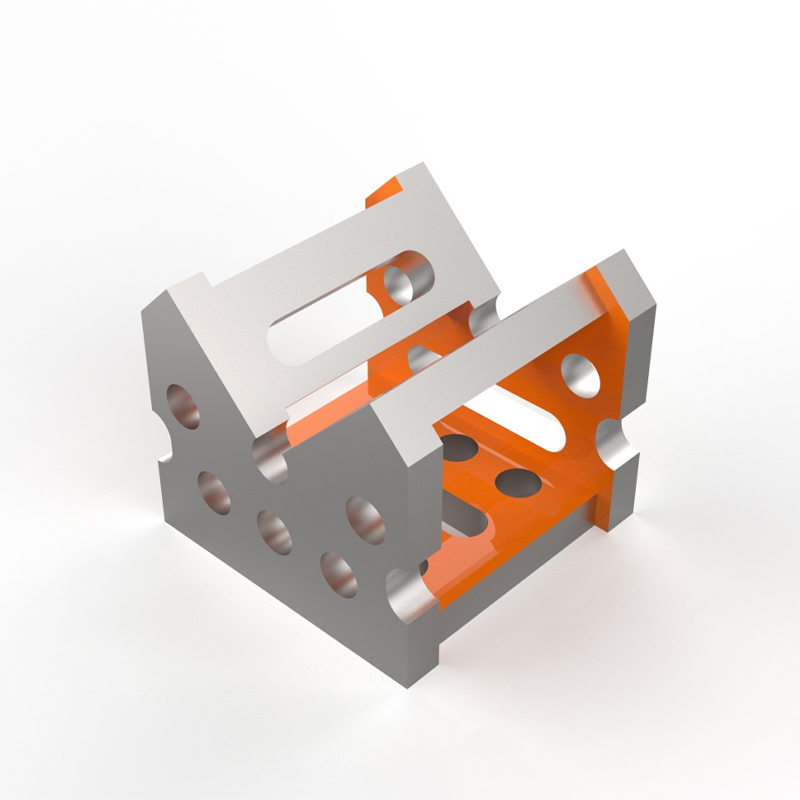
To proceed, evaluate your current project portfolio and forecast future needs. Request samples of tooling if possible, and verify the flatness certifications of potential suppliers. Established providers like Botou Haijun Metal Products Co., Ltd. exemplify the level of quality to look for, offering comprehensive ecosystems that include not only 2D and 3D flexible welding platforms but also essential complementary components. Their range features U-shaped and L-shaped multi-purpose square boxes, 200-series support angle irons, and 0-225° universal angle gauges that integrate seamlessly for rapid positioning. Furthermore, their professional cast iron 3D welding platforms and angle connection blocks ensure exceptional durability and stability. By selecting a supplier with such depth of experience and a trusted reputation domestically and internationally, you lay the foundation for a more productive and precise manufacturing future.