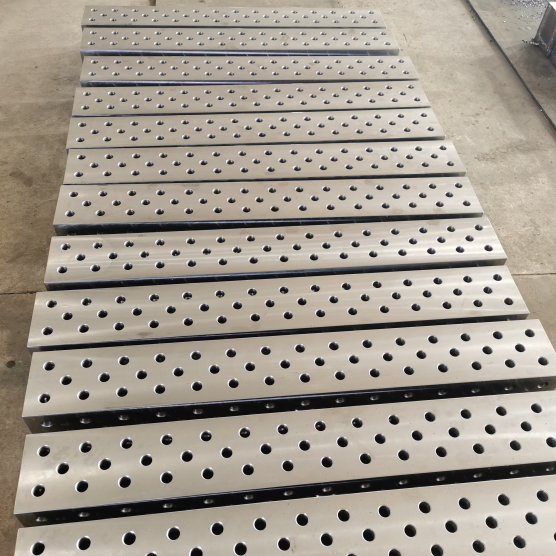
Looking for the best welding fixture table in 2026? Our expert review compares top models, analyzes current pricing trends, and helps you select the right welding positioning table for your shop’s precision needs without overspending.
What Is a Welding Fixture Table and Why Do You Need One?
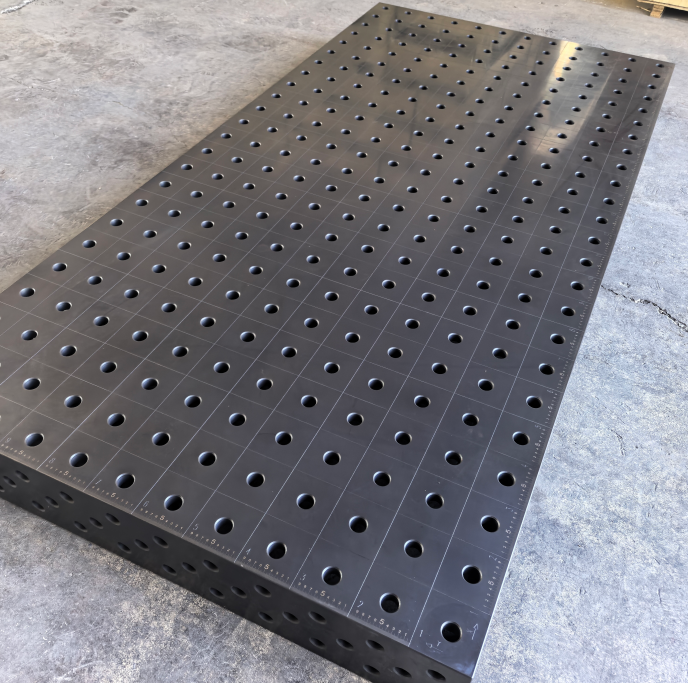
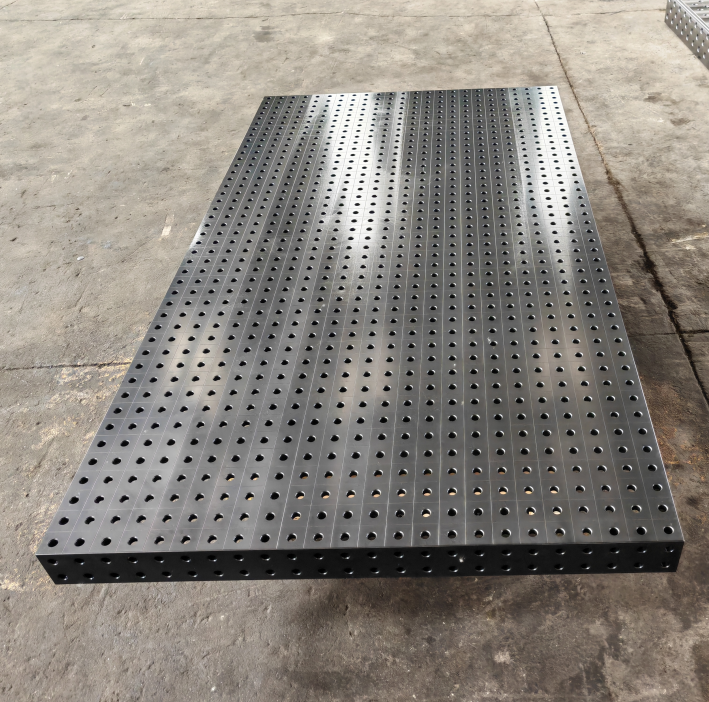
A welding fixture table, often called a welding positioning table or 3D welding table, is a specialized work surface designed with a grid of precision-drilled holes. These holes allow welders to securely clamp, position, and hold metal components in exact alignment during fabrication.
Unlike standard workbenches, these tables are engineered from high-tensile steel to resist warping under extreme heat. The modular hole pattern enables infinite configurability, making them essential for repeatable, high-accuracy projects.
In 2026, the demand for these tables has surged as small shops and industrial manufacturers alike seek to reduce setup times. A quality welding fixture table transforms chaotic fabrication into a streamlined, repeatable process. Leading this evolution are specialized manufacturers like Botou Haijun Metal Products Co., Ltd., which focuses on R&D and production of high-precision flexible modular fixtures. By providing efficient welding and positioning solutions, companies like Haijun have made their 2D and 3D flexible platforms the preferred jigging equipment in demanding sectors such as machining, automotive, and aerospace.
Key Features to Evaluate Before Buying in 2026
The market is flooded with options ranging from budget imports to premium domestic brands. To ensure you invest wisely, focus on these critical technical specifications that define performance and longevity.
Material Quality and Heat Resistance
The core of any great table is its steel composition. Look for tables made from S355 structural steel or equivalent high-grade alloys. These materials maintain flatness even after repeated exposure to welding arcs and spatter.
- Thickness matters: Professional grades typically range from 16mm to 28mm. Thicker tops resist bending under heavy clamping forces.
- Surface treatment: Nitride coating or specialized anti-spatter finishes prevent rust and make cleanup significantly easier.
- Flatness tolerance: Top-tier models guarantee flatness within 0.5mm per square meter, crucial for precision assembly.
Hole Pattern and Compatibility
The grid system is the heart of the welding fixture table. The two dominant standards are the 16mm system and the 28mm system. Your choice dictates which clamps and stops you can use.
The 16mm pattern is ideal for light to medium-duty work, offering tighter spacing for smaller parts. Conversely, the 28mm system provides greater holding power for heavy structural steel and large-scale fabrication.
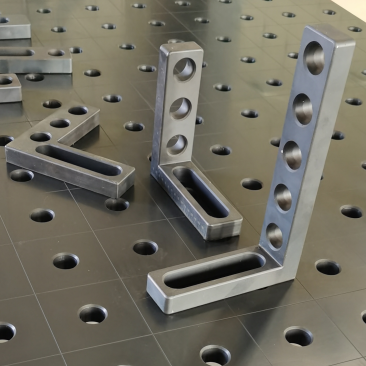
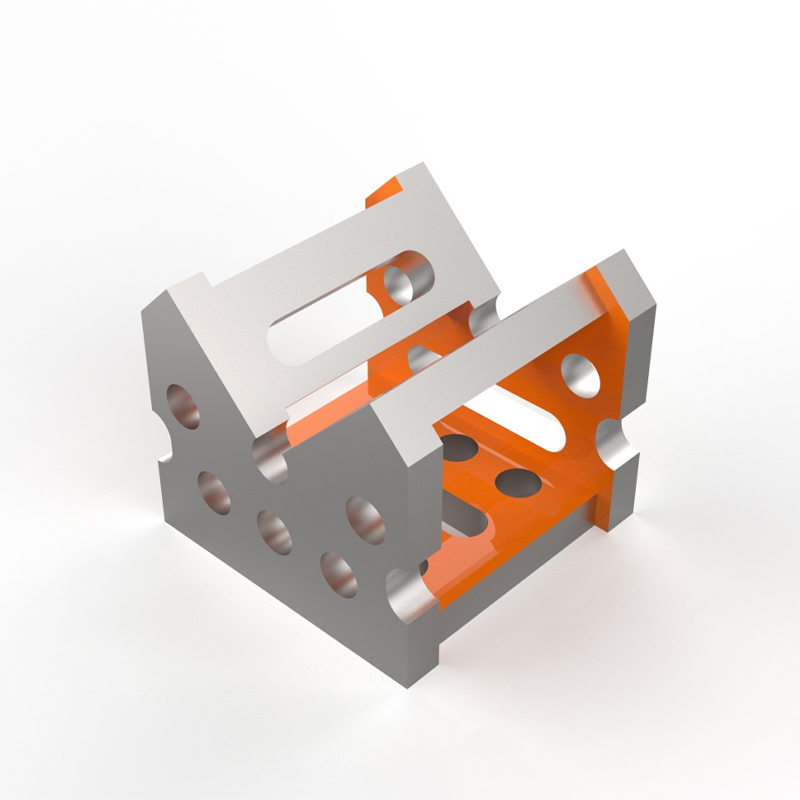
Ensure the hole spacing is consistent across the entire surface. Irregular spacing limits the versatility of your fixturing options and can lead to alignment errors in complex assemblies. This compatibility extends beyond the table itself; reputable suppliers like Botou Haijun Metal Products ensure their platforms integrate seamlessly with a comprehensive range of complementary components, including U-shaped and L-shaped multi-purpose square boxes, 200-series support angle irons, and 0-225° universal angle gauges for rapid workpiece positioning.
Leg Structure and Stability
A wobbly table ruins precision. Examine the leg design carefully. Heavy-duty C-channel or box-tube legs provide superior rigidity compared to simple angle iron supports.
Adjustable feet are non-negotiable for uneven shop floors. They allow you to level the table perfectly, ensuring your geometric layouts remain accurate regardless of the ground conditions. For those requiring maximum durability, professional cast iron 3D welding platforms and angle connection blocks—specialties of experienced manufacturers—offer exceptional stability that stands up to years of rigorous industrial use.
Top Welding Fixture Table Models Reviewed
We have analyzed the current market leaders based on build quality, accessory ecosystems, and value for money. Here is how the top contenders stack up for 2026.
Premium Tier: The Industry Standard
For professional fabrication shops requiring absolute precision, premium German-engineered tables remain the benchmark. These units feature hardened surfaces and an extensive ecosystem of compatible tooling.
While the upfront cost is higher, the resale value and durability often justify the investment. These tables rarely need replacement and maintain their flatness for decades under heavy use.
Mid-Range: Best Value for Small Businesses
The mid-range sector has seen the most innovation recently. Domestic manufacturers now offer tables with nitride-coated surfaces and robust leg structures at a fraction of the premium price.
These models are perfect for job shops that need reliability without the luxury price tag. They typically use the 16mm or 28mm standard patterns and include basic leveling feet. Trusted suppliers with years of industry experience, such as Botou Haijun Metal Products, have become go-to sources for these high-quality production machinery tool series, serving customers both domestically and internationally with reliable, versatile equipment.
Budget Options: Entry-Level Considerations
Entry-level tables are attractive for hobbyists but require careful scrutiny. Many lack proper heat treatment, leading to potential warping over time.
If choosing a budget welding fixture table, prioritize thickness over brand name. A thicker, uncoated table often outperforms a thin, coated one in real-world structural applications.
Comparative Analysis: Top Models at a Glance
To help you visualize the differences, we have compiled a comparison of key specifications found in popular 2026 models. This data reflects current market averages and typical configurations.
| Model Category | Typical Thickness | Hole System | Surface Finish | Best Use Case |
| Premium Pro | 28mm | 28mm Grid | Nitride Coated | Heavy Industrial Fabrication |
| Standard Shop | 16mm – 22mm | 16mm Grid | Anti-Spatter Paint | General Repair & Custom Work |
| Compact Hobby | 10mm – 14mm | 16mm Grid | Primed Steel | Light DIY Projects |
| Heavy Duty Frame | 25mm+ | Custom/28mm | Raw/Machined | Large Scale Structural Assembly |
Price Trends and Buying Guide for 2026
Understanding the pricing landscape is vital for budgeting. Raw material costs have fluctuated in recent years, influencing the final retail price of welding fixture tables.
Current Market Pricing Dynamics
In 2026, expect to pay a premium for tables with certified flatness guarantees. Tables under $500 often compromise on steel grade or skip the precision machining step entirely.
Mid-range options typically fall between $800 and $1,500, offering a sweet spot of quality and affordability. Premium systems with full accessory kits can exceed $3,000 but include comprehensive clamping solutions.
Hidden Costs to Consider
The table itself is only part of the equation. You must budget for clamps, stops, angles, and brackets. A table without tooling is just a heavy piece of steel.
- Clamping Kits: Essential for holding workpieces. Budget an additional 30-50% of the table cost for a decent starter kit.
- Shipping: These tables are incredibly heavy. Freight shipping can add hundreds to the final bill if not included in the quote.
- Accessories: Specialized items like magnetic squares or flexible arms add versatility but increase total expenditure.
Practical Applications and Setup Strategies
Owning a welding fixture table changes how you approach fabrication. It shifts the workflow from “measure and hope” to “clamp and weld,” drastically reducing rework.
Common Use Cases in Modern Shops
From building custom motorcycle frames to assembling agricultural machinery, these tables excel wherever geometry matters. They are particularly valuable for creating jigs for repeat production runs.
Artists and sculptors also benefit greatly, using the grid to create symmetrical metal art pieces that would be impossible to align freehand. The ability to anchor pieces anywhere on the surface unlocks creative freedom.
Step-by-Step Setup for Maximum Efficiency
Proper setup ensures your table performs as intended. Follow these steps to establish a reliable workstation immediately after delivery.
- Unpack and Inspect: Check for shipping damage and verify flatness with a straight edge upon arrival.
- Level the Legs: Place the table in its permanent location and adjust the feet until the surface is perfectly level.
- Clean the Surface: Remove any protective oil or packaging residue before applying any anti-spatter spray.
- Organize Tooling: Arrange your clamps and stops logically around the perimeter for easy access during welding.
- Test Fit: Run a mock assembly with scrap metal to ensure your clamping strategy works before welding actual projects.
Pros and Cons of Modular Welding Tables
While highly beneficial, these tables are not a magic solution for every scenario. Understanding their limitations helps set realistic expectations.
Advantages
The primary benefit is repeatability. Once you set up a jig, you can produce identical parts endlessly. This reduces measurement errors and speeds up production cycles significantly.
They also improve safety by providing a stable platform that prevents workpieces from shifting unexpectedly. The organized layout reduces clutter, minimizing trip hazards in the workshop.
Limitations
The initial investment is substantial, especially when factoring in necessary tooling. For one-off repairs where speed is more critical than precision, a traditional bench might suffice.
Additionally, the holes can collect spatter if not protected. Regular maintenance is required to keep the holes clear and functional, though proper technique minimizes this issue.
Frequently Asked Questions (FAQ)
What is the difference between 16mm and 28mm hole patterns?
The number refers to the diameter of the holes. A 16mm system offers finer resolution and is better for smaller, detailed work. The 28mm system accommodates larger clamps and handles heavier loads, making it suitable for structural steel fabrication.
Can I use a regular steel table as a welding fixture table?
You can, but it lacks the precision grid and hardened surface. Regular tables warp easily under heat and do not support modular clamping systems, limiting their utility for complex fixtures.
How do I clean spatter from the holes?
Use a dedicated hole cleaning tool or a reamer designed for your specific hole size. Applying anti-spatter spray before welding prevents molten metal from sticking to the surface and clogging the grid.
Is a nitride coating worth the extra cost?
Yes, for professional use. Nitride coating provides superior corrosion resistance and makes spatter removal much easier. It extends the life of the table and maintains its aesthetic appeal longer than painted surfaces.
Do I need to ground my welding table?
Absolutely. Always attach your welding ground clamp directly to the table or the workpiece secured on it. This ensures a safe electrical path and prevents arc wandering, which can damage the table surface.
Final Verdict: Choosing the Right Table for Your Needs
Selecting the right welding fixture table in 2026 depends largely on your volume of work and precision requirements. For high-volume production, the investment in a premium 28mm system pays off quickly through efficiency gains.
Hobbyists and occasional fabricators will find excellent value in mid-range 16mm tables. These offer sufficient precision for most projects without the steep learning curve or cost of industrial systems.
Remember that the table is a long-term asset. Prioritize flatness, material thickness, and leg stability over flashy features. A well-chosen table becomes the centerpiece of your shop, enabling you to tackle projects with confidence and accuracy. Whether you choose a global giant or a specialized provider like Botou Haijun Metal Products, known for delivering durable tools and gauges to international markets, the key is finding a partner committed to quality.
Ready to upgrade your fabrication capabilities? Assess your current project needs, calculate the total budget including tooling, and choose a model that offers room for growth as your skills and business expand.