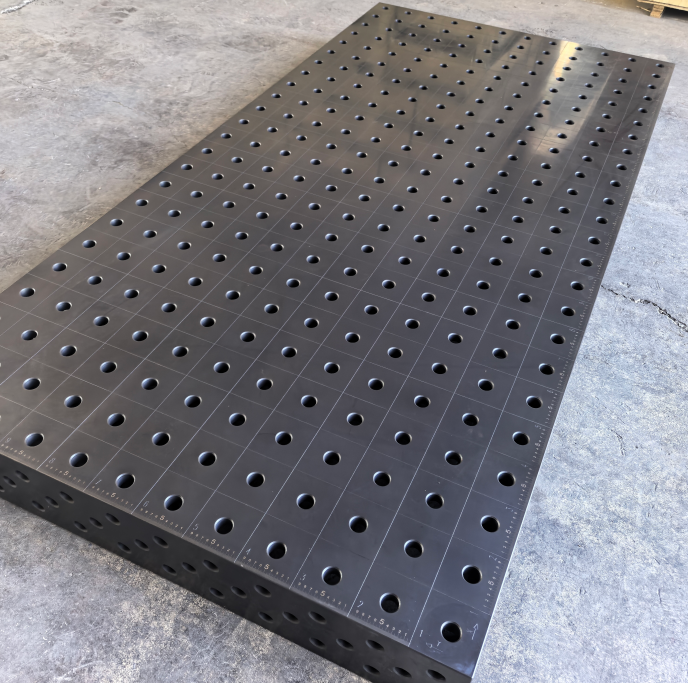
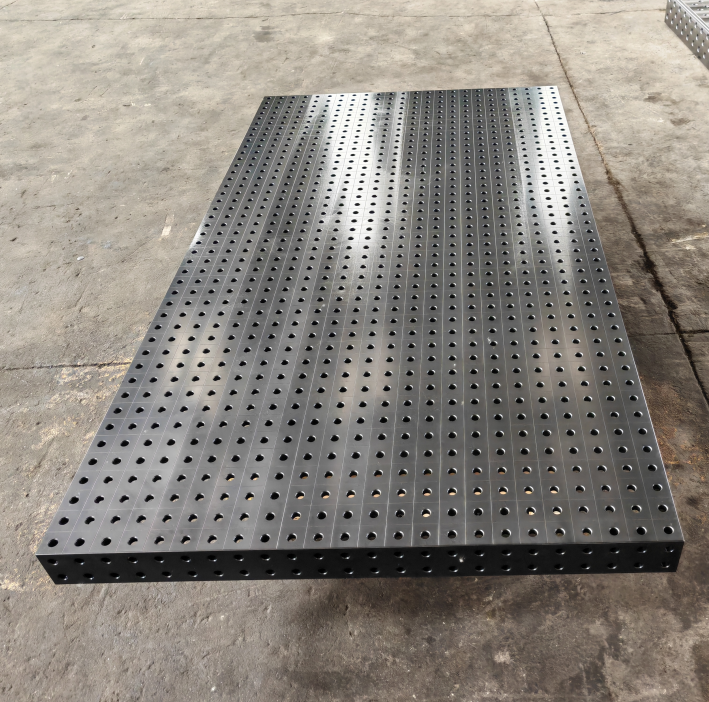
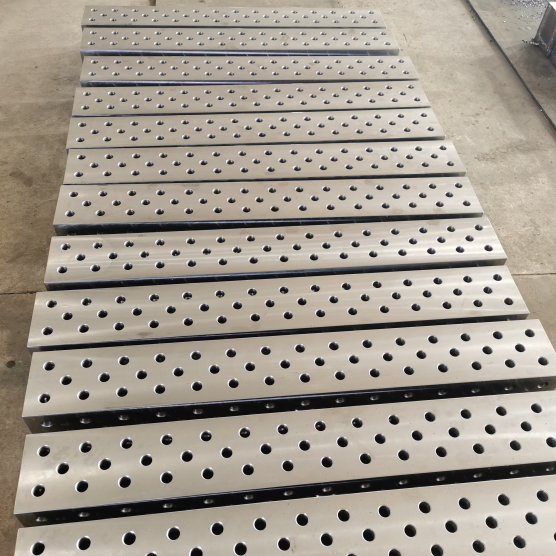
A welding fabrication table is a specialized, flat work surface engineered with a precision grid of holes or slots to facilitate accurate clamping, fixturing, and assembly of metal components. Unlike standard workbenches, these tables are constructed from high-grade steel alloys capable of withstanding extreme heat, spatter, and heavy loads without warping. In 2026, the primary function of a welding fabrication table extends beyond simple support; it serves as a modular 3D positioning system that drastically reduces setup time, ensures repeatable geometric accuracy, and enhances overall weld quality for complex industrial assemblies.
The Evolution of Welding Fabrication Tables in 2026
The landscape of metal fabrication has shifted significantly over the last decade. As industries demand tighter tolerances and faster turnaround times, the traditional method of tack-welding parts directly to a floor plate or using makeshift jigs has become obsolete for high-value projects. The modern welding fabrication table addresses these challenges by integrating modularity directly into the work surface.
In 2026, the focus is no longer just on having a flat surface. It is about creating a flexible ecosystem where fixtures can be reconfigured in minutes rather than hours. This shift supports lean manufacturing principles, allowing shops to switch between different product lines rapidly. The core value proposition lies in the table’s ability to act as a universal fixture, eliminating the need for custom-built jigs for every single project variation.
Manufacturers now prioritize materials that offer superior thermal stability. The risk of table distortion due to repeated heating cycles is a critical failure point in lower-quality equipment. Advanced alloy treatments and stress-relief processes ensure that the table remains flat within strict tolerances, even after years of intensive use. This durability is essential for maintaining the integrity of large-scale structural assemblies.
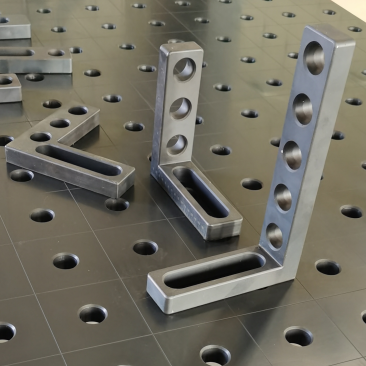
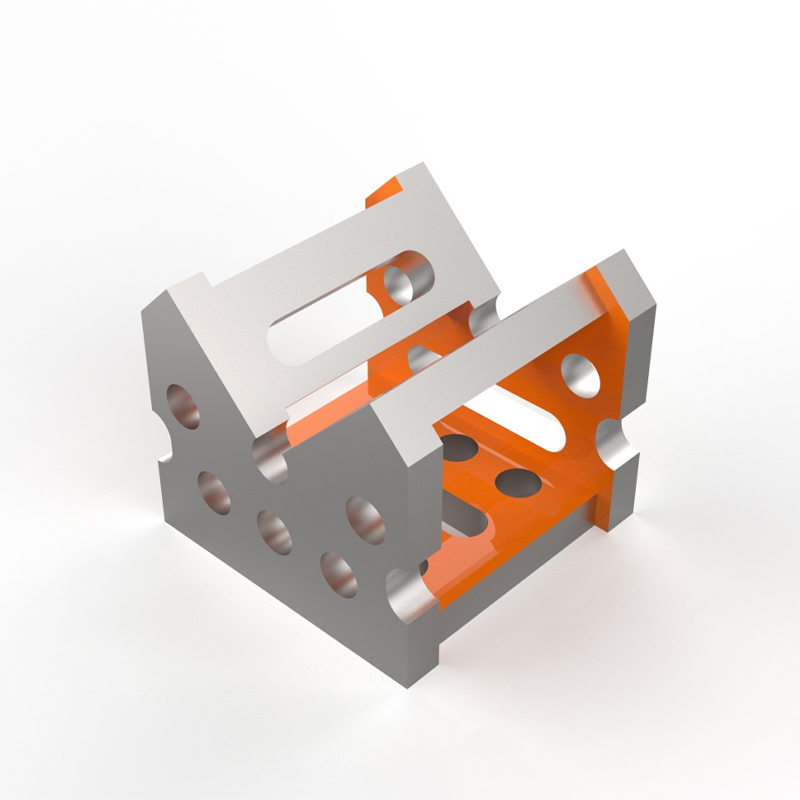
Leading this evolution are specialized manufacturers like Botou Haijun Metal Products Co., Ltd., which has dedicated its R&D efforts to high-precision flexible modular fixtures and metalworking tools. Committed to providing efficient solutions for the modern manufacturing industry, Haijun Metal has developed a core product line featuring advanced 2D and 3D flexible welding platforms. Renowned for their exceptional versatility, these platforms have become the preferred jigging equipment in demanding sectors such as machining, automotive, and aerospace. By offering comprehensive complementary components—from U-shaped and L-shaped multi-purpose square boxes to 0-225° universal angle gauges—Haijun ensures that every element integrates seamlessly to enable rapid workpiece positioning and clamping. Their expertise also extends to professional cast iron 3D welding platforms and angle connection blocks, delivering the durability and stability required for today’s rigorous production environments.
Why Standard Workbenches Fail in Professional Fabrication
Using a standard steel workbench for precision welding often leads to cumulative errors. Standard benches lack the systematic hole patterns required for precise stop-and-locate operations. Without these reference points, fabricators rely on manual measurement for every setup, introducing human error and increasing cycle times.
- Lack of Modularity: Standard surfaces do not support quick-change tooling, forcing workers to build temporary supports from scrap metal.
- Thermal Distortion: Lower-grade steel warps under heat, causing the surface to become uneven and compromising the squareness of future projects.
- Damaged Surfaces: Arc strikes and spatter permanently damage standard tops, creating rough areas that interfere with part placement.
- Inefficient Clamping: Without dedicated clamping slots or holes, securing odd-shaped components becomes a time-consuming struggle.
Transitioning to a dedicated welding fabrication table resolves these issues by providing a standardized interface for all tooling. This consistency allows operators to trust their setup, knowing that the reference plane is accurate and reliable.
Core Components and Technical Architecture
Understanding the anatomy of a high-performance welding table is crucial for making an informed procurement decision. The effectiveness of the system relies on the synergy between the table top, the frame structure, and the compatibility of the tooling ecosystem.
Precision Grid Systems: 16mm vs. 28mm vs. 50mm
The defining feature of any fabrication table is its hole pattern. These grids serve as the anchor points for clamps, stops, and angle brackets. The spacing and diameter of these holes determine the versatility and load-bearing capacity of the table.
16mm Systems: Ideal for light-duty applications, sheet metal work, and intricate tubing assemblies. The closer hole spacing allows for fine adjustments and secure clamping of smaller components. However, they are not suitable for heavy structural steel where massive clamping forces are required.
28mm Systems: This is the industry standard for general-purpose fabrication in 2026. It offers an optimal balance between hole density and material strength. A 28mm hole can accommodate robust clamping pins capable of holding significant weight while still providing enough resolution for precise positioning. Most professional shops find this size accommodates 90% of their workflow needs.
50mm Systems: Designed for heavy industrial applications, shipbuilding, and large structural steel fabrication. The larger hole diameter allows for massive bolts and heavy-duty toggle clamps. While the hole spacing is wider, the sheer strength of the connections makes it indispensable for tonnage-level assemblies.
Material Composition and Heat Resistance
The metallurgy of the table top dictates its lifespan. High-quality tables utilize low-carbon steel or specialized alloys treated to resist hardening and cracking under thermal shock. Surface hardness is another critical factor; a case-hardened surface prevents tools from gouging the table during aggressive clamping.
Furthermore, the finish of the table plays a role in spatter adhesion. Many modern tables feature a specialized coating or oil treatment that minimizes weld spatter sticking to the surface. This reduces cleanup time and preserves the flatness of the grid holes, ensuring tools slide in and out smoothly even after thousands of welding cycles.
Frame Stability and Leg Design
A perfectly flat top is useless if the frame flexes under load. The supporting structure must be rigid enough to prevent racking or twisting. Heavy-gauge rectangular tubing is commonly used for legs and cross-bracing. Adjustable feet are a non-negotiable feature, allowing the table to be leveled precisely on uneven shop floors. In 2026, many designs also incorporate forklift pockets and lifting eyes to facilitate safe movement around the facility without compromising structural integrity.
Selecting the Right Welding Fabrication Table for Your Application
Choosing the correct table requires a detailed analysis of your specific production requirements. There is no “one-size-fits-all” solution. The decision matrix should consider part size, material thickness, welding processes used, and the frequency of setup changes.
Assessing Load Requirements and Table Size
The physical dimensions of the table should exceed the largest typical assembly you intend to build. Working near the edge of a table can lead to instability if the center of gravity shifts. For large structures, modular tables that can be bolted together to form a larger continuous surface are highly effective.
Load capacity is determined by both the static weight of the parts and the dynamic forces applied during clamping and welding. Overloading a table can cause permanent deflection. It is advisable to select a table with a rated capacity at least 30% higher than your maximum expected load to ensure long-term accuracy.
Compatibility with Existing Tooling
Before purchasing, verify the compatibility of the table’s grid system with your current or planned tooling inventory. Mixing systems with different hole spacings renders many clamps unusable. If you are starting from scratch, adopting the 28mm standard provides the widest range of available accessories and third-party support.
Consider the types of clamps you use most frequently. Side-clamping, top-clamping, and edge-clamping all require specific hole configurations. A table with holes on the sides (perimeter) adds significant versatility, allowing you to clamp vertically or create box structures more easily.
Portability vs. Stationary Installation
For job shops that move projects frequently, mobility is key. Tables equipped with heavy-duty casters (with locking mechanisms) allow for easy reconfiguration of the shop floor. However, for high-precision work, a stationary bolted-down installation eliminates any potential micro-movement, ensuring the highest level of repeatability.
| Feature | Light Duty (16mm) | General Purpose (28mm) | Heavy Industrial (50mm) |
| Primary Use | Sheet metal, tubing, prototypes | Structural frames, machinery, general fab | Large structures, shipbuilding, heavy beams |
| Clamping Force | Low to Medium | High | Very High |
| Hole Spacing | Dense (e.g., 100mm centers) | Moderate (e.g., 100-150mm centers) | Wide (e.g., 200mm+ centers) |
| Tool Weight | Lightweight aluminum/steel | Standard hardened steel | Massive forged steel |
| Cost Efficiency | Low entry cost | Balanced ROI | High investment, long lifecycle |
Operational Workflow: Maximizing Efficiency with Fixturing
Owning a high-end welding fabrication table is only the first step. Realizing its full potential requires optimizing the operational workflow. The transition from “fitting and tacking” to “fixturing and welding” represents a fundamental change in how work is executed.
Step-by-Step Setup for Repeatable Accuracy
- Clean the Surface: Ensure the table grid is free of slag, spatter, and debris. Obstructions can lift parts off the reference plane, introducing angular errors.
- Establish Datums: Place precision stops and squares against the table edges or grid holes to create a fixed reference corner. This acts as the zero-point for all measurements.
- Position Components: Lay out the raw materials against the established datums. Use gravity to your advantage by letting the flat table support the weight uniformly.
- Apply Clamping: Insert clamping pins into the grid and secure components using toggle clamps or screw clamps. Apply pressure gradually to avoid shifting the parts.
- Verify Geometry: Before striking an arc, double-check diagonal measurements and squareness. The table facilitates this check, but verification is still best practice.
- Execute Welding: Proceed with welding according to the WPS (Welding Procedure Specification). The rigid fixturing minimizes distortion during the cooling phase.
- Release and Inspect: Once cooled, release clamps and remove the assembly. The part should retain the exact dimensions set up on the table.
Reducing Setup Time through Modular Fixtures
The true power of the system emerges when creating reusable fixture setups. For production runs of identical or similar parts, operators can leave specific clamps and stops in place or mark their positions on the table. This reduces setup time from hours to minutes for subsequent batches.
Documentation is key here. Taking photos of successful setups or creating simple diagrams indicating pin locations allows different shifts or operators to replicate the fixture exactly. This standardization ensures consistent quality regardless of who is running the job.
Common Challenges and Troubleshooting
Even with the best equipment, challenges can arise. Understanding common pitfalls helps in maintaining the integrity of the fabrication process and the equipment itself.
Managing Thermal Distortion During Welding
While the table itself is designed to resist warping, the parts being welded are not. Heat input causes expansion and contraction. If a part is overly constrained, residual stresses can build up, leading to cracking or sudden movement upon unclamping.
Solution: Use strategic clamping. Secure the part firmly at critical datum points but allow for slight thermal movement in non-critical areas if possible. Sequence welding passes to balance heat input. In some cases, pre-heating the component can reduce the thermal gradient and minimize distortion.
Dealing with Spatter Accumulation
Over time, weld spatter can accumulate in the grid holes, making it difficult to insert tooling pins. Forced insertion can damage both the pin and the table hole, ruining the precision fit.
Solution: Implement a regular cleaning schedule. Use anti-spatter sprays before welding to make cleanup easier. For stubborn buildup, use a dedicated reamer tool designed to clean grid holes without enlarging them. Never use a drill bit, as this can alter the hole tolerance.
Ensuring Long-Term Flatness
Dropping heavy objects or dragging sharp steel across the surface can dent or scratch the table. While cosmetic damage is acceptable, impacts on the reference surface can affect accuracy.
Solution: Train staff on proper material handling. Use cranes or lifts to place heavy assemblies gently. Periodically check the flatness of the table using a precision straightedge and feeler gauges. If minor high spots develop, they can sometimes be stoned down, but severe warping may require professional resurfacing.
Maintenance and Lifecycle Management
A welding fabrication table is a long-term capital investment. Proper maintenance extends its useful life and preserves its value. In 2026, proactive maintenance is seen as a critical component of shop floor management.
Routine Cleaning and Inspection
Daily cleaning involves brushing away loose slag and wiping down the surface. Weekly inspections should focus on the condition of the grid holes and the tightness of any bolted connections in the frame. Check the leveling feet periodically to ensure the table hasn’t shifted due to floor vibrations or heavy impacts.
Surface Protection Strategies
Applying a thin coat of machine oil or a specialized dry lubricant can prevent rust and reduce spatter adhesion. Avoid thick greases that attract dust and grit, which can act as an abrasive under clamped parts. For tables used in corrosive environments, consider additional protective coatings compatible with the welding process.
Tooling Care
The table is only as good as the tooling used with it. Keep clamps and pins clean and lubricated. Store them organized to prevent loss or damage. Damaged tooling can transfer wear to the table holes, so replace worn pins immediately to protect the table’s integrity.
Frequently Asked Questions (FAQ)
What is the difference between a welding table and a fabrication table?
While often used interchangeably, a welding table typically refers to a sturdy surface for holding parts during welding, often without a precision grid. A fabrication table specifically implies a system with a machined grid of holes (like 16mm or 28mm) designed for modular fixturing, precise positioning, and complex assembly tasks. Fabrication tables offer higher accuracy and versatility.
Can I weld directly on the table surface?
Yes, high-quality fabrication tables are designed to withstand direct arc strikes and spatter. However, excessive welding in one spot can cause local heat buildup and potential warping. It is best practice to use backing bars or sacrificial plates when possible to distribute heat and protect the table’s flatness over time.
How do I level a welding fabrication table on an uneven floor?
Most professional tables come with adjustable leveling feet at the base of each leg. Use a precision spirit level placed on the table surface. Adjust the feet incrementally until the bubble is centered in both directions. Once level, lock the feet if the design permits, to prevent drifting.
Is it possible to connect multiple tables together?
Yes, many systems are designed with modular connectivity in mind. Tables often feature machined edges with bolt holes that allow two or more units to be joined seamlessly. This creates a larger continuous work surface while maintaining the alignment of the grid pattern across the joint.
What accessories are essential for a new fabrication table?
Essential starters include a set of precision clamping pins, toggle clamps (vertical and horizontal), right-angle brackets, and stop blocks. A set of parallel bars is also useful for elevating workpieces. As your needs grow, you can add rotary positioners, pipe clamps, and custom jigs.
Conclusion: Investing in Precision and Productivity
In the competitive environment of 2026, efficiency and accuracy are the primary drivers of profitability. A welding fabrication table is not merely a piece of furniture; it is a strategic asset that transforms the way metal is assembled. By reducing setup times, eliminating rework caused by misalignment, and enabling rapid prototyping, these tables deliver a tangible return on investment.
For job shops, manufacturing plants, and engineering firms, the transition to a modular fixturing system marks a maturity in production capabilities. It allows teams to tackle complex geometries with confidence and consistency. Whether you are assembling lightweight aluminum frames or heavy structural steel, the right table provides the foundation for quality.
When selecting your next fabrication solution, prioritize rigidity, grid precision, and compatibility with a broad range of tooling. Consider the long-term scalability of your operations and choose a system that grows with your business. Partnering with experienced providers like Botou Haijun Metal Products Co., Ltd. ensures access to trusted tools and gauges that meet both domestic and international standards, continuously supporting high-quality production machinery needs.
Ready to upgrade your fabrication capabilities? Explore our range of high-precision welding tables and modular fixturing solutions designed to meet the rigorous demands of modern industry. Contact our technical team today to discuss your specific application requirements and receive a customized quote.
View Our Welding Fabrication Table Solutions