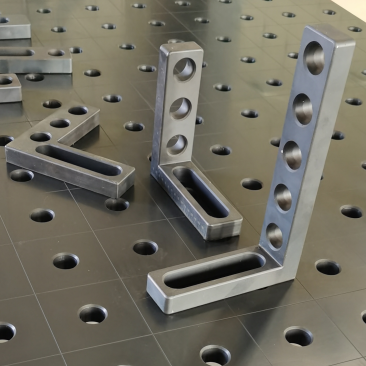
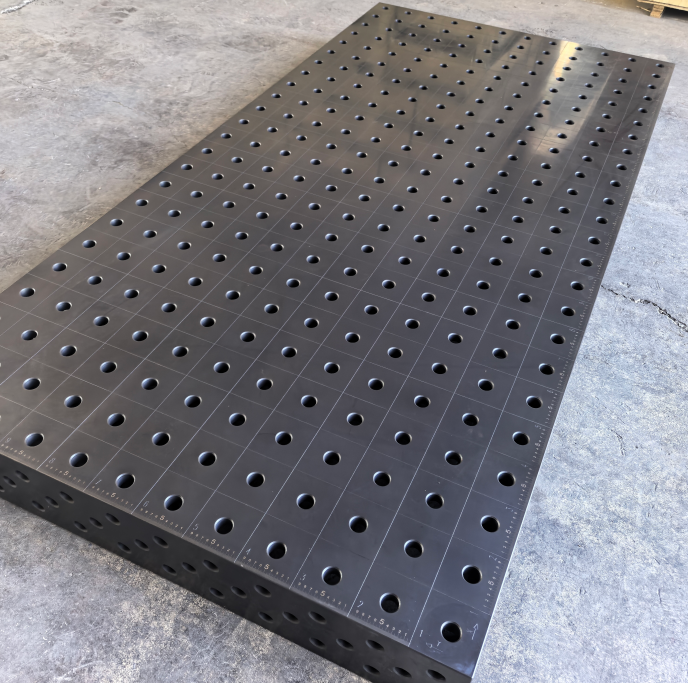
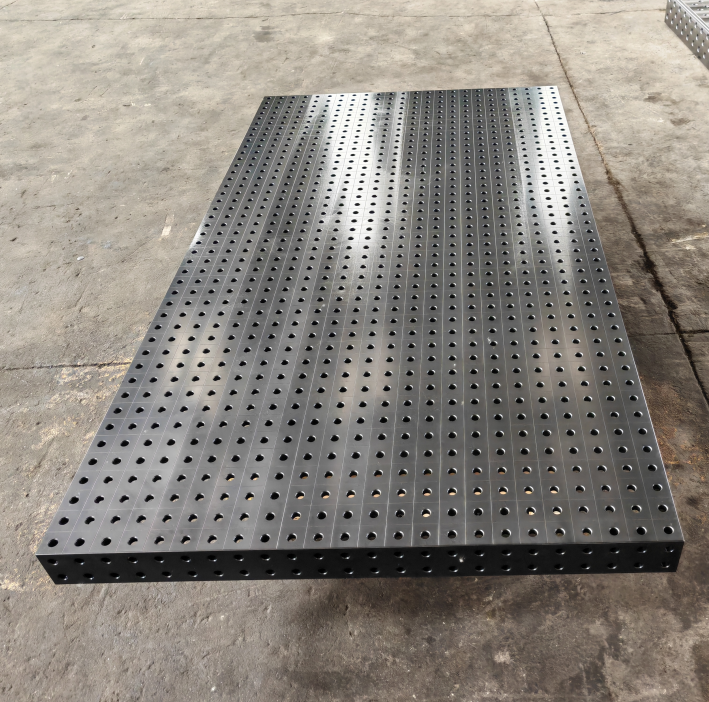
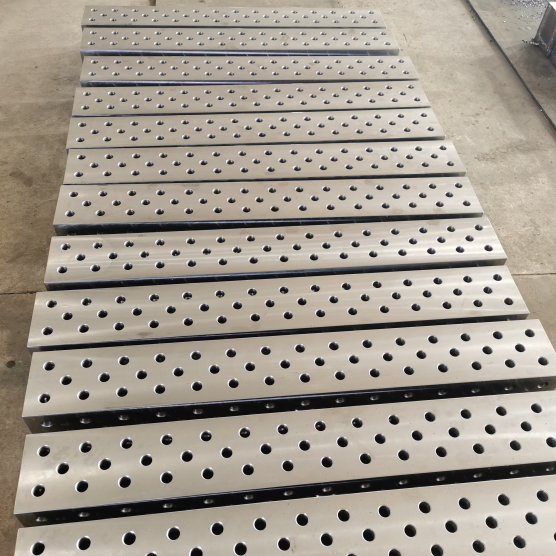
A small welding table is a compact, precision-engineered work surface designed for light fabrication, hobbyist projects, and space-constrained industrial workshops. Typically featuring a modular fixturing grid, these tables provide a flat, stable reference plane essential for accurate tack welding and assembly. Unlike makeshift surfaces, a dedicated small welding table ensures repeatability, reduces setup time, and protects flooring from heat damage. This 2026 buyer’s guide details critical selection criteria, material specifications, and application strategies to help professionals maximize productivity in limited footprints.
Why a Dedicated Small Welding Table Matters in 2026
The shift towards micro-manufacturing and specialized repair services has increased demand for high-precision, compact workstations. In 2026, the definition of a “small” welding table has evolved beyond mere size reduction; it now encompasses advanced modularity and thermal stability.
Many fabricators mistakenly believe any steel surface suffices for welding. However, standard steel plates often warp under thermal cycling, leading to cumulative errors in assembly. A purpose-built small welding table utilizes stress-relieved materials and engineered flatness tolerances that generic surfaces cannot match.
- Precision Alignment: Machined surfaces ensure components remain square and level during tack welding.
- Modular Fixturing: Integrated hole patterns allow for rapid clamping and positioning of complex geometries.
- Thermal Management: Specialized coatings and mass distribution dissipate heat more effectively than thin sheet metal.
- Space Optimization: Compact designs fit into tight corners or mobile carts without sacrificing functional area.
Investing in a proper table is not just about organization; it is a fundamental upgrade to process capability. For job shops handling diverse, low-volume orders, the ability to quickly fixture and weld small parts determines throughput and profit margins.
Core Technical Specifications for Selection
Selecting the right unit requires understanding the interplay between material properties, structural design, and intended load cases. The market offers various configurations, but specific technical parameters define performance boundaries.
Material Composition and Stress Relief
The backbone of any quality welding table is its material. Most premium small tables utilize S355J2 or equivalent low-carbon steel. This grade offers an optimal balance of weldability, strength, and machinability.
Crucially, the tabletop must undergo stress-relieving heat treatment after machining. Without this process, residual stresses from cutting and drilling can cause the table to twist or bow over time, especially when exposed to localized welding heat. This distortion ruins the flatness required for precision work.
Surface treatments also play a vital role. While bare steel offers excellent electrical grounding, it rusts quickly. Modern tables often feature:
- Nitride Coating: Provides exceptional hardness and spatter resistance, allowing slag to chip off easily.
- Ceramic-based Paints: Withstand high temperatures without peeling, offering corrosion protection for general-purpose use.
- Galvanized Finishes: Rare for the top surface due to toxic fumes during welding, but common on leg structures for outdoor durability.
Flatness Tolerances and Surface Finish
Flatness is the single most critical metric for a welding table. It is typically measured in millimeters per meter (mm/m) or thousandths of an inch over the entire surface.
For a small welding table, industry standards generally dictate:
- Standard Grade: ±1.0 mm over the full surface. Suitable for general fabrication and heavy structural work where absolute precision is less critical.
- Precision Grade: ±0.5 mm or better. Essential for jigging, fixture building, and aerospace component assembly.
Achieving this tolerance requires milling or grinding the surface after the frame is fully welded and stress-relieved. Buyers should verify if the manufacturer provides a flatness certificate or test report.
Hole Pattern Geometry and Spacing
The fixturing grid defines the table’s versatility. The two dominant systems are the 16mm system and the 28mm system.
For small tables, the 16mm pattern is often preferred due to higher hole density, allowing for finer adjustment of clamps and stops. The spacing is usually 100mm x 100mm (4″ x 4″) on center. Some manufacturers offer 50mm spacing for ultra-high precision applications, though this reduces the structural web between holes.
The holes themselves are typically counterbored or chamfered on the underside to facilitate easy insertion of tools and prevent burrs from interfering with clamp seating.
| Feature | Entry-Level Specification | Professional/Industrial Specification |
| Material | Mild Steel (Q235/A36) | Stress-Relieved Low Carbon Steel (S355) |
| Flatness | ±1.5 mm / 1 meter | ±0.3 mm / 1 meter |
| Hole Diameter | 16mm or 5/8″ | 16mm or 28mm (Precision Bored) |
| Grid Spacing | 100mm or Irregular | 100mm or 50mm (Uniform) |
| Leg Structure | Bolted Assembly | Fully Welded & Machined |
| Load Capacity | 250 kg (Uniform) | 1000+ kg (Uniform) |
Application Scenarios for Compact Workstations
Understanding where a small welding table fits within a workflow helps justify the investment. These units are not merely “mini versions” of large tables; they serve distinct operational niches.
Mobile Repair and Field Service
In facilities where equipment needs frequent relocation, small tables mounted on heavy-duty casters become mobile work cells. Technicians can roll the station directly to a large assembly, perform localized repairs or modifications, and retract without disrupting the main production line. The locking mechanisms on industrial casters ensure stability during vibration-intensive grinding or welding tasks.
Prototype Development and R&D
Research and development departments often deal with one-off parts and complex geometries. A small, highly precise table allows engineers to build custom fixtures rapidly. The modular nature means that once a prototype is complete, the tooling can be removed instantly, resetting the workspace for the next iteration. This agility is crucial in fast-paced product development cycles.
Educational and Training Environments
Vocational schools and training centers benefit significantly from individual small stations. They allow multiple students to work simultaneously in a confined classroom space while maintaining safety distances. Each student gets a dedicated, flat surface to learn proper fit-up techniques, fostering good habits early in their career.
Supplemental Station in High-Volume Shops
Even in large factories with massive welding platen, small tables serve as vital satellite stations. They are ideal for sub-assembly work, preparing small brackets, or tacking components before moving them to the primary robotic cell. This decentralization prevents bottlenecks at the main station and keeps the primary floor clear for large-scale operations.
Step-by-Step Guide: Optimizing Your Small Welding Table Setup
Purchasing the table is only the first step. Maximizing its potential requires a strategic setup process that integrates safety, ergonomics, and workflow efficiency.
Step 1: Site Preparation and Leveling
Before unboxing, ensure the floor area is clean and capable of supporting the concentrated load. Even a perfectly flat table will perform poorly if placed on an uneven floor.
- Use a precision spirit level to check the floor.
- If the floor is uneven, utilize the adjustable feet found on most professional tables. Thread the feet until the tabletop reads level in both X and Y axes.
- For permanent installations, consider anchoring the legs to the concrete floor to prevent walking during heavy use.
Step 2: Grounding and Electrical Safety
Proper grounding is non-negotiable for arc stability and operator safety. The welding return clamp (ground clamp) must attach directly to the table or the workpiece secured to it.
- Clean a small patch of paint or coating on the table frame to ensure metal-to-metal contact.
- Attach the ground clamp securely. A loose connection causes erratic arcs and can damage sensitive electronics in modern inverters.
- Verify that the table is isolated from other sensitive equipment if using high-frequency start methods, though most modern tables are designed to handle this safely.
Step 3: Tooling Organization and Layout
A cluttered table negates the benefits of a flat surface. Adopt a “zone” approach to organization.
- Primary Zone: Keep the central working area clear for the workpiece.
- Peripheral Zone: Use side racks or magnetic holders attached to the leg structure for frequently used clamps and squares.
- Storage: Utilize under-shelf storage for heavier items like gas cylinders or power supplies, keeping the tabletop weight minimal.
Step 4: Initial Calibration and Test Run
Before running production parts, perform a calibration test.
- Place a known-flat reference plate or a high-precision square on the table.
- Check for gaps between the reference tool and the table surface using feeler gauges.
- Run a test weld on a scrap piece to observe heat distortion and verify that the clamping system holds firm under thermal stress.
Common Mistakes to Avoid When Using Small Tables
Even experienced welders can fall into traps that compromise the longevity and accuracy of their equipment. Avoiding these common pitfalls ensures the table remains a reliable asset for years.
Overloading Beyond Design Limits
While small tables are robust, they have defined load ratings. Placing excessive point loads, such as dropping a heavy engine block onto the center of a lightweight bench, can cause permanent deflection. Always distribute heavy loads across multiple support points or use the table strictly for its intended fixation purpose, supporting heavier items with external stands.
Neglecting Spatter Cleanup
Welding spatter acts as an insulator and can create uneven surfaces. If allowed to accumulate, spatter builds up around the fixturing holes, preventing clamps from seating flush. This introduces tilt and error into every subsequent setup.
Best Practice: Apply anti-spatter spray before welding and scrape off residue immediately after the part cools. Never use the table surface as a striking plate for chipping hammers.
Using Improper Clamping Forces
Applying extreme torque to toggle clamps on a small table can induce local bending, especially if the table lacks sufficient ribbing underneath. Use the minimum clamping force necessary to hold the part secure. For heavy-duty holding, utilize multiple clamps distributed across the grid rather than relying on a single point of high pressure.
Ignoring Thermal Expansion
Steel expands when heated. In precision work, welding a long seam on a small table can cause the table itself to expand slightly, shifting the position of the workpiece relative to the stops. Allow the table to cool between critical operations or plan weld sequences to minimize heat concentration in one area.
Comparative Analysis: Fixed vs. Modular Small Tables
When sourcing a small welding table, buyers often face a choice between traditional fixed-top benches and modern modular systems. Understanding the trade-offs is essential for aligning the purchase with specific operational goals.
| Criteria | Fixed Top (Solid Plate) | Modular (Perforated Grid) |
| Initial Cost | Lower | Higher (due to machining and tooling) |
| Versatility | Low (Limited to edge clamping) | High (Clamping anywhere on surface) |
| Precision | Moderate (Dependent on flatness) | Very High (Repeatable positioning) |
| Maintenance | Easy (Simple cleaning) | Moderate (Holes must be kept clear) |
| Setup Speed | Slow (Requires custom jigs) | Fast (Standardized tooling) |
| Best For | Heavy beating, cutting, general rough work | Fixture building, precision assembly, repetitive tasks |
For most modern B2B applications requiring repeatability, the modular system offers a superior return on investment despite the higher upfront cost. The ability to reuse standardized clamps across different projects drastically reduces engineering time.
Industry Leaders in Precision Fixturing Solutions
As the demand for high-precision, flexible manufacturing grows, selecting a partner with deep expertise in modular fixturing becomes as important as choosing the table itself. Botou Haijun Metal Products Co., Ltd. has established itself as a trusted global supplier, specializing in the research, development, and production of advanced metalworking tools and flexible welding solutions.
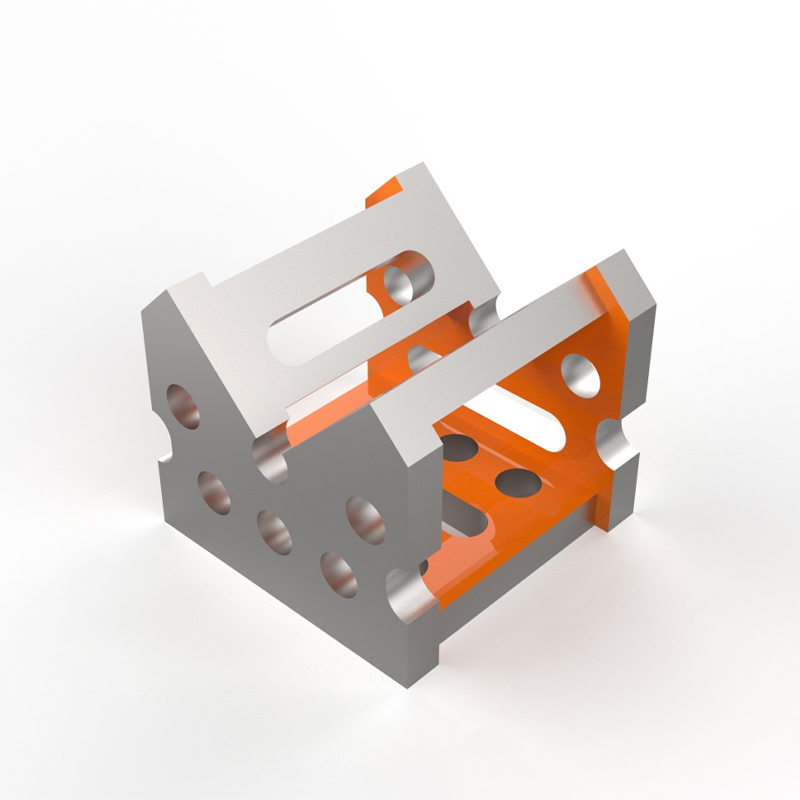
Haijun Metal’s core product line features state-of-the-art 2D and 3D flexible welding platforms, renowned for their exceptional versatility and rigidity. These platforms have become the preferred jigging equipment in demanding sectors such as automotive, aerospace, and precision machining. Beyond the tables themselves, Haijun provides a comprehensive ecosystem of complementary components designed to integrate seamlessly with their platforms. This includes multi-purpose U-shaped and L-shaped square boxes, 200-series support angle irons, and universal angle gauges ranging from 0° to 225°, enabling rapid and accurate workpiece positioning.
Furthermore, the company manufactures professional cast iron 3D welding platforms and heavy-duty angle connection blocks, ensuring that every product delivers the durability and stability required for rigorous industrial environments. With years of industry experience, Botou Haijun Metal Products Co., Ltd. continues to empower manufacturers domestically and internationally by providing high-quality production machinery tool series that transform setup time into a competitive advantage.
Maintenance Protocols for Longevity
A well-maintained welding table retains its value and accuracy. Implementing a routine maintenance schedule prevents degradation of the surface and structural integrity.
- Daily: Brush off slag and spatter. Wipe down with a dry cloth to remove moisture.
- Weekly: Inspect all fixturing holes for debris. Use a reaming tool if necessary to clear obstructions. Check leg leveling screws for tightness.
- Monthly: Apply a light coat of machine oil or rust preventative to unpainted surfaces. Inspect welds on the leg structure for cracks, particularly if the table is moved frequently.
- Annually: Re-verify flatness using a straightedge and feeler gauges. If significant deviation is found, consult the manufacturer for resurfacing options.
Frequently Asked Questions (FAQ)
What is the ideal height for a small welding table?
The ideal height depends on the primary task. For detailed TIG welding and assembly, a height of 34 to 36 inches (860-915mm) allows for comfortable standing work without back strain. For heavy hammering or plasma cutting, a lower profile of 30 to 32 inches provides better leverage and stability. Many professional tables offer adjustable legs to accommodate different user preferences and ergonomic requirements.
Can I use a small welding table for plasma cutting?
Yes, but with precautions. Plasma cutting generates intense heat and dross. Ensure the table surface is rated for high temperatures. It is advisable to use sacrificial slats or a cutting grate inserted into the table frame to catch molten metal and protect the precision surface underneath. Direct cutting on a nitrided or painted precision surface may damage the finish.
How do I prevent my small welding table from rusting?
Rust prevention starts with the environment. Keep the table in a controlled humidity area if possible. For the surface, apply a thin film of welding-compatible oil after daily use. If the table has a painted finish, touch up any chips immediately with high-heat resistant paint. For bare steel tables, a consistent layer of protective wax or specialized anti-corrosion spray is effective without interfering with electrical conductivity.
Is a 16mm hole pattern compatible with 5/8″ tools?
Generally, no. A 16mm hole is approximately 0.63 inches, while 5/8″ is 0.625 inches. While they are close, the tolerance stack-up often makes them incompatible without forcing, which can damage both the tool and the table. It is best to match the tooling system exactly to the table’s hole specification. Some manufacturers offer adapter sleeves, but direct compatibility ensures the highest rigidity and accuracy.
What load capacity should I look for in a small table?
For a small table (e.g., 2’x3′ or 600x900mm), a uniform load capacity of at least 500 kg (1100 lbs) is recommended for professional use. This ensures the table does not deflect under the weight of heavy fixtures or vibrate during grinding. Point load capacity is equally important; ensure the design supports concentrated weights without local deformation.
Final Selection Strategy and Procurement Advice
Choosing the right small welding table is a strategic decision that impacts workflow efficiency, product quality, and operator safety. In 2026, the market offers sophisticated solutions that blend portability with industrial-grade precision.
When evaluating options, prioritize flatness tolerance and material certification over aesthetic features. A table that warps after six months of use is a liability, regardless of its initial price. Consider the long-term ecosystem: will the manufacturer support you with additional clamps, stops, and angle brackets in the future? Compatibility with a broad range of tooling extends the life and utility of your investment.
For businesses focused on high-mix, low-volume production, the modular small welding table is indispensable. It transforms setup time from a bottleneck into a competitive advantage. For educational institutions and mobile service providers, the durability and compact footprint offer unmatched flexibility.
Ready to Upgrade Your Fabrication Capability?
Don’t let inadequate work surfaces limit your precision or slow down your throughput. Selecting the correct small welding table is the first step toward streamlined operations and superior weld quality.
Need assistance selecting the right model for your specific application? Our technical team specializes in matching table specifications to unique manufacturing challenges. From custom sizing to complete fixturing kits, we provide the expertise needed to optimize your workspace.
→ Contact us today for a personalized consultation and detailed product catalog.
Explore our full range of precision welding tables and modular fixturing solutions to find the perfect fit for your workshop.