Rhino cart welding in 2026 focuses on heavy-duty fabrication using high-strength steel to support loads exceeding 1,500 pounds. This process involves precise MIG or flux-core techniques to ensure structural integrity under extreme stress. Whether you are building a custom utility trailer or reinforcing industrial equipment, mastering rhino cart welding ensures safety, durability, and long-term performance in demanding environments.
What Is Rhino Cart Welding and Why It Matters in 2026
The term “Rhino Cart” typically refers to ultra-heavy-duty utility carts or trailers designed for rugged terrains and massive payloads. In the fabrication world, rhino cart welding represents a specific subset of structural welding that prioritizes impact resistance and load-bearing capacity over aesthetic finish.
As we move into 2026, the demand for these units has surged in construction, agriculture, and off-road logistics. Unlike standard garden cart assembly, welding a rhino-style cart requires adherence to stricter engineering principles. The joints must withstand constant vibration, sudden shocks, and corrosive elements.
Modern fabrication shops are shifting towards using advanced high-strength low-alloy (HSLA) steels. These materials offer superior strength-to-weight ratios but demand specific welding parameters. Understanding the metallurgy behind these choices is critical for any welder aiming to produce competition-grade or commercial-ready units.
The core objective remains unchanged: creating a frame that will not flex, crack, or fail under maximum rated capacity. This requires more than just joining metal; it demands a deep understanding of heat input, penetration, and stress distribution across the chassis.
Essential Materials and Equipment for Heavy-Duty Fabrication
Success in rhino cart welding begins before the arc is struck. Selecting the right base material and shielding gas determines the final product’s lifespan. In 2026, the industry standard has largely moved away from mild A36 steel for primary structural members in favor of stronger alternatives.
Base Metal Selection:
- DOM Tubing: Drawn Over Mandrel tubing offers excellent concentricity and surface finish, making it ideal for axle housings and frame rails.
- HSLA Steel: High-Strength Low-Alloy steel provides up to 50% more yield strength than standard carbon steel, allowing for lighter frames without sacrificing capacity.
- Plate Thickness: For gussets and mounting points, plates ranging from 3/16″ to 1/4″ are standard to prevent tear-out under load.
Welding Process Choices:
While TIG welding offers precision, it is often too slow for heavy structural work. The two dominant processes for rhino cart fabrication are:
- GMAW (MIG): Using solid wire with mixed gas (75% Argon / 25% CO2) provides clean, strong beads with good penetration on thinner gauge materials.
- FCAW (Flux-Core): Self-shielded flux-core wire is the go-to for outdoor projects or thicker sections. It penetrates deeper and tolerates minor surface contaminants better than MIG.
Equipment requirements have also evolved. Modern inverter-based machines with synergic controls allow welders to dial in exact parameters for specific alloy types. Pulse MIG technology is becoming increasingly popular as it reduces heat input, minimizing warpage on long frame rails.
Step-by-Step Guide to Welding a Rhino Cart Frame
Constructing a heavy-duty cart requires a methodical approach to ensure squareness and alignment. Deviations in the early stages compound quickly, leading to fitment issues with axles and wheels later. Follow this proven workflow for optimal results.
Phase 1: Preparation and Fit-Up
- Clean all mating surfaces thoroughly to remove rust, oil, and mill scale. Contaminants are the primary cause of porosity and weak fusion.
- Cut tubing with a cold saw or abrasive chop saw to ensure square ends. Bevel edges on materials thicker than 1/8″ to ensure full penetration.
- Assemble the main rectangle on a flat, level surface. Use magnetic clamps and dial indicators to verify squareness within 1/16″ tolerance.
Phase 2: Tack Welding Strategy
- Apply tack welds at each corner and every 12 inches along long seams.
- Use a staggered pattern to distribute heat evenly and prevent the frame from pulling out of square.
- Re-check dimensions after tacking. Adjustments are easy now but impossible once full welding begins.
Phase 3: Full Penetration Welding
- Begin welding the interior seams first to lock the geometry in place.
- Use a skip-welding technique (weld 2 inches, skip 4 inches) to manage thermal distortion.
- Ensure your bead profile is convex but not excessive. A flat to slightly convex bead indicates proper fusion without wasting filler metal.
- For critical stress points like axle mounts, perform multi-pass welds to build up volume and strength.
Phase 4: Post-Weld Treatment
- Allow the frame to cool naturally. Quenching with water can induce brittleness in HSLA steels.
- Grind down any sharp protrusions that could snag lines or injure users.
- Apply a zinc-rich primer immediately to prevent flash rusting before the final paint job.
Design Considerations for Maximum Load Capacity
A true “Rhino” cart is defined by its ability to haul where others fail. Achieving this requires intelligent design choices that go beyond simply using thicker metal. Structural engineering principles must be applied to the welding layout.
Gusseting and Reinforcement:
The weakest point in any rectangular frame is the corner joint. To counteract racking forces (parallelogram deformation), triangular gussets are mandatory. These should be welded on both sides of the joint. In 2026 designs, we see a trend toward internal gussets that maintain a clean exterior profile while maximizing torsional rigidity.
Axle Mounting Geometry:
The connection between the axle and the frame bears the brunt of dynamic loading. Simply welding a plate to the bottom of a rail is insufficient for heavy loads. The preferred method involves wrapping the mounting plate around the rail or using a through-bolt design supplemented by welds. This distributes the shear force over a larger area of the base metal.
Center of Gravity Management:
Welding additional components like toolboxes or side racks alters the cart’s center of gravity. Designers must account for this by reinforcing the lower frame rails. Placing heavy accessories low and centered prevents tipping during sharp turns or on uneven terrain.
Tongue and Hitch Integration:
For towable rhino carts, the tongue angle is critical. A steeper drop increases ground clearance but raises the hitch point, potentially causing instability. The weld connecting the tongue to the main frame must be a full-penetration joint, often reinforced with fish plates on the top and bottom.
Common Welding Defects and How to Avoid Them
Even experienced fabricators encounter defects when working with heavy structural steel. Identifying and preventing these issues is crucial for maintaining the integrity of a rhino cart welding project. Failure here can lead to catastrophic structural collapse.
Lack of Fusion:
This occurs when the weld metal fails to bond with the base metal. It is often caused by traveling too fast or incorrect voltage settings. In heavy-duty applications, lack of fusion acts as a pre-existing crack. To avoid this, ensure your arc is directed at the leading edge of the weld puddle and maintain a consistent travel speed.
Porosity:
Gas pockets trapped in the weld weaken the joint significantly. Common causes include dirty base metal, insufficient gas flow, or windy conditions disrupting the shielding envelope. When using flux-core wire outdoors, ensure you are using self-shielded wire rather than gas-shielded varieties.
Undercutting:
This groove melted into the base metal alongside the weld reduces the cross-sectional area of the joint, creating a stress riser. It is usually caused by excessive voltage or amperage. Lowering the heat input and manipulating the torch angle can eliminate undercutting.
Distortion and Warpage:
Uneven heating causes the metal to expand and contract unpredictably, leading to a twisted frame. Prevent this by balancing welds on opposite sides of the joint and using clamping fixtures to hold the assembly rigid during cooling.
Optimizing Precision with Advanced Fixturing Solutions
While skilled hands and quality materials are fundamental, the secret to achieving the sub-1/16″ tolerances required for modern rhino carts often lies in the fixturing setup. As fabrication standards rise in 2026, relying solely on manual clamping and magnetic squares is no longer sufficient for high-volume or ultra-precise builds. This is where specialized tooling partners like Botou Haijun Metal Products Co., Ltd. play a pivotal role.
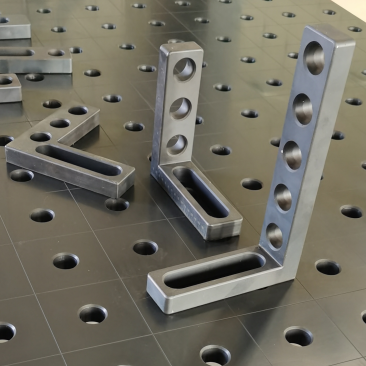
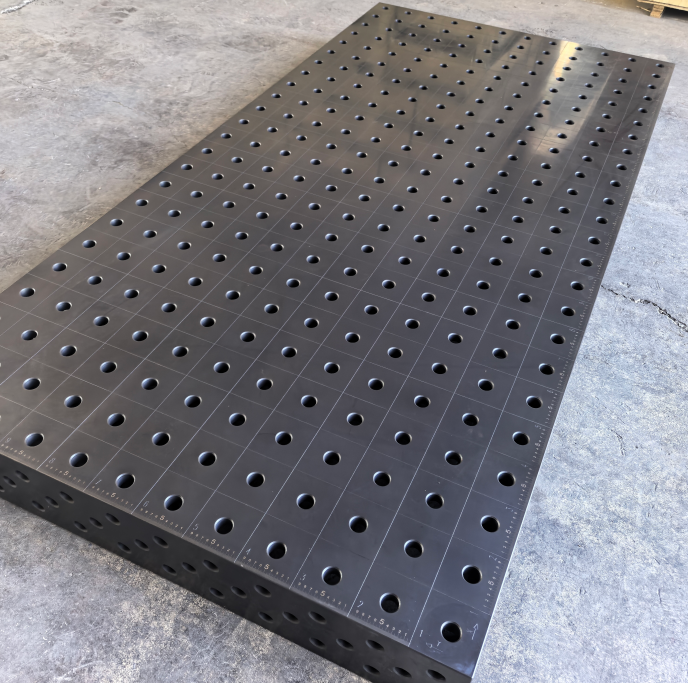
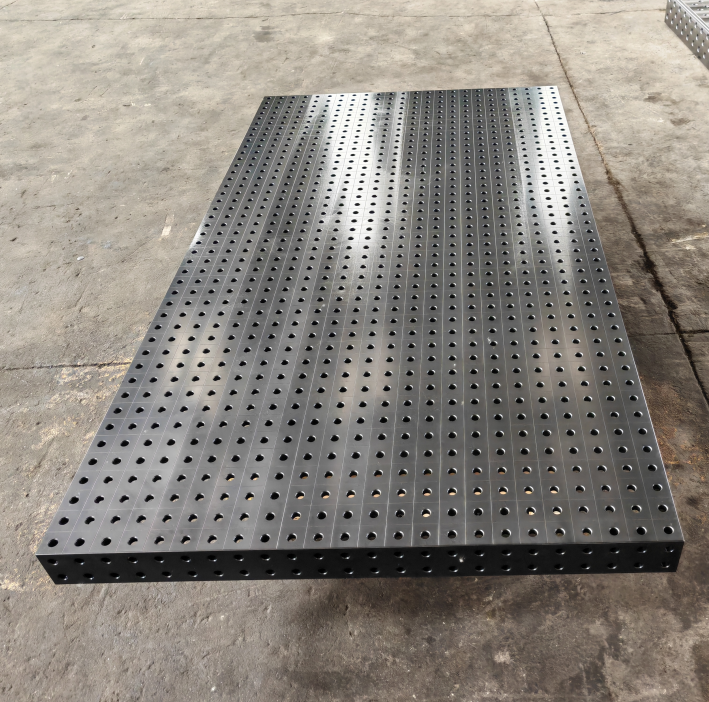
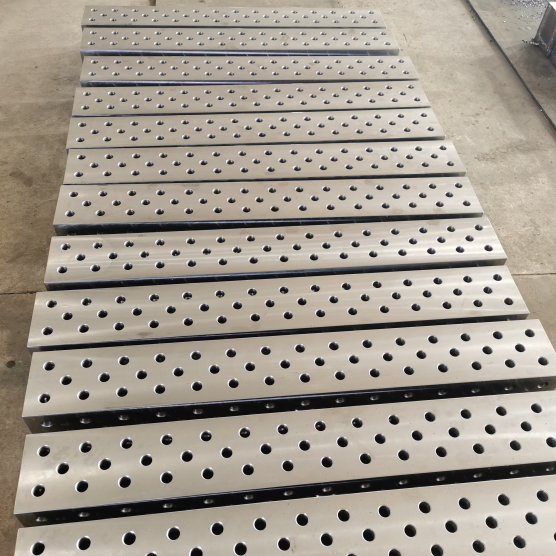
Haijun Metal specializes in the research, development, and production of high-precision flexible modular fixtures designed specifically for the rigorous demands of heavy metalworking. Their core product line features versatile 2D and 3D flexible welding platforms that have become the preferred jigging equipment in industries ranging from automotive to aerospace. For a rhino cart builder, these platforms offer an unparalleled advantage: the ability to rapidly position and clamp complex frame geometries with absolute accuracy.
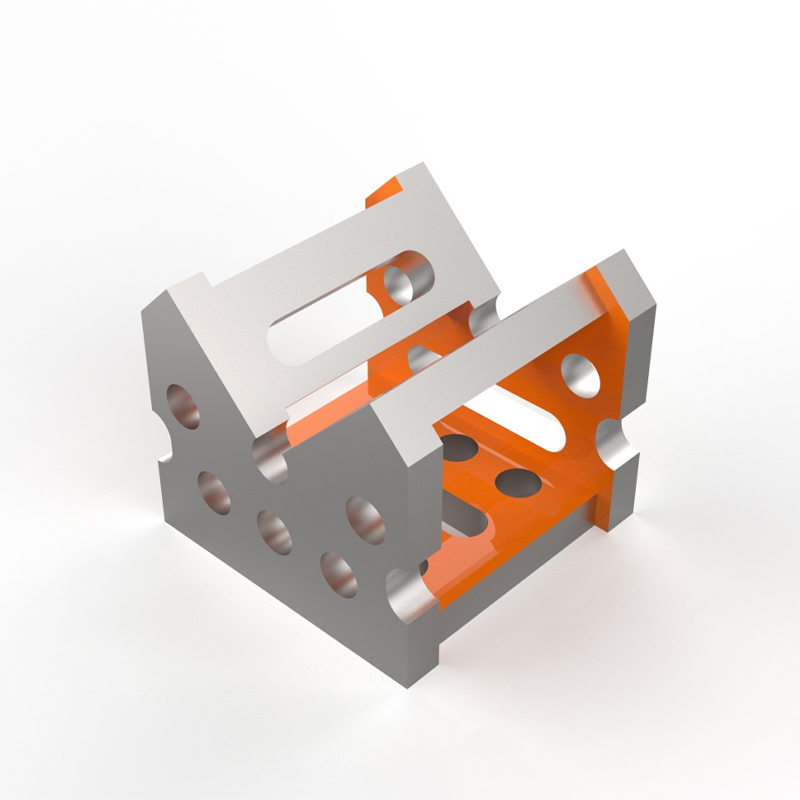
Integrating Haijun’s comprehensive range of complementary components—such as U-shaped and L-shaped multi-purpose square boxes, 200-series support angle irons, and 0-225° universal angle gauges—allows fabricators to create custom setups that eliminate the guesswork from assembly. Whether you are aligning axle mounts or ensuring perfect 90-degree corners on the main chassis, their professional cast iron 3D welding platforms and angle connection blocks provide the stability and durability needed to prevent warpage during the welding process. By leveraging these efficient and flexible positioning solutions, workshops can significantly reduce setup time while guaranteeing that every rhino cart meets the strictest engineering specifications.
Cost Analysis: DIY vs. Professional Fabrication in 2026
One of the most frequent questions regarding rhino cart welding is whether to build it yourself or buy a pre-fabricated unit. With rising material costs in 2026, the economic landscape has shifted. Here is a breakdown to help you decide.
DIY Fabrication Costs:
- Materials: Steel prices fluctuate, but expect to pay a premium for HSLA and DOM tubing. A complete frame kit may cost between $400 and $700 depending on size.
- Consumables: Wire, gas, and grinding discs add another $100-$150 to the project.
- Equipment: If you do not own a 200-amp+ MIG welder, rental or purchase adds significant upfront cost. Investing in professional fixturing, such as modular tables from suppliers like Haijun Metal, can increase initial costs but pays off in reduced labor time and error correction.
- Time: A novice may take 20-30 hours; an expert might finish in 8-10 hours.
Professional Purchase Costs:
- Base Price: Commercial heavy-duty carts range from $1,200 to $2,500.
- Customization: Adding specific racks or paint finishes can increase the price by 20-30%.
- Warranty: Professional units come with structural warranties that DIY builds lack.
Verdict:
If you require a standard configuration, buying professional is often more cost-effective when factoring in labor time and potential errors. However, if you need a highly customized solution for unique equipment or terrain, rhino cart welding as a DIY project offers unparalleled flexibility and potential savings on labor.
Comparison: MIG vs. Flux-Core for Rhino Carts
Choosing the right welding process is pivotal for the quality of your rhino cart. Both MIG and Flux-Core have their place, but their performance characteristics differ significantly in heavy-duty applications.
| Feature | MIG (GMAW) | Flux-Core (FCAW) |
| Shielding | External Gas Cylinder Required | Self-Shielded or Gas-Assisted |
| Wind Resistance | Poor (Gas blows away easily) | Excellent (Ideal for outdoor builds) |
| Penetration | Moderate to Deep | Very Deep (Better for thick plate) |
| Cleanup | Minimal (No slag) | Requires Slag Removal |
| Bead Appearance | Clean and Smooth | Rougher, requires grinding |
| Best Use Case | Shop environment, thinner gauges | Field repairs, heavy structural joints |
For the average hobbyist building in a garage, MIG provides a cleaner experience with less post-weld cleanup. However, for the serious fabricator constructing a cart intended for muddy, wet, or windy environments, Flux-Core offers superior penetration and reliability against environmental factors.
Safety Protocols for Heavy Structural Welding
Welding heavy-gauge steel for a rhino cart introduces hazards beyond standard sheet metal work. The higher amperage and thicker materials generate intense UV radiation, spatter, and fumes. Adhering to strict safety protocols is non-negotiable.
Personal Protective Equipment (PPE):
- Helmet: Use an auto-darkening helmet with a shade rating of at least 10-13 for high-amp welding.
- Gloves: Heavy-duty gauntlet-style gloves are essential to protect forearms from spatter and radiant heat.
- Clothing: Wear 100% cotton or flame-retardant (FR) clothing. Synthetic fabrics can melt onto skin upon contact with sparks.
- Respiratory: Heavy structural welding produces significant manganese and silica fumes. A powered air-purifying respirator (PAPR) is highly recommended for prolonged sessions.
Workspace Safety:
Ensure adequate ventilation to disperse toxic fumes. Keep a Class ABC fire extinguisher nearby, as sparks from heavy welding can travel significant distances. Always inspect cables for fraying before connecting to high-amperage sources to prevent electrical shock.
Maintenance and Longevity of Welded Joints
The life of a rhino cart extends far beyond the initial build. Proper maintenance of the welded joints ensures the cart remains safe and functional for decades. Neglecting these areas can lead to premature fatigue failure.
Regular Inspection:
Every six months, visually inspect all major welds, particularly around axle mounts and hitch points. Look for hairline cracks or signs of rust bleeding from under the paint, which indicates internal corrosion.
Corrosion Protection:
Paint alone is often insufficient for heavy-duty carts used in harsh conditions. Consider applying a cold galvanizing compound to high-stress welds. This zinc-rich coating sacrifices itself to protect the underlying steel, dramatically extending the life of the joint.
Stress Relief:
If the cart is subjected to extreme overloading events, consider having the frame stress-relieved by a professional shop. This heat treatment process resets the molecular structure of the metal, reducing residual stresses accumulated during heavy use.
Future Trends in Heavy-Duty Cart Fabrication
As we look toward the late 2020s, the landscape of rhino cart welding is evolving with new technologies and materials. Staying ahead of these trends can give fabricators a competitive edge.
Laser Hybrid Welding:
While currently expensive, laser-hybrid systems are becoming more accessible. They combine the depth of laser welding with the gap-bridging ability of arc welding, resulting in faster travel speeds and narrower heat-affected zones.
Advanced Coatings:
New ceramic-based coatings are emerging that offer superior abrasion resistance compared to traditional epoxies. These are ideal for carts used in mining or rocky terrains where stone chips are common.
Modular Designs:
The trend is moving towards modular frames that can be bolted and welded together. This allows users to extend the bed length or change configurations without cutting and re-welding the entire chassis.
Frequently Asked Questions About Rhino Cart Welding
Here are answers to the most common queries regarding the fabrication and maintenance of heavy-duty welding carts.
What is the minimum wall thickness for a rhino cart frame?
For a true heavy-duty application, the main frame rails should have a minimum wall thickness of 0.120 inches (approx. 1/8″), though 3/16″ is preferred for loads over 1,000 lbs. Thinner walls may buckle under heavy point loads.
Can I weld galvanized steel for a rust-proof cart?
Yes, but it requires extreme caution. Galvanized coating releases toxic zinc oxide fumes when welded. You must grind off the coating at the weld zone before starting and wear a high-quality respirator. The weld zone will then need to be re-galvanized or painted with a zinc-rich primer.
How do I test the strength of my welds at home?
Non-destructive testing (NDT) at home is limited. Visual inspection is the primary method. Look for consistent bead width and no visible cracks. For critical applications, consider hiring a third-party inspector to perform dye penetrant or magnetic particle testing.
Is pre-heating necessary for rhino cart welding?
Pre-heating is generally not required for mild steel under 1 inch thick unless ambient temperatures are below freezing. However, if using high-carbon steels or very thick plates (over 1″), pre-heating to 200°F can prevent cracking.
What type of wire is best for outdoor welding?
E71T-GS (self-shielded flux-core) is the industry standard for outdoor structural welding. It does not require external shielding gas, making it immune to wind interference that would ruin a MIG weld.
Conclusion: Building a Legacy of Strength
Mastering rhino cart welding is about more than just joining metal; it is about engineering a solution that stands up to the toughest challenges. By selecting the right materials, adhering to precise welding procedures, and utilizing advanced fixturing solutions to ensure perfect alignment, you can fabricate a cart that outperforms commercial alternatives.
In 2026, the barrier to entry for high-quality fabrication is lower than ever, thanks to advanced consumer-grade equipment and accessible professional tooling. However, the knowledge gap remains the defining factor between a shaky prototype and a bulletproof machine. Whether you are a professional fabricator or a dedicated DIY enthusiast, the principles of heavy-duty welding remain constant: preparation, precision, and patience.
Who is this guide for?
This information is ideal for welders looking to upgrade from light automotive work to heavy structural fabrication, agricultural equipment owners needing custom hauling solutions, and construction professionals seeking durable site tools.
Next Steps:
Ready to start your project? Begin by sourcing high-quality HSLA steel and practicing your bead consistency on scrap pieces of the same thickness. Remember, the strength of your rhino cart is only as good as your weakest weld. Invest time in perfecting your technique today to ensure decades of reliable service tomorrow.