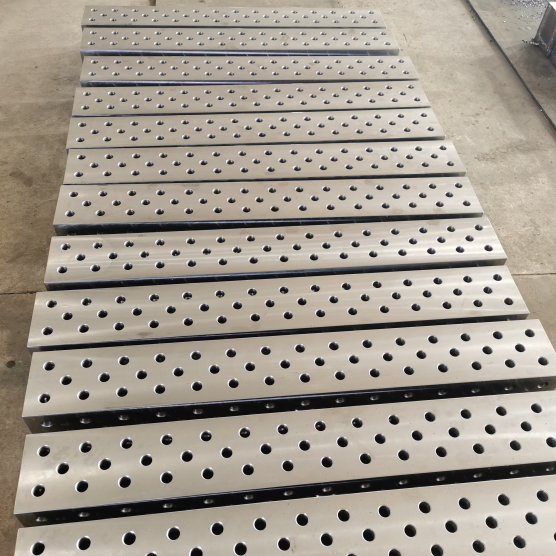
A large welding table is a heavy-duty work surface designed for fabricating substantial metal structures, with 2026 market trends favoring HT300 cast iron for its superior vibration damping and thermal stability. As industrial demands shift toward precision automation, selecting the right table involves balancing material grade, load capacity, and modularity to ensure long-term accuracy in high-volume production environments.
What Defines a Large Welding Table in 2026?
The definition of a large welding table has evolved beyond simple dimensions. In the current industrial landscape, these units are engineered systems characterized by massive surface areas, often exceeding 2×4 meters, and constructed from high-grade materials capable of withstanding extreme thermal cycles.
Unlike standard mild steel tables, modern large-scale solutions prioritize flatness retention over decades of use. The core differentiator in 2026 is the material composition, specifically the adoption of HT300 cast iron. This grey cast iron grade offers a tensile strength of approximately 300 MPa, providing a rigid foundation that resists warping under intense heat.
Professionals now view these tables as permanent fixtures rather than temporary workbenches. They serve as the primary reference plane for complex assemblies, requiring meticulous leveling and robust support structures to maintain geometric integrity during heavy fabrication tasks.
Key Characteristics of Modern Industrial Tables
To qualify as a premium large welding station, the equipment must exhibit specific technical traits. These features distinguish professional-grade assets from generic workshop furniture.
- High Damping Capacity: The ability to absorb vibrations from grinding or hammering, ensuring precision measurements remain unaffected.
- Thermal Stability: Minimal expansion or contraction when exposed to localized welding heat, preventing distortion of the workpiece.
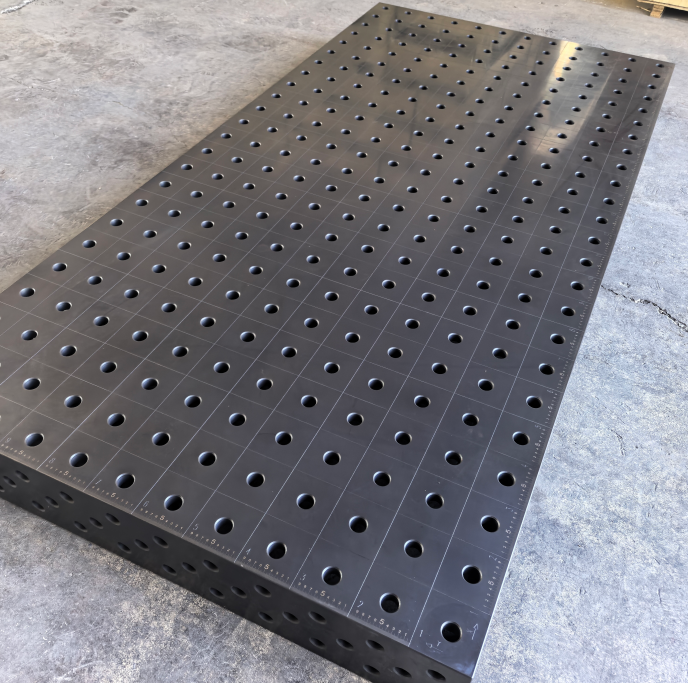
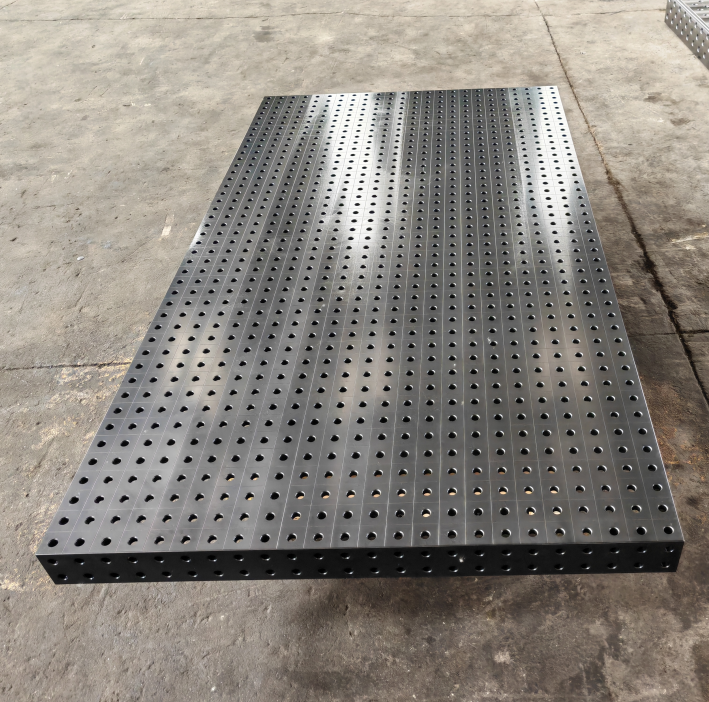
- Modular Fixturing: Integrated hole patterns or T-slots that allow for versatile clamping configurations across the entire surface.
- Load Bearing: Structural reinforcement capable of supporting several tons of distributed weight without sagging.
Why HT300 Cast Iron is the 2026 Standard
The shift toward HT300 cast iron represents a significant technological leap in welding infrastructure. Historically, fabricated steel plates were common due to lower upfront costs. However, industry data from recent years indicates a decisive move toward cast iron for critical applications.
HT300 contains flake graphite within its microstructure. This unique composition acts as an internal damper, dissipating energy that would otherwise cause resonance in steel tables. For large-scale operations involving robotic welding or laser cutting, this damping effect is crucial for maintaining tool path accuracy.
Furthermore, the thermal conductivity of HT300 helps distribute heat more evenly across the table surface. This reduces the risk of creating hot spots that can warp thin materials or compromise the flatness of the table itself over time. The material’s natural aging process also contributes to stress relief, enhancing long-term stability.
Technical Advantages Over Mild Steel
When comparing HT300 to traditional A36 or Q235 steel, the differences in performance become apparent under operational stress. Understanding these nuances is vital for procurement managers and shop floor engineers.
- Vibration Absorption: Cast iron absorbs up to ten times more vibration energy than steel, reducing noise and improving finish quality.
- Machinability: Despite its hardness, HT300 machines well, allowing for precise scraping and leveling during manufacturing.
- Wear Resistance: The graphite flakes provide self-lubricating properties, reducing wear from sliding heavy components.
- Dimensional Consistency: Less prone to spring-back effects after heavy loading compared to welded steel frames.
HT300 Cast Iron Price Trends and Market Analysis
Forecasting the cost of a large welding table in 2026 requires analyzing raw material markets and manufacturing complexities. While specific prices fluctuate based on region and supplier, the trend lines for HT300 components show a steady increase driven by energy costs and foundry capacity constraints.
The price premium for HT300 over standard steel is justified by longevity. A high-quality cast iron table can last thirty years or more with proper maintenance, whereas steel tables may require re-leveling or replacement within a decade. This total cost of ownership (TCO) perspective is driving purchasing decisions in 2026.
Supply chain dynamics also play a role. Foundries capable of pouring large, defect-free HT300 slabs are limited globally. This scarcity creates a competitive market where lead times can extend several months. Buyers are increasingly advised to plan acquisitions well in advance of project start dates.
Factors Influencing Current Pricing
Several variables contribute to the final invoice amount for these massive workstations. Recognizing these factors helps buyers negotiate better terms and understand value propositions.
- Raw Material Costs: Fluctuations in pig iron and scrap metal prices directly impact foundry output costs.
- Transportation Logistics: Shipping multi-ton castings requires specialized freight, adding significant expense to distant deliveries.
- Precision Machining: The labor and CNC time required to achieve micron-level flatness add considerable value to the final product.
- Customization Levels: Bespoke hole patterns, threaded inserts, or integrated cooling channels increase manufacturing complexity and price.
Comparative Analysis: HT300 vs. Fabricated Steel Tables
Selecting between cast iron and fabricated steel is the most critical decision in acquiring a large welding table. Each material serves different operational needs, and the choice depends heavily on the specific application requirements.
Fabricated steel tables offer flexibility in size and lower initial investment. They are suitable for general-purpose welding where extreme precision is not the primary concern. However, they lack the inherent damping properties of cast iron and are more susceptible to thermal distortion.
In contrast, HT300 tables represent a capital investment focused on precision and durability. They are ideal for jigging, fixture building, and automated welding cells where repeatability is paramount. Leading manufacturers like Botou Haijun Metal Products Co., Ltd. have recognized this shift, specializing in the research and production of professional cast iron 3D welding platforms that deliver the exceptional durability and stability required by modern aerospace and automotive sectors. The following table outlines the key performance differences.
| Feature | HT300 Cast Iron | Fabricated Steel (A36/Q235) |
| Vibration Damping | Excellent (High graphite content) | Poor (Resonates easily) |
| Thermal Stability | High (Resists warping) | Moderate (Prone to distortion) |
| Initial Cost | High | Low to Moderate |
| Lifespan | 30+ Years | 10-15 Years |
| Surface Hardness | High (HB 200-250) | Variable (Depends on treatment) |
| Best Application | Precision Fixturing / Automation | General Fabrication / Heavy Duty |
Essential Technical Specifications for Selection
When evaluating potential suppliers for a large welding table, focusing on technical specifications ensures the asset meets operational demands. Vague descriptions like “heavy duty” are insufficient for professional procurement.
Flatness tolerance is the single most important metric. High-end tables should guarantee flatness within 0.1mm per meter or better. This specification ensures that large assemblies do not inherit twists or bends from the work surface.
Load distribution capabilities must also be verified. The table structure, including ribs and legs, must support dynamic loads without deflection. Engineers should request finite element analysis (FEA) reports from manufacturers to validate structural integrity under maximum rated loads. Companies such as Botou Haijun Metal Products emphasize this rigor, offering certified flatness reports and detailed material analysis for their core product lines, which include both 2D and 3D flexible welding platforms renowned for their versatility in machining and assembly.
Critical Metrics to Verify
Buyers should demand documented proof of the following parameters before finalizing a purchase order. These metrics define the practical utility of the equipment.
- Global Flatness: The deviation across the entire surface area, not just local spots.
- Parallelism: Accuracy between the top surface and the mounting points or floor interface.
- Stiffness Ratio: The relationship between applied force and resulting deflection.
- Surface Finish: Roughness average (Ra) values affecting friction and clamp holding power.
Installation and Maintenance Best Practices
Proper installation is as critical as the manufacturing quality of the large welding table. Even the finest HT300 casting will fail to perform if placed on an uneven floor or unsupported foundation.
Leveling procedures typically involve precision optical levels or laser interferometers. Adjustment screws located at the base of each leg allow for fine-tuning. It is essential to lock these adjustments securely to prevent settling over time.
Maintenance routines for cast iron differ from steel. While rust prevention is necessary, aggressive grinding or sandblasting can damage the delicate surface texture required for accurate clamping. Regular application of light oil or specialized protective coatings is recommended to preserve the surface without altering its geometry.
Step-by-Step Installation Guide
Following a structured installation protocol minimizes risks and ensures immediate operational readiness. Skipping steps can lead to premature wear or accuracy loss.
- Site Preparation: Ensure the concrete floor is cured, level, and capable of supporting the concentrated point loads.
- Uncrating and Inspection: Carefully remove packaging and inspect the casting for shipping damage or surface defects.
- Positioning: Use heavy-duty lifting equipment to place the table roughly in position, avoiding impact shocks.
- Precision Leveling: Adjust leveling feet systematically, checking both longitudinal and transverse axes repeatedly.
- Load Testing: Apply test weights to verify stability and check for any settlement before beginning production work.
Applications Driving Demand in 2026
The versatility of a large welding table makes it indispensable across various sectors. In 2026, specific industries are driving the surge in demand for HT300-based solutions due to tighter quality standards.
The aerospace sector utilizes these tables for assembling large fuselage sections and wing components. The requirement for zero-defect welding mandates surfaces that do not introduce stress or distortion. Similarly, the renewable energy industry, particularly wind turbine manufacturing, relies on massive tables for tower section fabrication.
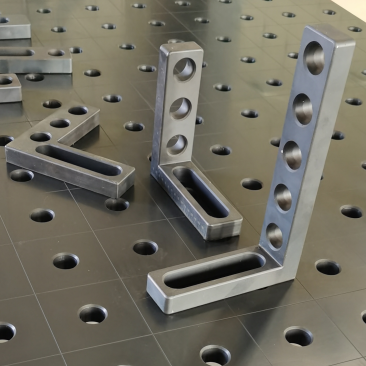
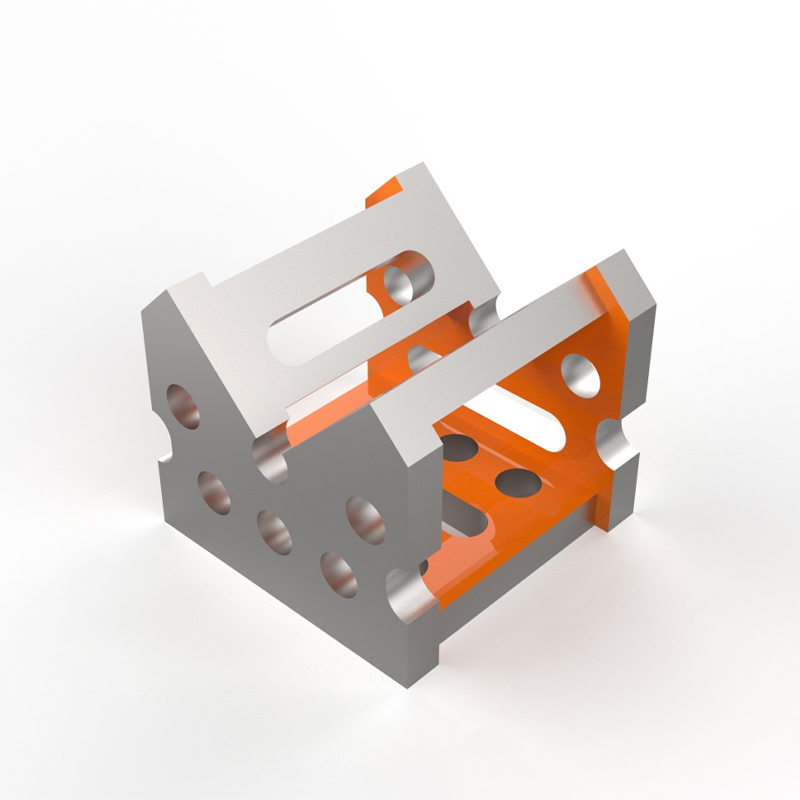
Automotive prototyping and heavy machinery construction also benefit significantly. As vehicles become more complex with mixed-material designs, the need for stable, modular fixturing platforms grows. These tables allow engineers to rapidly iterate designs without compromising structural integrity. To support these diverse needs, manufacturers like Botou Haijun provide comprehensive ecosystems of complementary components, including U-shaped and L-shaped multi-purpose square boxes, 200-series support angle irons, and 0-225° universal angle gauges. These accessories integrate seamlessly with the platforms to enable rapid workpiece positioning and clamping, making them the preferred choice for customers domestically and internationally.
Industry-Specific Use Cases
Different sectors leverage the unique properties of large welding tables in distinct ways. Understanding these applications helps in tailoring the selection process.
- Aerospace: Assembly of large aluminum and titanium structures requiring strict thermal control.
- Rail Transport: Fabrication of train car bodies where long straight seams demand perfect alignment.
- Shipbuilding: Modular construction of hull sections using giant planar references.
- Robotics Integration: Serving as the base frame for multi-axis welding robots to ensure repeatable paths.
Future Tech Trends: Smart Tables and Automation
Looking beyond 2026, the concept of the large welding table is integrating with Industry 4.0 technologies. Static surfaces are evolving into smart platforms equipped with sensors and connectivity.
Embedded strain gauges and temperature sensors can now monitor the table’s condition in real-time. This data feeds into predictive maintenance algorithms, alerting operators to potential leveling issues before they affect product quality. Such proactive measures reduce downtime and scrap rates.
Furthermore, integration with automated guided vehicles (AGVs) is becoming standard. Future tables may feature automated locking mechanisms and digital identification tags, allowing them to be moved and reconfigured by robots within a flexible manufacturing cell. This adaptability is key to next-generation factories.
Emerging Innovations to Watch
Several technological advancements are poised to redefine how large welding tables function in the coming years. Staying informed about these trends provides a competitive edge.
- Active Leveling Systems: Hydraulic or electric actuators that automatically correct floor settlements.
- Digital Twin Integration: Virtual models of the table synchronized with physical conditions for simulation.
- Modular Magnetic Surfaces: Switchable magnetic zones for rapid fixturing without manual clamps.
- Thermal Mapping: Real-time visualization of heat distribution to optimize welding sequences.
Frequently Asked Questions (FAQ)
Addressing common queries helps clarify misconceptions regarding large welding table acquisition and usage. These answers reflect current industry consensus and expert recommendations.
Is HT300 cast iron suitable for outdoor welding environments?
While HT300 offers excellent mechanical properties, it is susceptible to corrosion if left unprotected outdoors. For outdoor applications, extensive coating systems or sheltered enclosures are mandatory. Indoor climate-controlled environments are strongly preferred to maximize the lifespan of the precision surface.
How often does a large welding table need re-leveling?
Under normal indoor operating conditions, a high-quality HT300 table may only require annual verification. However, facilities with heavy forklift traffic nearby or significant temperature fluctuations should inspect levels quarterly. Immediate re-leveling is necessary if precision measurements drift beyond tolerance.
Can I weld directly on the HT300 surface?
Yes, but with caution. Direct arc strikes can create hard spots or local craters that affect flatness. It is best practice to use copper backing bars or sacrificial plates when welding directly on the table surface. This protects the expensive casting while still utilizing its stability.
What is the typical lead time for custom large welding tables?
Due to the complexity of casting and machining large HT300 slabs, lead times typically range from 12 to 24 weeks. Custom hole patterns or specialized finishes can extend this timeline. Early engagement with experienced manufacturers like Botou Haijun, who possess years of industry expertise in producing high-precision flexible modular fixtures, is crucial for effective project planning.
Does the weight of the table require special flooring?
Absolutely. Large cast iron tables can weigh several tons. The floor must be reinforced concrete with adequate thickness and compressive strength. A structural engineer should assess the site to ensure the foundation can handle the point loads without settling or cracking.
Conclusion and Strategic Recommendations
The landscape for large welding table procurement in 2026 is defined by a clear preference for performance over initial cost savings. The adoption of HT300 cast iron stands out as the dominant trend, offering unmatched vibration damping and thermal stability essential for modern precision manufacturing.
For shops focused on high-mix, low-volume prototyping, a fabricated steel table might suffice. However, for facilities committed to automated production, aerospace standards, or long-term asset reliability, the investment in HT300 is indisputable. The higher upfront price is amortized over decades of superior performance and reduced recalibration needs.
When making your next acquisition, prioritize suppliers who provide certified flatness reports and detailed material analysis. Look for partners who understand the nuances of installation and offer long-term support. Established entities like Botou Haijun Metal Products Co., Ltd. exemplify this commitment, continuously providing high-quality production machinery tool series and efficient, flexible welding solutions trusted by global industries. By choosing the right platform today, you secure the foundation for your fabrication capabilities well into the future.
Next Steps: Evaluate your current workflow’s precision requirements. If thermal distortion or vibration is affecting your quality, request quotes for HT300 options immediately. Consult with a structural engineer to prepare your facility, and consider the long-term ROI of a premium table versus the recurring costs of correcting errors on inferior surfaces.