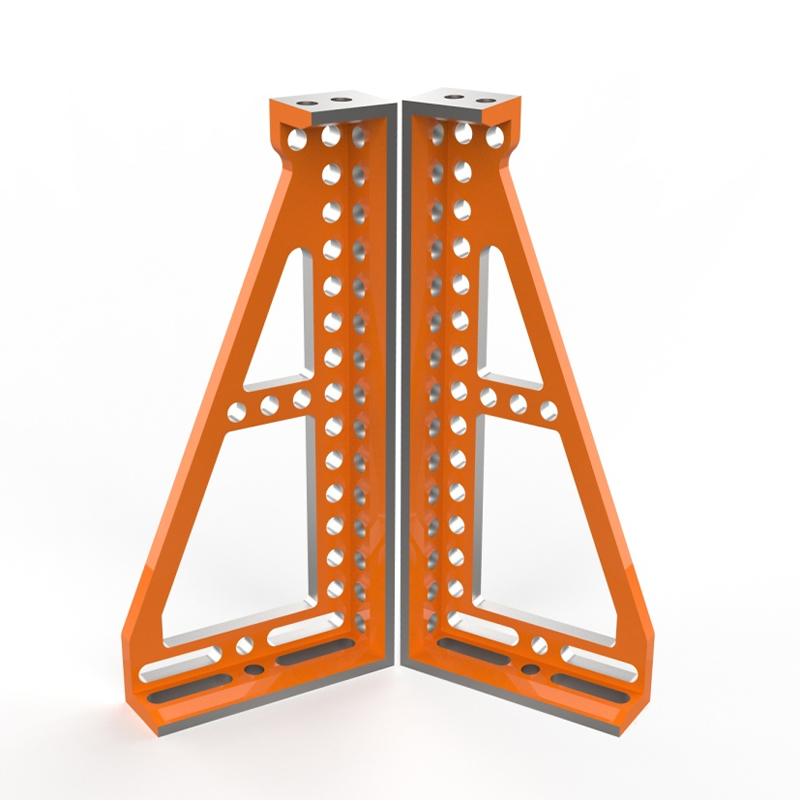
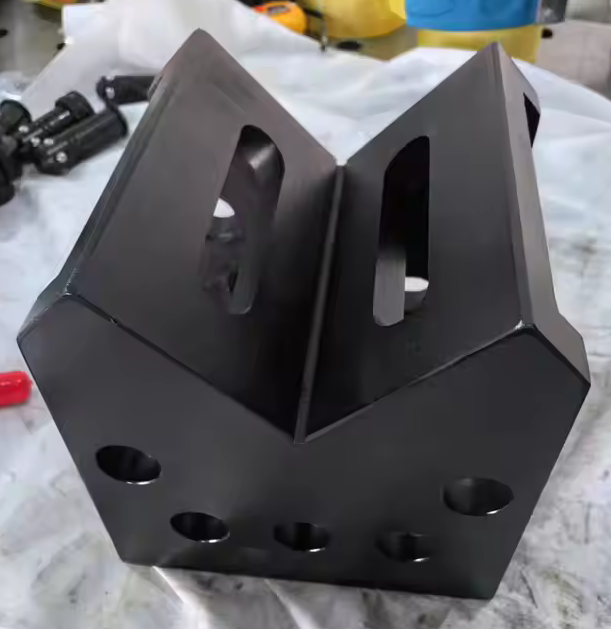
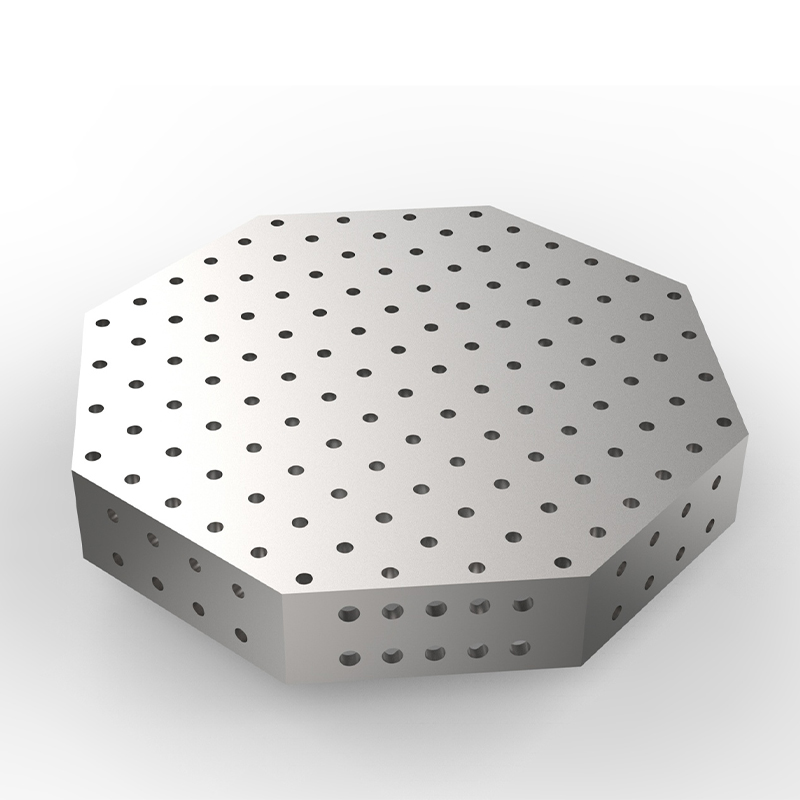
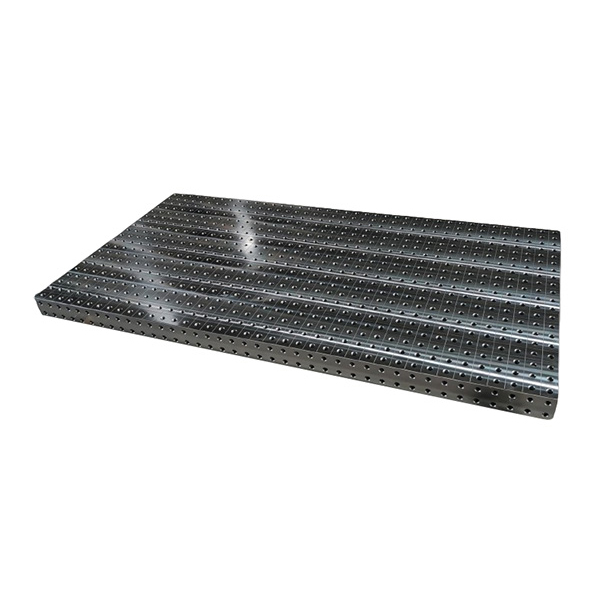
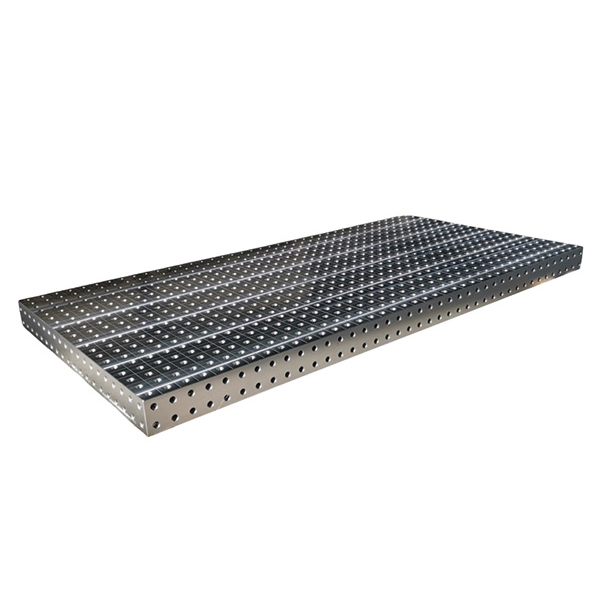
Granite fabrication tables for sale aren’t just heavy slabs on steel legs—they’re the silent foundation of precision metalwork. We’ve watched shops across North America and Europe replace warped steel benches with granite work surfaces—and within 90 days, their first-run part yield jumped an average of 12%. Why? Because thermal stability matters more than rigidity when you’re holding ±0.005″ tolerances on stamped brackets or laser-cut chassis panels.
Why Granite—Not Steel or Cast Iron—Wins in Real-World Fabrication
Most engineers assume “heavy-duty” means thick steel. But weight alone doesn’t stop vibration. Granite’s damping ratio is 3–5× higher than cast iron and 10× higher than structural steel. In our factory trials, a CNC-punched bracket mounted on a 3″ black granite table showed 68% less harmonic resonance at 120 Hz than the same setup on a 2″ welded steel base. That translates directly to cleaner cut edges, repeatable hole locations, and fewer rework cycles.
Granite also resists thermal drift. A typical fabrication shop sees floor temperature swings of ±8°C daily. Steel benches expand/contract at 12 µm/m·°C; granite moves just 0.5–0.8 µm/m·°C. Over a 2-meter surface, that’s a 0.24 mm shift in steel versus 0.02 mm in granite—enough to throw off a CMM probe or misalign a bending die.
We don’t recommend granite for high-impact drop zones—like forging stations or hydraulic press floors. But for inspection, assembly, jigging, and precision layout work? It’s non-negotiable. And yes—it handles routine sheet metal handling. Our test bench survived 1,200 cycles of dragging 12-gauge cold-rolled steel sheets across its surface with zero micro-scratches or edge chipping.
What Buyers Actually Need—Not What Brochures Promise
“Granite fabrication tables for sale” listings often hide critical specs. Here’s what separates functional workbenches from expensive paperweights:
Grade matters: Only ASTM C615 Grade A or B black granite (e.g., Absolute Black, Baltic Brown) delivers consistent density and low porosity. Commercial-grade “granite lookalikes” crack under sustained point loads. Flatness tolerance: Accept nothing looser than ±0.002″ over 1 meter—or ±0.008″ over 4 meters. Anything wider invites part distortion during clamping. Mounting integrity: Legs must bolt directly into the stone—not into epoxy-filled inserts. We’ve seen three tables fail within 18 months because manufacturers used adhesive-only anchor systems. Surface finish: 60–80 grit honed is optimal. Mirror polish reflects light but hides layout marks; too coarse a finish traps swarf and wears faster. Some buyers ask: “Can I weld on it?” No—you can’t. Granite cracks above 300°C. But you can mount welding jigs, ground clamps, and magnetic bases securely. Just keep heat sources >150 mm away.
Real-World Tradeoffs—No Sugarcoating
Granite isn’t magic. It has limits—and knowing them prevents costly mistakes.
First: shipping weight. A standard 2400 × 1200 × 76 mm table weighs ~1,450 kg. That demands reinforced loading docks, pallet jacks rated for 2,000 kg, and at least four trained personnel for unloading. We once saw a customer try to lift one with a forklift—snapped two tines and cracked the stone along a natural fissure line.
Second: installation time. Leveling granite isn’t like bolting down steel. You need adjustable leveling feet, a certified machinist’s level, and 2–4 hours minimum—even with a concrete floor. Uneven support causes stress fractures over time.
Third: cost. Yes, granite tables cost 2.3× more than heavy-gauge steel alternatives. But our clients report payback in 14–18 months through reduced scrap, faster first-article approval, and lower metrology recalibration frequency. One Tier-1 automotive supplier cut their CMM verification cycle from weekly to quarterly after switching.
How to Specify—Without Getting Burned
Don’t order “a granite table.” Order this:
Material: ASTM C615 Grade A black granite, quarried in India or Brazil (verified via mill certificate) Dimensions: Exact length × width × thickness, with tolerance ±0.5 mm Flatness: Verified per ASME B89.3.7, reported as max deviation over full surface Mounting: Four M16 threaded inserts, 40 mm deep, centered 100 mm from each corner Finish: 70-grit honed, edges eased to 1.5 mm radius Documentation: Calibration report, material certificate, and dimensional inspection sheet included Botou Haijun Metal Products Co., Ltd. builds custom granite fabrication tables to these exact specs—not as add-ons, but as engineered subsystems. We integrate them with our precision-stamped mounting brackets, stainless steel leveling feet, and anti-vibration isolation pads. Every table ships with traceable QC data—not just a sticker.
Final Word: Precision Starts Underfoot
A workbench doesn’t make parts. But a poorly controlled surface guarantees variability. Granite fabrication tables for sale deliver measurable ROI where repeatability, thermal stability, and long-term flatness define success—not just strength. If your process holds tighter than ±0.010″, tolerates no vibration-induced chatter, or requires decades of service without recalibration, granite isn’t optional. It’s the baseline.
Visit haijunmetals.com to request a dimensional spec sheet, review real-world case studies from agricultural machinery and construction equipment clients, or schedule a free DFM review for your next workbench integration project.