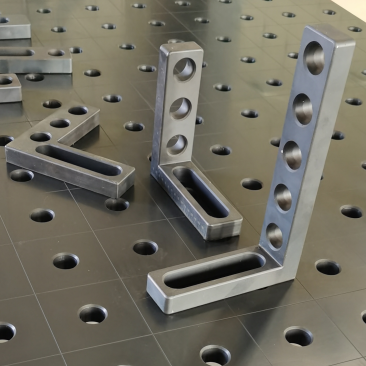
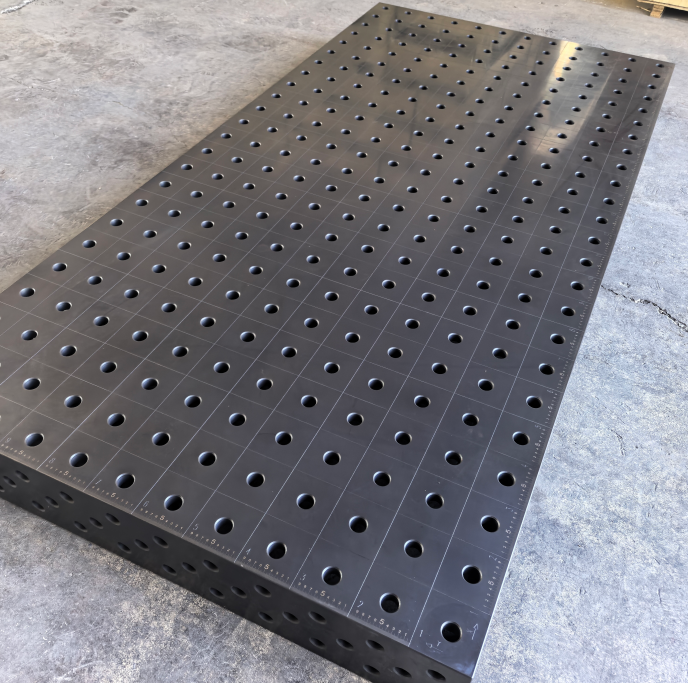
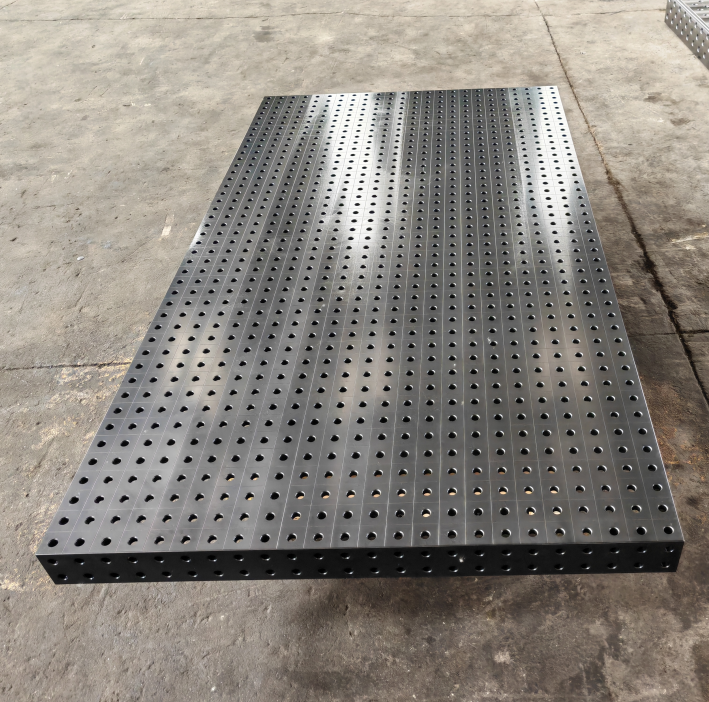
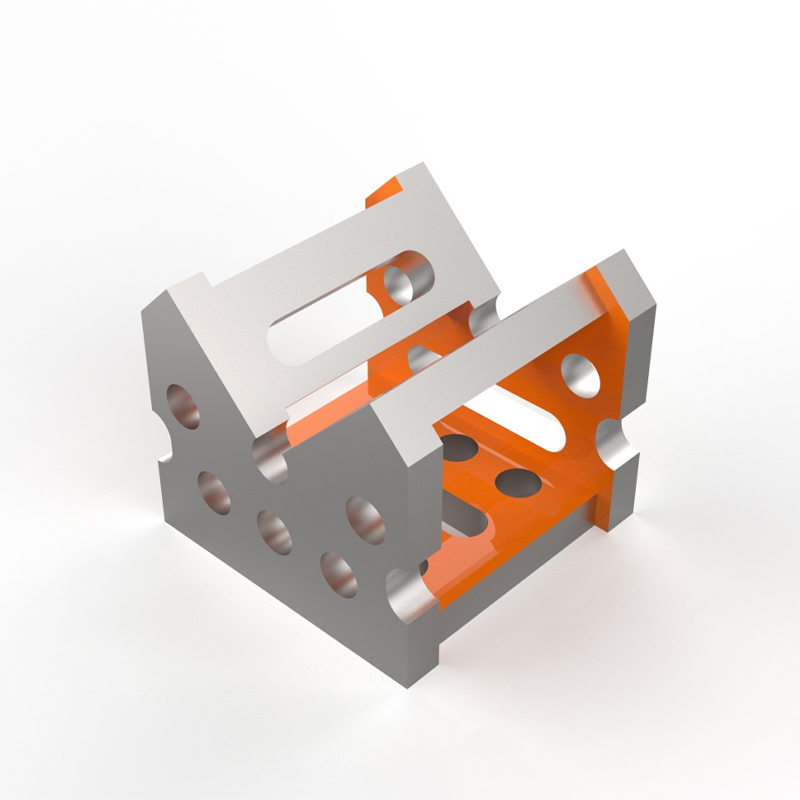
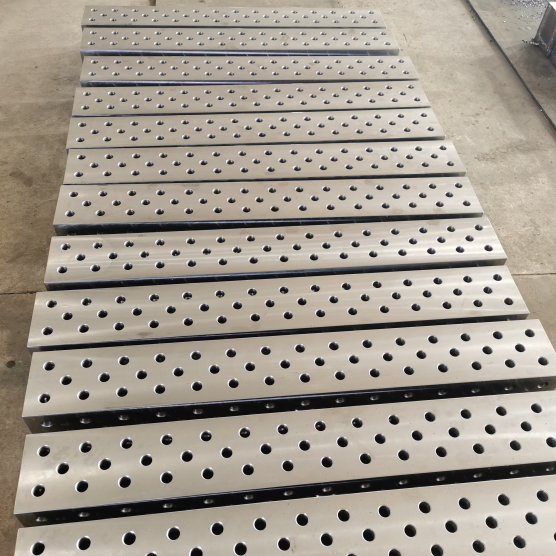
A welding table with holes is a precision workbench featuring a grid of threaded or unthreaded holes designed for modular clamping and fixturing. In 2026, prices for these tables from Chinese manufacturers typically range from $300 to $4,000 depending on size, material quality like cast iron or nitrided steel, and system compatibility such as D16 or D28. These platforms are essential for accurate fabrication, allowing welders to secure workpieces in any position using standard tooling.
Understanding the 2026 Market for Welding Table with Holes
The global demand for modular welding fixtures has surged as fabrication shops seek higher efficiency and repeatability. A welding table with holes serves as the backbone of modern manufacturing cells. Unlike traditional flat tables, these systems utilize a precise hole pattern to anchor clamps, stops, and angles instantly.
In 2026, the market is dominated by two primary standards: the D16 system for lighter duties and the D28 system for heavy industrial applications. Chinese manufacturers have significantly improved surface treatments, with nitriding becoming the standard for wear resistance. This evolution ensures that the table surface remains flat and durable even under intense thermal cycling.
Buyers today prioritize versatility. The ability to switch between 2D planar welding and complex 3D assembly on a single platform drives purchasing decisions. Current trends show a shift toward larger formats, such as 1200x2400mm, to accommodate motorcycle frames and large structural components without needing multiple setups.
Key Features Defining Modern Welding Tables
Modern tables are not just steel plates; they are engineered systems. The core feature is the hole spacing accuracy, often within ±0.1mm, ensuring that fixtures fit perfectly every time. Materials matter immensely. High-grade cast iron offers superior vibration damping, while alloy steel provides high tensile strength.
- Precision Hole Patterns: Uniform grids allow for infinite positioning possibilities.
- Surface Hardening: Nitrided surfaces resist spatter adhesion and scratching.
- Modular Compatibility: Works with thousands of off-the-shelf clamps and stops.
- Multi-Surface Access: Many 2026 models feature holes on five sides for 3D manipulation.
The integration of CNC drilling in manufacturing ensures that every hole is perpendicular to the surface. This geometric perfection is critical for squareness in final assemblies. Without this precision, the entire benefit of a modular system is lost.
D16 vs D28 Systems: Choosing the Right Hole Pattern
Selecting the correct hole system is the first step in buying a welding table with holes. The choice depends largely on the weight of the workpieces and the required clamping force. The industry generally categorizes these into D16 and D28 series.
The D16 system features 16mm holes with a 100mm pitch. It is ideal for light to medium-duty tasks, such as automotive repair, small furniture fabrication, and hobbyist projects. These tables are more affordable, often starting around $300 to $500 for standard sizes.
Conversely, the D28 system utilizes 28mm holes with a 100mm or 200mm pitch. Designed for heavy industry, these tables support massive loads and high-torque clamping. They are the go-to choice for shipbuilding, heavy machinery, and large-scale structural steel work. Prices for D28 tables typically start at $900 and can exceed $4,000 for large, custom configurations.
Performance Comparison of Hole Systems
| System Type | Hole Diameter | Typical Load Capacity | Best Application |
| D16 Series | 16mm | Light to Medium | Automotive, Hobby, Light Fabrication |
| D28 Series | 28mm | Heavy Duty | Industrial Machinery, Structural Steel, Shipbuilding |
| Custom Hybrid | Variable | Specialized | Unique Production Lines, Robotics |
When evaluating a welding table with holes, consider future scalability. While a D16 table might suffice for current needs, growing operations often require the robustness of D28. Some manufacturers offer hybrid solutions, though sticking to one standard simplifies tooling inventory.
The cost difference is significant but justified by longevity. A D28 table is an investment that can last decades with proper care. The thicker top plate, often 20mm or more, prevents warping under heavy welding heat, maintaining flatness over time.
Material Science: Cast Iron vs Nitrided Steel
The material composition directly impacts the performance and lifespan of a welding table with holes. In 2026, two materials dominate the premium market: HT300 Cast Iron and Nitrided Alloy Steel. Understanding their properties helps buyers make informed decisions.
Cast iron tables, specifically grade HT300, are renowned for their stability. The graphite flakes within the iron matrix absorb vibrations, which is crucial for precision machining and welding. This damping capability reduces noise and prevents distortion during cooling. However, cast iron is brittle and can crack if subjected to sudden impact.
Nitrided steel tables undergo a thermochemical process that hardens the surface layer. This creates an extremely tough shell that resists spatter, scratches, and corrosion. Steel offers higher tensile strength, making it less prone to cracking under shock loads. It is the preferred choice for dynamic environments where tables might be struck by heavy components.
Advantages of Surface Treatments
- Nitriding: Increases surface hardness up to 700-900 HV, preventing wear from sliding fixtures.
- Spatter Resistance: Treated surfaces allow welding slag to chip off easily, reducing cleanup time.
- Corrosion Protection: The hardened layer acts as a barrier against rust, extending service life.
- Flatness Retention: Heat treatment relieves internal stresses, ensuring the table stays flat.
Recent manufacturing updates in China have made nitriding more accessible. Previously a luxury feature, it is now standard on mid-range tables priced between $500 and $1,500. This shift represents a major value increase for buyers seeking durability without the premium price tag of imported European brands.
For users working with aluminum or stainless steel, the non-stick properties of nitrided surfaces are particularly beneficial. They prevent galvanic corrosion and ensure that delicate finishes on workpieces are not marred by rough table surfaces.
Price Analysis: What to Expect in 2026
Pricing for a welding table with holes varies widely based on specifications. As of early 2026, entry-level models from Chinese manufacturers start at approximately $300 for smaller D16 units. These are perfect for startups or home workshops needing basic modularity.
Mid-range options, typically featuring nitrided steel tops and sizes around 1200x2400mm, fall in the $500 to $1,500 range. This segment offers the best balance of cost and performance for most professional fabricators. These tables often include CNC-drilled holes and come with basic fixture kits.
High-end industrial tables, especially large D28 systems with five-sided machining, command prices from $900 up to $4,000 or more. Custom octagonal tables or those with specialized mounting surfaces can reach $10,000. The higher cost reflects the extensive machining time and material quality required.
Factors Influencing Cost
- Table Dimensions: Larger surfaces require more material and complex logistics.
- Hole Density: More holes mean more CNC drilling time, increasing production costs.
- Material Grade: HT300 iron and high-alloy steel are more expensive than mild steel.
- Surface Finish: Nitriding and precision grinding add significant processing steps.
- Accessories: Bundles including clamps, stops, and angles affect the total package price.
Shipping costs are a hidden factor. Since these tables are heavy, ocean freight rates significantly impact the landed cost. Buyers should request DDP (Delivered Duty Paid) quotes to avoid unexpected fees. Direct factory pricing often excludes these logistics, so clarity is essential.
Volume discounts are common. Purchasing multiple units for a production line can reduce the per-unit cost by 10-20%. Manufacturers are often willing to negotiate on large orders, especially for long-term partnerships.
Applications and Real-World Use Cases
The versatility of a welding table with holes makes it suitable for diverse industries. From aerospace component assembly to custom motorcycle fabrication, the ability to precisely locate parts is universal. The modular nature allows shops to adapt quickly to new projects.
In automotive restoration, these tables enable builders to recreate chassis geometries with exact precision. By using stops and angle brackets, a frame can be held perfectly square while tack welding. This eliminates the “pull” distortion common in free-hand welding.
Motorcycle frame fabrication is another key application. The complex angles required for modern bikes are easily managed with 3D tables. Fixtures can be mounted on the sides and top, holding tubes in space while the welder works. This capability has revolutionized custom bike building.
Industry-Specific Benefits
- Robotics Integration: Tables serve as repeatable bases for robotic welding cells.
- Prototyping: Rapid setup changes allow engineers to test multiple design iterations quickly.
- Education: Training centers use them to teach proper fixturing and geometry principles.
- Mass Production: Dedicated fixtures bolted to the table ensure every unit is identical.
Case studies show that shops switching to modular tables reduce setup times by up to 50%. The elimination of custom jigs for every job saves both money and floor space. Instead of storing hundreds of dedicated fixtures, a single table handles everything.
For pipeline and pressure vessel fabrication, the ability to rotate and clamp large cylinders is vital. Specialized V-blocks and chain clamps anchor securely into the hole grid, allowing safe positioning for circumferential welds. Safety and precision go hand in hand here.
How to Select the Best Manufacturer in China
China is the world’s largest producer of welding tables, offering competitive prices and improving quality. However, not all manufacturers are equal. Selecting the right partner requires due diligence to ensure you receive a genuine welding table with holes that meets international standards.
Look for manufacturers with ISO certifications and a track record of exports to Western markets. Request detailed photos of the machining process, specifically the CNC drilling and surface treatment stages. Video calls to inspect the factory floor can reveal the level of technological sophistication.
Ask about their quality control protocols. Do they check flatness with laser interferometers? Is the hole position verified with CMM (Coordinate Measuring Machine) equipment? Reputable factories will provide inspection reports before shipment.
Checklist for Vendor Verification
- Certifications: Verify ISO 9001 and specific material test reports.
- Sample Policy: Can they provide a small sample piece or reference customer?
- Lead Time: Confirm realistic production and shipping timelines.
- After-Sales Support: Check warranty terms and availability of replacement parts.
- Communication: Assess responsiveness and technical knowledge of the sales team.
Beware of prices that seem too good to be true. Extremely low costs often indicate inferior steel, lack of heat treatment, or poor hole accuracy. A table that warps after the first use is a false economy. Investing in a reputable brand ensures long-term reliability.
Customization is a strong suit of Chinese manufacturers. If you need a specific size, hole pattern, or cutout for machinery integration, most factories can accommodate these requests. Clear technical drawings are essential to avoid misunderstandings during production.
Maintenance and Longevity Tips
To maximize the lifespan of your welding table with holes, proper maintenance is essential. Despite their rugged construction, these tables are precision tools. Neglect can lead to rust, clogged holes, and loss of flatness.
Regular cleaning is the first rule. Remove spatter immediately after welding using a scraper or anti-spatter spray. Allowing slag to build up can damage the hole threads and interfere with fixture seating. A wire brush should be used gently to avoid scratching the nitrided surface.
Lubrication of the holes is critical, especially in humid environments. Apply a light coat of machine oil to the threads periodically to prevent seizing. If a hole becomes clogged, use a tap of the correct size to clean it out carefully. Never force a fixture into a dirty hole.
Best Practices for Care
- Cover When Not in Use: Protect the surface from dust and moisture with a fitted cover.
- Avoid Impact: Do not drop heavy objects onto the table to prevent dents or cracks.
- Level Regularly: Check the table level and adjust feet to maintain flatness over time.
- Store Fixtures Properly: Keep clamps and bolts organized to prevent loss and damage.
If the table is used outdoors or in a corrosive environment, consider applying a specialized protective coating. Some manufacturers offer galvanized or painted options, though these may interfere with electrical grounding for welding. Always consult the manufacturer before applying coatings.
Periodic re-calibration may be necessary for high-precision work. Using a granite straightedge and feeler gauges, check the flatness annually. If deviations are found, professional resurfacing might be required, though high-quality tables rarely need this.
Future Trends in Welding Fixture Technology
The future of the welding table with holes lies in smart integration and advanced materials. As Industry 4.0 progresses, we expect to see tables equipped with sensors to monitor load distribution and thermal expansion in real-time.
New composite materials are being tested to combine the damping properties of cast iron with the strength of steel. These hybrids could offer the best of both worlds, providing ultra-stable platforms for next-generation laser welding and additive manufacturing processes.
Automation compatibility will become standard. Tables will feature built-in mounting points for collaborative robots (cobots) and automated guided vehicles (AGVs). This seamless integration will allow for flexible manufacturing cells that can reconfigure themselves based on production needs.
Emerging Innovations
- Smart Clamping: Pneumatic and electric clamps controlled via software for rapid changeovers.
- Self-Cleaning Surfaces: Coatings that repel spatter without chemical sprays.
- Modular Legs: Adjustable support systems that adapt to uneven factory floors automatically.
- Digital Twins: Virtual models of the table setup for simulation before physical welding.
Sustainability is also driving innovation. Manufacturers are exploring recycled steel alloys and energy-efficient hardening processes. The goal is to reduce the carbon footprint of production while maintaining the high performance expected by global industries.
As these technologies mature, the gap between entry-level and premium tables will narrow. Features once reserved for high-end systems will trickle down to affordable models, democratizing access to precision fabrication tools for small businesses worldwide.
Frequently Asked Questions
Many buyers have specific questions when purchasing a welding table with holes. Addressing these common concerns helps clarify the decision-making process and ensures satisfaction with the final product.
Q: Can I mix D16 and D28 fixtures on one table?
A: Generally, no. The hole sizes and spacings are incompatible. You must choose one system per table, though some users maintain separate tables for different tasks.
Q: How thick should the table top be?
A: For D16, 10-12mm is standard. For D28, 16-20mm or thicker is recommended to handle heavy loads and prevent warping.
Q: Is assembly difficult?
A: Most tables ship fully assembled or with legs requiring simple bolting. The heavy top may require a forklift or crane for positioning.
Q: Do I need special tools for the holes?
A: Yes, you need metric hex keys and specific wrenches for the clamping bolts. These usually come with the fixture kit.
Q: What is the lead time for custom orders?
A: Standard sizes ship quickly, often within weeks. Custom dimensions or hole patterns may take 4-8 weeks depending on factory workload.
Conclusion: Making the Right Investment
Investing in a welding table with holes is a strategic move for any fabrication business aiming for precision and efficiency. The 2026 market offers unprecedented value, with Chinese manufacturers delivering high-quality nitrided and cast iron tables at competitive prices.
Whether you choose a D16 system for light duty or a robust D28 platform for heavy industry, the benefits of modularity are clear. Reduced setup times, improved accuracy, and enhanced safety translate directly to higher profitability and better product quality.
By understanding the nuances of materials, hole patterns, and maintenance, buyers can select a table that serves as the cornerstone of their workshop for decades. As technology evolves, these tables will remain central to the art and science of metal fabrication.