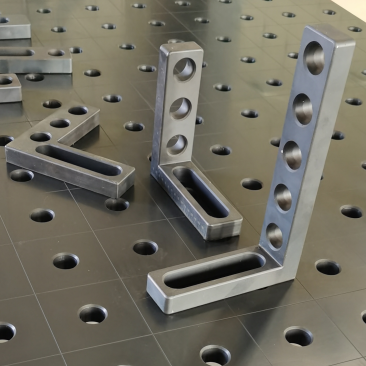
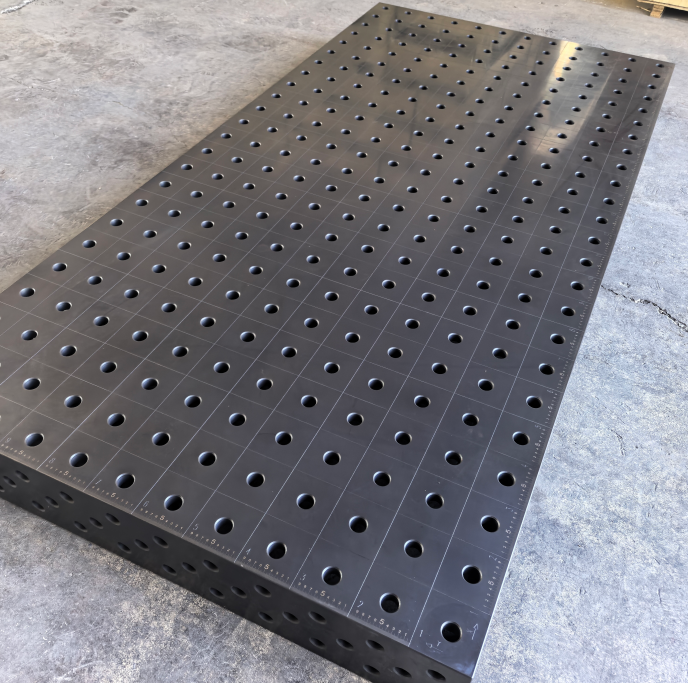
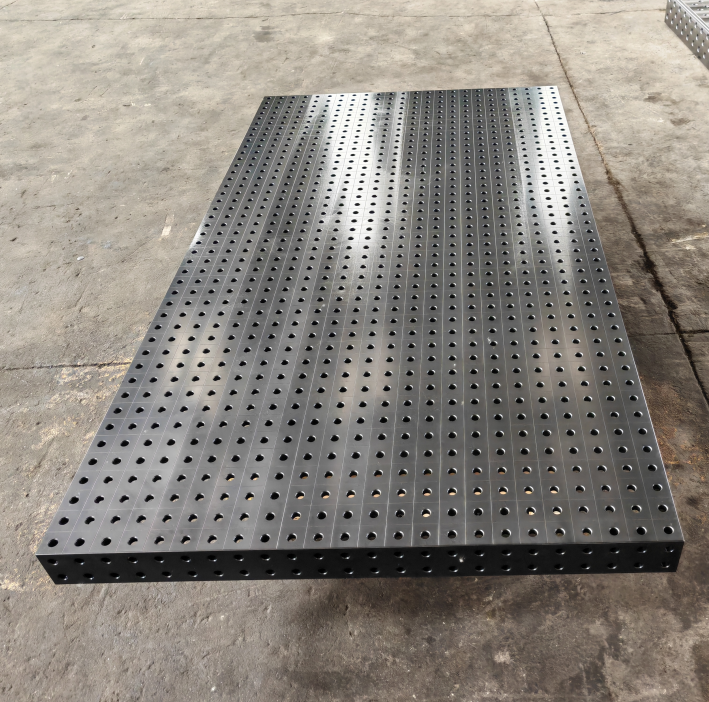
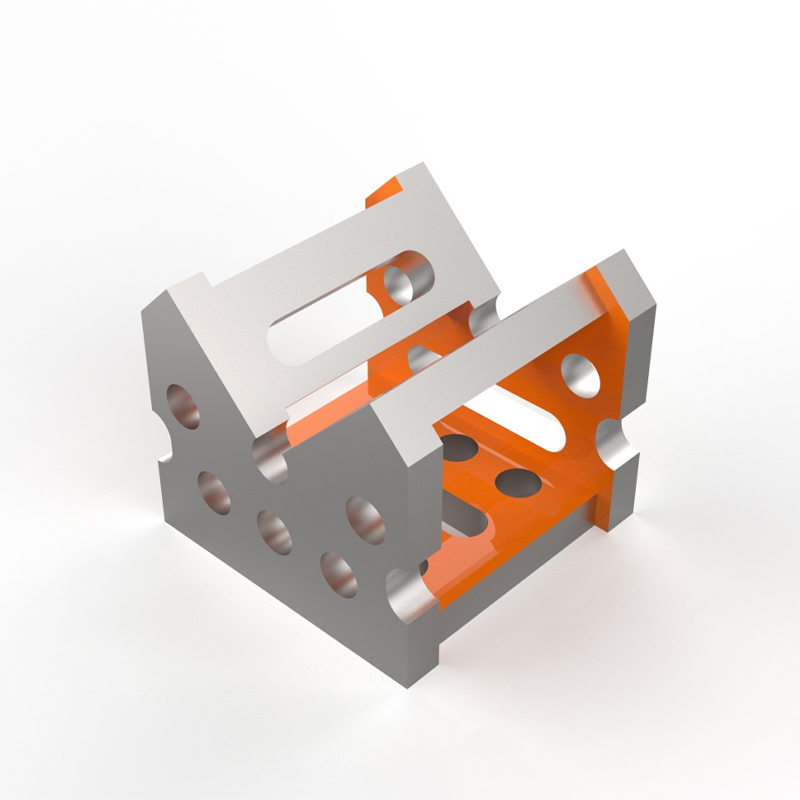
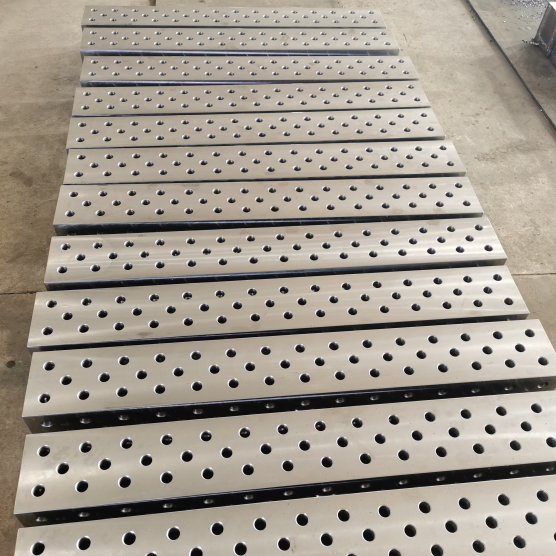
Fab table clamps are precision-engineered fastening devices designed to secure workpieces on fabrication tables during welding, assembly, and machining processes. These essential tools ensure stability, accuracy, and safety in metalworking environments by preventing movement under high stress. For manufacturers and fabricators seeking the best price on fab table clamps in 2026, understanding specifications, material grades, and application suitability is critical for optimizing workflow efficiency.
Understanding Fab Table Clamps: Core Functions and Design
Fab table clamps serve as the backbone of modern fixturing systems. Unlike standard C-clamps, they are specifically engineered to interface with the standardized hole patterns found on professional fabrication tables. Their primary function is to provide rigid holding power without damaging the workpiece or the table surface.
The design typically incorporates a hardened steel body with a quick-action mechanism. This allows operators to rapidly position and lock components. In 2026, the market has shifted towards modular designs that support complex 3D geometries. Precision is the key differentiator; high-quality clamps maintain parallelism and perpendicularity within tight tolerances.
- Rigid Holding: Prevents shifting during high-heat welding or heavy machining.
- Modularity: Compatible with standard 16mm or 28mm fixture table hole grids.
- Durability: Constructed from heat-treated alloy steel to resist deformation.
When selecting clamps, buyers must consider the clamp’s reach, throat depth, and maximum clamping force. These factors directly influence the range of projects a shop can undertake efficiently.
Material Standards and Heat Treatment
The longevity of fab table clamps depends heavily on material quality. Industry leaders in 2026 predominantly use S45C or higher-grade alloy steels. These materials undergo specific heat treatment processes to achieve a hardness range of HRC 40-45.
This hardness level offers a balance between strength and toughness. If a clamp is too hard, it may become brittle and crack under impact. If too soft, the threads or jaws will deform over time. Surface treatments such as black oxide or electro-galvanizing are also standard to prevent rust in humid workshop environments.
Recent trends show an increase in stainless steel options for specialized industries like food processing equipment manufacturing or marine applications where corrosion resistance is paramount. However, for general fabrication, hardened carbon steel remains the cost-effective standard.
Types of Fab Table Clamps for Specific Applications
The term “fab table clamps” encompasses a wide variety of tooling. Choosing the right type is essential for specific tasks. The market in 2026 offers specialized variants designed for distinct holding challenges.
Hold-Down Clamps and Step Blocks
Hold-down clamps are the most common type used for flattening sheet metal or securing plates. They utilize a step block system to apply downward force. The lever action multiplies the input force, ensuring the workpiece sits flush against the table.
These are indispensable for welding large assemblies where warping is a concern. By clamping the material firmly at multiple points, fabricators can minimize distortion caused by thermal expansion. Modern versions feature swivel pads that adjust to uneven surfaces automatically.
Edge Clamps and Corner Clamps
Edge clamps are designed to grip the vertical sides of a workpiece. They are crucial for aligning two plates at a perfect 90-degree angle before tack welding. In 2026, improved designs allow for fine-tuning adjustments via micrometer-style screws.
Corner clamps, often used in frame building, hold two or three pieces together at precise angles. These tools significantly reduce setup time for box sections and structural frames. Their ability to self-center makes them ideal for repetitive production runs.
Toggle Clamps for Rapid Cycling
For high-volume production, toggle clamps offer the fastest operation. Once the mechanism passes the center point, it locks mechanically. This allows for one-handed operation, freeing the other hand to position the part.
While not always as rigid as screw-type clamps for heavy welding, they are perfect for light assembly, drilling, or routing tasks on fab tables. Their speed advantage translates directly into higher throughput rates.
Key Specifications to Evaluate Before Buying
When searching for the best price on fab table clamps, buyers must look beyond the sticker price. Technical specifications determine whether a clamp will perform reliably in a professional setting. Ignoring these details can lead to premature failure and compromised project quality.
Clamping Force and Capacity
Clamping force is usually measured in pounds (lbs) or Newtons (N). A typical heavy-duty fab table clamp should exert several thousand pounds of force. This ensures the part does not slip even under significant lateral loads.
Capacity refers to the maximum thickness of the material the clamp can accommodate. Users should verify both the jaw opening and the throat depth. A clamp with insufficient throat depth cannot reach the center of wider workpieces, limiting its utility.
Compatibility with Table Hole Patterns
Fabrication tables come with standardized hole patterns, commonly 16mm x 16mm or 28mm x 28mm grids. It is vital to ensure the clamp’s mounting pin matches the table’s hole size. Using an undersized pin introduces play, reducing accuracy.
Some manufacturers offer adaptable bases with interchangeable pins. This versatility allows a single set of clamps to be used across different tables, providing better long-term value for shops with mixed equipment.
Tolerance and Precision Ratings
High-end clamps specify their positional tolerance. For precision aerospace or automotive prototyping, tolerances within ±0.1mm are often required. Lower-cost options may have looser tolerances suitable for general structural steelwork but inadequate for fine instrumentation.
Checking the flatness of the clamp base is also important. A warped base will not sit correctly on the table, causing the entire setup to be out of square. Reputable suppliers provide certification data for these metrics.
2026 Market Trends: Innovation in Clamping Technology
The fabrication industry is evolving, and clamping technology is keeping pace. In 2026, several key trends are shaping the market for fab table clamps. These innovations focus on speed, safety, and integration with digital workflows.
Integration with Automated Systems
As CNC integration becomes more common in fabrication shops, clamps are being designed with automation in mind. Low-profile designs prevent interference with robotic arms or automated welding heads. Some advanced clamps feature sensors to confirm locking status, feeding data back to the central control system.
This connectivity enhances safety by preventing machine operation if a workpiece is not securely clamped. It also aids in quality control by logging clamping forces for each job, creating a traceable record for compliance audits.
Ergonomic Enhancements
Worker safety and comfort are top priorities. New ergonomic handles reduce the torque required to tighten clamps, minimizing strain on operators’ wrists and hands. Soft-grip coatings and optimized lever lengths make repetitive clamping less fatiguing.
Quick-release mechanisms have also been refined. The latest models allow for rapid adjustment without fully unthreading the screw, saving seconds on every cycle. Over a full shift, these small savings accumulate into significant productivity gains.
Sustainable Manufacturing Practices
Environmental considerations are influencing production methods. Leading Chinese manufacturers are adopting greener heat treatment processes and using recyclable packaging. There is also a push towards extending product lifecycles through modular repairability.
Instead of discarding a clamp when a single component wears out, users can now replace just the jaw pads or threaded rods. This approach reduces waste and lowers the total cost of ownership, aligning with global sustainability goals.
Comparative Analysis: Top Clamping Solutions
To help buyers make informed decisions, the following table compares common types of fab table clamps available in the 2026 market. This comparison highlights features, strengths, and ideal use cases.
| Clamp Type | Key Features | Ideal Application |
| Standard Hold-Down | High force, adjustable height, robust build | General welding, plate leveling, heavy structural work |
| Precision Edge Clamp | Fine adjustment screw, hardened jaws, low profile | Aerospace prototyping, precision alignment, thin sheet metal |
| Quick-Action Toggle | Rapid lock/unlock, one-handed operation, moderate force | High-volume assembly, drilling jigs, light fabrication |
| Universal Angle Clamp | Swivel base, multi-angle locking, versatile mounting | Complex geometry assembly, pipe fitting, custom furniture |
| Hydraulic/Pneumatic | Automated actuation, consistent pressure, remote control | CNC integration, robotic cells, hazardous environments |
This comparison illustrates that no single clamp fits all needs. A well-equipped shop will typically maintain a mix of these types to handle diverse projects efficiently. Investing in a varied toolkit ensures readiness for any fabrication challenge.
Step-by-Step Guide to Selecting the Right Clamps
Choosing the correct fab table clamps involves a systematic evaluation of your specific requirements. Following these steps will help you avoid common pitfalls and ensure you get the best value for your investment.
- Step 1: Assess Your Workpiece Dimensions: Determine the typical size, thickness, and material of the parts you fabricate. This dictates the required throat depth and clamping force.
- Step 2: Identify Table Compatibility: Check your fabrication table’s hole pattern size and spacing. Ensure the clamps you choose have matching mounting pins or adaptable bases.
- Step 3: Define Precision Needs: Evaluate the tolerance requirements of your projects. High-precision work demands clamps with tighter manufacturing tolerances and finer adjustment capabilities.
- Step 4: Consider Workflow Speed: If you run high-volume batches, prioritize quick-action or toggle clamps. For custom, one-off jobs, versatility and adjustability may be more important than speed.
- Step 5: Evaluate Budget vs. Longevity: While initial cost is a factor, consider the lifespan of the tool. Higher-quality hardened steel clamps may cost more upfront but last significantly longer, offering better long-term ROI.
By methodically working through these steps, purchasers can narrow down the vast array of options to find the perfect solution for their specific operational needs.
Advantages and Disadvantages of Different Clamping Strategies
Every clamping strategy has its trade-offs. Understanding the pros and cons helps in balancing cost, speed, and quality.
Manual Screw Clamps
- Advantages: Extremely high holding force, excellent precision with fine threads, generally lower cost, no external power source needed.
- Disadvantages: Slower to operate, requires two hands sometimes, potential for operator fatigue during repetitive use.
Toggle and Quick-Release Clamps
- Advantages: Very fast operation, one-handed use, consistent clamping pressure once set, reduces cycle time significantly.
- Disadvantages: Lower maximum holding force compared to screw types, limited adjustability range, mechanical linkage can wear over time.
Powered (Hydraulic/Pneumatic) Clamps
- Advantages: Fully automatable, consistent force application, enhances safety in dangerous environments, integrates with smart factory systems.
- Disadvantages: High initial cost, requires infrastructure (air lines, hydraulic pumps), more complex maintenance, less portable.
Selecting the right strategy often involves a hybrid approach. For instance, using toggle clamps for initial positioning and screw clamps for final high-force locking can optimize both speed and stability.
Sourcing from China: Quality and Pricing Insights
China remains the global hub for manufacturing fab table clamps. In 2026, the landscape offers a wide spectrum of quality, from budget-friendly generic options to premium brands competing with Western counterparts. Navigating this market requires diligence.
Price Factors and Cost Drivers
The price of fab table clamps is influenced by raw material costs, heat treatment quality, and machining precision. Bulk purchasing directly from manufacturers often yields the best price. However, extremely low prices can indicate inferior materials or skipped quality control steps.
Buyers should request samples to test hardness and fitment before placing large orders. Verifying certifications such as ISO 9001 ensures the manufacturer adheres to international quality management standards. Transparent communication about specifications is key to avoiding mismatches.
Verifying Supplier Credibility
When sourcing online, look for platform-verified suppliers with a track record of exports. Check for customer reviews specifically mentioning durability and precision. Reputable manufacturers will provide detailed technical drawings and material test reports upon request.
Trade assurance programs offered by major B2B platforms provide an additional layer of security. These programs protect payments until the goods are received and verified to match the order description. This is particularly important for international transactions.
Customization Opportunities
Many Chinese manufacturers offer customization services. If your application requires non-standard jaw shapes, special coatings, or unique mounting configurations, discuss this early in the process. Custom tooling can enhance efficiency for niche applications but may involve minimum order quantities (MOQ).
Collaborating closely with the supplier’s engineering team can lead to innovative solutions tailored to your specific workflow. This partnership approach often yields better results than simply buying off-the-shelf products.
Real-World Applications and Case Studies
Fab table clamps are versatile tools used across various industries. Examining real-world applications highlights their critical role in modern manufacturing.
Automotive Prototyping
In automotive prototyping shops, precision is paramount. Engineers use high-tolerance edge clamps to assemble chassis components for testing. The ability to quickly reconfigure fixtures allows for rapid iteration of designs. Clamps ensure that weldments remain dimensionally accurate, which is crucial for fitment checks and crash test simulations.
Aerospace Component Assembly
The aerospace sector demands the highest levels of accuracy and documentation. Fabrication tables equipped with specialized clamps are used to assemble wing ribs and fuselage sections. Here, clamps must not only hold parts securely but also avoid inducing stress concentrations that could compromise material integrity. Stainless steel clamps are often preferred to prevent contamination.
Custom Furniture and Architectural Metalwork
Artisans and custom fabricators rely on versatile clamping systems to create intricate metal furniture and architectural features. The modularity of fab table clamps allows for the creation of complex jigs for bending and welding tubular structures. This flexibility enables small shops to compete with larger manufacturers by offering highly customized products.
Electronics Enclosure Manufacturing
For electronics assembly, thin sheet metal enclosures require careful handling to avoid denting. Soft-jaw clamps or those with protective pads are used to secure chassis panels during welding and riveting. The stability provided by these clamps ensures that mounting holes align perfectly, facilitating easy installation of electronic components.
Maintenance and Care for Longevity
To maximize the lifespan of fab table clamps, proper maintenance is essential. Regular care prevents wear and ensures consistent performance over years of use.
- Clean After Use: Remove sparks, spatter, and metal shavings immediately. Debris can damage threads and mating surfaces.
- Lubricate Moving Parts: Apply a light machine oil to threads and pivot points regularly. This prevents rust and ensures smooth operation.
- Inspect for Damage: Periodically check for cracks, bent levers, or worn jaws. Replace damaged components promptly to avoid accidents.
- Store Properly: Keep clamps in a dry environment. Hanging them on organized racks prevents them from knocking against each other and getting damaged.
A well-maintained clamp retains its precision and holding power. Neglecting maintenance can lead to premature failure, resulting in costly downtime and potential safety hazards.
Future Outlook: The Evolution of Fixturing
Looking beyond 2026, the future of fab table clamps points towards greater intelligence and adaptability. Smart clamps with embedded sensors will become more commonplace, providing real-time feedback on clamping force and part position.
Advanced materials, such as composites or new super-alloys, may offer lighter weight without sacrificing strength. Additionally, the integration of augmented reality (AR) could guide operators in optimal clamp placement for complex assemblies, further reducing setup times.
As manufacturing becomes more decentralized and flexible, the demand for portable, easy-to-use, yet highly precise clamping solutions will continue to grow. Manufacturers who innovate in these areas will lead the market.
Conclusion: Securing the Best Value in 2026
Investing in high-quality fab table clamps is a strategic decision that impacts productivity, safety, and product quality. In 2026, the market offers a diverse range of options catering to every need, from heavy industrial welding to delicate prototyping.
By understanding the technical specifications, recognizing the latest trends, and sourcing from reputable manufacturers, buyers can secure the best price without compromising on performance. Whether you are upgrading an existing workshop or equipping a new facility, choosing the right clamping solutions is fundamental to success.
Remember that the cheapest option is not always the most economical in the long run. Prioritize durability, precision, and compatibility to ensure your fabrication processes run smoothly and efficiently for years to come. With the right tools in hand, the possibilities for innovation and growth in metal fabrication are limitless.