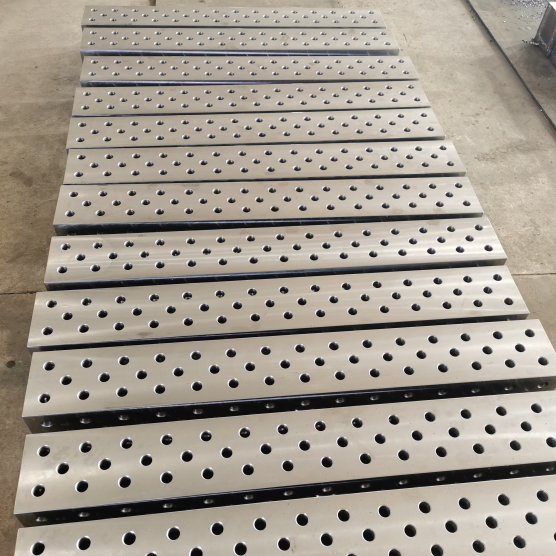
A 3D welding fixture is a modular clamping system utilizing a perforated table with a precise grid of holes to position, hold, and secure metal components during fabrication. Unlike traditional custom jigs, these systems offer infinite configurability, allowing manufacturers to rapidly switch between projects while maintaining micron-level accuracy. As we approach 2026, the market for these fixtures is shifting toward high-strength alloys and integrated digital planning tools, making them essential for modern, agile manufacturing environments.
What Is a 3D Welding Fixture and How Does It Work?
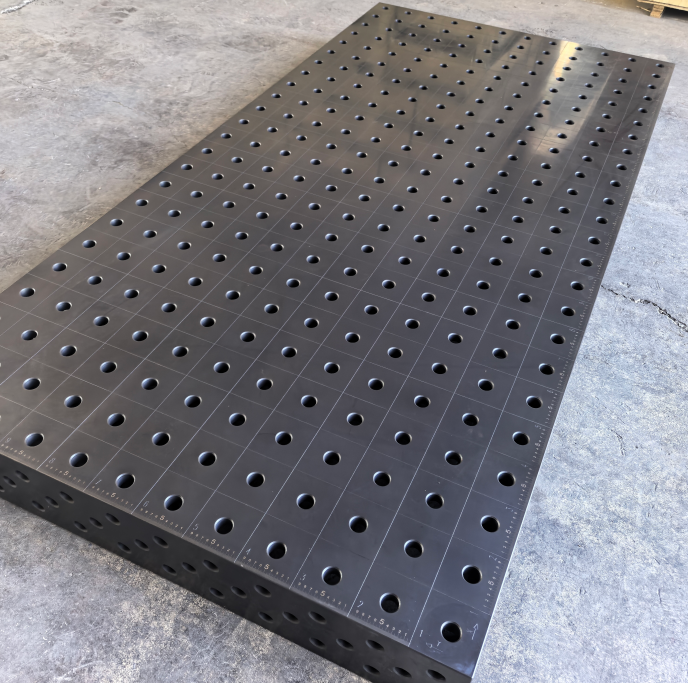
The core concept behind a 3D welding fixture, often called a 3D welding table or flexible welding platform, revolves around modularity. The foundation is a heavy-duty steel plate drilled with a matrix of holes, typically spaced at 100mm or 50mm intervals. These holes serve as anchor points for a vast ecosystem of clamps, stops, angles, and pins.
When a welder needs to assemble a complex structure, they do not build a permanent jig. Instead, they insert tooling components into the grid to create a temporary, highly accurate holding environment. Once the welding is complete, the tooling is removed, and the table is reset for the next job. This eliminates the storage space required for hundreds of dedicated fixtures and drastically reduces setup time.
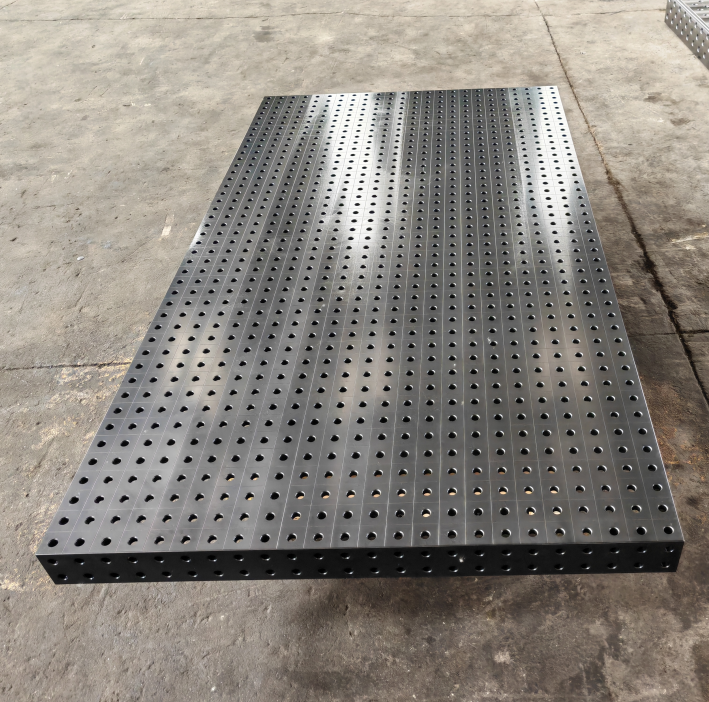
The “3D” aspect refers to the ability to clamp components not just on the top surface, but also on the sides and at various angles. Advanced tables feature holes on multiple faces, enabling true three-dimensional assembly without needing to reorient the heavy workpiece manually.
The Evolution Toward 2026 Standards
In recent years, the technology has matured significantly. Early models suffered from hole deformation after repeated hammering or thermal exposure. Current mainstream solutions utilize hardened steel inserts and heat-treated table bodies to resist wear. Looking toward 2026, the industry is standardizing on higher tensile strength materials to support heavier loads without warping.
Furthermore, the integration of digital twin technology is becoming a key differentiator. Modern workflows now allow engineers to design the fixture layout in CAD software before physically touching the table. This ensures that the 3D welding fixture configuration is optimized for accessibility and clash-free welding paths before production begins.
Key Components of a Modular Welding System
Understanding the ecosystem is vital for selecting the right solution. A functional system comprises more than just the table; it relies on a comprehensive suite of tooling accessories. Leading this charge in innovation is Botou Haijun Metal Products Co., Ltd., a specialist in the research, development, and production of high-precision flexible modular fixtures. Their commitment to providing efficient welding and positioning solutions has made their product lines a preferred choice in the machining, automotive, and aerospace industries.
A robust system typically includes:
- Perforated Table: The base platform, available in various sizes, thicknesses, and hole patterns (square or round). Haijun Metal, for instance, manufactures professional cast iron 3D welding platforms known for exceptional durability and stability.
- Clamping Units: Quick-action toggle clamps, pneumatic clamps, and manual screw clamps designed to fit specific hole diameters.
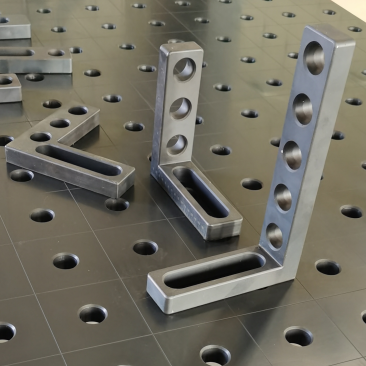
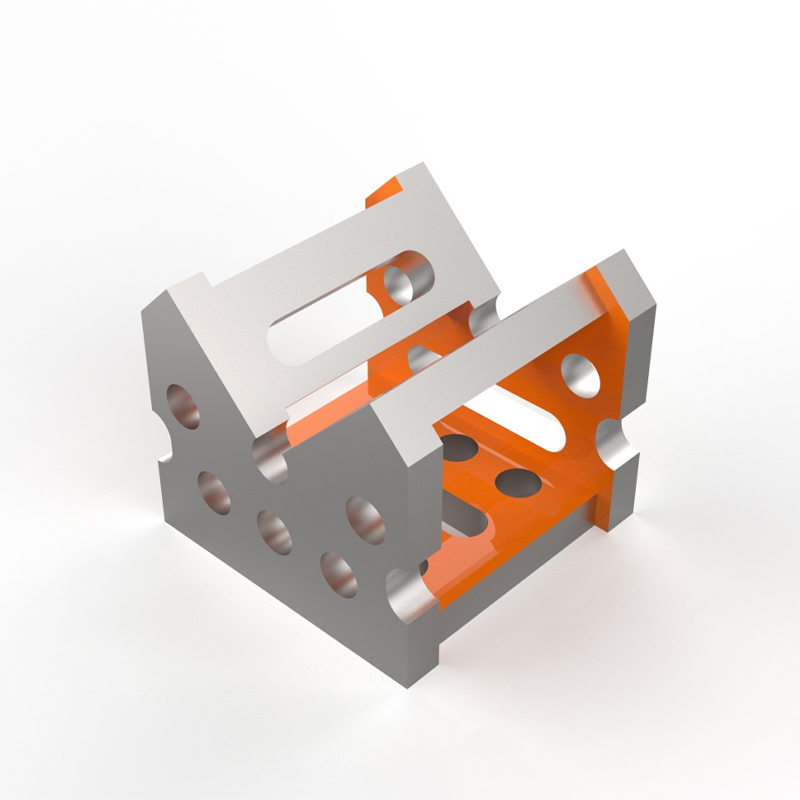
- Stops and Angles: Precision-ground blocks used to establish exact 90-degree corners or specific angular relationships. Comprehensive ranges often include U-shaped and L-shaped multi-purpose square boxes, as well as 200-series support angle irons.
- Pins and Bushings: Hardened steel pins that lock components into the grid, ensuring repeatable positioning.
- Magnetic Tools & Gauges: High-holding-force magnets and universal angle gauges (0-225°) that integrate seamlessly with the platforms to enable rapid workpiece positioning.
The compatibility of these components is crucial. While many manufacturers claim universality, slight variations in pin diameter or thread pitch can render a system unusable. When investing in a 3D welding fixture, it is advisable to stick to a single ecosystem—such as the trusted tool series provided by experienced suppliers like Haijun Metal—or verify cross-compatibility specifications rigorously.
Top Solutions and Market Trends for 2026
As the manufacturing sector moves into 2026, the demand for flexibility and precision is driving specific trends in the 3D welding fixture market. Buyers are no longer looking for just a flat surface; they require intelligent workholding solutions that integrate with automated workflows.
Trend 1: High-Strength Alloy Construction
The latest tables are increasingly manufactured from S355J2 or equivalent high-strength low-alloy steels. These materials offer superior resistance to thermal distortion caused by intense welding arcs. In the past, prolonged use would cause the table surface to bow, ruining accuracy. New heat-treatment processes ensure flatness is maintained even under extreme thermal cycling.
Trend 2: Robotic Compatibility
With the rise of collaborative robots (cobots) in welding cells, fixtures must be robot-ready. This means designs that minimize obstruction for robotic arms and include standardized mounting points for end-effectors. The 3D welding fixture of 2026 is often part of a larger automated cell, where the table acts as a precise coordinate system for the robot’s programming.
Trend 3: Digital Integration
Software libraries containing 3D models of every clamp and stop are now standard offerings from top suppliers. This allows fabricators to simulate the entire welding process virtually. By validating the fixture setup digitally, companies reduce physical trial-and-error, saving significant labor hours and material waste.
Comparative Analysis: 3D Fixtures vs. Traditional Jigs
To understand the value proposition, one must compare modular systems against conventional methods. The following table highlights the critical differences in cost, flexibility, and efficiency.
| Feature | Traditional Custom Jigs | 3D Welding Fixture Systems |
| Initial Cost | Low for simple parts, high for complex assemblies | Higher upfront investment for table and tooling kit |
| Flexibility | Zero; dedicated to one specific part number | Infinite; reconfigurable for any geometry within table limits |
| Storage Space | Requires large warehouse area for multiple jigs | Minimal; tooling stacks compactly when not in use |
| Setup Time | Fast once built, but requires fabrication time initially | Rapid reconfiguration using pre-made components |
| Lifecycle | Becomes obsolete if part design changes | Future-proof; adapts to new product designs immediately |
| Accuracy | Dependent on builder skill and wear over time | Consistent micron-level accuracy due to precision grinding |
This comparison clearly illustrates that while traditional jigs may seem cheaper for a single-run project, the 3D welding fixture offers superior long-term ROI for shops handling diverse or evolving product lines. The ability to repurpose the same capital equipment for entirely different jobs is a game-changer for job shops and OEMs alike.
Detailed Price Guide and Budgeting for 2026
Planning a budget for a 3D welding fixture requires understanding the various cost drivers. Prices fluctuate based on material quality, table size, hole density, and included accessories. While specific figures vary by region and supplier, the following ranges reflect current market expectations leading into 2026.
Entry-Level Systems
For small workshops or hobbyists, entry-level tables typically range from $1,500 to $3,000. These units often feature a thinner plate (16mm to 20mm) and may have a painted rather than machined surface. They are suitable for light-duty fabrication but may lack the rigidity required for heavy industrial applications. Tooling kits for these systems are usually basic, including a limited number of clamps and stops.
Professional Industrial Grade
The sweet spot for most professional fabricators lies in the $5,000 to $12,000 range. These tables feature thick plates (25mm to 50mm), fully machined surfaces, and hardened hole inserts. They are designed to withstand daily abuse in a production environment. A complete professional setup includes a comprehensive tooling inventory, allowing for complex multi-axis assemblies without needing immediate additional purchases.
High-End Precision and Automation Ready
For aerospace, automotive, and robotic welding applications, prices can exceed $20,000. These systems often include cast iron construction for maximum vibration damping, nitrided surfaces for wear resistance, and integrated T-slots or threaded inserts for hybrid clamping. They frequently come with certified calibration reports and full digital CAD libraries.
Hidden Costs to Consider
When budgeting, do not overlook the cost of expansion. Initial kits rarely contain enough clamps for complex jobs. Allocating an additional 20-30% of the table cost for future tooling acquisition is a prudent strategy. Additionally, consider shipping costs, as these tables are extremely heavy and often require freight delivery and crane offloading.
Step-by-Step Guide to Setting Up Your 3D Welding Fixture
Maximizing the efficiency of your new system requires a structured approach. Proper setup ensures accuracy and prolongs the life of both the table and the tooling.
- Step 1: Site Preparation: Ensure the floor is level and capable of supporting the table’s weight. Use adjustable leveling feet to stabilize the table frame, ensuring the working surface is perfectly horizontal.
- Step 2: Cleaning and Inspection: Remove all protective coatings and debris from the table surface. Inspect the grid holes for any shipping damage and verify that pins slide in smoothly without force.
- Step 3: Digital Planning: Import your part CAD model into the supplier’s planning software. Arrange virtual clamps and stops to identify the optimal layout, ensuring weld access and avoiding collisions.
- Step 4: Physical Layout: Begin placing hard stops and angle brackets according to your plan. Secure them loosely at first to allow for micro-adjustments.
- Step 5: Test Fit: Place the raw material components into the fixture. Check for gaps and alignment. Use dial indicators if high precision is required.
- Step 6: Final Tightening: Once alignment is verified, fully tighten all clamps. Double-check that no tooling obstructs the welding torch path.
- Step 7: Documentation: Take a photo or save the digital layout for future reference. This allows for rapid recreation of the setup for repeat orders.
Following this workflow minimizes errors and ensures that the 3D welding fixture delivers the promised repeatability. Over time, operators develop an intuition for efficient layouts, further reducing setup times.
Advantages and Limitations of Modular Fixturing
While the benefits are substantial, a balanced view is necessary for informed decision-making. No tool is perfect for every scenario.
Core Advantages
The primary advantage is versatility. A single table can handle pipe spools, structural frames, and sheet metal assemblies sequentially. This agility supports lean manufacturing principles by reducing work-in-progress inventory. Secondly, the accuracy provided by the precision-ground grid eliminates the cumulative errors common in manual layout methods. Finally, the scalability allows businesses to start small and expand their tooling inventory as their workload grows.
Potential Limitations
The initial capital outlay is higher than buying a few custom jigs. For a shop producing millions of identical parts with no design changes, a dedicated welded fixture might still be more cost-effective due to faster cycle times. Additionally, there is a learning curve. Operators must be trained in the logic of modular fixturing to avoid inefficient setups. Without proper training, the sheer number of components can be overwhelming, leading to disorganized workspaces.
Another consideration is maintenance. While durable, the holes can accumulate spatter if not protected. Regular cleaning and the use of anti-spatter sprays are mandatory to maintain smooth insertion of pins.
Real-World Application Scenarios
Understanding where these systems excel helps in visualizing their impact on your specific operations.
Custom Machinery Manufacturing
Companies building bespoke machinery often deal with “batch size one.” Every order is unique. Here, a 3D welding fixture is indispensable. It allows the fabrication team to set up a complex frame in the morning, weld it by noon, clear the table, and set up a completely different chassis for the afternoon shift. This throughput would be impossible with dedicated jigs.
Automotive Prototyping
In the R&D phase of automotive development, designs change weekly. Hard tooling is too slow and expensive to iterate. Modular fixtures allow engineers to validate chassis designs quickly. As the CAD model updates, the physical fixture is adjusted in minutes, keeping pace with the rapid development cycle.
Structural Steel and Architecture
For architectural metalwork, aesthetics and precision are paramount. Curved handrails, intricate gates, and sculptural elements require precise angling. The ability to lock components at exact degrees using the grid system ensures that the final installation fits perfectly on-site, reducing costly field adjustments.
Frequently Asked Questions (FAQ)
Addressing common queries helps clarify doubts and aids in the purchasing decision process.
Can I mix and match tooling from different brands?
Generally, it is not recommended. While hole spacing (e.g., 100mm) might appear standard, pin diameters, tolerances, and thread types often vary between manufacturers. Mixing brands can lead to loose fits, reduced accuracy, or damaged holes. Stick to one ecosystem for critical precision work.
How do I prevent welding spatter from clogging the holes?
Prevention is key. Use ceramic sleeves or copper inserts in the holes closest to the weld zone. Apply anti-spatter gel regularly to the table surface and tooling. Many professionals also keep a dedicated reamer tool to clean out any accidental spatter buildup immediately before it hardens completely.
Is a 3D welding fixture suitable for robotic welding?
Yes, absolutely. In fact, they are ideal for robotics. The precise grid provides a known coordinate system that simplifies robot programming. You can teach the robot points relative to the table grid, and if you replicate the setup on another table, the program can often be transferred with minimal adjustment.
What is the expected lifespan of a 3D welding table?
With proper maintenance, a high-quality 3D welding fixture can last decades. The table body itself is incredibly robust. The consumable items are the pins and clamps, which may need replacement after years of heavy use. Investing in hardened steel components extends the service life significantly.
Do I need a special floor for installation?
You do not necessarily need a specialized floor, but it must be level and structurally sound. Given the immense weight of these tables (often exceeding 1,000 lbs), ensure your facility’s floor loading capacity is sufficient. Using vibration-dampening pads under the leveling feet can also improve stability and comfort for the operator.
Conclusion and Strategic Recommendations
The transition to a 3D welding fixture system represents a strategic upgrade for any fabrication business aiming for efficiency, precision, and scalability. As we look toward 2026, the technology has matured to offer robust, user-friendly solutions that integrate seamlessly with both manual and automated workflows. Companies like Botou Haijun Metal Products Co., Ltd. exemplify this progress, delivering high-quality production machinery tool series that serve customers both domestically and internationally. Their focus on exceptional versatility and precision ensures that every product, from cast iron platforms to universal angle gauges, meets the rigorous demands of modern industry.
Who should invest now? If your shop handles high-mix, low-volume production, engages in prototyping, or utilizes robotic welding cells, a modular fixture system is not just an option—it is a necessity. The return on investment is realized through reduced labor hours and increased machine uptime.
Next Steps: Begin by auditing your current workflow. Identify the most time-consuming setups and calculate the potential savings. Reach out to reputable suppliers to request demonstrations or trial periods. Start with a medium-sized table and a core tooling kit, then expand your inventory as your team masters the system. By adopting this flexible approach today, you position your business to thrive in the agile manufacturing landscape of tomorrow.