Looking for the best welding jig table kit in 2026? This guide reviews top-rated sets, compares prices, and helps you choose the right modular fixturing system for precision fabrication without overspending.
What Is a Welding Jig Table Kit?
A welding jig table kit is a modular workholding system designed to hold metal parts in precise positions during welding. Unlike traditional tables with fixed holes, these kits utilize a grid of precision-drilled holes compatible with various clamps, stops, and angles.
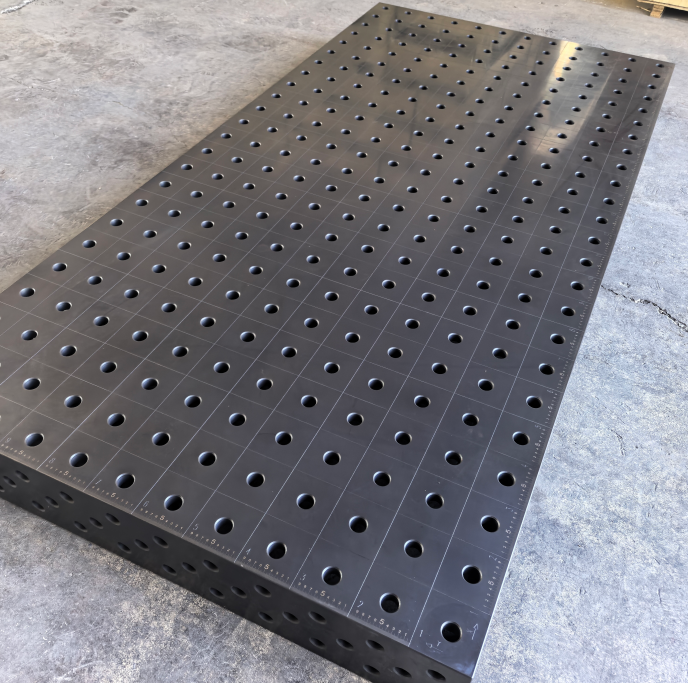
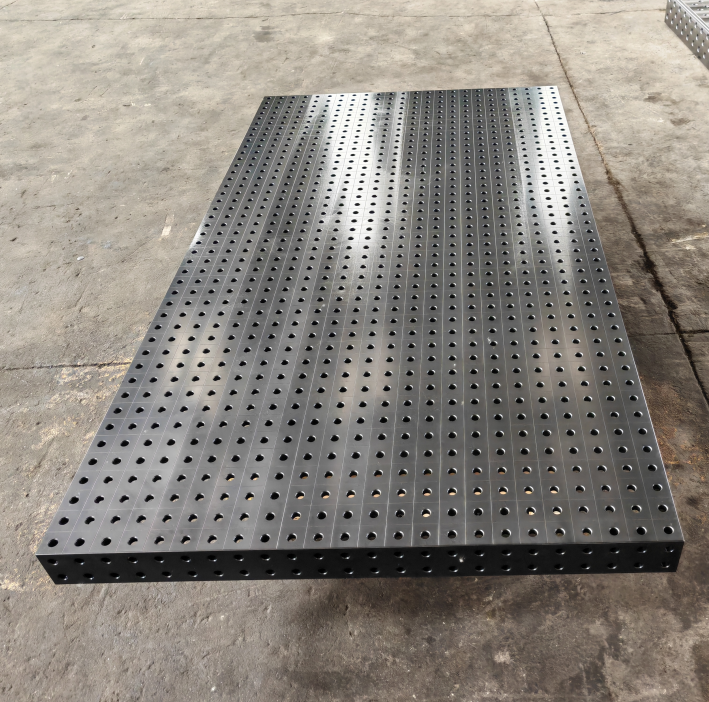
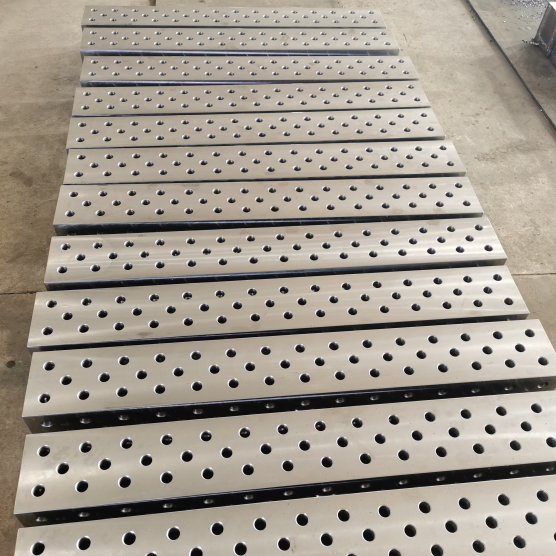
The core component is the tabletop, typically made from high-strength steel or cast iron. It features a uniform hole pattern, usually 50mm or 100mm spacing. This allows fabricators to build custom fixtures quickly.
These systems are essential for repeatable production. They eliminate the need for tack welding parts together before final assembly. By using dedicated tooling, operators ensure squareness and dimensional accuracy every time.
In 2026, the market has shifted toward hybrid kits. These combine heavy-duty stability with lightweight portability. Manufacturers now offer complete starter packs that include the table and essential clamping tools.
Why You Need a Modular Fixturing System in 2026
The demand for precision in small-batch manufacturing has never been higher. Traditional methods rely on manual measurement and temporary tacks. This approach is slow and prone to human error.
A welding jig table kit solves these issues through standardization. Once a setup is proven, it can be replicated instantly. This reduces setup time by up to 70% in many shop environments.
Furthermore, modern kits support complex geometries. With 3D fixturing capabilities, you can weld tubes and pipes at odd angles without custom-built jigs. This flexibility is crucial for diverse job shops.
Investing in a quality system also improves safety. Secure clamping prevents parts from shifting or falling during the welding process. This protects both the operator and the integrity of the weld.
Top Rated Welding Jig Table Kits for 2026
Selecting the right kit depends on your specific workload and budget. The market currently offers three distinct tiers: entry-level, professional, and industrial heavy-duty.
Entry-level kits are perfect for hobbyists and light repair work. They often feature thinner tops and basic clamp sets. While affordable, they may lack the rigidity needed for heavy structural steel.
Professional kits strike a balance between cost and performance. These usually include a 16mm or 22mm thick table with a comprehensive tool selection. They are the most popular choice for general fabrication shops.
Industrial sets are built for continuous production. They feature massive weight, hardened surfaces, and extensive accessory libraries. These systems represent a significant investment but offer unmatched longevity.
When evaluating options, consider the hole spacing. A 50mm grid offers finer adjustment but limits the size of tools you can use. A 100mm grid provides more clearance for larger clamps.
Key Features to Evaluate Before Buying
Not all tables are created equal. Several technical specifications determine the usability and lifespan of a welding jig table kit. Ignoring these details can lead to costly mistakes.
Table Thickness and Material: Thicker tables resist warping under heat. Look for tables at least 16mm thick for serious work. The material should be low-carbon steel to prevent hardening issues during drilling or modification.
Hole Precision and Finish: Holes must be bored, not punched. Punched holes have burrs that prevent tools from seating flush. A smooth finish ensures clamps lock tightly without wobble.
Surface Flatness: The entire surface must be machined flat. Even a slight bow can ruin the accuracy of large assemblies. High-end kits certify flatness within specific tolerances per meter.
Compatibility: Ensure the kit uses standard tooling sizes. Proprietary systems can trap you into buying expensive brand-specific accessories. Most global kits adhere to common metric or imperial standards.
Portability vs. Stability: Lighter tables are easier to move but vibrate more. Heavier tables dampen vibration and stay put. Consider if you need to move the table daily or if it will have a permanent home.
Comparison: Entry-Level vs. Professional vs. Industrial Kits
Understanding the differences between tiers helps align your purchase with your business needs. The following table breaks down the critical distinctions found in current 2026 models.
| Feature | Entry-Level Kit | Professional Kit | Industrial Kit |
| Table Thickness | 10mm – 14mm | 16mm – 22mm | 28mm – 50mm+ |
| Hole Spacing | 100mm only | 50mm or 100mm | Customizable grids |
| Tool Included | Basic clamps (4-8) | Full set (20+ pieces) | Modular library access |
| Surface Finish | Painted or coated | Machined and oiled | Hardened and ground |
| Best For | Hobbyists, DIY | Job shops, Prototyping | Mass production |
| Price Range | $ | $$ | $$$ |
Entry-level kits often sacrifice surface finish for price. The paint can burn off near welds, requiring frequent touch-ups. Professional kits usually come with a protective oil coating that withstands spatter better.
Industrial kits justify their cost through durability. They can withstand years of abuse without losing flatness. For high-volume shops, the downtime saved by reliable fixturing pays for the table quickly.
The tool count is another major differentiator. A table without clamps is just a piece of metal. Professional kits provide enough tools to start working immediately on complex projects.
Step-by-Step Guide to Setting Up Your Welding Jig
Proper setup is critical for achieving accurate results. Follow this logical sequence to configure your welding jig table kit for a new project.
- Clean the Surface: Remove all debris, spatter, and oil from the table. Use a wire brush or scraper to ensure tools seat perfectly against the surface.
- Establish a Datum: Select two perpendicular edges or a corner as your reference point. Install hard stops here to define the X and Y axes for your part.
- Position Primary Clamps: Place heavy-duty clamps to secure the main components of your assembly. Tighten them firmly but leave room for minor adjustments.
- Add Support Blocks: Insert height blocks or risers under thin materials to bring them to the same plane as thicker sections. This prevents distortion during welding.
- Verify Squareness: Use a precision square or digital angle finder to check the alignment of your setup. Adjust the stops until the geometry is perfect.
- Secure Secondary Parts: Add toggle clamps or quick-release pins to hold smaller brackets or gussets in place. Ensure nothing can shift during the welding arc.
- Perform a Dry Run: Assemble the parts without welding to confirm fit-up. Check for gaps or misalignments before applying heat.
- Execute the Weld: Proceed with welding, following your specified sequence to minimize heat distortion. Keep the clamps tight throughout the process.
This systematic approach eliminates guesswork. By establishing a solid datum first, every subsequent measurement becomes relative to a known accurate point.
Regular maintenance of the setup process ensures consistency. Train all operators to follow these same steps to maintain quality across different shifts.
Essential Accessories for Your Kit
A table is only as good as the tools you use with it. Expanding your welding jig table kit with the right accessories unlocks its full potential.
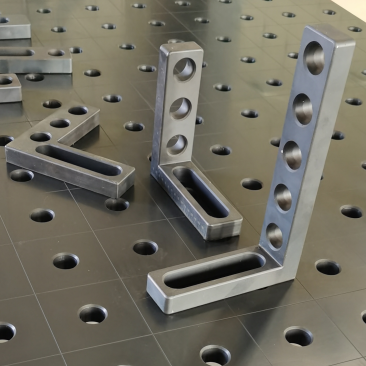
Stop Squares and Angles: These are fundamental for creating 90-degree joints. Magnetic versions are convenient, but mechanical stops offer higher precision and heat resistance.
Toggle Clamps: Ideal for rapid loading and unloading. They apply consistent pressure and can be operated with one hand, speeding up production cycles significantly.
Threaded Pins and Bolts: Used to create custom barriers or locators. Having a variety of lengths allows you to adapt to different material thicknesses easily.
Swivel Bases: These allow you to rotate parts for out-of-position welding. This is invaluable for pipe fabrication or complex tubular structures.
Protective Screens: While not a clamping tool, ceramic or copper screens protect the table holes from spatter. Keeping holes clean is vital for tool insertion later.
Investing in a organized storage system for these tools is also recommended. Losing small pins or bolts can halt production. Magnetic trays or dedicated tool carts keep everything accessible.
Common Mistakes to Avoid with Fixturing Tables
Even experienced welders make errors when transitioning to modular fixturing. Avoiding these pitfalls will save you money and frustration.
Over-tightening Clamps: Applying excessive force can distort thin materials or damage the table holes. Use torque-controlled tools if possible, or develop a feel for proper tightness.
Ignoring Heat Distortion: No jig can completely stop metal from moving under extreme heat. Plan your weld sequence to counteract expected shrinkage rather than fighting it blindly.
Using Damaged Tools: A bent stop or a worn pin introduces error into every part you make. Regularly inspect your tooling and replace damaged items immediately.
Neglecting Cleaning: Spatter buildup in the holes makes tool insertion difficult. Clean the table after every major job to maintain efficiency.
Mixing Incompatible Systems: Trying to force tools from one brand into another’s holes can ruin both. Stick to one ecosystem or use verified adapters.
Recognizing these common issues early helps you maximize the return on your investment. Proper care extends the life of both the table and the accessories.
Applications Across Different Industries
The versatility of a welding jig table kit makes it useful in various sectors. From automotive restoration to aerospace prototyping, the principles remain the same.
In automotive fabrication, these tables are used to build roll cages and exhaust systems. The ability to hold tubes at precise angles ensures proper fitment within the vehicle chassis.
Furniture makers utilize them for creating metal frames and bases. Consistency is key when producing multiple units of a design. Jigs ensure every chair leg is identical.
The HVAC industry benefits from quick setup for ductwork and supports. Custom brackets can be assembled rapidly without the need for complex measuring tapes.
Artists and sculptors find these tables indispensable for large metal artworks. The grid system allows for creative freedom while maintaining structural integrity.
For agricultural equipment repair, the durability of industrial kits handles heavy, dirty components. Farmers and mechanics can fix broken implements faster, reducing downtime during critical seasons.
Each application leverages the core benefit: repeatability. Whether making one custom piece or a thousand, the setup ensures the outcome matches the design intent.
Industry Spotlight: Leading Solutions from Botou Haijun Metal Products
As the demand for high-precision flexible modular fixtures grows, manufacturers like Botou Haijun Metal Products Co., Ltd. are setting the standard for efficient welding and positioning solutions. Specializing in the research, development, and production of advanced metalworking tools, Haijun Metal is committed to empowering the modern manufacturing industry with exceptional versatility and accuracy.
Their core product line features state-of-the-art 2D and 3D flexible welding platforms, which have become the preferred jigging equipment in demanding sectors such as machining, automotive, and aerospace. These platforms are renowned for their ability to handle complex geometries while maintaining rigorous tolerances.
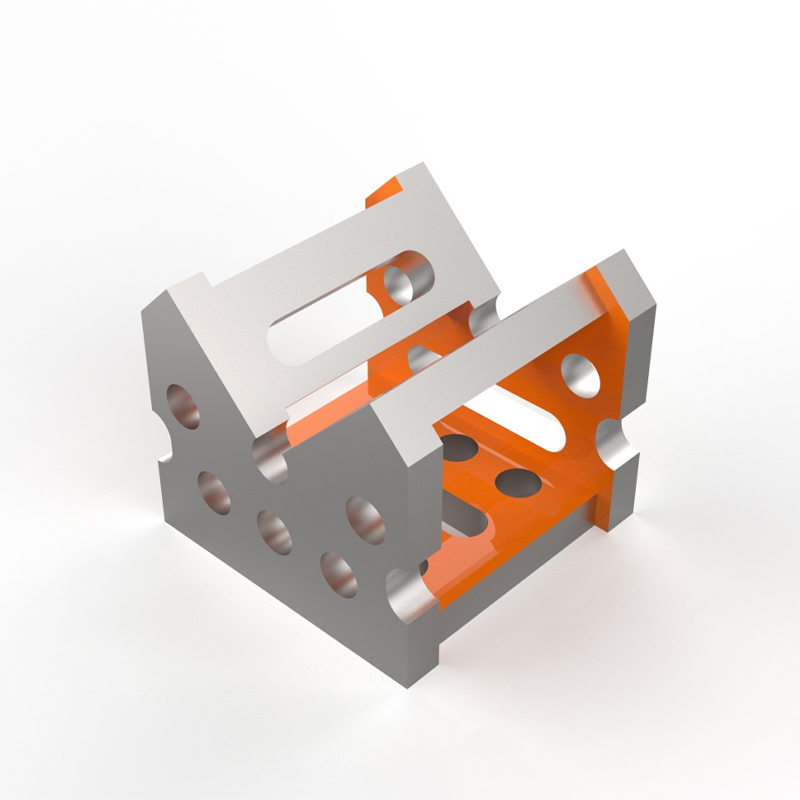
Beyond the main tables, Haijun Metal offers a comprehensive ecosystem of complementary components designed to integrate seamlessly with their platforms. Their catalog includes U-shaped and L-shaped multi-purpose square boxes, robust 200-series support angle irons, and versatile 0-225° universal angle gauges. These accessories enable rapid workpiece positioning and clamping, drastically reducing setup times.
Furthermore, the company manufactures professional cast iron 3D welding platforms and precision angle connection blocks, ensuring that every product delivers exceptional durability and stability. With years of industry experience, Botou Haijun Metal Products has established itself as a trusted supplier to customers both domestically and internationally, continuously providing high-quality production machinery tool series that drive productivity and precision.
Cost Analysis and ROI Expectations
Purchasing a welding fixture system is a capital expense. Understanding the return on investment helps justify the cost to business owners or personal budgets.
The initial cost includes the table, stand, and tooling kit. Prices range from a few hundred dollars for basic sets to several thousand for industrial configurations.
However, the savings come from reduced labor hours. If a jig cuts setup time by 30 minutes per job, and you do four jobs a day, that is two hours saved daily. Over a year, this adds up to hundreds of billable hours.
Scrap reduction is another financial benefit. Accurate fixturing means fewer ruined parts due to measurement errors. Saving even one large structural beam can pay for a significant portion of the table.
Consider the lifespan. A high-quality steel table can last decades. When amortized over 10 or 20 years, the annual cost becomes negligible compared to the productivity gains.
For freelancers, the ability to quote tighter tolerances can open new markets. Clients willing to pay for precision will choose a shop equipped with professional fixturing over one relying on tape measures.
Maintenance Tips for Longevity
To keep your welding jig table kit performing like new, regular maintenance is required. Neglect leads to rust, stuck tools, and loss of accuracy.
Rust Prevention: Apply a thin coat of machine oil or specialized anti-spatter spray regularly. This creates a barrier against moisture and makes spatter removal easier.
Spatter Removal: Use a chisel or grinding disc to remove weld spatter carefully. Avoid gouging the table surface. Ceramic nozzles on your torch can also reduce spatter generation.
Hole Cleaning: Periodically run a reamer or oversized pin through the holes to clear out compacted debris. This ensures smooth insertion of clamps and stops.
Storage: If the table is not in use for long periods, cover it with a tarp or plastic sheet. Store accessories in a dry environment to prevent corrosion.
Flatness Checks: Once a year, check the flatness of the table with a straight edge. If warping is detected, consult the manufacturer for resurfacing options.
Treating the table as a precision instrument rather than a workbench will extend its useful life. Small habits make a big difference in long-term performance.
Future Trends in Welding Fixturing Technology
The welding industry continues to evolve, and fixturing is no exception. Several trends are shaping the future of welding jig table kits beyond 2026.
Smart Tooling: Sensors integrated into clamps can detect pressure and alert operators if a part is not secured correctly. This adds a layer of quality control automation.
Lightweight Composites: Research into high-strength composite materials aims to reduce table weight without sacrificing rigidity. This would improve portability for mobile welders.
Modular Robotics Integration: Tables are being designed with mounting points specifically for collaborative robots (cobots). This facilitates automated welding cells in smaller shops.
Eco-Friendly Coatings: New non-stick coatings are emerging that require less chemical cleaning. These reduce environmental impact and improve worker safety.
Staying aware of these developments helps you future-proof your investment. Choosing a system with adaptable features ensures it remains relevant as technology advances.
Frequently Asked Questions (FAQ)
What is the ideal hole spacing for a general-purpose welding table?
For most applications, a 100mm (4-inch) grid offers the best balance. It provides enough holes for secure clamping while allowing space for larger tools. Fine work may benefit from a 50mm grid.
Can I drill additional holes in my welding jig table?
It is generally not recommended. Drilling can compromise the structural integrity and flatness of the table. It may also void the warranty. Use the existing grid pattern whenever possible.
How do I remove stubborn weld spatter from the holes?
Use an anti-spatter spray before welding to prevent adhesion. For existing spatter, a dedicated spatter remover gel or careful grinding with a flap disc works well. Avoid using excessive force that could deform the hole.
Are magnetic clamps suitable for precision welding jigs?
Magnetic clamps are convenient for quick setups but can lose strength when heated. For high-precision or heavy-duty work, mechanical clamps are superior as they provide consistent holding force regardless of temperature.
Do I need a stand for my welding table kit?
Yes, a sturdy stand is essential. It brings the table to a comfortable working height and provides stability. Wobbly legs can ruin the accuracy of your setups. Many kits include matched stands.
What is the difference between a positioning table and a welding table?
A positioning table often includes rotation and tilting mechanisms for manipulating the part. A welding jig table is static and focuses on holding parts in a fixed position for assembly and welding.
Final Verdict: Choosing the Right Set for You
Selecting the best welding jig table kit in 2026 comes down to matching the tool to your specific workflow. There is no single “best” option for everyone.
If you are a hobbyist working on occasional projects, an entry-level kit with a 100mm grid is sufficient. It offers great value and learns you the basics of fixturing without a huge upfront cost.
For professional fabricators and job shops, a professional-grade kit with a 16mm top and comprehensive tooling is the sweet spot. It delivers the precision and durability needed for paid work.
High-volume manufacturers should invest in industrial systems. The robustness and scalability of these kits support continuous operation and complex automation integration.
Remember that the table is just the foundation. The real value lies in the ecosystem of tools and the skills you develop to use them effectively.
Take the time to assess your current bottlenecks. If setup time and rework are eating into your profits, a modular fixturing system is likely the solution you need.
Start with a core kit that covers 80% of your common tasks. You can always expand your tool library later as specific needs arise. This phased approach manages cash flow while improving capability.
Investing in precision today builds the reputation for quality that will drive your business tomorrow. Choose wisely, maintain your equipment, and watch your productivity soar.