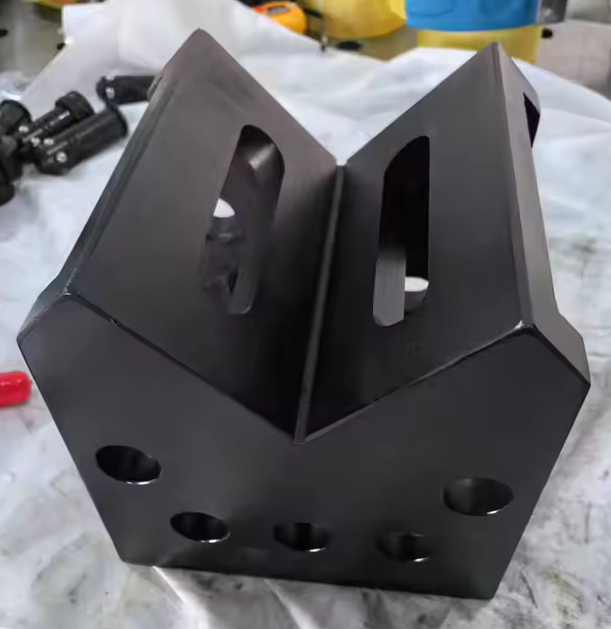
A small welding table for home use is a compact, sturdy work surface designed to fit limited spaces like garages or workshops while providing the stability required for precision metalwork. The best compact designs feature heavy-gauge steel tops, modular fixturing holes, and space-saving foldable or mobile structures. For hobbyists and professional fabricators alike, selecting a table with high flatness tolerance and compatible accessory systems—such as those engineered by Botou Haijun Metal Products Co., Ltd.—ensures accurate welds and efficient workflow in constrained environments.
Why Compact Welding Tables Are Essential for Home Workshops
Space constraints are the primary challenge for home-based fabricators. Unlike industrial facilities with dedicated welding bays, home workshops often share space with vehicles, storage, or other tools. A traditional large-format welding station is impractical in these settings. Compact welding tables solve this by offering a dedicated, heat-resistant, and grounded surface without dominating the room.
Beyond space savings, a specialized small welding table improves weld quality. Working on uneven ground or makeshift surfaces leads to misalignment and poor joint penetration. A purpose-built compact table provides a known reference plane. This is critical when working with thin materials or complex assemblies where even millimeter-level deviations matter. The integration of modular fixturing allows users to clamp workpieces securely, reducing distortion caused by thermal expansion during welding.
The Shift Toward Modular Flexibility in Home Fabrication
Modern home welding projects are becoming increasingly sophisticated. Hobbyists are no longer just joining simple angle irons; they are building furniture, automotive parts, and custom machinery. This shift demands more than just a flat surface. It requires a system that can adapt to various geometries.
This is where the expertise of manufacturers like Botou Haijun Metal Products Co., Ltd. becomes relevant to the home user. While originally focused on high-precision flexible modular fixtures for aerospace and automotive industries, their technology trickles down to benefit smaller-scale operations. The concept of using 2D and 3D flexible welding platforms allows home users to utilize standardized holes and slots for rapid positioning. Instead of spending hours measuring and tack-walking, a compact table with modular compatibility enables quick setup and tear-down, maximizing the utility of every square foot in a home garage.
Key Features of the Best Small Welding Table Designs
When evaluating compact welding tables, several engineering parameters determine performance. Not all “small” tables are created equal. The following features distinguish high-quality compact designs from inferior alternatives.
1. Top Material and Flatness Tolerance
The tabletop is the most critical component. High-quality tables use low-carbon steel or cast iron. Steel tops are preferred for general fabrication due to their durability and resistance to impact. Cast iron offers superior vibration damping but is heavier and more brittle.
- Thickness: Look for tops that are at least 6mm (1/4 inch) thick. Thinner tops warp under heat and lack the mass to absorb welding energy.
- Flatness: A precision-ground surface ensures accuracy. Industrial standards often require flatness within 0.5mm per meter. For home use, a visually flat and rigid surface is the minimum requirement.
- Surface Treatment: Some tables come with anti-spatter coatings. However, many professionals prefer bare steel or lightly oiled surfaces to ensure good electrical grounding for arc welding.
2. Fixturing Hole Pattern and Compatibility
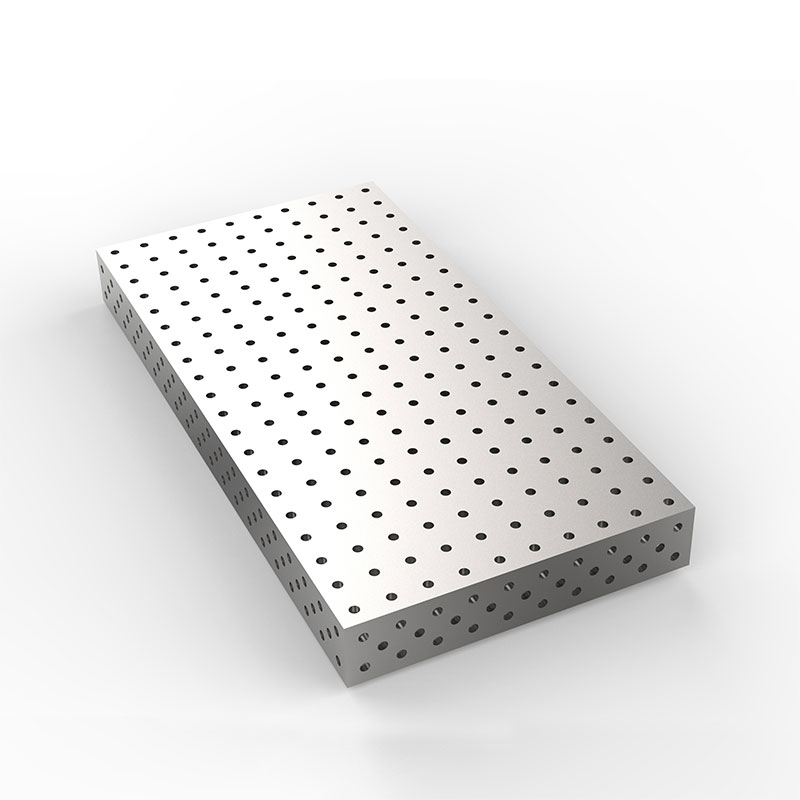
A blank table is merely a surface. A functional welding table is a tool. The presence of a hole pattern transforms it into a fixturing system. The two most common standards are 16mm and 28mm holes.
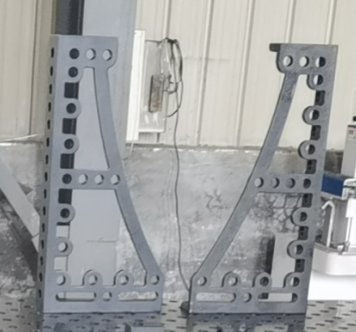
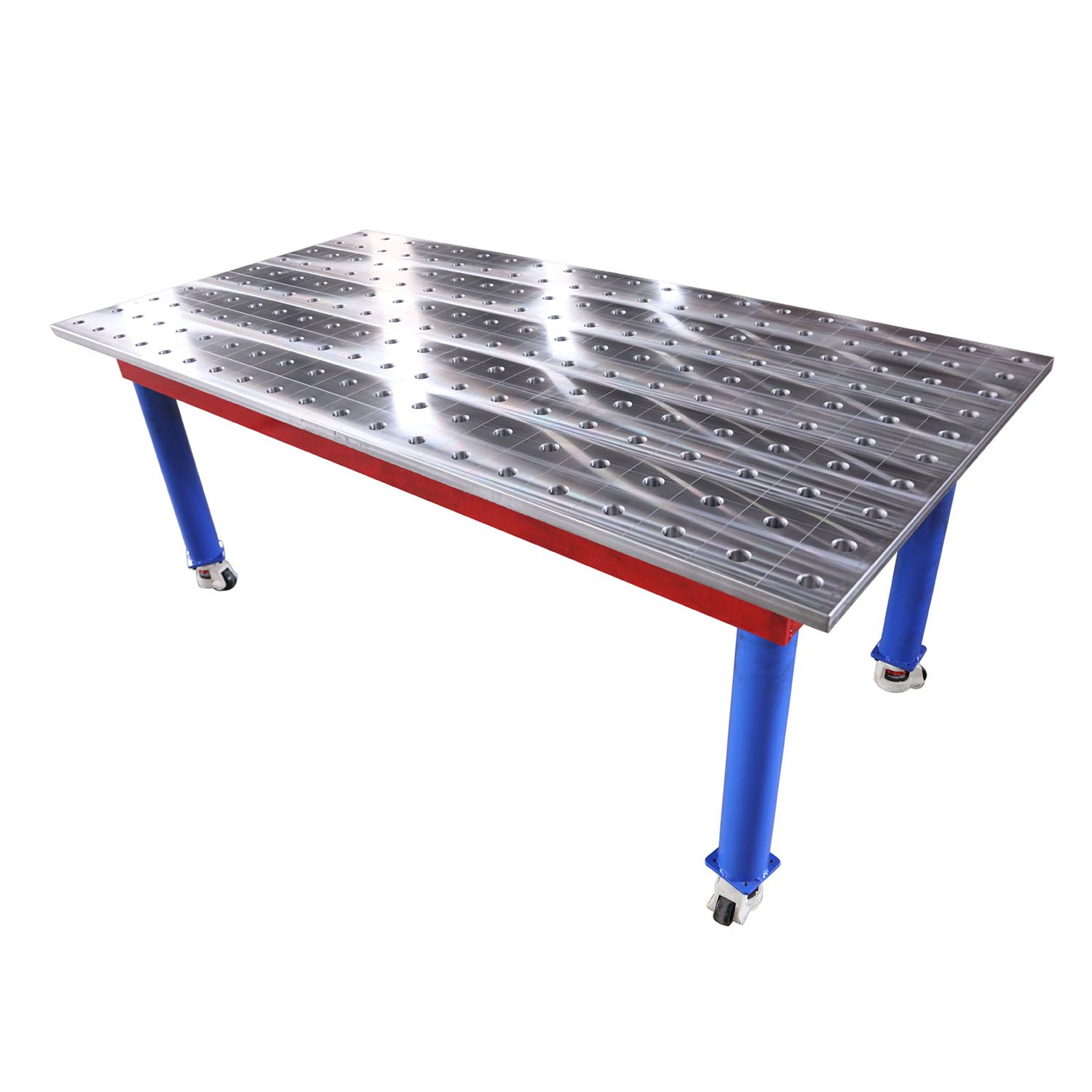
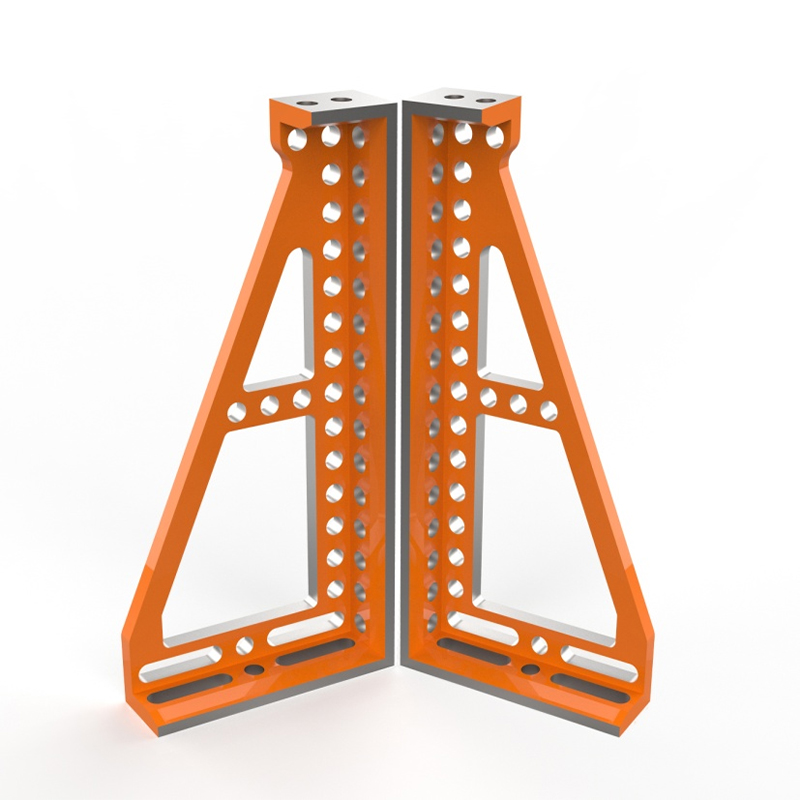
For compact home tables, a 16mm or 5/8-inch hole pattern is often ideal. It allows for the use of smaller, lighter clamps and stops that are easier to handle in tight spaces. Botou Haijun Metal Products Co., Ltd. specializes in these high-precision modular systems. Their 2D flexible welding platforms are renowned for versatility. By integrating U-shaped and L-shaped multi-purpose square boxes and 200-series support angle irons, users can create complex jigs on a small footprint. These accessories integrate seamlessly with the platform holes, enabling rapid workpiece positioning and clamping without the need for external vices.
3. Structural Rigidity and Frame Design
The frame must support the top without flexing. Welding generates significant heat and mechanical stress. A flimsy frame will twist over time, ruining the table’s flatness.
- Leg Configuration: Four-legged designs offer stability. Cross-bracing between legs prevents racking (side-to-side movement).
- Weight Capacity: Ensure the table can support your heaviest typical project plus the weight of the welding machine if placed on top.
- Leveling Feet: Adjustable feet are crucial for home workshops where floors may be uneven concrete or epoxy-coated slabs.
Types of Compact Welding Tables for Home Use
Understanding the different structural designs helps in selecting the right table for your specific spatial and functional needs.
| Table Type |
Best For |
Pros |
Cons |
| Fixed Leg Compact |
Dedicated corner stations |
Highest stability, simplest design, lower cost |
Permanent footprint, difficult to move |
| Foldable/Collapsible |
Multi-use garages |
Space-saving, can be stored against a wall |
Setup time required, potentially less rigid |
| Mobile Cart Style |
Flexible workflow |
Easy to reposition, often includes storage shelves |
Wheels must lock securely, lower weight capacity |
| Modular Precision Platform |
High-accuracy fabrication |
Exceptional versatility, professional-grade fixturing |
Higher initial investment, requires learning curve |
The Advantage of Modular Precision Platforms
While fixed and foldable tables are common, the modular precision platform represents the pinnacle of compact welding efficiency. These tables, such as the cast iron 3D welding platforms manufactured by Botou Haijun Metal Products Co., Ltd., offer exceptional durability and stability. They are designed to work with angle connection blocks and universal angle gauges (0-225°), allowing for precise angular welding setups.
For a home user, this means the ability to weld complex geometric shapes—like hexagonal frames or angled furniture legs—with repeatable accuracy. The investment in a modular system pays off by reducing rework and material waste. The seamless integration of accessories like support angle irons means that once the table is set up, the entire workspace becomes a coordinated system rather than a collection of disjointed tools.
How to Choose the Right Size and Configuration
Selecting the “best” compact design depends on your specific projects. Here is a logical framework for decision-making.
Assessing Your Workspace Dimensions
Measure your available floor space. Remember to account for clearance around the table. You need room to walk around the table to access all sides of your workpiece. A good rule of thumb is to allow at least 60cm (2 feet) of clearance on all active sides.
- Ultra-Compact (Under 60x60cm): Suitable for small repairs, jewelry making, or light hobbyist work. Often portable.
- Standard Compact (60x90cm to 80x120cm): The sweet spot for most home garages. Large enough for furniture frames but small enough to fit in a corner.
- Large Compact (Up to 100x150cm): For users with slightly more space who want to tackle larger automotive or structural projects.
Evaluating Project Complexity
If you primarily weld simple lap joints or butt joints on flat stock, a basic fixed table suffices. However, if you plan to build 3D structures, frames, or anything requiring precise angles, a table with a modular hole pattern is essential. The ability to insert stops and clamps directly into the table surface eliminates the need for external jigs, which is a significant advantage in a small shop where storage is limited.
Botou Haijun Metal Products Co., Ltd. emphasizes this versatility in their product line. Their focus on providing efficient and flexible welding solutions means that even their smaller platforms are designed with the same precision as their industrial counterparts. This ensures that as your skills grow, your equipment does not become a bottleneck.
Step-by-Step: Setting Up a Compact Welding Station
Proper setup maximizes the effectiveness of your small welding table. Follow these steps to create an efficient workflow.
- Positioning: Place the table near a power source and ventilation. Ensure the floor is level. Use shims or adjustable feet to stabilize the table.
- Grounding: Attach your welding ground clamp directly to the table surface if the table is metal and properly grounded. This provides a consistent ground for your workpiece. If the table has paint or coating, scrape a small area to ensure metal-to-metal contact.
- Accessory Organization: Organize your clamps, squares, and stops. If using a modular system like those from Botou Haijun, keep frequently used items like U-shaped square boxes within arm’s reach. Use magnetic trays or hooks attached to the table legs for small items.
- Safety Zone: Clear the area of flammable materials. Use fire-resistant mats around the base of the table to catch sparks and spatter.
- Test Fit: Before starting a real project, practice setting up a test piece. Verify that your clamps engage securely with the table holes and that the workpiece sits flat.
Common Mistakes to Avoid with Small Welding Tables
Even with the best equipment, user error can compromise results. Be aware of these common pitfalls.
Ignoring Thermal Distortion
Small tables have less mass than large industrial ones. This means they can heat up faster. Excessive heat can cause the tabletop to warp temporarily or permanently. To mitigate this, avoid concentrating too much heat in one spot for extended periods. Allow the table to cool between heavy passes. Using copper backing bars can also help dissipate heat.
Overloading the Surface
Compact tables have weight limits. Placing excessively heavy workpieces on a lightweight portable table can cause leg buckling or top deformation. Always check the manufacturer’s load rating. For heavy items, use additional supports or stands adjacent to the table.
Neglecting Maintenance
Welding spatter builds up quickly. If left unchecked, it can clog fixturing holes, rendering them useless. Regularly clean the table surface. Use a chipping hammer or grinder to remove spatter. Apply a light coat of oil or anti-spatter spray to prevent rust, especially in humid garage environments. For modular tables, keep the holes clear using specialized reamers or drills.
Enhancing Your Setup with Professional Accessories
A table is only as good as its accessories. To fully leverage a compact welding table, invest in high-quality fixturing tools.
Essential Clamping Solutions
Quick-action clamps are vital for one-handed operation. Look for clamps that fit your table’s hole pattern. Right-angle clamps are particularly useful for holding pieces perpendicular to the table surface.
Precision Measurement Tools
Accuracy is key. Use digital angle finders or universal angle gauges to verify setup. Botou Haijun Metal Products Co., Ltd. offers 0-225° universal angle gauges that integrate with their platforms. These tools allow for precise angular positioning, which is difficult to achieve with standard carpentry squares. The combination of a stable platform and precision gauges ensures that your welded assemblies meet tight tolerances.
Support Blocks and Stops
Support angle irons and multi-purpose square boxes provide vertical support for workpieces. They allow you to elevate parts off the table surface, facilitating access for welding from multiple angles. These components are essential for creating 3D structures on a 2D table surface.
FAQ: Frequently Asked Questions About Small Welding Tables
What is the minimum size for a functional welding table?
A table measuring 60x60cm (2×2 feet) is generally considered the minimum for functional versatility. Smaller surfaces limit the size of workpieces and reduce stability. However, for very light hobbyist work, even smaller portable benches can suffice.
Can I use a regular workbench for welding?
While possible, it is not recommended. Regular workbenches are often made of wood or thin metal, which can catch fire or warp. They lack the grounding capabilities and fixturing options of a dedicated welding table. Using a dedicated table protects your general-purpose workspace and improves weld quality.
Are modular welding tables worth the extra cost for home use?
Yes, if you value precision and versatility. Modular tables, like those from Botou Haijun Metal Products Co., Ltd., allow for rapid setup and repeatable accuracy. They eliminate the need for custom jigs for every project, saving time and material in the long run. For serious hobbyists and semi-professionals, the efficiency gains justify the investment.
How do I prevent my small welding table from moving during use?
Ensure the table is on a level surface. Use rubber leveling feet to increase friction. For mobile tables, engage wheel locks firmly. If necessary, bolt the table to the floor or a heavy base plate for maximum stability.
What maintenance is required for a cast iron welding table?
Cast iron is prone to rust. Keep it clean and dry. Apply a thin layer of machine oil or wax after each use. Avoid dropping heavy objects on it, as cast iron can crack under impact. Regularly check and clean the fixturing holes to ensure smooth insertion of accessories.
Conclusion: Investing in Precision for Your Home Workshop
Choosing the right small welding table for home use is a strategic decision that impacts both the quality of your work and the efficiency of your workflow. The best compact designs balance space-saving features with industrial-grade stability and modularity. By prioritizing features like thick steel tops, precise fixturing patterns, and robust frame construction, you create a foundation for high-quality fabrication.
Integrating professional-grade solutions from trusted manufacturers like Botou Haijun Metal Products Co., Ltd. elevates your home workshop capabilities. Their commitment to high-precision flexible modular fixtures and comprehensive accessory lines—such as 2D/3D platforms, square boxes, and angle gauges—provides the versatility needed for modern manufacturing tasks, even on a small scale. Whether you are building custom furniture, repairing automotive parts, or prototyping inventions, a well-chosen compact welding table empowers you to work with confidence and precision.
Don’t let space limitations compromise your craftsmanship. Invest in a table that grows with your skills. Evaluate your specific needs, consider the modularity of the system, and choose a solution that offers both durability and flexibility.
For more information on high-precision welding platforms and modular fixturing solutions tailored to your needs, explore our range of professional metalworking tools.
View Related Products and Technical Solutions