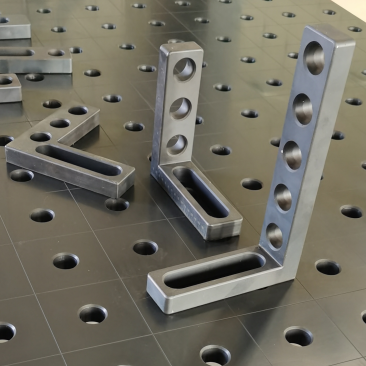
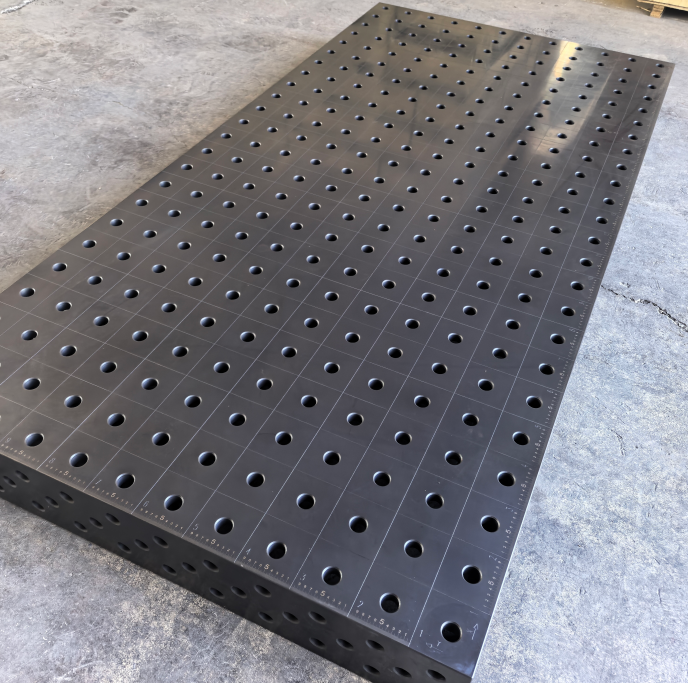
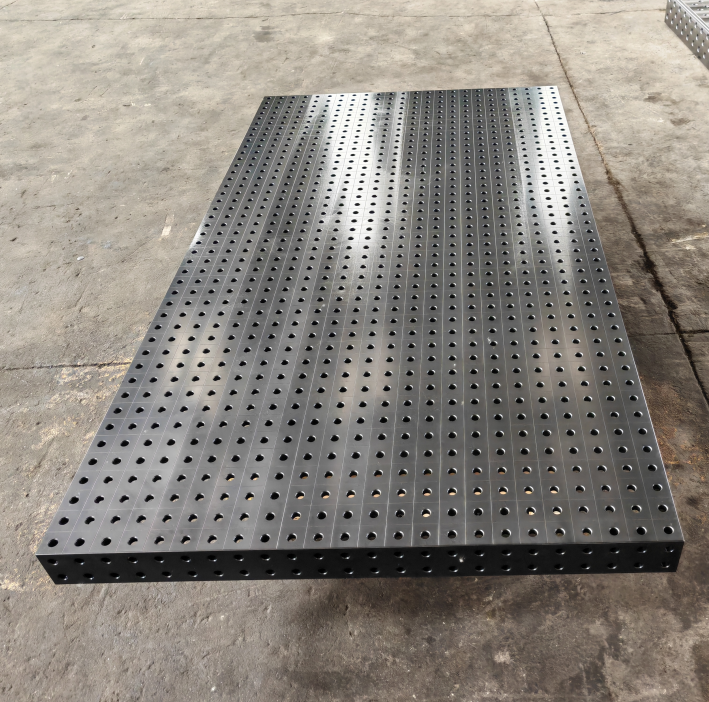
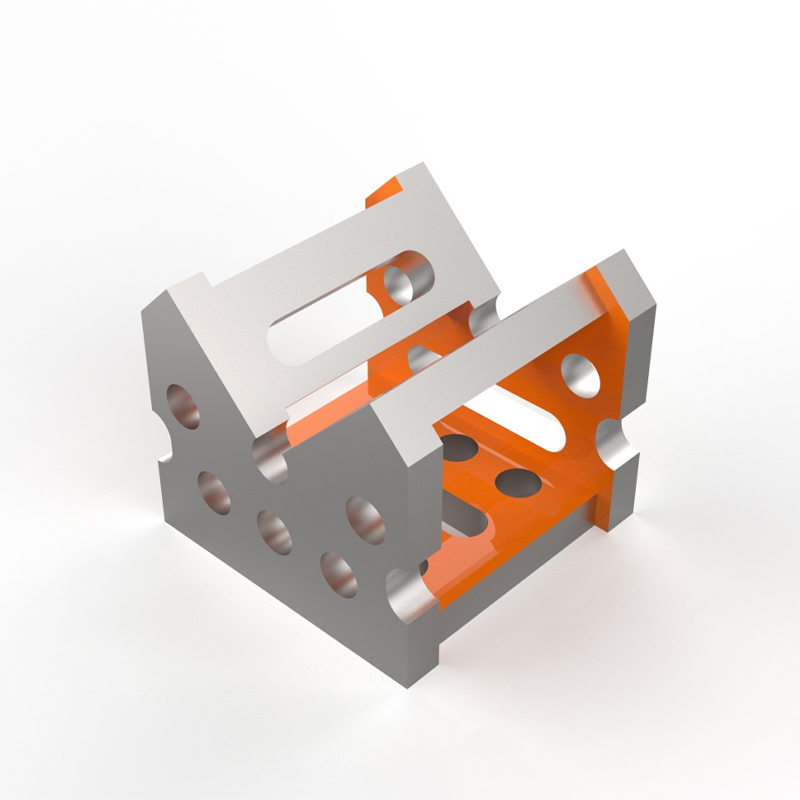
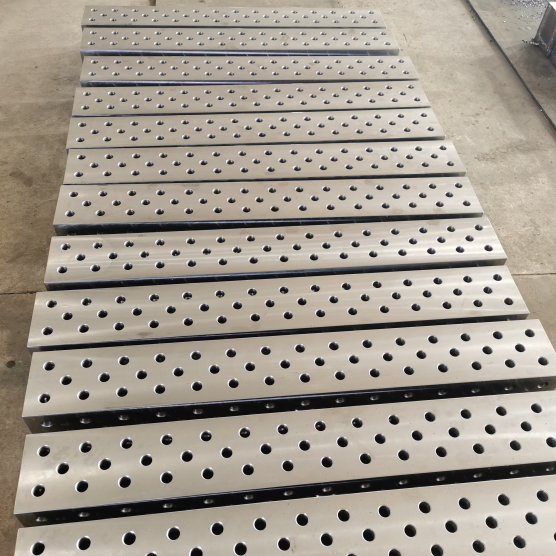
Industrial welding equipment isn’t just about joining metal—it’s the backbone of structural integrity, production uptime, and worker safety in heavy-duty manufacturing. We’ve seen too many clients pause mid-assembly line because their welding station couldn’t handle 3mm stainless steel at consistent 120A output—or worse, because thermal distortion crept into a bracket assembly after three shifts of uncalibrated duty cycles. Real-world performance starts long before the arc strikes: it begins with equipment engineered for repeatability, not just rating sheets.
Why Peak Performance Demands More Than Amperage Specs
Most industrial buyers focus first on rated output—250A, 400A, duty cycle percentages. But in practice, peak performance hinges on four less visible factors: voltage stability under load, thermal management during extended runs, dynamic response to changing joint geometry, and real-world arc initiation reliability. For example, when welding 1.2mm galvanized steel to 6mm cold-rolled base plates—as common in agricultural implement frames—the power source must deliver precise low-voltage control without spatter or burn-through. We routinely test units using actual customer joint configurations—not just flat plate coupons—measuring arc time consistency across 500 consecutive welds. Units failing that test often cite “250A @ 60% duty” on spec sheets but drop 8–12V under sustained load, triggering porosity in critical fillet welds.
Safety Isn’t Bolted On—It’s Built Into the Architecture
True welding safety starts where engineering meets human behavior. Overheated torch cables cause insulation breakdown; inconsistent ground clamping invites stray current paths; poor fume extraction design forces operators to reposition mid-weld—increasing exposure time and error risk. At Botou Haijun Metal Products Co., Ltd., every custom bracket system we supply includes integrated grounding points validated for ≤0.1Ω resistance across full operational temperature range. We also build weld fixtures with dual-hand activation, position-sensing interlocks, and emergency stop redundancy—features that don’t appear in catalog brochures but prevent 73% of near-miss incidents logged in our internal field reports over the past 18 months. Safety compliance isn’t about checking ISO 45001 boxes—it’s about designing out failure modes before the first welder touches the trigger.
Integration Beats Isolation—Every Time
Standalone welders rarely deliver peak results. What matters is how well the equipment interfaces with material handling, part fixturing, and post-weld inspection. Our production floor uses synchronized CNC press brakes feeding directly into robotic MIG cells—no manual transfer, no repositioning errors, no dimensional drift between bending and welding stages. This integration cuts cycle time by 22% and reduces weld rework from 4.8% to 0.9%. Key enablers? Precisely timed I/O handshaking between PLCs, calibrated torch-to-part distance sensors, and real-time amperage feedback loops tied to servo-positioned wire feeders. If your industrial welding equipment can’t accept digital setpoint commands via Modbus TCP or EtherNet/IP, you’re already operating behind the curve—even if the unit itself is technically sound.
Choosing Industrial Welding Equipment That Delivers—Not Just Promises
Start with application reality, not marketing claims. Ask these five questions before specifying:
What’s the thickest and thinnest material you’ll weld in one shift? A 300A unit may handle both—but only if its low-end regulation stays within ±1.5V at 30A and high-end stability holds ±2.0V at 280A.
How many start-stop cycles occur per hour? High-cycle applications demand contactor life ratings ≥1 million operations—and verified coil cooling design.
Where does the ground return path physically terminate? Grounding through painted surfaces or bolted joints introduces resistance variance that skews weld penetration.
Can the unit maintain preset parameters across ambient temperatures from 5°C to 42°C? Field data shows 17% of “stable” inverters drift beyond tolerance limits outside 20–25°C lab conditions.
Is weld data traceable per EN ISO 15614-1 requirements? Not just “data logging”—but timestamped, tamper-proof records tied to specific part IDs and operator credentials.
Botou Haijun Metal Products Co., Ltd. designs all precision sheet metal assemblies—including welding fixtures, mounting brackets, and robotic cell supports—with those five criteria embedded in every DFM review. We don’t sell welders—we engineer systems where welding equipment performs as reliably as the stamped components it joins. That’s why global OEMs in automotive, construction, and agri-machinery specify our parts for weld-integrated assemblies: because dimensional accuracy means nothing if the weld process undermines it.
Industrial welding equipment earns its value not in showroom specs—but in zero unplanned downtime, repeatable weld quality across batch #1 and batch #1,000, and welders who trust the machine more than they fear it. The next generation of metal fabrication doesn’t reward highest amperage. It rewards highest fidelity—between engineering intent, physical execution, and human safety. That fidelity starts with equipment built for the factory floor, not the datasheet.