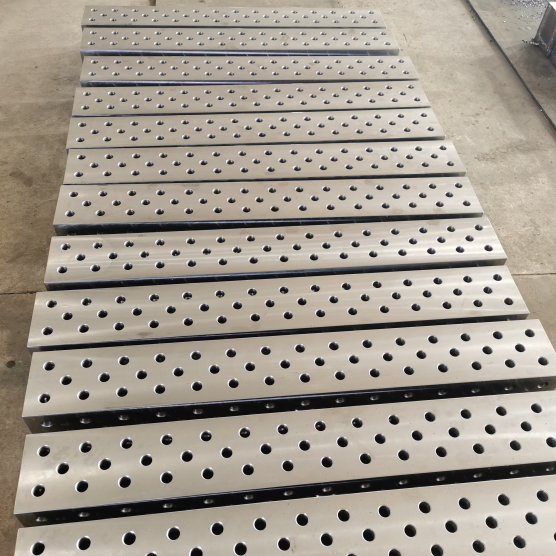
Choosing the right welding table top is critical for precision, safety, and workflow efficiency in 2026. Modern fabrication demands surfaces that resist warping under extreme heat while integrating advanced features like variable frequency drive (VFD) compatible grounding systems. This guide reviews the best prices, material technologies, and structural designs currently dominating the market to help professionals make informed decisions.
What Defines a High-Performance Welding Table Top in 2026?
A premium welding table top is no longer just a flat steel plate. In the current industrial landscape, it serves as the foundational fixture for complex jigging, robotic welding cells, and manual fabrication. The defining characteristic of a 2026-grade surface is its ability to maintain dimensional stability despite repeated thermal cycling.
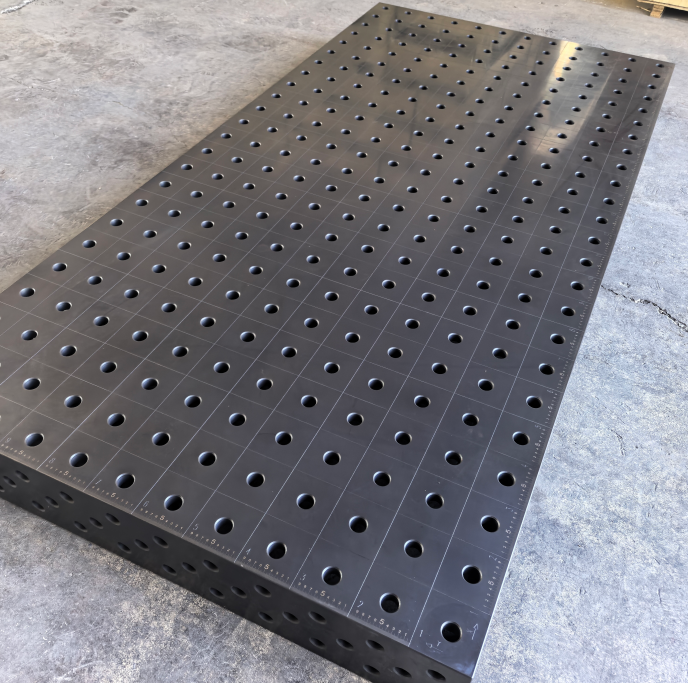
Traditional mild steel tops often warp after prolonged exposure to high-amperage arcs. Consequently, the industry has shifted toward stress-relieved alloys and composite structures. These materials ensure that your workpiece remains square and level, regardless of the heat input. Furthermore, modern tops are designed with modularity in mind, featuring standardized hole patterns that accept universal clamping tools.
The integration of technology also plays a role. Newer models support VFD tech environments by offering superior electrical grounding paths. This reduces interference with sensitive inverter-based welding power sources, ensuring stable arc performance. When evaluating options, prioritize tables that explicitly state their heat treatment processes and load-bearing capacities.
Core Materials and Construction Technologies
The longevity of your workstation depends heavily on the metallurgy of the table surface. Understanding the differences between common materials helps in selecting a unit that balances cost with durability.
Stress-Relieved Steel vs. Cast Iron
Most professional-grade tables utilize low-carbon steel that undergoes a rigorous stress-relieving process. This involves heating the metal to a specific temperature and cooling it slowly to remove internal tensions caused by cutting and machining.
- Stress-Relieved Steel: Offers excellent resistance to warping and is generally more affordable than cast iron. It is the standard for general fabrication shops.
- Cast Iron: Provides superior vibration damping and heat retention but is brittle and prone to cracking if dropped or struck sharply. It is ideal for precision machining but less common for heavy structural welding.
- Composite Ceramics: An emerging trend for specialized applications where spatter adhesion must be zero. These are niche products with higher price points.
The Role of Heat Treatment
Without proper heat treatment, a thick steel plate can twist like a pretzel during the first week of use. Manufacturers now certify their welding table top units with documented heat treatment cycles. This ensures the grain structure of the metal remains stable. Look for certifications indicating “full body stress relief” rather than just surface hardening.
Welding Table Top Comparison: Features and Pricing Trends
To assist in your purchasing decision, the following table compares the most popular configurations available in the current market. Prices fluctuate based on raw material costs, but these ranges reflect the average retail values for 2026.
| Table Type | Material Grade | Hole Pattern | Heat Resistance | Avg. Price Range | Best Use Case |
| Entry-Level Portable | Mild Steel (Untreated) | None or Grid | Low | $150 – $400 | Hobbyists, Light Repair |
| Standard Professional | Stress-Relieved A36 | 16mm or 28mm Grid | Medium-High | $600 – $1,200 | General Fabrication, MIG/TIG |
| Heavy-Duty Industrial | Alloy Steel (Normalized) | 28mm Precision Bore | Very High | $1,500 – $3,000 | Structural Steel, Robotic Cells |
| Precision Jigging | Hardened Tool Steel | ISO Standard 16/28mm | High | $2,500+ | Aerospace, Automotive Prototyping |
This comparison highlights that investing in a stress-relieved model usually offers the best return on investment for serious fabricators. While entry-level options save money upfront, they often require replacement within a year due to warping.
Integration with VFD Technology and Grounding
The mention of VFD tech in welding contexts often refers to the power supplies used in modern inverters. Variable Frequency Drives control the motor speed in fume extractors or positioners, but in welding, the term frequently relates to inverter-based power sources that operate at high frequencies.
Why Grounding Matters for Modern Tops
Inverter welders are sensitive to electrical noise and poor ground connections. A high-quality welding table top acts as a massive ground plane. If the table is painted or coated improperly, it can insulate the workpiece from the ground clamp, leading to arc instability.
- Bare Metal Surfaces: Ensure direct electrical contact. Most professional tops leave the welding surface unpainted.
- Dedicated Ground Ports: Advanced tables include threaded ports specifically for attaching ground clamps, reducing setup time.
- Noise Reduction: A solid, continuous steel mass helps dissipate electromagnetic interference (EMI) generated by VFD-driven equipment nearby.
Compatibility with Automation
As shops adopt semi-automated systems, the table must support consistent grounding for robotic torches. Fluctuations in ground resistance can cause robots to fault out. Therefore, the conductivity of the table top is a critical specification often overlooked in basic reviews.
Step-by-Step Guide to Selecting the Right Table Size
Choosing the correct dimensions is as important as selecting the material. An oversized table wastes floor space, while an undersized one limits your project capabilities. Follow this logical process to determine your needs.
Assess Your Maximum Workpiece
Measure the largest assembly you typically fabricate. Add at least 12 inches to each side to allow for clamp placement and torch access. If you frequently weld long beams, consider a rectangular topology rather than a square one.
Evaluate Shop Layout and Mobility
Consider how the table will move. Heavy industrial tops are rarely moved once placed. If your workflow requires reconfiguration, look for models with heavy-duty casters that can be locked rigidly.
- Fixed Stations: Bolt directly to the concrete floor for maximum rigidity.
- Mobile Units: Require leveling feet to compensate for uneven shop floors.
- Modular Systems: Allow multiple tables to be bolted together to create a larger surface area as needed.
Calculate Load Requirements
Estimate the weight of the heaviest fixture plus the workpiece. Ensure the leg structure and cross-bracing can support this load without flexing. Flexure in the legs translates to misalignment on the top surface.
Pros and Cons of Modular Fixturing Systems
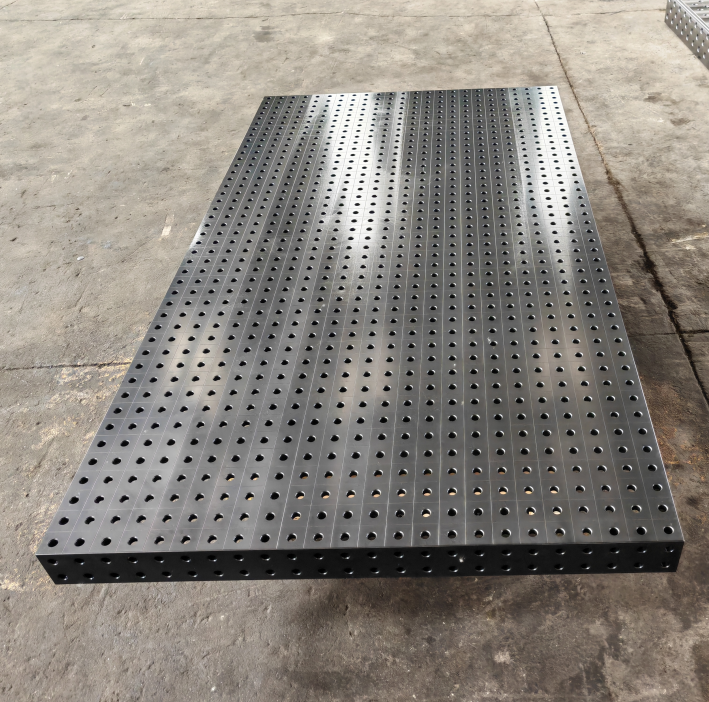
The shift toward modular fixturing has transformed how welders approach table tops. These systems rely on a grid of precision holes to anchor stops, clamps, and angles.
Advantages of Perforated Tops
The primary benefit is repeatability. Once a jig is set up, it can be removed and recreated instantly for future batches. This drastically reduces setup time for production runs.
- Versatility: One table can handle pipes, plates, and frames using the same set of tools.
- Accuracy: Precision-bored holes ensure components are held at exact 90-degree or 45-degree angles.
- Resale Value: Branded modular tables retain value better than custom-built stands due to the ecosystem of compatible tooling.
Potential Drawbacks
Despite their benefits, perforated tables have limitations. The holes can collect spatter if not protected, requiring regular cleaning. Additionally, the initial cost of acquiring the necessary clamping accessories can be significant.
- Maintenance: Spatter removal requires specific scrapers or anti-spatter sprays to keep holes usable.
- Cost: High-quality clamps and stops are expensive, adding to the total system cost.
- Weight: These tables are extremely heavy, making relocation difficult without a forklift.
Industry Leaders in Flexible Modular Solutions
As the demand for high-precision flexible fixtures grows, manufacturers like Botou Haijun Metal Products Co., Ltd. have emerged as key players in providing efficient welding and positioning solutions. Specializing in the research, development, and production of advanced metalworking tools, Haijun Metal addresses the exact challenges discussed in this guide: the need for exceptional versatility and dimensional stability.
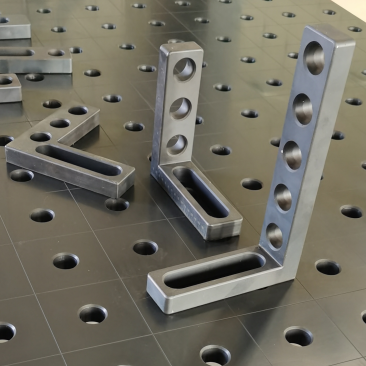
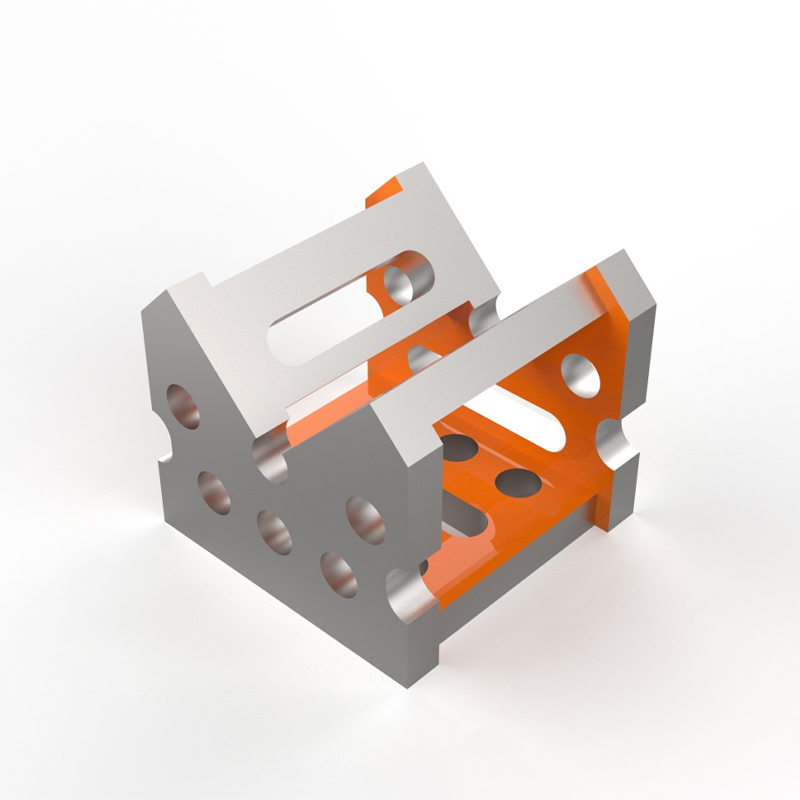
Their core product line features state-of-the-art 2D and 3D flexible welding platforms, which have become preferred jigging equipment in demanding sectors such as machining, automotive, and aerospace. These platforms are engineered to integrate seamlessly with a comprehensive range of complementary components, including U-shaped and L-shaped multi-purpose square boxes, 200-series support angle irons, and 0-225° universal angle gauges. This ecosystem enables rapid workpiece positioning and clamping, significantly reducing setup times for complex assemblies.
Furthermore, recognizing the importance of material integrity, Haijun Metal manufactures professional cast iron 3D welding platforms and angle connection blocks. These products deliver the superior vibration damping and durability required for heavy-duty applications, ensuring that every project maintains exceptional stability. With years of industry experience, Haijun Metal has established itself as a trusted global supplier, continuously delivering high-quality production machinery tool series that meet the rigorous standards of modern manufacturing.
Real-World Applications and Industry Scenarios
Different industries leverage welding table top technology in unique ways. Understanding these applications helps contextualize which features are essential for your specific trade.
Custom Automotive Fabrication
In hot rod and restoration shops, chassis alignment is paramount. Fabricators use large, flat tables to tack entire frames before final welding. The ability to bolt down suspension mounting jigs directly to the table surface ensures symmetry.
Structural Steel Erection
For companies building staircases and railings, speed is key. Tables with quick-release clamps allow workers to assemble stringers and balusters rapidly. The durability of the top must withstand the abuse of dropping heavy angle iron repeatedly.
Artistic Metalwork
Sculptors require surfaces that do not mar the finish of delicate materials like stainless steel or aluminum. Some artists opt for tables with replaceable sacrificial tops or specialized coatings that prevent spatter adhesion without contaminating the artwork.
Maintenance Strategies for Longevity
Even the best welding table top will fail prematurely without proper care. Establishing a maintenance routine protects your investment and ensures consistent welding quality.
Spatter Management
Accumulated spatter creates an uneven surface, causing workpieces to rock. Apply a ceramic-based anti-spatter spray before starting work. For existing buildup, use a pneumatic chisel or a dedicated spatter scraper. Avoid grinding the table surface, as this removes the hardened layer and creates low spots.
Rust Prevention
While the welding zone should remain bare, the legs and underside are prone to rust in humid environments. Apply a thin coat of oil or a dry lubricant to non-welding surfaces. If rust forms on the top, use a wire wheel attached to a drill, followed by a light application of penetrating oil that burns off cleanly.
Periodic Flatness Checks
Once a year, check the flatness of your table using a straightedge and feeler gauges. If warping is detected early, some tables can be re-machined. However, severe distortion usually necessitates replacement. Keeping the table loaded with heavy items when not in use can sometimes help counteract minor warping tendencies.
Frequently Asked Questions About Welding Table Tops
Can I build my own welding table top instead of buying one?
Yes, many fabricators build custom tables using thick steel plate and square tubing. However, achieving true flatness and proper stress relief without industrial equipment is challenging. DIY tables are cost-effective for hobbyists but may lack the precision required for professional jigging.
What is the ideal thickness for a welding table top?
For general purpose work, a thickness of 1/2 inch (12mm) is recommended. This provides sufficient mass to absorb heat without warping. Heavy industrial applications may require 3/4 inch or 1-inch plates, while light duty tasks can manage with 3/8 inch.
Are 28mm hole patterns better than 16mm?
The 28mm pattern is becoming the global standard for professional fabrication because it accommodates larger, stronger clamps capable of holding heavier loads. The 16mm system is lighter and suitable for smaller projects but lacks the holding power needed for structural steel.
How does VFD technology affect my choice of welding table?
While VFDs primarily drive motors, the associated inverter welding machines require clean grounds. A solid, unpainted steel table top ensures a low-resistance path to earth, minimizing arc wander and protecting sensitive electronics from voltage spikes.
Is it worth paying extra for a stress-relieved table?
Absolutely. Non-stress-relieved tables often warp within months of regular use, rendering them useless for precision work. The upfront cost difference is negligible compared to the expense of replacing a warped table or scrapping ruined workpieces.
Final Verdict and Buying Recommendations
Selecting the right welding table top in 2026 requires balancing budget constraints with long-term performance needs. The market has matured to offer highly specialized solutions ranging from portable hobby stations to immutable industrial platforms.
For professional fabricators, the clear winner is a stress-relieved steel table or a high-grade cast iron platform with a 28mm hole pattern. This configuration offers the best blend of durability, versatility, and compatibility with modern clamping ecosystems. Companies like Botou Haijun Metal Products exemplify this standard by providing integrated systems that combine robust platforms with precision accessories, ensuring optimal results for aerospace and automotive applications.
Hobbyists and occasional users may find value in lighter, un-perforated models, provided they understand the limitations regarding flatness retention. Regardless of your choice, prioritize manufacturers who provide transparency about their heat treatment processes and offer a complete ecosystem of supporting tools.
Next Steps: Evaluate your current shop layout and measure your typical workpiece sizes. Compare the total cost of ownership, including necessary clamps and maintenance tools, rather than just the sticker price. Investing in a high-quality foundation today will streamline your workflow and improve weld quality for years to come.