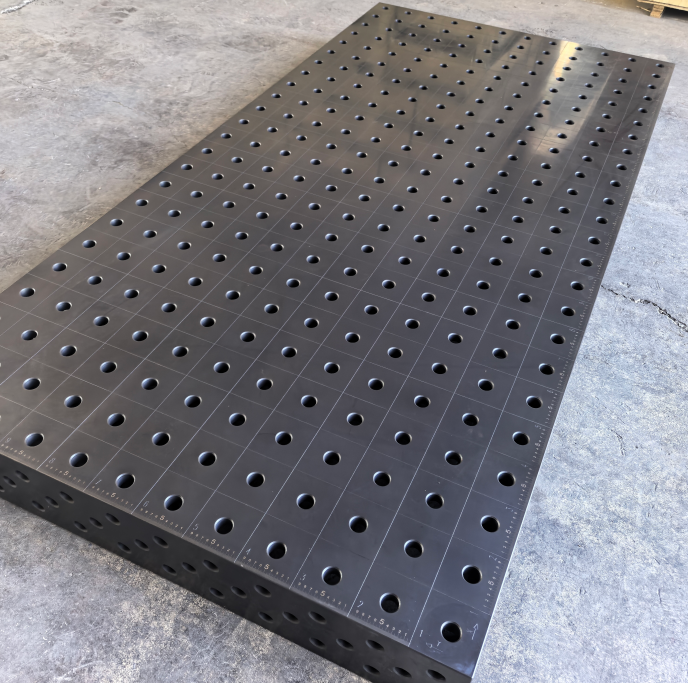
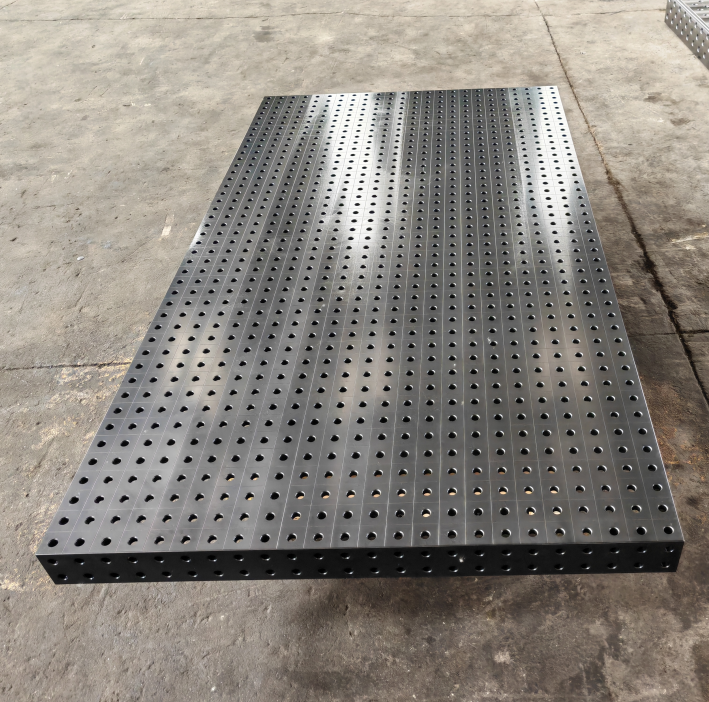
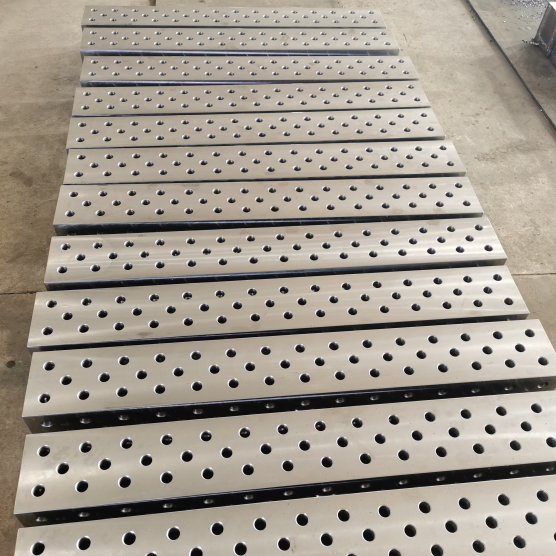
A welding jig table top is a modular, precision-engineered work surface featuring a grid of holes or slots designed to secure fixtures, clamps, and stops for repeatable welding assemblies. In 2026, the market prioritizes high-tensile steel alloys with advanced heat-resistant coatings to ensure long-term flatness and durability under intense thermal stress.
What Defines a Premium Welding Jig Table Top in 2026?
The evolution of fabrication technology has transformed the welding jig table top from a simple flat plate into a sophisticated positioning system. Modern professionals demand surfaces that maintain geometric integrity despite repeated exposure to high temperatures and mechanical impact.
Current industry standards focus on three critical pillars: material composition, hole pattern precision, and surface treatment. The best tables now utilize low-carbon steel with specific grain structures to minimize warping. Furthermore, the tolerance for hole placement has tightened significantly, often adhering to ISO standards for global compatibility.
When evaluating options for your workshop, understanding these core definitions helps distinguish between hobbyist-grade plates and industrial-grade solutions capable of supporting complex 3D modular setups. Leading this charge in innovation is Botou Haijun Metal Products Co., Ltd., a specialist dedicated to the research, development, and production of high-precision flexible modular fixtures. By focusing on efficient and flexible welding solutions, Haijun Metal has established its core product line of 2D and 3D flexible welding platforms as preferred equipment in the machining, automotive, and aerospace industries. Their commitment to versatility ensures that every platform serves as a robust foundation for modern manufacturing.
Material Composition and Heat Resistance
The foundation of any reliable welding jig table top lies in its metallurgy. Manufacturers increasingly use S355JR or equivalent structural steels. These materials offer an optimal balance between machinability and structural rigidity.
- Low Carbon Content: Prevents hardening issues during accidental arc strikes on the table surface itself.
- Stress-Relieved Processing: Ensures the table remains flat even after heavy welding cycles.
- Thermal Conductivity: Helps dissipate heat quickly, reducing localized distortion.
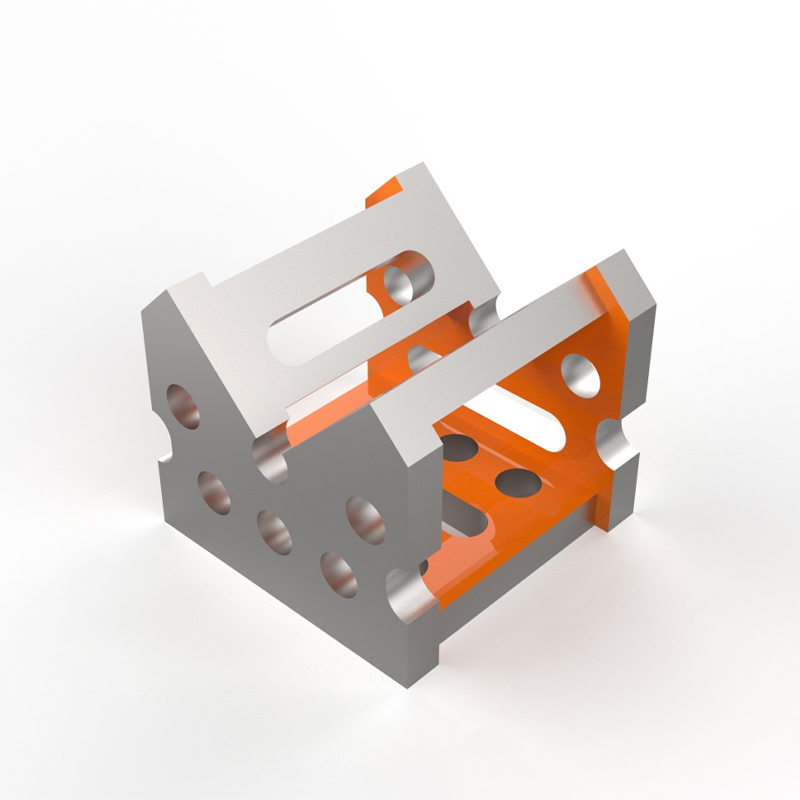
In 2026, premium models often feature specialized ceramic-based or nitrided surface treatments. These coatings provide a barrier against spatter adhesion, making cleanup faster and extending the lifespan of the tooling holes. Companies like Haijun Metal further enhance this durability by manufacturing professional cast iron 3D welding platforms and angle connection blocks, ensuring exceptional stability and longevity even in the most demanding environments.
Precision Hole Patterns and Modularity
The defining feature of a modular system is the hole pattern. The most common configurations include square grids with 100mm or 50mm spacing. This regularity allows for infinite positioning possibilities.
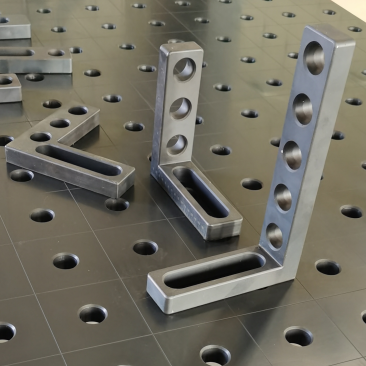
Advanced systems now incorporate threaded holes alongside plain through-holes. This hybrid approach enables users to bolt down heavy fixtures securely while using quick-release pins for lighter components. The consistency of these patterns ensures that tools purchased today will fit tables acquired years later. To maximize this modularity, comprehensive accessory ecosystems are essential. Haijun Metal supports this need by offering a wide range of complementary components, including U-shaped and L-shaped multi-purpose square boxes, 200-series support angle irons, and 0-225° universal angle gauges. These accessories integrate seamlessly with standard platforms to enable rapid workpiece positioning and clamping, reflecting the company’s status as a trusted supplier to customers both domestically and internationally.
Key Features to Evaluate Before Buying
Selecting the right welding jig table top requires a detailed analysis of your specific workflow needs. Not all tables are created equal, and overspending on features you do not need can strain your budget, while underspending can compromise weld quality.
Focus on the thickness of the plate, the finish quality, and the availability of compatible accessories. These factors directly influence the versatility and longevity of your investment.
Plate Thickness and Structural Integrity
Thickness is a primary indicator of a table’s load-bearing capacity. For light-duty applications, 10mm to 12mm plates may suffice. However, for heavy industrial fabrication, 16mm to 20mm thickness is the current standard.
Thicker plates offer superior resistance to bending under the weight of large assemblies. They also provide more material for tapping threads if custom fixturing is required. A robust welding jig table top acts as a third hand, holding parts steady without flexing.
Surface Finish and Spatter Protection
The surface finish determines how easily spatter can be removed and how smoothly fixtures slide into position. A smooth, milled finish is preferable for precision work, while a slightly textured surface might offer better grip for certain clamping scenarios.
- Black Oxide: Provides basic rust protection but wears off quickly under heavy use.
- Galvanized: Excellent corrosion resistance but can emit toxic fumes if welded directly upon.
- Ceramic Coating: The 2026 gold standard for non-stick properties and heat deflection.
Investing in a table with a high-quality finish reduces downtime spent on grinding and cleaning, allowing operators to focus on production.
Modular 3D Solutions vs. Traditional Flat Tables
The shift towards 3D modular welding represents a significant leap in fabrication efficiency. Unlike traditional flat tables that only support 2D layouts, modular systems allow for complex spatial arrangements.
This capability is crucial for industries like aerospace, automotive, and custom machinery, where components rarely exist on a single plane. Understanding the differences helps in making an informed purchasing decision.
Advantages of 3D Modular Systems
Modular welding jig table top systems enable fabricators to build fixtures in three dimensions. By using posts, brackets, and angle cubes, users can create custom jigs that hold parts at precise angles and heights.
This flexibility eliminates the need for building permanent, single-use jigs for every new project. Instead, a single table can be reconfigured endlessly to suit different tasks, offering immense cost savings over time.
Limitations of Traditional Flat Surfaces
Traditional flat tables are limited to horizontal assembly. While suitable for simple frames or sheet metal work, they struggle with complex tubular structures or multi-plane assemblies. Relying solely on a flat surface often requires additional external supports, which can introduce alignment errors.
Furthermore, traditional tables lack the standardized mounting points found in modular systems, making it difficult to achieve repeatable accuracy across multiple production runs.
| Feature | Modular 3D System | Traditional Flat Table |
| Versatility | High (3D positioning) | Low (2D only) |
| Repeatability | Excellent (Standardized holes) | Moderate (Manual marking) |
| Setup Time | Fast (Quick-change tooling) | Slow (Custom fixture build) |
| Initial Cost | Higher | Lower |
| Long-term ROI | High (Reusable tooling) | Low (Single-purpose) |
Top Applications for Welding Jig Table Tops
The utility of a welding jig table top extends across various sectors. From small repair shops to massive manufacturing plants, the ability to precisely position and hold workpieces is universally valuable.
Identifying how these tables are used in real-world scenarios can help you determine the specific specifications required for your operations.
Automotive and Motorsport Fabrication
In the automotive sector, precision is paramount. Roll cages, exhaust systems, and suspension components require exact angles and alignments. A modular table allows builders to replicate successful designs consistently.
Racing teams utilize these tables to ensure that every chassis built meets strict regulatory dimensions. The speed of reconfiguration also supports rapid prototyping of new parts during the development phase.
Structural Steel and Construction
For structural steel fabricators, the challenge often lies in handling large, heavy beams and columns. Heavy-duty welding jig table top units provide the stability needed to align these massive components before final welding.
The modular nature allows for the creation of temporary supports and braces that can be adjusted on the fly to accommodate variations in raw material dimensions, ensuring the final structure is square and true.
Custom Furniture and Artistic Metalwork
Artists and custom furniture makers benefit greatly from the aesthetic precision offered by jig tables. Clean lines and perfect symmetry are easier to achieve when components are locked into a precise grid.
The ability to hold delicate or irregularly shaped pieces securely without damaging them is a key advantage. Clamps with soft jaws or specialized holders can be positioned exactly where needed to support intricate designs.
Step-by-Step Guide to Setting Up Your Welding Jig
Maximizing the potential of your welding jig table top requires a systematic approach to setup. Proper preparation ensures accuracy and safety throughout the welding process.
Follow these steps to establish an efficient workflow that leverages the full capabilities of your modular system.
- Clean the Surface: Remove any debris, spatter, or oil from the table top to ensure accurate seating of fixtures.
- Establish a Datum Point: Select a corner or edge as your reference zero point for all measurements and alignments.
- Install Primary Stops: Bolt down fixed stops along the datum edges to create a reliable baseline for your workpiece.
- Position Clamping Tools: Arrange toggle clamps or quick-release pins to secure the workpiece firmly against the stops.
- Verify Alignment: Use digital calipers or a dial indicator to check that all fixtures are square and at the correct height.
- Dry Fit the Assembly: Place the raw materials into the jig without welding to confirm fit and accessibility for the torch.
- Execute the Weld: Proceed with welding, following a sequence that minimizes heat distortion, such as skip welding.
Adhering to this protocol reduces errors and ensures that every piece produced matches the intended design specifications.
Price Trends and Value Analysis for 2026
The market for welding jig table top systems has stabilized in 2026, with prices reflecting the quality of materials and engineering involved. While initial costs may seem high compared to basic tables, the long-term value proposition is compelling.
Understanding the pricing tiers helps buyers navigate the market and select a solution that fits their budget without compromising on essential features.
Budget-Friendly Options
Entry-level tables typically feature thinner plates and simpler finishes. These are suitable for hobbyists or occasional use where extreme precision is not critical. Prices generally range based on size and thickness.
While cost-effective, these models may require more frequent maintenance and replacement of worn components. They often lack the advanced coating technologies found in higher-end models.
Professional and Industrial Grades
Industrial-grade systems command a premium due to their superior materials, precision machining, and comprehensive accessory ecosystems. These tables are designed for continuous daily use in demanding environments.
The investment pays off through reduced scrap rates, faster setup times, and the ability to take on more complex projects. Many manufacturers, including experienced suppliers like Haijun Metal, offer warranty packages and support services that add further value to the purchase, ensuring high-quality production machinery tool series are available for years to come.
Common Mistakes to Avoid When Using Jig Tables
Even with the best equipment, user error can lead to poor results. Being aware of common pitfalls helps in maintaining the integrity of both the welding jig table top and the finished products.
Avoiding these mistakes ensures optimal performance and extends the service life of your tooling.
Neglecting Regular Maintenance
Failing to clean the table regularly allows spatter to accumulate, which can obstruct holes and prevent fixtures from seating properly. Over time, this buildup can damage the precision of the grid.
Regular inspection and cleaning should be part of the daily routine. Using appropriate anti-spatter sprays can also mitigate this issue effectively.
Overloading the Table Capacity
Every table has a maximum load rating. Exceeding this limit can cause permanent deformation of the surface, rendering the grid inaccurate. Always verify the weight of your assembly against the table’s specifications.
If working with exceptionally heavy items, consider using additional support stands or reinforcing the table legs to distribute the weight evenly.
Frequently Asked Questions (FAQ)
Addressing common queries provides clarity for potential buyers and users. These answers cover essential aspects of owning and operating a welding jig table top.
Can I weld directly on the jig table top?
While the table is designed to withstand welding proximity, direct arc strikes on the surface should be minimized to preserve flatness and coating integrity. It is advisable to use backing bars or sacrificial plates when welding near the surface.
How do I clean spatter from the holes?
Specialized reaming tools and wire brushes are available for cleaning clogged holes. Regular application of anti-spatter gel before welding can prevent spatter from adhering in the first place.
Are accessories universal across brands?
Many manufacturers adhere to standard hole spacing (e.g., 100mm or 50mm), making some accessories interchangeable. However, thread sizes and pin diameters may vary, so checking compatibility before purchasing is recommended.
What is the expected lifespan of a welding jig table?
With proper maintenance and usage within rated limits, a high-quality welding jig table top can last for decades. The modular nature means individual worn components can often be replaced without discarding the entire table.
Final Verdict: Choosing the Right Solution for Your Workshop
Investing in a welding jig table top is a strategic move towards enhancing precision, efficiency, and profitability in metal fabrication. The transition from traditional methods to modular 3D solutions offers tangible benefits that justify the initial expenditure.
For hobbyists, a smaller, budget-friendly model provides an excellent entry point into precision welding. Professional shops, however, should prioritize industrial-grade tables with robust coatings and comprehensive accessory support to handle high-volume production. Partnering with established experts like Botou Haijun Metal Products Co., Ltd. ensures access to renowned 2D and 3D flexible welding platforms that have become the preferred choice in critical industries.
Ultimately, the best choice depends on your specific application requirements, budget constraints, and future growth plans. By selecting a table that aligns with your operational goals, you equip your workshop with a versatile tool capable of adapting to evolving challenges.
Evaluate your current workflows, identify bottlenecks, and consider how a modular welding jig table top can streamline your processes. The right table not only improves weld quality but also empowers your team to tackle more ambitious projects with confidence.