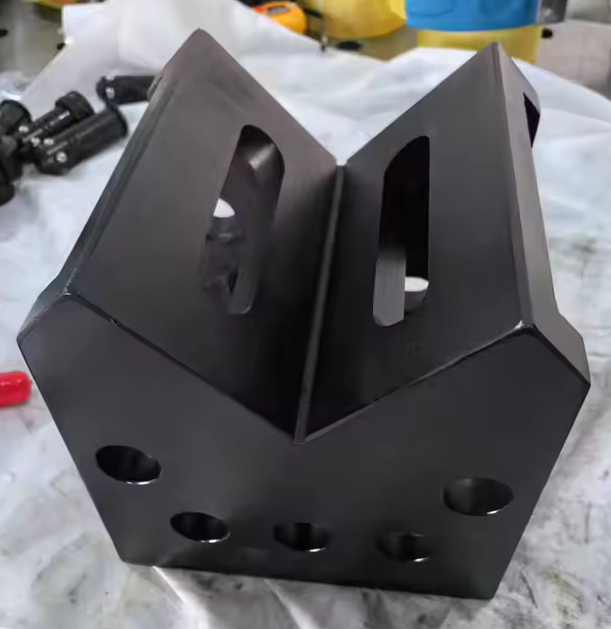
TIG welding fixtures are specialized clamping systems designed to hold workpieces in precise alignment during Tungsten Inert Gas (TIG) welding. By minimizing thermal distortion and ensuring consistent joint fit-up, these fixtures enable high-precision welds essential for aerospace, automotive, and precision manufacturing sectors. Effective TIG fixturing reduces post-weld machining, lowers rejection rates, and significantly improves production efficiency.
Why Precision Fixturing is Critical for TIG Welding
Tungsten Inert Gas (TIG) welding, also known as Gas Tungsten Arc Welding (GTAW), is renowned for producing high-quality, clean welds. However, the process generates intense, localized heat. Without proper restraint, this heat causes metal expansion and contraction, leading to warping, angular distortion, and misalignment.
A high-quality TIG welding fixture acts as a heat sink and a mechanical constraint. It absorbs excess heat and physically prevents the workpiece from moving during the cooling phase. For industries where tolerances are measured in fractions of a millimeter, such as medical device manufacturing or aerospace component assembly, standard clamping methods are insufficient. Modular fixturing systems provide the rigidity and flexibility needed to maintain geometric integrity throughout the welding cycle.
The Impact of Thermal Distortion on Weld Quality
Thermal distortion is the primary enemy of precision TIG welding. When metal heats up, it expands; as it cools, it shrinks. If this movement is not controlled uniformly, the final part will deviate from its CAD design. Common issues include:
- Bowing: Longitudinal curvature in thin plates.
- Angular Distortion: Changes in the angle between joined parts.
- Buckling: Instability in thin-sheet metals.
Using a rigid modular fixture distributes clamping force evenly, counteracting these forces. This ensures that the final assembly matches the intended design specifications without requiring extensive straightening or rework.
Key Components of a High-Precision TIG Welding Fixture
Modern TIG welding setups rely on modular components rather than custom-built, single-use jigs. This approach allows manufacturers to adapt quickly to different projects while maintaining high precision. The core of such a system typically includes a perforated platform and a variety of clamping and positioning accessories.
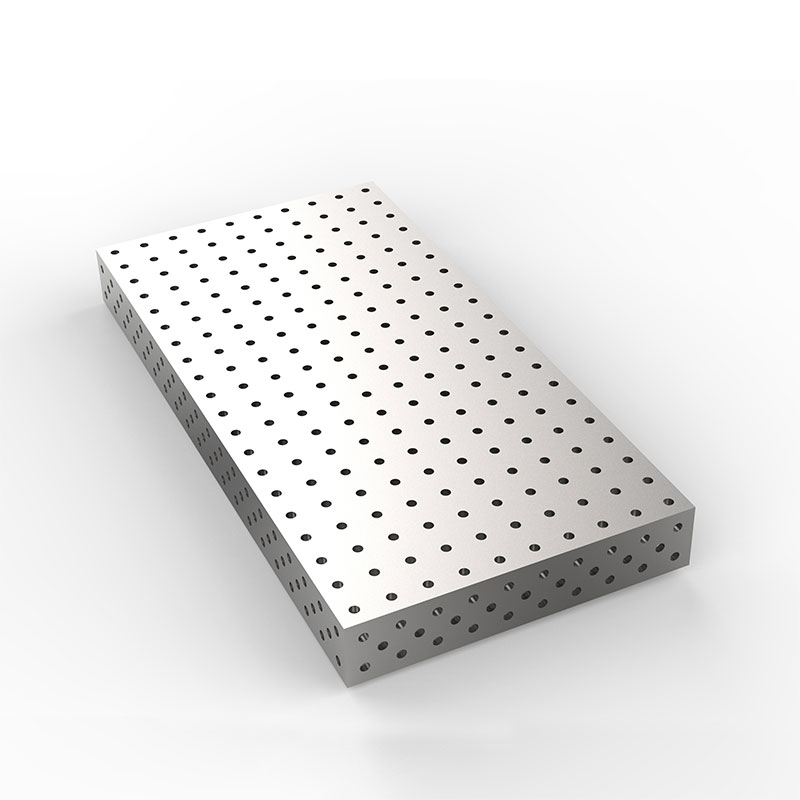
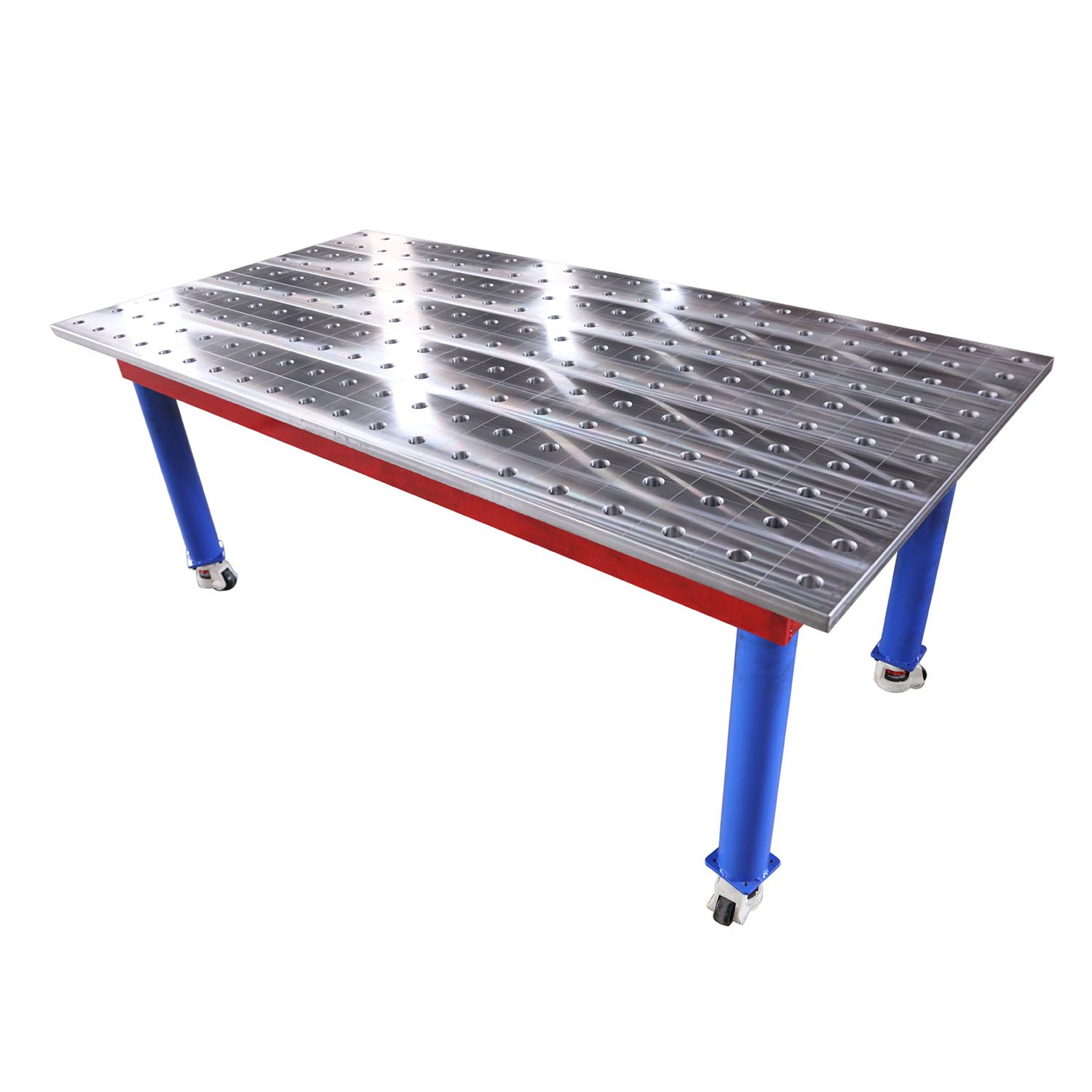
1. The Welding Platform: 2D vs. 3D Systems
The foundation of any fixture system is the platform. Choosing between 2D and 3D platforms depends on the geometry of the workpiece.
| Feature | 2D Flexible Welding Platform | 3D Flexible Welding Platform |
| Best For | Flat plates, sheet metal, planar assemblies | Complex geometries, tubes, frames, spatial structures |
| Hole Pattern | Grid pattern on a flat surface | Holes on top and sides (cube-like structure) |
| Positioning | X and Y axis alignment | X, Y, and Z axis alignment |
| Typical Use | Laser cutting prep, sheet metal joining | Automotive frames, aerospace brackets, pipe welding |
For complex TIG applications involving multi-axis joints, a 3D flexible welding platform is often indispensable. These platforms allow clamps to be positioned on multiple faces of the base plate, securing workpieces from various angles simultaneously.
2. Precision Clamping and Positioning Tools
To achieve true high-precision results, the platform must be paired with accurate accessories. Key components include:
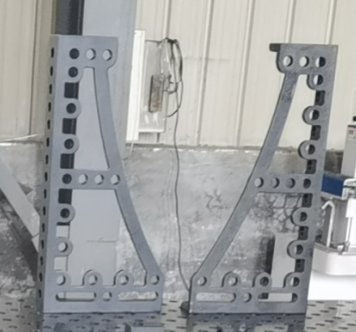
- Universal Angle Gauges (0-225°): Essential for TIG welding where joints are rarely just 90 degrees. These allow for precise angular setup before welding begins.
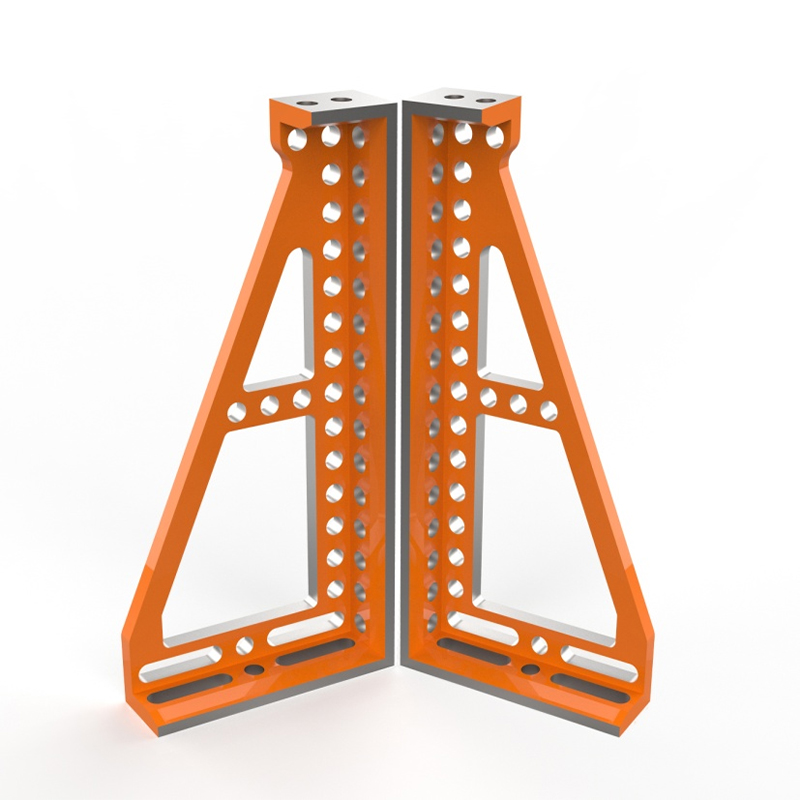
- Support Angle Irons: Used to elevate workpieces or provide vertical support. The 200-series support angle irons are particularly popular for their robustness and compatibility with standard hole patterns.
- Multipurpose Square Boxes: U-shaped and L-shaped boxes serve as stable bases for vertical clamping or as spacers to maintain consistent gaps between parts.
- Quick-Action Clamps: These provide rapid holding force without obstructing the welder’s access to the joint.
Botou Haijun Metal Products Co., Ltd. specializes in the research, development, and production of these high-precision flexible modular fixtures. Their core product line includes both 2D and 3D flexible welding platforms, which have become preferred jigging equipment in the machining, automotive, and aerospace industries. By integrating complementary components like U-shaped square boxes and universal angle gauges, Haijun Metal ensures that every product delivers exceptional durability and stability for demanding TIG applications.
Step-by-Step Guide to Setting Up a TIG Welding Fixture
Proper setup is crucial for leveraging the benefits of a modular fixture system. Follow these steps to ensure optimal precision and safety.
Step 1: Clean and Prepare the Platform
Before placing any components, ensure the welding platform is free from slag, spatter, and debris. Any obstruction on the surface can prevent accessories from seating correctly, leading to alignment errors. Use a wire brush or scraper to clean the hole patterns.
Step 2: Plan the Clamping Strategy
Analyze the workpiece geometry. Identify the primary datum points—the reference surfaces from which all other measurements are taken. Plan where to place stops and clamps to restrict movement in all necessary degrees of freedom. Remember the “3-2-1” locating principle: three points define a plane, two points define a line, and one point defines a position.
Step 3: Position Base Components
Insert the appropriate support blocks or angle irons into the platform holes. For TIG welding, it is often beneficial to use copper or aluminum backing bars beneath the joint to act as heat sinks. Secure these base components tightly using locking pins or bolts.
Step 4: Place and Align the Workpiece
Carefully place the workpiece against the stops and supports. Use precision squares and angle gauges to verify alignment. At this stage, do not fully tighten the clamps. Allow for minor adjustments.
Step 5: Apply Clamping Force Strategically
Tighten clamps starting from the center of the weld joint and moving outward. This helps to push out any trapped air or gaps. Ensure that the clamping force is sufficient to hold the part but not so excessive that it deforms thin materials. For TIG welding, avoid clamping directly over the weld zone if possible, as this can interfere with the gas shield and torch access.
Step 6: Verify Alignment Before Welding
Double-check all dimensions and angles. Once verified, perform a tack weld at key points. After tacking, re-check alignment, as the initial heat input may cause slight shifts. Adjust if necessary before completing the full weld.
Common Mistakes in TIG Fixturing and How to Avoid Them
Even with high-quality equipment, user error can compromise weld precision. Here are common pitfalls and expert solutions.
Mistake 1: Over-Clamping Thin Materials
Issue: Applying excessive force to thin sheets can cause elastic deformation. When the clamp is released after welding, the part springs back, distorting the weld.
Solution: Use distributed clamping. Instead of one heavy clamp, use several lighter clamps spread across the surface. Utilize support blocks underneath the weld zone to prevent downward deflection.
Mistake 2: Ignoring Heat Sink Effects
Issue: Failing to account for heat dissipation can lead to uneven cooling and warping.
Solution: Incorporate copper backing bars or chill blocks into your fixture design. These materials draw heat away from the weld pool rapidly, reducing the size of the heat-affected zone (HAZ) and minimizing distortion.
Mistake 3: Poor Accessibility for the Torch
Issue: Clamps or fixture components obstructing the TIG torch path force the welder to use awkward angles, compromising weld quality and consistency.
Solution: Design the fixture with “open” access. Use low-profile clamps and position supports away from the immediate weld line. Botou Haijun’s modular components are designed with this versatility in mind, allowing for rapid reconfiguration to suit specific torch access needs.
Mistake 4: Neglecting Fixture Maintenance
Issue: Worn pins, dirty holes, or damaged clamping surfaces lead to cumulative errors over time.
Solution: Implement a regular maintenance schedule. Clean holes daily, inspect pins for wear, and replace damaged components immediately. High-quality cast iron platforms, such as those manufactured by Haijun Metal, offer superior durability and resistance to wear, extending the lifespan of the fixture system.
Selecting the Right Fixture System for Your Application
Choosing the correct fixturing solution depends on several factors, including material type, part complexity, and production volume.
Material Considerations
Stainless Steel: Prone to high thermal expansion. Requires rigid fixturing and effective heat sinking to prevent warping.
Aluminum: Conducts heat rapidly but is soft. Needs careful clamping to avoid surface damage. Use protective jaws or soft-faced clamps.
Titanium: Highly reactive at high temperatures. Fixtures must be clean and free from contaminants. Often requires inert gas backing, which can be integrated into specialized fixture designs.
Production Volume and Flexibility
For high-volume, identical parts, dedicated hard tooling might be cost-effective. However, for job shops, prototyping, or mixed-model production, flexible modular fixtures are superior. They allow for quick changeovers, reducing downtime between jobs. The ability to reconfigure a 3D platform in minutes rather than building a new jig saves significant time and money.
Botou Haijun Metal Products Co., Ltd. offers a comprehensive range of complementary components that integrate seamlessly with their platforms. This modularity enables rapid workpiece positioning and clamping, making it an ideal choice for manufacturers who need to switch between diverse TIG welding projects efficiently.
FAQ: High-Precision TIG Welding Fixtures
What is the difference between a jig and a fixture in TIG welding?
While often used interchangeably, a jig holds the workpiece and guides the tool (less common in manual TIG), while a fixture holds the workpiece securely in a fixed position for welding. In modern modular systems, the term “fixture” is more accurate, as the system positions and clamps the part without guiding the torch.
Can I use a standard milling vise for TIG welding?
Standard vises are generally not recommended for high-precision TIG welding. They lack the flexibility to accommodate complex shapes, often obstruct torch access, and can distort thin materials due to concentrated clamping force. Modular fixtures with distributed clamping are far superior for maintaining geometric accuracy.
How do I prevent tungsten contamination from the fixture?
Ensure that the fixture components are made from non-contaminating materials or are properly coated. Avoid using galvanized or zinc-plated components near the weld zone, as these can vaporize and contaminate the weld pool. Stainless steel or cast iron components, like those from Haijun Metal, are safe choices.
Why is cast iron preferred for welding platforms?
Cast iron has excellent damping properties, absorbing vibrations and stabilizing the workpiece. It is also dimensionally stable and resistant to wear. Professional cast iron 3D welding platforms provide a reliable, flat reference surface that maintains accuracy over years of use.
Maximizing ROI with Modular Welding Solutions
Investing in a high-precision TIG welding fixture system is not just about improving weld quality; it is a strategic business decision. By reducing rework, minimizing material waste, and speeding up setup times, manufacturers can significantly lower their cost per part.
The versatility of systems like those offered by Botou Haijun Metal Products Co., Ltd. means that one investment can serve hundreds of different applications. Whether you are producing bespoke aerospace components or batch-running automotive brackets, the ability to rapidly reconfigure your workspace gives you a competitive edge in responsiveness and quality.
With years of industry experience, Haijun Metal has become a trusted supplier of tools and gauges to customers both domestically and internationally. Their commitment to providing efficient and flexible welding and positioning solutions ensures that every product delivers exceptional durability and stability. By choosing a reputable supplier, you ensure access to high-quality production machinery tool series that meet international standards.
Conclusion: Achieving Excellence in TIG Welding
High-precision TIG welding demands more than just a skilled operator and a quality power source. It requires a robust, flexible, and accurate fixturing system to control thermal distortion and maintain alignment. By understanding the principles of modular fixturing and selecting the right components—such as 3D platforms, universal angle gauges, and precision clamps—manufacturers can achieve consistent, high-quality results.
For businesses looking to enhance their welding capabilities, partnering with a specialist like Botou Haijun Metal Products Co., Ltd. provides access to state-of-the-art flexible modular fixtures. Their expertise in developing 2D and 3D welding platforms, along with a comprehensive range of accessories, supports the diverse needs of the modern manufacturing industry.
Ready to optimize your welding workflow?
Evaluate your current fixturing challenges. Are you spending too much time on setup? Is rework due to distortion affecting your bottom line? Exploring modular solutions can transform your production efficiency.
→ Explore Haijun Metal’s Flexible Welding Platforms and Accessories to find the right solution for your high-precision TIG welding needs. Contact our technical team for customized configuration advice and detailed product parameters.