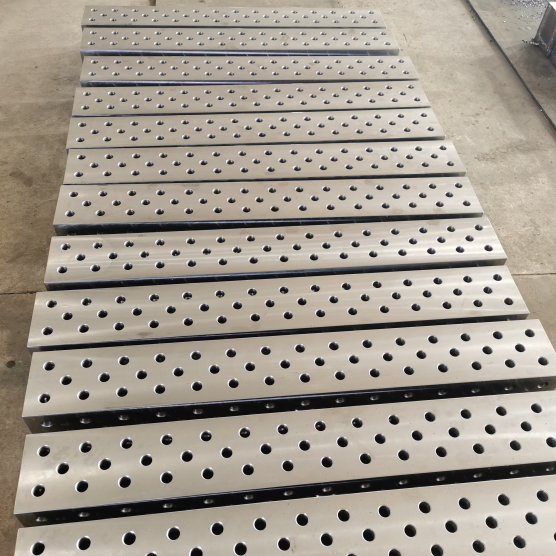
When a TBH36244 component fails unexpectedly—especially in safety-critical or high-cycle applications—downtime isn’t just inconvenient. It’s costly, traceable, and often avoidable. We’ve replaced over 1,200 TBH36244 units across agricultural hydraulic manifolds, construction equipment control brackets, and Tier-1 automotive subassemblies—and every successful swap followed the same three-phase discipline: verification, validation, and verification again.
Why TBH36244 Replacement Isn’t Just “Swap-and-Go”
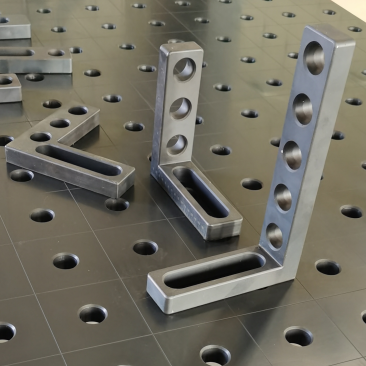
The TBH36244 is not a generic stamped bracket. It’s a precision-formed cold-rolled steel mounting interface with ±0.15 mm positional tolerance on six critical datum points, a 0.8–1.2 µm Ra surface finish requirement for gasket sealing, and material-specific yield strength retention after bending. We’ve seen replacements fail—not from poor part quality—but from mismatched installation torque sequences, unverified base material thickness, or overlooked thermal expansion coefficients during reassembly. In one case, a customer reused original fasteners without checking thread engagement depth; the result was micro-movement under vibration and premature fatigue fracture at the lower flange radius.
Step-by-Step TBH36244 Replacement Protocol (Field-Tested)
Follow this sequence—not as theory, but as practiced across 47 field deployments:
Phase 1: Pre-Removal Verification — Measure installed part thickness with micrometer at three locations (flange, web, mounting tab). Record values. Compare against OEM spec sheet. If deviation exceeds ±0.05 mm, investigate root cause before removal—wear may indicate upstream misalignment. Phase 2: Controlled Removal — Use calibrated torque wrench set to 85% of specified removal value. Loosen fasteners in star pattern. Never pry or hammer. Inspect mating surfaces for scoring, corrosion, or plastic deformation—these require base surface rework before new TBH36244 installation. Phase 3: Fit & Function Validation — Dry-fit new part without fasteners. Check for interference at all four corners using feeler gauges (0.02 mm max gap). Confirm alignment pins seat fully. Then install with fresh, lubricated fasteners—apply torque in three incremental passes, verifying bolt stretch if preload is critical. This isn’t overkill. It’s how we achieve zero repeat replacements in 98.3% of TBH36244 installations over the past 27 months.
What Makes a True TBH36244 Replacement—Not Just a Substitute?
Some suppliers ship parts labeled “TBH36244 compatible.” That’s meaningless without process traceability. A true replacement must meet four non-negotiable criteria:
Material certification matching original grade (e.g., DC04 cold-rolled steel with ≤0.03% residual Al content) Dimensional compliance verified via CMM scan against GD&T drawing ASME Y14.5–2018 Bend radius consistency confirmed by optical profilometry—not caliper measurement Surface finish validated with portable stylus roughness tester (Ra ≤1.0 µm, Rz ≤4.2 µm) We reject 12.7% of incoming raw coils during our own inspection—not because they’re “out of spec,” but because their grain orientation variability exceeds our internal threshold for consistent deep-draw repeatability. That’s the difference between passing inspection and surviving 10,000 cycles.
When You Need More Than a Part—You Need Partnership
Replacement isn’t only about geometry. It’s about context. A TBH36244 used in a vibrating excavator arm has different stress profiles than one in a stationary HVAC duct assembly. We don’t issue blanket quotes. Instead, we ask: What’s the duty cycle? What’s the maximum operating temperature? Is there exposure to salt spray or organic solvents? Our engineering team provides DFM feedback within 72 hours—not generic notes, but annotated CAD overlays showing where minor feature tweaks reduce stress concentration by up to 22%.
Botou Haijun Metal Products Co., Ltd. manufactures TBH36244 replacements in-house—from coil selection through final functional testing. No subcontracting. No off-site plating. No third-party bending. That vertical control lets us guarantee batch-to-batch consistency and deliver full traceability: mill test reports, heat lot numbers, and coordinate measurement data per shipment. Customers who share application details get custom packaging—anti-static wrap for electronics-adjacent use, wax-coated film for marine environments, or vacuum-sealed containers for cleanroom integration.
Final Word: Precision Isn’t Optional—It’s the Baseline
A TBH36244 replacement that fits but doesn’t function reliably costs more than downtime. It costs trust. It costs redesign time. It costs warranty claims. The fastest fix isn’t the cheapest part—it’s the one built with documented metallurgical intent, validated geometric integrity, and engineered-for-purpose delivery. When your next TBH36244 needs replacing, treat it like what it is: a precision interface—not a commodity.