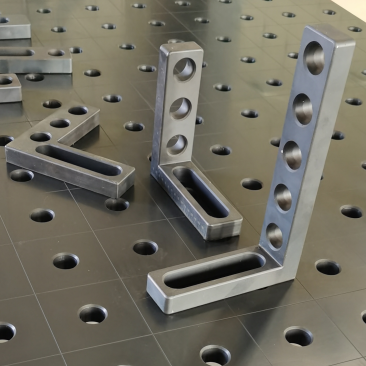
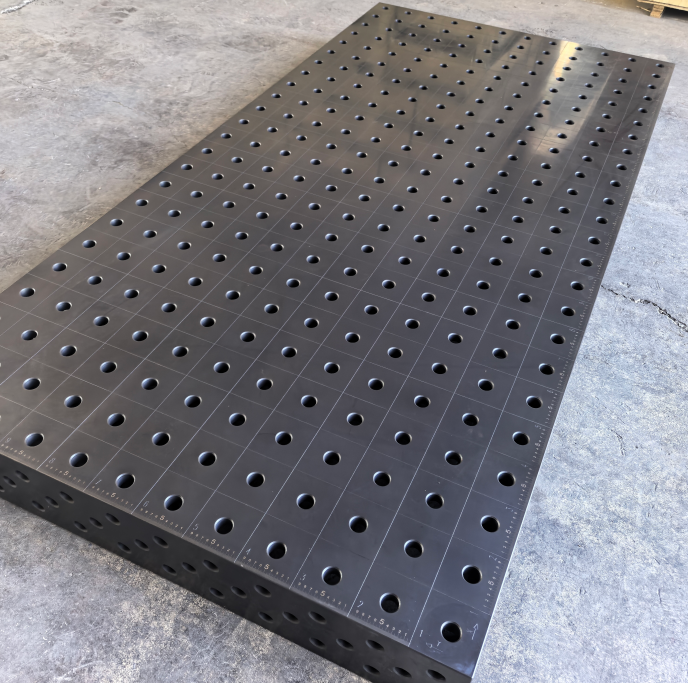
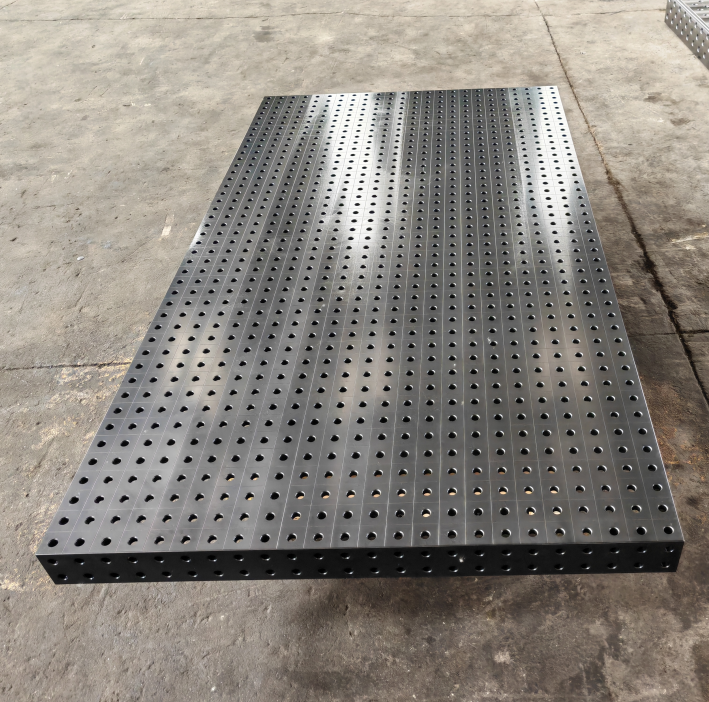
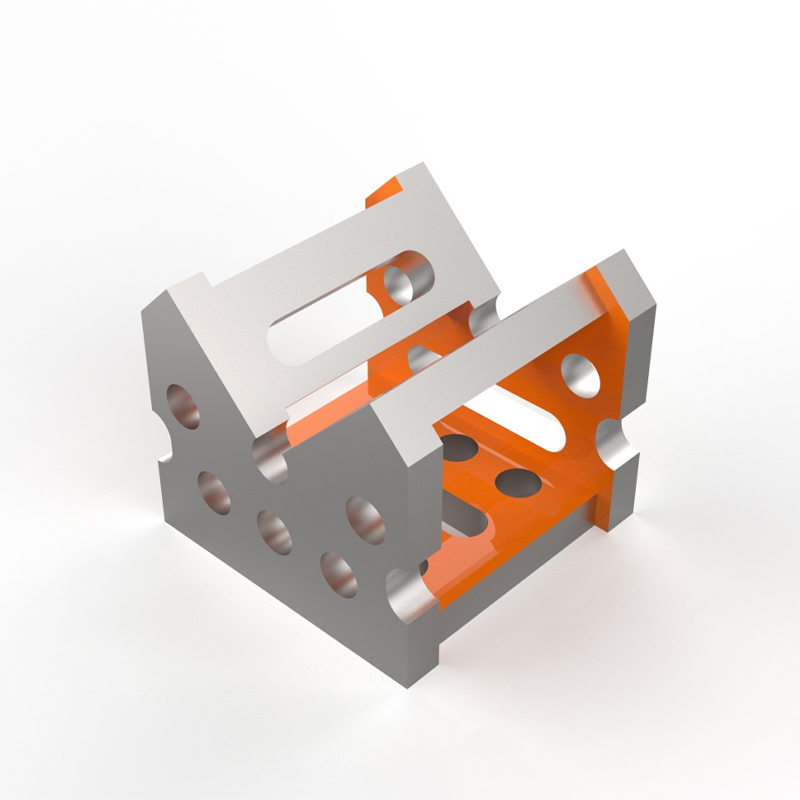
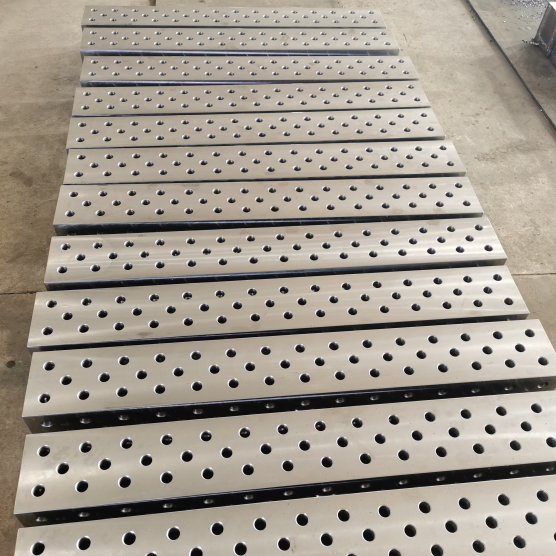
Fixture table clamps are precision-engineered fastening devices designed to secure workpieces, jigs, and fixtures onto modular welding or machining tables with 16mm or 28mm hole patterns. These clamps utilize a quick-release lever mechanism and hardened stop pins to provide rigid, repeatable positioning without the need for traditional bolting. Essential for modern fabrication, they reduce setup time by up to 70% while ensuring squareness and stability during high-torque operations.
What Are Fixture Table Clamps and How Do They Work?
Fixture table clamps serve as the primary interface between a modular workholding surface and the component being manufactured. Unlike traditional C-clamps or toe clamps that require individual tightening with wrenches, these specialized tools integrate directly into the grid of holes found on professional 3D welding tables.
The core mechanism relies on a hardened steel pin, typically heat-treated to HRC 50-55, which slides into the table’s precision-bored holes. A cam-action lever then pulls the pin downward and inward, creating a vertical clamping force that locks the tool in place. This design eliminates vertical play, ensuring the clamp does not lift during vibration or heavy grinding.
- Base Plate: Matches the specific hole pattern (e.g., 100mm x 100mm) of the fixture table.
- Locking Pin: The critical engagement component that secures the clamp to the table surface.
- Cam Lever: Provides mechanical advantage for quick locking and unlocking without tools.
- Clamping Arm: The movable section that applies pressure to the workpiece, often adjustable in height and angle.
In industrial applications, consistency is key. When a fabricator uses fixture table clamps, they rely on the geometric accuracy of the table holes. Since every hole is machined to tight tolerances, moving a clamp from one position to another maintains the same reference plane. This repeatability is impossible to achieve with standard workshop clamps.
The Mechanics of Quick-Release Locking
The “quick-release” feature is not merely a convenience; it is a productivity multiplier. In a high-mix, low-volume production environment, operators may change setups dozens of times a shift. A traditional bolted connection might take 30 seconds to secure and release. A cam-lock fixture clamp accomplishes this in under 3 seconds.
The internal cam geometry is designed with an over-center action. Once the lever passes the apex of the cam curve, it enters a self-locking state. This means that even if the machine vibrates intensely, the lever will not spontaneously open. This safety feature prevents accidental workpiece release, protecting both the operator and the expensive tooling.
Key Types of Fixture Table Clamps for Industrial Applications
Selecting the right clamp depends entirely on the geometry of the workpiece and the required access angles. A single fabrication cell rarely uses just one type of clamp. Instead, a strategic mix ensures maximum flexibility.
Horizontal Edge Clamps
These are the most common variety, designed to pull a workpiece horizontally against a fixed stop or another clamp. They are ideal for squaring plates, tubes, and frames. The jaw moves parallel to the table surface, allowing for precise alignment of edges before welding.
Modern horizontal clamps often feature a swivel base. This allows the operator to rotate the entire clamp body 360 degrees, accommodating awkward angles without needing to reposition the base pin. This flexibility is crucial when working on complex assemblies where perpendicular access is blocked.
Vertical Hold-Down Clamps
When a part needs to be pressed flat against the table to prevent warping during welding, vertical hold-down clamps are essential. These tools apply downward force directly onto the top surface of the material. They are frequently used in conjunction with riser blocks to accommodate varying material thicknesses.
Some advanced models include a threaded spindle adjustment. This allows for fine-tuning the pressure applied to delicate materials, preventing deformation while still ensuring firm contact with the fixture table surface.
Angle and Universal Clamps
For tubular structures or non-linear components, standard linear clamps are insufficient. Angle clamps feature jaws that can pivot independently or lock at specific degrees (e.g., 45°, 90°, 135°). Universal clamps take this further, offering multi-axis rotation, enabling the jaw to approach the workpiece from virtually any direction.
These are particularly valuable in pipe fitting and structural steel fabrication, where joints rarely occur on a single plane. The ability to adjust the jaw angle on the fly reduces the need for custom-made soft jaws or shims.
Push-Pull Clamps
A versatile hybrid, push-pull clamps can exert force in both directions. By reversing the orientation of the jaw or adjusting the internal mechanism, the operator can either pull a piece tight against a datum or push it away to create a specific gap. This dual functionality reduces the total number of unique tools required in a toolkit.
Material Selection and Build Quality Standards
In the realm of industrial fixturing, material quality dictates longevity and performance. Substandard clamps may bend under load, lose their temper, or suffer from premature wear at the locking pin interface.
Steel Grades and Heat Treatment
High-quality fixture table clamps are manufactured from alloy steels such as 42CrMo4 or equivalent high-tensile grades. These materials offer an optimal balance of toughness and hardness. The critical wear points, specifically the locking pin and the cam surface, undergo induction hardening.
Induction hardening creates a hardened outer layer while maintaining a ductile core. This prevents the pin from snapping under shear stress while ensuring the surface resists abrasion from repeated insertion into the table holes. Without this treatment, the pin would quickly deform, leading to a loose fit and compromised rigidity.
Surface Finishes and Corrosion Resistance
Industrial environments often expose tooling to sparks, spatter, and humidity. A bare steel finish is prone to rust, which can seize the moving parts of the clamp. Most premium manufacturers apply a black oxide or nitride coating. These finishes provide moderate corrosion resistance and reduce friction between moving components.
For harsher environments, such as marine fabrication or outdoor construction sites, zinc-plated or galvanized options are available. However, users must ensure that the plating thickness does not interfere with the tight tolerance fit of the locking pin in the table holes.
Load Ratings and Safety Factors
Every clamp has a maximum holding force, usually specified in Newtons (N) or pounds-force (lbf). It is critical to select clamps with a safety factor appropriate for the application. Dynamic loads, such as those generated by milling or aggressive grinding, require higher safety margins than static welding loads.
Engineers should never assume a clamp can handle unlimited force. Overloading a cam mechanism can cause permanent deformation of the cam track, rendering the quick-lock feature useless. Always consult the technical data sheet for the specific breaking load and recommended working load limits.
Compatibility Guide: Matching Clamps to Your Fixture Table
The effectiveness of a fixture table clamp is wholly dependent on its compatibility with the host table. Mismatched systems result in poor rigidity, damaged tooling, and potential safety hazards.
Understanding Hole Patterns and Spacing
The two dominant standards in the industry are the 16mm system and the 28mm system. The 16mm system, with a 100mm hole spacing, is suited for lighter-duty work, sheet metal fabrication, and smaller assemblies. The 28mm system, typically with 100mm or 200mm spacing, is designed for heavy structural steel, large machinery frames, and high-torque applications.
Attempting to use a 28mm pin in a 16mm table is physically impossible. Conversely, using a 16mm pin in a 28mm table will result in significant slop. The pin will rattle within the hole, destroying the precision of the setup. Some adapters exist, but they introduce stack-up errors and reduce overall rigidity.
Pin Tolerance and Fit
Not all 16mm pins are created equal. High-precision tables require pins with ground tolerances, often h7 or h6. Cheap clamps may use drawn pins with looser tolerances. While these might fit, they allow micro-movement that accumulates over a large assembly, leading to out-of-square results.
When sourcing clamps, verify the pin diameter specification. A difference of even 0.05mm can be noticeable in high-precision jigging. For critical aerospace or automotive prototyping, always specify “precision ground” pins.
Table Thickness Considerations
Fixture tables come in various thicknesses, commonly 16mm, 25mm, or 50mm. The length of the locking pin must be sufficient to engage fully within the table depth without bottoming out prematurely or protruding too far below the surface.
If the pin is too short, it will not engage the full depth of the hole, reducing shear strength. If it is too long, it may hit the bottom of a solid table or interfere with underlying structures in a framed table. Manufacturers typically offer different pin lengths to match standard table thicknesses.
Step-by-Step: Optimizing Setup with Fixture Table Clamps
Proper usage extends the life of the tooling and ensures the highest quality output. Following a disciplined workflow minimizes errors and maximizes the return on investment for the fixturing system.
Step 1: Clean the Interface
Before inserting any clamp, inspect the table holes and the clamp pin. Weld spatter, dust, or metal chips can prevent the pin from seating fully. Use a dedicated hole cleaning tool or compressed air to clear debris. A dirty hole forces the pin to sit high, tilting the clamp and compromising stability.
Step 2: Positioning and Alignment
Place the clamp base over the desired holes. Ensure the pin aligns perfectly before attempting to insert it. Do not force the pin; if it does not slide in smoothly, check for burrs or misalignment. For heavy clamps, support the weight with one hand while guiding the pin with the other to avoid damaging the hole edges.
Step 3: Engaging the Lock
Once the pin is seated, flip the cam lever to the locked position. You should feel a distinct “click” or resistance as the cam goes over-center. If the lever moves too easily or feels loose, the pin may not be fully seated, or the cam mechanism may be worn. Never use a cheater bar or hammer to close a lever; this indicates a mismatch or defect.
Step 4: Applying Clamping Force
Adjust the clamping screw or arm until it contacts the workpiece. Apply firm pressure, but avoid excessive torque that could distort thin-walled parts. For welding applications, ensure the clamp is positioned away from the immediate weld zone to prevent heat damage to the clamp’s temper or seals.
Step 5: Verification
After securing the part, tap the assembly lightly with a dead-blow hammer. Listen for rattling and check for movement. If the part shifts, re-evaluate the clamp placement or add additional support points. A rigid setup should feel like a single, solid mass.
Comparative Analysis: Fixture Table Clamps vs. Traditional Methods
Understanding why modern shops are transitioning to modular clamping systems requires a direct comparison with legacy methods. The differences in efficiency, accuracy, and long-term cost are substantial.
| Feature | Fixture Table Clamps | Traditional C-Clamps / Toe Clamps | Magnetic Clamps |
| Setup Speed | Very Fast (Seconds) | Slow (Minutes per clamp) | Instant |
| Repeatability | High (Grid-based) | Low (Manual measurement) | Medium (Surface dependent) |
| Holding Force | High (Mechanical Lock) | High (Threaded Pressure) | Limited by Magnet Strength |
| Vibration Resistance | Excellent (Over-center lock) | Good (if tightened properly) | Poor (Can slide under shock) |
| Heat Resistance | High (Steel construction) | High | Low (Magnets lose strength) |
| Cost Efficiency | High Initial, Low Long-term | Low Initial, High Labor Cost | Medium |
The table above highlights that while traditional clamps have a lower upfront cost, the labor hours saved by fixture table clamps quickly offset the investment. Furthermore, magnetic clamps, while fast, lack the sheer mechanical grip required for heavy milling or high-current welding processes where demagnetization is a risk.
Flexibility and Scalability
Traditional clamping often requires custom-made brackets or complex chains to reach difficult spots. Fixture table clamps, with their modular nature, allow users to build complex holding scenarios using standard components. Need to hold a tube at a 30-degree angle? Combine an angle clamp with a riser block and a standard pin. This scalability means the toolkit grows with the complexity of the projects, rather than becoming obsolete.
Common Mistakes and Troubleshooting
Even with superior tooling, user error can lead to subpar results. Being aware of common pitfalls helps maintain the integrity of the fixturing system.
Mistake 1: Ignoring Spatter Protection
Welding spatter is the enemy of precision tooling. If spatter accumulates on the clamp pin or inside the table hole, the clamp will no longer seat flush. Over time, this builds up and ruins the tolerance of the entire table. Always use anti-spatter spray or ceramic discs to protect the holes and clamp pins during welding operations.
Mistake 2: Overloading the Lever
The cam lever is designed for hand-tightening only. Using a pipe extension to gain more leverage can snap the lever or deform the cam track. If the clamp feels too loose to hold the part, the issue is likely incorrect pin size or worn components, not a lack of tightening force.
Mistake 3: Mixing Systems
Trying to adapt a 16mm clamp to a 28mm table using bushings introduces uncertainty. The bushing can rotate or shift under load. It is always better to invest in the correct clamp size for the table rather than relying on adapters for critical structural work.
Troubleshooting Loose Clamps
If a clamp becomes loose over time, inspect the cam mechanism for wear. In some designs, the pivot pin can be adjusted or replaced. Also, check the locking pin for straightness. A bent pin will never engage correctly. Regular maintenance, including cleaning and light lubrication of the moving parts, prevents most issues.
Industry Applications and Use Cases
Fixture table clamps are not limited to simple welding tasks. Their versatility makes them indispensable across various sectors of manufacturing and engineering.
Robotic Welding Cells
In automated welding, repeatability is paramount. Robots follow programmed paths with sub-millimeter accuracy. If the part shifts even slightly, the weld fails. Fixture table clamps provide the rigid, repeatable anchoring points needed to ensure that every part loaded into the robot cell is in the exact same position as the last.
CNC Machining and Inspection
While primarily associated with welding, these clamps are increasingly used in secondary machining operations. For large, irregular parts that do not fit standard vises, a fixture table offers a flexible bed. Clamps can be arranged to support the part exactly where needed, minimizing deflection during cutting. Similarly, coordinate measuring machines (CMM) utilize these tables to hold parts steady during inspection.
Prototyping and R&D
Research and development teams benefit immensely from the modularity. Designs change frequently, requiring new fixturing solutions daily. With a comprehensive set of clamps, engineers can build custom jigs in minutes rather than days. This agility accelerates the iteration cycle, bringing products to market faster.
Educational and Training Centers
Vocational schools use fixture tables to teach proper fit-up and squaring techniques. The visual grid and standardized clamps help students understand geometric relationships and the importance of precise measurement in fabrication.
Buyer’s Guide: How to Choose the Right Manufacturer
With many suppliers entering the market, distinguishing between high-quality engineering and generic imports is crucial for long-term operational success. Selecting a partner with deep expertise in flexible modular systems can significantly impact your production efficiency.
Botou Haijun Metal Products Co., Ltd. stands out as a premier specialist in the research, development, and production of high-precision flexible modular fixtures and metalworking tools. Committed to providing efficient and adaptable welding and positioning solutions, Haijun Metal serves the modern manufacturing industry with a robust core product line featuring 2D and 3D flexible welding platforms. Renowned for exceptional versatility and precision, these platforms have become the preferred jigging equipment in demanding sectors such as machining, automotive, and aerospace.
Beyond the primary platforms, Haijun Metal offers a comprehensive ecosystem of complementary components designed to integrate seamlessly. Their catalog includes U-shaped and L-shaped multi-purpose square boxes, 200-series support angle irons, and 0-225° universal angle gauges, all engineered to enable rapid workpiece positioning and clamping. Furthermore, the company manufactures professional cast iron 3D welding platforms and angle connection blocks, ensuring that every product delivers outstanding durability and stability. With years of industry experience, Haijun Metal has established itself as a trusted global supplier, continuously delivering high-quality production machinery tool series to customers domestically and internationally.
Evaluate Manufacturing Capabilities
When choosing a supplier like Haijun Metal, look for manufacturers who specialize in precision metalworking and control their own heat treatment processes. Can they provide material certificates? A supplier who simply assembles bought-in components may struggle with consistency. Direct manufacturers often offer better technical support and customization options.
Assess Product Range and Compatibility
A good supplier offers a complete ecosystem. Beyond just clamps, they should provide compatible tables, stops, angles, and accessories. Ensuring all components come from a unified system guarantees that tolerances match. Check if they support both metric and imperial standards if your shop operates with mixed equipment.
Review Technical Support and Documentation
Complex fixturing sometimes requires expert advice. Does the supplier offer CAD files for their tools? Is there detailed documentation on load ratings and maintenance? Access to 3D models allows engineers to simulate setups before purchasing, reducing the risk of buying incompatible tools.
Consider Lead Times and Availability
In a production environment, downtime is costly. Choose a supplier with a robust inventory and reliable logistics. Standard items should be available for immediate shipment. For custom solutions, clarify the lead times upfront to ensure they align with your project schedules.
Frequently Asked Questions (FAQ)
Can fixture table clamps be used for milling operations?
Yes, provided the clamps are rated for the specific cutting forces involved. Heavy-duty clamps with short overhangs and multiple locking points are recommended for milling to minimize vibration. Always ensure the workpiece is supported directly under the cutting area to prevent deflection.
How do I prevent weld spatter from damaging my clamps?
Apply a ceramic spatter guard to the clamp body near the weld zone. Regularly clean the pins and table holes with a wire brush or specialized cleaning tool. Using anti-spatter spray on the tooling before welding also creates a protective barrier that makes cleanup easier.
Are these clamps compatible with all welding tables?
Compatibility depends on the hole size and spacing. You must match the clamp pin diameter (e.g., 16mm or 28mm) and the hole pitch (e.g., 100mm) to your specific table model. Using mismatched sizes will result in poor fitment and reduced holding power.
What is the typical lifespan of a fixture table clamp?
With proper maintenance and usage within rated limits, high-quality steel clamps can last for decades. The most common wear points are the cam mechanism and the locking pin. Regular inspection and replacement of worn pins can extend the life of the clamp body indefinitely.
Do you offer custom clamp designs for unique applications?
Many specialized manufacturers, including Botou Haijun Metal Products Co., Ltd., offer custom engineering services. If your application involves unusual geometries or extreme environmental conditions, contacting the engineering team directly can result in a bespoke solution tailored to your specific needs.
Conclusion and Next Steps
Fixture table clamps represent a fundamental shift in how modern fabrication shops approach workholding. By combining speed, precision, and modularity, they enable manufacturers to tackle complex projects with greater efficiency and confidence. The transition from traditional clamping methods to a modular system is not just an equipment upgrade; it is a strategic move towards leaner, more agile production.
Whether you are outfitting a new robotic cell, expanding a prototyping lab, or upgrading a manual welding bay, selecting the right clamping solution is critical. Focus on quality materials, precise tolerances, and a supplier who understands the demands of industrial engineering.
Ready to optimize your workflow? Evaluate your current fixturing needs and consider how a modular approach can reduce your setup times and improve part quality. For detailed specifications, compatibility charts, and expert advice on building your custom fixture layout, explore our full range of industrial clamping solutions.
View Full Product Catalog & Technical Specifications