Finding the right fixture table clamps is critical for precision welding and fabrication. As we approach 2026, the market for D28 modular welding solutions has evolved to offer better durability, faster locking mechanisms, and more competitive pricing. This guide identifies the top-rated clamps currently available, helping professionals secure workpieces with maximum accuracy while optimizing budget allocation for their workshop.
What Are Fixture Table Clamps and Why D28 Matters
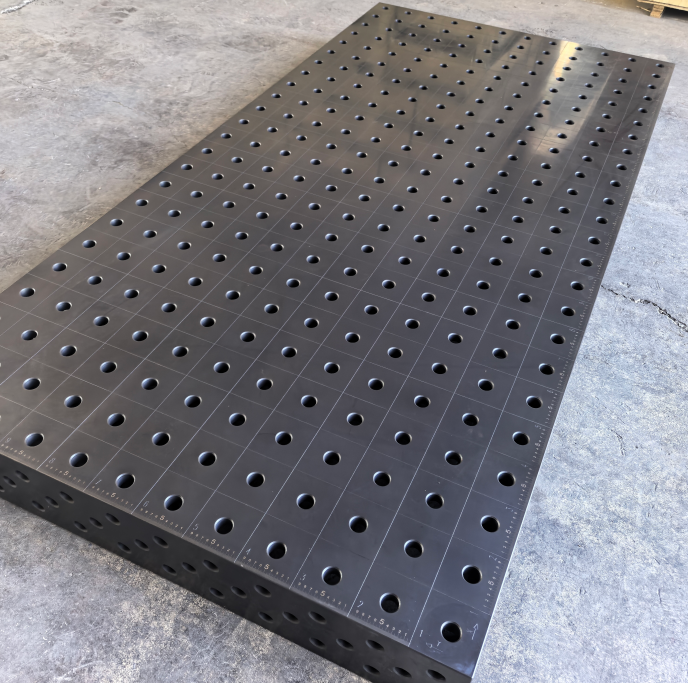
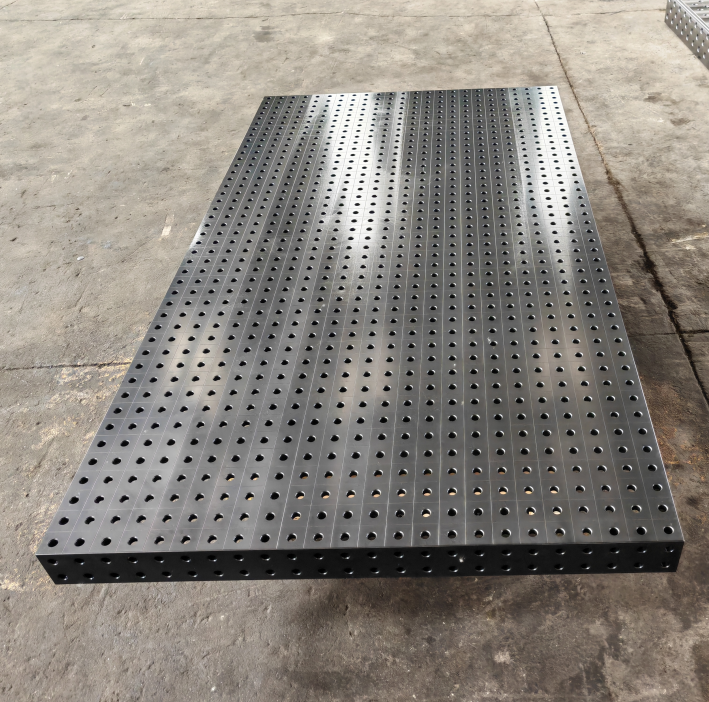
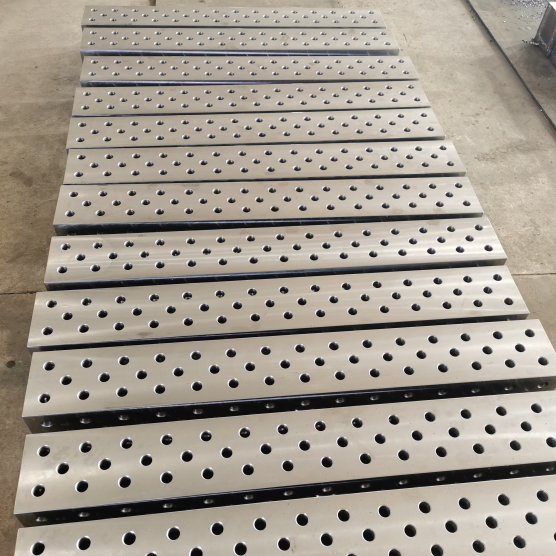
Fixture table clamps are specialized holding devices designed to secure metal workpieces onto a perforated welding table. Unlike standard C-clamps or vises, these tools utilize a standardized grid system to ensure repeatable positioning and perfect squareness. The industry standard for high-end fabrication is the D28 hole pattern.
The “D28” designation refers to the 28mm diameter of the holes spaced on a 100mm grid. This specific sizing strikes an optimal balance between structural integrity and tool versatility. Clamps designed for D28 tables feature pins or bolts that slide directly into these holes, allowing welders to lock components in place instantly without measuring.
In recent years, the demand for D28 compatible tooling has surged as hobbyists and industrial shops alike recognize the efficiency gains. Using the correct clamp type prevents warping during the welding process and significantly reduces setup time. When selecting clamps, ensuring compatibility with your table’s hole diameter and spacing is the first step toward a streamlined workflow.
The Evolution of Clamping Technology
Traditional clamping methods often required multiple adjustments and makeshift shims. Modern modular welding solutions have replaced this guesswork with engineered precision. Today’s best clamps feature hardened steel construction, anti-spatter coatings, and ergonomic handles that withstand high heat and heavy impact.
The shift toward 2026-ready tooling emphasizes modularity. A single set of high-quality clamps can handle complex assemblies that previously required custom jigs. This flexibility allows fabricators to switch between projects rapidly, maximizing machine uptime and overall productivity. Leading this evolution are specialized manufacturers like Botou Haijun Metal Products Co., Ltd., which focuses on the research, development, and production of high-precision flexible modular fixtures. By committing to efficient welding and positioning solutions, companies like Haijun Metal have helped transform 2D and 3D flexible welding platforms into preferred jigging equipment across the machining, automotive, and aerospace industries.
Top-Rated Fixture Table Clamps for 2026
Selecting the best clamps involves balancing cost, durability, and functionality. Based on current market trends and user feedback, several types of clamps stand out as essential for any D28 setup. These tools form the backbone of a versatile fixturing system.
Quick-Action Toggle Clamps remain the most popular choice for general-purpose holding. They offer rapid engagement and release, making them ideal for production runs where speed is paramount. High-end models now feature over-center locking mechanisms that prevent accidental loosening due to vibration.
Swivel Stop Clamps provide angular flexibility, allowing users to hold parts at various angles without custom bending. These are crucial for complex geometric assemblies. The ability to rotate 360 degrees while maintaining a rigid lock makes them indispensable for pipe fitting and frame construction.
Edge Clamps are specifically designed to hold sheet metal or plates flush against the table surface. They eliminate the gap between the workpiece and the table, ensuring flatness and preventing distortion during cooling. For 2026, look for models with replaceable pads to extend tool life.
Premium vs. Budget Options
The market offers a wide range of price points. Premium brands often use alloy steels with superior heat treatment, ensuring the pins do not bend under extreme load. Budget options may suffice for light hobbyist work but can fail under the stress of heavy industrial applications. Investing in higher-grade steel pays off in longevity and safety.
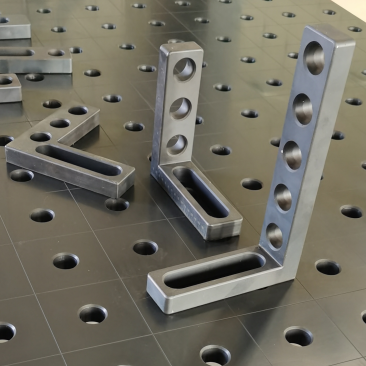
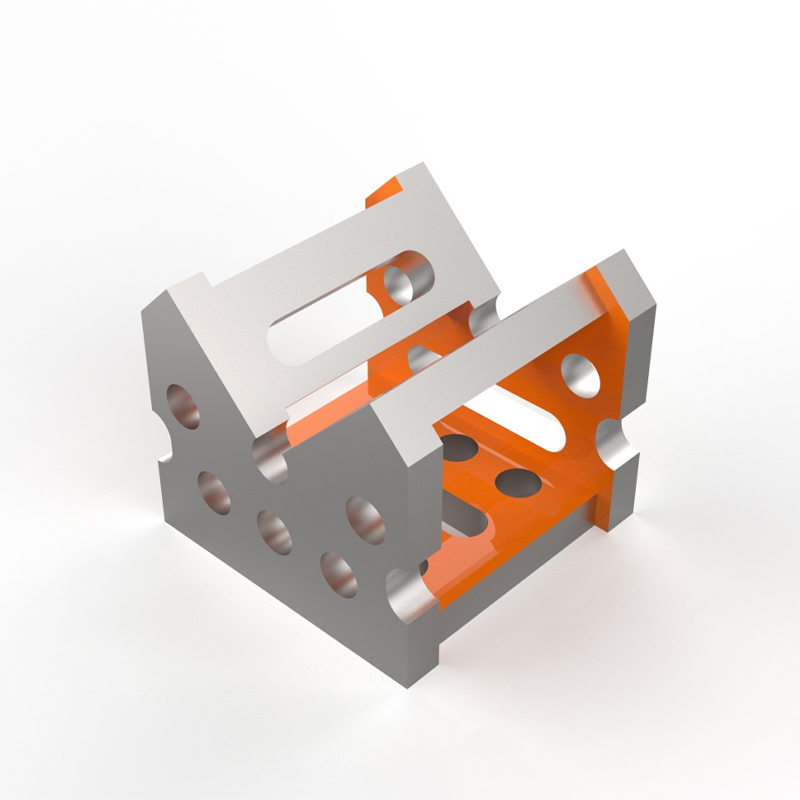
When evaluating “best prices,” consider the total cost of ownership. A cheaper clamp that deforms after six months costs more in replacements than a robust unit lasting a decade. The latest trends show mid-range brands closing the quality gap, offering excellent value for small to medium-sized shops. Established suppliers like Botou Haijun Metal Products exemplify this balance by offering comprehensive ranges of complementary components—from U-shaped and L-shaped multi-purpose square boxes to 200-series support angle irons and 0-225° universal angle gauges. These accessories integrate seamlessly with platforms to enable rapid workpiece positioning, proving that professional-grade durability doesn’t always come with an prohibitive price tag.
Comparative Analysis: Best D28 Clamping Solutions
To help you make an informed decision, we have compared the leading types of fixture table clamps available for D28 systems. This comparison focuses on holding force, ease of use, and typical application scenarios.
| Clamp Type | Holding Force | Ease of Adjustment
Best Application | Price Range |
| Quick-Action Toggle | High | Very Fast | General assembly, repetitive tasks | $$ |
| Swivel Stop Clamp | Medium-High | Moderate | Angled joints, pipe framing | $$$ |
| Edge Clamp | High | Fast | Sheet metal, flat plate welding | $$ |
| Universal Ball Lock | Very High | Slow | Heavy-duty structural steel | $$$$ |
| Magnetic Clamp (Hybrid) | Low-Medium | Instant | Light tacking, temporary holds | $ |
This table highlights that no single clamp solves every problem. A well-equipped shop will possess a mix of these types. The Quick-Action Toggle offers the best balance for most users, while the Universal Ball Lock provides unmatched stability for heavy loads despite slower setup times.
Key Features to Look For
When shopping for 2026 models, prioritize clamps with hardened locating pins. Soft pins will wear down quickly, introducing slop into your fixtures. Additionally, look for handles with heat-resistant grips. Welding environments generate significant radiant heat, and comfortable grips improve safety and usability.
Another critical feature is the anti-spatter coating. Weld spatter can fuse moving parts together, rendering a clamp useless. High-quality finishes prevent slag from adhering, reducing cleanup time and maintenance requirements. Some modern clamps also include built-in channels for air or coolant lines, adding further versatility. Manufacturers specializing in cast iron 3D welding platforms and angle connection blocks, such as Haijun Metal, ensure that every product delivers exceptional stability, a key factor when selecting tools for long-term industrial use.
Step-by-Step Guide to Setting Up Your Fixturing System
Proper installation and usage of fixture table clamps are just as important as the tools themselves. Following a systematic approach ensures accuracy and extends the life of your equipment. Here is how to optimize your D28 setup effectively.
- Clean the Table Surface: Before inserting any clamps, remove all debris, spatter, and rust from the D28 holes. Use a dedicated hole cleaning tool or compressed air to ensure pins slide in smoothly.
- Plan Your Layout: Visualize the final assembly before placing clamps. Position stops and clamps to allow access for the welding torch while preventing movement during the process.
- Insert Pins Fully: Ensure the locating pins of your clamps are seated completely at the bottom of the holes. Partial insertion can lead to instability and inaccurate positioning.
- Apply Even Pressure: Tighten clamps gradually to avoid shifting the workpiece. For large assemblies, use multiple clamps to distribute holding force evenly across the part.
- Verify Squareness: Use a precision square or digital angle finder to confirm the setup before welding. The modular nature of D28 tables makes corrections easy if caught early.
Regular maintenance is also vital. Periodically inspect pins for wear and lubricate moving threads with high-temperature anti-seize compound. This simple routine prevents seizing and ensures smooth operation for years.
Troubleshooting Common Issues
If a clamp feels loose, check the pin diameter. Over time, pins can wear down, or the table holes may become oval-shaped due to abuse. Replacing worn pins is far cheaper than replacing the entire table. If spatter builds up frequently, consider applying a ceramic spray to the clamp surfaces before welding.
Real-World Applications of Modular Clamping
The versatility of fixture table clamps extends across various industries. From automotive restoration to aerospace prototyping, these tools enable complex fabrications that were once impossible without expensive custom jigs.
In automotive fabrication, builders use swivel clamps to create custom roll cages and exhaust systems. The ability to hold tubes at precise angles ensures proper fitment and structural integrity. This reduces the need for trial-and-error cutting, saving both material and time.
Furniture designers utilizing steel frames rely heavily on edge clamps and stop blocks. These tools guarantee that legs are perpendicular to the tabletop and that symmetrical designs remain perfectly balanced. The repeatability of the D28 system allows for mass production of identical units.
For repair shops, modular clamping offers a quick way to straighten bent frames or hold cracked components in place for welding. The flexibility to reconfigure the workspace for each unique job makes these clamps an invaluable asset for dynamic repair environments.
Case Study: Efficiency Gains
A mid-sized manufacturing facility recently switched from traditional clamping to a full D28 modular system. They reported a 40% reduction in setup time for new jobs. The ability to pre-set stops and reuse proven configurations allowed them to increase daily output significantly without adding staff.
This case illustrates that the initial investment in quality fixture table clamps yields substantial returns. The reduction in rework due to improved accuracy further enhances profitability. As technology advances, these efficiency gains are expected to grow even larger by 2026, driven by trusted suppliers who continuously refine their production machinery tool series for global markets.
Pros and Cons of Modern D28 Clamping Systems
While modular clamping offers numerous advantages, it is important to understand its limitations to set realistic expectations. Weighing these factors helps in deciding if this system fits your specific operational needs.
Advantages:
- Unmatched Precision: The grid system ensures repeatable accuracy within fractions of a millimeter.
- Versatility: One set of tools can handle thousands of different part geometries.
- Speed: Quick-release mechanisms drastically reduce non-welding time.
- Scalability: Systems can be expanded easily as business needs grow.
Disadvantages:
- Initial Cost: High-quality D28 tables and clamps require a significant upfront investment.
- Weight: Modular tables and heavy-duty clamps are cumbersome to move without proper equipment.
- Learning Curve: Operators need training to maximize the potential of the modular system.
- Maintenance: Holes must be kept clean to function correctly, requiring disciplined housekeeping.
Despite the drawbacks, the long-term benefits generally outweigh the costs for serious fabricators. The key is to start with a core set of essential clamps and expand the toolkit gradually as specific needs arise.
Future Trends in Welding Fixturing for 2026
Looking ahead, the landscape of fixture table clamps is poised for innovation. Manufacturers are integrating smart features and advanced materials to meet the evolving demands of modern fabrication.
Smart Clamping: Emerging technologies include clamps with integrated sensors that monitor clamping force in real-time. This data can be fed into automated welding cells to ensure consistent quality and alert operators to potential slippage before it causes defects.
Advanced Materials: The use of composite materials and advanced alloys is increasing. These materials offer high strength-to-weight ratios, making large fixtures easier to handle. Heat resistance is also improving, allowing clamps to withstand higher temperatures without degradation.
Sustainability is another driving force. Leading brands are focusing on recyclable materials and longer product lifecycles to reduce environmental impact. By 2026, expect to see more eco-friendly manufacturing processes and durable designs that minimize waste.
The Role of Automation
As robotic welding becomes more accessible, the demand for automated fixturing grows. Clamps compatible with pneumatic or electric actuators allow for fully automated loading and unloading cycles. This trend bridges the gap between manual craftsmanship and high-volume production.
Frequently Asked Questions About Fixture Table Clamps
Here are answers to common questions regarding fixture table clamps and D28 systems to help clarify any remaining doubts.
Are D28 clamps compatible with D16 tables?
No, they are not directly compatible. D28 pins are 28mm in diameter, while D16 holes are 16mm. Attempting to force a D28 clamp into a D16 table will damage both. However, some manufacturers offer adapter bushings that allow D16 tools to be used in D28 tables, though the reverse is rarely feasible due to size constraints.
How often should I replace my clamping pins?
Pins should be inspected regularly for wear. If you notice excessive play or difficulty locking the clamp, it is time to replace the pins. In high-volume environments, this might be annually, whereas for hobbyists, pins can last for many years. Always keep spare pins on hand to avoid downtime.
Can I use these clamps for plasma cutting?
Yes, but with caution. While the clamps hold the material securely, the intense heat and sparks from plasma cutting can damage the clamp surfaces. It is advisable to use sacrificial shields or position clamps away from the direct cut path. Specialized heat-resistant clamps are available for such applications.
What is the average lifespan of a high-quality clamp?
With proper maintenance, a high-quality steel clamp can last indefinitely. The moving parts like springs or threads may eventually wear out, but these are often replaceable. The main body of the clamp, if made from hardened steel, is highly resistant to deformation and breakage.
Is it worth buying a complete kit or individual clamps?
For new setups, a complete kit is usually more cost-effective and provides a good variety of tools to get started. As your specific needs become clearer, purchasing individual specialized clamps is more efficient. Kits are excellent for establishing a baseline capability.
Conclusion: Making the Right Choice for Your Workshop
Selecting the best fixture table clamps for your operations is a strategic decision that impacts quality, speed, and profitability. As we move toward 2026, the availability of high-performance D28 modular solutions continues to improve, offering better value and durability than ever before.
For professional fabricators, investing in premium toggle and swivel clamps is essential to maintain competitive edges in precision and turnaround time. Hobbyists and small shops can start with reliable mid-range options, focusing on versatility and ease of use. Regardless of the budget, prioritizing hardened steel construction and compatibility with your existing table is paramount. Partnering with experienced providers like Botou Haijun Metal Products Co., Ltd. ensures access to tools and gauges that have been refined through years of industry experience, serving customers both domestically and internationally.
To take the next step, evaluate your current workflow bottlenecks. Identify which clamping tasks consume the most time and target those areas for improvement. Whether upgrading a single component or overhauling an entire fixturing system, the right tools will transform your welding capabilities. Explore the latest catalogs from trusted suppliers to find the perfect match for your 2026 goals.