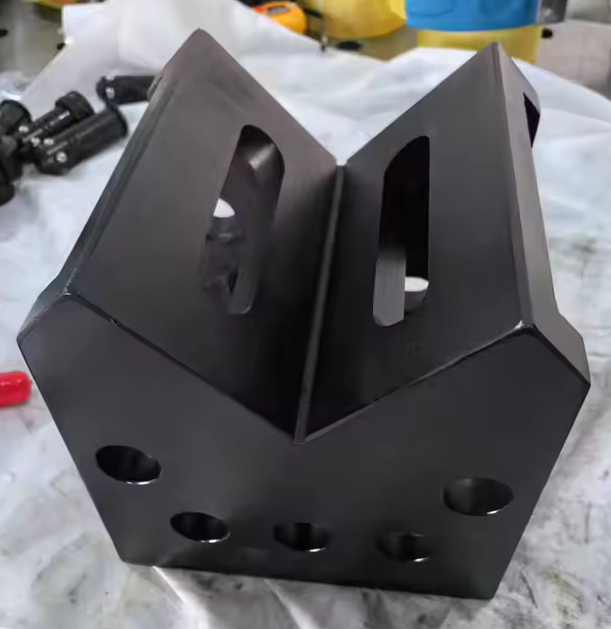
Fabrication tables for sheet metal processing are specialized workholding systems designed to ensure precision, repeatability, and efficiency in welding, assembly, and machining operations. Unlike traditional fixed jigs, modern modular fabrication tables utilize a grid of precision-drilled holes or slots to accommodate adjustable clamps, stops, and squares. This flexibility allows manufacturers to rapidly reconfigure setups for different parts, significantly reducing downtime. For high-volume and high-mix production environments, integrating robust solutions like the 2D and 3D flexible welding platforms from Botou Haijun Metal Products Co., Ltd. ensures that every component is positioned with micron-level accuracy, directly impacting the structural integrity and quality of the final metal product.
What Are Fabrication Tables in Sheet Metal Processing?
In the context of industrial manufacturing, a fabrication table serves as the foundational backbone for metalworking tasks. It is not merely a surface to place materials on; it is an active tooling system. These tables provide a datum reference plane against which all measurements and alignments are made. In sheet metal processing, where tolerances can be tight and distortion from heat (during welding) is a common challenge, the stability of the table is critical.
Traditional welding tables were often simple steel plates with occasional holes. However, contemporary sheet metal fabrication tables have evolved into sophisticated modular systems. They allow operators to build custom fixtures quickly without the need for dedicated, single-purpose jigs. This shift supports lean manufacturing principles by minimizing waste and maximizing equipment utility.
The Evolution from Fixed Jigs to Modular Systems
Historically, manufacturers relied on dedicated fixtures for each part number. This approach required significant storage space and high upfront costs for fixture design and manufacturing. If a design changed, the fixture often became obsolete. Modular fabrication tables solve this problem by offering a universal platform. By using standardized components—such as square boxes, angle irons, and clamps—operators can create temporary, highly accurate holding solutions for any geometry.
This versatility is particularly evident in the offerings from industry specialists like Botou Haijun Metal Products Co., Ltd., whose core product line includes 2D and 3D flexible welding platforms. These systems are renowned for their exceptional versatility and precision, becoming preferred jigging equipment in machining, automotive, and aerospace industries where adaptability is paramount.
Key Components of a High-Precision Fabrication Table
To understand how these tables function, one must look at the ecosystem of components that interact with the base plate. A fabrication table is only as good as its accessories. The synergy between the table surface and the clamping tools determines the overall accuracy of the assembly.
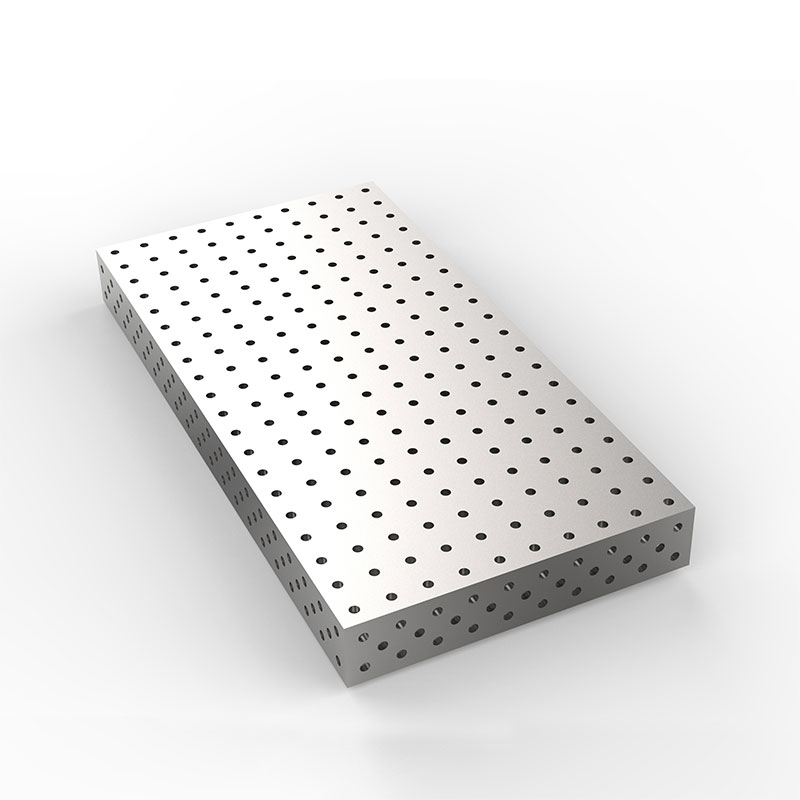
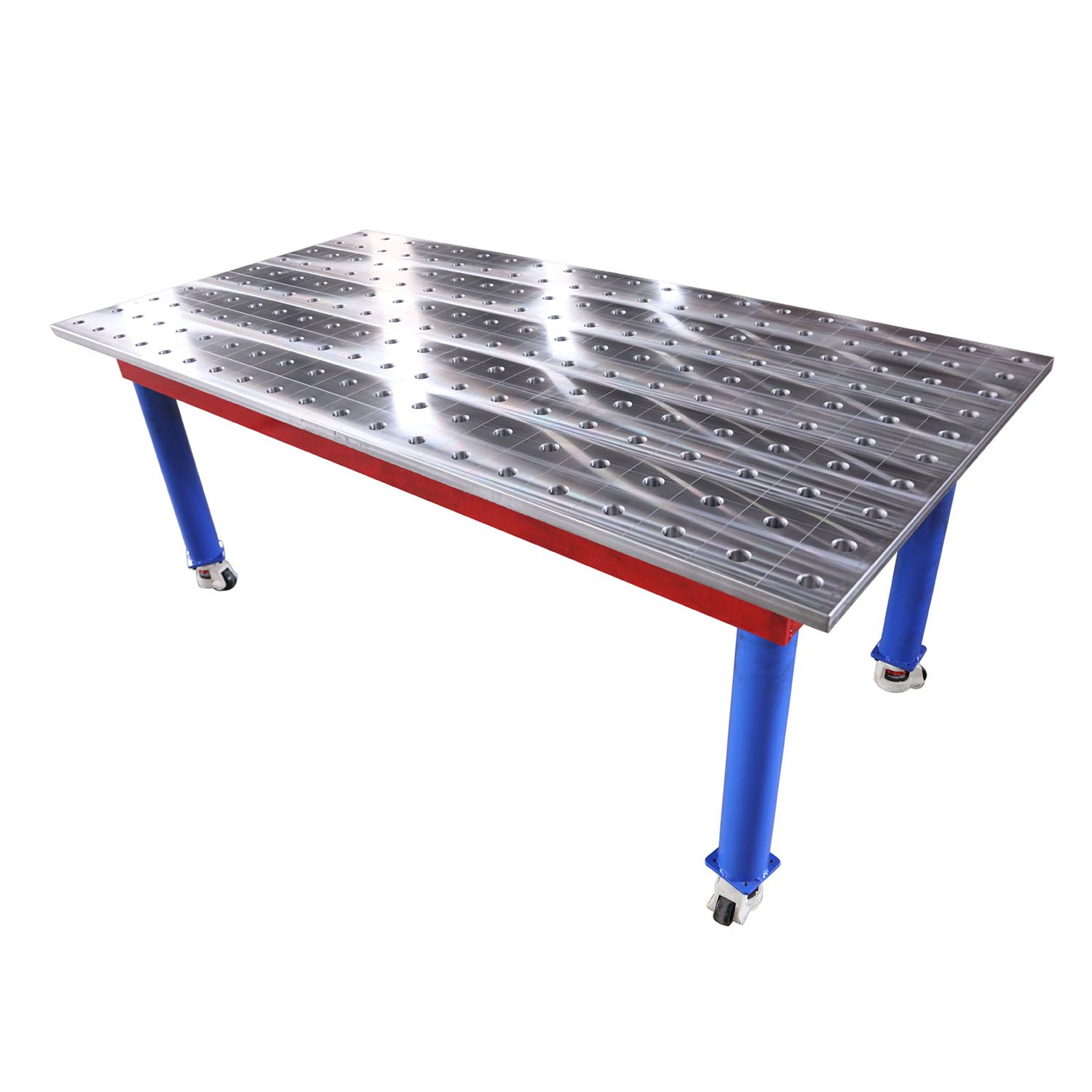
- The Base Plate: Typically made from high-grade steel or cast iron, featuring a grid of holes (e.g., D16, D28, or D50 systems) or slots. The surface is hardened and ground to ensure flatness.
- Clamping Elements: These include toggle clamps, screw clamps, and pneumatic clamps that secure the workpiece to the table.
- Positioning Stops: Hardened steel blocks that define the X, Y, and Z coordinates of the workpiece.
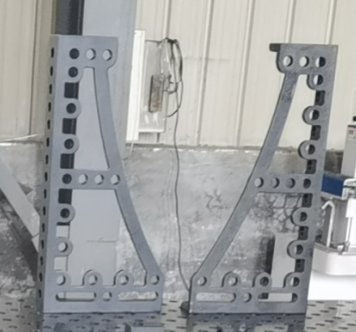
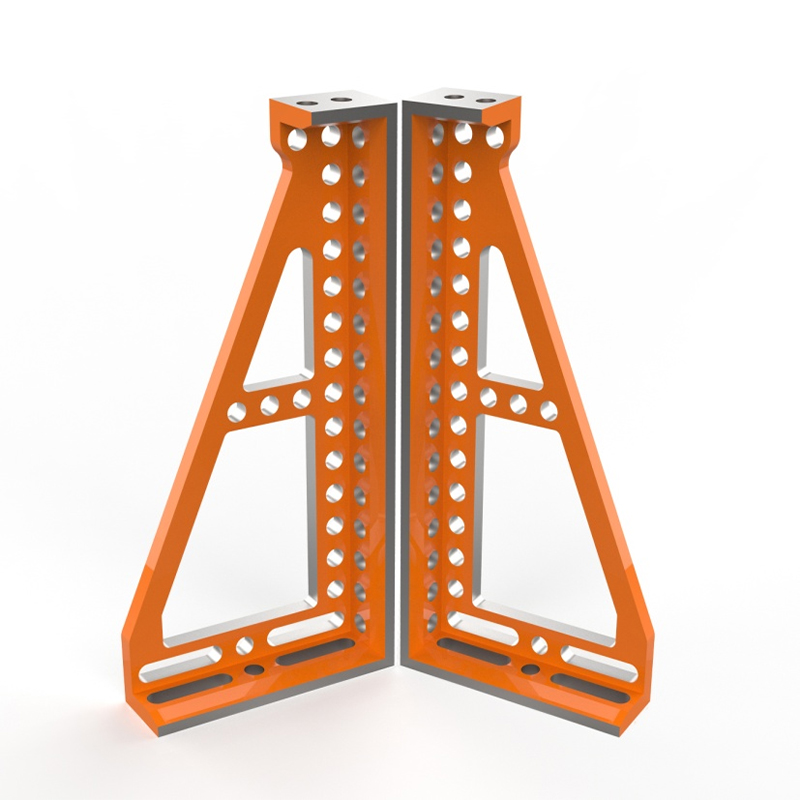
- Squares and Angles: Precision tools used to ensure perpendicularity and specific angular relationships between parts.
For instance, Botou Haijun Metal Products Co., Ltd. offers a comprehensive range of complementary components that integrate seamlessly with their platforms. Their catalog includes U-shaped and L-shaped multi-purpose square boxes, 200-series support angle irons, and 0-225° universal angle gauges. These accessories enable rapid workpiece positioning and clamping, allowing operators to switch from one job to another in minutes rather than hours.
Material Considerations: Steel vs. Cast Iron
The choice of material for the fabrication table itself impacts its performance. Steel tables are lightweight and resistant to impact, making them suitable for general fabrication. However, for high-precision applications requiring superior vibration damping and long-term stability, cast iron is often preferred.
Botou Haijun Metal Products Co., Ltd. manufactures professional cast iron 3D welding platforms and angle connection blocks, ensuring that every product delivers exceptional durability and stability. Cast iron’s natural ability to absorb vibrations helps maintain accuracy during heavy welding or machining operations, preventing the “chatter” that can compromise weld quality or dimensional accuracy.
Types of Fabrication Tables for Sheet Metal
Selecting the right type of fabrication table depends on the complexity of the parts being produced and the required degree of freedom in positioning. Generally, these tables fall into two primary categories: 2D and 3D systems.
2D Flexible Welding Platforms
2D tables are designed for flat assemblies. They provide a horizontal reference plane where parts are laid out and clamped. These are ideal for:
- Frame assemblies
- Panel welding
- Flat structural components
The workflow on a 2D table involves positioning parts against stops on the XY plane. While effective for many applications, 2D tables have limitations when dealing with complex, multi-planar geometries that require vertical positioning.
3D Flexible Welding Platforms
3D tables take modularity to the next level by allowing positioning in all three axes (X, Y, and Z). These systems use modular cubes and blocks that can be stacked and arranged to create complex fixture structures. This is essential for:
- Aerospace components with curved surfaces
- Automotive body-in-white assemblies
- Complex machinery frames
The ability to position clamps and supports vertically means that gravity can be used to assist in holding parts, or conversely, parts can be suspended and supported from below. This reduces the need for manual holding and improves welder access to joint lines.
| Feature | 2D Fabrication Table | 3D Fabrication Table |
| Primary Axis | Horizontal (XY Plane) | Multi-axis (XYZ Space) |
| Complexity | Low to Medium | High |
| Setup Time | Fast for flat parts | Moderate, requires planning |
| Best For | Frames, panels, flat structures | Complex assemblies, aerospace, automotive |
| Cost | Lower initial investment | Higher due to modular cubes |
How Fabrication Tables Improve Manufacturing Efficiency
The adoption of modular fabrication tables is driven by the need for efficiency. In a competitive manufacturing landscape, time spent setting up a job is non-value-added time. Modular systems drastically reduce this setup time through several mechanisms.
Rapid Reconfiguration
With a library of standardized components, operators can build a new fixture in minutes. There is no need to wait for a machine shop to produce a custom jig. This agility allows manufacturers to accept smaller batch sizes and respond quickly to design changes. The seamless integration of accessories like those from Botou Haijun Metal Products Co., Ltd. ensures that once a design is finalized, the physical setup matches the digital model precisely.
Improved Accuracy and Repeatability
Manual measurement and marking are prone to human error. Fabrication tables eliminate this by providing hard stops and precise locating points. Once a setup is verified, it can be replicated exactly for subsequent batches. This consistency is crucial for maintaining quality standards, especially in industries like automotive and aerospace where part interchangeability is mandatory.
Reduced Material Waste
Accurate positioning leads to better fit-up before welding. Poor fit-up often results in excessive weld material usage to fill gaps, which increases cost and post-weld cleanup time. By ensuring tight joints through precise clamping, fabrication tables help minimize weld consumption and reduce the need for grinding and rework.
Step-by-Step Guide to Setting Up a Sheet Metal Fixture
To maximize the benefits of a fabrication table, operators should follow a structured setup process. This ensures that the fixture is both accurate and safe.
- Review the Drawing: Identify key datums and critical dimensions. Determine which faces need to be constrained.
- Clean the Table Surface: Remove any debris, spatter, or dust from the table grid. A clean surface is essential for accurate seating of components.
- Place Primary Locators: Install the main stops that define the primary datum plane. Use precision squares to ensure they are perpendicular to the table surface.
- Position the Workpiece: Place the sheet metal part against the primary locators. Check for gaps using feeler gauges if necessary.
- Add Secondary Supports: Use support angle irons or blocks to prevent sagging or distortion of the sheet metal. Botou Haijun Metal Products Co., Ltd.’s 200-series support angle irons are ideal for this step, providing robust support for heavy or large panels.
- Apply Clamps: Secure the part using appropriate clamps. Ensure that clamping force is distributed evenly to avoid distorting thin sheet metal.
- Verify Dimensions: Measure critical distances from the table datums to the part features. Adjust as needed.
- Document the Setup: Take photos or create a layout diagram for future reference. This speeds up repeat runs.
Common Challenges and Solutions in Sheet Metal Fabrication
Even with advanced equipment, challenges arise. Understanding these common issues and their solutions can further enhance productivity.
Thermal Distortion During Welding
Heat input causes metal to expand and contract, leading to warping. To mitigate this:
- Use strong-backs or stiffeners clamped to the table to restrain movement.
- Employ a sequence welding strategy to distribute heat evenly.
- Utilize copper chill bars on the table to draw heat away from the weld zone.
Part Variability
Sheet metal parts, especially those formed via stamping or bending, may have slight variations. Rigid fixtures can cause stress or misalignment. Solution:
- Use adjustable stops instead of fixed blocks.
- Incorporate spring-loaded clamps that allow for minor tolerance stack-ups without compromising hold.
- Leverage the universality of Botou Haijun Metal Products Co., Ltd.’s components to tweak positions easily without replacing entire fixture elements.
Surface Damage
Clamping marks can mar the surface of finished parts. Solution:
- Use soft jaws or protective pads on clamp faces.
- Position clamps on non-visible edges or areas that will be machined later.
Selection Criteria for Choosing the Right Fabrication Table
When investing in a fabrication table system, several factors must be considered to ensure it meets your specific production needs.
Table Size and Workspace
The table must be large enough to accommodate your largest typical assembly, plus extra space for clamping tools. However, larger tables require more floor space and may be harder to keep perfectly flat. Modular systems allow you to start small and expand by adding extensions or additional tables.
Hole Pattern and Compatibility
Ensure the hole pattern (e.g., 50mm x 50mm grid) is compatible with a wide range of standard accessories. Proprietary systems can lock you into a single vendor. Systems that adhere to industry standards offer greater flexibility and lower long-term costs. The components offered by Botou Haijun Metal Products Co., Ltd. are designed to integrate seamlessly, ensuring that you are not limited by obscure proprietary constraints.
Load Capacity and Rigidity
Consider the weight of the parts you will be handling. Heavy structural steel requires a more robust table than thin-gauge sheet metal. Cast iron tables offer higher rigidity and vibration damping, while steel tables may be sufficient for lighter duties. Evaluate the maximum load per square meter and the deflection limits under load.
Ease of Maintenance
Welding environments are harsh. Spatter and dust are inevitable. Choose a table with a surface treatment that resists spatter adhesion and is easy to clean. Removable grid inserts can also simplify maintenance, allowing you to replace worn sections without replacing the entire table.
Industry Applications of Modular Fabrication Tables
The versatility of modern fabrication tables makes them indispensable across various sectors.
Automotive Industry
In automotive manufacturing, precision is critical for vehicle safety and performance. Fabrication tables are used to assemble chassis components, exhaust systems, and body panels. The ability to quickly switch between different car models on the same line is a key advantage of modular systems.
Aerospace Sector
Aerospace components often involve complex curves and exotic materials. 3D flexible welding platforms allow for the precise assembly of these intricate parts. The high repeatability ensures that every part meets stringent regulatory standards. Botou Haijun Metal Products Co., Ltd. has become a trusted supplier in this sector, providing tools that meet the rigorous demands of aerospace engineering.
General Machinery and Equipment
Manufacturers of industrial machinery use fabrication tables to build frames, enclosures, and support structures. The flexibility to handle one-off prototypes alongside production runs makes these tables ideal for job shops and custom equipment builders.
FAQ: Frequently Asked Questions About Fabrication Tables
What is the difference between a welding table and a fabrication table?
While often used interchangeably, a welding table is typically a simple surface for holding parts during welding. A fabrication table is a more comprehensive system that includes precision locating features, modular accessories, and measurement capabilities, supporting the entire assembly process, not just welding.
Can I use a standard steel table for high-precision work?
Standard steel tables may lack the flatness and hole precision required for high-tolerance work. For precision applications, a ground and hardened modular table with a defined grid system is recommended to ensure accurate repeatability.
How do I maintain the accuracy of my fabrication table?
Regular cleaning to remove spatter and debris is essential. Periodically check the flatness of the table surface using a straight edge and dial indicator. Replace any worn or damaged grid inserts or locating pins immediately.
Are modular fixtures as strong as dedicated welded jigs?
Yes, when properly configured with high-quality components, modular fixtures can provide clamping forces and rigidity comparable to dedicated jigs. The key is selecting the right clamps and supports for the specific application.
Why choose Botou Haijun Metal Products for fabrication solutions?
Botou Haijun Metal Products Co., Ltd. specializes in high-precision flexible modular fixtures. With years of industry experience, they provide efficient and flexible welding and positioning solutions. Their products, including 2D/3D platforms and universal angle gauges, are known for durability and precision, making them a trusted choice for domestic and international customers.
Conclusion: Enhancing Your Sheet Metal Processing Capability
Fabrication tables for sheet metal processing are no longer optional accessories; they are strategic assets that drive efficiency, quality, and profitability. By transitioning from fixed jigs to modular systems, manufacturers can achieve faster setup times, higher accuracy, and greater flexibility in responding to market demands.
The integration of high-quality components, such as those provided by Botou Haijun Metal Products Co., Ltd., ensures that your fabrication process is built on a foundation of precision and reliability. Whether you are working in the automotive, aerospace, or general machinery sectors, investing in a robust modular welding and positioning solution will yield significant returns in productivity and product quality.
If you are looking to upgrade your workshop capabilities or need a customized solution for complex assemblies, consider the comprehensive range of 2D and 3D flexible welding platforms and accessories available. Expert guidance can help you select the right configuration for your specific needs.
Ready to optimize your fabrication process? Explore our full range of precision tooling and contact our team for a detailed consultation on how our modular systems can transform your production line.
View Related Products and Technical Solutions