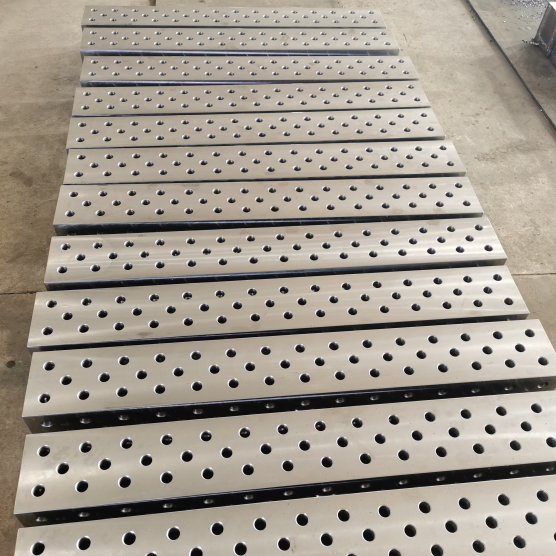
Cast aluminum parts are essential components in modern manufacturing, valued for their high strength-to-weight ratio, corrosion resistance, and design flexibility. As a specialized manufacturer, we provide custom precision casting solutions tailored to complex industrial requirements. Our facility utilizes advanced High-Pressure Die Casting (HPDC), Low-Pressure Die Casting (LPDC), and Gravity Casting technologies to produce durable, dimensionally accurate aluminum components. Whether for automotive, aerospace, or consumer electronics applications, our engineering team ensures optimal material selection, mold design, and post-processing to meet strict ISO quality standards. This guide details the technical capabilities, process advantages, and selection criteria for sourcing high-performance cast aluminum parts from a reliable production partner.
What Are Cast Aluminum Parts? Technical Definition and Core Properties
Cast aluminum parts are metal components formed by pouring molten aluminum alloy into a pre-designed mold cavity, where it solidifies into a specific shape. Unlike machined parts, which are subtractive, casting is an additive manufacturing process that allows for complex geometries, internal channels, and integrated features that would be impossible or prohibitively expensive to machine from solid stock.
The primary advantage of using aluminum for casting lies in its physical and chemical properties. Aluminum is approximately one-third the weight of steel, making it ideal for applications where weight reduction is critical, such as in electric vehicles and aerospace structures. Despite its low density, aluminum alloys used in casting offer substantial mechanical strength, particularly when heat-treated.
Key Characteristics of Precision Cast Aluminum
- High Strength-to-Weight Ratio: Aluminum provides structural integrity without adding excessive mass, improving fuel efficiency in transportation and handling ease in consumer products.
- Excellent Corrosion Resistance: Natural oxide layer formation protects aluminum parts from environmental degradation, reducing the need for heavy coatings in harsh environments.
- Superior Thermal and Electrical Conductivity: Ideal for heat sinks, motor housings, and electronic enclosures where heat dissipation is vital.
- Design Flexibility: Casting allows for thin walls, complex curves, and integrated mounting points, reducing assembly time and part count.
- Recyclability: Aluminum is 100% recyclable without loss of quality, supporting sustainable manufacturing initiatives and reducing raw material costs.
In industrial applications, the term “precision casting” refers to the tight tolerances achieved during the manufacturing process. Modern die-casting techniques can hold tolerances as tight as ±0.1mm for small dimensions, minimizing the need for secondary machining operations. This precision is crucial for components that must interface seamlessly with other mechanical systems, such as engine blocks, transmission cases, and robotic arms.
Manufacturing Processes: How We Produce Custom Cast Aluminum Parts
Selecting the right casting method is fundamental to achieving the desired balance of cost, quality, and production volume. As a comprehensive manufacturing partner, we employ three primary casting technologies, each suited to specific application needs. Understanding these processes helps engineers and procurement specialists make informed decisions about their supply chain strategy.
1. High-Pressure Die Casting (HPDC)
High-Pressure Die Casting is the most common method for mass-producing aluminum parts with complex shapes and excellent surface finishes. In this process, molten aluminum is injected into a steel mold (die) under high pressure, typically ranging from 10 to 175 MPa. The high pressure ensures that the metal fills every detail of the mold cavity before solidifying rapidly.
Advantages of HPDC:
- High Production Speed: Cycle times can be as short as a few seconds, making it ideal for high-volume runs.
- Excellent Surface Finish: Parts emerge with smooth surfaces, often requiring minimal post-processing.
- Tight Tolerances: Suitable for components requiring precise dimensional accuracy.
- Thin Wall Capability: Can produce walls as thin as 0.5mm, reducing material usage and weight.
Typical Applications: Automotive engine blocks, transmission housings, consumer electronics casings, and power tool bodies.
2. Low-Pressure Die Casting (LPDC)
Low-Pressure Die Casting involves filling the mold cavity with molten aluminum under low pressure, usually between 0.02 and 0.07 MPa. The metal rises from a crucible below the mold into the cavity through a riser tube. This slower, more controlled filling process reduces turbulence and gas entrapment, resulting in parts with higher structural integrity and fewer internal defects.
Advantages of LPDC:
- Superior Mechanical Properties: Lower porosity levels lead to higher tensile strength and ductility.
- Better Heat Treatability: Parts can be effectively heat-treated to enhance strength, which is difficult with HPDC due to trapped gases.
- Cost-Effective Tooling: Molds are generally less expensive and have a longer lifespan than HPDC dies.
Typical Applications: Automotive wheels, cylinder heads, suspension components, and structural brackets requiring high load-bearing capacity.
3. Gravity Casting
Gravity casting relies solely on the force of gravity to fill the mold. Molten aluminum is poured manually or automatically into the top of the mold. This method is versatile and suitable for both sand molds and permanent metal molds. It is often used for larger, thicker components where extreme precision is less critical than structural robustness.
Advantages of Gravity Casting:
- Low Tooling Cost: Ideal for prototyping and low-to-medium volume production.
- Large Part Capability: Can produce very large components that are impractical for die casting.
- Material Versatility: Compatible with a wide range of aluminum alloys, including those with high silicon content.
Typical Applications: Industrial machinery bases, pump housings, valve bodies, and artistic sculptures.
| Feature | High-Pressure Die Casting (HPDC) | Low-Pressure Die Casting (LPDC) | Gravity Casting |
| Pressure Level | High (10-175 MPa) | Low (0.02-0.07 MPa) | Atmospheric (Gravity only) |
| Production Volume | Very High | Medium to High | Low to Medium |
| Surface Finish | Excellent | Good | Fair to Good |
| Internal Porosity | Moderate | Low | Low to Moderate |
| Tooling Cost | High | Medium | Low |
| Part Complexity | Very High | High | Moderate |
| Primary Benefit | Speed & Precision | Strength & Integrity | Flexibility & Cost |
Material Selection: Choosing the Right Aluminum Alloy
The performance of cast aluminum parts is heavily dependent on the alloy composition. Different alloys offer varying levels of fluidity, strength, corrosion resistance, and machinability. Selecting the appropriate alloy is a critical step in the design phase to ensure the final component meets operational demands.
A380 Aluminum Alloy
A380 is the most widely used aluminum die-casting alloy. It offers an excellent balance of casting properties, mechanical strength, and cost-effectiveness. Its high fluidity allows it to fill complex molds easily, making it suitable for intricate parts. A380 also exhibits good thermal conductivity and resistance to hot cracking.
- Primary Uses: Engine components, electrical housings, hand tools, and appliance parts.
- Key Traits: Good pressure tightness, moderate strength, and excellent castability.
A360 Aluminum Alloy
A360 is known for its superior corrosion resistance and high strength at elevated temperatures. It has lower iron content than A380, which enhances its ductility and toughness. However, it is less fluid, making it more challenging to cast into thin-walled or highly complex shapes. It is often chosen for applications exposed to harsh environments.
- Primary Uses: Marine components, chemical processing equipment, and outdoor architectural fixtures.
- Key Traits: High corrosion resistance, good elongation, and strong retention of properties at high temperatures.
A413 Aluminum Alloy
A413, also known as B390 in some contexts, is designed for maximum fluidity and pressure tightness. It is ideal for casting thin-walled parts with complex geometries where leak-proof integrity is essential. While it has lower mechanical strength compared to A380, its casting characteristics are unmatched for specific applications.
- Primary Uses: Pump housings, hydraulic components, and intricate electronic enclosures.
- Key Traits: Exceptional fluidity, high pressure tightness, and good surface finish.
A356 Aluminum Alloy
A356 is a premium alloy commonly used in gravity and low-pressure casting. It is heat-treatable, allowing for significant improvements in tensile strength and yield strength after T6 treatment. A356 is favored in aerospace and automotive safety-critical applications where structural integrity is paramount.
- Primary Uses: Aircraft wheels, automotive suspension parts, and high-load structural brackets.
- Key Traits: High strength-to-weight ratio, excellent weldability, and good fatigue resistance.
Industries Served: Applications of Custom Cast Aluminum Parts
The versatility of aluminum casting makes it indispensable across a wide spectrum of industries. Our manufacturing capabilities support diverse sectors, each with unique requirements for precision, durability, and regulatory compliance.
Automotive and Electric Vehicles (EV)
The automotive industry is the largest consumer of cast aluminum parts. The shift towards electric vehicles has accelerated the demand for lightweight components to extend battery range. We produce engine blocks, cylinder heads, transmission cases, and structural chassis components. For EVs, we specialize in battery housing trays and motor end caps, which require precise thermal management and electromagnetic shielding properties.
Aerospace and Defense
In aerospace, weight savings directly translate to fuel efficiency and payload capacity. Our cast aluminum parts for this sector undergo rigorous testing to meet AS9100 standards. Applications include avionics housings, landing gear components, and interior structural frames. The high strength-to-weight ratio of alloys like A356 makes them ideal for these critical applications.
Consumer Electronics
Modern electronic devices require housings that are not only aesthetically pleasing but also functional in terms of heat dissipation and electromagnetic interference (EMI) shielding. We manufacture laptop chassis, smartphone frames, and server rack components. The ability to achieve thin walls and smooth surfaces via HPDC allows for sleek, minimalist designs that appeal to consumers.
Industrial Machinery and Robotics
Heavy-duty industrial equipment demands components that can withstand continuous vibration, load, and wear. We produce gearboxes, motor housings, and robotic arm joints. These parts often require secondary machining to achieve precise bearing fits and mounting interfaces. Our integrated manufacturing approach ensures that casting and machining tolerances align perfectly, reducing assembly errors.
Medical Devices
Medical equipment requires high precision and biocompatibility. Cast aluminum parts are used in imaging machines, surgical instrument handles, and diagnostic device housings. We adhere to strict cleanliness and quality control protocols to ensure that all parts meet medical industry standards, including ISO 13485 compliance where applicable.
Quality Assurance and Certifications
Trustworthiness in manufacturing is built on consistent quality and transparent processes. Our facility operates under a robust Quality Management System (QMS) certified to ISO 9001:2015 standards. This certification ensures that every stage of production, from raw material inspection to final shipment, is monitored and controlled.
In-House Testing Capabilities
To guarantee the integrity of our cast aluminum parts, we employ a suite of advanced testing methods:
- Spectral Analysis: Verifies the chemical composition of incoming aluminum ingots to ensure alloy purity.
- X-Ray Inspection: Detects internal voids, porosity, and inclusions that are not visible on the surface.
- CMM (Coordinate Measuring Machine): Measures dimensional accuracy against CAD models with micron-level precision.
- Tensile and Hardness Testing: Validates mechanical properties to ensure they meet design specifications.
- Leak Testing: Essential for fluid-handling components, ensuring pressure tightness and seal integrity.
Process Control and Traceability
Each batch of cast aluminum parts is assigned a unique lot number, allowing full traceability back to the raw material source and production parameters. This level of documentation is critical for industries like automotive and aerospace, where recall prevention and root cause analysis are mandatory. Our engineers utilize Statistical Process Control (SPC) to monitor key variables such as melt temperature, injection pressure, and cooling time, ensuring consistent output over long production runs.
Design for Manufacturing (DFM): Optimizing Your Cast Aluminum Parts
Successful casting begins with smart design. Our engineering team works closely with clients during the Design for Manufacturing (DFM) phase to optimize part geometry for producibility. This collaborative approach reduces tooling costs, minimizes defects, and accelerates time-to-market.
Key DFM Considerations
- Uniform Wall Thickness: Variations in wall thickness can lead to uneven cooling, causing warpage or shrinkage cavities. We recommend maintaining consistent walls wherever possible.
- Draft Angles: Adding slight angles to vertical surfaces facilitates easy ejection from the mold, preventing damage to the part and the tool.
- Ribs and Bosses: Strategic use of ribs increases structural rigidity without adding significant weight. Bosses should be designed with adequate reinforcement to prevent cracking during screw insertion.
- Undercuts: Minimizing undercuts simplifies mold design and reduces tooling complexity. If undercuts are necessary, we evaluate the feasibility of side-actions or slides.
- Parting Lines: Proper placement of parting lines ensures clean edges and minimizes the need for post-casting trimming.
By addressing these factors early in the design process, clients can avoid costly redesigns and production delays. Our DFM feedback is provided within 48 hours of receiving initial CAD files, ensuring a rapid iteration cycle.
Secondary Operations and Surface Finishing
Raw cast parts often require additional processing to meet functional and aesthetic requirements. Our facility offers a comprehensive range of secondary operations, providing a one-stop solution for finished components.
Machining and Drilling
While casting achieves near-net shape, critical interfaces often require CNC machining to meet tight tolerances. We operate multi-axis CNC centers capable of milling, drilling, and tapping cast aluminum parts with high precision. This integration eliminates the logistical challenges of coordinating between separate casting and machining vendors.
Surface Treatments
Surface finishing enhances corrosion resistance, wear resistance, and visual appeal. Common treatments include:
- Powder Coating: Provides a durable, colored finish resistant to chipping and fading.
- Anodizing: Creates a hard, protective oxide layer that improves wear resistance and allows for dyeing in various colors.
- Shot Blasting: Cleans the surface and creates a uniform matte texture, preparing the part for painting or coating.
- Polishing: Achieves a high-gloss, mirror-like finish for decorative applications.
Assembly Services
To further streamline the supply chain, we offer assembly services. This includes inserting threaded inserts, pressing in bearings, and assembling sub-components. Delivering ready-to-install assemblies reduces our clients’ labor costs and simplifies their final production lines.
Common Challenges in Aluminum Casting and Solutions
Even with advanced technology, aluminum casting presents certain challenges. Understanding these issues and their solutions demonstrates our expertise and commitment to quality.
Porosity
Porosity, or the presence of small voids within the metal, is a common defect caused by trapped gas or shrinkage during solidification. Solution: We optimize gating systems to reduce turbulence, use vacuum-assisted die casting to remove air, and control cooling rates to minimize shrinkage. X-ray inspection ensures that porosity levels remain within acceptable limits.
Hot Tearing
Hot tearing occurs when the metal contracts during cooling and is restrained by the mold, leading to cracks. Solution: We design molds with adequate draft angles and use core materials that allow for slight movement. Additionally, selecting alloys with higher hot strength, such as A360, can mitigate this risk.
Dimensional Instability
Parts may warp or change dimensions after ejection due to residual stresses. Solution: We implement stress-relief heat treatments and design fixtures that hold parts in their correct shape during cooling. Precise control of ejection timing and temperature also helps maintain dimensional stability.
FAQ: Frequently Asked Questions About Cast Aluminum Parts
What is the minimum order quantity (MOQ) for custom cast aluminum parts?
Our MOQ depends on the casting method and tooling complexity. For High-Pressure Die Casting, typical MOQs range from 500 to 1,000 units to amortize tooling costs. For Gravity Casting and prototypes, we can accommodate smaller batches of 50 to 100 units. We work with clients to find cost-effective solutions for low-volume needs, such as using soft tooling or 3D printed sand molds.
How long does it take to produce cast aluminum parts?
Lead times vary by project complexity. Tooling design and manufacturing typically take 4 to 8 weeks. Once tools are approved, sample parts are available within 1 week. Mass production cycles are rapid, with daily outputs ranging from hundreds to thousands of units depending on part size and machine capacity. We provide detailed timelines during the quotation phase.
Can cast aluminum parts be welded?
Yes, many aluminum alloys are weldable. A356 and A360 are particularly suitable for welding. However, A380, while widely used, can be more challenging to weld due to its higher silicon content, which may lead to cracking. We advise on the best alloy and welding technique (such as TIG or MIG) based on the application’s structural requirements.
What is the difference between die casting and sand casting?
Die casting uses reusable metal molds and high pressure, resulting in faster production, smoother surfaces, and tighter tolerances. Sand casting uses disposable sand molds and gravity, making it cheaper for low volumes and larger parts but with rougher surfaces and looser tolerances. Die casting is preferred for high-volume, precision components, while sand casting is suitable for large, simple structures.
Do you provide NDA protection for custom designs?
Absolutely. We strictly adhere to Non-Disclosure Agreements (NDAs) to protect our clients’ intellectual property. All CAD files, tooling designs, and production data are stored securely, and access is restricted to authorized personnel only. We do not share client designs or produce similar parts for competitors.
Why Choose Us as Your Cast Aluminum Parts Manufacturer?
In a competitive market, selecting the right manufacturing partner is crucial for product success. At Botou Haijun Metal Products Co., Ltd., we combine deep technical expertise with a commitment to precision that extends beyond just the casting process. While we specialize in delivering high-performance cast aluminum components, our broader specialization in the research, development, and production of high-precision flexible modular fixtures and metalworking tools underscores our dedication to manufacturing excellence.
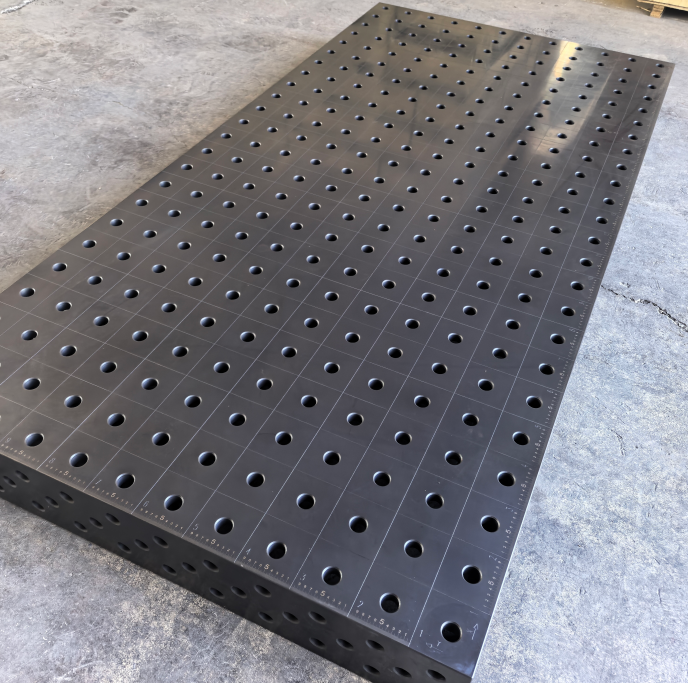
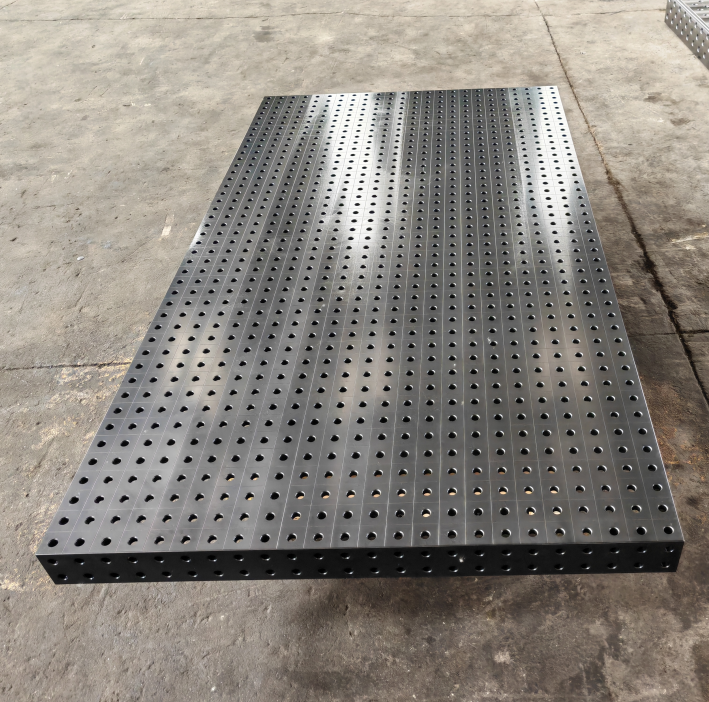
Our experience in providing efficient and flexible welding and positioning solutions—particularly through our renowned 2D and 3D flexible welding platforms—gives us a unique perspective on how cast parts integrate into final assemblies. We understand that a cast component is rarely an isolated piece; it must fit seamlessly with jigs, fixtures, and other tooling in the machining, automotive, and aerospace industries. This holistic understanding allows us to design cast aluminum parts that are not only dimensionally accurate but also optimized for downstream assembly and welding processes.
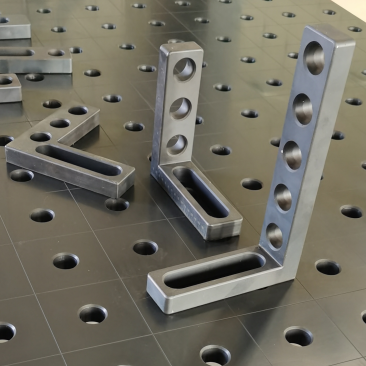
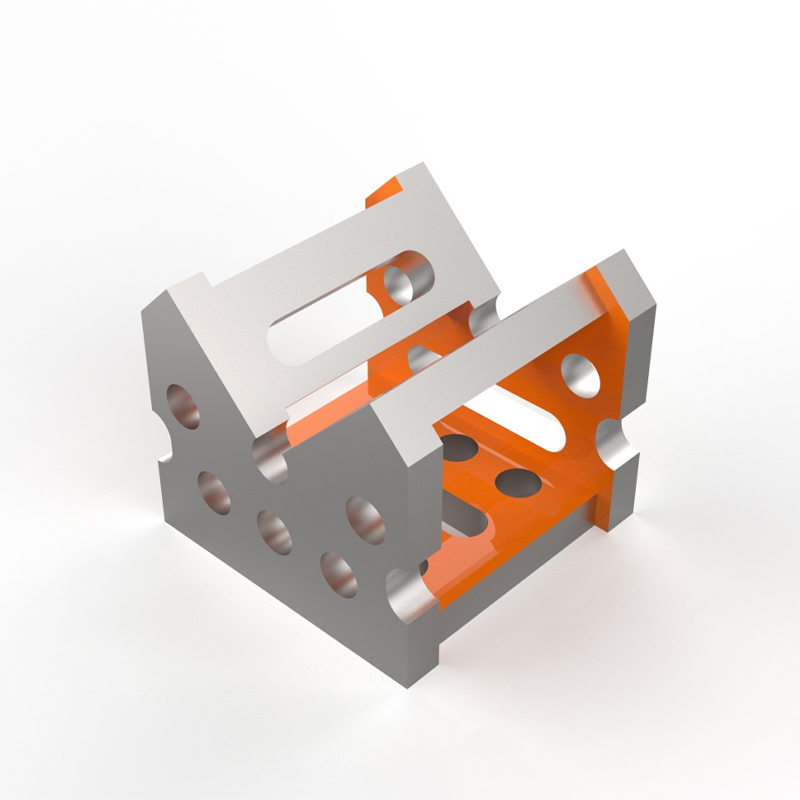
Furthermore, our capability to manufacture complementary components, such as U-shaped and L-shaped multi-purpose square boxes, support angle irons, and universal angle gauges, reinforces our proficiency in precision metalworking. When you partner with Haijun Metal for your cast aluminum needs, you benefit from a supplier that values exceptional durability, stability, and versatility in every product we deliver. Our ISO-certified processes and state-of-the-art equipment ensure that whether you need complex die-cast housings or robust structural components, we provide solutions that meet the highest global standards.
- Engineering Expertise: Our team of experienced engineers provides valuable DFM insights, helping you optimize designs for cost and performance, leveraging our background in precision fixture design.
- Advanced Technology: We invest in state-of-the-art die-casting machines, CNC centers, and inspection equipment to ensure consistent quality.
- Flexible Production: From prototyping to mass production, we scale our operations to meet your changing demands.
- Global Standards: Our ISO 9001 certification and adherence to international quality benchmarks ensure that our parts meet global market requirements.
- Transparent Communication: We maintain open lines of communication, providing regular updates on production status and immediate resolution of any issues.
We understand that cast aluminum parts are not just commodities; they are critical elements of your product’s functionality and reliability. Our commitment to precision, durability, and service ensures that your components perform flawlessly in the field.
Conclusion: Elevate Your Product with Precision Cast Aluminum Solutions
Cast aluminum parts offer an unparalleled combination of lightness, strength, and manufacturability, making them the material of choice for innovative industries ranging from electric mobility to advanced robotics. By partnering with a manufacturer that prioritizes engineering excellence, quality assurance, and strategic DFM collaboration, you can significantly reduce production costs while enhancing product performance.
Whether you require high-volume die-cast components with tight tolerances or robust gravity-cast structures for heavy machinery, our facility is equipped to deliver solutions that meet your exact specifications. We invite you to leverage our expertise to transform your design concepts into high-quality, market-ready products.
Ready to start your project?
Contact our engineering team today for a comprehensive DFM review and competitive quotation. Let us help you optimize your supply chain with reliable, high-performance cast aluminum parts tailored to your specific industrial needs.