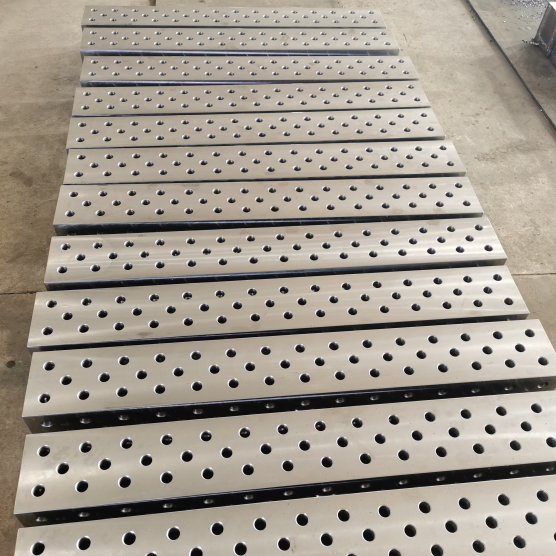
Looking to buy large welding table units in 2026? A large welding table is a heavy-duty, precision-ground workbench designed for industrial fabrication, featuring modular hole patterns or T-slots for secure clamping and alignment. Current 2026 prices from top China manufacturers range from $1,000 to $10,000 depending on size, material grade (HT200-HT300 cast iron), and modularity. This guide covers specs, sourcing strategies, and the latest trends in 3D fixturing technology.
Understanding Large Welding Table Specifications in 2026
The market for industrial fabrication equipment has evolved significantly. When you decide to buy large welding table systems, understanding the technical specifications is crucial for ensuring longevity and precision. In 2026, the industry standard has shifted towards high-tolerance modular systems that support complex 3D fixturing.
Modern tables are no longer just flat surfaces. They are engineered platforms designed to withstand thermal distortion while providing repeatable accuracy. The core specification lies in the material composition and the surface geometry.
Material Grades: HT200 vs. HT300 Cast Iron
The most critical factor in durability is the cast iron grade. Manufacturers in China, particularly in Hebei Province, specialize in high-quality casting processes.
- HT200: This is the standard grade for general-purpose welding tables. It offers excellent vibration damping and moderate heat resistance, suitable for most structural steel fabrication.
- HT300: For high-precision applications, HT300 is the preferred choice. It provides superior hardness and stability, minimizing warping under extreme thermal stress during heavy welding operations.
Choosing between these grades depends on your specific workload. For automotive chassis assembly or aerospace component fitting, HT300 is often recommended to maintain tight tolerances over years of use.
Surface Precision and Flatness
Precision ground surfaces are non-negotiable for professional results. Leading suppliers now guarantee flatness within strict tolerances across the entire tabletop.
The surface is typically machined to ensure that fixtures sit perfectly flush. This prevents cumulative errors when assembling large structures. In 2026, advanced CNC machining centers allow factories to produce massive plates with consistent accuracy.
Types of Large Welding Tables Available
Not all large tables serve the same purpose. The market offers distinct categories based on mobility, modularity, and application scope. Identifying the right type helps optimize your workflow and budget.
Modular 3D Welding Tables
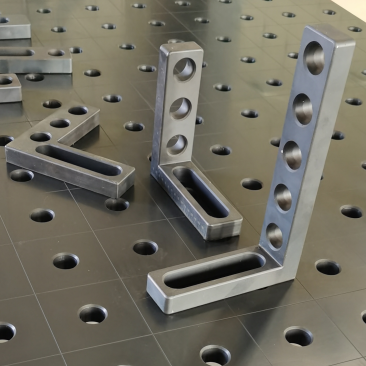
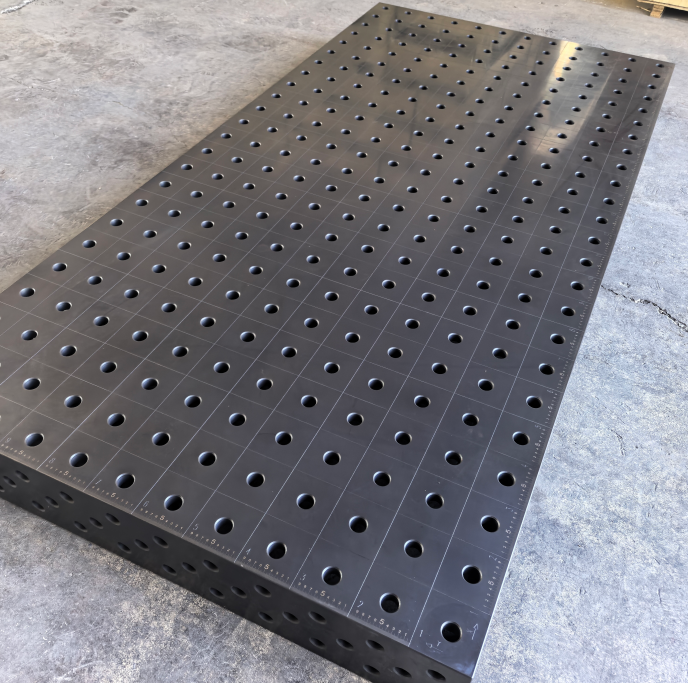
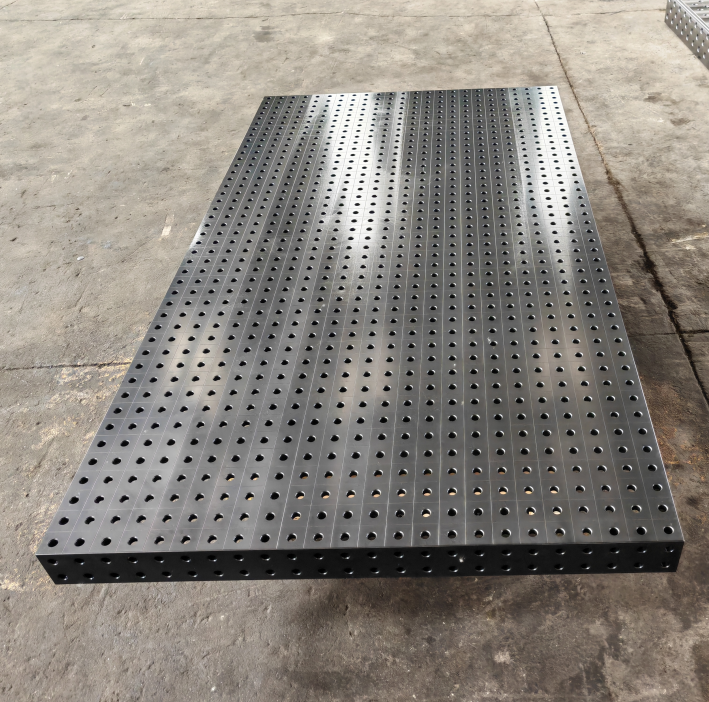
These are the gold standard for modern manufacturing. Featuring a grid of precision-drilled holes (commonly 16mm or 28mm diameter) spaced in a 100mm x 100mm pattern, they offer unlimited clamping possibilities.
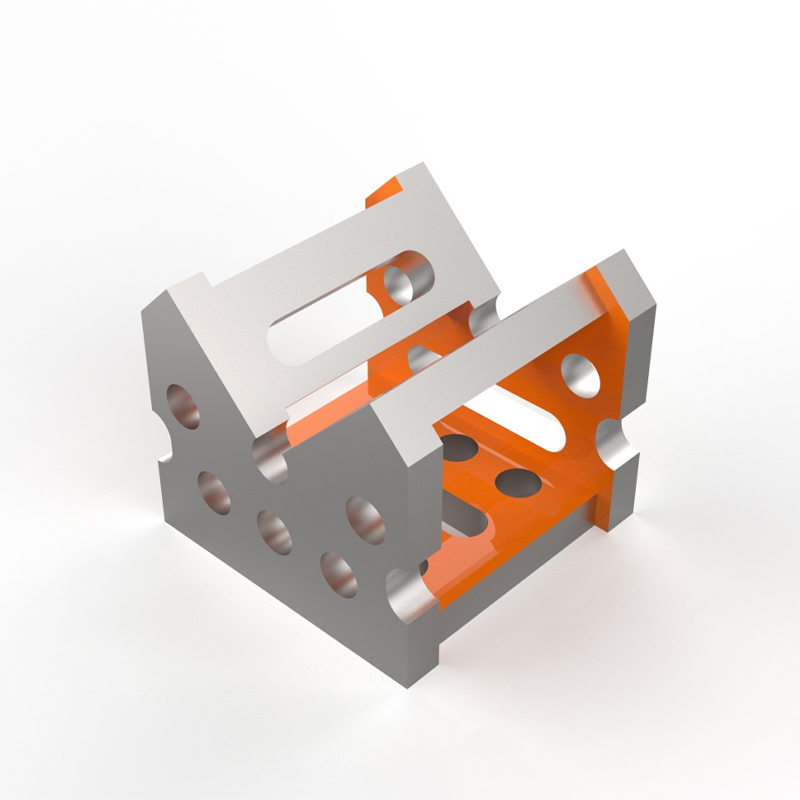
- Flexibility: Allows clamping from the top and sides.
- Scalability: Multiple tables can be joined together to create oversized workspaces for large projects like wind turbine towers or ship sections.
- Reconfigurability: Ideal for job shops handling diverse batch sizes.
Recent innovations include hardened steel plates with nitrided surfaces to resist spatter adhesion, reducing cleanup time significantly.
Portable and Collapsible Large Tables
While “large” usually implies stationary, there is a growing demand for mobile solutions. These tables feature foldable legs or lightweight aluminum frames.
They are perfect for on-site construction repairs or mobile welding services. Although they may lack the massive weight of cast iron units, they provide sufficient stability for field operations where space is limited.
Fixed Heavy-Duty Platforms
For dedicated production lines, fixed platforms made from thick steel plates welded to robust I-beam frames are common. These are often custom-built to specific dimensions, such as 3000mm x 4000mm or larger.
Unlike modular tables, these may use T-slots instead of hole grids. They are cost-effective for repetitive tasks where fixture positions rarely change.
2026 Pricing Trends and Cost Factors
When planning to buy large welding table equipment, budget allocation is a primary concern. Prices in 2026 reflect raw material costs, machining complexity, and logistics.
Price Ranges by Category
Based on current market data from major manufacturing hubs like Botou City and Jiangsu, here is a breakdown of expected costs:
| Table Type | Estimated Price Range (USD) | Typical Dimensions |
| Entry-Level Modular | $1,000 – $2,500 | 1000mm x 1000mm |
| Standard Industrial (HT200) | $3,000 – $6,000 | 2000mm x 3000mm |
| Premium Precision (HT300) | $7,000 – $10,000+ | 3000mm x 4000mm+ |
| Custom Oversized Platforms | $10,000 – $20,000+ | Variable (e.g., 5m x 10m) |
Note that prices vary based on order volume. Bulk purchases for factory setups often attract significant discounts compared to single-unit orders.
Factors Influencing Cost
Several elements drive the final price tag. Understanding these helps in negotiating better deals with suppliers.
- Material Thickness: Thicker tops (e.g., 30mm vs. 16mm) increase material costs but offer better heat dissipation and longevity.
- Hole Pattern Density: A finer grid requires more machining time, increasing labor costs.
- Surface Treatment: Options like black oxide coating or specialized anti-spatter sprays add value but also cost.
- Logistics: Shipping heavy cast iron internationally is expensive. FOB (Free on Board) prices from China ports are competitive, but landed costs depend on freight rates.
Sourcing from China: Strategic Guide for Buyers
China remains the global epicenter for 3D welding table production. Concentrated industrial clusters offer unmatched scale and specialization. Knowing where to look is half the battle.
Key Manufacturing Regions
Different regions in China specialize in different aspects of metal fabrication. Targeting the right cluster ensures you get the best quality for your needs.
- Hebei Province (Botou City): Known as the heart of metal fabrication, Botou hosts dense concentrations of foundries. Factories here excel in cast iron processing and precision machining. They are ideal for sourcing high-tolerance welding fixtures and modular workbenches.
- Jiangsu and Shanghai: These regions focus on higher-end machinery and export-oriented manufacturing. Suppliers here often have better English communication and experience with international compliance standards.
- Wuhan: An emerging hub for heavy industrial equipment, offering competitive pricing for massive, custom-built platforms.
Evaluating Supplier Credibility
In the B2B sector, trust is paramount. Before you commit to a purchase, verify the supplier’s capabilities.
Look for manufacturers with established track records in exporting to your region. Check for certifications related to quality management. Request detailed photos of their machining centers and previous large-scale projects.
Many reputable suppliers now offer virtual factory tours. This transparency allows you to assess their production capacity and quality control measures without traveling.
Comparison: Modular vs. Traditional Welding Tables
Deciding between a modern modular system and a traditional solid table can be challenging. This comparison highlights the strengths and weaknesses of each approach.
| Feature | Modular 3D Table | Traditional Solid Table |
| Versatility | High: Adaptable to any project via clamps | Low: Fixed surface, limited clamping options |
| Setup Speed | Fast: Quick-change tooling systems | Slow: Requires custom jig fabrication |
| Initial Cost | Higher upfront investment | Lower initial cost |
| Long-term Value | Excellent: Reduces labor time and rework | Moderate: May require frequent maintenance |
| Best For | Job shops, prototyping, batch production | High-volume repetitive welding, heavy structural work |
For businesses aiming to improve workflow efficiency and reduce setup times, the modular approach is increasingly becoming the industry norm in 2026.
Industrial Applications and Use Cases
A large welding table is not a one-size-fits-all solution. Its application varies widely across sectors, driving specific design requirements.
Automotive Industry
In automotive manufacturing, precision is key. Welding tables are used for assembling chassis, exhaust systems, and suspension components.
The flat, dimensionally stable surfaces allow for accurate alignment of parts before welding. This reduces errors and rework, which is critical in high-volume production environments. Robotic welding cells often integrate these tables for repeatability.
Construction and Structural Steel
The construction sector relies on these tables for fabricating beams, columns, and trusses. Large platforms provide a rigid base that maintains alignment during long welds.
This prevents warping and distortion, ensuring that structural components fit together perfectly on-site. The ability to clamp heavy sections securely is a major advantage here.
Aerospace and Defense
These industries demand the highest levels of accuracy. HT300 cast iron tables with fine grid patterns are standard for assembling aircraft frames and defense vehicle components.
The thermal stability of the material ensures that measurements remain consistent even under varying workshop temperatures.
Step-by-Step Guide to Selecting the Right Table
Choosing the correct equipment involves a systematic approach. Follow these steps to ensure your investment meets operational needs.
- Step 1: Define Your Requirements: Determine the maximum size of the parts you will weld. Consider weight limits and the need for side access.
- Step 2: Choose Material Grade: Decide between HT200 for general use or HT300 for high-precision tasks. Evaluate the thermal load of your typical projects.
- Step 3: Select Hole Pattern: Match the hole diameter (16mm or 28mm) with your existing or planned tooling inventory. Ensure compatibility with standard clamps.
- Step 4: Assess Logistics: Calculate shipping costs and lead times. Verify if the supplier can handle export documentation and packaging for heavy machinery.
- Step 5: Request Samples or Visits: If possible, order a small sample plate or visit the factory to inspect build quality firsthand.
Taking time at each stage prevents costly mistakes and ensures the table integrates smoothly into your production line.
Advantages and Limitations of Large Welding Tables
Like any industrial equipment, large welding tables come with distinct pros and cons. Being aware of these helps in setting realistic expectations.
Key Advantages
- Precision Alignment: Grid systems enable exact positioning of parts, crucial for complex assemblies.
- Workflow Efficiency: Modular setups reduce changeover time between different jobs.
- Durability: High-grade cast iron resists wear and tear, offering a long service life.
- Versatility: One table can handle welding, assembly, inspection, and even machining setups.
Potential Limitations
- High Initial Cost: Premium modular systems require a significant upfront investment compared to basic tables.
- Weight and Mobility: Large cast iron tables are extremely heavy, making relocation difficult without specialized equipment.
- Maintenance: While durable, the hole patterns must be kept clean of spatter to ensure proper tool insertion.
Despite the limitations, the long-term productivity gains often outweigh the initial costs for serious fabricators.
Maintenance and Care for Longevity
To maximize the lifespan of your investment, regular maintenance is essential. Proper care ensures the table remains flat and functional for decades.
Cleaning Procedures
Remove welding spatter regularly using scrapers or specialized anti-spatter sprays. Avoid using abrasive tools that could damage the precision-ground surface or enlarge the mounting holes.
Keep the hole patterns clear of debris. Compressed air is effective for blowing out dust and small particles from the grid.
Surface Protection
Apply a thin layer of oil or rust inhibitor if the table will be idle for extended periods. This prevents oxidation, especially in humid environments.
Use sacrificial plates or skins for extremely messy jobs. This protects the main tabletop from direct exposure to intense heat and slag.
Periodic Inspection
Check the flatness of the table annually using precision levels or laser measurement tools. If deviations are detected, professional resurfacing may be required.
Inspect the frame and legs for any signs of structural fatigue or loosening bolts, tightening them as necessary to maintain stability.
Future Trends in Welding Table Technology
The evolution of welding tables continues as manufacturing demands grow. Several trends are shaping the market landscape in 2026 and beyond.
Smart Fixturing Integration
We are seeing the early stages of “smart” tables equipped with sensors to monitor clamping force and part alignment digitally. This integration with IoT platforms allows for real-time quality tracking.
Advanced Coatings
New nanocoatings are being developed to make surfaces completely non-stick to spatter. This would virtually eliminate cleaning time, further boosting productivity.
Sustainable Manufacturing
Suppliers are increasingly adopting green manufacturing practices. Using recycled cast iron and energy-efficient machining processes is becoming a selling point for environmentally conscious buyers.
As technology advances, the large welding table will remain a cornerstone of industrial fabrication, evolving to meet the needs of smarter, faster, and more precise manufacturing ecosystems.
Conclusion
Investing in a high-quality large welding table is a strategic decision that impacts your production efficiency and product quality. With 2026 bringing advanced materials like HT300 cast iron and sophisticated modular designs, the options are better than ever.
Whether you source from the specialized clusters in Hebei or the high-tech hubs of Jiangsu, focusing on specifications, supplier credibility, and long-term value will ensure success. By understanding the nuances of pricing, types, and applications, you can select a table that serves as a reliable foundation for your welding operations for years to come.
Ready to upgrade your workshop? Evaluate your specific needs, compare the modular advantages, and connect with reputable manufacturers to secure the best deal for your business.