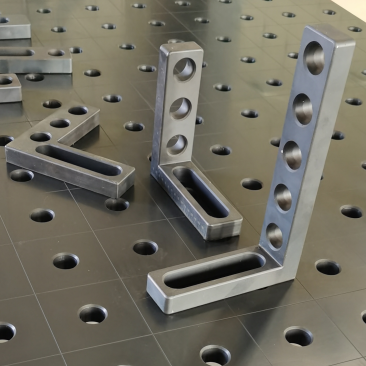
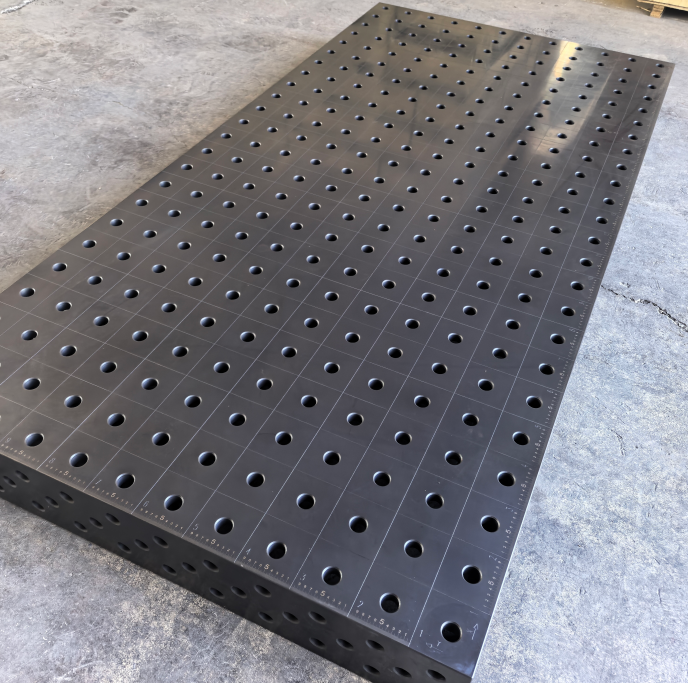
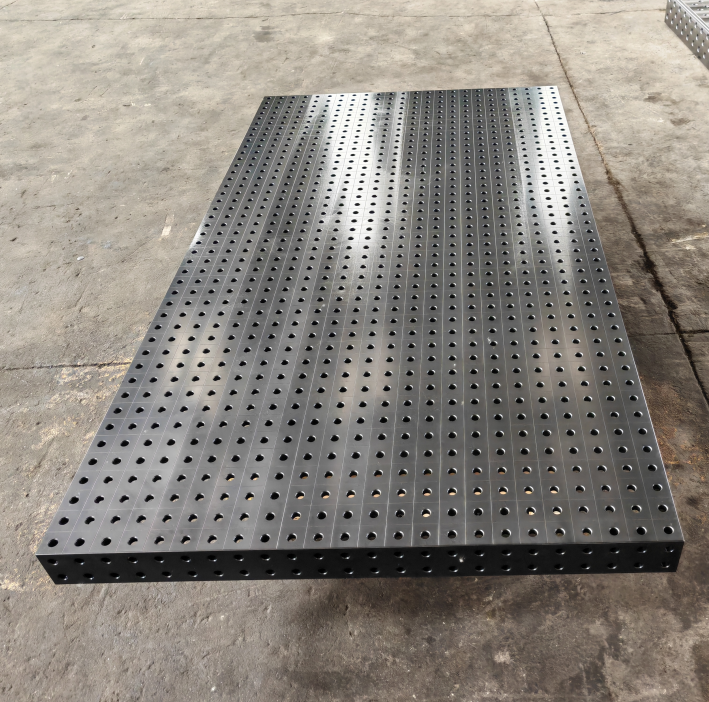
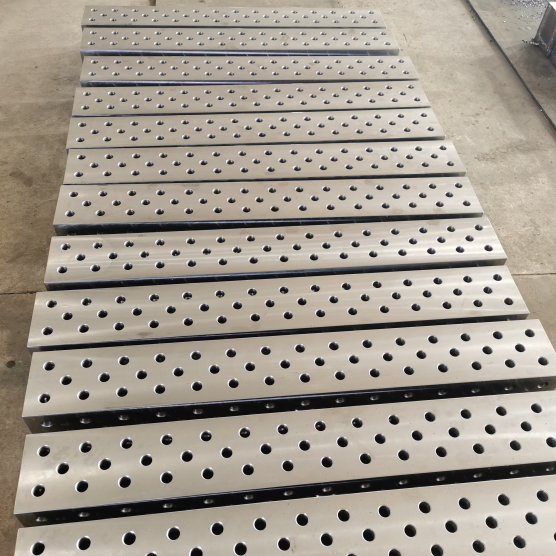
A 3D flexible welding assembly table is a modular workbench system featuring a precision-drilled grid of holes (typically D28 spacing) that allows welders to clamp, position, and assemble metal components in three dimensions with high accuracy. Unlike traditional fixed tables, these systems enable rapid reconfiguration for complex geometries, significantly reducing setup time and improving repeatability in modern fabrication shops.
The Evolution of Welding Fixturing: Why 2026 Demands Flexibility
The manufacturing landscape has shifted dramatically in recent years. As custom fabrication and low-volume, high-mix production become the norm, rigid welding jigs are no longer cost-effective. The 3D flexible welding assembly table has emerged as the industry standard for adapting to these changes. By 2026, factory direct pricing models have made this technology accessible to small and medium-sized enterprises, not just large automotive manufacturers.
Traditional welding methods often rely on building dedicated fixtures for each part. This approach is time-consuming and expensive when design iterations occur frequently. In contrast, a modular 3D table acts as a universal fixture. The surface is perforated with a precise grid, allowing clamps and stops to be positioned anywhere on the X, Y, and Z axes. This flexibility ensures that fabricators can handle diverse projects without investing in new tooling for every job.
Current trends indicate a move towards “lean manufacturing” principles within welding shops. Reducing non-value-added time, such as part positioning and tack welding adjustments, is critical. A high-quality 3D assembly table directly addresses this by providing a reference plane that is flat, stable, and infinitely adjustable. This shift represents a fundamental change in how professional welders approach complex assemblies.
Understanding the D28 Modular System Standard
When selecting a 3D flexible welding assembly table, the hole pattern is the most critical specification. The D28 system has become the global benchmark for heavy-duty industrial applications. The “D28” designation refers to the 28mm diameter of the holes and the 100mm center-to-center spacing of the grid. This specific geometry offers an optimal balance between structural integrity and clamping versatility.
The D28 standard ensures compatibility across a vast ecosystem of tools. Because the spacing is uniform, accessories such as angle brackets, toggle clamps, and locating pins can be interchanged seamlessly. This interoperability is vital for maintaining workflow efficiency. Shops that adopt the D28 standard avoid the pitfall of proprietary systems that lock them into a single vendor’s expensive accessory line.
Beyond the hole size, the material quality defines the table’s lifespan. Premium 2026 models utilize high-strength structural steel, often S355 or equivalent, which undergoes stress-relieving processes to prevent warping over time. The surface is typically hardened and coated to resist spatter adhesion and corrosion. This durability ensures that the table remains a precise reference surface even after years of intense thermal cycling and mechanical abuse.
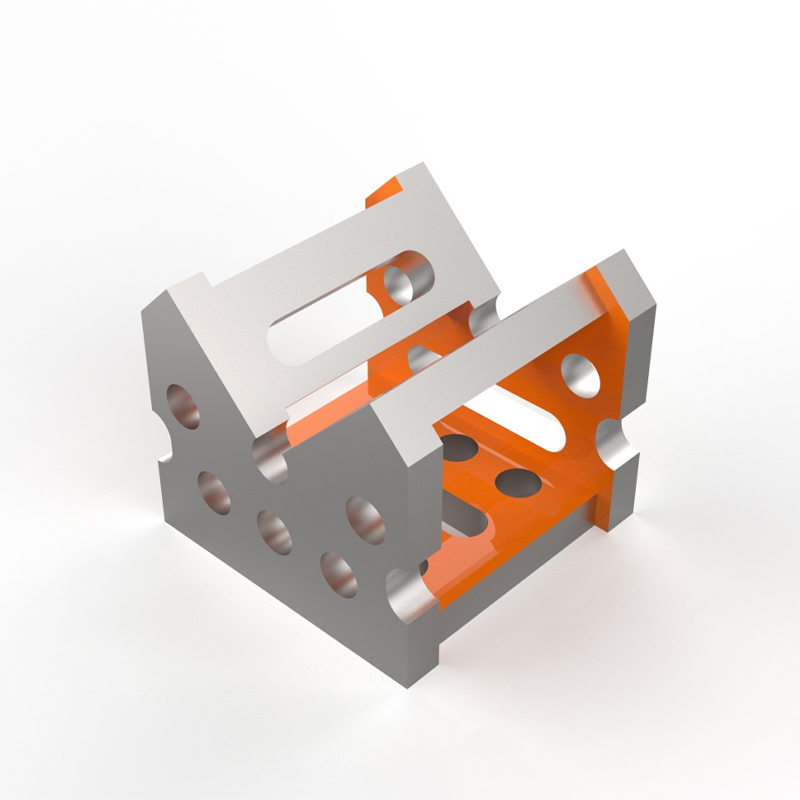
Leading this charge in precision engineering is Botou Haijun Metal Products Co., Ltd., a company specializing in the research, development, and production of high-precision flexible modular fixtures. Committed to providing efficient solutions for the modern manufacturing industry, Haijun Metal has established itself as a trusted supplier to the machining, automotive, and aerospace sectors. Their core product line features both 2D and 3D flexible welding platforms renowned for exceptional versatility. To ensure seamless integration, they offer a comprehensive range of complementary components, including U-shaped and L-shaped multi-purpose square boxes, 200-series support angle irons, and 0-225° universal angle gauges. Furthermore, their manufacturing of professional cast iron 3D welding platforms and angle connection blocks guarantees that every installation delivers the durability and stability required for rigorous industrial use.
Key Specifications of the D28 Grid
- Hole Diameter: 28mm, designed to accommodate robust clamping bolts and quick-release pins.
- Pitch Spacing: 100mm x 100mm grid, providing dense positioning options for complex parts.
- Tolerance: High-precision machining ensures hole positions are accurate within ±0.1mm over the entire surface.
- Load Capacity: Engineered to support several tons of distributed weight without deflection.
- Surface Finish: Often features a nitrided or specialized coating to minimize weld spatter sticking.
Factory Direct Pricing vs. Distributor Markups in 2026
One of the most significant developments in the welding equipment market is the rise of factory direct sales channels. Historically, purchasing a 3D flexible welding assembly table involved multiple layers of distribution, each adding a markup that could inflate the final price by 40% to 60%. In 2026, manufacturers like Botou Haijun Metal Products are increasingly bypassing these intermediaries to offer competitive pricing directly to end-users.
Buying factory direct does not just mean lower costs; it often implies better customization options. Direct communication with the engineering team allows buyers to specify table dimensions, leg configurations, and even custom hole patterns if the standard D28 grid does not suit their unique workflow. This level of service was previously reserved for enterprise-level contracts but is now becoming standard practice for direct buyers.
However, buyers must exercise due diligence. Not all “factory direct” claims are genuine. Some entities act as trading companies masquerading as manufacturers. To verify authenticity, look for detailed technical documentation, video evidence of the manufacturing process, and clear warranty terms backed by the production facility. Genuine factory direct suppliers will provide comprehensive support for spare parts and accessory compatibility.
Cost Breakdown Comparison
| Feature | Traditional Distributor Model | 2026 Factory Direct Model |
| Base Price | High (includes distributor margin) | Low (manufacturing cost + logistics) |
| Customization | Limited to stock SKUs | High (bespoke sizes and configs) |
| Lead Time | Variable (depends on warehouse stock) | Predictable (direct from production line) |
| Technical Support | Generalist knowledge | Engineer-level expertise |
| Accessory Compatibility | Often restricted to brand | Open standard (D28 universal) |
Core Advantages of 3D Flexible Assembly Tables
Adopting a 3D flexible welding assembly table transforms the welding process from an art dependent on individual skill to a repeatable engineering operation. The primary advantage is geometric accuracy. The flat surface serves as a datum plane, ensuring that all assembled parts are square and aligned. This reduces the need for post-weld correction, saving hours of grinding and rework.
Speed is another crucial factor. With a modular system, setup times are slashed. Instead of measuring and tack-wielding temporary braces, operators simply insert pins and clamps into the grid. Complex angles can be achieved instantly using pre-calibrated angle brackets. This efficiency allows shops to take on more jobs per day, directly impacting the bottom line.
Versatility cannot be overstated. A single table can handle pipe fabrication, structural steel beams, sheet metal enclosures, and intricate machinery frames. As project requirements change, the table adapts. This future-proofs the investment, ensuring the equipment remains useful even as the business pivots to new types of work. The ability to work in 3D space, utilizing the vertical axis as effectively as the horizontal, opens up design possibilities that flat plates simply cannot support.
Detailed Benefits Analysis
- Repeatability: Once a setup is proven, it can be replicated exactly for subsequent units, ensuring consistent quality across batches.
- Reduced Distortion: Strong clamping forces hold parts firmly against the heat sink of the massive table, minimizing thermal distortion during welding.
- Ergonomics: Tables can be equipped with adjustable legs or casters, allowing workers to position the workpiece at the ideal height, reducing fatigue.
- Space Efficiency: One modular table replaces dozens of dedicated jigs, freeing up valuable floor space in the workshop.
- Safety: Secure clamping prevents parts from shifting or falling during the welding process, enhancing overall shop safety.
Step-by-Step Guide to Setting Up Your 3D Welding Table
Maximizing the potential of a 3D flexible welding assembly table requires a systematic approach to setup. While the system is intuitive, following best practices ensures optimal accuracy and safety. The following steps outline the standard procedure for preparing a complex assembly.
First, clean the table surface thoroughly. Any debris, spatter, or oil on the grid can affect the seating of clamps and the accuracy of the assembly. Use a wire brush or scraper to clear the holes. Next, establish your datum points. Select a corner or edge of the table as your zero reference and install hard stops. These stops will serve as the anchor for all subsequent measurements.
Position your primary components against the stops and secure them with toe clamps or side clamps. Ensure that the parts are flush against the table surface. For 3D assemblies, introduce vertical elements using angle brackets or tower clamps. Verify all angles with a precision square before applying full clamping force. Finally, perform a dry fit check without welding to ensure all tolerances are met.
Operational Workflow Checklist
- Step 1: Inspect and clean the D28 grid holes to remove obstructions.
- Step 2: Install reference stops at the chosen origin point of the coordinate system.
- Step 3: Place the base component and secure it lightly to allow for micro-adjustments.
- Step 4: Add secondary components using appropriate brackets and clamps for 3D positioning.
- Step 5: Verify dimensions and squareness using calibrated measuring tools.
- Step 6: Tighten all clamps securely and apply anti-spatter spray to nearby areas.
- Step 7: Execute the welding sequence, monitoring for any movement due to heat.
Real-World Applications Across Industries
The utility of the 3D flexible welding assembly table extends far beyond general fabrication. In the automotive sector, particularly in custom car building and restoration, these tables are indispensable. They allow builders to construct roll cages and chassis components with exact symmetry, which is critical for vehicle performance and safety.
In the aerospace and defense industries, where tolerance margins are incredibly tight, modular fixturing provides the necessary precision. Engineers use these tables to assemble lightweight aluminum structures and titanium components. The ability to create custom fixtures quickly accelerates the prototyping phase, allowing for faster iteration and testing of new designs.
Architectural metalwork also benefits significantly. Creating complex staircases, railings, and artistic sculptures often involves awkward angles and non-standard geometries. A 3D table allows artisans to visualize and hold these shapes in space securely while welding. Similarly, in the robotics and automation field, manufacturers use these tables to build the frames for robotic cells, ensuring that mounting points are perfectly aligned for machine integration.
Selecting the Right Accessories for Maximum Utility
A 3D flexible welding assembly table is only as good as its accessories. The D28 ecosystem offers a vast array of tools designed to leverage the grid system. Essential items include quick-action clamps, which allow for fast loading and unloading of parts, and precision ground stops that guarantee accurate positioning.
Angle brackets are perhaps the most versatile accessory. Available in various degrees (90, 45, 30, etc.), they enable the creation of complex 3D structures without the need for custom bending. Magnetic clamps can also be useful for holding ferrous materials temporarily, though mechanical clamping is preferred for high-stress welding operations.
For larger projects, extension wings and riser blocks can expand the working area or create multi-level setups. It is advisable to invest in a core set of high-quality accessories initially and expand the collection based on specific project needs. Ensuring all accessories are from the same tolerance class prevents cumulative errors in large assemblies. Suppliers like Botou Haijun Metal Products exemplify this by offering integrated solutions such as universal angle gauges and support angle irons that match the precision of their platforms.
Frequently Asked Questions (FAQ)
What is the difference between D16 and D28 welding tables?
The primary difference lies in the hole size and load capacity. D16 tables have 16mm holes and are suitable for lighter duty work and thinner materials. D28 tables feature 28mm holes, offering superior rigidity and clamping force, making them the preferred choice for heavy industrial fabrication and thick plate welding.
Can I use a 3D flexible welding table for cutting and grinding?
While possible, it is generally not recommended to use the precision surface for aggressive cutting or grinding. Sparks and debris can damage the hole threads and affect the flatness. It is best to use the table primarily for assembly and welding, performing rough cutting on separate stations to preserve the table’s accuracy.
How do I prevent weld spatter from sticking to the table?
Applying a ceramic-based anti-spatter spray before welding is the most effective method. Additionally, keeping the table clean and using spatter-resistant coatings provided by manufacturers can help. Some welders also use thin metal sheets as sacrificial layers under specific weld zones.
Is assembly required for factory direct tables?
Most factory direct 3D flexible welding assembly tables ship partially assembled to reduce shipping volume and cost. Typically, the legs and support braces need to be attached to the tabletop. The process is straightforward and usually requires basic hand tools, with instructions provided by the manufacturer.
What is the expected lifespan of a D28 modular table?
With proper maintenance, a high-quality steel D28 table can last for decades. The limiting factor is usually surface wear or damage to the holes from misuse rather than structural failure. Regular cleaning and avoiding excessive impact will ensure the table remains a valuable asset for the long term.
Conclusion and Strategic Recommendations
The transition to a 3D flexible welding assembly table represents a strategic upgrade for any fabrication business aiming for higher efficiency and quality in 2026. The combination of D28 modularity, factory direct affordability, and unparalleled versatility makes it an essential tool for modern manufacturing. By eliminating the need for dedicated jigs and reducing setup times, these tables pay for themselves through increased throughput and reduced labor costs.
This solution is ideally suited for job shops handling diverse projects, prototype developers requiring rapid iteration, and heavy industries demanding strict geometric tolerances. Whether you are constructing complex piping systems or precision robotic frames, the adaptability of the 3D grid system ensures you are equipped for any challenge.
As you move forward, evaluate your current fixturing bottlenecks. Identify the projects that consume the most setup time and consider how a modular D28 system could streamline those processes. Investigate reputable factory direct suppliers who offer genuine D28 compatibility and robust after-sales support. Investing in the right assembly table today sets the foundation for a more agile, profitable, and competitive operation tomorrow.