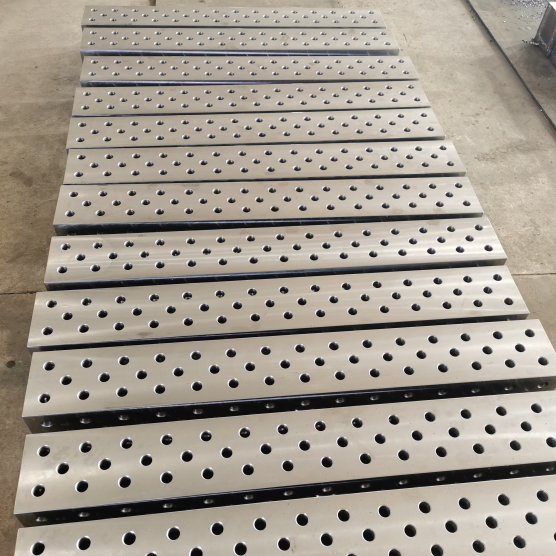
A welding workbench designed for heavy-duty fabrication is a precision-engineered platform featuring a perforated surface with a grid of holes, allowing for infinite clamping and fixturing possibilities. Unlike traditional tables, these systems provide unmatched accuracy, repeatability, and rigidity essential for complex metal assembly. Selecting the best option requires evaluating table thickness, hole pattern consistency, and material grade to ensure stability under extreme thermal and mechanical stress.
What Defines a Heavy-Duty Welding Workbench?
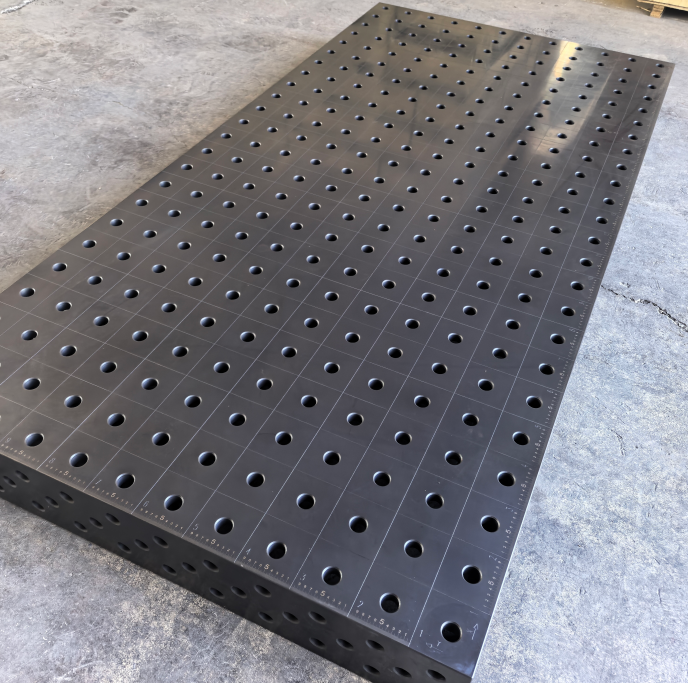
In the realm of industrial metalworking, the definition of a heavy-duty welding workbench extends far beyond a simple steel surface. These specialized platforms are engineered to serve as the foundational datum for precise fabrication, acting as both a workspace and a sophisticated clamping system. The core distinction lies in the precision-ground surface and the standardized hole pattern that permeates the top plate.
Traditional welding tables often suffer from warping due to intense heat cycles, leading to inaccurate assemblies. In contrast, modern heavy-duty options utilize high-grade steel alloys treated to resist deformation. The industry standard for “heavy-duty” typically involves a top plate thickness ranging from 16mm to 50mm, ensuring that the table remains flat even when supporting massive structures or enduring aggressive welding processes.
The functionality of these benches is defined by their modularity. The grid of holes allows welders to position stops, clamps, and angles with sub-millimeter accuracy. This capability transforms the workbench from a passive surface into an active tool that enforces geometric integrity during the fabrication process. For professional fabricators, this level of control is not a luxury but a necessity for maintaining quality standards.
The Critical Role of Surface Flatness
Surface flatness is the single most important metric when evaluating a welding workbench for heavy applications. Even minor deviations can compound over large assemblies, resulting in parts that do not fit together correctly. High-quality manufacturing processes ensure that the table top is machined to strict tolerances, often within fractions of a millimeter across the entire surface.
Maintaining this flatness requires more than just initial machining; it demands material stability. Premium manufacturers use stress-relieved steel to prevent internal tensions from causing warping over time. When heat is applied during welding, the table must absorb thermal shock without permanently altering its geometry. This resilience is what separates entry-level products from true heavy-duty solutions capable of lasting decades in a demanding shop environment.
Material Composition and Durability
The longevity of a welding workbench is directly tied to the quality of its raw materials. Heavy-duty models are constructed from low-carbon steel or specialized alloys that offer an optimal balance between hardness and weldability. While harder surfaces resist scratching, they must also allow for occasional tack welding directly to the table if necessary, without cracking.
Coatings play a significant role in durability as well. Many top-tier tables feature a protective finish that resists spatter adhesion while preventing rust. This coating simplifies cleanup and ensures that the clamping tools slide smoothly into the positioning holes without friction caused by corrosion or built-up debris. The combination of robust base materials and advanced surface treatments creates a workstation that withstands the harshest industrial conditions.
Key Features to Evaluate for Heavy Fabrication
Selecting the right welding workbench involves a detailed analysis of specific technical features. Not all tables are created equal, and understanding the nuances of design can prevent costly mistakes. The following factors are critical when determining which option best suits heavy-duty fabrication needs.
- Table Top Thickness: Thicker plates provide greater mass, which reduces vibration and absorbs heat more effectively. For heavy fabrication, a minimum thickness of 22mm is often recommended, with 50mm being ideal for the most demanding applications.
- Hole Pattern Precision: The spacing and diameter of the holes must be consistent across the entire surface. Any variation can lead to misalignment when using modular fixturing tools. A precise grid ensures that accessories fit perfectly every time.
- Leg Structure and Bracing: The support frame must be as rigid as the top plate. Heavy-duty tables feature reinforced legs with cross-bracing to prevent racking or tipping under uneven loads. Adjustable feet are essential for leveling the table on uneven shop floors.
- Edge Accessibility: The ability to clamp materials hanging off the edge is crucial for large assemblies. Tables with holes drilled into the sides or flush edges offer maximum flexibility for odd-sized projects.
- Grounding Points: Integrated grounding studs allow for secure attachment of welding earth clamps anywhere on the table. This feature improves electrical conductivity and safety, reducing the risk of arc strikes on unintended areas.
Understanding Hole Patterns and Spacing
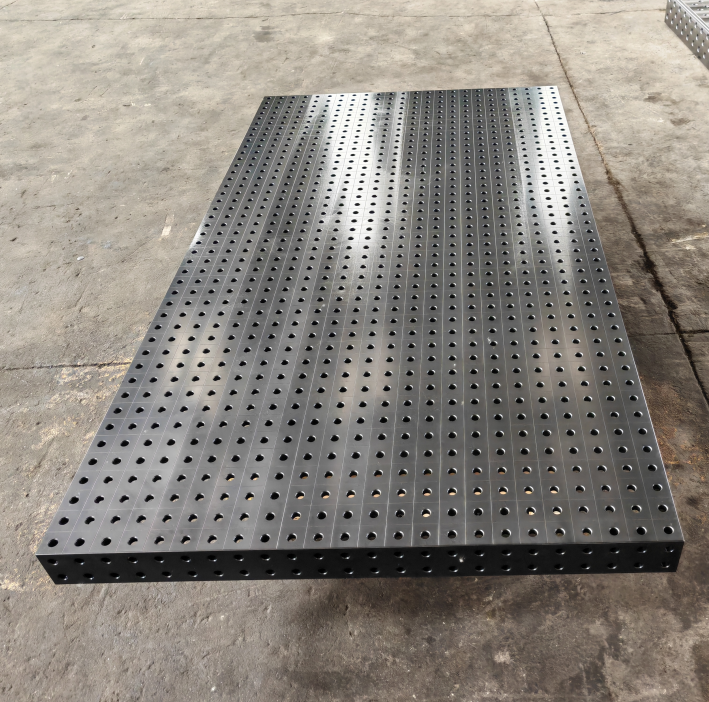
The geometry of the hole pattern dictates the versatility of the workbench. The most common configurations include square grids with 100mm or 50mm spacing. A finer grid offers more positioning options but may reduce the structural integrity of the table if the holes are too close together. Conversely, a wider spacing provides more material strength but limits fine adjustments.
For heavy-duty fabrication, the diameter of the holes is equally important. Standard sizes like 16mm or 28mm accommodate a wide range of industry-standard clamps and stops. It is vital to choose a table where the hole tolerance is tight enough to prevent play in the tooling but loose enough to allow for easy insertion and removal, even after exposure to heat and spatter.
Load Bearing Capacity and Stability
Heavy fabrication often involves manipulating large, cumbersome steel plates or structural beams. The workbench must support these loads without deflection. Load bearing capacity is determined by both the top plate thickness and the design of the underlying frame. Engineers calculate these ratings based on point loads and distributed loads to ensure safety margins are met.
Stability is also influenced by the weight of the table itself. Heavier tables are generally more stable because their mass resists movement during vigorous grinding or hammering. However, mobility features like heavy-duty casters with locking mechanisms can provide the best of both worlds, allowing the table to be moved when empty and locked securely in place during operation.
Comparison of Heavy-Duty Workbench Configurations
When navigating the market for heavy-duty solutions, buyers often encounter various configurations tailored to different workflows. Understanding the differences between these types helps in selecting the most efficient setup for specific fabrication tasks. The following table outlines the primary distinctions between common heavy-duty workbench styles.
| Feature | Standard Solid Top | Modular Perforated Top | Hybrid Combination |
| Primary Use Case | General welding and cutting | Precision fixturing and assembly | Versatile multi-process workflows |
| Clamping Flexibility | Limited to edge clamps | Infinite positioning via grid holes | Moderate; combines edges and select holes |
| Accuracy Level | Low to Medium | High (Repeatable) | Medium to High |
| Heat Dissipation | High (Massive solid steel) | Medium (Airflow through holes) | High |
| Tooling Compatibility | Universal hand tools | Specialized modular fixturing systems | Mixed compatibility |
| Ideal For | Rough fabrication, repair work | Complex jigs, batch production | Shops with diverse project types |
Advantages of Modular Perforated Systems
The modular perforated top has become the gold standard for serious fabrication shops. Its primary advantage is the ability to create custom jigs and fixtures rapidly. By using a library of stops, clamps, and angle brackets, a welder can set up a repeatable process for batch production. This reduces setup time significantly and ensures that every part produced matches the previous one exactly.
Furthermore, the open grid design facilitates better airflow, which can help in cooling down hot workpieces faster than a solid slab. The holes also allow slag and spatter to fall through rather than accumulating on the working surface, keeping the area cleaner and reducing the frequency of deep cleaning sessions required to maintain flatness.
When to Choose a Solid Top Design
Despite the popularity of perforated tables, there are scenarios where a solid top remains the superior choice. Applications involving extensive plasma cutting or processes that generate massive amounts of debris might benefit from a solid surface that contains sparks and slag. Additionally, if the budget does not allow for a comprehensive set of modular tooling, a solid table provides a robust, no-frills workspace that relies on traditional clamping methods.
Solid tops are also preferable for operations that require a continuous, unbroken surface for sliding large sheets of metal. Without holes to catch edges, heavy plates can be maneuvered more easily across the table. For shops focused primarily on structural steel erection rather than precision sheet metal assembly, the sheer mass and simplicity of a solid top often suffice.
Step-by-Step Guide to Setting Up Your Workbench
Proper installation and setup are crucial to unlocking the full potential of a heavy-duty welding workbench. Even the highest quality table will underperform if it is not leveled correctly or if the tooling is not organized efficiently. Follow these steps to ensure optimal performance and longevity.
- Step 1: Site Selection and Floor Preparation: Choose a location with a concrete floor capable of supporting the immense weight of the table and the workpieces. Ensure the area is well-ventilated and has access to power outlets for lighting and equipment.
- Step 2: Unpacking and Inspection: Carefully unpack the table and inspect the surface for any shipping damage. Check the flatness with a straightedge if possible. Verify that all hardware, including legs and leveling feet, is present.
- Step 3: Assembly of the Frame: Attach the legs to the tabletop according to the manufacturer’s instructions. Use a torque wrench to tighten bolts to the specified values to ensure structural rigidity. Do not overtighten, as this can distort the frame.
- Step 4: Precision Leveling: Place a high-quality machinist level on the table surface. Adjust the leveling feet incrementally until the bubble is centered in both directions. Recheck after tightening the lock nuts on the feet to ensure they did not shift.
- Step 5: Grounding Installation: Install grounding studs into the designated holes. Connect the main ground cable from your welding machine to these studs. Ensure a clean metal-to-metal contact for optimal electrical flow.
- Step 6: Tooling Organization: Arrange your clamps, stops, and squares in a logical order near the table. Consider installing shelving or tool racks underneath the table to keep frequently used items within reach but off the working surface.
Maintenance Best Practices
To maintain the accuracy and appearance of the workbench, regular maintenance is essential. After each shift, remove large chunks of spatter and debris. Avoid using abrasive grinding discs directly on the table surface unless absolutely necessary, as this can create low spots over time. Instead, use chipping hammers or specialized spatter removal tools.
Periodically check the leveling of the table, especially if heavy impacts occur frequently. Re-leveling may be required annually depending on usage intensity. Apply a light coat of oil or a dedicated anti-rust spray to the surface if the table will be idle for extended periods, particularly in humid environments. Keeping the holes clear of obstruction ensures that tooling can always be inserted without force.
Real-World Applications in Heavy Fabrication
The versatility of a heavy-duty welding workbench makes it indispensable across various sectors of the manufacturing industry. From custom automotive builds to large-scale structural engineering, these tables provide the stability needed for diverse projects. Understanding specific applications highlights the return on investment these systems offer.
In structural steel fabrication, these tables are used to assemble beams, columns, and trusses with precise angles. The ability to lock components in place prevents movement during tack welding, ensuring that the final structure meets architectural specifications. For bridge building or skyscraper frameworks, the margin for error is non-existent, making the precision of the workbench critical.
The machinery and equipment manufacturing sector relies heavily on these benches for building frames and enclosures. Complex assemblies requiring multiple weld passes benefit from the heat dissipation and rigidity of the table. Operators can rotate and reposition heavy parts using overhead cranes while relying on the table to hold the assembly steady.
Custom Automotive and Motorsports
In the high-stakes world of motorsports, chassis fabrication demands absolute symmetry and strength. A heavy-duty workbench allows builders to construct roll cages and suspension mounts with exact geometries. The modular tooling enables the creation of jigs that hold tubing in perfect alignment while tacks are applied, ensuring that the vehicle handles predictably at high speeds.
Restoration projects also benefit from these surfaces. When repairing vintage frames, the ability to pull and hold distorted metal in its original shape is invaluable. The table acts as a reference plane, allowing technicians to measure deviations and apply corrective forces accurately.
Artistic Metalwork and Sculpture
While often associated with industrial utility, heavy-duty workbenches are increasingly popular among metal artists. Large-scale sculptures require a stable base to assemble intricate components. The grid system allows artists to experiment with different configurations before committing to permanent welds. The durability of the table supports the weight of dense materials like bronze or thick steel plates used in public art installations.
For artists, the table serves as a canvas where gravity and geometry are controlled. The precision holes allow for the use of temporary supports that can be removed cleanly, leaving no trace of the assembly process on the finished artwork. This level of control elevates the quality of the final piece and expands the creative possibilities.
Industry Leaders in Precision Fixturing Solutions
As the demand for higher precision and efficiency grows, partnering with experienced manufacturers becomes crucial for shops looking to upgrade their capabilities. Companies like Botou Haijun Metal Products Co., Ltd. have emerged as trusted leaders in this space, specializing in the research, development, and production of high-precision flexible modular fixtures and metalworking tools. Committed to providing efficient and flexible welding solutions for the modern manufacturing industry, Haijun Metal has established a reputation for excellence across the machining, automotive, and aerospace sectors.
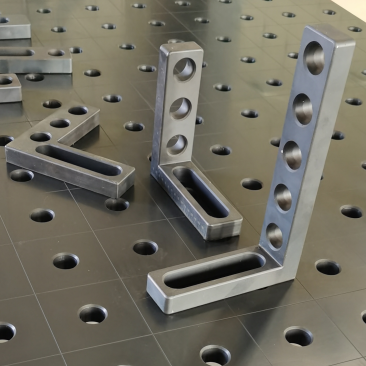
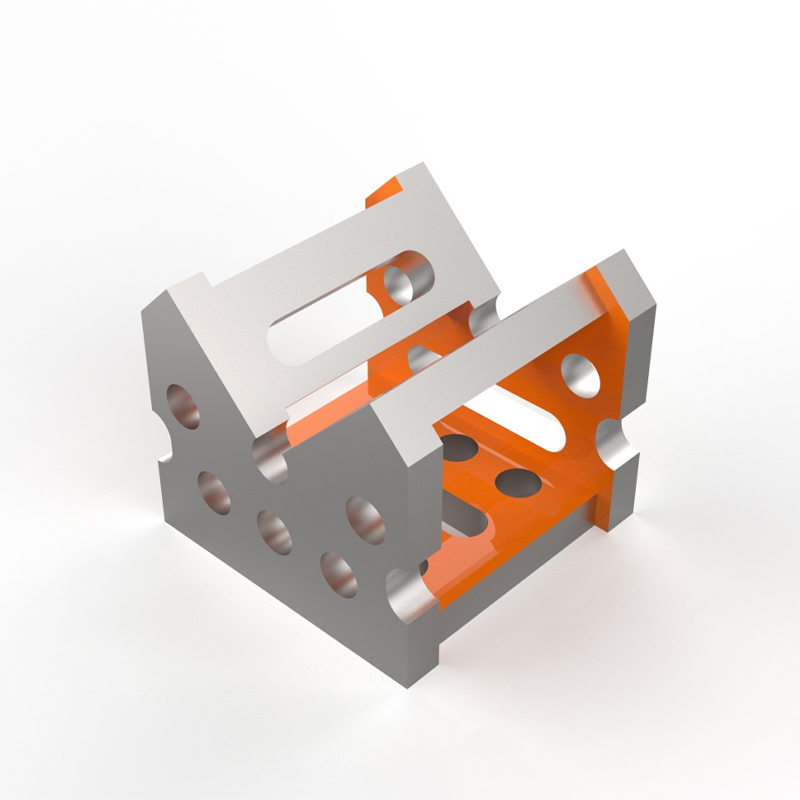
Their core product line features advanced 2D and 3D flexible welding platforms renowned for exceptional versatility and accuracy. These systems serve as the foundation for rapid workpiece positioning, seamlessly integrating with a comprehensive range of complementary components. Whether utilizing U-shaped and L-shaped multi-purpose square boxes, 200-series support angle irons, or 0-225° universal angle gauges, fabricators can achieve quick and reliable setups. Furthermore, Haijun Metal manufactures professional cast iron 3D welding platforms and angle connection blocks, ensuring that every product delivers the durability and stability required for heavy-duty applications. With years of industry experience, they continue to supply high-quality production machinery tool series to customers both domestically and internationally, helping shops elevate their fabrication standards.
Frequently Asked Questions (FAQ)
Addressing common queries helps clarify uncertainties regarding the selection and use of heavy-duty welding workbenches. The following answers provide expert insights based on industry standards and practical experience.
Can I weld directly on the surface of a heavy-duty workbench?
Yes, you can weld directly on the surface, but with caveats. These tables are made from weldable steel, so tack welding components to the table is a standard practice. However, excessive welding in one spot can create localized heat buildup, potentially causing minor warping or damaging the protective coating. It is advisable to use copper backing plates or ceramic tiles under high-heat areas to protect the table surface and extend its lifespan.
How do I clean spatter from the positioning holes?
Spatter accumulation in the holes can hinder tool insertion. The most effective method is to use a dedicated hole cleaning tool or a drill bit slightly smaller than the hole diameter to gently scrape out debris. Regular maintenance prevents buildup. Some professionals apply a thin layer of anti-spatter spray around the holes before starting work, which makes subsequent cleaning much easier.
Is it necessary to anchor the workbench to the floor?
For most heavy-duty tables, anchoring is not strictly necessary due to their immense weight. The friction between the leveling feet and the concrete floor usually provides sufficient stability. However, in environments with seismic activity or where extremely aggressive lateral forces are applied during assembly, bolting the table to the floor adds an extra layer of security. Always consult the manufacturer’s guidelines regarding anchoring options.
What is the expected lifespan of a premium welding workbench?
With proper care and maintenance, a high-quality heavy-duty welding workbench can last for decades. The steel construction is inherently durable, and unlike electronic equipment, it does not become obsolete. The primary wear points are the surface finish and the hole tolerances, both of which can be managed through routine upkeep. Many shops report using the same tables for over 20 years without significant loss of functionality.
Making the Final Decision: Choosing the Right Option
Selecting the best welding workbench for heavy-duty fabrication is a strategic decision that impacts productivity, quality, and safety for years to come. The ideal choice balances immediate budget constraints with long-term operational needs. By prioritizing features like table thickness, hole precision, and structural rigidity, fabricators can secure a foundation that elevates their entire workflow.
It is essential to consider the specific types of projects your shop handles most frequently. If precision assembly and repeatability are paramount, a modular perforated system is the clear winner. For rougher, high-volume cutting and welding, a thicker solid top might offer better value. Evaluating the available space and the need for mobility will further refine the selection process.
Ultimately, investing in a top-tier heavy-duty workbench is an investment in the quality of your output. It reduces rework, speeds up setup times, and provides a safe, stable environment for tackling the most challenging fabrication tasks. As the industry continues to demand higher precision and efficiency, having the right platform becomes a competitive advantage that distinguishes professional shops from the rest.
Next Steps for Procurement
Before making a purchase, request detailed specifications sheets from manufacturers to verify material grades and tolerance ratings. If possible, visit a showroom or arrange a demonstration to see the build quality firsthand. Consider the total cost of ownership, including the necessary modular tooling, which is an integral part of the system’s value. By taking these informed steps, you ensure that your new welding workbench becomes the cornerstone of your fabrication success.