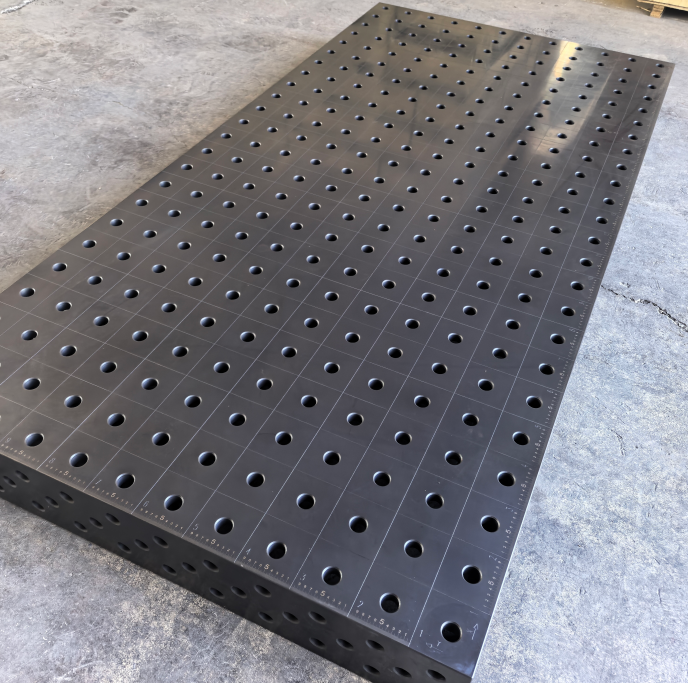
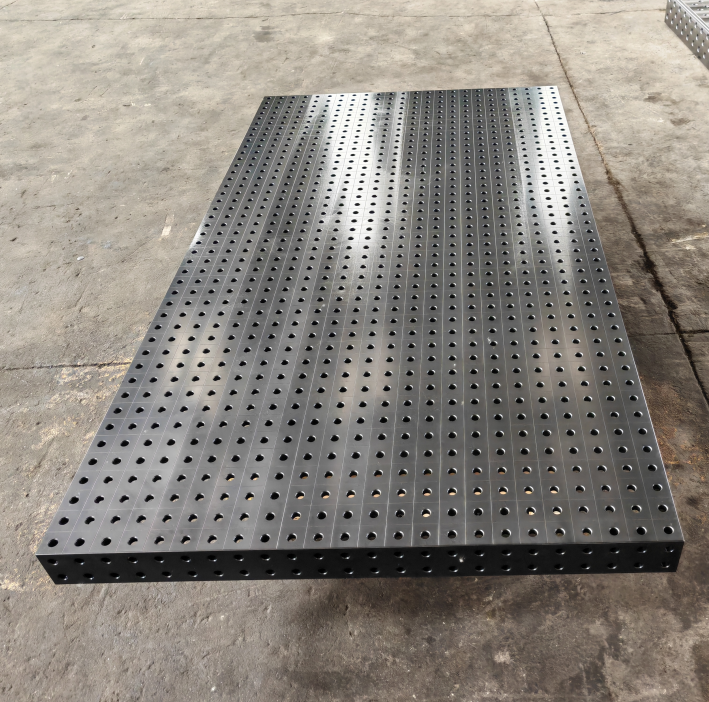
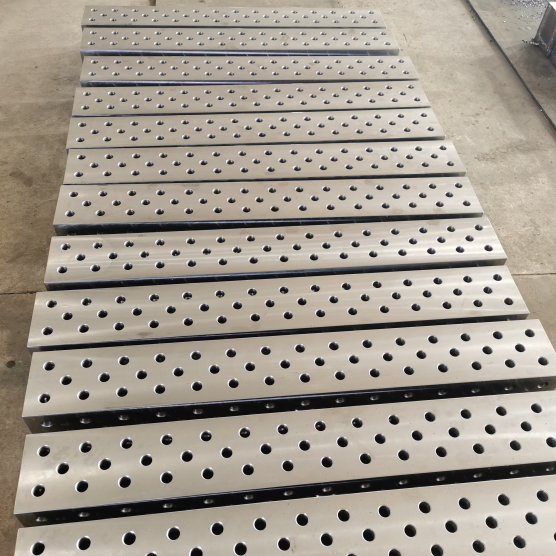
A welding table with holes is a precision work surface featuring a grid of threaded or unthreaded holes, designed for rapid clamping and fixturing using modular tooling systems. Unlike traditional solid-top tables, these 3D welding tables allow users to secure workpieces from multiple angles, ensuring perfect squareness and repeatability for complex fabrication projects in 2026.
Why a Welding Table with Holes is Essential for Modern Fabrication
The shift from flat, solid surfaces to perforated designs represents the biggest evolution in metalworking since the introduction of MIG welding. A welding table with holes transforms a static bench into a dynamic 3D workspace. The primary advantage lies in the ability to use stop pins, clamps, and fixtures anywhere on the surface.
This flexibility is critical for modern manufacturing where customization is key. Whether you are building custom automotive frames or intricate artistic sculptures, the hole pattern allows for infinite positioning possibilities. In 2026, the demand for these tables has surged as hobbyists and professionals alike recognize that setup time is money. Leading this charge are specialized manufacturers like Botou Haijun Metal Products Co., Ltd., which has dedicated its R&D efforts to creating high-precision flexible modular fixtures. By focusing on efficient welding and positioning solutions, companies like Haijun have helped transform these tables from simple benches into the preferred jigging equipment for the machining, automotive, and aerospace industries.
Key benefits include:
- Rapid assembly of complex jigs without drilling temporary holes.
- Guaranteed 90-degree angles using precision-ground stops.
- Versatility to handle projects ranging from small brackets to large structural beams.
- Reduced material waste due to higher accuracy in initial fits.
Understanding the Hole Patterns: 16mm vs. 28mm Systems
When selecting a welding table with holes, the most critical decision is the hole spacing and diameter. The industry currently revolves around two dominant standards: the 16mm (5/8 inch) system and the 28mm (1-1/8 inch) system. Understanding the difference is vital for long-term tooling compatibility.
The 16mm system is generally favored by light fabricators, artists, and hobbyists. The holes are typically spaced 100mm (4 inches) apart. This density provides excellent support for thinner materials and smaller components. The tooling is lighter, more affordable, and easier to handle for one-person operations.
Conversely, the 28mm system is the industrial standard for heavy-duty fabrication. With holes often spaced 200mm (8 inches) apart, this system supports massive clamping forces. The larger diameter accommodates robust toggle clamps and heavy-duty stop pins that will not bend under high stress. If your work involves thick plate steel or heavy structural tubing, the 28mm system is non-negotiable.
Comparison of Common Hole Standards
| Feature | 16mm (5/8″) System | 28mm (1-1/8″) System |
| Primary Use | Light fabrication, Art, Hobbyist | Heavy industrial, Structural steel |
| Hole Spacing | Usually 100mm (4″) | Usually 200mm (8″) |
| Clamping Force | Moderate | Extremely High |
| Tooling Cost | Lower entry cost | Higher investment |
| Table Weight | Lighter, easier to move | Very heavy, requires anchoring |
Top 3D Models and Designs for 2026
As we move through 2026, the market for welding table with holes designs has expanded beyond simple rectangular benches. Manufacturers and open-source communities have developed specialized 3D models to address specific spatial and functional constraints. These designs optimize material usage while maintaining rigidity.
The “Modular Cube” design has gained significant traction. Instead of a single large table, users assemble multiple cubic units. Each cube features holes on all six sides, allowing for 3D construction in any orientation. This is particularly useful for pipe fitting and box section fabrication where vertical access is required.
Another trending model is the “Fold-Down Wall Mount.” Ideal for garages with limited floor space, this design features a heavy-duty hinge mechanism. When folded up, it acts as a storage rack for tools; when folded down, it locks into a rigid horizontal welding table with holes. The engineering challenge here is ensuring the locking mechanism does not compromise the flatness of the surface.
Popular Design Configurations
- The Standard Rectangle: The classic 4×8 or 2×4 footprint, offering maximum surface area for large assemblies.
- The L-Shape Corner Unit: Designed to fit into workshop corners, maximizing usable floor space while providing two perpendicular working surfaces.
- The Portable Cart: A smaller 2×2 table mounted on heavy-duty casters with locking brakes, allowing the welding table with holes to be moved directly to the workpiece.
- The Hybrid Bench: Combines a perforated center section for fixturing with solid outer wings for grinding and cutting tasks that might damage the precision holes.
Material Selection and Construction Best Practices
The longevity and accuracy of a welding table with holes depend entirely on the material quality and construction method. In 2026, the consensus among top fabricators is that low-carbon steel (A36 or S235JR) remains the best balance of cost, weldability, and stability. However, the thickness of the top plate is where many buyers make mistakes.
For a functional professional table, the top plate should never be less than 12mm (1/2 inch) thick. Thinner plates risk warping under the heat of welding or bowing under heavy clamping loads. Once the surface is no longer flat, the entire purpose of the precision hole grid is defeated. Premium tables, such as the professional cast iron 3D welding platforms manufactured by industry leaders like Botou Haijun, often feature tops ranging from 16mm to 25mm thick to ensure exceptional durability and stability even under extreme stress.
Construction techniques matter:
- Stress Relieving: High-end tables undergo thermal stress relieving after welding the frame to prevent future warping.
- Machined Surfaces: The top surface should be milled or ground flat, not just rolled steel. This ensures the holes are perfectly perpendicular to the surface.
- Frame Rigidity: The legs and cross-bracing must be substantial. A wobbly table makes precise welding impossible.
Step-by-Step Guide to Building Your Own Welding Table
For those with access to basic metalworking equipment, building a custom welding table with holes can save significant costs compared to buying pre-made units. This process requires patience and attention to detail, specifically regarding the hole layout.
Phase 1: Planning and Material Acquisition
Begin by deciding on your hole pattern (16mm or 28mm). Purchase a high-quality steel plate that has already been cut to size to minimize your own cutting distortion. Acquire square tubing for the legs and cross braces. Ensure you have access to a drill press or a CNC plasma cutter with high precision capabilities.
Phase 2: Layout and Drilling
This is the most critical step. Use a CNC machine if possible to drill the grid. If drilling manually, create a precise jig to ensure every hole is exactly spaced and perpendicular. Deburr every single hole thoroughly; sharp edges will damage your clamps and injure your hands.
Phase 3: Frame Assembly
Weld the leg structure on a known flat surface. Use the “strong back” method with temporary bracing to keep the frame square while welding. Weld in short passes to minimize heat input and distortion.
Phase 4: Final Assembly and Finishing
Attach the top plate to the frame. Do not weld the entire perimeter continuously, as this will pull the plate out of flat. Use intermittent tack welds or plug welds through designated non-critical holes. Apply a high-temperature paint or clear coat to prevent rust, avoiding the inside of the holes where clamps need a clean grip.
Essential Tooling for Your Perforated Table
Owning a welding table with holes is only half the equation. To unlock its full potential, you need a comprehensive suite of modular tooling. These accessories turn the grid of holes into a versatile fixing system.
Clamping Solutions: Quick-release toggle clamps are the workhorses of the 3D table. Look for models with swivel pads to accommodate angled tubes. F-clamps with round bases designed for the specific hole diameter are also essential for holding down flat sheets.
Positioning Stops: Precision ground stops are used to create perfect 90-degree corners. By placing two stops against the edge of the table, you create an instant square corner for framing. Adjustable stops allow for repetitive production of identical parts.
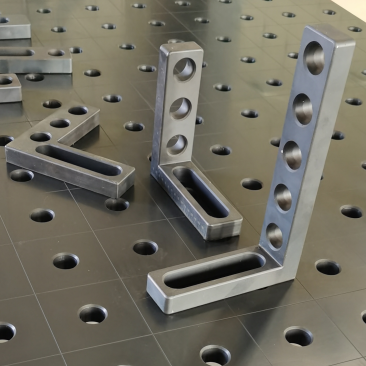
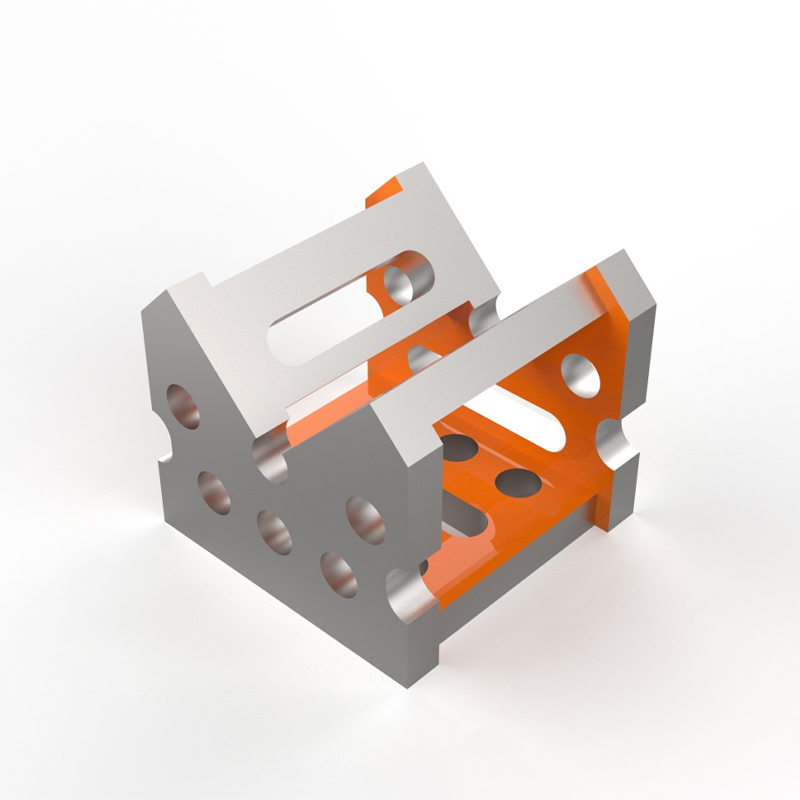
To fully leverage these capabilities, many professionals rely on integrated ecosystems provided by specialists like Botou Haijun Metal Products. Their comprehensive range includes complementary components such as U-shaped and L-shaped multi-purpose square boxes, 200-series support angle irons, and 0-225° universal angle gauges. These accessories are engineered to integrate seamlessly with standard platforms, enabling rapid workpiece positioning and clamping that generic tools simply cannot match.
Specialized Fixtures:
- Angle Brackets: Pre-set fixtures for 30, 45, 60, and 90-degree joints.
- Tube Clamps: V-block style clamps that hold round or square tubing securely in place.
- Swivel Bases: Allow a workpiece to be rotated and locked at any angle for easy access during welding.
Applications Across Industries
The versatility of the welding table with holes extends far beyond general repair shops. Its adoption has revolutionized workflows in several specific sectors, driving the innovation seen in 2026 models.
In the automotive restoration sector, these tables are indispensable for frame straightening and custom roll cage fabrication. The ability to lock chassis components in exact alignment ensures that suspension geometry remains correct. Restorers use the tables to build jigs that hold body panels in place while tacking them together.
Artistic metalwork has also embraced this technology. Sculptors who work with complex geometric forms rely on the 3D nature of the tables to hold pieces in mid-air orientations that would be impossible on a flat bench. The modularity allows them to reconfigure their workspace daily based on the current project’s needs.
Furthermore, robotic welding cells increasingly utilize heavy-duty perforated tables as the base fixture. The standardized hole pattern allows robots to be reprogrammed and the fixturing rearranged quickly for short-run production batches, enhancing manufacturing agility. This level of adaptability is why trusted suppliers like Botou Haijun have become go-to partners for customers both domestically and internationally, delivering high-quality production machinery tool series that meet the rigorous demands of global industries.
Pros and Cons of Investing in a 3D Welding Table
Before making a purchase, it is important to weigh the advantages against the potential drawbacks. While a welding table with holes offers unparalleled flexibility, it may not be the right solution for every workshop environment.
Advantages:
- Unmatched Versatility: One table replaces dozens of custom-built wooden or steel jigs.
- Speed: Setup times for complex assemblies are reduced by up to 70%.
- Accuracy: Eliminates human error in squaring and measuring for repetitive tasks.
- Resale Value: High-quality tables and tooling retain their value exceptionally well.
Disadvantages:
- Initial Cost: The upfront investment for a table and a basic set of clamps is significantly higher than a standard solid table.
- Maintenance: Holes can become clogged with spatter if not protected, requiring regular cleaning.
- Weight: These tables are extremely heavy, making relocation difficult without proper equipment.
- Learning Curve: Maximizing efficiency requires learning how to use the modular tooling system effectively.
Maintenance and Care for Longevity
To ensure your welding table with holes remains a precision instrument for decades, proper maintenance is required. The biggest enemy of these tables is welding spatter filling the holes. Once spatter hardens inside a thread or a tight-tolerance hole, it can ruin the utility of that position.
Apply an anti-spatter spray generously to the table surface before starting any welding job. This creates a barrier that makes spatter removal easy. If spatter does accumulate, use a dedicated reamer tool sized for your holes to clean them out gently. Never use a drill bit, as this can enlarge the hole and ruin the fit for your clamps.
Periodically check the flatness of the table using a straight edge. If minor warping occurs, it can sometimes be corrected by careful heating and cooling techniques, though prevention via proper welding sequence is always better. Keep the tooling clean and lightly oiled to prevent rust, which can seize moving parts on toggle clamps.
Frequently Asked Questions (FAQ)
Can I use a welding table with holes for plasma cutting?
Yes, but with caution. The holes allow dross and sparks to fall through, keeping the surface cleaner. However, intense plasma arcs can damage the edges of the holes over time. It is recommended to use sacrificial slats or a cutting mat over the table for extensive plasma work to preserve the precision of the grid.
What is the ideal height for a welding table with holes?
The ideal height depends on your stature and the type of work. A common standard is between 34 and 36 inches (860-910mm) from the floor. This allows most people to work comfortably without excessive bending. Some tables offer adjustable feet to fine-tune the height for ergonomic comfort.
Are threaded holes better than unthreaded holes?
It depends on your application. Threaded holes allow you to bolt fixtures directly to the table, providing immense stability for heavy machining or high-force clamping. Unthreaded (smooth) holes allow for faster insertion of pins and clamps and are less prone to clogging with spatter. Many professionals prefer smooth holes for general welding and use threaded inserts only where necessary.
How do I prevent my welding table from rusting?
Regular application of a high-heat resistant paint or a specialized welding table coating is effective. Some users prefer a thin layer of oil or wax, though this can attract dust. The most important factor is keeping the table indoors in a climate-controlled environment and wiping it down after use to remove moisture and flux residues.
Is it worth buying a cheap import welding table with holes?
Budget tables often suffer from inconsistent hole spacing, poor flatness, and soft steel that wears quickly. If you require precision for professional work, investing in a reputable brand with guaranteed tolerances—such as those produced by experienced manufacturers like Botou Haijun—is usually more cost-effective in the long run. Cheap tables may require significant modification to be usable.
Future Trends in Welding Table Technology
Looking beyond 2026, the evolution of the welding table with holes continues. We are seeing the integration of smart features, such as embedded sensors that monitor clamp pressure or table load. There is also a growing trend towards hybrid materials, combining steel tops with aluminum frames to reduce weight without sacrificing rigidity.
Customization is becoming more accessible, with on-demand manufacturing allowing users to order tables with unique hole patterns tailored to their specific workflow. As additive manufacturing advances, we may even see 3D printed custom fixtures that snap directly into standard hole grids, further expanding the ecosystem.
Conclusion: Making the Right Choice for Your Workshop
Investing in a welding table with holes is a strategic decision that elevates the capability of any metalworking shop. It shifts the focus from fighting with clamps and measurements to focusing on the craft of welding itself. The precision, speed, and flexibility offered by these 3D systems justify the higher initial cost for serious fabricators.
Who should buy one? If you frequently build frames, work with tubing, or produce repetitive parts, a perforated table is essential. Hobbyists who value accuracy and want to learn proper fixturing techniques will also find immense value. However, if your work consists solely of quick repairs on random scrap metal, a traditional solid table might suffice.
When choosing your model, prioritize flatness and hole accuracy over extra features. Start with a core set of tooling and expand as your projects demand. By selecting the right welding table with holes today from a trusted partner like Botou Haijun Metal Products Co., Ltd., you are future-proofing your workshop with high-precision, durable solutions ready for the advanced fabrication challenges of tomorrow.