Looking for a Welding Table Price Guide: What Affects the Cost in 2026? The price of a professional welding table in 2026 typically ranges from $300 for basic hobbyist models to over $4,000 for industrial-grade precision fixtures. Key cost drivers include steel thickness, surface finish (machined vs. raw), fixture compatibility, and load-bearing capacity. Understanding these variables is essential for selecting a workbench that balances budget constraints with long-term durability and project accuracy.
Understanding the Core Factors Behind Welding Table Pricing
The market for welding workbenches has evolved significantly, shifting from simple heavy steel plates to sophisticated modular fixturing systems. When analyzing the welding table price guide, it becomes clear that the sticker price is rarely just about the amount of metal used. In 2026, manufacturers are integrating advanced material sciences and precision engineering techniques that directly influence the final cost.
Buyers often mistake weight for quality. While mass provides stability, the true value lies in the flatness tolerance and the integrity of the welding surface. A heavier table made with lower-grade steel that warps under heat is less valuable than a lighter, stress-relieved unit with a machined top. This distinction is the first major pivot point in pricing structures across the industry.
Furthermore, the shift towards modular fixturing has created a new tier of pricing. Tables designed with standardized hole patterns allow for infinite clamping possibilities, adding significant utility but also increasing manufacturing complexity. This guide breaks down exactly where your money goes when purchasing a welding table in the current economic landscape.
The Impact of Material Grade and Steel Thickness
The foundational element of any welding table is the steel itself. The grade of steel and the thickness of the tabletop are the primary determinants of the base cost. In 2026, most reputable manufacturers utilize low-carbon steel, often referred to as mild steel, due to its excellent weldability and resistance to cracking under thermal stress.
Thickness variations create distinct price tiers. Entry-level tables often feature tops ranging from 3mm to 5mm. These are suitable for light fabrication but lack the thermal mass to prevent warping during heavy-duty welding. Mid-range professional units typically employ 10mm to 12mm plates, offering a robust balance between cost and performance.
- Light Duty (3-5mm): Lowest cost, prone to warping, suitable for occasional hobby use.
- Medium Duty (8-10mm): Moderate price, good thermal mass, ideal for general fabrication shops.
- Heavy Duty (12-19mm+): Premium pricing, maximum stability, required for industrial jigs and heavy structural work.
Thicker steel requires more energy to cut and significantly more effort to machine flat. This increase in processing time is directly passed on to the consumer. Additionally, the sourcing of high-quality, consistent steel plates has seen volatility, influencing the baseline material costs in the 2026 market.
Surface Finish and Machining Tolerances
Once the steel plate is selected, the method used to finish the surface dramatically alters the price. A raw, hot-rolled plate is the cheapest option but comes with mill scale and inherent unevenness. Conversely, a CNC-machined surface represents the pinnacle of precision and commands a premium price tag.
Machining involves removing a thin layer of steel to ensure the entire surface is perfectly flat within specific tolerances, often measured in thousandths of an inch or fractions of a millimeter. This process is critical for users who need to assemble complex geometries where even a slight deviation can ruin a project. The equipment and labor required for this step are substantial.
Industry standards in 2026 generally categorize finishes into three groups. The “as-welded” or raw finish is common in budget tables. The “ground” finish offers a smoother surface but may not be perfectly flat across large spans. The “precision machined” finish is reserved for high-end fixturing tables, ensuring that the surface serves as a reliable datum for all measurements.
Structural Design and Frame Engineering Costs
Beyond the tabletop, the underlying frame structure plays a pivotal role in both the longevity of the table and its price. A wobbly frame renders even the flattest top useless. The engineering behind the legs, cross-bracing, and connection points dictates the overall rigidity and load-bearing capacity of the unit.
High-cost tables often feature internal ribbing or gusseted corners to prevent racking (the tendency of a rectangular frame to skew into a parallelogram). This reinforcement requires additional cutting, fitting, and welding labor. Cheaper alternatives may rely on simple bolt-together designs or minimal tack welding, which can loosen over time due to vibration and thermal cycling.
Leg Configuration and Stability Features
The design of the legs is not merely aesthetic; it is a functional component that affects price. Fixed-leg tables are generally more affordable but offer limited adjustability. In contrast, tables with adjustable leveling feet are standard in the professional sector, allowing users to compensate for uneven shop floors.
Premium models may include modular leg systems that can be reconfigured or replaced. Some high-end designs incorporate casters with locking mechanisms that allow the massive table to be moved without losing stability. The hardware required for these features—high-load bearings, threaded adjustment rods, and heavy-duty locks—adds to the manufacturing bill of materials.
Stability is also enhanced by the width and gauge of the tubing used for the legs. Thicker wall tubing resists bending better but is harder to work with. Manufacturers must balance the desire for a lightweight, shippable product with the need for a rock-solid foundation, a balance that is reflected in the final retail price.
Welding Quality and Assembly Methods
The human element of assembly cannot be overlooked. A table that is fully welded at the factory ensures maximum rigidity but incurs higher shipping costs due to weight and volume. Knock-down (KD) kits reduce shipping expenses but transfer the assembly burden to the customer.
Professional-grade welding on the frame itself is a marker of quality. Continuous welds provide superior strength compared to intermittent tack welds found on economy models. The time spent cleaning up weld spatter, grinding joints smooth, and applying protective coatings adds labor hours that elevate the price of premium brands.
In 2026, automated robotic welding cells are increasingly used for frame construction to ensure consistency. While this reduces human error, the capital investment in such technology is factored into the product pricing. Buyers paying for a fully assembled unit are essentially paying for the guarantee of structural integrity right out of the crate.
The Premium of Precision Fixturing Systems
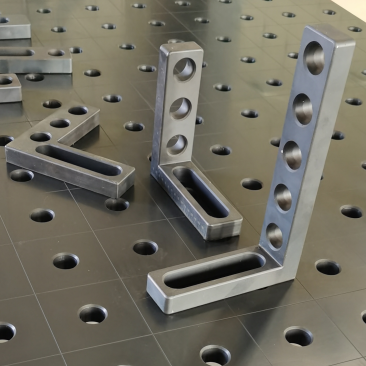
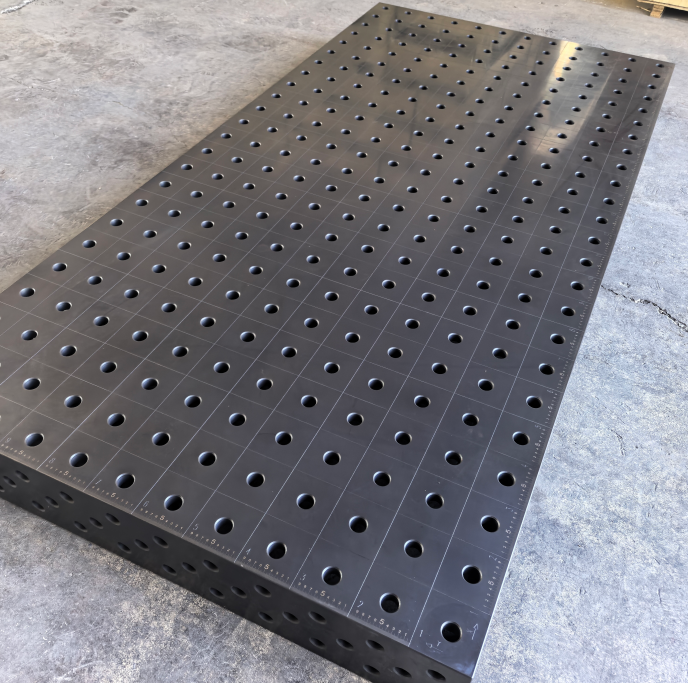
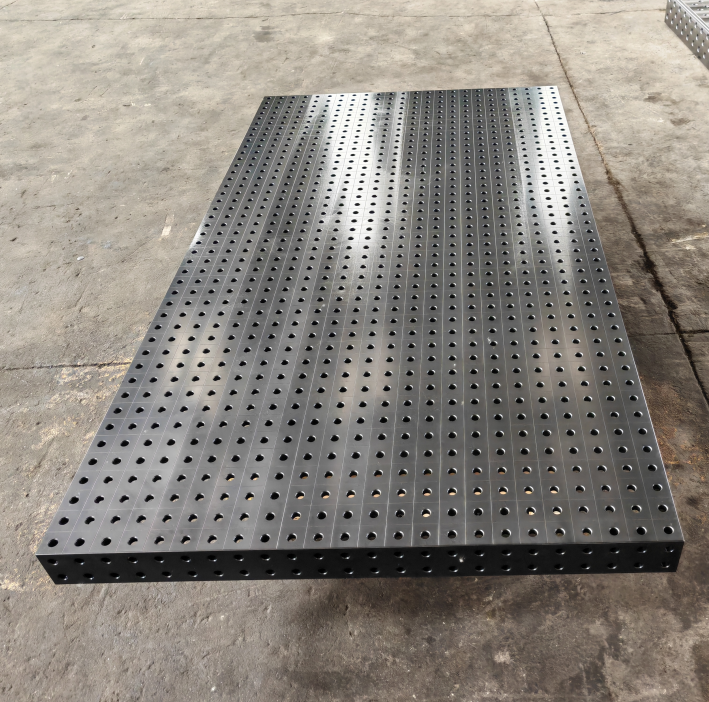
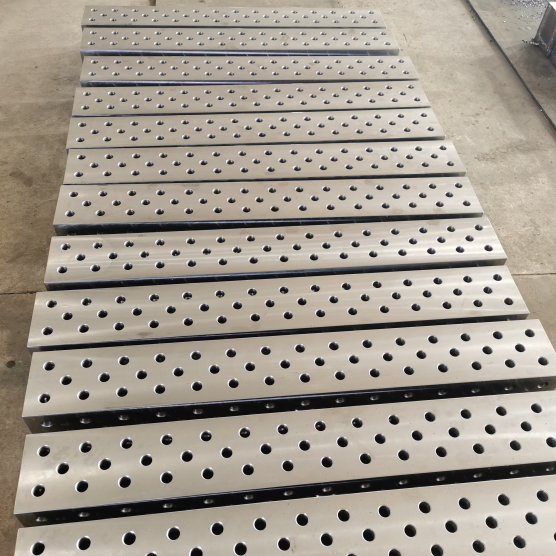
One of the most significant differentiators in the 2026 welding table market is the presence of a fixturing grid. Tables equipped with a pattern of precisely spaced holes allow for the use of clamps, stops, and angles anywhere on the surface. This modularity transforms a simple workbench into a versatile fabrication station.
Creating these hole patterns is a resource-intensive process. Each hole must be drilled or punched with extreme accuracy to ensure that tools fit snugly and square to the table surface. If the holes are not perpendicular to the table, the entire fixturing system fails. This requirement for positional accuracy drives up the cost significantly compared to solid-top tables.
Leading this charge in precision engineering are specialized manufacturers like Botou Haijun Metal Products Co., Ltd., which has dedicated years to the research and development of high-precision flexible modular fixtures. By focusing specifically on efficient welding and positioning solutions, companies like Haijun have set the benchmark for what modern manufacturing demands. Their core product lines, including advanced 2D and 3D flexible welding platforms, exemplify the kind of exceptional versatility and tight tolerances that justify the premium pricing discussed in this guide. Such platforms have become the preferred jigging equipment in demanding sectors like automotive and aerospace, proving that investment in superior fixturing yields tangible returns in production quality.
Hole Pattern Standards and Compatibility
Not all hole patterns are created equal. The industry has largely coalesced around specific metric and imperial standards, such as 16mm or 5/8-inch spacing. Tables adhering to these universal standards allow users to leverage a vast ecosystem of third-party clamps and tooling.
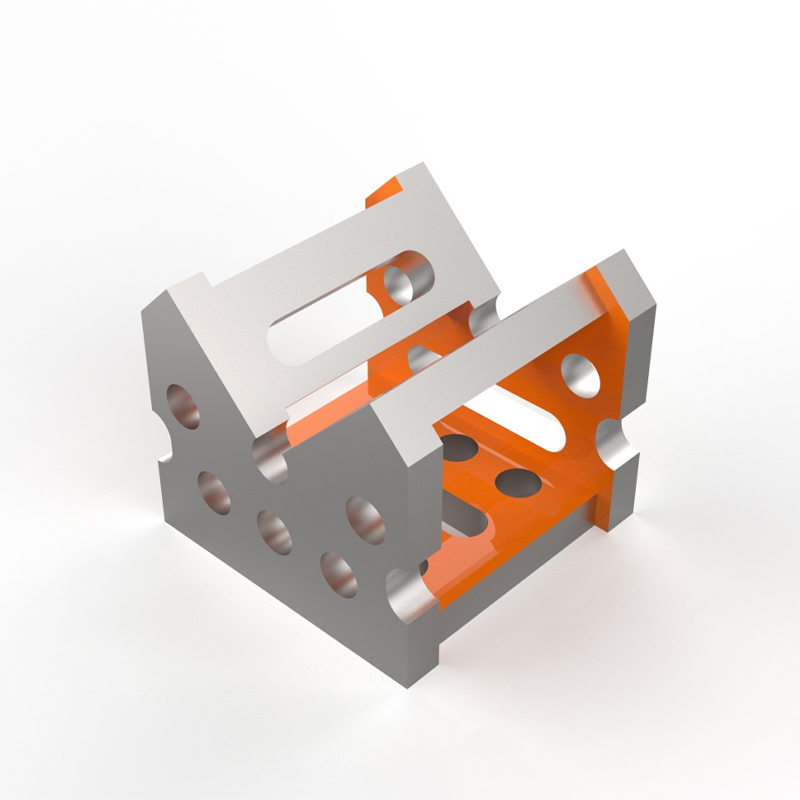
Proprietary hole patterns, while sometimes offering unique benefits, can limit the user to a single brand’s accessories, potentially increasing long-term costs. However, from a manufacturing standpoint, sticking to a standard grid allows for optimized production runs, which can sometimes keep prices competitive despite the added complexity. Suppliers like Botou Haijun Metal Products ensure their platforms integrate seamlessly with a comprehensive range of complementary components, such as U-shaped and L-shaped multi-purpose square boxes, 200-series support angle irons, and 0-225° universal angle gauges. This ecosystem approach enables rapid workpiece positioning and clamping, maximizing the utility of the initial table investment.
- Standard Grid (e.g., 100mm x 100mm): Most common, wide accessory availability, moderate price impact.
- Fine Grid (e.g., 50mm x 50mm): Higher flexibility, increased drilling time, higher cost.
- Hybrid Surfaces: Combination of solid areas and holed areas, offering versatility at a premium price point.
The depth of the holes also matters. Deeper holes accommodate longer pins and provide better support for tall assemblies but require more material removal. The edge distance—the space between the outermost holes and the edge of the table—is another engineering consideration that affects usability and manufacturing yield.
Accessory Ecosystem and Total Cost of Ownership
When evaluating the welding table price guide, one must consider the total cost of ownership. A cheaper table without a hole pattern may seem like a bargain, but the inability to use quick-clamping systems can drastically slow down production. Time is money, and the efficiency gains from a fixturing table often justify the higher upfront investment.
Many manufacturers bundle starter kits of clamps and stops with their premium tables. While this increases the initial purchase price, it provides immediate value and ensures compatibility. In 2026, the trend is moving towards comprehensive solutions where the table and its accessories are designed as a unified system rather than disparate parts. For instance, the inclusion of professional cast iron 3D welding platforms and angle connection blocks, as seen in high-end offerings, ensures that every product delivers exceptional durability and stability. Investing in a table with a recognized hole pattern and a robust accessory line ensures that as your needs grow, you can expand your tooling without replacing the entire workbench.
Comparative Analysis: Entry-Level vs. Professional Tables
To visualize how these factors combine to affect pricing, it is helpful to compare the typical specifications found at different price points. The following table outlines the distinctions between entry-level, mid-range, and professional-grade welding tables available in the 2026 market.
| Feature | Entry-Level / Hobbyist | Mid-Range / Prosumer | Professional / Industrial |
| Tabletop Thickness | 3mm – 5mm | 8mm – 10mm | 12mm – 19mm+ |
| Surface Finish | Raw / Hot Rolled | Ground / Semi-Machined | CNC Precision Machined |
| Flatness Tolerance | ±2mm or more | ±1mm | ±0.1mm or better |
| Fixturing Holes | None or Drilled (Low Precision) | Standard Grid (Moderate Precision) | High-Precision Universal Grid |
| Frame Construction | Bolt-Together or Light Welds | Fully Welded with Basic Bracing | Heavy Gusseted & Stress-Relieved |
| Load Capacity | Light (< 500 lbs) | Medium (500 – 1500 lbs) | Heavy (> 2000 lbs) |
| Primary Use Case | Occasional Repairs, DIY | Small Business, Custom Fabrication | High-Volume Production, Jig Building |
This comparison highlights that the price gap is not arbitrary. It reflects tangible differences in material volume, processing time, and engineering rigor. For a user intending to perform precise layout work, the entry-level option may prove inadequate, leading to frustration and the eventual need to upgrade.
Long-Term Value and Durability Considerations
Durability is a silent cost factor. A table that rusts quickly or loses its flatness after a year of use is effectively more expensive than a pricier unit that lasts decades. Professional tables often undergo stress-relieving processes during manufacturing to prevent future warping, a step skipped in budget production.
Coatings also play a role. While bare steel is traditional, many 2026 models feature specialized coatings that resist spatter adhesion and corrosion without interfering with electrical grounding. These advanced finishes add to the manufacturing cost but reduce maintenance time and extend the life of the table.
Considering the resale value, high-quality branded tables tend to hold their worth remarkably well. The robust construction and standardized features make them desirable on the secondary market, whereas generic, lightweight tables often have little to no resale value once they show signs of wear.
Operational Steps: How to Select the Right Table for Your Needs
Selecting the correct welding table involves a systematic evaluation of your specific requirements against the available market options. Following a structured approach ensures that you do not overspend on unnecessary features or underestimate your needs, leading to costly upgrades later.
- Step 1: Define Your Primary Applications: Determine if you will be doing light repair work, custom artistic fabrication, or high-volume production jigging. This dictates the required flatness and load capacity.
- Step 2: Assess Space and Portability: Measure your workshop footprint. Decide if the table needs to be stationary or mobile. Heavy, fixed tables offer better stability, while lighter, caster-equipped models offer flexibility.
- Step 3: Evaluate Fixturing Needs: Ask yourself if you frequently need to hold parts at specific angles or distances. If yes, a table with a precision hole pattern is mandatory. If no, a solid top may suffice.
- Step 4: Set a Realistic Budget: Include the cost of essential accessories like clamps and squares in your budget. A great table is useless without the tooling to utilize its features.
- Step 5: Verify Specifications: Look for detailed specs on steel thickness, flatness tolerance, and frame construction. Avoid listings that omit these critical data points.
By following these steps, buyers can navigate the complex pricing landscape with confidence. The goal is to find the “sweet spot” where the table’s capabilities align perfectly with the user’s workflow, maximizing return on investment.
Common Mistakes to Avoid When Purchasing
Many first-time buyers fall into the trap of prioritizing size over quality. A large table made of thin steel will flex and warp, making it impossible to achieve accurate results. It is always better to have a smaller, rigid table than a large, floppy one.
Another common error is ignoring the height of the table. Ergonomics are crucial for productivity and safety. A table that is too low forces the welder to bend over, causing fatigue, while one that is too high compromises control. Adjustable legs are a worthwhile investment to mitigate this issue.
Finally, neglecting to check the compatibility of the hole pattern can be a costly oversight. Ensuring that the table accepts widely available tooling prevents the need to source expensive, proprietary accessories that may become obsolete if the manufacturer discontinues the line.
Frequently Asked Questions About Welding Table Costs
As consumers research the welding table price guide, several recurring questions emerge regarding value, maintenance, and technical specifications. Addressing these FAQs provides clarity on the nuances of purchasing a welding workbench in 2026.
Is a more expensive welding table always better?
Not necessarily. “Better” is relative to the application. For a hobbyist tacking together garden art, a $400 table is perfectly adequate and offers better value than a $3,000 industrial fixture table. However, for a shop building aerospace components or complex machinery, the precision of the expensive table is not a luxury but a necessity. The “best” table is the one that meets your specific tolerance and durability requirements without paying for unused capabilities.
Why do some welding tables cost significantly more than others of the same size?
The price disparity usually stems from the manufacturing process and material quality. Two tables may look identical externally, but the expensive one likely features a stress-relieved, CNC-machined top with tight flatness tolerances and a fully welded, gusseted frame. The cheaper version likely uses raw, un-machined steel and a lighter frame assembly. The hidden costs of precision engineering and quality control drive the price difference.
Can I build my own welding table to save money?
Yes, DIY welding tables are a popular option for saving on initial costs. However, achieving true flatness and squareness without industrial machining equipment is challenging. While you can save on labor costs, the expense of buying thick steel plate and the time invested in fabrication must be considered. For critical precision work, a professionally manufactured table often provides better accuracy and warranty support than a homemade solution.
How does the hole pattern affect the price?
The hole pattern adds significant cost due to the precision required in drilling or punching. Each hole must be perfectly perpendicular to the surface to function correctly as a fixturing point. This process increases machining time and requires rigorous quality inspection. Additionally, the design must account for the structural integrity of the table after removing material for the holes, often necessitating a thicker base plate, which further increases material costs.
What maintenance costs should I expect?
Welding tables are generally low-maintenance assets. The primary ongoing cost involves keeping the surface clean of spatter and preventing rust. High-quality tables with durable finishes require less frequent maintenance. Over time, you may need to replace worn clamps or pins, especially if using the fixturing system heavily. Investing in a table with a hard-facing or specialized coating can reduce the frequency of surface refurbishment.
Application Scenarios: Matching Table Types to Industries
Different industries have distinct requirements that dictate their choice of welding table. Understanding these scenarios helps in contextualizing why certain features command higher prices and which segments of the market drive demand for specific product tiers.
Custom Fabrication and Artistic Metalwork
In the realm of custom fabrication, versatility is king. Artists and custom builders often work with irregular shapes and varying material thicknesses. For this sector, a mid-range table with a standard hole pattern offers the ideal balance. It provides enough fixturing capability to hold complex assemblies while being affordable enough for small studios. The ability to quickly reconfigure clamps is more valuable than extreme load capacity.
Industrial Manufacturing and Jig Building
High-volume manufacturing environments demand repeatability and speed. Here, the premium industrial table is the standard. The investment in a precision-machined surface pays off through reduced setup times and fewer rejected parts. These tables serve as the foundation for elaborate jigs that may remain in place for months. The rigidity and thermal stability of heavy-duty tables ensure that production tolerances are maintained shift after shift. Companies specializing in this area, such as Botou Haijun Metal Products, have become trusted suppliers to customers both domestically and internationally by continuously providing high-quality production machinery tool series that meet these rigorous industrial demands.
Educational Institutions and Training Centers
Schools and training centers require equipment that is durable, safe, and easy to maintain. They often opt for robust mid-range units that can withstand the abuse of novice learners. Features like spark-resistant surfaces and rounded edges are prioritized. While precision is important for teaching proper technique, the extreme tolerances of industrial tables are often unnecessary, allowing institutions to allocate budgets across multiple stations.
Future Trends Influencing Welding Table Pricing in 2026
The welding equipment landscape is dynamic, with several trends poised to influence pricing and product availability in 2026 and beyond. Being aware of these shifts can help buyers make timely decisions.
Automation Integration: As collaborative robots (cobots) become more common in small shops, welding tables are being designed with mounting points and interfaces specifically for automation. This added functionality introduces new engineering challenges and costs but opens up new possibilities for semi-automated fabrication.
Sustainable Manufacturing: There is a growing emphasis on eco-friendly production methods. Tables manufactured using recycled steel or energy-efficient processes may carry a slight premium initially but appeal to environmentally conscious businesses. Supply chain fluctuations in raw materials continue to be a factor, with prices potentially varying based on global steel markets.
Modular Scalability: The trend towards modularity is accelerating. Users prefer systems that allow them to connect multiple tables or add extensions as their business grows. This design philosophy requires more sophisticated joining mechanisms, which influences the unit price but offers greater long-term flexibility.
Conclusion: Making an Informed Investment
Navigating the Welding Table Price Guide: What Affects the Cost in 2026 reveals that price is a direct reflection of capability, precision, and durability. From the thickness of the steel plate to the tolerance of the fixturing holes, every dollar spent contributes to the table’s performance envelope. While entry-level options serve casual users well, professional applications demand the investment in higher-specification units to ensure accuracy and efficiency.
This guide is best suited for fabricators, shop owners, and serious hobbyists looking to upgrade their workspace with a clear understanding of value. If your work involves precise layouts, repetitive jigs, or heavy structural components, prioritizing flatness and frame rigidity is essential. For lighter tasks, a cost-effective solid top may suffice.
Next Steps: Evaluate your current workflow limitations and identify the specific features that would resolve them. Compare the specifications of potential models against the criteria outlined in this guide. Remember, a welding table is a foundational tool that will support your craft for years; choosing wisely today prevents costly compromises tomorrow. Explore reputable suppliers that offer detailed specifications and warranty support to secure the best asset for your workshop.