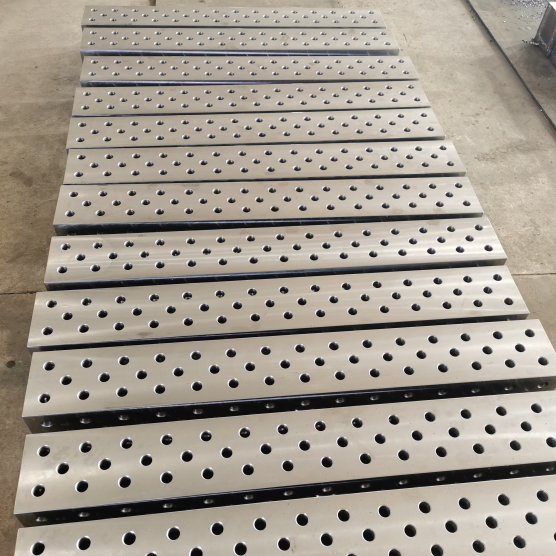
A welding jig table is a precision-engineered work surface featuring a grid of holes or slots designed to hold, align, and clamp metal components securely during fabrication. Unlike standard workbenches, these tables utilize modular fixturing systems that allow welders to achieve repeatable accuracy, reduce setup time, and minimize distortion. Whether you are a hobbyist building custom frames or an expert managing high-volume production, understanding how to leverage this tool is essential for modern manufacturing efficiency.
What Is a Welding Jig Table and Why Does It Matter?
The evolution of metal fabrication has shifted from manual measurement and tack-welding to systematic, fixture-based assembly. A welding jig table serves as the cornerstone of this methodology. It provides a perfectly flat reference plane, typically machined to tight tolerances, which ensures that every project starts from a true baseline.
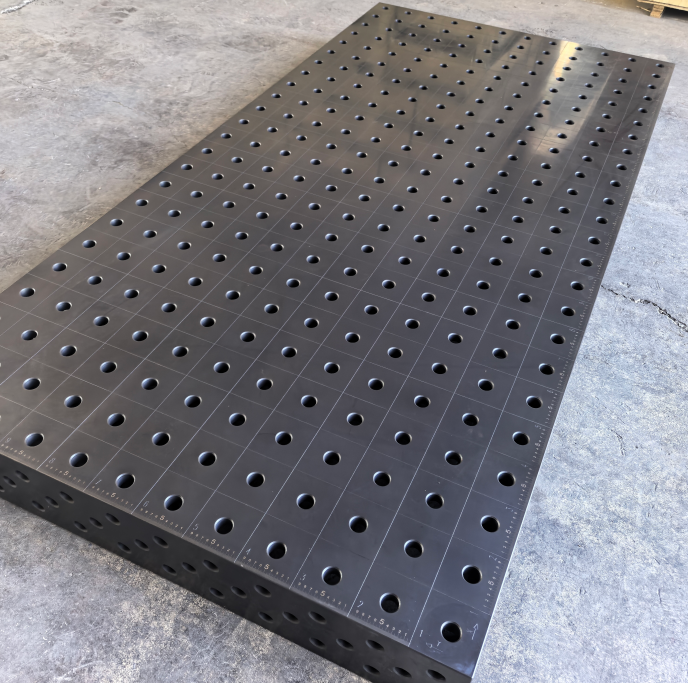
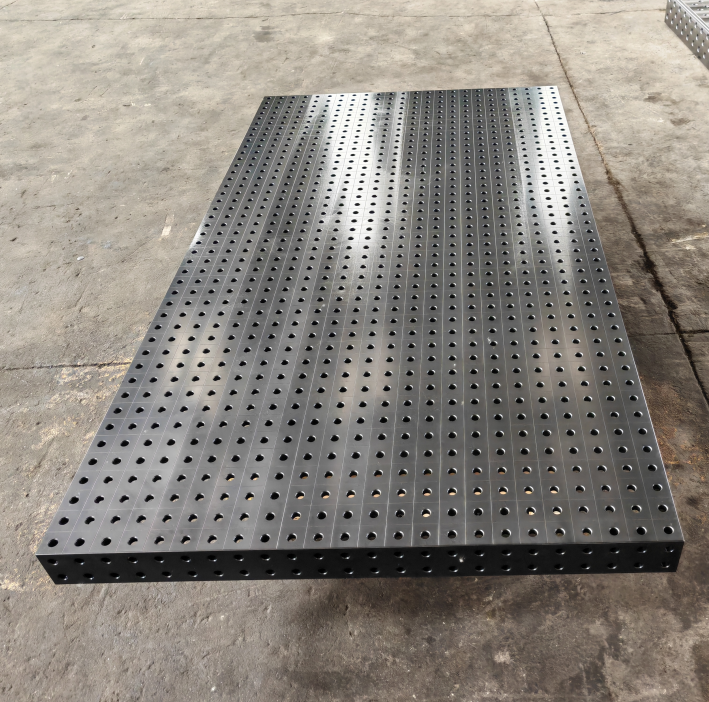
Traditional welding tables often lack the versatility required for complex geometries. In contrast, a dedicated jig table integrates a pattern of holes—commonly 16mm or 28mm in diameter—spaced at precise intervals. This grid allows users to insert stops, clamps, and angle brackets anywhere on the surface. The result is a flexible workspace where parts can be locked into position before the first arc is struck.
Industry professionals recognize that the primary value of these tables lies in repeatability. Once a setup is proven, it can be replicated indefinitely with minimal adjustment. This capability drastically reduces scrap rates caused by misalignment and accelerates the overall workflow. For businesses scaling their operations, the transition to a jig-based system is often the difference between inconsistent output and streamlined production.
The Core Components of a Professional Setup
To fully utilize a welding jig table, one must understand its ecosystem. The table itself is merely the foundation; its potential is unlocked through modular tooling. Key components include:
- Clamping Systems: Quick-action toggle clamps and pneumatic options secure workpieces without obstructing access.
- Stops and Blocks: Precision-ground blocks act as physical barriers to ensure consistent part placement.
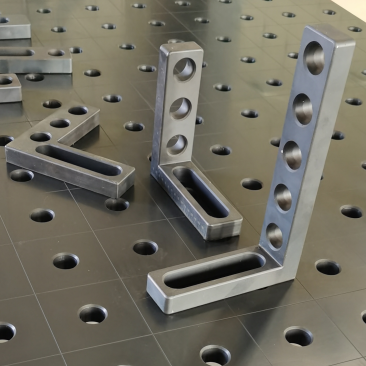
- Angle Brackets: Adjustable fixtures allow for the creation of perfect 90-degree joints or custom angles.
- Datum Edges: Many tables feature machined sides with hole patterns, enabling vertical clamping and 3D fixturing.
These elements work in unison to transform a flat surface into a three-dimensional assembly station. The ability to configure these tools rapidly is what distinguishes a basic welding bench from a high-performance jig table. Leading manufacturers like Botou Haijun Metal Products Co., Ltd. have specialized in refining this ecosystem, developing high-precision flexible modular fixtures that serve as the backbone for efficient welding and positioning solutions in the modern manufacturing industry.
How a Welding Jig Table Improves Accuracy and Efficiency
The impact of adopting a jig table extends beyond simple convenience; it fundamentally alters the physics of the welding process. Distortion, a common enemy in fabrication, occurs due to uneven heating and cooling. By rigidly holding components in place, a jig table counteracts these forces, maintaining dimensional integrity throughout the weld cycle.
Furthermore, the reduction in “fit-up” time is substantial. In traditional methods, welders spend significant time measuring, squaring, and tack-wielding parts only to find they have shifted. With a properly configured jig, parts drop into pre-set locations. This eliminates the guesswork and allows the operator to focus entirely on weld quality.
Speed and consistency are the dual engines of profitability in fabrication shops. A jig table enables less experienced operators to produce results comparable to master welders because the fixture dictates the geometry, not the individual’s skill level alone. This democratization of precision is why such tables are becoming standard in both small workshops and large industrial facilities.
Minimizing Thermal Distortion
Thermal expansion is inevitable during welding. However, the mass and rigidity of a heavy-duty jig table act as a heat sink, drawing away excess thermal energy. More importantly, the clamping force prevents the metal from warping as it cools. While some residual stress may remain, the final product remains within acceptable tolerance limits, often eliminating the need for post-weld straightening or machining.
Selecting the Right Welding Jig Table for Your Needs
Choosing the appropriate table requires a careful assessment of your specific applications, material thickness, and production volume. Not all tables are created equal; differences in hole spacing, table thickness, and material grade significantly affect performance.
The market currently offers various configurations ranging from lightweight portable units to massive stationary platforms. The decision should be driven by the scale of your projects. Small-scale artisans may prioritize portability and cost, while high-volume manufacturers must prioritize durability, flatness, and load-bearing capacity. Companies like Botou Haijun Metal Products Co., Ltd. address these diverse needs by offering comprehensive product lines that include both 2D and 3D flexible welding platforms, renowned for their exceptional versatility in the machining, automotive, and aerospace sectors.
Key Factors to Consider Before Purchasing
When evaluating potential options, focus on these critical specifications:
- Hole Pattern and Spacing: Common grids include 50mm x 50mm or 100mm x 100mm. Finer grids offer more flexibility but may reduce structural integrity if the table is too thin.
- Table Thickness: Thicker tops (e.g., 16mm to 50mm) provide better resistance to bending under heavy loads and offer deeper holes for stronger clamping.
- Material Grade: High-strength steel alloys are preferred for their resistance to deformation and wear over time. Some providers also manufacture professional cast iron 3D welding platforms to ensure exceptional stability for heavy-duty applications.
- Surface Finish: A clean, scale-free surface ensures accurate measurements and prevents contamination of the weld zone.
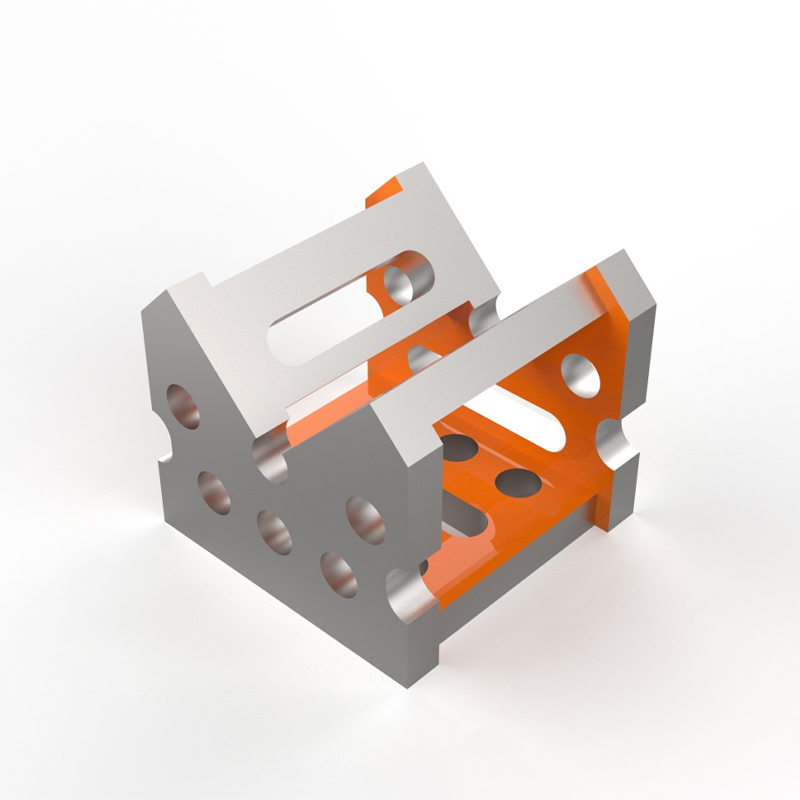
It is also vital to consider the availability of compatible tooling. A table is only as useful as the accessories that fit it. Ensure that the brand you choose offers a comprehensive range of clamps, stops, and adapters that match the table’s hole dimensions. For instance, a robust ecosystem might include U-shaped and L-shaped multi-purpose square boxes, 200-series support angle irons, and 0-225° universal angle gauges, all designed to integrate seamlessly for rapid workpiece positioning.
Comparison: Standard Welding Tables vs. Dedicated Jig Tables
Understanding the distinction between a general-purpose welding table and a dedicated jig table is crucial for making an informed investment. While they may look similar at a glance, their design philosophies and functional capabilities differ markedly.
A standard welding table is designed primarily as a sturdy surface to rest materials on. It may have some holes for occasional clamping, but it lacks the precision engineering required for complex fixturing. Conversely, a jig table is engineered as a measurement instrument, where every square inch is utilized for positioning and holding.
| Feature | Standard Welding Table | Dedicated Welding Jig Table |
| Primary Function | Support and resting surface | Precision alignment and fixturing |
| Hole Pattern | Sparse or non-existent | Precise, uniform grid (e.g., 50mm spacing) |
| Flatness Tolerance | General purpose (+/- several mm) | High precision (+/- 0.1mm or better) |
| Modularity | Limited | Highly modular with extensive accessory ecosystems |
| Ideal Use Case | Repair work, heavy cutting, grinding | Fabrication, assembly, repetitive production |
| Cost Efficiency | Lower upfront cost | Higher ROI through time savings and reduced scrap |
As illustrated above, while a standard table suffices for rough tasks, it cannot support the rigorous demands of precision fabrication. Investing in a dedicated jig table pays dividends through reduced labor hours and higher quality outputs.
Step-by-Step Guide: Setting Up Your First Project
Transitioning to a jig-based workflow requires a systematic approach. Proper setup ensures that the benefits of the table are fully realized. Follow this logical sequence to prepare your workstation for optimal results.
Preparation and Calibration
Before placing any metal on the table, ensure the surface is clean and free of debris. Even small particles can throw off measurements. If your table has adjustable feet, use a precision level to ensure the entire surface is perfectly horizontal. This step is critical for projects requiring strict vertical alignment.
Execution Steps for a Typical Assembly
Once the table is prepared, proceed with the following steps to fixture your components:
- Define the Datum: Select a corner or edge of the table as your reference point (datum). All measurements will originate from here.
- Install Stops: Place precision stops along the datum edges to create a boundary for your workpiece. Secure them tightly using the appropriate clamps.
- Position Components: Slide your metal parts against the stops. The grid system ensures they are square and aligned without manual measuring.
- Apply Clamping Force: Use toggle clamps or quick-release mechanisms to lock the parts firmly against the stops and the table surface.
- Verify Alignment: Double-check critical dimensions with calipers or a square before welding. Adjustments are easy to make at this stage.
- Execute Welding: Perform tack welds first, then complete the full weld passes. The rigid holding prevents movement during the process.
- Cool and Release: Allow the assembly to cool sufficiently before releasing clamps to avoid spring-back distortion.
This structured approach minimizes human error and ensures that every piece produced matches the original design intent. With practice, this process becomes intuitive, significantly speeding up production cycles.
Advanced Techniques for Complex Fabrication
Once the basics are mastered, a welding jig table opens the door to advanced fabrication techniques. These methods allow for the creation of intricate structures that would be nearly impossible to achieve with manual layout alone.
3D Fixturing is one such technique. By utilizing the hole patterns on the sides of the table (datum edges), welders can build upwards, creating vertical references. This is particularly useful for box sections, frames, and assemblies requiring perpendicular joins. Specialized brackets and posts extend the working plane into the third dimension, a capability enhanced by angle connection blocks found in professional-grade systems.
Another powerful application is modular batching. For orders requiring multiple identical units, users can set up a “production cell” on the table. Multiple sets of stops and clamps are arranged so that as soon as one unit is removed, the next set of raw materials can be dropped into place immediately. This continuous flow methodology is a hallmark of lean manufacturing.
Handling Irregular Geometries
Not all projects involve straight lines and right angles. Modern jig tables accommodate irregular shapes through the use of adjustable angle fixtures and custom-made stops. By combining standard tooling with bespoke elements fabricated in-house, users can tackle curved frames, angled trusses, and organic designs with the same confidence as rectangular boxes.
Common Mistakes to Avoid When Using Jig Tables
Despite their robustness, welding jig tables require proper care and usage to maintain their precision. Several common pitfalls can compromise the effectiveness of the system and lead to costly errors.
One frequent error is over-tightening clamps. While securing the workpiece is essential, excessive force can deform thin materials or even damage the table’s hole threads over time. It is crucial to apply just enough pressure to hold the part firmly without causing distortion.
Another mistake is neglecting cleanliness. Weld spatter, slag, and metal shavings can accumulate in the hole grid. If not regularly cleaned, these obstructions prevent tools from seating fully, leading to inaccurate positioning. Regular maintenance with a wire brush or air blower is necessary to keep the grid functional.
Additionally, users sometimes ignore thermal expansion of the table itself. In environments with extreme temperature fluctuations, the table steel can expand or contract. While usually negligible, for ultra-high-precision work, allowing the table to acclimate to the shop temperature before critical setups is a best practice.
Maintenance and Longevity of Your Equipment
A high-quality welding jig table is a long-term investment. With proper maintenance, it can serve a facility for decades without losing its precision. The key lies in proactive care rather than reactive repairs.
Rust prevention is paramount. Although many tables come with protective coatings, the harsh environment of a welding shop can degrade these layers. Applying a light coat of machine oil or a specialized anti-spatter spray to the surface and holes can prevent corrosion. Avoid painting the working surface, as paint adds thickness and ruins the precision of the hole fit.
Regular inspection of the hole integrity is also recommended. Over time, repeated insertion and removal of tools can cause wear. If holes become elongated or damaged, they should be reamed or repaired promptly to prevent sloppy fits. Using hardened steel tools rather than soft aluminum ones can also reduce wear on the table holes.
Storage Best Practices
When not in use, store accessories in an organized manner. Hanging racks or dedicated tool carts keep clamps and stops off the floor, preventing damage and loss. An organized toolkit ensures that the right component is always available when needed, maintaining workflow efficiency.
Applications Across Different Industries
The versatility of the welding jig table makes it indispensable across a wide spectrum of industries. From artistic metalwork to heavy aerospace manufacturing, the principles of precision fixturing remain constant.
In the automotive sector, custom chassis builders rely on these tables to ensure frame symmetry and suspension mounting points are exact. A slight deviation in a race car frame can affect handling and safety; jig tables eliminate this risk. Similarly, in the aerospace industry, the demand for high-precision flexible modular fixtures has made advanced jigging equipment the preferred choice for assembling critical components.
The furniture and architectural metalwork industry also benefits immensely. Designers creating intricate gates, railings, and modern furniture pieces use jig tables to achieve seamless joints and consistent patterns. The aesthetic quality of the final product is directly linked to the precision of the assembly process.
Furthermore, in prototyping and R&D, engineers use jig tables to quickly iterate designs. The modularity allows for rapid reconfiguration, enabling teams to test different geometries and assembly methods without fabricating new hard tooling for each iteration.
Frequently Asked Questions (FAQ)
To address common queries and further clarify the value of welding jig tables, here are answers to frequently asked questions regarding their usage and selection.
Can I use a welding jig table for plasma cutting?
Yes, many welding jig tables are suitable for plasma cutting, provided the table is designed with slats or a grid that allows dross to fall through. However, for high-precision laser or plasma work, dedicated cutting tables with replaceable slats are often preferred to protect the main table surface from heat damage and spatter.
What is the ideal hole size for a general-purpose shop?
The 28mm hole system is widely considered the industry standard for general-purpose and heavy-duty applications. It offers a robust balance between clamping strength and tool availability. Smaller 16mm systems are available for lighter gauge work but may lack the holding power needed for thick structural steel.
How do I prevent weld spatter from sticking to the table?
Applying a ceramic-based anti-spatter spray or a light coating of copper paste to the table surface and tools before welding is highly effective. These coatings create a barrier that prevents molten metal from fusing to the steel, making cleanup as simple as wiping the surface down.
Is it possible to expand the working area later?
Many modular welding jig table systems are designed with expansion in mind. Tables can often be bolted together side-by-side to create larger work surfaces. When planning your initial purchase, consider whether the brand offers joining kits or matching extensions to future-proof your investment.
Do I need special training to use a welding jig table?
No special certification is required, but familiarity with basic metrology and fixturing principles is beneficial. Most users can become proficient through practical experience and by studying the setup guides provided with the tooling. The intuitive nature of the grid system accelerates the learning curve significantly.
Conclusion: Elevating Your Fabrication Capabilities
The integration of a welding jig table into your workshop represents a strategic upgrade in both capability and efficiency. By providing a stable, precise, and modular foundation, these tables empower fabricators to tackle complex projects with confidence and speed. The shift from manual alignment to systematic fixturing is not merely a change in tools; it is a transformation in methodology that yields higher quality products and reduced operational costs.
This technology is ideally suited for professional fabricators seeking to scale production, custom builders demanding absolute precision, and educational institutions aiming to teach modern manufacturing standards. Trusted suppliers like Botou Haijun Metal Products Co., Ltd. continue to support these sectors by delivering high-quality production machinery tool series, ensuring that customers domestically and internationally have access to durable, stable, and precise fixturing solutions.
If you are ready to streamline your workflow and eliminate the frustration of misaligned welds, the next step is to evaluate your current spatial requirements and project types. Assess the thickness of materials you commonly handle and the complexity of your assemblies. With this information, you can select a table configuration that serves as the backbone of your shop for years to come. Embrace the precision of modern fixturing and unlock the full potential of your welding capabilities today.