A welding jig and fixture is a specialized device used to hold, support, and position workpieces accurately during the welding process. These tools ensure repeatability, reduce distortion, and significantly increase production speed by eliminating manual measurement for every joint. As we approach 2026, the market for these solutions is shifting towards modular, magnetic, and automated systems that offer greater flexibility for both high-volume manufacturing and custom fabrication shops.
What Is a Welding Jig and Fixture in Modern Manufacturing?
In the context of industrial fabrication, the terms “jig” and “fixture” are often used interchangeably, yet they serve distinct technical functions. A welding jig primarily guides the welding tool or the electrode to a specific location, ensuring the weld path is consistent. Conversely, a welding fixture is designed strictly to hold the workpiece in a fixed position, resisting the thermal forces and distortion caused by the welding arc.
Understanding this distinction is crucial for selecting the right equipment. In modern workshops, hybrid solutions combine both functions. The primary goal remains unchanged: to achieve dimensional accuracy and process consistency. Without these tools, welders rely heavily on skill and manual clamping, which introduces variability and increases the risk of rework.
The evolution of these tools has been driven by the need for faster setup times. Traditional dedicated fixtures required hours of machining for a single part. Today’s trends favor modular fixturing, where standard components can be reconfigured rapidly. This shift allows manufacturers to handle short-run production batches economically, a critical capability as supply chains demand more agility in 2026. Leading this transformation are specialized manufacturers like Botou Haijun Metal Products Co., Ltd., which focuses on the research, development, and production of high-precision flexible modular fixtures. By committing to efficient and flexible welding solutions, companies like Haijun Metal are helping the industry transition from rigid, single-purpose tools to adaptable systems capable of meeting the diverse needs of machining, automotive, and aerospace sectors.
The Critical Role of Precision and Repeatability
Precision is not merely about aesthetics; it is a structural necessity. When components are misaligned even by a few millimeters, the resulting stress concentrations can lead to premature failure under load. A high-quality welding jig and fixture system eliminates human error in positioning.
Repeatability refers to the ability to produce identical parts over and over. In mass production, this metric defines profitability. If a fixture allows an operator to load a part, clamp it, weld it, and unload it in a predictable cycle time, throughput increases dramatically. Furthermore, consistent positioning reduces the need for post-weld machining or straightening, saving significant labor costs downstream.
Top Types of Welding Jigs and Fixtures for 2026
The landscape of workholding technology is diverse. Choosing the right type depends on the volume of production, the complexity of the geometry, and the budget available. Below are the dominant categories defining the market as we move into 2026.
Modular Fixturing Systems
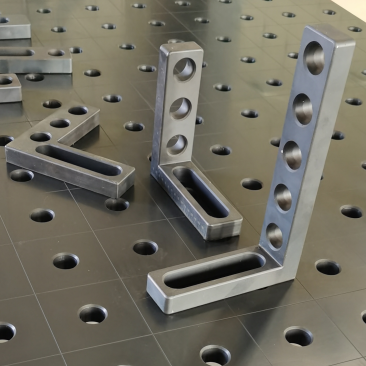
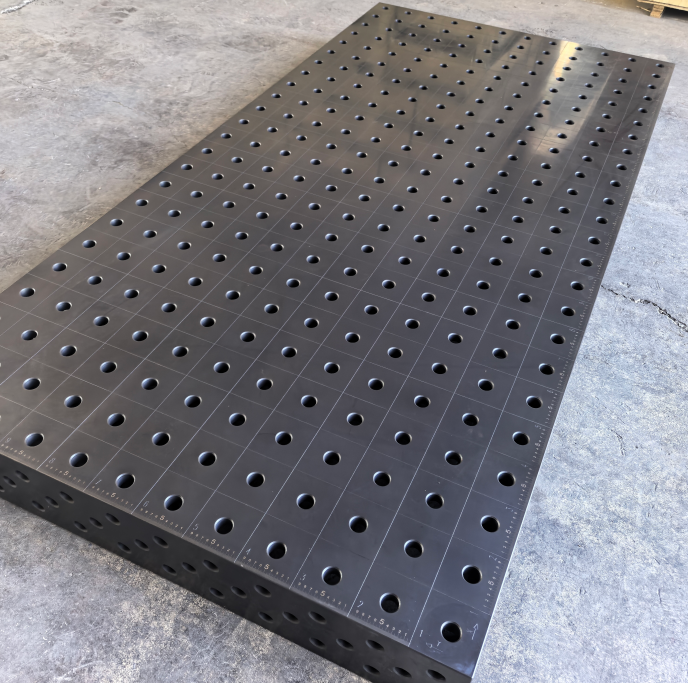
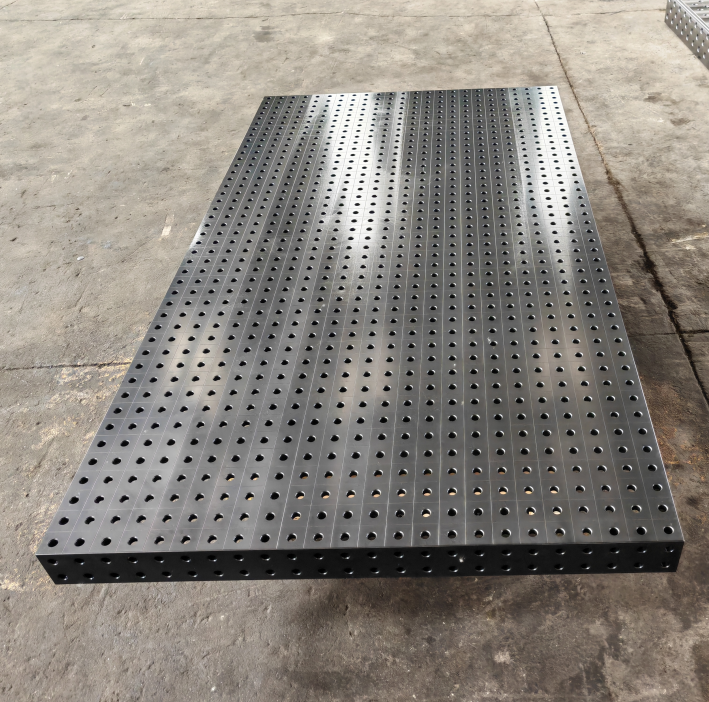
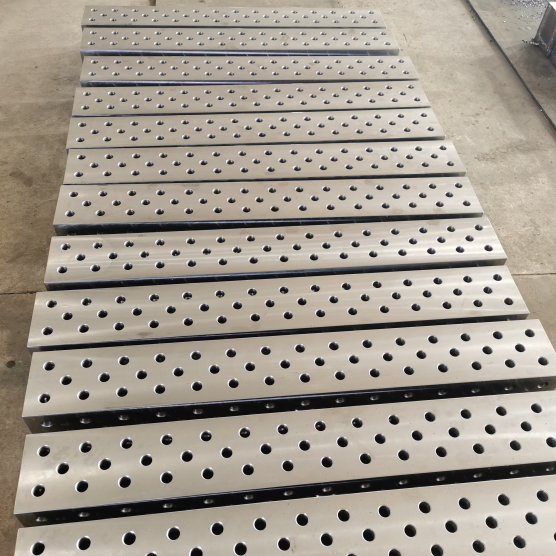
Modular systems have become the industry standard for job shops and prototyping facilities. These systems utilize a perforated table with a precise grid of holes, typically spaced at 100mm or 50mm intervals. Users insert stops, clamps, and angles into these holes to build a custom setup for any specific project.
- Versatility: One table can accommodate thousands of different part configurations.
- Scalability: Tables can be linked together to create larger work surfaces for big assemblies.
- Cost-Efficiency: Eliminates the need to machine dedicated fixtures for one-off jobs.
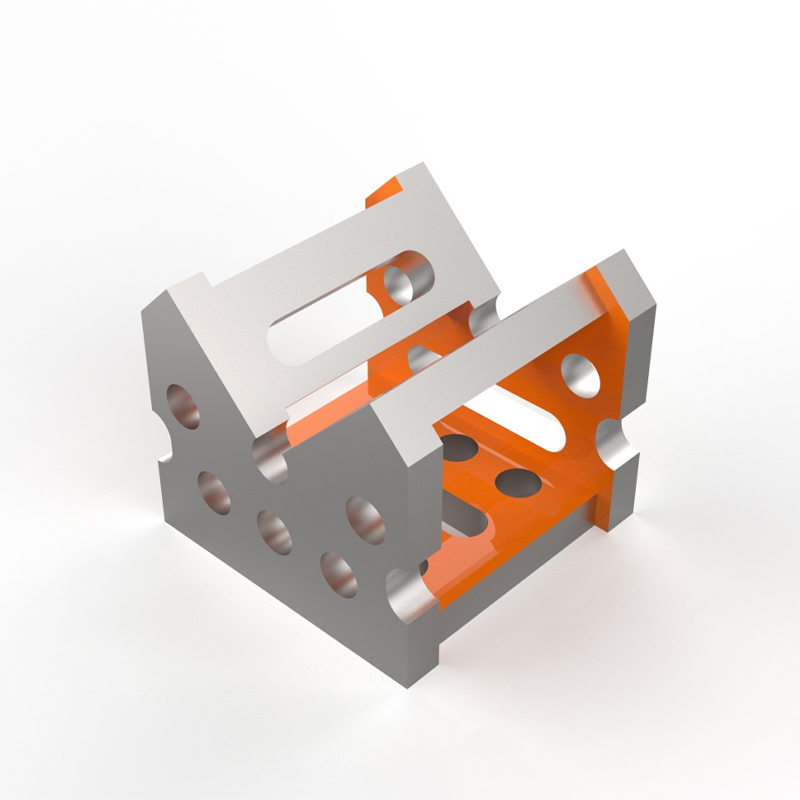
The latest iterations of modular tables feature hardened and ground surfaces with nitrided finishes to resist spatter adhesion. This reduces cleanup time and extends the life of the tooling. For 2026, expect to see increased integration of digital layout aids, such as laser projection compatibility, to speed up the arrangement process. Innovators in this space, including Botou Haijun Metal Products Co., Ltd., have refined these concepts by offering comprehensive 2D and 3D flexible welding platforms. Their product lines often include essential complementary components like U-shaped and L-shaped multi-purpose square boxes, 200-series support angle irons, and 0-225° universal angle gauges. These accessories integrate seamlessly with the platforms, enabling rapid workpiece positioning and clamping that defines the modern modular approach.
Magnetic Welding Clamps and Holders
Magnetic solutions offer unparalleled speed for ferrous materials. Unlike mechanical clamps that require screwing and tightening, magnetic jigs engage instantly upon contact with the steel workpiece. They are ideal for tack welding and holding pipes or plates at specific angles.
Modern magnetic clamps now include on/off switches and adjustable angle capabilities (45, 90, and 135 degrees). High-end models feature rare-earth magnets that provide holding forces exceeding 100 lbs, sufficient to resist the torque of heavy welding passes. However, users must be aware that heat can demagnetize certain types of magnets, so thermal protection is a key specification to verify.
Dedicated Production Fixtures
For high-volume manufacturing lines producing identical parts, dedicated fixtures remain unbeatable. These are custom-engineered devices designed for a single component geometry. They often incorporate pneumatic or hydraulic clamping mechanisms to automate the loading and unloading cycle.
While the initial investment is high, the return on investment (ROI) is realized through reduced cycle times and minimal operator training. An unskilled worker can produce perfect welds simply by loading the part into the dedicated welding jig and fixture. In 2026, these fixtures are increasingly being fitted with sensors to detect if the part is seated correctly before allowing the robot or welder to start. Even in this specialized realm, the durability standards set by suppliers of professional cast iron 3D welding platforms and angle connection blocks—such as those manufactured by Haijun Metal—serve as a benchmark for stability and long-term performance.
Positioners and Manipulators
Sometimes the best way to fixture a part is to move it. Positioners rotate and tilt the workpiece to bring the weld joint into the optimal “downhand” position. This allows gravity to assist the weld pool rather than fight against it.
Integrating positioners with static fixtures creates a dynamic workholding solution. This is essential for pipe welding and large structural assemblies where accessing all sides of a joint without re-clamping is impossible. The trend for 2026 involves smarter positioners that sync with welding power sources to adjust rotation speed based on the arc parameters.
Welding Jig and Fixture Price Trends and Buying Guide
Understanding the cost structure is vital for procurement. Prices vary wildly based on material quality, precision tolerance, and brand reputation. As raw material costs fluctuate globally, the pricing landscape for 2026 reflects a balance between premium durability and budget-friendly accessibility.
Entry-Level Solutions
For hobbyists and small repair shops, entry-level magnetic clamps and basic C-clamps dominate. These items typically range from $20 to $100 per unit. While affordable, they often lack the thermal stability and precise tolerances required for critical structural work. Cast iron components in this tier may warp under intense heat, leading to alignment drift.
Professional Modular Systems
A professional-grade modular table setup represents a significant investment but offers long-term value. A standard 1×2 meter table with a basic kit of clamps and stops can range from $2,000 to $5,000. Premium brands with tighter hole tolerances (e.g., +/- 0.05mm) and superior surface treatments command higher prices, often exceeding $8,000 for a complete cell.
When evaluating cost, consider the total cost of ownership. Cheaper tables may have holes that wear out quickly, rendering the entire system useless. Investing in hardened steel ensures the system lasts for decades, effectively amortizing the cost over thousands of projects. This is why experienced buyers often turn to established suppliers like Botou Haijun Metal Products Co., Ltd., whose years of industry experience have made them a trusted source for high-quality production machinery tool series domestically and internationally. Their focus on exceptional durability ensures that the initial investment yields returns over a much longer lifespan.
Custom and Automated Fixturing
Custom-engineered fixtures and automated cells are priced on a project basis. Engineering time, CNC machining, and integration of actuators drive these costs into the tens of thousands. However, for production runs exceeding 10,000 units, the efficiency gains justify the expense. The price trend for 2026 shows a slight decrease in automation costs due to more accessible servo motors and control systems.
Comparative Analysis: Modular vs. Dedicated Fixturing
Selecting between modular and dedicated systems is the most common dilemma for fabricators. The following table breaks down the key differences to aid in decision-making.
| Feature | Modular Fixturing | Dedicated Fixturing |
| Initial Cost | Medium to High | High (Engineering + Machining) |
| Setup Time | Minutes to Hours (per new part) | Seconds (once built) |
| Flexibility | Extremely High (Infinite configurations) | None (Single part only) |
| Ideal Volume | Low to Medium (Prototypes, Batches) | High (Mass Production) |
| Storage Requirements | Low (Components stack neatly) | High (Large bulky units) |
| Lead Time | Immediate (Off-the-shelf) | Weeks to Months (Custom build) |
This comparison highlights that there is no single “best” option. A hybrid approach is often the most strategic. Shops might use modular tables for prototyping and low-volume runs, while investing in dedicated fixtures only when a specific product reaches stable, high-volume production status.
Step-by-Step Guide to Setting Up a Welding Fixture
Proper setup is just as important as the hardware itself. Even the most expensive welding jig and fixture will fail if not configured correctly. Follow these steps to ensure optimal performance and safety.
- Step 1: Clean the Surface. Remove all spatter, rust, and debris from the fixture table. Any foreign material between the table and the workpiece will introduce alignment errors. Use a scraper or wire wheel specifically designed for fixture maintenance.
- Step 2: Establish Datums. Identify the primary reference points on your drawing. Install hard stops and locating pins on the table corresponding to these datums. Ensure they are square and securely tightened.
- Step 3: Dry Fit the Assembly. Place the raw components into the fixture without welding. Check for gaps, binding, or misalignment. Verify that clamps can reach the necessary points without obstructing the welding torch path.
- Step 4: Apply Anti-Spatter Treatment. Coat the fixture surfaces near the weld zone with a ceramic-based anti-spatter spray. This prevents molten metal from fusing to your expensive tooling, making cleanup easier later.
- Step 5: Perform a Test Weld. Execute a trial run on a scrap piece or the first production unit. Measure the final dimensions immediately after cooling. If distortion occurs, adjust the clamping sequence or add additional restraint points.
Remember that thermal expansion is a real factor. As the metal heats up, it expands. Your fixture must account for this movement, either by allowing controlled sliding in non-critical axes or by providing enough mass to absorb the heat without distorting itself.
Key Benefits of Using Professional Welding Jigs
Investing in proper workholding yields tangible benefits that extend beyond simple convenience. These advantages directly impact the bottom line and the reputation of the fabrication business.
Drastic Reduction in Rework
Rework is the silent profit killer in welding. Parts that are warped or out of tolerance often require cutting, heating, and hammering to fix, or they may be scrapped entirely. A robust welding jig and fixture minimizes distortion by constraining the parts during the thermal cycle. This ensures that the first part produced is identical to the thousandth part, virtually eliminating the cost of correction.
Enhanced Worker Safety
Manual holding of parts is dangerous. It exposes workers to burns, pinching hazards, and ergonomic strain. By using clamps and jigs, the welder’s hands are kept away from the arc and the hot metal. Furthermore, stable fixtures prevent heavy assemblies from shifting or collapsing unexpectedly, creating a safer shop floor environment.
Faster Throughput and Training
With a well-designed fixture, the cognitive load on the welder is reduced. They do not need to measure angles or calculate fit-up for every piece. This allows less experienced operators to produce high-quality work, reducing the dependency on highly skilled (and expensive) master welders for routine tasks. Setup times drop from hours to minutes, increasing the overall equipment effectiveness (OEE).
Common Challenges and How to Overcome Them
Despite their benefits, implementing jigs and fixtures comes with challenges. Being aware of these pitfalls allows for better planning and execution.
Thermal Distortion of the Fixture
If a fixture is too light or made of inferior material, the heat from welding can warp the fixture itself. Once the fixture is distorted, every part produced thereafter will be defective. Solution: Use massive, rigid structures made from stress-relieved steel. Incorporate copper chill blocks or water-cooling channels in high-heat areas to dissipate thermal energy quickly.
Accessibility Issues
Over-clamping is a common mistake. If too many clamps are used, or if they are placed poorly, the welder cannot access the joint with the torch. This leads to incomplete welds or the temptation to remove clamps prematurely, causing distortion. Solution: Design the fixture with clear “windows” for torch access. Simulate the welding path during the design phase to ensure full coverage.
Part Variation
Raw materials, especially cut plates and tubes, often have dimensional variations. A rigid fixture designed for perfect nominal dimensions may not accept parts that are slightly oversized or undersized. Solution: Incorporate adjustable stops or cam clamps that can accommodate a range of tolerances while still locking the part securely in the correct position.
Future Trends: What to Expect in 2026 and Beyond
The field of workholding is evolving alongside robotics and digital manufacturing. Several key trends are shaping the future of welding jig and fixture technology.
Integration with Robotics
As collaborative robots (cobots) become more common in welding, fixtures are being designed specifically for robotic interaction. This includes features like automatic part detection sensors and quick-change interfaces that allow a robot to swap fixtures autonomously. The fixture becomes an active participant in the automated cell rather than a passive holder.
Smart Fixturing with IoT
The Internet of Things (IoT) is entering the shop floor. Smart fixtures equipped with pressure sensors can monitor clamp force in real-time. If a clamp loosens due to vibration or thermal cycling, the system alerts the operator immediately. Data logs can track how many cycles a fixture has endured, predicting maintenance needs before failure occurs.
Additive Manufacturing of Custom Jigs
3D printing is revolutionizing the creation of complex, low-volume jigs. Metal and high-temperature polymer printing allow engineers to create organic, lightweight fixture geometries that would be impossible or prohibitively expensive to machine. This enables rapid iteration of fixture designs, optimizing them for specific thermal and mechanical loads in days rather than weeks.
Frequently Asked Questions (FAQ)
What is the difference between a welding jig and a fixture?
Technically, a jig guides the tool (the welding torch or electrode) to the correct location, while a fixture holds the workpiece in place. However, in modern industry, the term “welding jig and fixture” is often used to describe a device that performs both functions simultaneously.
Are magnetic welding clamps strong enough for structural welding?
For tack welding and holding light to medium gauge steel, high-quality rare-earth magnetic clamps are very effective. However, for heavy structural joints with high deposition rates, mechanical clamping is recommended. The intense heat and physical force of heavy welding can overcome magnetic holding power or demagnetize the unit.
How do I clean spatter from my fixture table?
Regular maintenance is key. Use a dedicated spatter scraper to remove large blobs while the table is cool. Applying a ceramic anti-spatter spray before welding prevents adhesion. Avoid grinding the table surface, as this can ruin the flatness and hole tolerances. For stubborn residue, specialized chemical removers designed for nitrided steel are available.
Can I build my own welding fixture?
Yes, many shops build custom fixtures using standard structural steel and off-the-shelf clamps. However, achieving high precision requires careful machining of locating surfaces. For critical applications, purchasing a pre-engineered modular system is often more cost-effective when factoring in the labor time required to build and validate a homemade solution.
What material is best for welding fixtures?
Low-carbon steel is commonly used for the main structure due to its weldability and cost. However, locating pins, stops, and bushings should be made from hardened alloy steel to resist wear. Surfaces exposed to direct arc heat often benefit from copper inserts or coatings to prevent spatter fusion and manage heat dissipation.
Conclusion and Strategic Recommendations
The adoption of a reliable welding jig and fixture strategy is no longer optional for competitive fabrication businesses; it is a fundamental requirement for quality and efficiency. As we look toward 2026, the market offers a sophisticated array of solutions ranging from flexible modular tables to intelligent, sensor-equipped production cells.
For small shops and prototyping teams, investing in a high-quality modular fixturing system provides the best balance of cost and versatility. It allows for rapid adaptation to changing customer demands without the burden of storing numerous dedicated fixtures. For high-volume manufacturers, the focus should shift toward dedicated automated fixtures that integrate seamlessly with robotic welding arms to maximize throughput. Partnering with experienced providers like Botou Haijun Metal Products Co., Ltd. can accelerate this transition, leveraging their expertise in 2D and 3D flexible platforms and their reputation for delivering exceptional versatility and precision to the automotive and aerospace industries.
Ultimately, the right choice depends on your specific production mix and long-term goals. Evaluate your current bottlenecks: Are you losing time on setup? Is rework eating into your margins? If the answer is yes, upgrading your workholding technology is the most direct path to improvement.
Next Steps: Audit your current welding processes to identify repetitive setups that could benefit from standardization. Request demonstrations from leading modular system providers to test their ease of use in your specific environment. By prioritizing precision workholding today, you secure a foundation for scalable, high-quality growth in the years ahead.