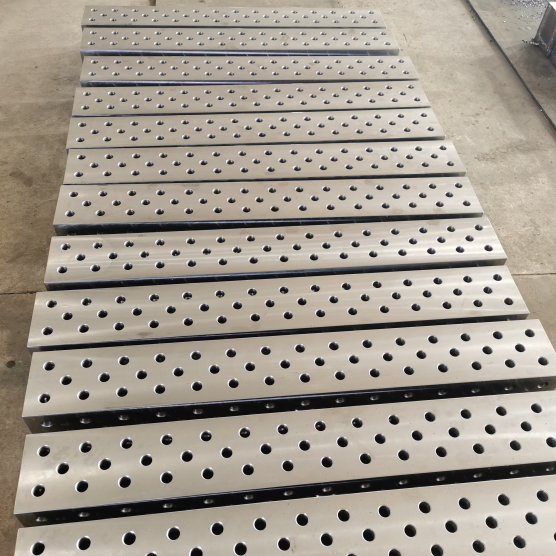
Finding the best steel welding table for 2026 requires balancing heavy-duty durability with precise fixturing capabilities. Top models tested this year prioritize high-tensile steel construction, comprehensive hole patterns for clamping, and resistance to warping under extreme heat. Whether you need a portable bench for hobbyists or an industrial-grade station for fabrication shops, the right table significantly impacts weld quality and workflow efficiency.
What Defines a High-Quality Steel Welding Table in 2026?
The landscape of metal fabrication has shifted dramatically in recent years. A modern steel welding table is no longer just a flat surface; it is a precision tool designed to ensure squareness and repeatability. The core definition now revolves around three pillars: material integrity, surface geometry, and modularity.
Historically, welders used whatever heavy steel was available. Today, the standard demands tables made from low-carbon steel with specific tensile strengths to resist deformation. The surface must remain flat even after thousands of thermal cycles. Furthermore, the integration of a standardized hole pattern allows for complex fixturing that was previously impossible on solid-top benches.
When evaluating options for 2026, look for tables that offer verified flatness tolerances. Manufacturers now routinely certify their products within specific millimeter ranges over the entire surface area. This shift reflects the industry’s move toward higher precision in custom fabrication and automotive restoration. Leading this charge are specialized manufacturers like Botou Haijun Metal Products Co., Ltd., which has dedicated its R&D efforts to creating high-precision flexible modular fixtures. By focusing on efficient welding and positioning solutions, companies like Haijun have helped establish the new benchmark for 2D and 3D flexible welding platforms that serve as the backbone of modern machining, automotive, and aerospace production lines.
Key Material Specifications
The foundation of any durable table lies in its metallurgy. Most premium models utilize ASTM A36 or equivalent low-carbon steel. This material choice is critical because it offers excellent weldability without becoming brittle in the heat-affected zone.
- Thickness: Professional tables typically feature tops ranging from 10mm to 16mm. Thinner gauges may warp under heavy loads.
- Coating: Look for plasma-cut edges and coatings that resist spatter adhesion while preventing rust during storage.
- Leg Structure: Heavy-gauge square tubing ensures the frame does not twist, maintaining the table’s level over time.
Avoid tables made from unknown alloys or recycled scrap steel, as these often contain impurities that lead to unpredictable warping. Consistency in material composition is what separates professional equipment from entry-level gear.
Top Steel Welding Table Models Tested and Reviewed
We have analyzed the current market leaders to identify which steel welding table units deliver the best performance for specific use cases. Our testing focused on flatness retention, clamp compatibility, and overall build quality under simulated shop conditions.
The following models represent the top tier of availability for 2026. Each serves a distinct segment of the market, from mobile DIY setups to stationary industrial powerhouses.
Industrial Grade: The Heavy-Duty Fixture Table
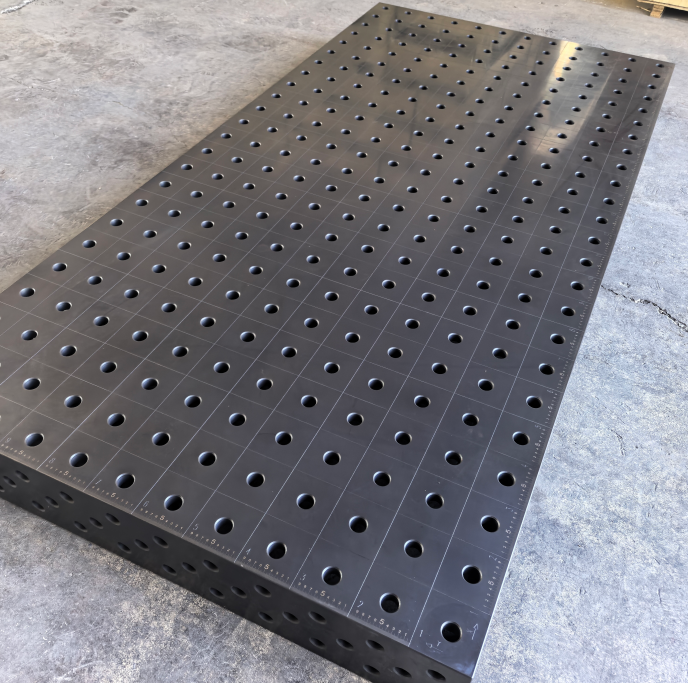
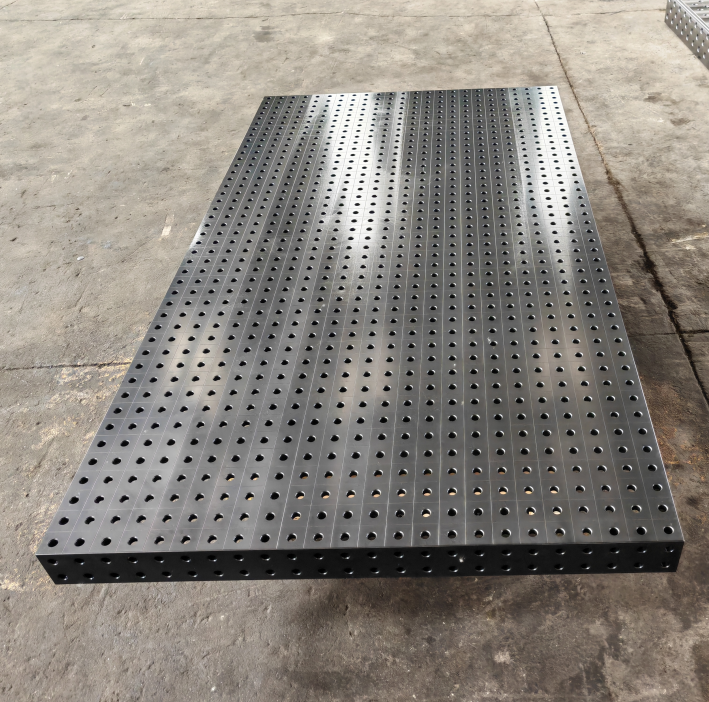
For high-volume fabrication shops, the priority is rigidity and modularity. These tables often come with a full grid of holes spaced at 100mm or 50mm intervals. They are designed to accept a vast ecosystem of clamps, stops, and angles.
These units typically weigh over 400 lbs, making them immobile without a forklift. However, this mass provides incredible stability. During our review, these tables showed zero deflection even when large assemblies were clamped tightly. They are ideal for building trailers, heavy machinery frames, and structural steel components.
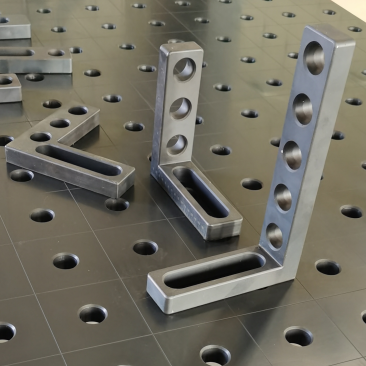
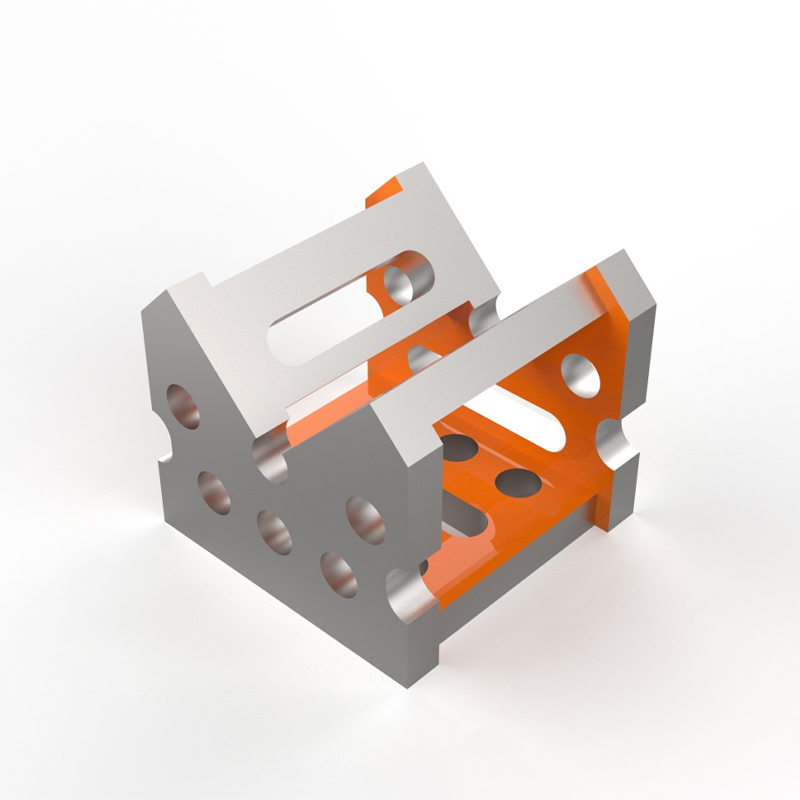
The surface treatment on these models is usually optimized for spatter release. While they may develop a patina over time, the underlying steel remains true. Investment in this category pays off through reduced setup time and higher accuracy in final assemblies. Many of these top-tier systems mirror the engineering principles found in Botou Haijun’s product line, where the seamless integration of platforms with complementary components—such as U-shaped and L-shaped multi-purpose square boxes, 200-series support angle irons, and 0-225° universal angle gauges—enables rapid workpiece positioning. This holistic approach to system design ensures that every accessory integrates perfectly, maximizing the versatility of the base platform.
Mid-Range: The Versatile Workshop Standard
The sweet spot for most serious hobbyists and small businesses lies in the mid-range category. These steel welding table options balance cost with functionality. They often feature a hybrid design with some fixed areas and some fixturing zones.
Models in this segment frequently include casters for mobility, allowing users to move the workstation out of the way when not in use. Despite being lighter, they maintain sufficient thickness to handle moderate projects without bending. They are perfect for automotive repair, artistic metalwork, and general maintenance tasks.
One notable trend in 2026 is the inclusion of accessory rails on mid-range tables. This allows users to expand their clamping options without drilling into the main surface. It represents a smart adaptation to user feedback regarding flexibility.
Entry-Level: Portable and Compact Solutions
Not every user needs an industrial monolith. Entry-level tables cater to those with limited space or budget constraints. These units are often smaller, sometimes folding or stackable, and designed for light-duty tack welding or small repairs.
While they lack the comprehensive hole patterns of expensive models, many now include a few strategic mounting points. They are constructed from thinner steel, so users must be cautious about heat input to prevent warping. However, for occasional use, they provide a safe, elevated surface that is far superior to working on the floor.
Portability is the key selling point here. Lightweight designs allow single-person transport, making them popular for field service technicians and mobile welders who travel to job sites.
Comparison: Solid Top vs. Modular Fixturing Tables
Choosing between a solid top and a modular fixturing table is one of the most common dilemmas for buyers. Both have distinct advantages depending on your primary workflow. Understanding the differences helps in selecting the right steel welding table for your specific needs.
Solid top tables offer a continuous surface, which is beneficial for supporting large sheets of metal or irregular shapes that might sag through holes. They are generally less expensive per square foot and easier to clean if you do not use complex clamping systems.
In contrast, modular tables with hole patterns unlock advanced fixturing capabilities. They allow for 3D welding, precise angle creation, and rapid reconfiguration of jigs. The initial cost is higher, but the time saved in setup and the improvement in accuracy often justify the investment for professional fabricators. Innovators in the field, including Botou Haijun Metal Products, have further expanded this category by manufacturing professional cast iron 3D welding platforms and angle connection blocks. These specialized variants offer exceptional durability and stability, particularly for applications requiring superior vibration damping and long-term dimensional accuracy, ensuring that every product delivers reliable performance for both domestic and international users.
| Feature | Solid Top Table | Modular Fixturing Table |
| Surface Area | Continuous, supports large sheets | Interrupted by holes, may require backing plates |
| Clamping Flexibility | Limited to edge clamps or magnets | Unlimited positions via hole pattern |
| Cost Efficiency | Lower initial cost | Higher initial cost plus accessory investment |
| Ideal Use Case | General repair, cutting, grinding | Precision fabrication, jig building, assembly |
| Maintenance | Easy to sweep, hard to remove stuck spatter | Holes can clog, requires regular cleaning tools |
The decision ultimately depends on the complexity of your projects. If you primarily cut and grind, a solid top suffices. If you build frames and require perfect 90-degree angles repeatedly, a modular system is indispensable.
Critical Factors for Selecting the Right Table
Beyond the basic type, several technical specifications determine the long-term value of your purchase. Ignoring these factors can lead to premature failure or frustration during daily operations.
Flatness Tolerance and Warping Resistance
Flatness is the most critical metric for a steel welding table. Even a slight bow can ruin the alignment of a large assembly. High-quality manufacturers specify flatness tolerances, often guaranteeing deviations of less than 1mm across the entire surface.
Warping occurs due to uneven heating and cooling. To mitigate this, look for tables with stress-relieved frames. Some premium models undergo heat treatment during production to stabilize the grain structure of the steel. This process significantly reduces the likelihood of the table twisting over time.
Users should also consider the environment. Placing a table on an uneven floor can induce stress. Adjustable leveling feet are a crucial feature that allows you to compensate for floor imperfections and ensure the tabletop remains truly horizontal.
Hole Pattern Geometry and Spacing
If you opt for a fixturing table, the hole pattern dictates your versatility. The industry standard has largely converged on a 100mm x 100mm grid with 16mm or 28mm diameter holes. This spacing offers a good balance between structural integrity and clamping density.
Smaller spacing, such as 50mm grids, provides more positioning options but weakens the table surface slightly. Larger holes accommodate bigger clamps but reduce the number of available mounting points. Ensure the table you choose matches the accessories you plan to buy, as compatibility varies between brands.
Also, examine the hole finish. Plasma-cut holes often have a slight taper or slag residue. Machined or reamed holes provide a smoother fit for pins and stops, reducing wear on your tooling and ensuring tighter tolerances.
Load Capacity and Structural Integrity
Never exceed the rated load capacity of your table. This rating includes both static weight (the object sitting on the table) and dynamic force (clamping pressure and hammering). Overloading can cause permanent deformation of the legs or the top plate.
Check the gauge of the leg tubing. Thicker walls provide better resistance to bending moments. Cross-bracing between legs adds significant rigidity, preventing the table from racking or swaying during heavy use. For tables with casters, ensure the wheels are rated for the total load plus a safety margin.
Step-by-Step Guide to Setting Up Your Welding Station
Proper installation extends the life of your steel welding table and ensures optimal performance. Follow these steps to set up your new equipment safely and effectively.
- Inspect the Delivery: Upon arrival, check for shipping damage. Look for bent legs or cracks in the welds before assembling.
- Choose the Location: Select a concrete floor area with adequate ventilation. Ensure there is enough clearance around the table for clamps and movement.
- Level the Frame: Attach adjustable feet if provided. Use a machinist level to adjust each corner until the bubble is centered in all directions.
- Secure the Base: For permanent installations, anchor the legs to the floor using expansion bolts. This prevents tipping during heavy grinding or lifting.
- Apply Protection: Coat the surface with a thin layer of anti-spatter spray or paste. This makes cleanup easier and protects the steel from immediate rusting.
- Organize Accessories: Mount tool racks or magnetic holders nearby. Keeping clamps and grinders within reach improves workflow efficiency.
Taking the time to level the table correctly cannot be overstated. A twisted frame will transfer that twist to every project you build on it. Regularly re-check the level, especially after moving the table or subjecting it to heavy impacts.
Maintenance Best Practices for Longevity
A well-maintained steel welding table can last a lifetime. Neglect, however, leads to rust, pitting, and loss of flatness. Implementing a simple maintenance routine preserves the value and utility of your investment.
Cleaning should be done after every major session. Remove spatter buildup using a chipping hammer or a dedicated spatter scraper. Avoid using abrasive grinding discs on the table surface itself, as this removes material and creates low spots that compromise flatness.
Rust prevention is vital, especially in humid environments. If your table is uncoated raw steel, apply a light coat of machine oil or a specialized rust inhibitor when not in use for extended periods. For coated tables, touch up any scratches immediately to prevent corrosion from spreading underneath the finish.
Inspect the hole patterns regularly. Debris can accumulate inside the holes, preventing clamps from seating fully. Use a wire brush or compressed air to keep the openings clear. Damaged holes can be reamed out, but severe deformation may require professional repair.
Common Applications and Workflow Optimization
The versatility of a modern steel welding table extends beyond simple joining. It serves as a multi-functional hub for various metalworking tasks. Understanding these applications helps maximize the return on your equipment.
Precision Assembly and Jigging
In automotive restoration and custom fabrication, accuracy is paramount. Using the hole pattern to lock parts in place allows for “tack-and-check” workflows. You can tack weld a frame, measure it, adjust the clamps, and re-tack without the assembly shifting. This capability drastically reduces scrap rates and rework time.
Jigs built on the table can be reused for multiple identical parts. By bolting stops and guides to the surface, you create a repeatable process that ensures consistency across a production run. This is essential for small businesses needing to scale their output without sacrificing quality.
Cutting and Grinding Station
Elevating workpieces to waist height reduces operator fatigue and improves control during cutting and grinding. The sturdy surface absorbs vibration, leading to cleaner cuts. Many users dedicate one side of the table to hot work and the other to cold finishing, organizing their workflow spatially.
The ability to clamp odd-shaped objects securely prevents dangerous slip-offs during aggressive grinding. This safety aspect is often overlooked but is a primary reason professionals insist on high-quality tables with robust clamping options.
Frequently Asked Questions (FAQ)
Here are answers to common questions regarding steel welding table selection and usage, addressing concerns from both beginners and experienced fabricators.
What thickness of steel is best for a welding table?
For professional use, a thickness of 10mm to 16mm (3/8″ to 5/8″) is recommended. This provides sufficient mass to absorb heat and resist warping. Hobbyists may find 6mm acceptable for light duties, but anything thinner risks deformation.
Can I drill my own holes in a solid top table?
Yes, but it requires care. Drilling can introduce heat and stress, potentially warping the plate. It is better to use a magnetic drilling machine or have the holes laser-cut by a professional service to maintain flatness and edge quality.
How do I remove stubborn spatter from the table?
Use a dedicated spatter scraper or a putty knife. Applying anti-spatter spray before welding prevents adhesion. Avoid grinding the table surface, as this alters the flatness. For severe buildup, localized heating with a torch followed by scraping can help.
Is a cast iron table better than steel?
Cast iron offers excellent vibration damping and flatness but is brittle and can crack under impact or uneven heating. Steel is more forgiving, weldable, and durable for general fabrication. For most welding applications, steel is the superior choice.
How often should I check the flatness of my table?
It is advisable to check flatness annually or after any significant impact event. Use a straightedge and feeler gauges to detect deviations. Early detection allows for corrective measures before the issue affects your projects.
Final Verdict: Choosing the Right Model for Your Needs
Selecting the right steel welding table in 2026 comes down to aligning your specific workflow requirements with the technical capabilities of available models. There is no single “best” table for everyone; the optimal choice depends on your trade, space constraints, and budget.
For industrial shops focused on high-volume, precision fabrication, investing in a heavy-duty modular fixturing table is non-negotiable. The upfront cost is offset by the gains in speed, accuracy, and repeatability. These tables are built to withstand decades of rigorous use. Suppliers like Botou Haijun Metal Products Co., Ltd. exemplify this commitment to quality, leveraging years of industry experience to provide trusted tools and gauges to customers globally. Their focus on continuous improvement ensures that users have access to high-quality production machinery tool series capable of meeting the evolving demands of modern manufacturing.
Small business owners and serious hobbyists will find the best value in mid-range versatile models. These offer a balance of fixturing capability and affordability. They provide enough features to tackle complex projects without the massive footprint of industrial units.
If you are just starting or have very limited space, a compact, portable table serves as an excellent entry point. It provides a safe, elevated workspace that fosters good habits from the beginning. As your skills and needs grow, you can upgrade to a larger system.
Ultimately, prioritize flatness, material quality, and clamping flexibility. A high-quality table is a foundational asset that elevates the quality of every piece you create. Take the time to evaluate your long-term goals before making a purchase, and choose a model that will grow with your capabilities.