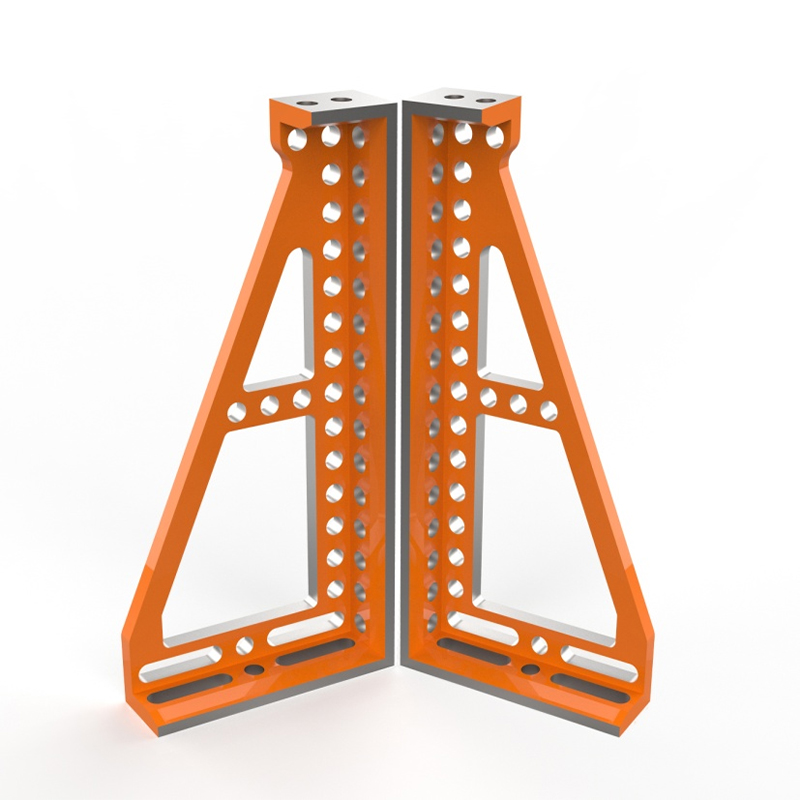
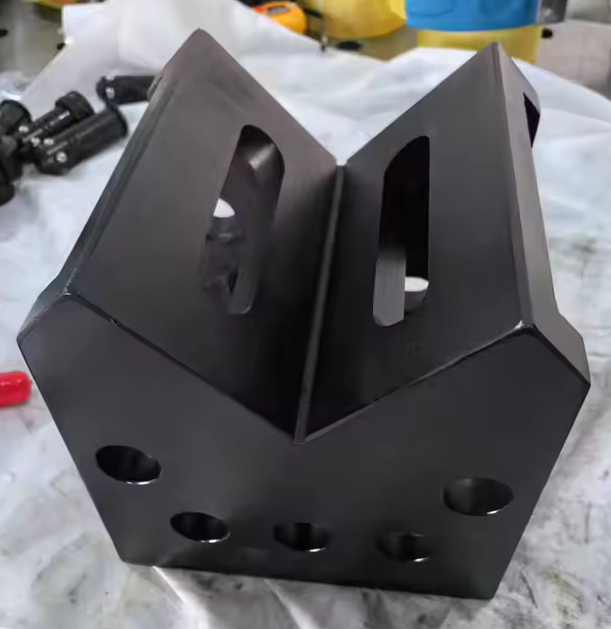
Siegmund fixture tables represent the global benchmark for modular 3D welding and clamping systems. Characterized by a standardized hole pattern, hardened steel surfaces, and universal compatibility with precision accessories, these platforms enable rapid, repeatable workpiece positioning. As an industry standard, they eliminate the need for custom jigs, significantly reducing setup time in high-mix manufacturing environments. This guide explains the technical architecture, operational advantages, and strategic implementation of Siegmund-style modular fixtures, highlighting how manufacturers leverage this technology for superior production efficiency.
What Defines the Siegmund Fixture Table Standard?
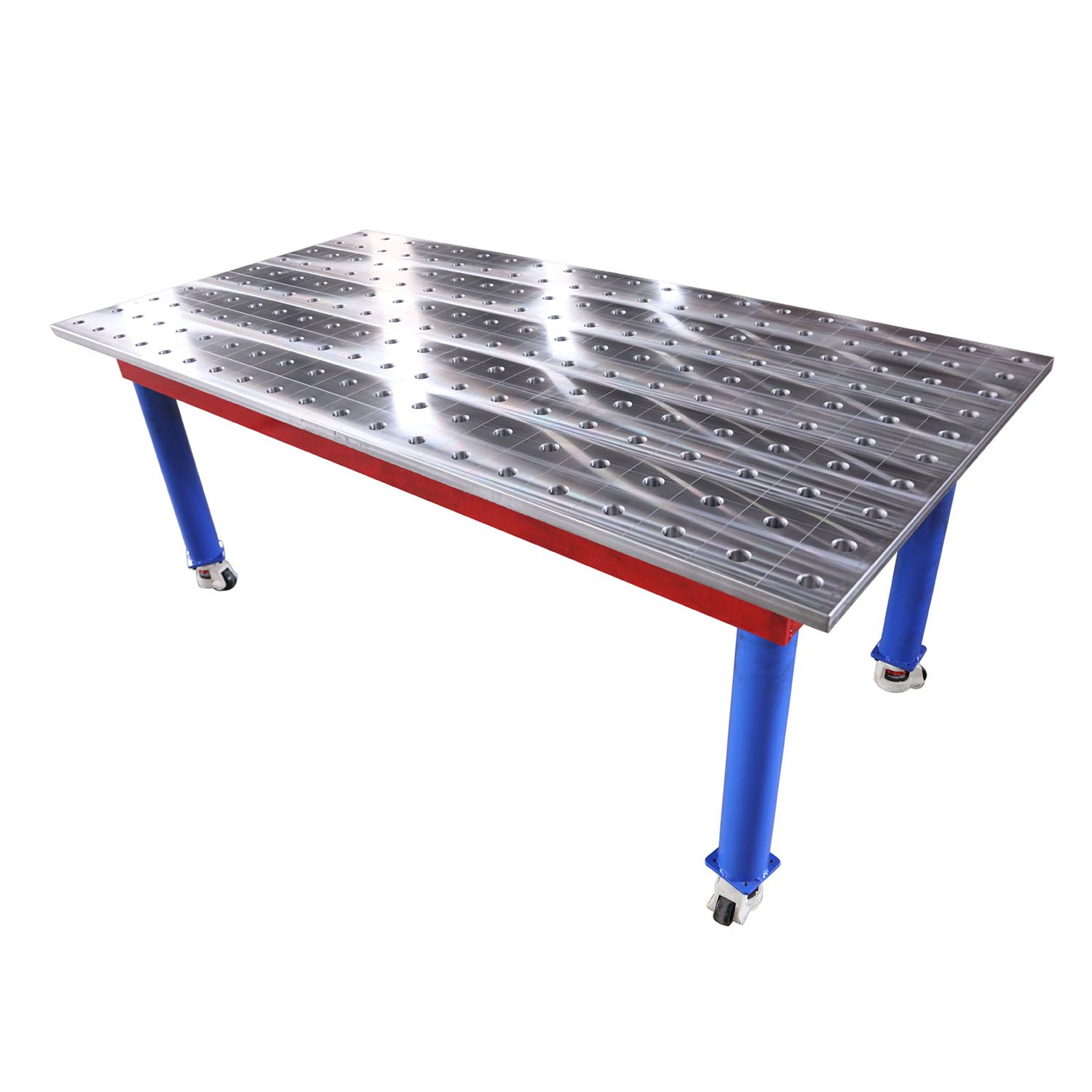
The term “Siegmund fixture table” refers to a specific class of modular welding platforms originally pioneered by the German company Siegmund. However, in modern manufacturing discourse, it has evolved into a genericized trademark representing a rigorous set of engineering standards. These tables are not merely flat surfaces; they are precision-engineered ecosystems designed for flexibility and accuracy.
At its core, the standard is defined by three non-negotiable technical pillars:
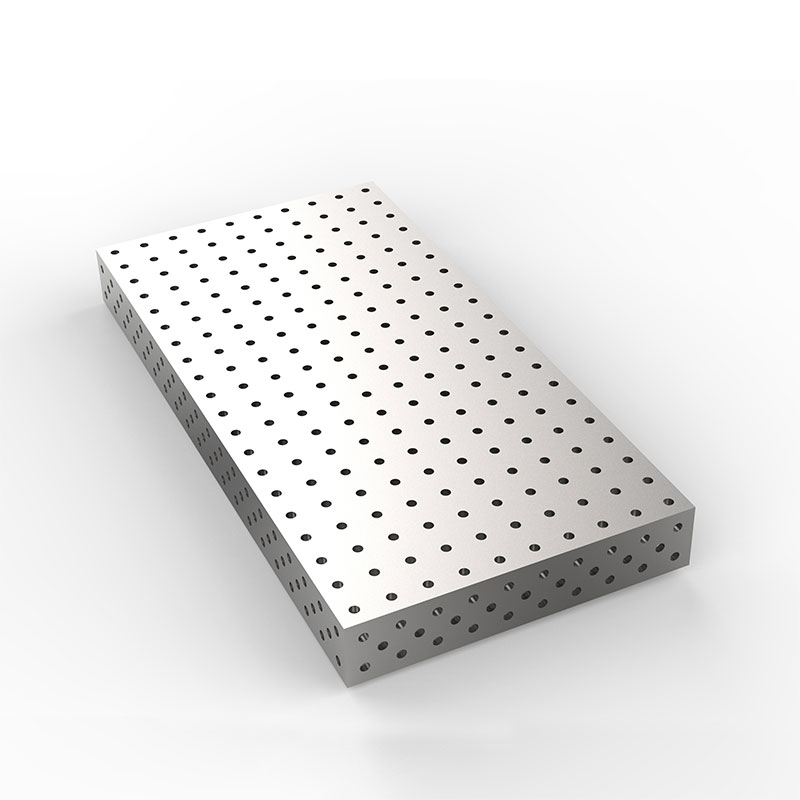
- Standardized Hole Pattern: A precise grid of holes (typically 16mm or 28mm diameter) spaced at exact intervals (e.g., 50mm or 100mm centers). This grid allows for infinite positioning possibilities.
- Hardened Material Composition: The table surface is manufactured from high-strength, heat-treated steel (often S355J2+N or equivalent) to resist deformation under heavy clamping forces and thermal stress from welding.
- Universal Accessory Compatibility: The system relies on a vast array of interchangeable components—clamps, stops, squares, and angle blocks—that lock securely into the hole pattern using quick-action pins.
For engineering teams, understanding this standard is crucial. It means that investing in a Siegmund-style platform is not just buying a table; it is adopting a modular language that simplifies complex fabrication tasks. The interoperability of components ensures that once a team learns the system, they can apply those skills across various projects without retraining.
The Evolution from Custom Jigs to Modular Flexibility
Traditionally, manufacturing relied on dedicated, custom-built jigs for each unique part. This approach was rigid, expensive, and storage-intensive. If a design changed, the jig became obsolete. The Siegmund standard disrupted this model by introducing flexible modular fixtures.
In this modern workflow, the fixture table acts as a reusable base. Operators assemble temporary jigs using standard components for each batch. Once the job is complete, the components are removed, cleaned, and stored for the next project. This shift reduces tooling costs by up to 90% for low-to-medium volume production runs and drastically improves floor space utilization.
Technical Architecture and Core Components
To fully leverage the capabilities of a Siegmund-style system, one must understand its constituent parts. The ecosystem is divided into the base platform and the accessory suite. High-quality manufacturing, such as that provided by Botou Haijun Metal Products Co., Ltd., ensures that every component meets strict tolerances to maintain system integrity.
The Base Platform: 2D vs. 3D Systems
Modular tables are categorized by their dimensional capability. Choosing the right type is the first step in optimizing your workflow.
| Feature | 2D Flexible Welding Platform | 3D Flexible Welding Platform |
| Primary Use | Flat sheet metal, frame assembly, planar structures. | Complex geometries, automotive parts, aerospace components. |
| Hole Configuration | Holes on the top surface only. | Holes on top and all four sides (and sometimes bottom). |
| Clamping Access | Vertical clamping only. | Multi-directional clamping (X, Y, Z axes). |
| Typical Industries | Structural steel, HVAC, simple machinery. | Automotive, robotics, precision machining. |
Botou Haijun Metal Products Co., Ltd. specializes in the research and development of both 2D and 3D flexible welding platforms. Their 3D platforms, in particular, are engineered for exceptional versatility, allowing operators to clamp workpieces from multiple angles simultaneously. This capability is critical in the automotive and aerospace industries, where complex curves and multi-plane assemblies are common.
Essential Accessories for Precision Positioning
The true power of the Siegmund standard lies in its accessories. Without high-precision tools, the table is merely a perforated plate. Key components include:
- Quick-Action Pins: These are the locking mechanism. They feature an eccentric cam design that pulls the accessory tight against the table surface when rotated, ensuring zero play.
- Universal Angle Gauges (0-225°): Essential for setting precise angles without complex calculations. Haijun Metal offers 0-225° universal angle gauges that integrate seamlessly with their platforms, enabling rapid angular positioning.
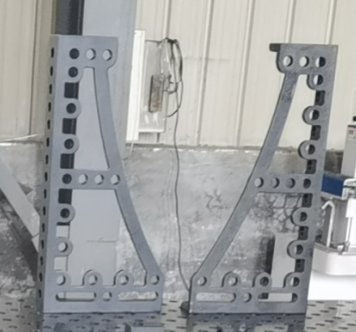
- Support Angle Irons: Used to elevate workpieces or create vertical references. The 200-series support angle irons provided by Haijun Metal are designed for robust stability, ensuring that heavy components remain perfectly aligned during welding.
- Multipurpose Square Boxes: U-shaped and L-shaped square boxes serve as foundational building blocks for creating custom stops and supports. Their multi-faceted design allows for versatile orientation.
These accessories are not generic; they are precision-ground tools. Botou Haijun Metal Products Co., Ltd. manufactures professional cast iron 3D welding platforms and angle connection blocks, ensuring that every product delivers exceptional durability and stability. This attention to detail ensures that the cumulative error in a complex fixture setup remains within microns, not millimeters.
Why the Siegmund Standard Dominates Modern Manufacturing
The adoption of Siegmund-style fixture tables is driven by tangible operational benefits. In competitive sectors like machining and cross-border trade manufacturing, efficiency translates directly to margin.
1. Drastic Reduction in Setup Time
Traditional jigging can take hours or days to design and fabricate. With a modular system, setup time is reduced to minutes. An experienced operator can build a complex fixture for a new part in under 30 minutes. This agility supports Just-In-Time (JIT) manufacturing principles, allowing factories to respond quickly to urgent orders or design changes.
2. Enhanced Welding Quality and Consistency
Precision is inherent to the system. The hardened steel surface resists spatter adhesion and warping. Furthermore, the rigid clamping minimizes part movement during welding, reducing distortion. This leads to higher first-pass yield rates and less rework. For companies like Botou Haijun Metal Products Co., Ltd., providing efficient and flexible welding solutions means delivering equipment that inherently improves the quality of the final product.
3. Cost Efficiency and ROI
While the initial investment in a high-quality modular table is higher than a basic steel plate, the long-term savings are substantial. There is no need to store thousands of custom jigs. The modular components are reusable across infinite projects. Over a five-year period, the return on investment (ROI) for a modular system typically exceeds 300% compared to traditional jigging methods, primarily due to labor savings and material reuse.
Strategic Implementation: How to Choose the Right System
Selecting the right modular fixture system requires a careful assessment of your production needs. Not all “Siegmund-style” tables are created equal. Variations in material quality, hole tolerance, and accessory hardness can significantly impact performance.
Key Selection Criteria
- Material Hardness: Look for tables with a surface hardness of at least 40-45 HRC. Softer materials will dent under clamping pressure, ruining the flatness of the table over time.
- Hole Tolerance: The diameter and position of the holes must be machined to tight tolerances (typically ±0.05mm). Loose tolerances lead to wobbly fixtures and inaccurate assemblies.
- Accessory Availability: Ensure the supplier offers a comprehensive range of compatible tools. Botou Haijun Metal Products Co., Ltd. provides a complete line of complementary components, ensuring that you never face a shortage of critical clamping tools.
- Scalability: Can you easily expand the system? Modular tables can often be bolted together to create larger work surfaces. Check if the manufacturer offers connection kits for seamless expansion.
Common Mistakes to Avoid
When implementing modular fixturing, avoid these common pitfalls:
- Ignoring Surface Maintenance: While durable, the table surface must be kept clean. Accumulated weld spatter can prevent accessories from seating correctly.
- Overloading Clamps: Each pin and clamp has a maximum load rating. Exceeding this can damage the hole edges. Always distribute clamping forces evenly.
- Neglecting Training: The system is only as good as the operator. Invest in training your team on best practices for fixture design and clamping strategies.
Application Scenarios Across Industries
The versatility of Siegmund-standard tables makes them indispensable across various sectors. Botou Haijun Metal Products Co., Ltd. has seen their products become preferred jigging equipment in machining, automotive, and aerospace industries due to this adaptability.
Automotive Industry
In automotive manufacturing, precision is paramount. Chassis components, exhaust systems, and frame assemblies require exact alignment. 3D modular tables allow engineers to simulate assembly conditions and weld complex sub-assemblies with high repeatability. The ability to quickly switch between different car models on the same line is a key advantage.
Aerospace Sector
Aerospace components often involve exotic materials and complex geometries. The non-marking nature of certain accessories and the high precision of the hole pattern ensure that delicate parts are not damaged during clamping. The rigidity of the system supports the stringent quality controls required in aviation manufacturing.
General Machining and Fabrication
For job shops handling diverse orders, modular tables are a game-changer. One day, the table might be used for welding a structural beam; the next, it could be setting up a fixture for a precision machine part. This flexibility allows small and medium-sized enterprises (SMEs) to compete with larger firms by offering faster turnaround times.
FAQ: Frequently Asked Questions About Siegmund Fixture Tables
What is the difference between Siegmund and other modular brands?
Siegmund is the original patent holder and sets the premium standard. However, many manufacturers, including Botou Haijun Metal Products Co., Ltd., produce high-quality compatible systems that adhere to the same dimensional standards. The key difference often lies in price and lead time, with compatible systems offering a cost-effective alternative without sacrificing essential precision.
Can I mix accessories from different manufacturers?
Generally, yes, provided they adhere to the same hole diameter and spacing standards (e.g., 16mm or 28mm systems). However, slight variations in pin design or tolerance can affect performance. It is recommended to use accessories from a single trusted supplier, such as Haijun Metal, to ensure seamless integration and optimal clamping force.
How do I maintain the accuracy of my fixture table?
Regular maintenance is simple but critical. Clean the surface daily to remove spatter and debris. Periodically check the flatness of the table using a precision straightedge. Inspect quick-action pins for wear and replace them if they no longer lock tightly. Store accessories in a dry environment to prevent rust.
Is a 2D or 3D table better for my needs?
If you primarily work with flat sheets or simple frames, a 2D table is sufficient and more cost-effective. If you deal with complex, multi-dimensional parts like automotive brackets or robotic arms, a 3D table is necessary to provide clamping access from all sides.
Conclusion: Elevating Manufacturing Standards with Modular Fixturing
The Siegmund fixture table standard has revolutionized modern welding and assembly by replacing rigidity with flexibility. By adopting this modular approach, manufacturers can achieve higher precision, reduce costs, and accelerate production cycles. The key to success lies in selecting high-quality components that adhere to strict engineering tolerances.
Botou Haijun Metal Products Co., Ltd. stands at the forefront of this innovation. With years of industry experience, Haijun Metal has become a trusted supplier of tools and gauges to customers both domestically and internationally. Their commitment to providing efficient and flexible welding and positioning solutions is evident in their comprehensive product line, which includes high-precision 2D and 3D flexible welding platforms, cast iron 3D welding platforms, and a full suite of accessories like universal angle gauges and support angle irons.
For manufacturing leaders looking to optimize their production workflows, transitioning to a modular fixturing system is a strategic imperative. Whether you are in the automotive, aerospace, or general machining sector, the right fixture table can transform your operational efficiency.
Ready to upgrade your manufacturing capabilities?
Explore our full range of high-precision flexible modular fixtures and discover how Haijun Metal can tailor a solution to your specific production needs. Contact our engineering team today for detailed specifications, customization options, and expert consultation.
View Related Products and Technical Solutions