Choosing between a cheap welding table and a premium model fundamentally comes down to material integrity, dimensional stability, and long-term operational efficiency. Cheap tables often utilize low-grade steel with poor flatness tolerances, leading to warping under heat and inconsistent clamping. In contrast, premium welding tables feature stress-relieved cast iron or high-precision modular steel platforms with hardened, ground surfaces. For industries requiring repeatable accuracy, such as automotive or aerospace manufacturing, the initial higher investment in a premium solution prevents costly rework and ensures superior fixture longevity.
The Core Differences: Material Quality and Structural Integrity
The most significant differentiator between budget-friendly and high-end welding tables lies in the base material and its treatment. Understanding these metallurgical and structural differences is critical for procurement managers and workshop engineers who need to justify capital expenditure based on total cost of ownership rather than just upfront price.
Cast Iron vs. Mild Steel Construction
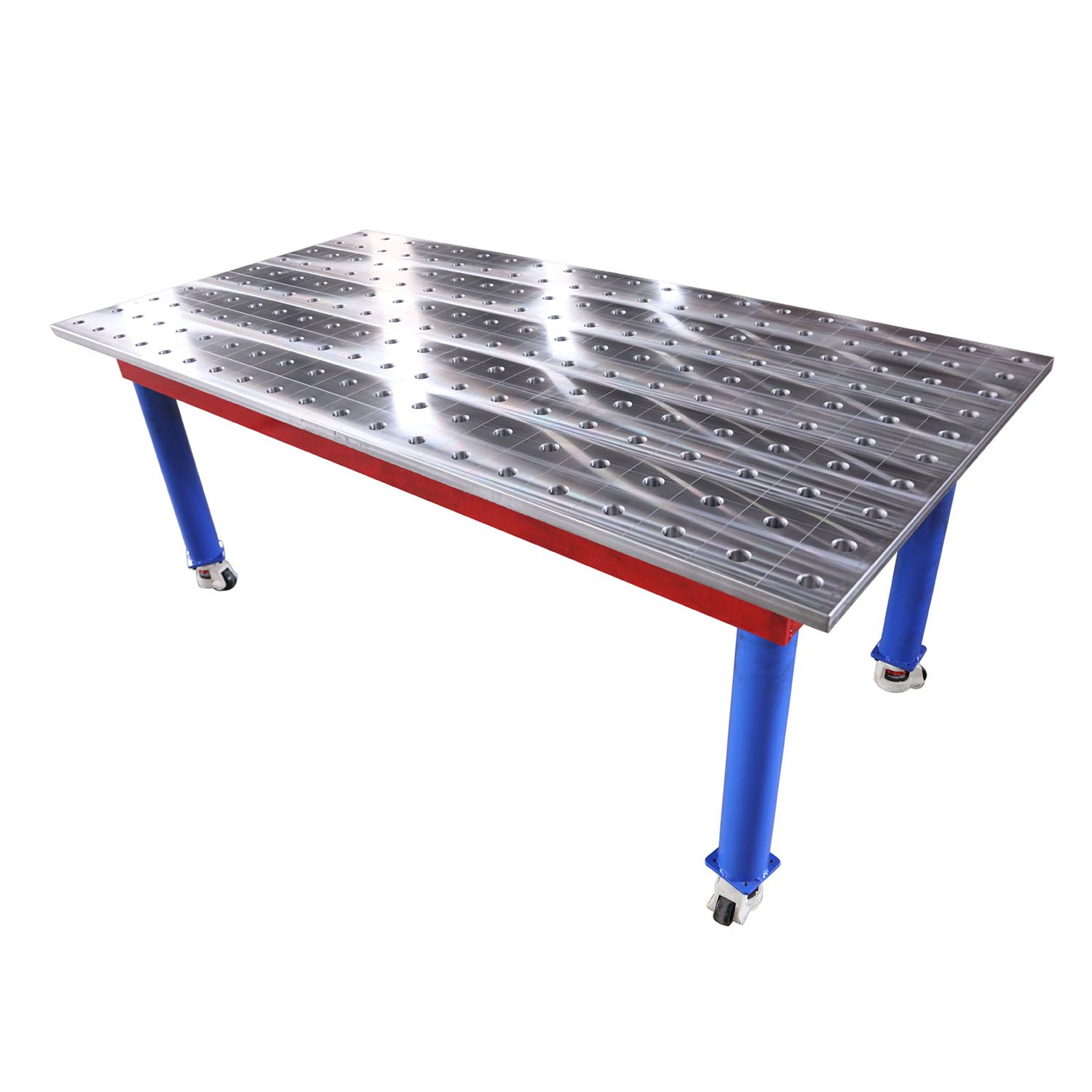
Premium welding platforms, particularly those designed for 3D flexible fixturing, often utilize high-grade cast iron or specialized alloy steels. Cast iron is favored in high-precision environments due to its exceptional vibration damping properties and resistance to thermal distortion. When welding generates intense localized heat, cast iron dissipates this energy more evenly than standard mild steel, maintaining surface flatness.
Cheap welding tables typically rely on basic mild steel plates welded together. Without proper stress-relieving processes, these tables are prone to “memory effects,” where internal stresses cause the table to twist or bow over time. This deformation compromises the squareness of every part welded on the surface, leading to cumulative errors in assembly.
Surface Hardness and Wear Resistance
A professional welding environment involves constant dragging of heavy workpieces, striking with hammers, and exposure to spatter. Premium tables undergo surface hardening treatments, such as induction hardening or nitriding, to increase surface durability. This ensures that the reference surface remains scratch-resistant and true for years.
In contrast, inexpensive tables often have untreated soft steel surfaces. These surfaces dent easily, creating uneven planes that disrupt clamping accuracy. Over time, the accumulation of weld spatter on a soft surface becomes difficult to remove without damaging the table further, whereas premium surfaces allow for easy cleaning and maintenance.
Precision and Tolerance: Why Flatness Matters
In modern manufacturing, especially in sectors like machining and automotive production, tolerance is not optional. The difference between a cheap and a premium table is often measured in fractions of a millimeter regarding flatness and hole positioning accuracy.
Flatness Standards
High-quality welding tables adhere to strict flatness standards, often certified to DIN or ISO specifications. For instance, a premium 3D welding platform might guarantee a flatness tolerance within 0.5mm over its entire surface area. This level of precision allows engineers to use the table itself as a primary datum for measurement and alignment.
Budget tables rarely provide certified flatness data. In practical applications, this means operators must spend significant time shimming parts or using external levels to achieve basic alignment. This inefficiency translates directly into increased labor costs and slower production cycles.
Hole Pattern Accuracy and Modularity
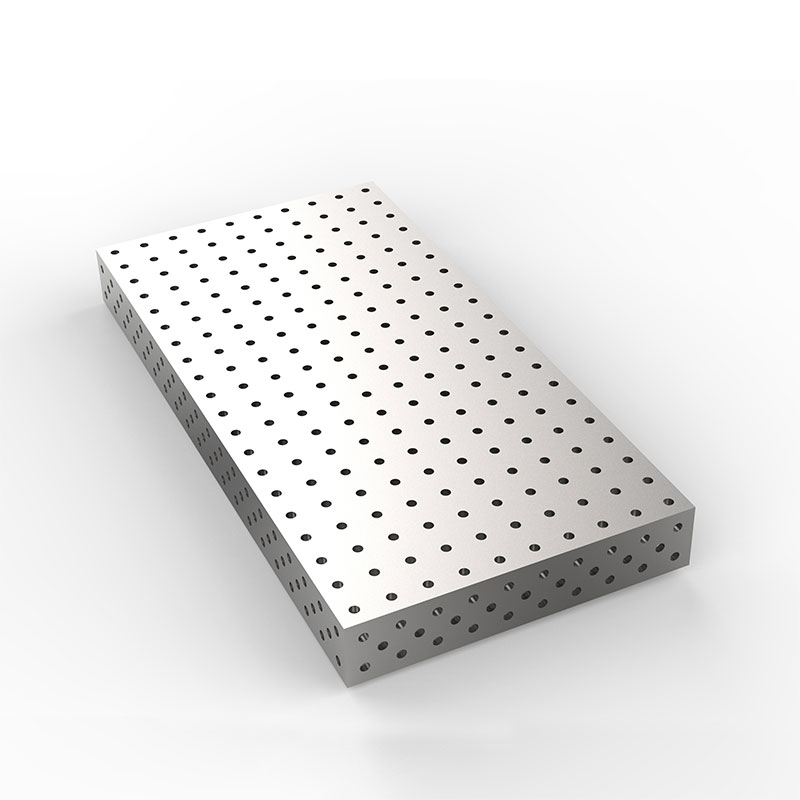
The value of a modular welding system lies in its grid of holes. Premium systems, such as those developed by Botou Haijun Metal Products Co., Ltd., feature precisely machined hole patterns with tight positional tolerances. This ensures that clamps, stops, and squares fit snugly without play, providing rigid support for complex assemblies.
Cheap alternatives often have drilled holes with significant variance. This “slop” or play in the clamping components leads to movement during the welding process, resulting in misaligned joints. For 2D and 3D flexible welding platforms, this lack of precision negates the primary benefit of modularity: rapid, repeatable setup.
| Feature | Cheap Welding Table | Premium Welding Table (e.g., Haijun Metal) |
| Material | Basic Mild Steel, Untreated | Stress-Relieved Cast Iron or High-Grade Alloy Steel |
| Flatness Tolerance | Uncertified, Prone to Warping | Certified (e.g., <0.5mm), Thermally Stable |
| Hole Precision | High Variance, Loose Fit | Tight Tolerances, Snug Clamp Fit |
| Surface Treatment | Painted or Raw, Soft Surface | Hardened, Ground, Spatter Resistant |
| Load Capacity | Limited, Risk of Bending | High Load Bearing, Reinforced Structure |
| Modularity | Limited Accessory Compatibility | Full Ecosystem (Clamps, Angles, Gauges) |
Flexibility and Modular Ecosystems
A welding table is not an isolated tool; it is the foundation of a fixturing system. The true value of a premium table is realized through its compatibility with a comprehensive range of accessories that enable complex positioning tasks.
The Importance of Compatible Accessories
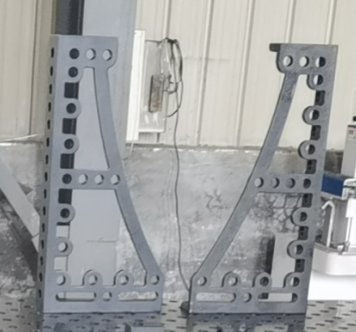
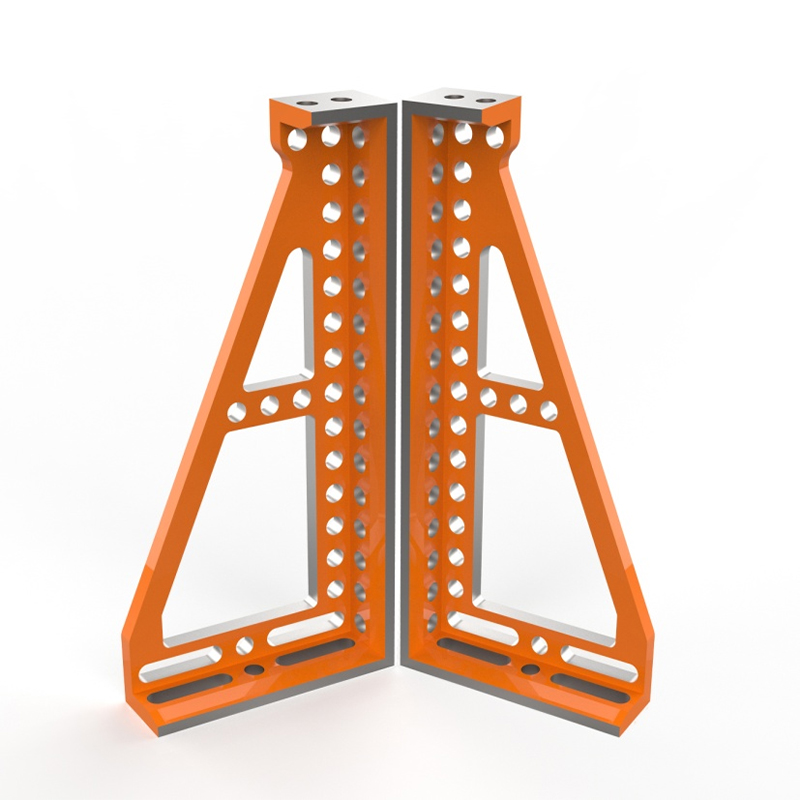
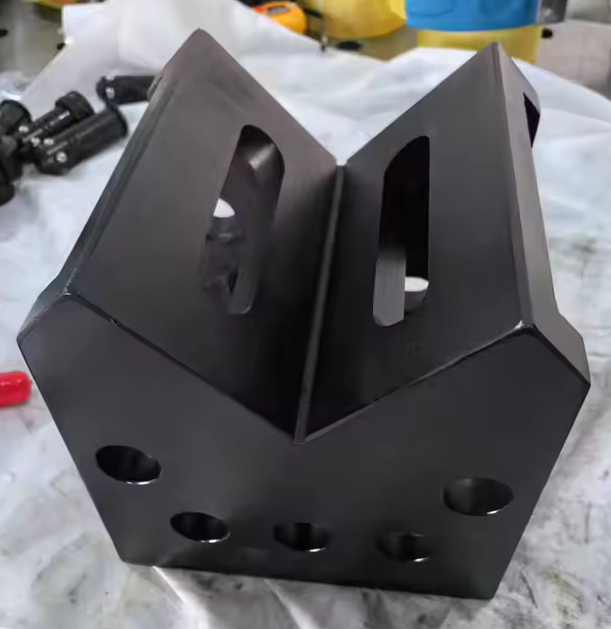
Premium manufacturers invest heavily in R&D to create ecosystems where every component works in harmony. Botou Haijun Metal Products Co., Ltd. exemplifies this approach by offering a complete line of complementary components. These include U-shaped and L-shaped multi-purpose square boxes, 200-series support angle irons, and 0-225° universal angle gauges.
These accessories integrate seamlessly with the platform’s hole pattern, enabling rapid workpiece positioning and clamping. For example, the universal angle gauges allow for precise angular welding setups without the need for custom jigs. This flexibility is crucial for low-volume, high-mix production environments where changeover time must be minimized.
Limitations of Budget Systems
Cheap welding tables often lack a standardized accessory ecosystem. Users may find that standard clamps do not fit properly or that specialized angles are unavailable. This forces workshops to fabricate their own tooling, which is time-consuming and rarely achieves the same level of precision as professionally manufactured fixtures.
Furthermore, budget tables may not support 3D fixturing capabilities. 3D flexible welding platforms allow for clamping from multiple axes, including vertical and horizontal orientations. This capability is essential for complex assemblies in the aerospace and automotive industries, where parts cannot always be laid flat.
Durability and Long-Term Cost Analysis
While the initial purchase price of a cheap welding table is attractive, the long-term costs often exceed those of a premium investment. This concept, known as Total Cost of Ownership (TCO), includes maintenance, rework, downtime, and replacement frequency.
Resistance to Thermal Distortion
Welding introduces extreme thermal cycles. Premium tables are designed to withstand these cycles without permanent deformation. The use of stress-relieved materials ensures that the table returns to its original shape after cooling. Cheap tables, lacking this treatment, gradually warp. Once a table is warped, it cannot be easily repaired, necessitating early replacement.
Maintenance and Cleanup Efficiency
Time spent cleaning weld spatter is non-value-added time. Premium tables with hardened surfaces allow spatter to be chipped off easily without damaging the underlying metal. Some high-end models even feature coatings that prevent spatter adhesion entirely. In contrast, soft steel surfaces on budget tables accumulate spatter, requiring grinding that further degrades the surface flatness.
Impact on Product Quality
The most hidden cost of a cheap table is poor product quality. If the reference surface is not flat, the welded assembly will not be square. Correcting these errors post-welding requires grinding, cutting, and re-welding, which consumes material and labor. In high-precision industries, such defects can lead to rejected batches, significantly impacting profitability.
Application-Specific Recommendations
Selecting the right welding table depends heavily on the specific application and industry requirements. Different sectors have varying needs regarding precision, load capacity, and flexibility.
Automotive and Aerospace Industries
These sectors demand the highest levels of precision and repeatability. Components often have complex geometries and strict tolerance requirements. Here, premium 3D flexible welding platforms are indispensable. The ability to use modular fixtures like those from Haijun Metal allows for rapid prototyping and production runs with minimal setup time. The stability of cast iron platforms ensures that delicate aerospace components are not distorted during welding.
General Fabrication and Repair Shops
For general fabrication, where tolerances are less critical, a mid-range steel table might suffice. However, even in these environments, the benefits of a modular system are evident. The ability to quickly clamp irregular shapes using universal angle gauges and support irons improves workflow efficiency. Investing in a higher-quality table here still pays off through reduced setup times and improved versatility.
Heavy Machinery Manufacturing
This sector requires tables with high load-bearing capacities. Premium tables are engineered with reinforced structures to support heavy workpieces without sagging. Cheap tables may buckle under heavy loads, posing safety risks and compromising weld quality. The durability of premium materials ensures that the table can withstand the rigors of heavy industrial use.
Common Mistakes When Choosing a Welding Table
Avoiding common pitfalls can save businesses from costly mistakes. Here are frequent errors made during the selection process:
- Ignoring Hole Pattern Standards: Assuming all modular tables are compatible. Always verify the hole spacing and diameter to ensure compatibility with existing or planned accessories.
- Underestimating Weight Requirements: Failing to account for the weight of the workpiece plus the clamping force. A table that flexes under load will produce inaccurate welds.
- Overlooking Surface Treatment: Choosing a painted table for heavy welding. Paint burns off, creating fumes and leaving a rough surface. Opt for hardened, unpainted, or specially coated surfaces.
- Neglecting Future Needs: Buying a fixed table when a modular system would offer greater long-term flexibility. Modular systems grow with your business needs.
FAQ: Frequently Asked Questions
What is the lifespan of a premium welding table compared to a cheap one?
A premium welding table, properly maintained, can last decades without losing its precision. Cheap tables may lose flatness within a few years of regular use, requiring replacement. The robust construction and material quality of premium tables ensure long-term reliability.
Can I upgrade a cheap welding table to make it more precise?
While you can add accessories, you cannot correct the inherent lack of flatness or structural instability in a cheap table. Machining the surface is possible but often costs more than buying a quality table initially. It is more effective to invest in a precision-built platform from the start.
Why are cast iron tables preferred for precision welding?
Cast iron has superior vibration damping and thermal stability compared to steel. It absorbs the energy from welding and clamping, preventing movement and distortion. This makes it ideal for high-precision applications where minute deviations matter.
How do modular fixtures improve welding efficiency?
Modular fixtures allow for quick setup and changeover. Instead of building custom jigs for each part, operators can use standardized components like angle irons and clamps to secure workpieces rapidly. This reduces non-welding time and increases overall productivity.
Conclusion: Investing in Precision and Efficiency
The decision between a cheap welding table and a premium one is not merely about cost; it is about capability, efficiency, and quality. While budget options may seem appealing initially, they often fail to deliver the precision and durability required in modern manufacturing. Premium tables, with their superior materials, precise engineering, and modular ecosystems, provide a foundation for high-quality production.
Botou Haijun Metal Products Co., Ltd. stands out as a trusted supplier in this domain, specializing in high-precision flexible modular fixtures. Their commitment to providing efficient and flexible welding solutions, including 2D and 3D flexible welding platforms, addresses the evolving needs of the machining, automotive, and aerospace industries. By integrating comprehensive accessories like universal angle gauges and support angle irons, Haijun Metal ensures that every customer can achieve rapid workpiece positioning and exceptional durability.
For businesses aiming to enhance their manufacturing capabilities, investing in a premium welding solution is a strategic move. It reduces rework, accelerates production, and ensures consistent quality. To explore how these advanced fixturing solutions can optimize your workflow, consider evaluating your specific application needs against the robust offerings available in the market.
If you are ready to upgrade your welding infrastructure with reliable, high-precision tools, contact our team today to discuss customized solutions and technical specifications tailored to your production requirements.