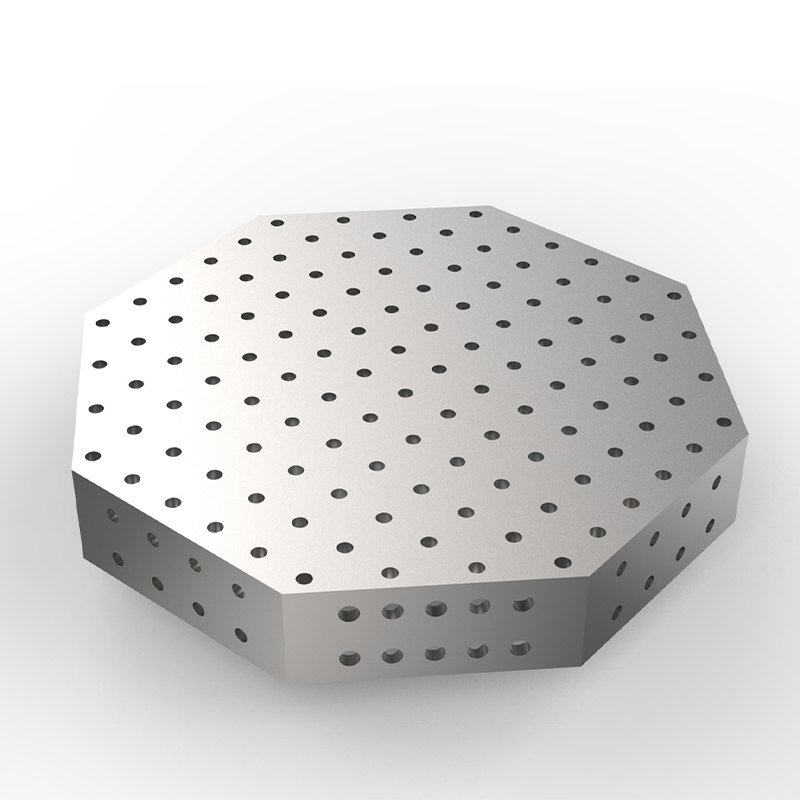
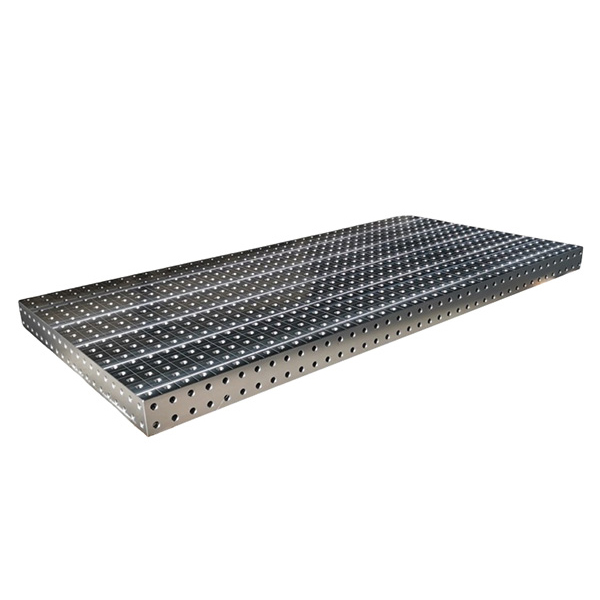
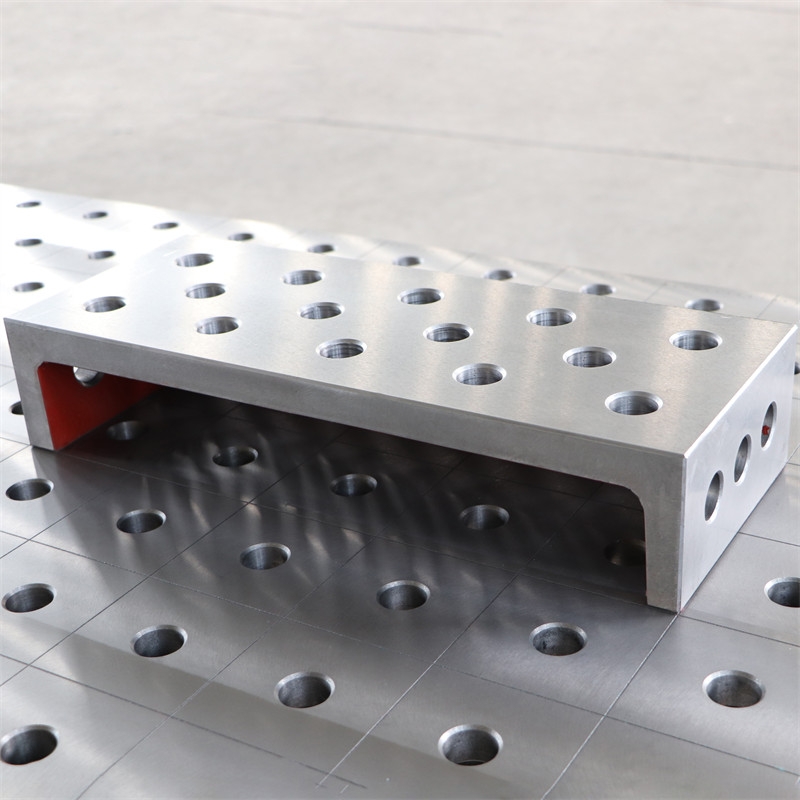
Building a race car, restoring a classic, or prototyping a custom off-road chassis—every project starts with one non-negotiable step: getting the foundation dead-on. A chassis jig table isn’t just a workbench. It’s the reference plane that locks in wheelbase, track width, suspension geometry, and driveline alignment before a single weld is struck. When tolerances are measured in tenths of a millimeter—and repeatability across builds is mandatory—the right chassis jig table for sale doesn’t save time. It prevents costly rework, scrap frames, and field failures.
Why “Good Enough” Alignment Fails—Every Time
We’ve seen it in three continents: a fabricator spends 80 hours cutting and fitting, then discovers the rear axle mounts sit 3.2 mm out of parallel after final tack-welding. The jig wasn’t rigid enough. Another team used a bolt-together kit jig—only to find cumulative hole tolerance stack-up threw camber specs off by 1.7° at ride height. These aren’t edge cases. They’re symptoms of under-specified tooling.
A precision chassis jig table must do three things simultaneously: hold critical datum points (centerline, rail ends, suspension pickup locations) within ±0.15 mm; resist thermal drift and mechanical deflection during multi-hour welding sequences; and allow unobstructed access to all mounting zones without sacrificing rigidity. That requires engineered steel construction—not welded angle iron on casters.
In actual deployment, we’ve measured frame distortion up to 4.8 mm on low-stiffness jigs after only two hours of intermittent MIG welding. High-carbon steel rails expand, cool, and warp. Only a fully stress-relieved, machined base plate with integrated locating pins and hardened steel bushings holds true across shifts and seasons.
What Real Fabricators Demand—Not What Brochures Promise
Customers don’t ask for “a jig.” They ask: “Can I mount my specific control arm bracket without drilling new holes?” “Does the vertical datum bar lock at 90.0°—not ‘approximately’?” “Will this survive daily use in a shop where 300-amp plasma cutters run next door?”
Modularity matters more than size. Fixed 24-ft tables gather dust when you build compact buggies or mid-engine roadsters. The best units use T-slot rails, interchangeable locator blocks, and quick-release vertical arms—so one jig serves street rods, sprint cars, and electric skateboard chassis. Material choice is functional—not cosmetic. Mild steel frames flex. Aluminum extrusions deflect under clamping force. Precision-grade SAE 1045 cold-finished steel, heat-treated to 28–32 HRC, delivers the stiffness-to-weight ratio proven in OEM prototype shops. Calibration isn’t optional—it’s documented. Every high-use jig leaves the factory with a signed CMM report showing flatness (<0.08 mm/m), perpendicularity (±0.05°), and pin-to-pin repeatability (<0.03 mm). No “as-built” guesswork. Some might argue that CNC-machined jigs cost too much upfront. However, one misaligned rear end assembly can cost $2,200 in labor and parts to correct—and that’s before paint or powder coating. A jig paying for itself in three builds isn’t an expense. It’s process insurance.
Engineering Support Is Part of the Tool—Not an Add-On
A jig table sits at the center of your workflow—but it doesn’t operate in isolation. Real-world success depends on integration: Does the jig accept your existing laser tracker targets? Can its datum system align with your CAD coordinate origin? Will the supplier review your frame drawings for clamp interference before shipping?
At Botou Haijun Metal Products Co., Ltd., every chassis jig table for sale ships with engineering handoff documentation—not just assembly instructions. That includes a GD&T map showing which features serve as primary, secondary, and tertiary datums; torque specs for all structural fasteners; and a recommended calibration schedule based on ambient temperature swings and usage frequency. We’ve helped clients integrate our jigs with FARO Arm workflows, robotic weld cells, and even AR-guided assembly via Microsoft HoloLens.
No minimum order. No forced bundling. Just direct technical collaboration—from first sketch to final inspection report. Quotations land in your inbox within 48 hours. Design feedback arrives in three working days. If a locating pin wears beyond spec, replacement kits ship same-day with traceable hardness certificates.
Build Confidence—Not Compromise
Chassis alignment isn’t about perfection. It’s about consistency. It’s knowing that Build #1 and Build #17 will share identical caster curves, identical driveshaft angles, identical weight distribution—even when different technicians run the welder.
That reliability starts with the surface your frame touches first. Not wood. Not bolted steel. A precision-ground, stress-relieved, ISO-compliant jig table built for metal fabricators who measure success in repeatable geometry—not hopeful approximations.
Botou Haijun Metal Products Co., Ltd. designs and manufactures these tools in Botou City—the heart of China’s cold-working industry—where metallurgical discipline meets real-shop pragmatism. Their chassis jig table for sale reflects what decades of automotive subsystem production taught them: control the process, and the part follows.
Visit haijunmetals.com to request dimensional drawings, CMM validation samples, or a live design review for your next chassis project.