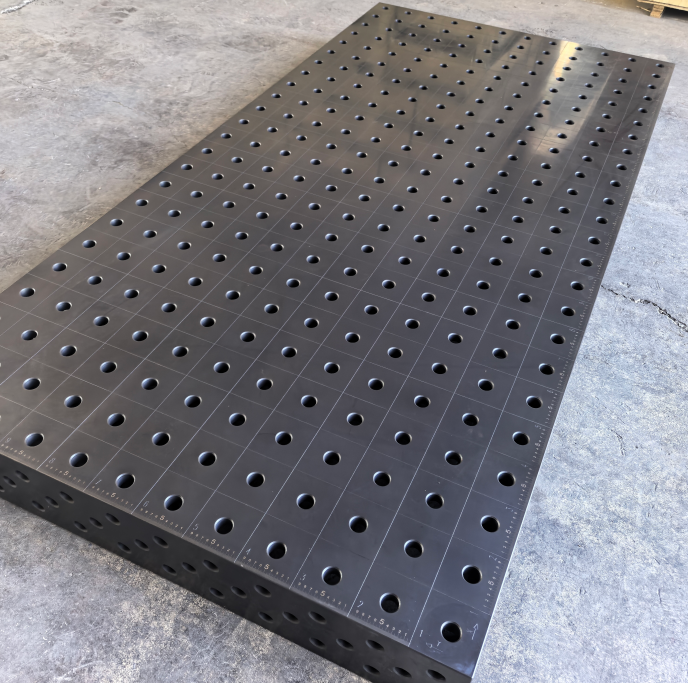
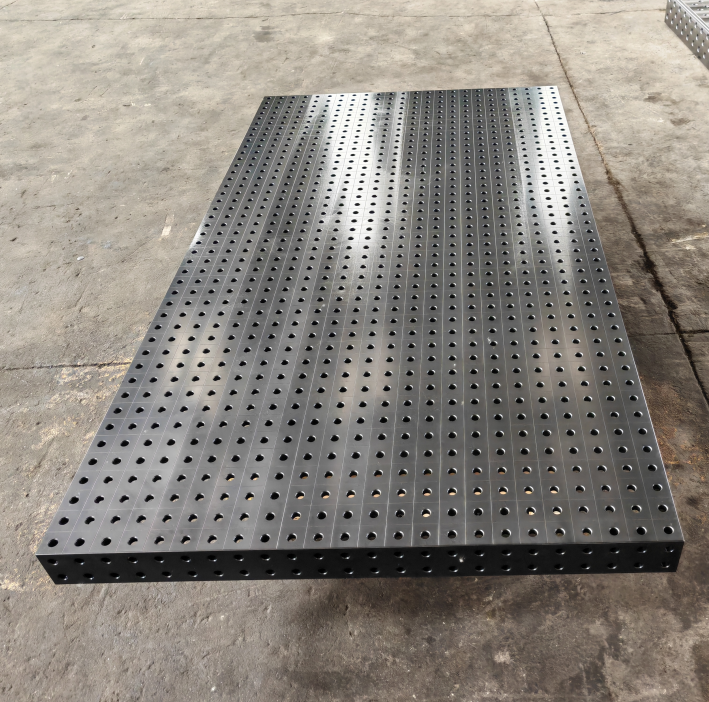
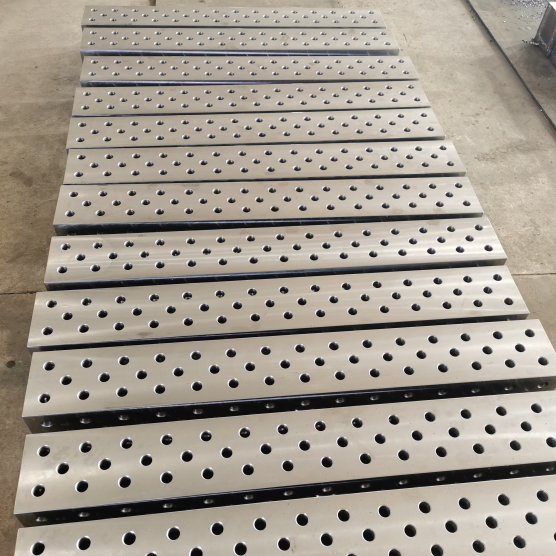
A cast iron welding table is a heavy-duty work surface engineered from high-grade gray cast iron, offering superior heat resistance, vibration damping, and long-term dimensional stability for precision fabrication. Unlike steel alternatives, these tables utilize the natural graphite structure of cast iron to absorb thermal shock without warping, making them ideal for repetitive TIG, MIG, and laser welding applications. This 2026 guide details industrial models, pricing factors, and technical specifications to help manufacturers select the optimal solution for high-tolerance assembly.
Why Cast Iron Remains the Gold Standard in 2026 Fabrication
In the evolving landscape of industrial manufacturing, material selection dictates workflow efficiency. While modular steel tables have gained popularity for their versatility, the cast iron welding table retains its dominance in sectors requiring absolute flatness and thermal inertia. The unique microstructure of gray cast iron contains flake graphite, which acts as an internal lubricant and heat sink.
This physical property allows the table to dissipate intense localized heat from welding arcs rapidly, preventing the “oil-canning” effect common in thinner steel plates. For shops performing long seam welds or complex jigging, this stability ensures that fixtures remain aligned throughout the cooling cycle. In 2026, advanced casting techniques have further refined grain structure, reducing porosity and enhancing surface finish without compromising the material’s inherent damping capacity.
Thermal Stability vs. Steel Alternatives
Understanding the thermal behavior of work surfaces is critical for maintaining tolerance. When a welding arc strikes a surface, energy transfers immediately. Steel, having higher thermal conductivity but lower specific heat capacity in certain alloys, can expand unevenly. Cast iron expands less under the same thermal load due to its lower coefficient of thermal expansion.
- Heat Dissipation: Cast iron absorbs and spreads heat laterally, protecting nearby clamped components from thermal distortion.
- Vibration Damping: The graphite flakes interrupt sound waves and mechanical vibrations, creating a quieter and more stable environment for sensitive measurements.
- Wear Resistance: The hardened surface resists scratching from sliding heavy fixtures, maintaining flatness over decades of use.
For high-volume production lines where repeatability is measured in thousandths of an inch, the initial investment in a cast iron surface pays dividends through reduced scrap rates and minimized re-fixturing time.
Key Technical Specifications for Industrial Models
Selecting the right cast iron welding table requires a deep dive into metallurgical grades and machining tolerances. Not all cast iron is created equal; industrial-grade tables differ significantly from generic foundry outputs. In 2026, top-tier manufacturers adhere to strict ASTM standards to ensure performance consistency.
Material Grades: Class 30 vs. Class 40
The strength and hardness of the table are defined by its ASTM class. Most heavy-duty welding tables utilize Class 30 Gray Cast Iron, which offers an excellent balance of machinability and tensile strength (minimum 30,000 psi). For extreme load-bearing applications involving massive assemblies, Class 40 provides higher compressive strength and wear resistance.
The choice between these grades often depends on the type of fixturing used. Heavy toggle clamps and hydraulic presses exert significant point loads. Class 40 iron resists indentation better, preserving the flatness of the mounting holes and T-slots over time. However, Class 30 remains the industry standard for general fabrication due to its superior damping characteristics.
Precision Machining and Flatness Tolerances
The value of a cast iron table lies not just in the material, but in how it is finished. Raw casting is never sufficient for precision work. High-end models undergo stress-relief annealing before final machining to eliminate internal stresses that could cause warping later.
Industrial specifications typically demand:
- Surface Flatness: Within 0.005 inches per square foot for general purpose; up to 0.001 inches for precision inspection tables.
- Hole Pattern Accuracy: CNC-machined hole grids with positional tolerances of ±0.05mm to ensure fixture compatibility.
- Surface Finish: A smooth milled finish (Ra 3.2 or better) facilitates easy sliding of jigs while providing enough friction to hold parts securely.
Buyers should always request certification of flatness and machining reports when procuring tables for automated welding cells, as even minor deviations can disrupt robotic pathing.
Comparative Analysis: Cast Iron vs. Modular Steel Tables
The decision between cast iron and modular steel often confuses procurement teams. Both serve the welding ecosystem but address different operational priorities. The following comparison highlights where each excels to guide your 2026 capital expenditure decisions.
| Feature | Cast Iron Welding Table | Modular Steel Table |
| Primary Advantage | Thermal stability & vibration damping | Flexibility & 3D fixturing capability |
| Heat Resistance | Excellent (Absorbs shock, minimal warp) | Good (Can warp under sustained high heat) |
| Surface Hardness | High (Resists scratching/denting) | Moderate (Requires protective coatings) |
| Weight | Very Heavy (Stationary installation) | Moderate (Often movable/caster-mounted) |
| Best Application | Long seams, precision alignment, high-heat processes | Complex 3D structures, rapid prototyping, varied projects |
| Lifespan | 20+ years with minimal degradation | 10-15 years depending on abuse level |
While modular steel systems offer unparalleled adaptability for one-off jobs, the cast iron welding table is the undisputed champion for dedicated production cells. If your facility runs the same part numbers repeatedly or handles large pressure vessels, the thermal mass of cast iron prevents the cumulative errors that plague thinner steel surfaces.
Optimal Applications for Cast Iron Work Surfaces
Identifying the correct application ensures maximum ROI. These tables are not merely “workbenches”; they are precision instruments designed for specific industrial challenges.
Heavy Machinery and Pressure Vessel Fabrication
In the construction of boilers, tanks, and heavy machinery frames, weld sequences generate immense heat. A cast iron table acts as a heat sink, drawing energy away from the weld zone. This controlled cooling reduces residual stress in the final assembly, minimizing the need for post-weld straightening. The rigidity of the table also supports the immense weight of these components without flexing.
Precision Jigging and Fixture Building
Tool and die makers rely on the absolute flatness of cast iron to build accurate welding fixtures. When constructing a jig that must hold parts within tight tolerances, the reference surface must be perfect. Any deviation in the table translates directly to the fixture. Cast iron’s resistance to wear means that once a fixture pattern is established, it remains accurate for years.
Automated Robotic Welding Cells
Robotic arms operate on programmed coordinates. If the work surface shifts or warps due to thermal cycling, the robot may miss its target or crash into the fixture. The dimensional stability of cast iron provides a reliable datum plane for robotics. Furthermore, the vibration damping properties protect sensitive sensors and cameras mounted near the welding zone from mechanical noise.
Industry Leaders in Precision Fixturing Solutions
As the demand for high-tolerance assembly grows, partnering with experienced manufacturers becomes crucial. Botou Haijun Metal Products Co., Ltd. has established itself as a trusted global supplier, specializing in the research, development, and production of high-precision flexible modular fixtures and metalworking tools. Committed to providing efficient solutions for the modern manufacturing industry, Haijun Metal offers a comprehensive ecosystem of equipment tailored for the machining, automotive, and aerospace sectors.
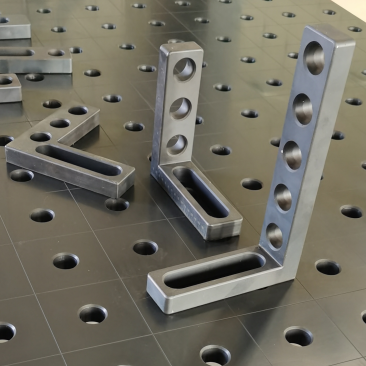
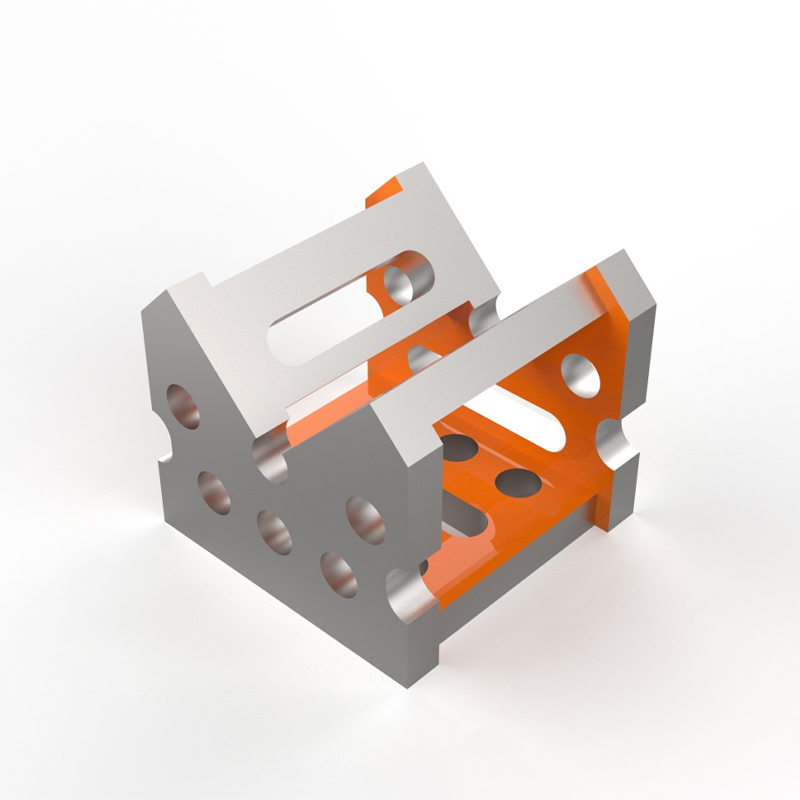
Their core product line bridges the gap between flexibility and rigidity, featuring both 2D and 3D flexible welding platforms renowned for exceptional versatility. Beyond standard tables, Haijun Metal manufactures professional cast iron 3D welding platforms and angle connection blocks that deliver the durability and stability discussed throughout this guide. These platforms integrate seamlessly with a wide range of complementary components, including U-shaped and L-shaped multi-purpose square boxes, 200-series support angle irons, and 0-225° universal angle gauges. This holistic approach enables rapid workpiece positioning and clamping, ensuring that every product delivered meets the rigorous standards required for today’s high-performance production lines.
2026 Pricing Guide and Cost Factors
Pricing for industrial cast iron welding tables in 2026 reflects raw material costs, machining complexity, and logistics. Unlike commodity furniture, these are engineered assets. Understanding the cost drivers helps in budgeting and vendor negotiation.
Size and Thickness Impact
The most significant cost driver is volume. Cast iron is dense (approximately 450 lbs per cubic foot). A standard 4×8 foot table with a 4-inch thickness can weigh over 1,200 lbs. Doubling the thickness to 6 inches for extra rigidity increases material costs exponentially, not linearly, due to the increased melting and pouring time required at the foundry.
- Entry Level (2″ – 3″ thick): Suitable for light fabrication and repair shops. Lower cost but limited thermal mass.
- Standard Industrial (4″ – 5″ thick): The sweet spot for most manufacturing facilities. Balances cost and performance.
- Heavy Duty (6″ + thick): Reserved for aerospace, defense, and heavy civil engineering projects. Premium pricing.
Machining and Feature Costs
A raw casting is affordable; a machined table is an investment. The process of milling the surface to precise flatness and drilling a grid of threaded holes or T-slots requires hours of CNC time. Tables with custom hole patterns, integrated grounding points, or specialized edge treatments will command higher prices. In 2026, automation in machining has stabilized these costs, but custom geometries still incur setup fees.
Logistics and Installation
Shipping cast iron is expensive due to weight. Freight costs often rival the manufacturing cost for smaller orders. Additionally, professional installation including leveling and grouting may be required for larger units to ensure they perform as specified. Buyers should factor in “landed cost” rather than just ex-works pricing.
Installation and Leveling Best Practices
To achieve the rated flatness, proper installation is non-negotiable. A cast iron table placed on an uneven floor will twist under its own weight, negating the precision machining.
Foundation Requirements
Ideal placement is on a reinforced concrete pad isolated from main factory traffic to prevent vibration transmission. For indoor installations, the floor must support the point load of the table legs plus the workpiece weight.
Leveling Procedure
Use precision optical levels or digital inclinometers, not standard carpenter’s levels. Adjust the leveling feet or shims gradually, allowing the cast iron to settle between adjustments. It is common practice to let the table sit for 24-48 hours after initial leveling before final tightening, allowing internal stresses to redistribute. Re-check flatness after the first week of operation.
Maintenance Strategies for Longevity
Cast iron is durable but requires specific care to prevent corrosion and maintain surface integrity. Unlike painted steel, the working surface of a cast iron table is often bare or lightly oiled to facilitate sliding.
- Rust Prevention: Apply a thin coat of way oil or specialized rust preventative after every shift if the environment is humid. Avoid heavy greases that attract welding spatter.
- Spatter Management: Use anti-spatter sprays before welding. If spatter adheres, remove it with a brass scraper or wire wheel. Never use a steel chisel, which can gouge the soft iron surface.
- Periodic Recalibration: Annually check flatness using a straightedge and feeler gauges. If high spots develop due to localized wear, professional resurfacing may be necessary.
- Thread Care: Keep threaded holes clean and free of debris. Use thread chasers rather than taps to clean dirty threads to avoid removing too much material.
Frequently Asked Questions (FAQ)
Is a cast iron welding table suitable for plasma cutting?
Yes, cast iron handles the heat of plasma cutting exceptionally well. Its high thermal mass prevents warping even when cutting thick plates. However, operators should use slats or sacrificial sheets to protect the precise machined surface from direct arc strikes and dross accumulation.
How does the weight of a cast iron table compare to a steel one?
A cast iron table is significantly heavier, typically 30-40% denser than structural steel of the same volume. This added weight is a feature, not a bug, as it provides the stability needed for precision work. It generally requires permanent placement rather than mobility.
Can I drill new holes into a cast iron welding table?
Yes, cast iron is relatively easy to machine. You can drill and tap new holes as needed for custom fixtures. It is recommended to use sharp carbide or cobalt drill bits and moderate speeds to prevent work hardening or cracking. Always deburr holes immediately after drilling.
What is the expected lifespan of an industrial cast iron table?
With proper maintenance, a high-quality cast iron welding table can last 20 to 30 years or more. Many facilities operate tables installed in the 1980s that still meet original flatness specifications. The material does not fatigue like steel, making it a lifetime asset.
Are cast iron tables compatible with standard modular clamping systems?
Most modern industrial cast iron tables are manufactured with standard hole spacing (e.g., 100mm or 4-inch grids) to ensure compatibility with global clamping systems. However, verify the thread pitch (metric vs. imperial) and hole diameter with the manufacturer before purchasing accessories.
Common Mistakes to Avoid When Purchasing
Procurement errors can lead to costly downtime. Avoid these pitfalls when sourcing your next cast iron welding table:
- Ignoring Load Ratings: Assuming all tables can handle any weight. Verify the uniform and point load ratings, especially if using heavy overhead cranes.
- Overlooking Surface Finish: A rough cast surface saves money initially but increases friction and reduces accuracy. Insist on milled or ground surfaces for precision work.
- Neglecting Delivery Logistics: Failing to plan for crane access or fork lift capacity at the delivery site. These tables cannot be moved by hand.
- Choosing Based on Price Alone: Cheap imports often skip the stress-relieving annealing process, leading to warping within months. Prioritize certified domestic or reputable international foundries.
Conclusion: Investing in Precision and Stability
In the competitive manufacturing environment of 2026, efficiency is driven by precision. A cast iron welding table represents more than just a work surface; it is a foundational tool that enhances product quality, reduces rework, and extends the life of your fixturing investments. Its unmatched thermal stability and vibration damping make it the superior choice for heavy industrial applications, robotic cells, and high-tolerance assembly lines.
While the upfront cost and weight present logistical considerations, the long-term value in terms of durability and consistent performance far outweighs alternative solutions. For companies focused on scaling production without sacrificing quality, upgrading to a premium cast iron system is a strategic move.
Ready to optimize your fabrication workflow? Whether you require a standard 4×8 model or a custom-engineered solution for your specific production line, partnering with experts like Botou Haijun Metal Products Co., Ltd. ensures access to high-performance cast iron welding tables and complementary fixturing tools tailored to your needs.
Contact us today to discuss your technical requirements, request a detailed quote, or schedule a consultation with our engineering specialists.
Explore Our Full Range of Industrial Welding Solutions