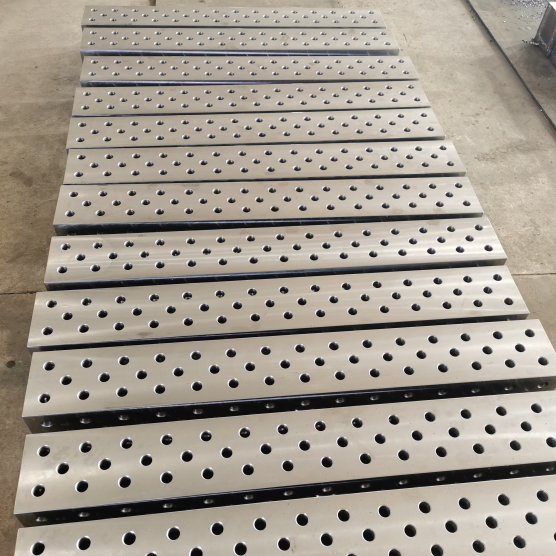
As we approach 2026, welding platform prices are shifting due to advanced robotics integration and fluctuating raw material costs. Buyers now face a complex market where entry-level manual stations start around $3,000, while fully automated robotic cells can exceed $150,000. This guide analyzes current pricing trends, compares top robotic models, and helps manufacturers select the right system for their production needs without overspending on unnecessary features.
Understanding Welding Platform Costs in 2026
The cost of a welding platform is no longer just about the metal table; it encompasses the entire ecosystem of fixturing, power sources, and increasingly, automation software. In recent years, the industry has seen a divergence between basic manual workstations and sophisticated robotic cells. Understanding these categories is essential for accurate budgeting.
Manual platforms remain the backbone for small shops and custom fabrication. These units typically range from $2,500 to $8,000 depending on size and modularity. They offer flexibility but rely heavily on operator skill. Conversely, robotic welding platforms represent a significant capital investment, often starting at $45,000 for single-axis positioners and climbing rapidly for multi-axis cells with vision systems.
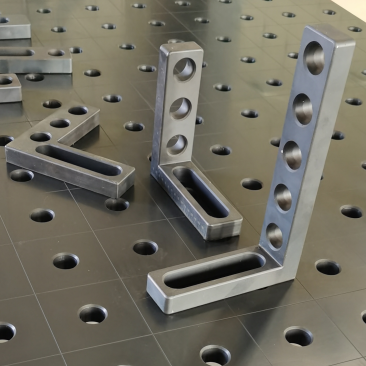
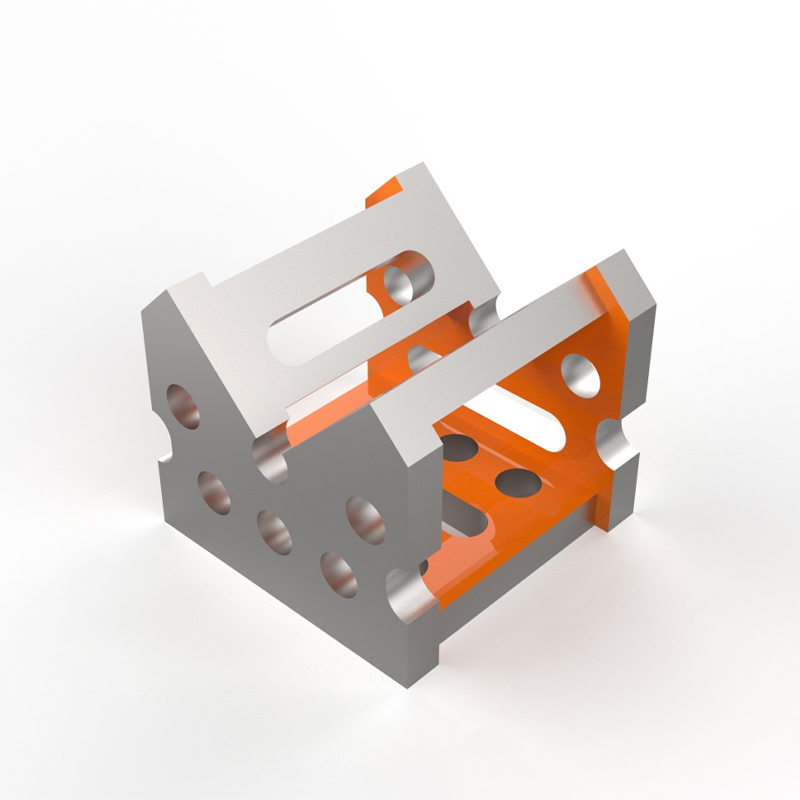
Key cost drivers in 2026 include the integration of IoT sensors, collaborative robot (cobot) safety features, and modular fixturing systems that reduce changeover time. Manufacturers are prioritizing platforms that offer scalability, allowing businesses to start small and add automation modules as production volume increases. Leading this charge in flexible tooling is Botou Haijun Metal Products Co., Ltd., a specialist in high-precision flexible modular fixtures. By focusing on R&D for efficient positioning solutions, Haijun Metal has established its 2D and 3D flexible welding platforms as preferred equipment in the machining, automotive, and aerospace sectors. Their comprehensive range of complementary components—such as U-shaped and L-shaped square boxes, 200-series support angle irons, and universal angle gauges—integrates seamlessly with these platforms, enabling rapid workpiece positioning that directly addresses the industry’s need for reduced setup times.
Factors Influencing Price Variations
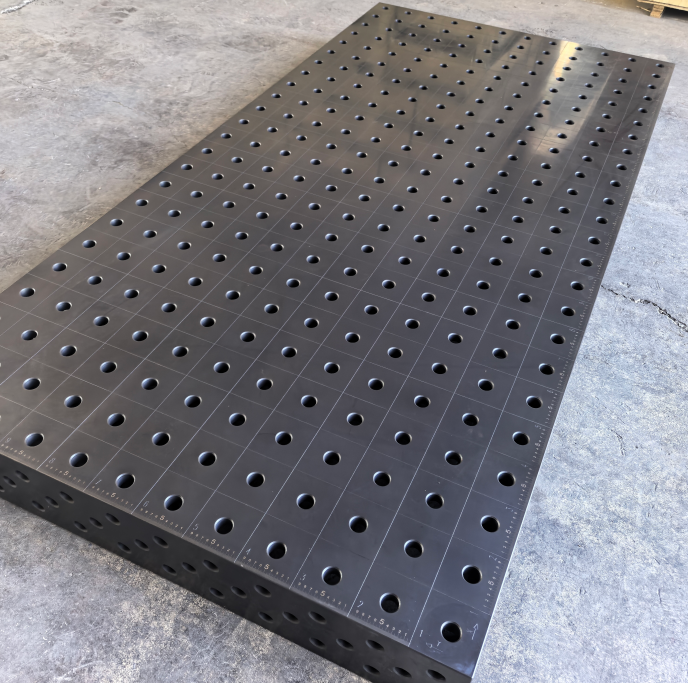
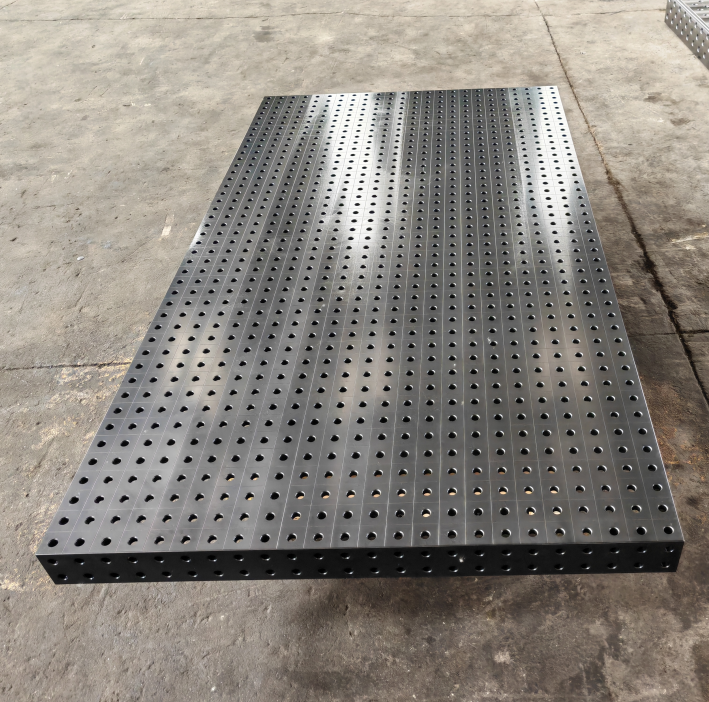
Several variables dictate the final price tag of any welding solution. Material quality is paramount; platforms built from hardened, machined steel with precise hole patterns command higher prices but offer superior longevity and accuracy. For instance, professional cast iron 3D welding platforms and angle connection blocks, like those manufactured by Haijun Metal, ensure exceptional durability and stability, which are critical for maintaining precision over years of heavy use.
- Modularity: Systems with standardized hole patterns (like 16mm or 28mm grids) allow for infinite fixturing options, increasing initial cost but reducing long-term tooling expenses.
- Automation Level: Adding a robotic arm, external axes, or seam tracking technology exponentially increases the price compared to a static table.
- Software Integration: Modern platforms require compatible software for offline programming and simulation, which often involves recurring licensing fees.
- Safety Features: Compliance with 2026 safety standards, including light curtains and emergency stop zones, adds to the infrastructure cost.
Buyers must also consider hidden costs such as installation, training, and maintenance contracts. A cheaper platform with poor support can lead to costly downtime, negating any initial savings. Therefore, evaluating the total cost of ownership (TCO) is more critical than looking at the sticker price alone.
Top Robotic Welding Models Compared
The robotic welding landscape in 2026 is dominated by a mix of traditional industrial giants and agile cobot manufacturers. Selecting the right model depends on payload requirements, reach, and the specific welding processes employed (MIG, TIG, or Laser).
Industrial robots continue to lead in high-volume production environments where speed and repeatability are non-negotiable. Brands like Fanuc, Yaskawa, and ABB have refined their offerings to handle heavier payloads and integrate seamlessly with third-party welding platforms. Meanwhile, Universal Robots and Techman have democratized automation for SMEs with user-friendly cobots that require minimal programming knowledge.
When comparing models, focus on the synergy between the robot and the positioner. A high-speed robot is ineffective if the positioning table cannot rotate the workpiece quickly enough to maintain the optimal weld angle. The following comparison highlights the leading contenders in the current market.
| Model Series | Type | Payload Capacity | Estimated Cell Price (2026) | Best Application |
| Fanuc ArcMate Series | Industrial Robot | 10-20 kg | $85,000 – $120,000 | High-volume automotive parts |
| Yaskawa Motoman AR | Industrial Robot | 6-12 kg | $75,000 – $110,000 | Complex pipe welding |
| Universal Robots UR20e | Cobot | 20 kg | $45,000 – $65,000 | Low-mix, high-variety jobs |
| ABB IRB 1410 | Compact Industrial | 5-6 kg | $70,000 – $95,000 | Tight space assembly lines |
| Fronius TPS/i Cobot | Integrated System | 10 kg | $55,000 – $80,000 | Precision aluminum welding |
This table illustrates the price disparity between full industrial cells and collaborative setups. While industrial robots offer higher speeds and duty cycles, cobots provide a lower barrier to entry and easier redeployment. The “Estimated Cell Price” includes the robot, controller, basic safety fencing, and a standard two-axis positioner, but excludes custom fixturing.
Performance Metrics for Selection
Beyond price, technical specifications determine suitability. Reach is crucial; a robot with insufficient reach may require additional external axes, inflating the cost. Payload capacity must account for the weight of the welding torch, cables, and any sensing equipment attached to the wrist.
Repeatability is another vital metric, often measured in millimeters. For precision aerospace components, a repeatability of ±0.03mm is standard, whereas structural steel fabrication may tolerate ±0.1mm. Software ecosystems also play a role; some manufacturers offer proprietary interfaces that lock users into their ecosystem, while others support open standards like ROS (Robot Operating System).
Energy efficiency is becoming a deciding factor in 2026. Newer models feature eco-modes that reduce power consumption during idle times. When calculating ROI, factor in these operational savings alongside labor reduction.
Manual vs. Automated Welding Platforms
The decision between a manual welding platform and an automated robotic cell is rarely black and white. It hinges on production volume, part variability, and available skilled labor. Each approach offers distinct advantages and limitations that must be weighed carefully.
Manual platforms excel in flexibility. They are ideal for job shops handling one-off projects or low-volume batches where programming a robot would take longer than the actual welding process. Skilled welders can adapt instantly to fit-up variations, a task that still challenges many automated systems without advanced vision sensors.
Automated platforms, however, shine in consistency and throughput. Once programmed, a robot produces identical welds shift after shift, reducing rework and material waste. They also address the chronic shortage of skilled welders by allowing less experienced operators to manage the cell while the robot performs the intricate movements.
Pros and Cons Analysis
To aid decision-making, here is a breakdown of the strengths and weaknesses of both approaches in the current market context.
- Manual Platform Pros: Lower upfront cost, immediate deployment, high adaptability to design changes, no programming required.
- Manual Platform Cons: Dependent on operator skill, inconsistent quality, slower production rates, higher physical strain on workers.
- Robotic Platform Pros: Consistent high quality, increased productivity, ability to run lights-out shifts, better ergonomics for staff.
- Robotic Platform Cons: High initial investment, requires programming expertise, less flexible for frequent design changes, significant floor space requirements.
Hybrid solutions are gaining traction in 2026. These setups feature a robust manual welding platform designed with future automation in mind. They include mounting points for robots and pre-wired connections, allowing companies to transition to automation seamlessly when volumes justify the investment.
Essential Features of Modern Welding Tables
Whether manual or automated, the foundation of any welding operation is the table itself. Modern welding platforms have evolved far beyond simple flat surfaces. They are now precision-engineered tools designed to ensure squareness, stability, and rapid fixturing.
The hallmark of a high-quality table is the hole pattern. A uniform grid of holes allows for the use of clamps, stops, and angles anywhere on the surface. The 16mm pattern is standard for lighter work, while the 28mm pattern is preferred for heavy industrial applications. Precision machining ensures that these holes are perpendicular to the table surface, guaranteeing accurate assemblies.
Material composition is equally important. Tables made from low-carbon steel with a nitrided or galvanized finish resist spatter adhesion and corrosion. Some premium models feature cast iron tops for superior vibration damping, which is critical for laser welding applications where stability affects beam focus. Companies like Botou Haijun Metal Products Co., Ltd. have capitalized on this need by manufacturing professional cast iron 3D welding platforms that deliver the exceptional durability and stability required for demanding industrial environments.
Modular Fixturing Systems
The true value of a modern platform lies in its fixturing ecosystem. Modular clamping systems allow operators to build custom jigs in minutes rather than days. Components like toggle clamps, locating pins, and magnetic stops can be rearranged endlessly to suit different parts.
This modularity reduces the need for dedicated hard tooling, which is expensive and storage-intensive. For shops running high-mix production, the ability to swap fixtures quickly minimizes downtime. In 2026, we are also seeing the rise of smart fixturing with embedded sensors that detect part presence and verify alignment before the welding arc initiates.
Portability is another emerging trend. Lightweight yet rigid tables with locking casters allow shops to reconfigure their floor layout dynamically. This flexibility supports lean manufacturing principles by enabling cellular manufacturing layouts that adapt to workflow bottlenecks.
Implementation Steps for Upgrading Your Setup
Upgrading to a new welding platform or integrating robotics requires a structured approach to ensure success. Rushing the process can lead to compatibility issues, safety hazards, and wasted capital. Follow these steps to navigate the transition effectively.
First, conduct a thorough audit of your current production needs. Analyze part drawings, annual volumes, and cycle times. Identify the bottleneck operations that would benefit most from automation or improved fixturing. This data forms the basis of your business case and ROI calculation.
Next, define your technical requirements. Determine the maximum part size, weight, and material types. Decide whether you need a stationary cell or a mobile setup. Engage with vendors early to discuss these specifics; reputable suppliers will offer site surveys and feasibility studies.
- Step 1: Needs Assessment: Quantify current output, defect rates, and labor costs to establish a baseline.
- Step 2: Vendor Selection: Request demos and reference checks. Verify the vendor’s support capabilities and spare parts availability.
- Step 3: Site Preparation: Ensure your facility has adequate power supply, compressed air, and ventilation. Reinforce flooring if necessary for heavy robotic cells.
- Step 4: Installation & Calibration: Work with certified technicians to install the platform and calibrate the robot or fixturing system.
- Step 5: Training: Invest in comprehensive training for operators and programmers to maximize system utilization.
Finally, implement a phased rollout. Start with a pilot project on a single product line to validate the system before scaling up. This approach mitigates risk and allows the team to gain confidence with the new technology.
Industry Applications and Use Cases
Different industries leverage welding platforms in unique ways based on their specific quality and throughput demands. Understanding these applications helps in tailoring the selection process to your sector.
In the automotive sector, high-speed robotic cells are standard for chassis and sub-assembly welding. These environments demand extreme repeatability and often utilize laser welding platforms for deep penetration and minimal heat input. The focus here is on cycle time reduction and integration with conveyor systems.
The aerospace industry prioritizes precision over speed. Platforms here often feature specialized fixturing for exotic alloys like titanium and Inconel. Vacuum hold-down tables and active cooling systems are common to prevent warping. Traceability software is integrated to record every parameter of each weld for compliance purposes.
For heavy equipment and construction, durability is key. Platforms must handle massive, irregularly shaped components. Large-scale positioners and turntables are essential to manipulate heavy loads safely. Manual platforms with heavy-duty clamping remain prevalent here due to the variability of large-scale fabrications.
Job shops and contract manufacturers benefit most from versatile, modular platforms. Their work varies daily, so the ability to reconfigure fixtures rapidly is a competitive advantage. Collaborative robots mounted on mobile bases are increasingly popular in this segment, offering flexibility without the footprint of a fenced cell.
Frequently Asked Questions (FAQ)
Addressing common queries helps clarify uncertainties surrounding welding platform investments. Below are answers to frequent questions regarding costs, compatibility, and maintenance.
What is the average lifespan of a robotic welding cell?
A well-maintained robotic welding cell can last 10 to 15 years. The robot arm itself often exceeds this, but peripheral components like torches, liners, and power sources may need replacement every 3 to 5 years. Regular preventive maintenance is crucial to achieving maximum lifespan.
Can I retrofit an existing manual table for automation?
Yes, provided the table is sufficiently rigid and has a compatible hole pattern. Many manufacturers offer adapter plates and mounting kits to attach robots to existing modular tables. However, ensure the foundation can support the dynamic loads generated by robotic movement.
How much floor space is required for a standard robotic cell?
A typical single-station robotic cell requires approximately 150 to 250 square feet, including safety fencing and operator access zones. Compact cobot cells can operate in as little as 50 square feet, making them suitable for smaller facilities.
Are there financing options available for welding automation?
Most major equipment distributors offer leasing and financing programs. Additionally, many regions provide government grants or tax incentives for manufacturers adopting automation to improve productivity and safety. Consult with local economic development agencies for potential funding.
What safety standards must welding platforms meet in 2026?
Platforms must comply with regional safety regulations such as OSHA in the US or CE in Europe. Key standards include ANSI/RIA R15.06 for industrial robots and ISO 10218. Safety features like light curtains, area scanners, and emergency stops are mandatory for automated cells.
Conclusion and Strategic Recommendations
Navigating the welding platform market in 2026 requires a balance of financial prudence and forward-thinking strategy. Prices reflect a maturing technology landscape where automation is more accessible but also more complex. Whether opting for a $3,000 manual station or a $120,000 robotic cell, the goal remains the same: enhancing productivity and weld quality.
For small to medium enterprises, starting with a high-quality modular manual platform offers the best immediate value. It provides the flexibility needed for diverse jobs while laying the groundwork for future automation. As volumes grow, adding a collaborative robot to this existing infrastructure is a cost-effective upgrade path.
Large-scale manufacturers should prioritize fully integrated robotic cells with advanced sensing capabilities. The higher upfront cost is justified by the gains in consistency, speed, and labor optimization. Regardless of scale, investing in training and selecting a vendor with strong support services is paramount.
Next Steps: Evaluate your current production bottlenecks and request quotes from at least three reputable suppliers. Ask for a live demonstration using your own parts if possible. By taking a data-driven approach, you can secure a welding solution that drives growth and competitiveness for years to come.