Welding jigs are precision fixtures designed to hold metal components in a specific position during the welding process, ensuring repeatability and accuracy. As we approach 2026, the market for welding jigs is shifting rapidly toward automated solutions that integrate with robotic arms and smart manufacturing systems. This guide explores the latest pricing trends, top automated models, and how modern fabrication shops can leverage these tools to reduce cycle times and eliminate human error.
What Are Welding Jigs and Why Do They Matter in 2026?
A welding jig is more than just a clamp; it is an engineered system that locates, supports, and holds workpieces securely while allowing the welder or robot unobstructed access to the joint. In high-volume production environments, the difference between manual tacking and using a dedicated jig can mean the difference between minutes and seconds per unit.
In 2026, the definition of a welding jig has expanded. Traditional fixed-position fixtures are being replaced by modular and programmable jigs. These advanced systems adapt to different part geometries without requiring complete retooling. The primary value proposition remains consistent: improving fit-up accuracy, reducing distortion, and ensuring every welded assembly meets strict quality standards.
The integration of sensors and IoT connectivity means modern jigs can now provide real-time feedback on clamping pressure and part alignment. This evolution is critical for industries like automotive and aerospace, where tolerance stacks are incredibly tight. Without proper fixturing, even the most advanced welding power sources cannot guarantee consistent results.
Market Trends: Pricing and Automation Shifts for 2026
The cost landscape for welding fixturing is undergoing a significant transformation. While basic manual jigs remain affordable, the investment required for automated welding solutions reflects their increased complexity and productivity gains. Buyers in 2026 must evaluate total cost of ownership rather than just the upfront purchase price.
Entry-level modular systems typically start in the range of $2,000 to $5,000. These units offer flexibility for small job shops but require manual adjustment. Mid-range automated cells, which include servo-driven positioners and quick-change tooling, often fall between $15,000 and $40,000. These are the sweet spot for many medium-sized manufacturers looking to scale.
At the high end, fully integrated robotic welding cells with adaptive jigs can exceed $100,000. However, when factoring in labor savings and reduced scrap rates, the return on investment (ROI) for these systems is often realized within 12 to 18 months. The trend suggests a move away from custom-built, single-purpose jigs toward reconfigurable platforms.
Supply chain stabilization in recent years has also helped normalize lead times. Previously, custom fixturing could take months to deliver. Now, many manufacturers offer standardized components that can be assembled and shipped within weeks. This agility allows fabricators to respond faster to changing customer demands.
Top Automated Welding Jig Solutions
Selecting the right equipment depends heavily on your production volume and part variability. The market in 2026 is dominated by three distinct categories of automated solutions. Each serves a specific niche within the manufacturing ecosystem.
Robotic Positioners and Turntables
These systems rotate the workpiece to present the weld joint in the optimal “downhand” position. By keeping the torch stationary or moving it along a simple path, these jigs maximize deposition rates. Modern turntables feature synchronized motion control, allowing them to dance in coordination with six-axis robots.
- High Payload Capacity: Capable of handling assemblies weighing several tons.
- Multi-Axis Movement: Some models offer tilt and rotate functions simultaneously.
- Safety Integration: Equipped with light curtains and emergency stops for collaborative environments.
Modular Clamping Systems
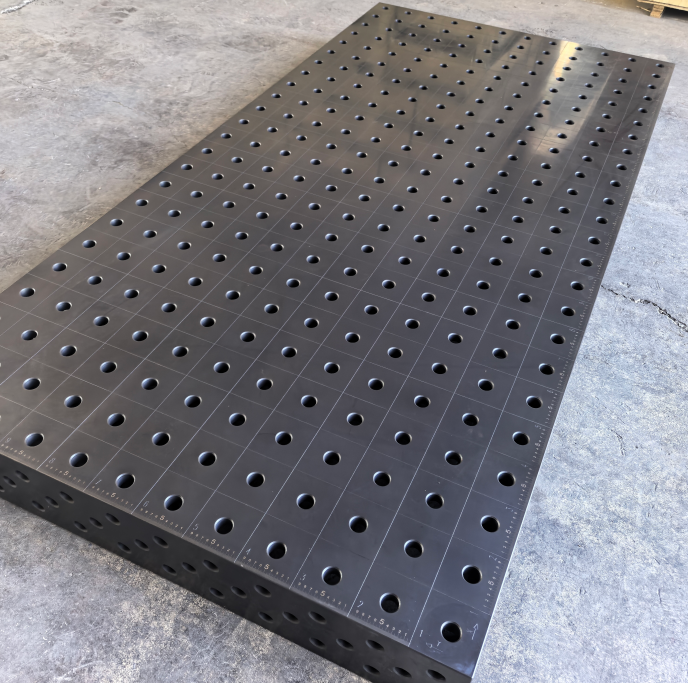
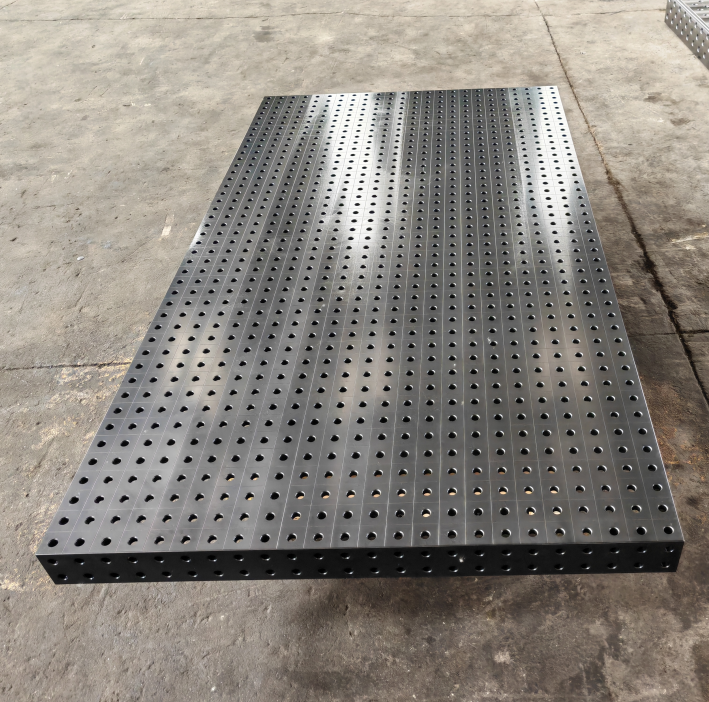
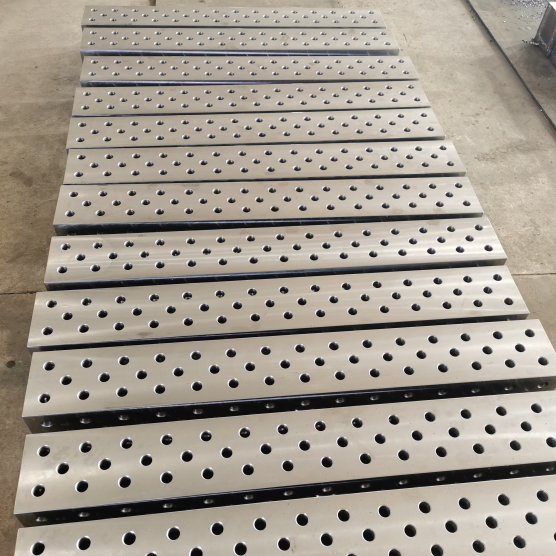
Flexibility is the key driver here. Instead of welding a permanent fixture, operators use a grid table with standardized stops, clamps, and pins. In 2026, these systems have become smarter, with digital readouts ensuring precise placement every time. They are ideal for low-to-medium volume production where part designs change frequently.
The latest iterations include pneumatic and hydraulic actuation built directly into the clamping modules. This reduces the physical strain on operators and speeds up the load/unload cycle. Software libraries allow users to save specific clamping configurations for repeat jobs, recalling them instantly via a touchscreen interface.
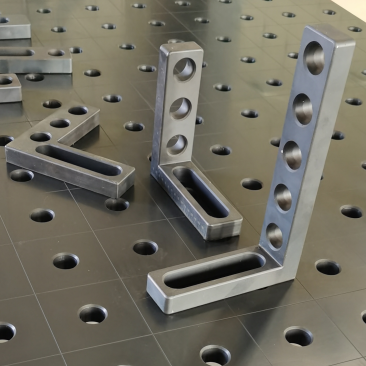
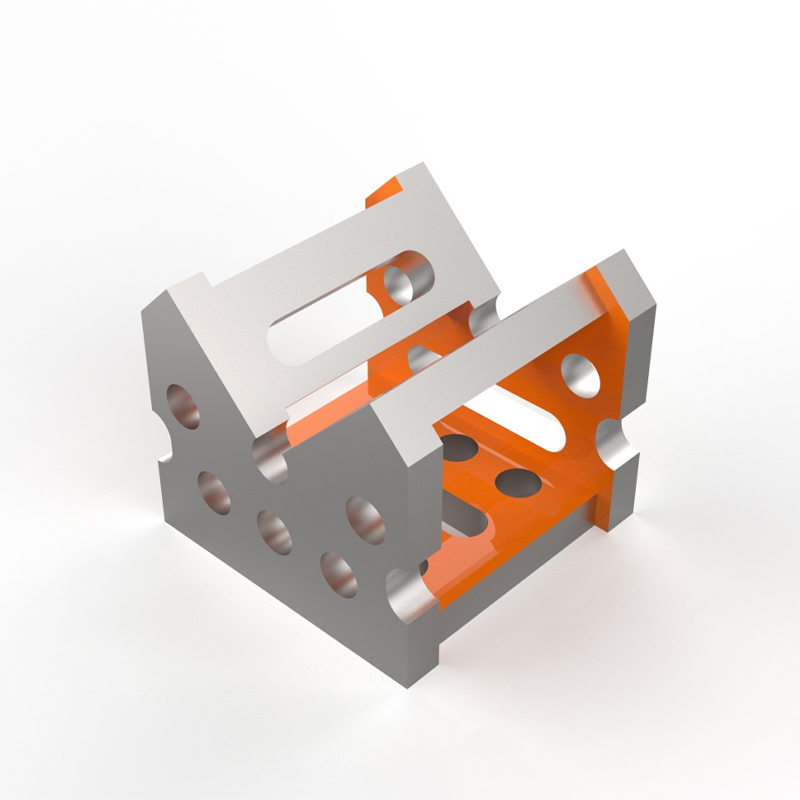
Leading this charge in flexible modularity is Botou Haijun Metal Products Co., Ltd., a specialist in the research, development, and production of high-precision flexible modular fixtures. Their core product line features versatile 2D and 3D flexible welding platforms that have become preferred equipment in the machining, automotive, and aerospace sectors. By integrating complementary components—such as U-shaped and L-shaped multi-purpose square boxes, 200-series support angle irons, and 0-225° universal angle gauges—Haijun’s systems enable rapid workpiece positioning. Furthermore, their professional cast iron 3D welding platforms and angle connection blocks ensure exceptional durability and stability, providing the robust foundation necessary for modern automated cells.
Adaptive Fixturing with Vision Systems
This represents the cutting edge of welding technology. These jigs utilize cameras and lasers to scan the raw parts before clamping. If a part is slightly out of spec due to previous cutting operations, the jig automatically adjusts its holding points to compensate. This closed-loop system ensures the robot always welds the correct seam path.
Such systems are essential for processing stamped or cast components that naturally exhibit variance. By adapting to the part rather than forcing the part to fit the jig, manufacturers significantly reduce setup rejection rates. The initial cost is higher, but the reduction in rework often justifies the expense.
Manual vs. Automated Welding Jigs: A Detailed Comparison
Understanding the trade-offs between traditional manual fixtures and modern automated systems is crucial for making an informed purchasing decision. The following table breaks down the key differences relevant to the 2026 manufacturing landscape.
| Feature | Manual Welding Jigs | Automated Welding Jigs |
| Initial Cost | Low to Moderate | High |
| Setup Time | Slow (Requires manual adjustment) | Fast (Programmable presets) |
| Repeatability | Dependent on operator skill | Extremely High (Micron-level accuracy) |
| Flexibility | Low (Often single-purpose) | High (Quick changeovers) |
| Labor Requirement | High (Skilled fitters needed) | Low (Load/monitor only) |
| Best Use Case | Prototyping and one-offs | Mass production and complex assemblies |
While manual jigs still hold a place in repair shops and prototype labs, the trajectory is clearly toward automation. The ability to store digital recipes for different parts means that switching production lines no longer requires a team of fitters spending hours tweaking bolts and shims.
Key Factors Influencing Welding Jig Prices
When requesting quotes for welding fixturing in 2026, you will notice significant price variations. These are not arbitrary; they are driven by specific engineering and material factors. Understanding these drivers can help you negotiate better terms or optimize your design requirements.
Material Quality: High-end jigs are constructed from stress-relieved steel or aluminum alloys to prevent warping under thermal cycling. Cheaper alternatives may use mild steel that distorts over time, leading to accuracy drift. The cost of premium materials is a major component of the final price tag.
Tolerance Specifications: Holding a tolerance of +/- 1mm is significantly cheaper than holding +/- 0.1mm. As precision requirements tighten, the machining time and inspection protocols increase exponentially. Be realistic about your actual needs; over-specifying tolerances drives up costs without adding value.
Integration Complexity: A standalone jig is cheaper than one that communicates with your factory’s MES (Manufacturing Execution System). Features like RFID tagging for part identification, automatic clamp sequencing, and data logging add software and hardware layers that increase the price but enhance traceability.
Implementation Guide: Steps to Select the Right Jig
Choosing the wrong fixturing strategy can bottleneck your entire production line. Follow this structured approach to ensure you select a solution that aligns with your operational goals and budget constraints.
- Analyze Part Geometry: Review your CAD models to identify critical datums and access points. Determine where the weld seams are located and if internal clamping is possible.
- Calculate Cycle Times: Measure how long current setups take versus potential automated solutions. Include loading, clamping, welding, and unloading times in your analysis.
- Assess Volume Variability: If you run long batches of identical parts, dedicated hard tooling might be best. For high-mix, low-volume work, invest in modular or adaptive systems.
- Evaluate Floor Space: Automated cells often have larger footprints due to safety fencing and robot reach. Ensure your facility can accommodate the new equipment layout.
- Request Demonstrations: Never buy based on brochures alone. Ask vendors to demonstrate the changeover process with a part similar to yours to verify ease of use.
Common Challenges and How to Overcome Them
Even with the best equipment, implementing new welding jigs comes with hurdles. Being aware of these common pitfalls allows teams to prepare mitigation strategies in advance.
Operator Resistance: Skilled welders often view automation as a threat or an unnecessary complication. Involve them early in the selection process. Show them how the jig removes the tedious aspects of fitting and tacking, allowing them to focus on quality oversight.
Maintenance Neglect: Automated jigs have moving parts, sensors, and electronics that require regular care. Dust, spatter, and heat can degrade performance quickly. Establish a strict preventive maintenance schedule to clean lenses, lubricate rails, and check calibration.
Part Variation Issues: If incoming raw materials vary significantly in size or shape, even adaptive jigs may struggle. Work with your supply chain to improve the consistency of cut parts. Better upstream processes reduce the burden on downstream fixturing.
Applications Across Industries
The versatility of modern welding jigs means they are applicable across a wide spectrum of industries. Each sector leverages these tools to solve unique challenges related to scale, safety, and precision.
Automotive Manufacturing
In the automotive sector, speed is everything. Jigs here are designed for rapid cycling, often utilizing pneumatic clamps that engage in seconds. With the rise of electric vehicles, new battery tray assemblies require specialized fixturing that handles thin aluminum sheets without causing distortion.
Heavy Equipment and Construction
Builders of excavators, cranes, and bulldozers deal with massive structural components. Their jigs prioritize rigidity and load-bearing capacity. Rotational positioners are critical here to allow welders to access deep joints on thick plates without needing overhead cranes for every maneuver.
Aerospace and Defense
This industry demands the highest level of traceability and precision. Jigs used in aerospace often include embedded sensors to record clamping forces and temperatures for every unit produced. The focus is on zero-defect manufacturing, where any deviation can ground a fleet.
Frequently Asked Questions (FAQ)
Here are answers to some of the most common questions regarding welding jigs and automated solutions in the current market.
How long does it take to recoup the investment in an automated welding jig?
The payback period varies based on labor rates and production volume. For most shops running two shifts, the ROI is typically achieved within 12 to 18 months. High-volume operations may see returns in as little as 6 months due to drastic reductions in cycle time and scrap.
Can existing manual jigs be upgraded to automation?
In many cases, yes. Modular systems allow you to replace manual clamps with powered actuators. However, the base structure must be rigid enough to handle the dynamic forces of automated movement. Consult with a fixture engineer to assess retrofit feasibility.
Do automated jigs require specialized programming skills?
Modern interfaces are increasingly user-friendly. Many systems use graphical touchscreens where operators can drag and drop clamping points. While basic troubleshooting skills are needed, deep coding knowledge is generally not required for daily operation.
What maintenance is required for welding jigs?
Daily cleaning to remove spatter is essential. Weekly checks should include verifying clamp pressure and inspecting wear pads. Monthly calibration ensures the geometric accuracy remains within tolerance. Lubrication schedules depend on the specific manufacturer’s guidelines.
Future Outlook: What’s Next for Welding Fixturing?
Looking beyond 2026, the convergence of AI and robotics will further redefine welding jigs. We anticipate the rise of self-learning fixtures that analyze historical weld data to suggest optimal clamping strategies for new parts. Augmented Reality (AR) glasses may soon guide operators through complex setup procedures, overlaying digital instructions directly onto the physical jig.
Sustainability will also play a larger role. Future designs will focus on energy-efficient actuators and recyclable materials. The modularity trend will accelerate, reducing the need to scrap entire fixtures when product lines change. The goal is a circular economy for manufacturing tooling.
Conclusion and Strategic Recommendations
The landscape of welding jigs in 2026 is defined by a clear shift toward automation, modularity, and intelligence. While manual solutions still serve a purpose for prototyping, the competitive advantage lies in adopting systems that enhance repeatability and reduce reliance on scarce skilled labor. Prices reflect these capabilities, but the long-term operational savings are substantial.
Who should invest now? Manufacturers facing labor shortages, those dealing with high part variability, and companies aiming to scale production without expanding their workforce are prime candidates. If your current process relies heavily on manual tacking and fit-up, the time to evaluate automated solutions is today.
Next Steps: Begin by auditing your current fixturing inefficiencies. Identify the bottlenecks in your workflow where setup time eats into arc-on time. Reach out to reputable vendors for demonstrations tailored to your specific parts. Investing in the right welding jig technology is not just a purchase; it is a strategic move to future-proof your fabrication capabilities.