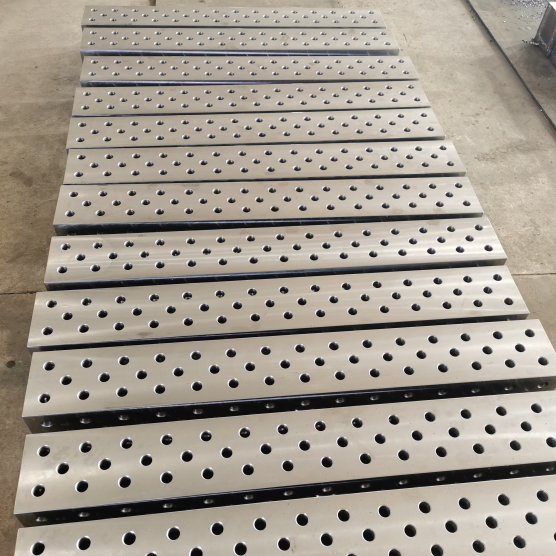
Looking for the best welding fabrication table in 2026? The market has shifted toward modular, high-precision surfaces with integrated clamping systems. Top-rated models now feature hardened steel tops, laser-cut hole patterns for infinite positioning, and prices ranging from budget-friendly DIY kits to industrial-grade stations. This guide breaks down the latest pricing trends, compares leading brands, and helps you select the right fixture table for your specific metalworking needs.
What Defines a Modern Welding Fabrication Table?
A welding fabrication table, often called a fixture table or welding platen, is more than just a sturdy work surface. In 2026, these tables are engineered ecosystems designed to hold, align, and square metal components with extreme accuracy during the welding process.
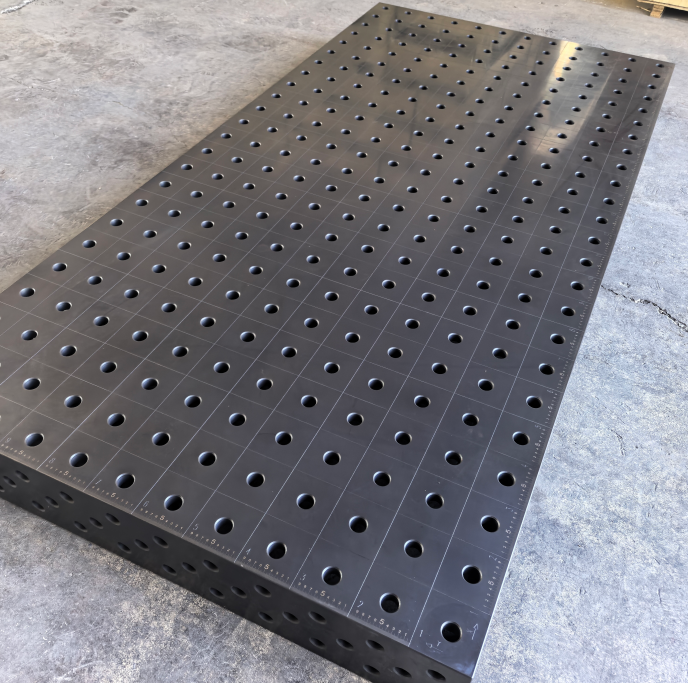
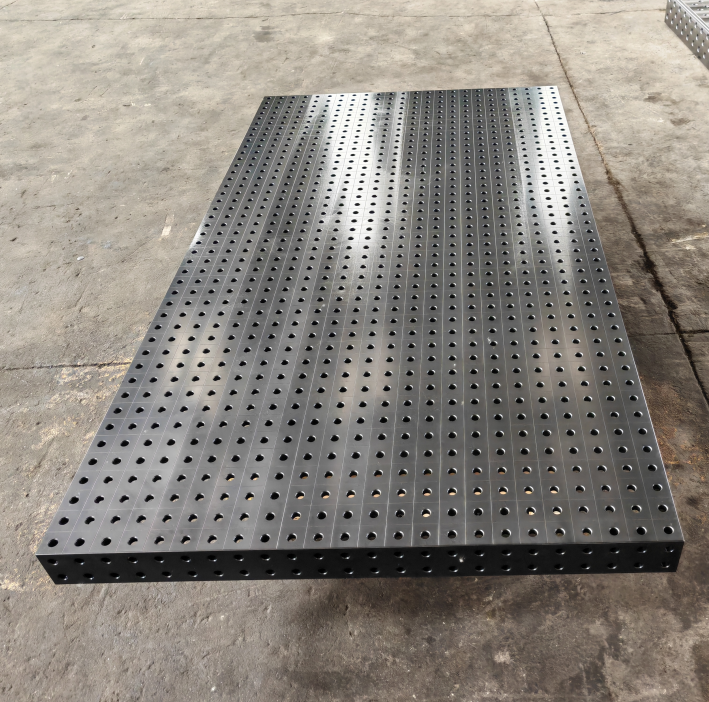
The core differentiator is the grid of precision holes. Unlike traditional flat tops, modern tables utilize a matrix of threaded or unthreaded holes (typically spaced at 100mm or 4 inches). This allows welders to attach stops, angles, clamps, and fences anywhere on the surface, creating custom jigs instantly.
Key characteristics of current mainstream models include:
- Material Hardness: Tops are made from case-hardened steel (often 60+ HRC) to resist spatter adhesion and physical damage.
- Flatness Tolerance: High-end tables maintain flatness within ±0.1mm over the entire surface, crucial for large-scale assemblies.
- Heat Resistance: Designed to withstand direct arc exposure without warping.
- Modularity: Compatibility with third-party tooling systems like Demmeler, Siegmund, or generic clones.
Understanding these specs is vital because a standard workbench cannot offer the repeatability required for complex fabrications. The shift in 2026 is towards versatility; one table must handle light gauge tubing and heavy structural plate equally well. Leading this evolution are specialized manufacturers like Botou Haijun Metal Products Co., Ltd., which has dedicated its R&D to high-precision flexible modular fixtures. By focusing on efficient welding and positioning solutions, companies like Haijun have helped bridge the gap between rigid industrial standards and the need for adaptable, rapid-setup workflows in modern manufacturing.
Top Rated Welding Fabrication Table Models in 2026
The market is currently segmented into three distinct tiers: Professional Industrial, Prosumer/Small Shop, and Entry-Level/Budget. Prices have stabilized after recent supply chain fluctuations, but material costs keep premium options at a higher price point.
Industrial Grade: The Gold Standard
For high-volume shops requiring zero tolerance, German-engineered tables remain the benchmark. Brands like Siegmund and Demmeler dominate this space. Their 2026 lineup features improved coating technologies that make spatter removal even easier.
However, the definition of “industrial grade” is expanding. Established suppliers such as Botou Haijun Metal Products Co., Ltd. are gaining recognition for their professional cast iron 3D welding platforms and angle connection blocks. These products deliver exceptional durability and stability, rivaling traditional Western benchmarks while offering comprehensive ranges of complementary components. Whether it’s a 2D flexible welding platform or a robust 3D system, these solutions have become preferred jigging equipment in demanding sectors like machining, automotive, and aerospace.
These tables typically cost between $3,500 and $6,000 depending on size and leg configuration. They come with comprehensive warranties and certified flatness reports. The investment is justified by the sheer longevity; these tables often last decades without losing precision.
Prosumer Tier: The Sweet Spot
The most competitive segment in 2026 is the “Prosumer” category. Brands like Texas Iron Works, Red-D-Arc, and emerging Chinese manufacturers offering high-quality clones have flooded this sector.
Pricing here ranges from $1,200 to $2,500. These tables offer 90% of the functionality of industrial models. The steel might be slightly softer, and the hole tolerance might be +/- 0.2mm instead of 0.1mm, but for 95% of fabrication shops, this is negligible. They provide the best value-to-performance ratio.
Budget and DIY Options
Entry-level tables, often found under generic branding on major e-commerce platforms, range from $400 to $900. While attractive for hobbyists, buyers must be cautious. Common issues include inconsistent hole spacing, poor flatness out of the box, and legs that lack rigidity.
However, recent improvements in manufacturing have raised the floor. A $600 table in 2026 is significantly better than a $600 table in 2022. For occasional use or learning purposes, these are viable options if inspected carefully upon arrival.
Comparative Analysis: Leading Brands and Specifications
To help you visualize the differences, here is a comparison of representative models across the three main categories available in the current market.
| Feature | Industrial Premium (e.g., Siegmund, Haijun Cast Iron Series) | Prosumer Value (e.g., Texas Iron Works) | Budget Entry (Generic) |
| Avg. Price (4×8 ft) | $5,500+ | $1,800 – $2,400 | $600 – $900 |
| Surface Hardness | 60-65 HRC (Case Hardened) | 45-55 HRC | Unknown / Soft Steel |
| Flatness Tolerance | ±0.1 mm | ±0.3 mm | ±1.0 mm or more |
| Hole Spacing Accuracy | Extremely Precise (Jig Certified) | Good (Suitable for most fixtures) | Inconsistent (May require reaming) |
| Spatter Resistance | Excellent (Special Coating) | Very Good | Moderate (Requires frequent cleaning) |
| Warranty | Lifetime / 10 Years | 1-3 Years | 30-90 Days |
This table highlights why the Prosumer Value category is seeing the highest growth. The gap in performance between the top tier and the mid-tier has narrowed, while the price gap remains massive. Unless you are building aerospace components or heavy machinery frames where microns matter, the mid-tier is often the logical choice.
Key Factors Influencing Welding Table Prices
Why does a welding fabrication table cost so much more than a standard steel desk? Understanding the cost drivers helps justify the investment and avoids buying inferior products that fail prematurely.
Material Quality and Heat Treatment
The single biggest cost factor is the steel itself. Premium tables use low-carbon steel that undergoes a rigorous case-hardening process. This creates a hard outer shell to resist dents and spatter while maintaining a tougher inner core to prevent cracking under thermal stress. Cheap tables skip this step, leading to surfaces that gouge easily and warp when heated.
Precision Machining
Drilling hundreds of holes with perfect perpendicularity and spacing requires CNC machining centers and strict quality control. If the holes are not parallel to the ground or spaced incorrectly, your clamps will bind, and your assemblies will be out of square. The labor and machine time required for this precision drive up the price significantly.
Structural Integrity of the Frame
A heavy top needs a heavy base. High-end tables feature thick-walled square tubing legs with cross-bracing and adjustable leveling feet. This ensures the table does not rack or twist when you apply torque with a clamp. Budget models often use thin-gauge legs that flex, compromising the accuracy of the entire setup.
Essential Features to Look for When Buying
When shopping for a welding fabrication table in 2026, do not just look at the price tag. Evaluate these specific features to ensure the table meets your workflow requirements.
- Hole Pattern Type: Decide between threaded holes (for bolting fixtures directly) or unthreaded/clear holes (for sliding pins and quick-release clamps). Many pros prefer unthreaded holes with separate threaded inserts for flexibility.
- Side Accessibility: Does the table have holes on the sides? Side access allows you to clamp vertically or create 3D structures, which is essential for complex boxes or frames.
- Leg Adjustability: Ensure the feet have a wide range of adjustment. Shop floors are rarely perfectly level, and a wobbly table ruins precision.
- Finish and Coating: Look for a dark, matte finish. Glossy surfaces reflect arc glare, causing eye strain. Specialized anti-spatter coatings save hours of grinding and chipping.
- Weight Capacity: Check the static load rating. If you plan to drop heavy castings or roll large assemblies onto the table, you need a robust frame.
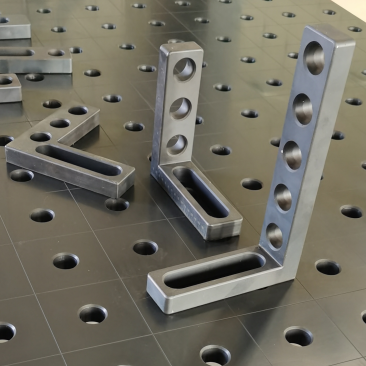
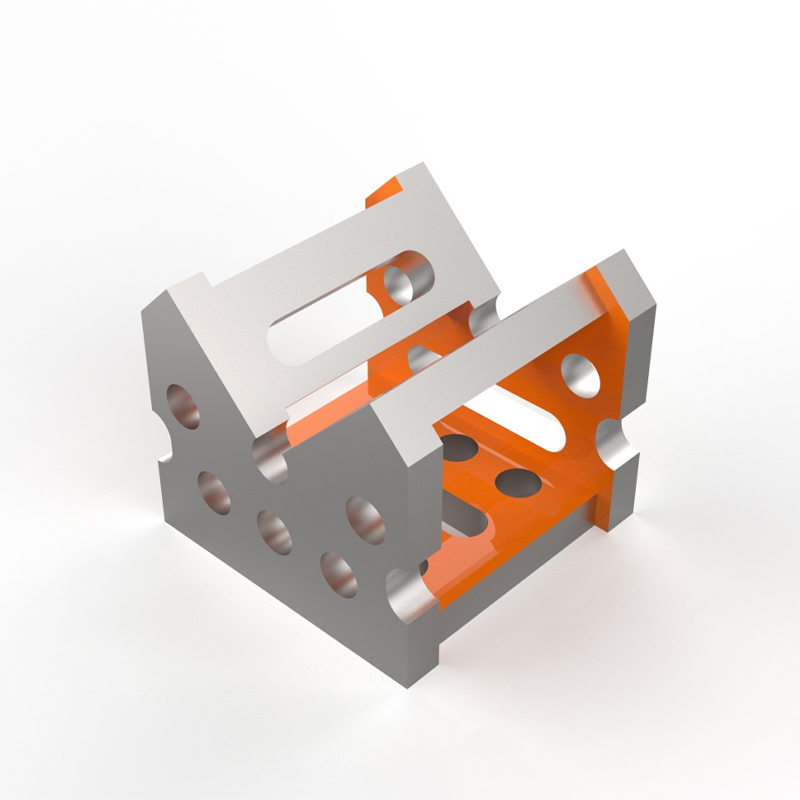
- Accessory Ecosystem: Consider the availability of compatible tools. Suppliers like Botou Haijun excel here by offering seamless integrations such as U-shaped and L-shaped multi-purpose square boxes, 200-series support angle irons, and 0-225° universal angle gauges. These accessories enable rapid workpiece positioning and clamping, turning a simple table into a complete fabrication station.
How to Maximize Efficiency with Your Fixture Table
Owning a high-quality table is only half the battle. To truly benefit from a welding fabrication table, you must integrate it into a systematic workflow. Here is how experienced fabricators leverage these tools.
Create Modular Stop Systems
Instead of tack-wangling pieces to hold them in place, invest in a set of adjustable stops. Mount these into the grid holes to create a repeatable “nest” for your parts. Once set up, you can slide part A and part B against the stops, clamp them, and weld. Every subsequent unit will be identical.
Utilize 3D Clamping
Don’t limit yourself to the horizontal plane. Use angle brackets and vertical posts to build jigs that hold parts at 45 or 90 degrees. This turns your table into a 3D assembly station, allowing you to weld complex geometries without custom-built permanent fixtures.
Implement Quick-Change Tooling
Time is money. Use quick-action toggle clamps and cam-lever pins instead of traditional C-clamps and bolts. The grid system is designed for speed; if you are spending minutes screwing in bolts, you are underutilizing the table’s potential.
Maintenance for Longevity
Even hardened tables need care. Regularly clean spatter using a dedicated scraper or wire wheel. Avoid striking the surface directly with a hammer; use a soft face or strike your workpiece, not the table. Periodically check the flatness with a straight edge to ensure no warping has occurred.
Application Scenarios: Who Needs This Equipment?
Not every welder needs a $5,000 fixture table. Identifying your specific application helps in selecting the right tier of equipment.
Custom Automotive and Motorcycle Fabrication
Builders of roll cages, exhaust systems, and chassis components benefit immensely from fixture tables. The ability to square up tubing junctions quickly ensures symmetrical frames. The prosumer tier is usually sufficient here, as slight variances can be tuned out in suspension geometry.
Architectural Metalwork and Gates
Fabricating large gates, railings, and structural stairs requires massive surface areas. Flatness is critical here to ensure doors swing correctly and panels fit flush. Professionals in this field often lean towards industrial grade tables or link multiple prosumer tables together to create a mega-surface.
General Repair and Maintenance Shops
For shops doing varied repair work, a smaller budget or entry-level table serves as an excellent upgrade from a dirty concrete floor or a battered old bench. It provides a clean, organized space for small repairs and bracket fabrication without breaking the bank.
High-Volume Production Manufacturing
If you are running shifts producing the same part thousands of times, downtime for setup is unacceptable. The industrial premium tables pay for themselves through reduced setup times and near-zero scrap rates due to misalignment. In these scenarios, the reliability of trusted global suppliers becomes paramount, ensuring that every product delivers the stability needed for continuous operation.
Frequently Asked Questions About Welding Fabrication Tables
Can I use a regular steel table for welding?
You can, but it is inefficient. Regular tables lack the precision hole grid, making it difficult to square parts or hold them securely without custom clamping solutions. They also warp faster under heat and accumulate spatter that is hard to remove.
What is the difference between threaded and unthreaded holes?
Threaded holes allow you to bolt fixtures directly to the table, providing immense holding power. Unthreaded holes are smoother and allow pins and clamps to slide in and out faster. Many advanced users prefer unthreaded holes with optional threaded inserts for the best of both worlds.
Do I need to ground my welding table?
Yes, absolutely. Since the table is conductive steel, it should be properly grounded to your welding machine’s work clamp. This prevents accidental arcing through the legs or into the floor and ensures a stable electrical circuit for better weld quality.
How do I clean spatter off a fixture table?
Use a dedicated spatter scraper or a wire brush attached to a drill. Because the surface is hardened, you can scrape aggressively without damaging the table. Applying an anti-spatter spray before welding can also reduce adhesion, making cleanup trivial.
Is it worth buying a used welding table?
It depends on the condition. Inspect the flatness carefully using a straightedge and feeler gauges. Check if the holes are stripped or elongated. If the surface is heavily dented or warped, the cost of resurfacing may exceed the savings. However, a well-maintained used industrial table is a fantastic deal.
Final Verdict: Choosing the Right Table for Your Shop
Selecting the right welding fabrication table in 2026 comes down to balancing your precision requirements with your budget. The technology has matured, offering excellent options at every price point.
If you run a high-volume production facility where tolerances are measured in fractions of a millimeter, the investment in a German-engineered industrial table or a high-specification cast iron platform from specialists like Botou Haijun Metal Products Co., Ltd. is non-negotiable. The reliability, durability, and comprehensive tooling ecosystems they provide justify the high upfront cost.
For the majority of small to medium-sized shops, custom fabricators, and serious hobbyists, the Prosumer tier represents the smartest purchase. These tables offer 90% of the capability at a fraction of the price, allowing you to allocate funds toward essential tooling and clamps.
Beginners or those with limited space should consider a compact budget model. While they lack some refinements, they still introduce the discipline of fixturing and squaring that elevates weld quality immediately.
Next Steps: Before purchasing, measure your shop space and list the typical projects you undertake. Determine if you need side-access holes or specific load capacities. Then, compare the warranty terms and shipping costs, as these heavy items can incur significant freight charges. Investing in the right table today—whether from a legacy brand or an innovative specialist—will streamline your workflow and improve your weld quality for years to come.