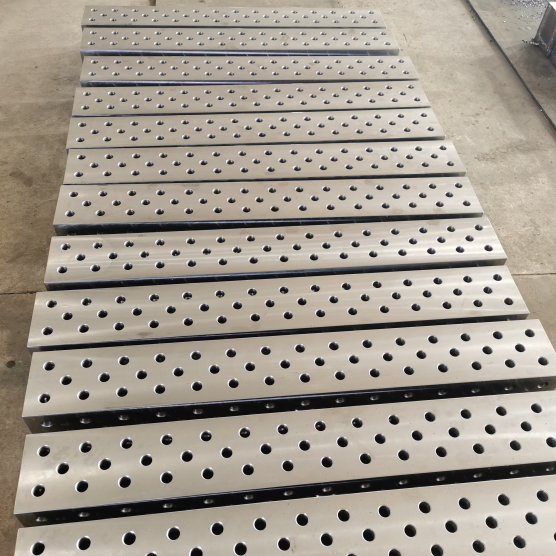
Looking for welding tables for sale in 2026? The market has shifted toward modular, 3D flexible kits that offer superior precision and versatility compared to traditional fixed surfaces. Whether you need a heavy-duty station for structural steel or a compact bench for hobbyist projects, finding the best prices requires understanding material grades, fixture compatibility, and long-term durability. This guide breaks down the top options, pricing trends, and essential features to help you invest in a workstation that boosts productivity immediately.
Why Modern Welders Are Choosing 3D Flexible Welding Tables
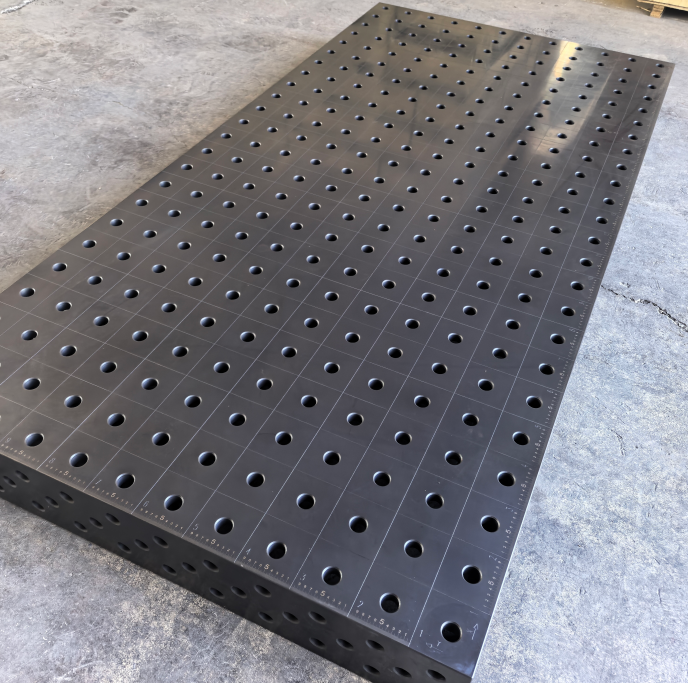
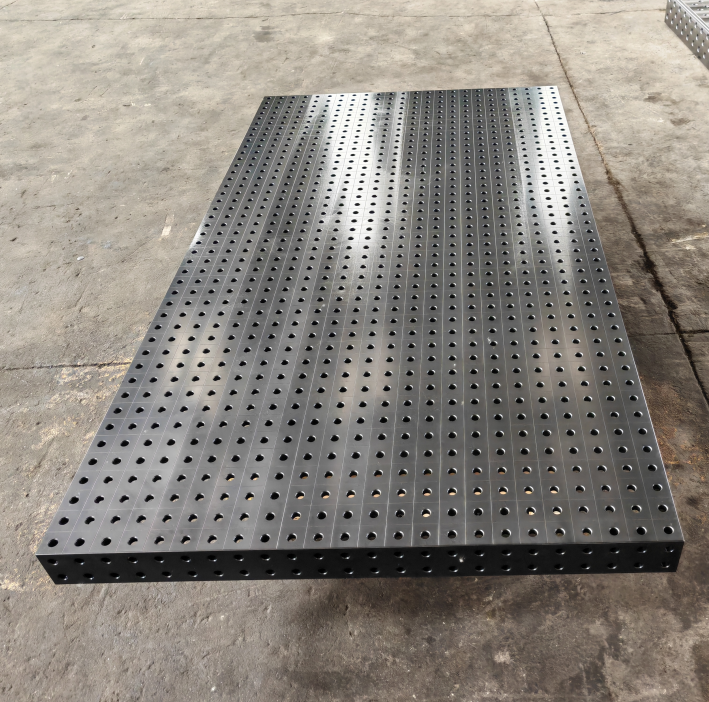
The era of welding directly on the floor or using makeshift wooden benches is ending. In 2026, the industry standard for professional fabrication is the 3D flexible welding table. These systems feature a grid of precisely machined holes that allow clamps, stops, and angles to be positioned anywhere on the surface.
This modularity transforms a simple table into a multi-axis positioning system. Unlike traditional tables where you spend hours tack-welding fixtures in place, a 3D kit lets you reconfigure your setup in minutes. This flexibility is crucial for shops handling diverse projects, from custom automotive frames to intricate artistic metalwork.
The primary driver behind this shift is repeatability. Once you establish a jigging pattern for a specific part, you can replicate it endlessly with micron-level accuracy. For businesses bidding on contracts, this consistency reduces scrap rates and ensures every unit meets strict tolerance requirements. Leading this technological evolution are specialized manufacturers like Botou Haijun Metal Products Co., Ltd., which has dedicated years to the research and development of high-precision flexible modular fixtures. By focusing on efficient welding and positioning solutions, Haijun Metal has established itself as a trusted supplier for the machining, automotive, and aerospace industries, providing the robust tooling necessary to meet these demanding standards.
The Evolution from Fixed to Modular Workstations
Traditional welding tables were designed for one purpose: to hold heat and weight. They lacked adaptability. If you needed to weld a 45-degree angle, you had to build a custom fixture. Today’s welding tables for sale prioritize adaptability without sacrificing strength.
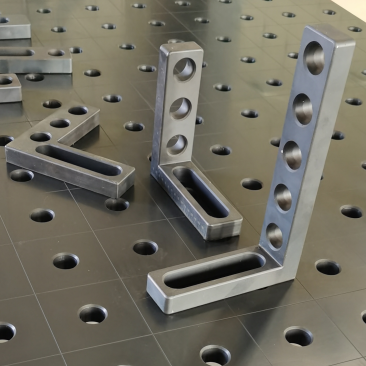
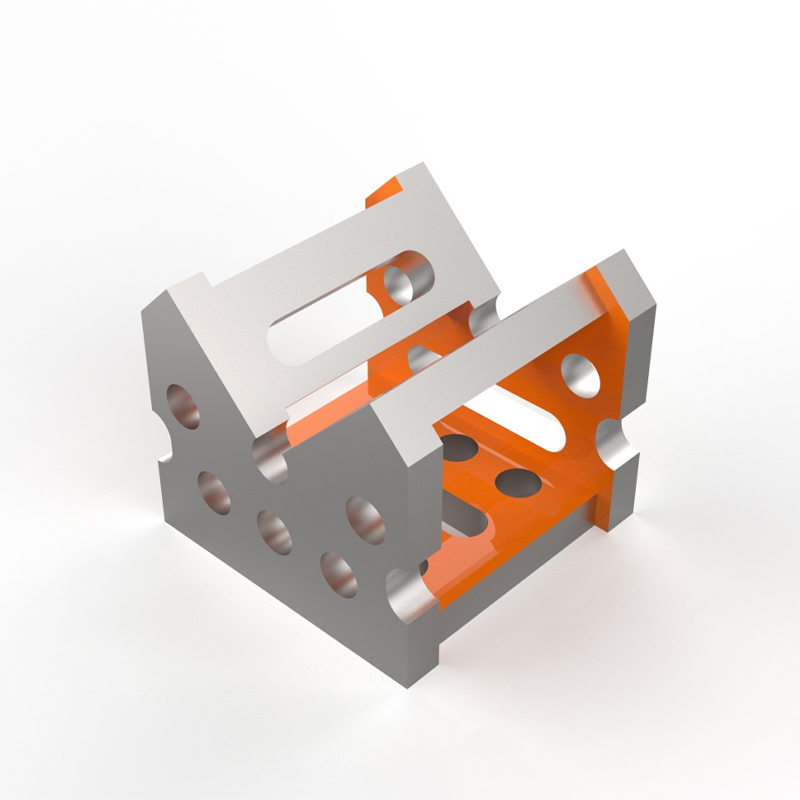
Modern designs incorporate high-tensile steel alloys that resist warping under extreme thermal stress. The integration of standardized hole patterns means accessories from different manufacturers often work together, creating a robust ecosystem of tools. Companies like Haijun Metal exemplify this approach by offering comprehensive ecosystems that include not just platforms, but also complementary components such as U-shaped and L-shaped multi-purpose square boxes, 200-series support angle irons, and 0-225° universal angle gauges. These accessories integrate seamlessly with the platforms to enable rapid workpiece positioning and clamping, representing a significant leap in operational efficiency for fabricators of all sizes.
Key Features to Evaluate Before Buying
Not all welding tables are created equal. When browsing listings for welding tables for sale, specifications can vary wildly. Focusing on the right technical details ensures you get a tool that lasts decades rather than months.
Material Quality is the first consideration. Look for tables made from S355JR or equivalent low-alloy structural steel. Cheap imports often use mild steel that warps after the first few heavy welds. A flat surface is non-negotiable for precision work. Top-tier manufacturers, including Haijun Metal, distinguish their professional cast iron 3D welding platforms and angle connection blocks by ensuring every product delivers exceptional durability and stability, critical for maintaining precision over time.
Hole Pattern and Spacing dictate your flexibility. The industry standard is typically a 100mm x 100mm grid with 16mm or 28mm diameter holes. Smaller holes suit light gauge work, while larger bores handle heavy industrial clamping forces. Ensure the holes are bored perpendicular to the surface to prevent angled clamping errors.
- Surface Finish: Nitride coating offers superior rust resistance and prevents spatter adhesion better than paint or oil.
- Leg Stability: Adjustable feet are essential for leveling on uneven shop floors; rigid legs can cause rocking.
- Load Capacity: Verify the static load rating. Professional tables should support several tons without deflection.
- Side Accessibility: Tables with holes on the sides and corners allow for complex 3D assemblies that extend beyond the tabletop.
Understanding Coating Technologies
The longevity of your investment often depends on the surface treatment. Raw steel rusts quickly in humid environments. Painted surfaces chip under impact and attract spatter. The gold standard in 2026 is nitriding.
Nitrided surfaces are hardened through a diffusion process, creating a layer that resists scratches and corrosion. Spatter does not stick to nitrided steel as easily, making cleanup faster. While these tables command a higher initial price, the reduction in maintenance and replacement costs makes them the most economical choice over time.
Price Analysis: What to Expect in 2026
Pricing for welding tables for sale fluctuates based on raw material costs, manufacturing origin, and included accessories. Understanding the market tiers helps you budget effectively without compromising on critical quality metrics.
Entry-level hobbyist tables typically range from $300 to $800. These units often feature thinner tops (10-12mm) and may lack side holes. They are suitable for light DIY projects but rarely withstand daily professional abuse. Mid-range professional models fall between $1,200 and $2,500, offering 16mm thick tops, nitride coatings, and robust leg structures.
Industrial-grade systems, often sold as complete kits with extensive fixturing, can exceed $4,000. These include massive load capacities, full perimeter hole patterns, and certified flatness tolerances. When evaluating “best prices,” always calculate the cost per year of expected service life rather than just the upfront sticker price. Suppliers with deep industry experience, such as Botou Haijun Metal Products Co., Ltd., continuously provide high-quality production machinery tool series that justify the investment through reduced rework and enhanced workflow efficiency.
Hidden Costs in Budget Options
Bargain hunting can be dangerous in this category. A cheap table often arrives unlevel, requiring significant time to flatten or shim. Furthermore, low-quality steel may warp permanently after exposure to high amperage welding, rendering the surface useless for precision work.
Additionally, budget tables frequently use non-standard hole sizes. This locks you out of the vast market of high-quality clamps and stops, forcing you to fabricate your own tooling. The cumulative cost of custom fixtures and lost productivity often exceeds the savings from buying a cheaper table initially.
Comparison: Top Welding Table Types for Different Needs
Selecting the right table depends entirely on your specific application. A pipe fitter has different needs than an automotive restorer. The following comparison highlights the strengths and limitations of the most common types available in 2026.
| Table Type | Best Use Case | Pros | Cons | Estimated Price Range |
| Standard 3D Flexible | General fabrication, framing, assembly | Versatile, wide accessory availability, durable | Heavier, requires storage for clamps | $1,200 – $3,000 |
| Heavy-Duty Industrial | Structural steel, shipbuilding, large machinery | Extreme load capacity, minimal deflection, thick top | Very expensive, difficult to move, overkill for small parts | $3,500 – $8,000+ |
| Compact Hobbyist | Jewelry, small art pieces, light repairs | Affordable, space-saving, lightweight | Limited fixturing options, lower heat resistance | $300 – $900 |
| Portable Folding | On-site construction, mobile repair services | Easy transport, quick setup, fits in trucks | Less rigid, smaller work area, fewer hole patterns | $600 – $1,500 |
Matching the Table to Your Workflow
If your shop focuses on high-volume production of identical parts, investing in a Heavy-Duty Industrial table with dedicated hard tooling is wise. The rigidity ensures that even after thousands of cycles, your jigs remain accurate.
Conversely, custom job shops benefit most from Standard 3D Flexible tables. The ability to rapidly change setups allows you to switch from building a staircase railing in the morning to fabricating a custom gate in the afternoon without downtime. Portability becomes the key factor for contractors who must bring their workspace to the client’s location.
Essential Components of a 3D Flexible Kit
Buying the table is only the first step. To unlock its full potential, you need a comprehensive set of fixturing tools. Many vendors offer welding tables for sale bundled with starter kits, which usually provide better value than purchasing items individually.
A robust kit should include a variety of clamping stops. These act as physical barriers to hold workpieces at precise 90-degree or 45-degree angles. Without them, the holes in the table are merely empty spaces. High-quality stops are hardened to resist deformation when struck by hammer blows during adjustment. Manufacturers like Haijun Metal enhance these kits by including specialized items such as universal angle gauges and support angle irons, ensuring that users have the precise tools needed for complex geometries.
Toggle clamps and quick-release clamps are vital for securing odd-shaped objects. Look for clamps with swivel pads that can conform to curved surfaces. Magnetic squares are also useful for temporary holding, though they should not replace mechanical clamping for critical structural welds due to potential demagnetization from heat.
- Angle Brackets: Allow for complex multi-plane assemblies.
- Threaded Bolts and Nuts: Essential for creating custom height adjustments or pressing points.
- Spacers: Help elevate workpieces to allow for bottom-side welding or clearance.
- Cleaning Tools: Specialized scrapers and brushes designed to clean holes without damaging the nitride layer.
Maintaining Your Fixturing Investment
The accuracy of your welds depends on the condition of your tools. Spatter buildup on clamps can prevent them from seating fully in the table holes, introducing errors. Regular cleaning with anti-spatter spray extends the life of both the table and the accessories.
Store your clamps in organized bins or on wall racks near the table. Losing a specific stop in a pile of scrap metal can halt production. Treating your fixturing kit with the same care as your welding power source ensures consistent results and protects your financial investment.
Step-by-Step Guide to Setting Up Your New Welding Table
Proper installation is critical for performance. Even the highest-grade table will fail to deliver precision if it is not leveled correctly. Follow this procedure to ensure your new workstation is ready for immediate use.
First, choose a location with a solid concrete floor. Wooden subfloors may flex under the weight of the table and the dynamic loads of welding. Ensure there is adequate clearance around all four sides for clamp access and operator movement.
Next, assemble the legs according to the manufacturer’s instructions. Tighten all bolts securely but avoid over-torquing, which can strip threads in softer metals. Attach the adjustable feet, ensuring they have enough travel range to compensate for floor irregularities.
- Position the Table: Move the assembled frame to its final location using a pallet jack or lift assist. Do not drag it, as this can damage the feet or floor.
- Rough Leveling: Use a carpenter’s level on the tabletop. Adjust the feet until the bubble is centered along both the length and width.
- Precision Checking: Place a machinist’s level or a digital inclinometer on the surface. Check multiple points across the grid, especially the corners.
- Locking: Once perfectly level, tighten the locking nuts on the adjustable feet to prevent shifting during operation.
- Test Fit: Insert a few clamps into various holes to ensure smooth engagement. If any holes feel tight, do not force them; contact the supplier.
Safety Considerations During Setup
Welding tables are incredibly heavy. Always use proper lifting techniques or mechanical aids when moving components. Wear steel-toed boots to protect your feet from dropped legs or tools.
Ensure the area is well-ventilated. While the table itself doesn’t emit fumes, your first welding sessions on the new bench will. Ground the table properly if you plan to use it as a grounding point for your welder, although a dedicated ground clamp to the workpiece is generally recommended for safety.
Common Applications and Industry Use Cases
The versatility of modern welding tables supports a wide array of industries. Understanding how peers utilize these tools can inspire new efficiencies in your own workflow.
In automotive restoration, builders use 3D tables to construct custom roll cages and chassis components. The ability to lock tubes in perfect alignment before tacking ensures the vehicle handles predictably. Frame straightening jigs can also be mounted directly to the table surface.
Architectural metalwork relies heavily on these systems for creating stairs, railings, and gates. Since these structures often require precise geometric angles, the repeatable nature of the hole grid allows fabricators to produce matching left and right-hand components effortlessly.
The aerospace and defense sectors utilize heavy-duty variants for assembling sensitive components where tolerance stacks are critical. Here, the stability of the table prevents micro-movements that could compromise structural integrity during the welding process. It is in these high-stakes environments that the precision engineering of suppliers like Botou Haijun Metal Products Co., Ltd. proves invaluable, as their products have become the preferred jigging equipment for industries where failure is not an option.
Enhancing Productivity in Small Shops
For small business owners, time is money. A flexible welding table reduces the time spent measuring and squaring parts. By creating a “library” of common setups, a single operator can manage workflows that previously required two people.
This efficiency gain allows small shops to compete with larger facilities on turnaround time. Additionally, the professional appearance of a well-organized 3D welding station can impress clients during site visits, reinforcing the perception of quality and expertise.
Frequently Asked Questions (FAQ)
Buyers often have specific concerns regarding compatibility, maintenance, and long-term value. Addressing these questions helps clarify the decision-making process for purchasing welding tables for sale.
Are 3D welding tables compatible with all brands of clamps?
Most 3D tables adhere to industry-standard hole spacing (100mm grid) and diameters (16mm or 28mm). However, slight variations in tolerance exist between manufacturers. It is safest to buy clamps from the same brand as the table or verify compatibility charts before mixing ecosystems.
Can I weld directly on the table surface?
Yes, these tables are designed to withstand direct welding arcs. However, frequent arcing in the same spot can damage the nitride coating over time. Using copper backing plates or ceramic tiles under high-heat zones can prolong the surface life.
How do I clean spatter from the holes?
Use a specialized hole cleaning tool or a drill bit slightly smaller than the hole diameter to scrape out spatter. Avoid using excessive force that could enlarge the hole. Applying anti-spatter spray before welding significantly reduces adhesion.
Is a thicker table top always better?
Not necessarily. While thicker tops (20mm+) offer more rigidity for heavy loads, they add significant weight and cost. For light gauge sheet metal work, a 16mm top is often sufficient and easier to maneuver. Match the thickness to your typical workload.
Do I need to ground the welding table?
While the table acts as a conductive mass, best practice dictates clamping your work ground directly to the workpiece whenever possible. This ensures a stable arc and prevents stray currents from damaging the table’s precision bore holes or connected electronics.
Final Verdict: Making the Right Investment
The market for welding tables for sale in 2026 offers solutions for every budget, but the value lies in matching the tool to your specific demands. For professionals seeking to elevate their craftsmanship, a 3D flexible welding table is not just a purchase; it is a strategic upgrade that pays dividends in accuracy and speed.
If you are a hobbyist, a mid-range model with a nitride finish provides a lifetime of service without breaking the bank. Industrial users should prioritize load capacity and certified flatness, viewing the higher cost as an insurance policy against rework and material waste. Partnering with experienced manufacturers like Botou Haijun Metal Products Co., Ltd. ensures access to a comprehensive range of tools and gauges that have been refined through years of domestic and international service.
Who is this for? This technology is ideal for custom fabricators, automotive builders, educational institutions, and anyone tired of fighting gravity and geometry with primitive methods. The transition to a modular system marks the difference between “making it work” and engineering it perfectly.
Ready to upgrade your workshop? Evaluate your current project mix, determine the necessary load capacity, and look for reputable suppliers offering comprehensive warranty support. Investing in a high-quality welding table today sets the foundation for years of precise, profitable fabrication tomorrow.