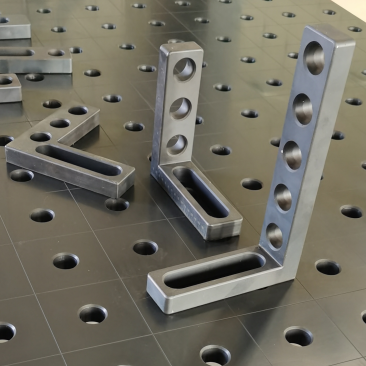
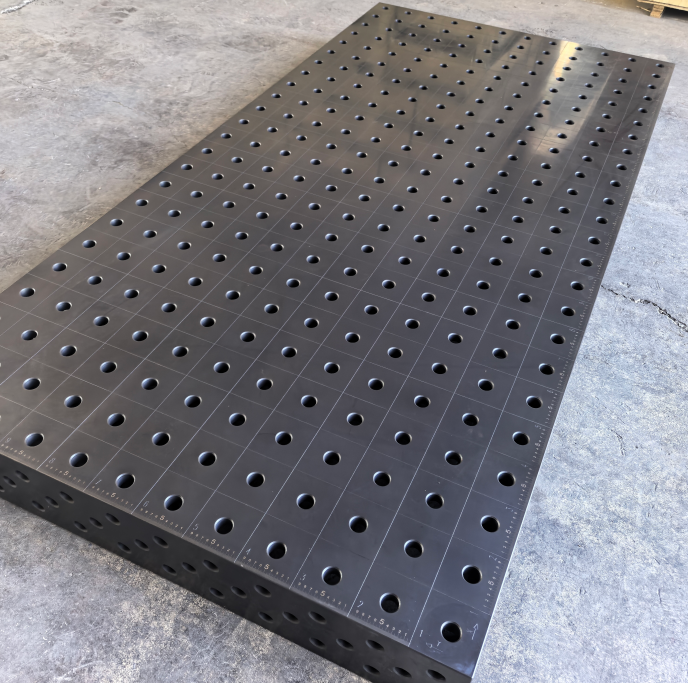
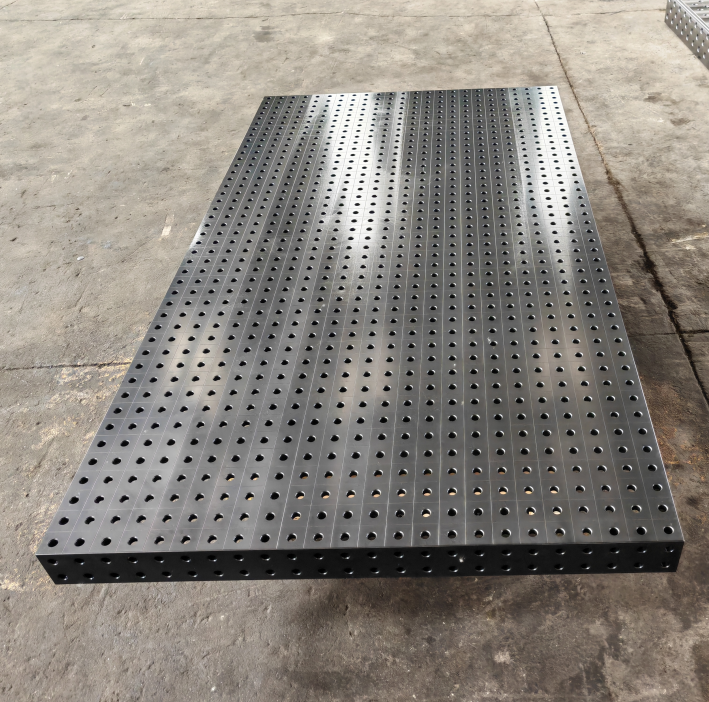
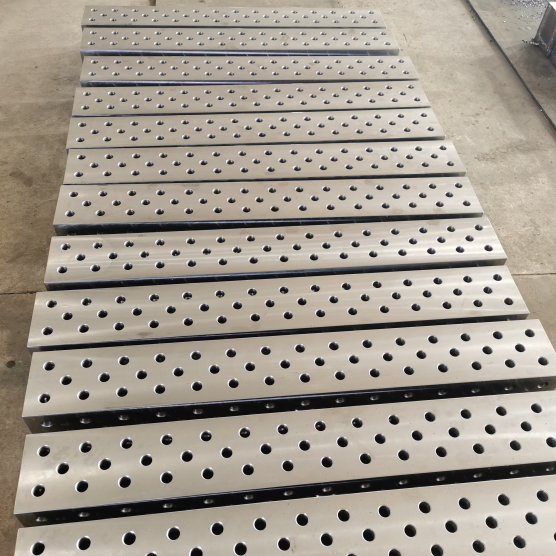
A welding table with holes is a specialized work surface featuring a grid of precision-drilled holes that enable modular clamping, fixturing, and alignment for high-accuracy fabrication. Unlike solid-top tables, this design allows welders to secure workpieces from multiple angles instantly, drastically reducing setup time while ensuring repeatable precision. For professionals demanding tight tolerances, the benefits include enhanced versatility, superior heat dissipation, and the ability to create complex jigs without custom fabrication.
What Defines a Precision Welding Table with Holes?
The core definition of a welding table with holes revolves around its functional geometry. These tables typically feature a pattern of uniformly spaced holes, often arranged in a square or triangular grid across the entire surface and sometimes along the sides. This system transforms a static surface into a dynamic 3D workspace.
Industry standards generally categorize these tables by hole diameter and spacing. Common configurations include 16mm or 28mm hole diameters with 100mm center-to-center spacing. The precision of these holes is critical; they are usually machined to tight tolerances to ensure that clamping tools fit snugly without play, which is essential for maintaining squareness during assembly.
The material composition is equally vital. High-grade structural steel, such as S355 or equivalent, is the current mainstream choice. This material offers the necessary rigidity to prevent warping under thermal stress while providing a durable surface that withstands sparks and spatter. The surface is often treated with anti-corrosion coatings that do not interfere with electrical grounding, a key safety requirement in welding environments.
The Engineering Behind the Hole Pattern
The arrangement of holes is not arbitrary. It follows specific engineering principles designed to maximize flexibility. A square grid allows for orthogonal clamping, ideal for frames and boxes. Some advanced models incorporate additional holes on the table legs or vertical faces, enabling 3D fixturing where components can be held vertically or at specific angles.
Key engineering features include:
- Uniform Spacing: Ensures that clamps can be positioned exactly where needed without being limited by fixed rail positions.
- Burr-Free Edges: Holes are deburred to prevent damage to clamping tools and to ensure smooth insertion of stops and pins.
- Grounding Compatibility: The design maintains continuous electrical conductivity across the table, allowing for safe grounding of the welding circuit directly through the workpiece or clamps.
This systematic approach distinguishes professional-grade equipment from generic perforated metal sheets. The latter lacks the precision machining required for true fixturing applications and often suffers from inconsistent hole sizes that compromise accuracy. Leading manufacturers like Botou Haijun Metal Products Co., Ltd. have dedicated their R&D efforts to mastering these engineering nuances. Specializing in high-precision flexible modular fixtures, Haijun Metal has developed core product lines including advanced 2D and 3D flexible welding platforms that meet the rigorous demands of the automotive and aerospace industries. Their commitment to producing tables with exceptional versatility and precision ensures that every unit serves as a reliable foundation for modern manufacturing.
Core Benefits for Precision Welding Applications
Adopting a welding table with holes provides tangible advantages that directly impact production quality and efficiency. The primary benefit lies in the drastic reduction of setup time. Traditional methods involving C-clamps, magnets, and temporary tack welds are time-consuming and prone to error. In contrast, a modular hole system allows for rapid deployment of standardized clamping tools.
Precision is significantly enhanced because the hole grid serves as a built-in coordinate system. Welders can reference measurements directly from the holes, ensuring that components are aligned perfectly before the first arc is struck. This repeatability is crucial for batch production, where every unit must match the previous one exactly.
Enhanced Versatility and Modularity
The modular nature of these tables means a single workstation can handle a vast array of projects. By swapping out clamps, stops, and angle brackets, the same table can accommodate small intricate assemblies or large structural frames. This adaptability reduces the need for multiple dedicated fixtures, saving valuable floor space and capital investment.
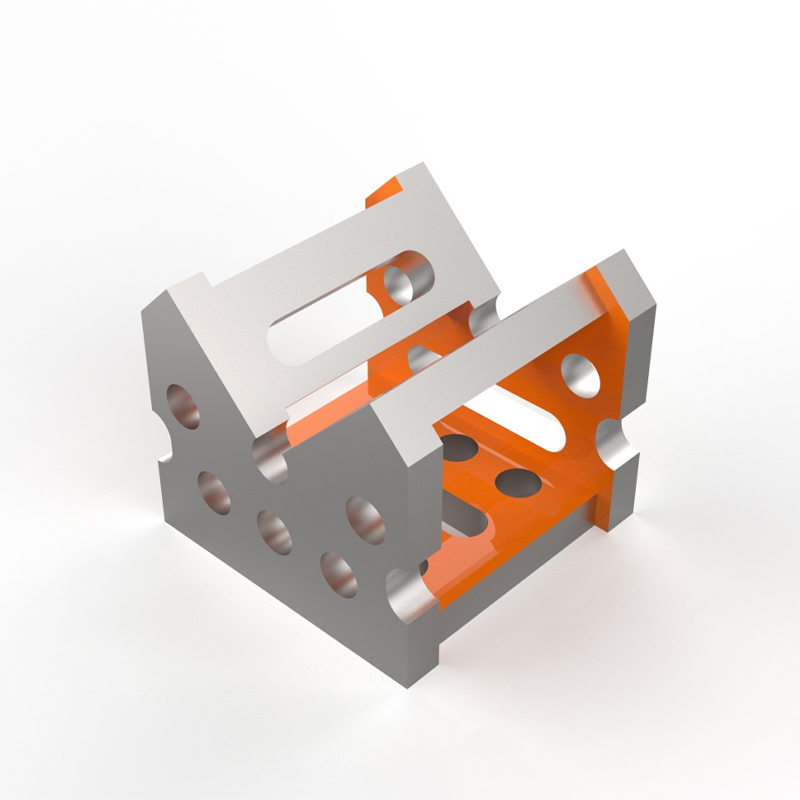
Furthermore, the ability to anchor tools anywhere on the surface allows for creative problem-solving. Complex geometries that would be difficult to hold with traditional methods become manageable. Users can build custom jigs directly on the table surface using the holes as anchor points, then disassemble them once the job is complete. To fully realize this potential, the ecosystem of accessories is just as important as the table itself. Companies like Botou Haijun Metal Products Co., Ltd. support this modularity by offering a comprehensive range of complementary components, such as U-shaped and L-shaped multi-purpose square boxes, 200-series support angle irons, and 0-225° universal angle gauges. These accessories integrate seamlessly with the platforms, enabling rapid workpiece positioning and clamping that turns a standard table into a highly adaptable fabrication hub.
Improved Heat Management and Durability
Welding generates intense heat, which can cause solid tables to warp over time. The perforated design of a welding table with holes aids in heat dissipation. Air can circulate through the holes, cooling the surface more effectively than a solid plate. Additionally, the holes allow spatter to fall through or be easily cleaned, preventing buildup that could interfere with flatness.
The structural integrity of these tables is maintained through rigorous manufacturing processes. The web-like structure created by the holes does not significantly compromise strength when engineered correctly. Instead, it offers a favorable strength-to-weight ratio, making the tables easier to move if equipped with casters, while still providing the mass needed to dampen vibrations. Beyond steel options, some providers also manufacture professional cast iron 3D welding platforms and angle connection blocks. Cast iron, known for its superior damping properties, ensures that every product delivers exceptional durability and stability, particularly in environments where vibration control is paramount.
Comparison: Perforated Tables vs. Solid Top Surfaces
Understanding the differences between perforated systems and traditional solid tops helps in selecting the right equipment for specific workflows. While solid tables have their place in heavy-duty beating or cutting operations, they fall short in precision assembly tasks.
The following table outlines the key distinctions based on current industry observations:
| Feature | Welding Table with Holes | Solid Top Welding Table |
| Clamping Flexibility | High; clamps can be placed anywhere on the grid. | Low; limited to edges or requires drilling/tacking. |
| Setup Speed | Fast; uses quick-release modular tooling. | Slow; relies on manual adjustment of C-clamps. |
| Repeatability | Excellent; ideal for batch production and prototyping. | Moderate; depends on operator skill and marking. |
| Heat Dissipation | Superior due to airflow through perforations. | Poorer; heat accumulates on the solid surface. |
| Initial Cost | Higher due to precision machining and tooling. | Lower; simpler manufacturing process. |
| Maintenance | Requires cleaning of holes to prevent clogging. | Requires flattening and spatter removal. |
This comparison highlights that while the initial investment for a perforated system is higher, the long-term gains in productivity and quality often justify the cost for professional fabricators. The ability to reduce setup time by significant margins translates directly into increased throughput.
When to Choose a Solid Top Instead
Despite the advantages of hole systems, there are scenarios where a solid top remains preferable. Operations involving heavy hammering, plasma cutting directly on the surface, or grinding large areas may benefit from the uninterrupted surface of a solid plate. In these cases, the holes could be a liability, potentially catching debris or weakening the surface under extreme impact.
However, many modern workshops adopt a hybrid approach, utilizing a welding table with holes as the primary assembly station and a separate solid table for rough preparation. This segregation of duties optimizes the lifespan of the precision equipment.
Step-by-Step Guide to Maximizing Table Efficiency
To fully leverage the benefits of a perforated welding table, users must adopt a systematic approach to fixturing. Random placement of tools negates the precision advantages. The following steps outline a best-practice workflow for setting up a job.
Step 1: Planning the Layout
Before bringing any metal to the table, analyze the drawing or prototype. Identify the primary datums and critical dimensions. Determine which holes will serve as the reference points for your stops and clamps. Visualizing the grid as a coordinate system helps in planning the most efficient clamp arrangement.
It is advisable to sketch the layout if the assembly is complex. Marking the intended hole positions on a piece of paper or using digital layout software can prevent errors. This planning phase ensures that all necessary tools are ready and that the workspace is not cluttered with unnecessary items.
Step 2: Establishing the Zero Point
Select a corner or a specific intersection of holes to serve as your “zero point.” Insert precision stops or angle brackets into these holes to create a fixed reference frame. Ensure these tools are seated fully and tightened securely. This step is critical for ensuring that the first component is aligned perfectly with the table axes.
Use a dial indicator or a high-quality square to verify the perpendicularity of your stops. Even a minor deviation at this stage can compound into significant errors in the final assembly. The rigidity of the table allows for precise verification that is difficult to achieve on uneven floors or makeshift surfaces.
Step 3: Securing the Workpiece
Place the base component against the established stops. Use toggle clamps or quick-action clamps inserted into adjacent holes to hold the piece firmly. The advantage of the hole system is that you can apply downward pressure and lateral stability simultaneously without obstructing access for welding.
Add subsequent components by referencing the existing geometry. Use adjustable stops to maintain gap consistency for weld penetration. The modular nature allows for fine-tuning the position of each part before tacking. Once satisfied with the alignment, proceed with tack welding at strategic points.
Step 4: Welding and Cooling
Execute the weld according to the specified procedure. The open structure of the table allows for welding from multiple sides without repositioning the entire assembly. If distortion is a concern, use the holes to attach heat sinks or cooling fixtures to manage thermal expansion.
Allow the assembly to cool while still clamped if possible. This technique, known as “clamp cooling,” helps minimize residual stress and distortion. The table’s mass acts as a heat sink, further stabilizing the temperature gradient across the workpiece.
Step 5: Inspection and Release
After cooling, perform a final inspection using the table grid as a reference. Check critical dimensions against the hole spacing. If everything meets specifications, release the clamps and remove the finished product. The modular tools can then be quickly rearranged for the next job, minimizing downtime.
Regular maintenance of the tools and the table surface is essential. Clean any spatter from the holes immediately to ensure future tools slide in smoothly. Inspect clamping pins for wear and replace them if they show signs of looseness.
Real-World Application Scenarios
The versatility of a welding table with holes makes it suitable for a wide range of industries. From bespoke artistic creations to high-volume industrial manufacturing, the underlying principles of precision fixturing remain consistent.
Custom Fabrication and Prototyping
In custom shops, no two jobs are alike. Fabricators often face unique geometries that require one-off solutions. The modular system allows them to build temporary fixtures in minutes rather than days. For prototyping, the ability to quickly iterate on designs by adjusting clamp positions accelerates the development cycle significantly.
Designers can test fit-ups and make real-time adjustments without committing to permanent welds. This flexibility encourages innovation and reduces the risk of costly errors in final production runs. The table becomes an extension of the designer’s intent, translating digital models into physical reality with high fidelity.
Structural Steel and Frame Assembly
For manufacturers producing frames, racks, or structural components, squareness is paramount. A perforated table ensures that every corner is exactly 90 degrees. By using precision squares and stops, operators can assemble large frames with confidence that they will fit together correctly during installation.
The scalability of the system allows for the assembly of large structures by joining sub-assemblies. Each sub-assembly is built to precise tolerances on the table, ensuring that the final integration is seamless. This method is widely used in the production of machinery guards, conveyor frames, and architectural elements.
Pipe and Tube Notching
While primarily for welding, these tables also excel in preparation tasks like pipe notching. Angles and stops can be set to hold tubes at precise angles for cutting or notching. The stability provided by the multi-point clamping system prevents the tube from rolling or shifting during the cutting process, resulting in cleaner fits and less rework.
This application is particularly valuable in roll cage fabrication and handrail construction, where complex compound angles are common. The ability to lock a tube in a specific 3D orientation simplifies what would otherwise be a highly skilled and tedious manual task.
Factors to Consider When Selecting a System
Choosing the right welding table with holes involves evaluating several technical parameters. Not all systems are created equal, and selecting the wrong specification can limit future capabilities. Buyers should focus on compatibility, material quality, and accessory availability.
Hole Size and Spacing Standards
The diameter and pitch of the holes determine the range of compatible tooling. Smaller holes (e.g., 16mm) offer finer resolution for positioning but may limit the size of clamps that can be used. Larger holes (e.g., 28mm) accommodate heavier-duty clamps but provide slightly coarser positioning increments.
It is crucial to select a standard that has broad industry support. Proprietary hole patterns can lock users into a single supplier for accessories, leading to higher costs and longer lead times. Sticking to widely adopted standards ensures a vibrant ecosystem of third-party tools and replacements. Partnering with experienced suppliers like Botou Haijun Metal Products Co., Ltd. can mitigate this risk. With years of industry experience, Haijun Metal has become a trusted supplier of tools and gauges to customers both domestically and internationally, continuously providing high-quality production machinery tool series that adhere to global standards.
Table Thickness and Flatness
The thickness of the table top affects its load-bearing capacity and resistance to warping. Thicker plates provide greater rigidity but add weight. For most precision applications, a thickness of 10mm to 20mm is considered optimal. The flatness tolerance is even more critical; a table that is not flat out of the box cannot produce flat assemblies.
Look for specifications regarding machined flatness. High-quality tables are milled after welding the frame to ensure a truly planar surface. Cheaper alternatives may rely on rolled plate, which can have inherent curves or twists that compromise precision.
Accessory Ecosystem
The value of the table is multiplied by the available accessories. A robust ecosystem includes various clamps, stops, angles, risers, and measuring tools. Before purchasing, verify that the manufacturer or compatible third parties offer a comprehensive range of tools.
Consider the specific needs of your workflow. Do you need magnetic clamps? Adjustable height stops? Angle gauges? Ensuring these tools are readily available and affordable is just as important as the table itself. The long-term usability of the system depends on this support network.
Frequently Asked Questions (FAQ)
Addressing common queries helps clarify misconceptions and provides deeper insight into the practical use of perforated welding tables.
Can I weld directly on the surface of a hole table?
Yes, you can weld directly on the surface, but it is generally recommended to use protective measures. While the steel is durable, repeated arcing can damage the precision-machined holes or create spatter that clogs them. Using ceramic tiles, copper backing bars, or sacrificial sheets in high-spatter areas helps preserve the table’s condition and longevity.
How do I clean spatter from the holes?
Regular maintenance is key. Specialized hole cleaning tools, often resembling reamers or brushes, are designed to remove spatter without damaging the hole walls. It is best practice to clean the holes immediately after welding while the spatter is still warm or using anti-spatter sprays beforehand to prevent adhesion. Avoid using drill bits, as they can alter the hole diameter and ruin the fit for precision tools.
Is a welding table with holes suitable for TIG welding?
Absolutely. In fact, TIG welding benefits immensely from the stability and precision of these tables. Since TIG is often used for high-aesthetic or high-tolerance work, the ability to fixture parts perfectly before welding ensures clean, distortion-free results. The grounding capability of the steel table also supports the electrical requirements of TIG processes.
What is the typical lifespan of these tables?
With proper care, a high-quality welding table with holes can last for decades. The limiting factor is usually the wear on the holes or surface flatness due to abuse rather than material failure. Regular cleaning, avoiding excessive hammering, and using protective covers during grinding operations can extend the service life indefinitely. Industry experience suggests that these tables are a long-term asset rather than a consumable item.
Do I need special training to use a modular welding table?
No special certification is required, but there is a learning curve associated with mastering fixturing techniques. Operators familiar with traditional clamping methods can adapt quickly. However, understanding geometric principles, datum selection, and the specific capabilities of the modular toolset enhances proficiency. Many suppliers offer training resources or guides to help teams maximize the system’s potential.
Conclusion and Strategic Recommendations
The transition to a welding table with holes represents a strategic upgrade for any fabrication operation focused on precision, efficiency, and scalability. The benefits extend beyond mere convenience; they fundamentally change how workpieces are prepared, assembled, and verified. By providing a repeatable, modular environment, these tables reduce reliance on operator intuition and increase dependence on engineered accuracy.
Who should invest in this technology?
- Custom Fabricators: Those who handle diverse, one-off projects will appreciate the rapid reconfiguration capabilities.
- Batch Manufacturers: Companies producing repeated units will see immediate ROI through reduced setup times and improved consistency.
- Prototyping Labs: Teams needing to iterate designs quickly will find the flexibility invaluable.
- Training Facilities: Schools and apprenticeship programs can teach best practices in fixturing and geometry using these standardized systems.
For those considering the switch, the recommendation is to start with a core table size that fits the majority of your work envelope and invest in a versatile starter kit of clamps and stops. Prioritize quality and standardization over initial cost savings to ensure long-term compatibility and performance. As the industry moves towards higher precision demands, the welding table with holes stands out as an essential tool for modern manufacturing excellence.
Taking the next step involves evaluating your current workflow bottlenecks. If setup time and rework due to misalignment are significant pain points, integrating a modular fixturing system is the logical solution. Explore the available configurations and accessory options to tailor a setup that aligns with your specific production goals. Whether you require 2D or 3D flexible welding platforms, partnering with a dedicated specialist like Botou Haijun Metal Products Co., Ltd. ensures access to efficient, flexible, and high-precision solutions tailored for the modern manufacturing industry.