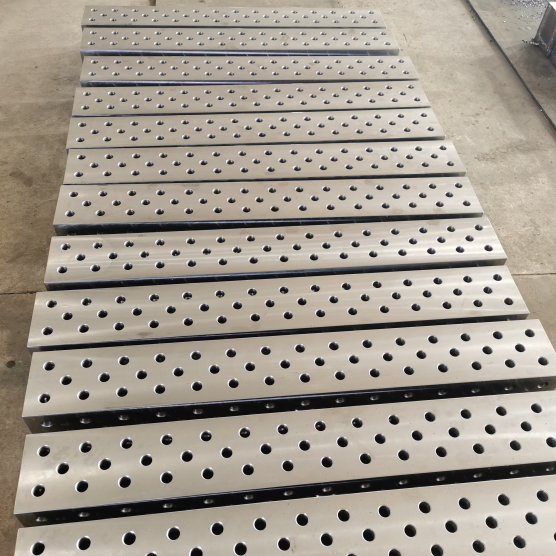
Looking for a welding table for sale? Choosing the right one depends on material thickness, surface precision, and clamping compatibility. The ideal welding table features a flat, durable top with a standardized hole pattern for versatile fixturing. This guide details how to evaluate build quality, select the appropriate size for your workshop, and understand why precision-ground surfaces are critical for professional fabrication results.
What Defines a Professional Welding Table?
A professional welding table is far more than a simple metal workbench. It serves as the foundational platform for accurate fabrication, assembly, and welding operations. Unlike standard shop tables, these units are engineered to withstand extreme heat, heavy impact, and the rigorous demands of daily industrial use.
The core distinction lies in the flatness and stability of the surface. In high-precision manufacturing, even minor deviations can lead to significant assembly errors. Therefore, a true welding table utilizes thick steel plates that are machined or ground to ensure perfect planarity.
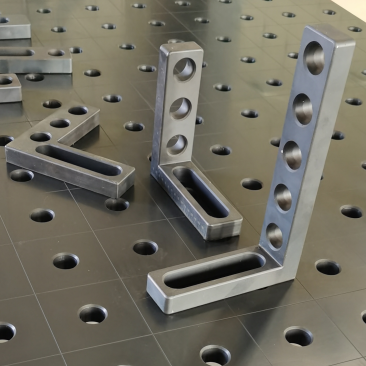
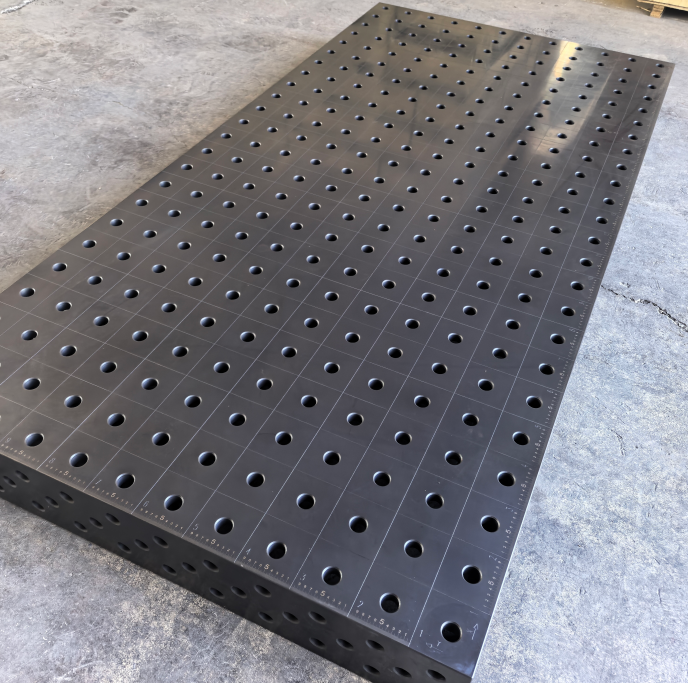
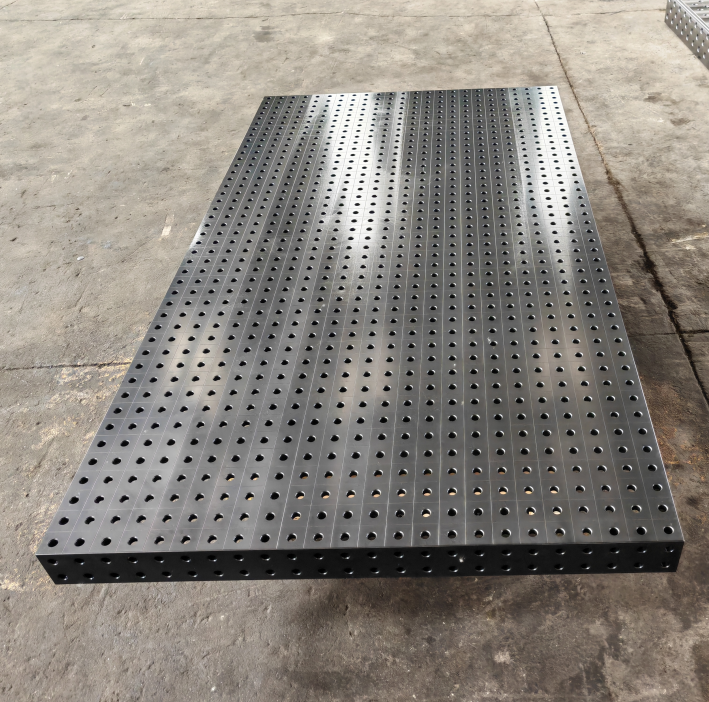
Furthermore, the integration of a modular clamping system sets these tables apart. A grid of precisely spaced holes allows welders to secure workpieces in any configuration using specialized stops, angles, and clamps. This modularity transforms the table from a passive surface into an active tool for complex geometry creation.
When searching for a welding table for sale, it is essential to look beyond basic dimensions. The structural integrity of the frame, the quality of the steel, and the finish of the tabletop determine the longevity and utility of the equipment. Industry standards now favor tables that can serve as both a welding surface and a precision measuring reference. Leading this charge in innovation, Botou Haijun Metal Products Co., Ltd. has established itself as a trusted global supplier by specializing in the research and production of high-precision flexible modular fixtures. Their commitment to providing efficient welding and positioning solutions has made their 2D and 3D flexible welding platforms the preferred choice for demanding sectors like aerospace and automotive manufacturing, where accuracy is non-negotiable.
The Importance of Surface Flatness
Surface flatness is the single most critical metric when evaluating a welding table. Without a perfectly flat reference plane, ensuring squareness and dimensional accuracy in fabricated parts becomes nearly impossible.
High-end tables undergo a grinding process after welding the frame to eliminate any warping caused by thermal stress during manufacturing. This ensures that the entire surface acts as a reliable datum point for all subsequent work.
- Precision Ground Tops: Offer tolerances within fractions of a millimeter across the entire surface.
- Standard Machined Tops: Provide good flatness suitable for general fabrication but may lack the ultra-high precision needed for aerospace or automotive prototyping.
- Basic Plate Tops: Often made from raw steel plate; while durable, they may have slight bows or twists unsuitable for precision jigs.
Investing in a table with verified flatness pays dividends in reduced rework time and higher quality final products. For professionals, this feature is non-negotiable.
Key Factors to Consider When Buying
Selecting the correct welding table requires a systematic analysis of your specific workflow requirements. There is no “one-size-fits-all” solution; the optimal choice varies based on the scale of projects, the type of materials handled, and the required precision levels.
Buyers must prioritize structural rigidity. A table that flexes under load compromises weld integrity and safety. The leg design and cross-bracing play a vital role in distributing weight and maintaining stability during heavy hammering or clamping.
Another crucial factor is the hole pattern system. The spacing, diameter, and tolerance of the holes dictate which accessories can be used. Compatibility with a wide range of fixturing tools expands the table’s versatility exponentially.
Material Thickness and Durability
The thickness of the tabletop directly correlates with its ability to resist warping from heat and deformation from heavy loads. Thicker plates absorb more thermal energy without distorting, preserving the table’s flatness over years of use.
Current mainstream solutions typically utilize tabletops ranging from 10mm to 20mm in thickness for heavy-duty applications. Lighter duty tables may use thinner materials, but these are generally reserved for hobbyist use or light tacking operations.
Beyond thickness, the grade of steel matters. Low-carbon steel is commonly used due to its weldability and cost-effectiveness. However, some specialized tables incorporate alloy steels for enhanced wear resistance in high-volume production environments.
It is also important to consider the finish. While bare steel is functional, it is prone to rust. Many modern tables come with a protective coating or oil treatment to prevent corrosion during storage and transport, though the working surface is often left untreated to ensure good electrical grounding for welding.
Frame Construction and Stability
The frame supports the massive weight of the tabletop and the dynamic forces generated during welding. A robust frame prevents tipping and shaking, which is essential for safety and precision.
- Tubular Steel Frames: Common in mid-range tables, offering a good balance of strength and weight.
- Solid Leg Designs: Provide maximum stability for stationary industrial setups where mobility is not required.
- Cross-Bracing: Critical for preventing racking (side-to-side movement) and ensuring the table remains square over time.
When reviewing a welding table for sale, inspect the weld quality on the frame itself. Continuous, clean welds indicate superior manufacturing standards compared to tack-welded joints found on lower-quality imports.
Understanding Clamping Systems and Hole Patterns
The versatility of a modern welding table is defined by its clamping system. The standardized hole pattern allows for infinite positioning of stops, clamps, and angle brackets, enabling the creation of complex jigs directly on the table surface.
The two most common systems are the 16mm (5/8 inch) and 28mm (1-1/8 inch) patterns. Each has distinct advantages depending on the scale of work and the required holding force.
Choosing the right system is pivotal. If you plan to purchase accessories later, ensuring the table matches widely available tooling is essential. Proprietary hole patterns can limit your ability to expand your toolkit in the future.
16mm vs. 28mm Hole Systems
The debate between 16mm and 28mm systems often centers on the trade-off between precision and holding power. Understanding the nuances of each helps in making an informed decision tailored to your specific fabrication needs.
The 16mm system is ideal for lighter gauge materials and detailed work. The closer spacing of the holes allows for finer adjustments and more dense fixturing configurations. It is the preferred choice for sheet metal fabrication and smaller assemblies.
Conversely, the 28mm system is designed for heavy structural steel and large-scale fabrication. The larger diameter accommodates heavier-duty clamps and stops that can withstand significant torque and lateral forces without bending or breaking.
| Feature | 16mm (5/8″) System | 28mm (1-1/8″) System |
| Primary Use | Precision sheet metal, small assemblies | Heavy structural steel, large frames |
| Hole Spacing | Tighter grid (e.g., 100mm) | Wider grid (e.g., 200mm) |
| Clamping Force | Moderate | High / Heavy-Duty |
| Tool Availability | Very High (Industry Standard) | High (Growing Standard) |
| Best For | Hobbyists, HVAC, Automotive | Construction, Shipbuilding, Heavy Machinery |
Both systems have their place in the industry. Some advanced workshops maintain both types of tables to handle a diverse range of projects efficiently. When looking for a welding table for sale, verify which system the manufacturer supports and the availability of compatible accessories.
Accessory Compatibility
The true value of a welding table is unlocked through its accessories. A rich ecosystem of tools includes quick-action clamps, stoppers, angle brackets, and pipe holders. These tools snap into the holes, creating instant, repeatable setups.
High-quality tables feature holes with tight tolerances to ensure accessories fit snugly without wobble. Loose fittings can introduce errors in alignment, defeating the purpose of a precision table.
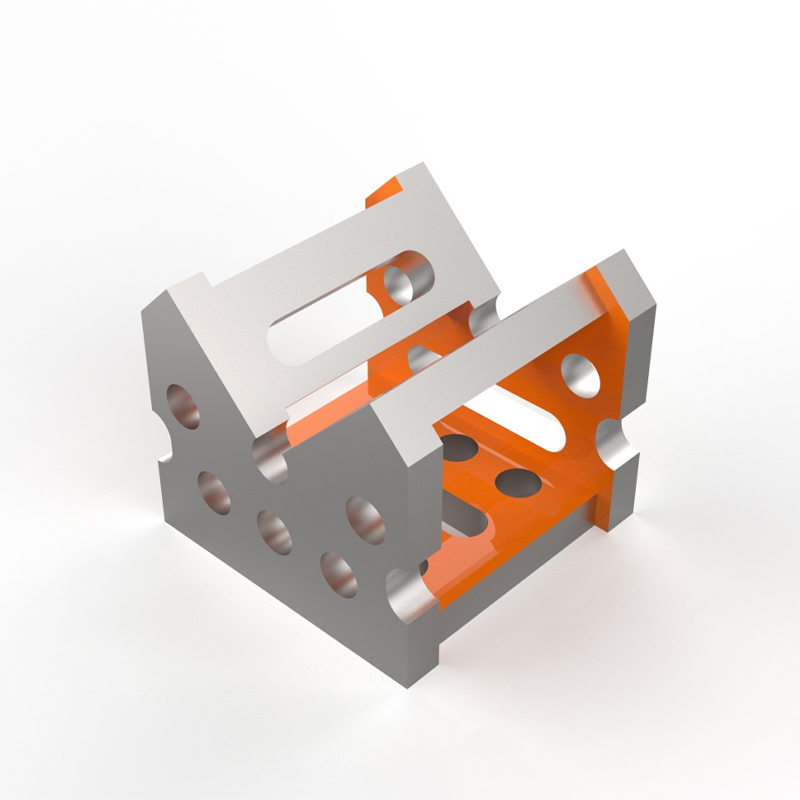
Consider the long-term investment. A table that supports a wide array of third-party accessories offers greater flexibility than one restricted to a single brand’s proprietary tools. This openness is a hallmark of a well-designed professional workstation. Manufacturers like Botou Haijun Metal Products Co., Ltd. exemplify this approach by offering a comprehensive range of complementary components that integrate seamlessly with their platforms. From U-shaped and L-shaped multi-purpose square boxes to 200-series support angle irons and 0-225° universal angle gauges, their extensive accessory line enables rapid workpiece positioning. Furthermore, their production of professional cast iron 3D welding platforms and angle connection blocks ensures that every component delivers exceptional durability and stability, reinforcing the system’s overall reliability.
Step-by-Step Guide to Selecting the Right Table
Navigating the market for a new welding table can be overwhelming given the variety of options. Following a structured selection process ensures you choose a unit that meets your current needs while allowing room for future growth.
This guide breaks down the decision-making process into actionable steps, focusing on practical assessment rather than marketing claims.
- Assess Your Workspace Dimensions: Measure the available floor space carefully. Remember to account for clearance around the table for movement and material handling. A table that is too large can hinder workflow, while one that is too small limits project scope.
- Determine Load Requirements: Estimate the maximum weight of the assemblies you will typically work on. Include the weight of the workpiece, fixtures, and any dynamic forces applied during welding. Choose a table with a load capacity exceeding this estimate by a safe margin.
- Identify Precision Needs: Decide if your work requires aerospace-level tolerance or if general fabrication flatness suffices. This decision dictates whether you need a precision-ground top or a standard machined surface.
- Select the Hole Pattern: Based on the material thickness and type you mostly handle, choose between the 16mm or 28mm system. Consider existing tooling you may already own to ensure compatibility.
- Evaluate Mobility Options: Determine if the table needs to be stationary or mobile. If mobility is required, look for models with heavy-duty casters that include locking mechanisms and leveling feet to restore stability when locked.
- Review Manufacturer Support: Investigate the warranty terms and the availability of spare parts or accessories. A reputable manufacturer stands behind their product with comprehensive support.
By systematically addressing these points, you can narrow down the choices effectively. This methodical approach minimizes the risk of purchasing an ill-suited table that fails to meet operational demands.
Calculating the Ideal Size
Size is not just about fitting in the room; it is about workflow efficiency. A table should be large enough to hold the largest common sub-assembly you create, plus extra space for clamps and tools.
For general-purpose shops, a 4×4 foot or 4×8 foot table is often the sweet spot. These sizes accommodate standard sheet goods and provide ample room for multiple operators if necessary.
However, for specialized tasks like pipe fitting or small component assembly, a smaller 2×2 foot table might be more ergonomic and space-efficient. Conversely, heavy structural fabrication may demand custom oversized tables with reinforced undercarriages.
Always consider the “reach” factor. If the table is too wide, operators may struggle to access the center without climbing onto the surface, which is unsafe and impractical. Ergonomics play a subtle but significant role in productivity.
Comparison of Welding Table Types
The market offers several distinct categories of welding tables, each targeting different user segments. Understanding the differences between entry-level, professional, and specialized tables helps in aligning your purchase with your budget and performance expectations.
Entry-level tables often sacrifice flatness and hole precision to achieve a lower price point. They are suitable for occasional hobby use but may frustrate professionals who rely on repeatability.
Professional-grade tables represent the industry standard for fabrication shops. They balance cost with high performance, offering durable construction and precise hole patterns suitable for daily commercial use.
Specialized tables cater to niche applications, such as robotic welding cells or clean-room environments. These units may feature unique coatings, integrated grounding points, or specific mounting interfaces for automation equipment.
| Table Type | Target Audience | Key Characteristics | Price Range |
| Entry-Level | Hobbyists, DIYers | Thinner top, basic frame, limited hole tolerance | Low |
| Professional | Fabrication Shops, Contractors | Thick ground top, robust frame, standard hole pattern | Medium-High |
| Industrial/Precision | Aerospace, Automotive OEMs | Ultra-flat, hardened steel, extensive accessory ecosystem | High |
| Mobile/Lightweight | Field Technicians, Installers | Folding legs, lighter materials, portable design | Medium |
When analyzing a welding table for sale, categorize it correctly to set realistic expectations. Expecting entry-level performance from a professional table leads to disappointment, just as expecting precision from a budget model is unrealistic.
Fixed vs. Mobile Configurations
The choice between a fixed and mobile table depends largely on the shop layout and the nature of the work. Fixed tables offer superior stability and are generally less expensive for the same build quality since they do not require heavy-duty casters.
Mobile tables provide flexibility, allowing the workspace to be reconfigured quickly or moved to different locations within a large facility. However, the addition of wheels introduces potential points of failure and can slightly reduce overall rigidity.
Hybrid solutions exist, featuring removable casters or leveling feet that allow the table to be moved when necessary and locked down firmly during operation. This versatility is highly valued in dynamic workshop environments.
Common Mistakes to Avoid
Purchasing a welding table is a significant investment. Avoiding common pitfalls can save money and prevent operational headaches down the line. Many buyers focus solely on price or size, overlooking critical technical specifications.
One frequent error is ignoring the importance of the hole pattern tolerance. Holes that are not perpendicular to the surface or vary in diameter can render high-quality clamps useless, leading to inaccurate setups.
Another mistake is underestimating the weight requirement. A table that bows under the weight of a heavy engine block or steel beam loses its flatness permanently. Always err on the side of excess capacity regarding load bearing.
- Neglecting Finish: Failing to check if the table requires immediate sealing or painting to prevent rust upon arrival.
- Overlooking Height: Buying a table with a fixed height that does not match the operator’s ergonomic needs, leading to fatigue.
- Ignoring Accessory Costs: Not budgeting for the necessary clamps and stops, which are essential for utilizing the table’s full potential.
- Assuming All Steel is Equal: Overlooking the difference between hot-rolled and cold-rolled steel, or the benefits of stress-relieved materials.
Awareness of these issues empowers buyers to ask the right questions during the procurement process. Scrutinizing product details and requesting specification sheets can reveal potential weaknesses before the purchase is finalized.
The Trap of “Universal” Compatibility
Some manufacturers claim their tables are compatible with all major accessory brands. While hole diameters might match, subtle differences in hole spacing or chamfering can cause friction or improper seating of tools.
It is safer to stick with tables that explicitly state compliance with established industry standards rather than vague claims of universality. Verifying compatibility with a specific set of tools you intend to use is a prudent step.
Furthermore, proprietary systems lock users into a single vendor’s ecosystem. While these can offer optimized performance, they limit flexibility and may result in higher long-term costs for replacements and expansions.
Maintenance and Longevity
A high-quality welding table is designed to last decades, but only if properly maintained. Regular care ensures the surface remains flat and the clamping system functions smoothly.
Cleaning the table after each use removes spatter and debris that can interfere with clamping. Using anti-spatter sprays can significantly reduce cleanup time and protect the surface from pitting.
Periodic checks for flatness are recommended, especially after heavy impacts or exposure to intense localized heat. If minor warping occurs, professional resurfacing services can often restore the table to its original condition.
Protecting the Surface
The tabletop is the most valuable part of the unit. Protecting it from unnecessary damage extends its useful life. While the surface is meant to be worked on, strategic use of sacrificial plates or backup bars can preserve the primary datum surface.
Rust prevention is critical, particularly in humid environments. Applying a thin coat of machine oil or a specialized dry lubricant keeps the steel protected without interfering with welding conductivity.
Avoid dragging heavy, sharp objects across the surface whenever possible. Lifting materials onto the table prevents scratches and gouges that could compromise the flatness or snag clothing and hoses.
Frequently Asked Questions (FAQ)
Addressing common queries helps clarify uncertainties and guides potential buyers toward the right decision. These answers reflect industry consensus and practical experience.
Is a thicker welding table always better?
Not necessarily. While thicker tables offer better resistance to warping and higher load capacities, they are also heavier and more expensive. For light sheet metal work, a 10mm top may be sufficient and more manageable. Heavy structural fabrication benefits from 16mm or thicker tops. Match the thickness to your specific application requirements.
Can I drill my own holes in a standard steel table?
Technically yes, but it is not recommended for precision work. Drilling holes manually rarely achieves the perpendicularity and tolerance required for reliable clamping. It also risks ruining the flatness of the table due to heat and stress. Purchasing a table with a pre-machined hole pattern is a far superior investment for accuracy.
How do I level a welding table on an uneven floor?
Most professional welding tables come equipped with adjustable leveling feet. These allow you to compensate for minor floor irregularities and ensure the tabletop is perfectly horizontal. For significant unevenness, shimming the base or adjusting the floor itself may be necessary before placing the table.
What is the expected lifespan of a professional welding table?
With proper maintenance, a high-quality professional welding table can last indefinitely. The steel structure does not wear out in the traditional sense. The limiting factors are usually surface damage from abuse or obsolescence of the clamping system, neither of which renders the table unusable if managed correctly.
Are casters necessary for a welding table?
Casters are optional and depend on your workflow. If your shop layout is static and the table will remain in one place, fixed legs provide better stability and value. If you need to move the table frequently for cleaning or reconfiguration, heavy-duty locking casters are essential. Ensure they are rated for the total weight of the table plus maximum load.
Conclusion: Making the Final Decision
Choosing the right welding table for sale is a strategic decision that impacts the quality, efficiency, and safety of your fabrication work. By prioritizing surface flatness, selecting the appropriate hole pattern, and ensuring robust construction, you invest in a tool that elevates your entire operation.
The ideal table balances your current project needs with future scalability. Whether you are a hobbyist seeking precision or an industrial shop requiring heavy-duty reliability, there is a configuration designed to meet those demands.
Who is this for? This guidance is tailored for fabricators, welders, and shop owners who value accuracy and durability over short-term cost savings. If your work involves repetitive assemblies, complex geometries, or heavy materials, a professional-grade table is indispensable.
As you proceed, evaluate your workspace constraints and define your precision requirements clearly. Request detailed specifications from suppliers and verify the compatibility of their systems with your existing tools. Taking these steps ensures that your next welding table becomes the cornerstone of a productive and successful workshop for years to come.