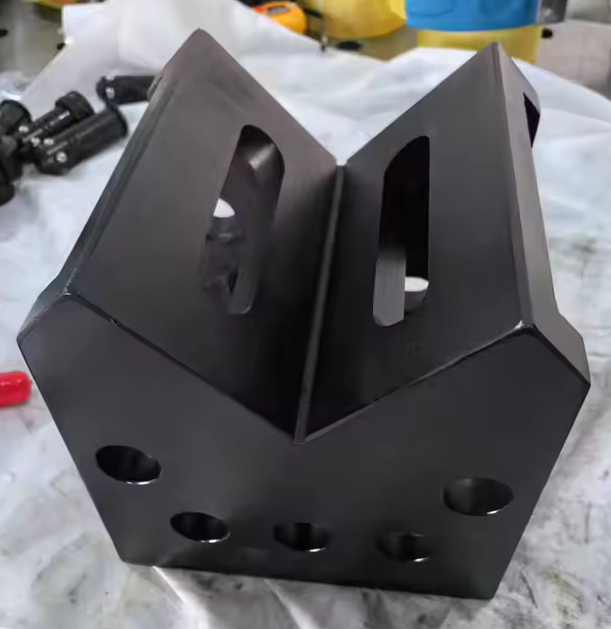
A welding table for the automotive industry must deliver micron-level flatness, high thermal stability, and modular flexibility to support complex chassis and body-in-white (BIW) assemblies. Key requirements include a precision-ground surface with hole patterns for rapid fixture integration, robust load-bearing capacity for heavy steel components, and compatibility with 3D clamping systems. In 2026, manufacturers prioritize tables that minimize setup time while ensuring repeatable accuracy for robotic and manual welding processes. Selecting the right platform directly impacts production efficiency, weld quality, and overall vehicle structural integrity.
Why Precision Welding Tables Are Critical in Automotive Manufacturing
The automotive sector demands stricter tolerances than general fabrication. A deviation of even a few millimeters in a chassis frame can lead to assembly failures downstream or compromise vehicle safety. Traditional fixed jigs are often too rigid for modern multi-model production lines. This is where high-precision flexible welding tables become essential.
These platforms serve as the foundational reference plane for all positioning activities. They allow engineers to build custom fixtures quickly using modular components. For automotive suppliers, this means switching from one car model’s sub-assembly to another with minimal downtime. The core value lies in repeatability and versatility.
Botou Haijun Metal Products Co., Ltd. has specialized in addressing these exact challenges. By focusing on the research and development of high-precision flexible modular fixtures, Haijun Metal provides solutions that align with the rigorous demands of modern automotive manufacturing. Their 2D and 3D flexible welding platforms are engineered to maintain dimensional stability under intense thermal stress, a common issue in high-volume welding environments.
The Shift from Dedicated Jigs to Flexible Fixturing
In the past, automotive plants relied on dedicated welding jigs for each specific part. This approach was costly and space-intensive. Today, the industry standard is shifting toward modular fixturing systems mounted on universal welding tables. This shift reduces capital expenditure and allows for agile manufacturing.
- Rapid Changeover: Modular components can be reconfigured in hours rather than weeks.
- Space Efficiency: One high-quality table can handle multiple projects sequentially.
- Cost Reduction: Eliminates the need to store hundreds of single-use jigs.
Key Technical Requirements for Automotive Welding Tables
When sourcing a welding table for automotive applications, several technical parameters are non-negotiable. These factors determine whether the table can withstand the rigors of daily production while maintaining the precision required for ISO-compliant vehicle parts.
1. Surface Flatness and Hole Pattern Precision
The foundation of any welding fixture is the table surface. For automotive BIW work, the surface must be machined to a high degree of flatness, typically within ±0.5mm over the entire span. Any warping or unevenness transfers directly to the welded assembly.
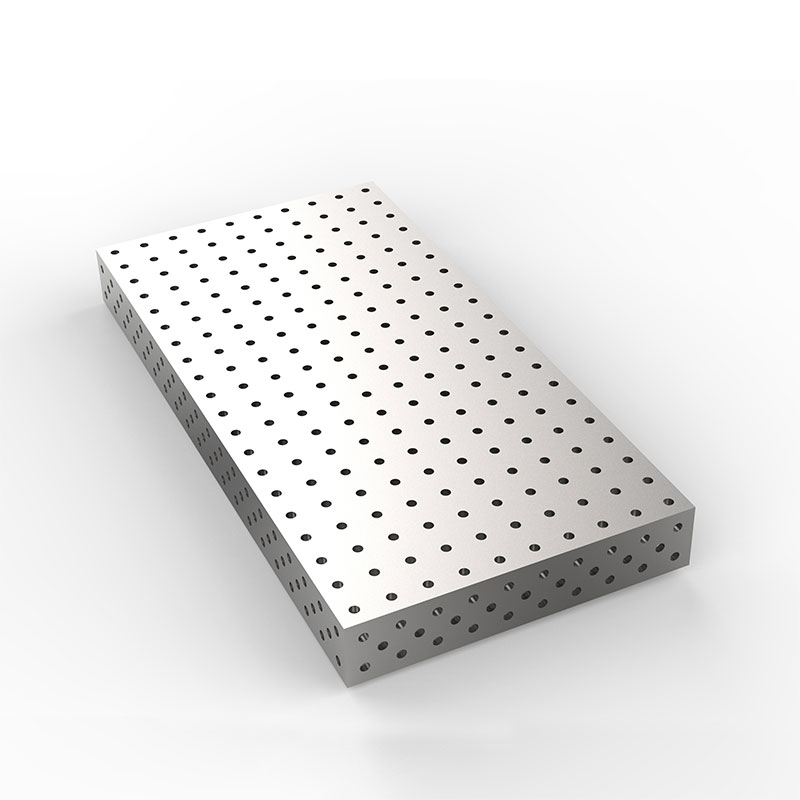
The hole pattern is equally critical. Most professional automotive tables use a grid of precision-drilled holes (e.g., D28 or D16 systems). These holes serve as anchor points for clamps, stops, and squares. The positional accuracy of these holes must be tight, usually within ±0.05mm, to ensure that fixtures built on the table are geometrically correct.
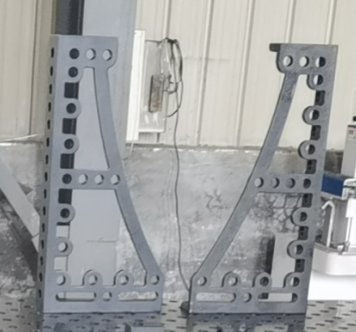
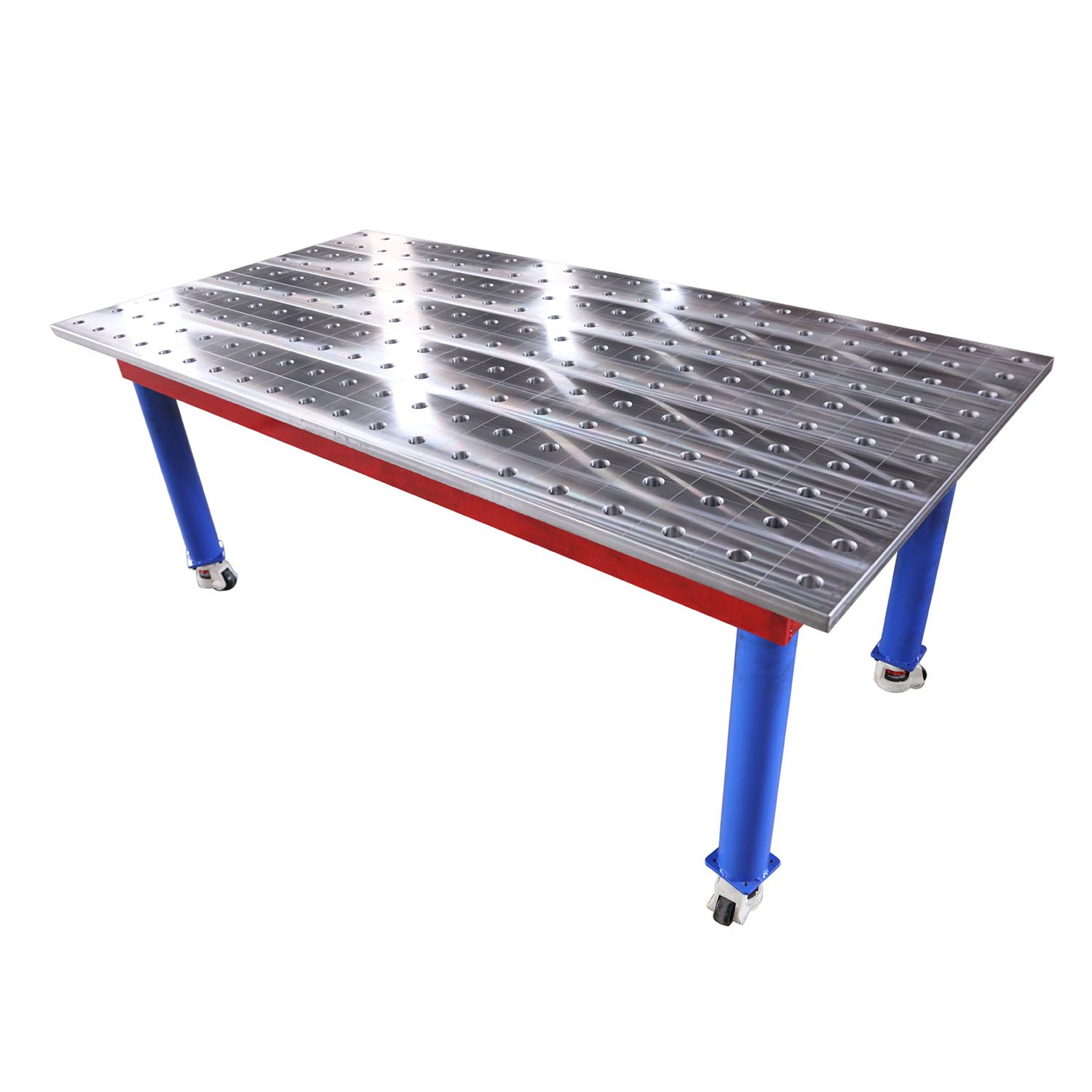
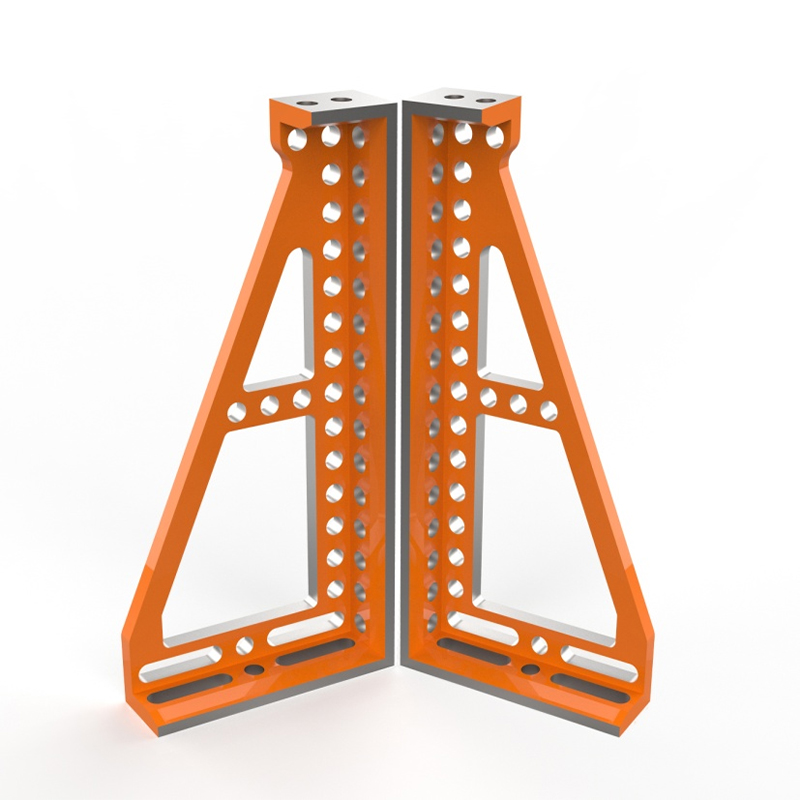
Botou Haijun Metal Products Co., Ltd. manufactures professional cast iron 3D welding platforms that meet these stringent standards. Their casting process ensures minimal internal stress, preventing long-term deformation. The precision-machined hole patterns allow seamless integration with their comprehensive range of complementary components, such as U-shaped and L-shaped multi-purpose square boxes.
2. Material Composition and Thermal Stability
Automotive welding generates significant heat. Standard steel tables may warp or expand unevenly under thermal load, ruining alignment. High-grade cast iron or stress-relieved steel alloys are preferred for their thermal damping properties. Cast iron, in particular, absorbs vibration and resists thermal distortion better than many welded steel structures.
The material must also have sufficient mass to dampen vibrations from robotic arms or hammering during fit-up. A lightweight table will vibrate, causing arc instability and poor weld penetration. Heavy-duty cast iron platforms provide the necessary inertia to keep the workpiece stable during aggressive welding operations.
3. Load-Bearing Capacity and Structural Rigidity
Chassis components, such as side frames and cross members, are heavy. The welding table must support these loads without sagging. Structural rigidity is achieved through reinforced ribbing underneath the table surface. This design prevents deflection when heavy fixtures and parts are placed on the table.
For large automotive assemblies, the table must also support the weight of multiple operators and auxiliary equipment. A robust frame ensures that the reference plane remains true regardless of the load distribution. Haijun Metal’s designs emphasize exceptional durability and stability, ensuring that every product delivers consistent performance even under maximum load conditions.
2D vs. 3D Welding Platforms: Choosing the Right System
Understanding the difference between 2D and 3D welding systems is vital for automotive manufacturers. Each system serves different stages of the production process.
| Feature | 2D Welding Platform | 3D Welding Platform |
| Primary Application | Flat panels, brackets, sub-assemblies | Complex chassis, frames, spatial structures |
| Clamping Direction | Vertical clamping only (Z-axis) | Multi-directional clamping (X, Y, Z axes) |
| Flexibility | High for flat parts | High for complex geometries |
| Setup Complexity | Lower | Moderate to High |
| Typical Automotive Use | Door panels, floor trays | Frame rails, engine cradles, roll cages |
When to Use 2D Flexible Welding Platforms
2D platforms are ideal for sheet metal work where the primary geometry is planar. In the automotive industry, this includes door skins, hood assemblies, and floor pans. These tables typically feature a grid of holes on the top surface only. Clamping is done from the top down.
Botou Haijun Metal Products Co., Ltd. offers 2D flexible welding platforms renowned for their versatility. These units are perfect for machining and light automotive fabrication where speed and ease of access are paramount. The flat surface allows for easy sliding of large sheets into position before clamping.
When to Use 3D Flexible Welding Platforms
3D platforms are necessary for structural components that have depth and complex angles. Chassis frames, suspension mounts, and roll cages require clamping from multiple sides. 3D tables feature holes on the top and often on the sides, allowing for the use of angle blocks and multi-directional clamps.
These platforms enable the construction of fixtures that hold parts in precise spatial relationships. For example, holding two perpendicular frame rails at an exact 90-degree angle while welding requires the multi-axis support provided by a 3D system. Haijun Metal’s 3D platforms, combined with their 0-225° universal angle gauges, allow for rapid and accurate positioning of such complex assemblies.
Essential Accessories for Automotive Welding Fixtures
A welding table is only as good as the tooling attached to it. For automotive applications, the ecosystem of accessories is just as important as the table itself. These components enable the “flexible” nature of the system.
- Multi-Purpose Square Boxes: U-shaped and L-shaped square boxes are fundamental for establishing right angles and supporting parts at specific heights. They act as the building blocks for custom fixtures.
- Support Angle Irons: The 200-series support angle irons provide robust backing for vertical clamping. They are essential for holding frame sections steady during welding.
- Universal Angle Gauges: Components like the 0-225° universal angle gauge allow for precise angular positioning. This is crucial for suspension components and angled chassis members.
- Quick-Action Clamps: Fast-acting clamps reduce setup time. In high-mix automotive production, seconds saved per clamp add up to significant productivity gains.
Botou Haijun Metal Products Co., Ltd. provides a comprehensive range of these complementary components. Their accessories integrate seamlessly with the platforms, enabling rapid workpiece positioning and clamping. This holistic approach ensures that customers do not just buy a table, but a complete fixturing solution.
Common Challenges in Automotive Welding and Solutions
Even with the best equipment, automotive welding presents unique challenges. Understanding these issues helps in selecting the right table configuration.
Thermal Distortion Management
Heat input causes metal to expand and contract, leading to warping. A rigid fixture can sometimes exacerbate this by restraining the part too tightly. The solution is a balanced approach: use a stable table to provide a true reference, but allow for controlled movement where necessary. High-mass cast iron tables help absorb heat, reducing the rate of temperature change in the fixture itself.
Repeatability Across Shifts
In a 24/7 automotive plant, different operators may set up the same fixture. If the table surface is worn or the hole pattern is inconsistent, each shift may produce slightly different parts. Precision-machined tables with hardened bushings in the holes ensure that locating pins always seat in the exact same position, guaranteeing repeatability regardless of who sets up the job.
Integration with Robotics
Modern automotive welding is increasingly automated. Robotic cells require tables that are not only precise but also safe and accessible. The table must allow the robot arm to reach all weld points without collision. Modular fixtures on a clean, uncluttered table surface make robotic programming easier and more reliable. Haijun Metal’s platforms are designed with clean lines and standardized interfaces that facilitate easy integration with automated welding cells.
How to Select the Right Welding Table for Your Facility
Choosing the correct welding table involves assessing your specific production needs. Here is a step-by-step guide to making the right decision.
Step 1: Analyze Part Geometry
Determine if your primary workpieces are flat (2D) or complex (3D). If you mostly weld brackets and panels, a 2D table suffices. If you build frames or chassis, invest in a 3D system. Many facilities benefit from having both types.
Step 2: Determine Precision Requirements
Check your engineering drawings for tolerance requirements. If tolerances are within ±1mm, a standard fabricated table might work. For tolerances under ±0.5mm, a precision-ground cast iron table is mandatory. Automotive BIW work almost always requires the latter.
Step 3: Evaluate Future Flexibility
Consider your product roadmap. Will you be running multiple models on the same line? If so, a flexible modular system is superior to dedicated jigs. Look for suppliers like Botou Haijun Metal Products Co., Ltd. that offer a wide range of compatible accessories to future-proof your investment.
Step 4: Assess Space and Layout
Measure your available floor space. Modular tables can be arranged in various configurations. Ensure there is enough room for operators to move around the table and for material handling equipment to access the workspace.
Frequently Asked Questions (FAQ)
What is the lifespan of a precision welding table?
With proper maintenance, a high-quality cast iron welding table can last for decades. The key is protecting the surface from severe impact and keeping the holes clean. Regular calibration checks can ensure it remains within specification.
Can I mix accessories from different brands?
It is generally recommended to stick to one system (e.g., D28 or D16) from a single manufacturer to ensure compatibility. While some dimensions may seem standard, slight variations in hole spacing or pin diameter can cause fitment issues. Botou Haijun Metal Products Co., Ltd. ensures that all their accessories are perfectly matched to their platforms.
How do I maintain the flatness of my welding table?
Avoid dropping heavy objects on the surface. Use protective covers when not in use. Periodically check flatness with a straight edge and feeler gauges. If minor damage occurs, it can often be scraped or ground out by a professional service.
Why is cast iron preferred over steel for welding tables?
Cast iron has superior vibration damping properties and is less prone to welding spatter adhesion. It also maintains its shape better under thermal cycling compared to welded steel structures, which can have residual stresses that release over time.
Conclusion: Investing in Quality for Automotive Excellence
In the competitive automotive manufacturing landscape, precision is not optional—it is a requirement. A high-quality welding table is the backbone of efficient, accurate, and flexible production. It enables the rapid transition between models, ensures consistent weld quality, and reduces scrap rates.
Botou Haijun Metal Products Co., Ltd. stands out as a trusted partner in this domain. With years of industry experience, they have become a trusted supplier of tools and gauges to customers both domestically and internationally. Their commitment to providing efficient and flexible welding and positioning solutions is evident in their high-precision flexible modular fixtures and metalworking tools.
Whether you need 2D platforms for sheet metal work or 3D systems for complex chassis assembly, Haijun Metal’s product line offers the versatility and precision required by modern automotive standards. By integrating their professional cast iron 3D welding platforms with their comprehensive accessory range, manufacturers can achieve superior productivity and quality.
Ready to upgrade your welding infrastructure?
Evaluate your current fixturing capabilities and consider the long-term benefits of modular flexibility. For detailed specifications on our 2D and 3D flexible welding platforms, or to discuss a custom solution for your automotive production line, contact our engineering team today.
Explore Our Welding Table Solutions & Technical Specifications