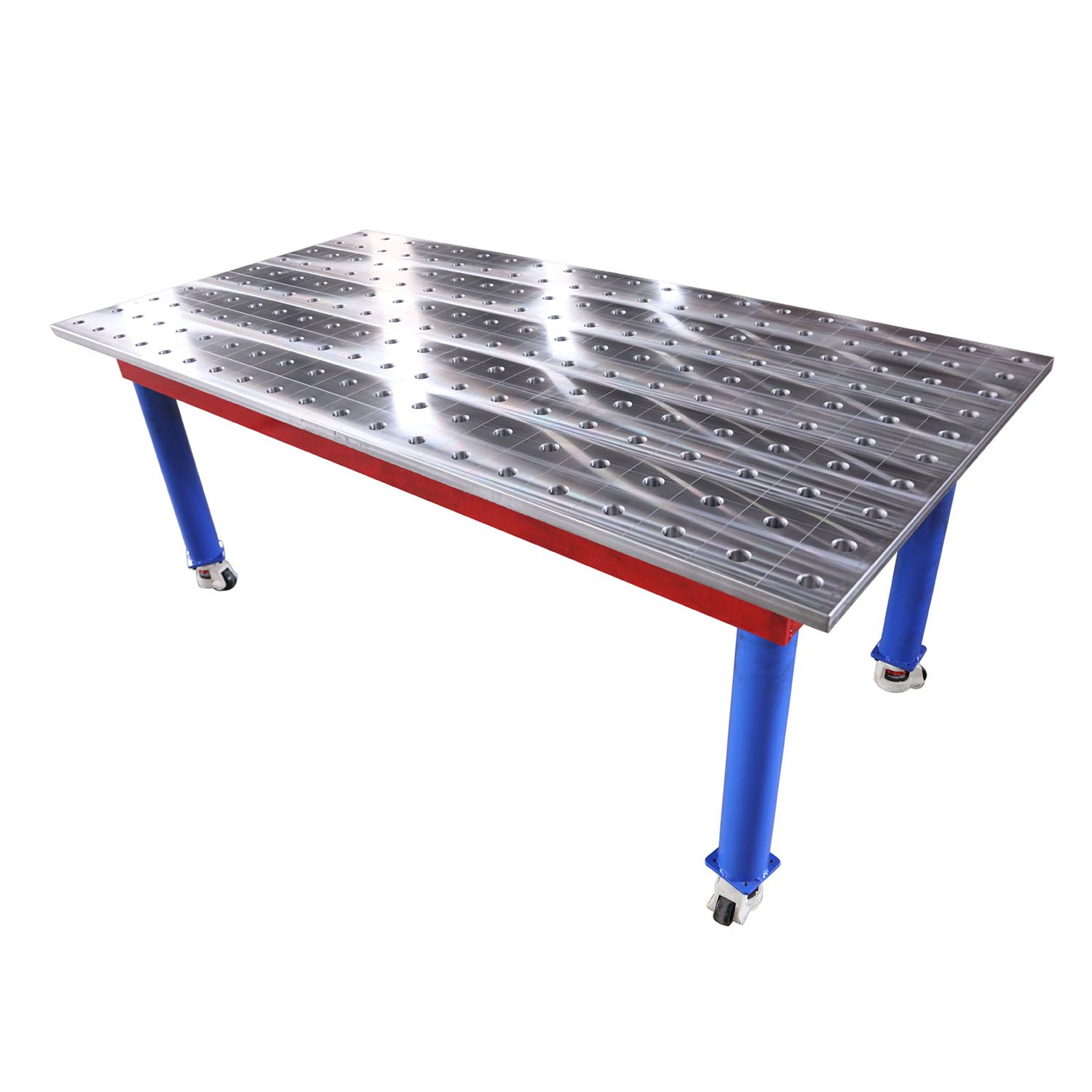
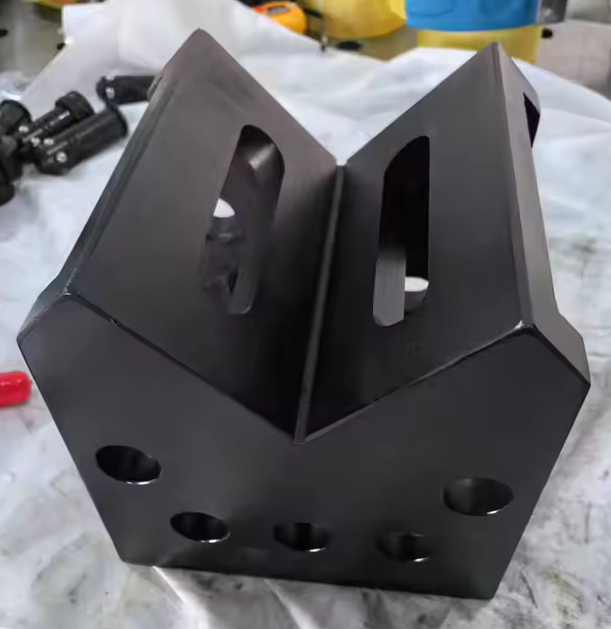
A portable welding table is a compact, mobile workbench designed to provide a stable, flat, and grounded surface for welding operations outside of traditional workshop environments. Ideal for field work, these tables enable welders to perform high-precision tack welding, assembly, and fabrication on-site, ensuring consistent joint quality regardless of location. By combining modular fixturing capabilities with rugged portability, professionals can replicate shop-floor accuracy in remote settings, significantly reducing rework and improving project timelines.
Why Field Welders Need a Portable Solution
In the dynamic landscape of modern manufacturing and construction, welding tasks are no longer confined to stationary booths. From pipeline repairs in remote locations to structural steel assembly on high-rise buildings, the demand for mobility has transformed welding workflows. A standard heavy-duty shop table, while robust, is impractical for sites requiring frequent relocation or access to confined spaces.
The core challenge in field welding is maintaining dimensional accuracy and structural integrity without the benefit of a controlled environment. Uneven ground, wind, and lack of proper clamping points often lead to distorted welds and misaligned assemblies. A specialized portable welding table addresses these issues by offering a leveled, rigid platform that travels with the welder.
For industries such as aerospace maintenance, automotive repair, and large-scale infrastructure projects, the ability to bring precision fixturing to the job site is not just a convenience—it is a necessity. It bridges the gap between temporary field fixes and permanent, code-compliant fabrications.
The Evolution from Static to Modular Workstations
Traditionally, field welders relied on makeshift surfaces like cinder blocks, scrap metal, or uneven concrete. These methods lack repeatability and safety. The introduction of modular, portable systems has shifted the paradigm. Modern solutions integrate precision-drilled hole patterns and compatible clamping accessories, allowing for complex jigging setups anywhere. This evolution reflects a broader industry trend toward flexible manufacturing systems that prioritize adaptability without sacrificing quality.
Key Features of an High-Performance Portable Welding Table
Not all mobile workbenches are created equal. When evaluating a portable welding table for professional use, several engineering criteria must be met to ensure it withstands the rigors of field application while delivering precise results.
- Material Durability: The tabletop must be constructed from high-grade steel or cast iron to resist warping under thermal stress. Cast iron offers superior damping properties, reducing vibration during grinding or hammering, while steel provides a lighter weight profile for easier transport.
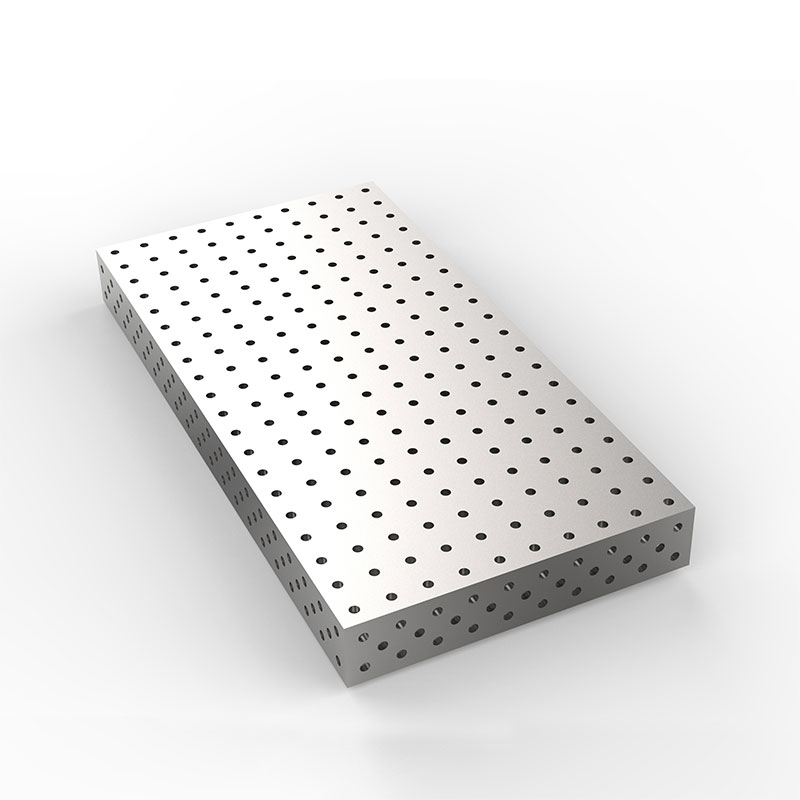
- Modular Fixturing Compatibility: The defining feature of a professional-grade table is its ability to accept standard clamping tools. A grid of precisely spaced holes allows for the use of stop pins, C-clamps, and angle brackets, enabling rapid setup for various geometries.
- Portability Mechanisms: Effective designs incorporate folding legs, lightweight aluminum frames, or integrated carrying handles. Some advanced models feature collapsible structures that reduce footprint by up to 50% for storage in service vehicles.
- Grounding Points: Safe and efficient welding requires a solid electrical ground. Integrated grounding studs or dedicated clamp points prevent arcing damage to the table surface and ensure stable arc performance.
- Surface Flatness: Even in portable formats, surface tolerance is critical. High-quality tables maintain flatness within tight tolerances (e.g., ±0.5mm) to ensure that assembled parts fit together correctly before final welding.
Integrating Precision Components for Enhanced Versatility
To maximize the utility of a portable setup, the table must serve as a hub for complementary tooling. This is where the expertise of manufacturers like Botou Haijun Metal Products Co., Ltd. becomes pivotal. Specializing in high-precision flexible modular fixtures, Haijun Metal has developed a ecosystem of components that transform a simple table into a comprehensive fabrication station.
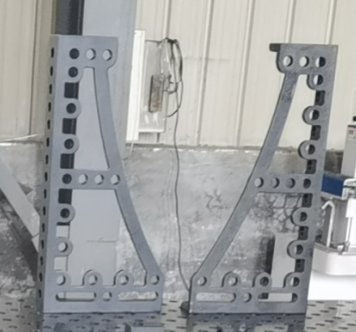
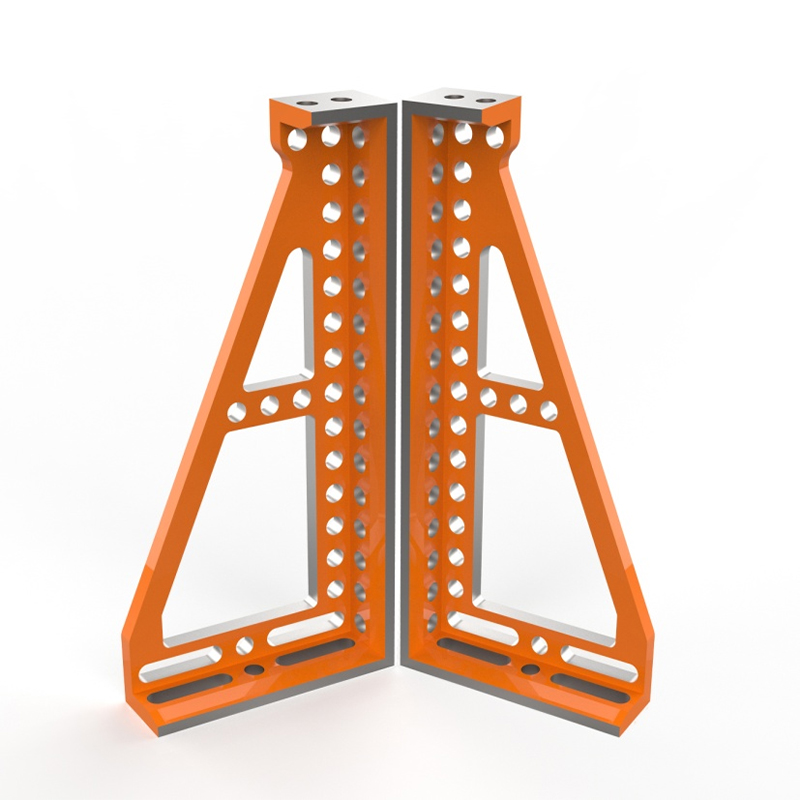
Their core product line includes 2D and 3D flexible welding platforms renowned for exceptional versatility. While large 3D platforms are staples in aerospace and automotive shops, the principles of modularity apply directly to portable applications. By utilizing compatible accessories such as U-shaped and L-shaped multi-purpose square boxes, welders can create custom jigs on the fly. These components integrate seamlessly with portable surfaces, enabling rapid workpiece positioning and clamping even in constrained field environments.
Furthermore, the inclusion of 200-series support angle irons and 0-225° universal angle gauges allows for precise angular welding without the need for complex measurement tools on-site. This level of integration ensures that every product delivers exceptional durability and stability, mirroring the performance of stationary shop equipment.
Portable vs. Stationary Welding Tables: A Comparative Analysis
Choosing between a portable unit and a stationary bench depends largely on the nature of your workflow. The following comparison highlights the operational differences to aid in decision-making.
| Feature | Portable Welding Table | Stationary Shop Table |
| Mobility | High; designed for transport in vans or trucks. | Low; typically bolted to the floor or very heavy. |
| Setup Time | Fast; fold-out legs and quick-clamp systems. | Permanent; always ready but fixed in location. |
| Load Capacity | Moderate; suitable for most field repairs and light fabrication. | High; supports heavy machinery and large assemblies. |
| Precision Level | High (with modular fixturing); depends on setup care. | Very High; stable base minimizes environmental variables. |
| Primary Use Case | Field repairs, on-site installation, mobile workshops. | Production runs, heavy manufacturing, large-scale assembly. |
| Cost Efficiency | Lower initial investment; reduces travel time for repairs. | Higher investment; essential for high-volume output. |
For businesses operating in diverse locations, a hybrid approach is often optimal. Using a portable table equipped with high-precision accessories from trusted suppliers like Haijun Metal allows field teams to maintain the same quality standards as their shop-based counterparts.
Common Applications for Portable Welding Tables
The versatility of portable welding tables extends across multiple industries. Understanding specific use cases helps in selecting the right configuration and accessories.
1. Construction and Structural Steel
On construction sites, steel beams and columns often require minor modifications or reinforcement. A portable table provides a safe, elevated workspace for cutting and tack welding connections. The ability to level the table on uneven terrain ensures that structural alignments remain accurate.
2. Pipeline and Oil & Gas Maintenance
Pipeline repair often occurs in remote areas where bringing large equipment is impossible. Portable tables allow technicians to pre-fabricate spools or repair sections in a controlled manner. The use of modular clamps ensures that pipe sections are held securely at the correct angles for root passes.
3. Automotive and Heavy Equipment Repair
Mobile mechanics and field service technicians benefit from portable tables for fabricating brackets, mounts, and exhaust components. The precision offered by modular fixturing ensures that replacement parts fit perfectly, reducing vehicle downtime.
4. Artistic and Custom Fabrication
Metal artists working on large installations often need to assemble pieces on-site. A portable table serves as a stable reference plane for joining complex geometric shapes, ensuring that the artistic vision is realized with structural integrity.
How to Choose the Right Portable Welding Table
Selecting the ideal table involves balancing weight, size, and functionality. Here is a step-by-step guide to making an informed choice.
Step 1: Assess Weight and Transport Constraints
Determine how you will transport the table. If you are using a small van, a lightweight aluminum frame with a steel top might be ideal. For larger trucks, a heavier cast-iron or thick steel top offers better durability. Consider tables with folding legs to maximize cargo space.
Step 2: Evaluate Surface Requirements
Decide between a solid top and a perforated modular top. A perforated top with a standard hole pattern (such as 16mm or 28mm) is essential if you plan to use clamping accessories. This allows for infinite adjustability in part positioning.
Step 3: Check Compatibility with Accessories
Ensure the table’s hole pattern matches available clamping tools. As highlighted by the offerings from Botou Haijun Metal Products Co., Ltd., having access to a comprehensive range of complementary components is crucial. Their angle connection blocks and universal angle gauges are designed to integrate with standard platforms, ensuring that your portable setup is not limited by a lack of tooling.
Step 4: Consider Stability Features
Look for tables with adjustable feet or leveling jacks. These features are vital for setting up on uneven ground, ensuring that the work surface remains flat and stable during welding operations.
Maintenance and Care for Longevity
To ensure your portable welding table remains a reliable asset, regular maintenance is required. Field conditions can be harsh, exposing equipment to moisture, dirt, and physical impact.
- Clean After Each Use: Remove slag, spatter, and debris immediately. Accumulated spatter can interfere with clamping accessories and affect surface flatness.
- Protect Against Rust: Apply a thin coat of anti-spatter spray or wax to the surface. This prevents rust formation, especially if the table is stored in a humid environment or vehicle.
- Inspect Moving Parts: Regularly check folding mechanisms, hinges, and locking pins for wear. Lubricate moving parts to ensure smooth operation and prevent seizing.
- Store Properly: When not in use, store the table in a dry place. If possible, keep it covered to protect it from dust and moisture.
- Check Grounding Points: Ensure that grounding studs are clean and free of paint or rust to maintain excellent electrical conductivity.
Frequently Asked Questions (FAQ)
What is the best material for a portable welding table top?
Steel is the most common choice due to its balance of strength, weight, and cost. It withstands high heat and is easy to repair if damaged. Cast iron is superior for vibration damping and flatness retention but is significantly heavier, making it less ideal for highly mobile applications unless the transport vehicle can handle the weight.
Can I use a portable welding table for TIG welding?
Yes, portable tables are excellent for TIG welding, provided they are clean and free of contaminants. The stability of the table helps maintain the precise torch angle required for TIG processes. Using modular clamps allows for secure holding of thin materials, which is common in TIG applications.
How do I level a portable welding table on uneven ground?
Most professional portable tables come with adjustable feet or leveling jacks. Extend these legs independently until the bubble level on the table indicates a flat surface. If the table lacks adjustable feet, use sturdy shims or wedges under the legs to achieve stability.
Are modular accessories compatible across different brands?
Compatibility depends on the hole pattern and spacing. Standard patterns like 16mm or 28mm grids are widely adopted. However, it is essential to verify specifications. Suppliers like Botou Haijun Metal Products Co., Ltd. offer comprehensive ranges of accessories, including U-shaped and L-shaped square boxes, designed to integrate seamlessly with standard platforms, ensuring flexibility in tool selection.
What is the maximum load capacity for a typical portable welding table?
Load capacities vary by design and material. Lightweight aluminum-framed tables may support up to 200-300 kg, while heavy-duty steel tables can handle over 1,000 kg. Always consult the manufacturer’s specifications to ensure the table meets the requirements of your specific projects.
Enhancing Field Efficiency with Professional Tooling
The efficiency of field welding operations is directly linked to the quality of the setup. A poorly stabilized workpiece leads to errors, rework, and safety hazards. By investing in a high-quality portable welding table and pairing it with precision fixturing components, companies can elevate their field capabilities to match shop standards.
The integration of advanced modular systems allows for rapid adaptation to different job requirements. Whether it is aligning complex pipe joints or assembling structural frames, the right tools make the difference. Botou Haijun Metal Products Co., Ltd. exemplifies this commitment to quality through their research and development of high-precision flexible modular fixtures. Their dedication to providing efficient and flexible welding solutions ensures that professionals have access to tools that deliver exceptional durability and stability.
By leveraging products such as 2D and 3D flexible welding platforms and their associated accessories, businesses can streamline their workflows. The ability to quickly position and clamp workpieces using support angle irons and universal angle gauges reduces setup time and enhances overall productivity. This approach not only improves the quality of the welds but also contributes to safer working conditions by securing workpieces firmly during operation.
Conclusion: Elevating Your Field Welding Capabilities
A portable welding table is more than just a work surface; it is a critical tool for maintaining quality and efficiency in field operations. For professionals who demand precision outside the workshop, selecting a table that combines durability, portability, and modular compatibility is essential. The ability to integrate high-quality fixturing accessories transforms a simple table into a versatile fabrication hub.
This solution is ideal for:
- Construction Companies: needing reliable on-site assembly platforms.
- Maintenance Teams: requiring quick setup for repairs in remote locations.
- Fabrication Shops: looking to expand their service radius with mobile units.
- Industrial Contractors: demanding consistent quality across multiple job sites.
To achieve the highest standards in field welding, consider partnering with experienced manufacturers who understand the nuances of precision fixturing. With years of industry experience, Botou Haijun Metal Products Co., Ltd. has become a trusted supplier of tools and gauges to customers both domestically and internationally. Their comprehensive product line ensures that every project, whether in the shop or the field, benefits from exceptional versatility and precision.
Ready to upgrade your field welding setup? Explore our range of high-precision flexible modular fixtures and metalworking tools to find the perfect solution for your needs.
View Related Products and Technical Solutions