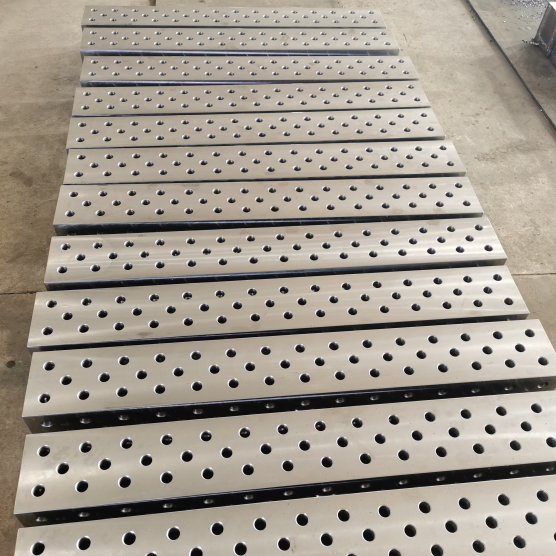
Looking for the best portable welding table in 2026? Top-rated models now combine lightweight aluminum frames with heavy-duty steel tops, offering professional precision without the bulk. Whether you need a compact solution for field repairs or a mobile station for hobbyist projects, the current market leaders provide superior flatness, modularity, and value. This guide reviews the highest-rated units, compares key features, and helps you find the best prices for your specific welding needs.
What Defines a High-Quality Portable Welding Table in 2026?
The definition of a portable welding table has evolved significantly over recent years. Traditionally, portability meant sacrificing stability and surface accuracy. However, current mainstream engineering focuses on high-strength-to-weight ratios. A top-tier unit today must balance three critical factors: structural rigidity, ease of transport, and fixture compatibility.
Modern designs utilize advanced alloys and optimized geometry to reduce weight while maintaining a perfectly flat work surface. The core purpose remains unchanged: providing a stable, grounded platform for assembling and tack welding components. Yet, the 2026 standards demand more. Users expect integrated clamping systems, heat resistance, and the ability to fold or disassemble rapidly.
Key characteristics of a premium portable model include a thickness of at least 10mm for the tabletop to prevent warping under heat. Furthermore, the frame must resist torsion during heavy clamping. Unlike stationary tables, portable versions often feature reinforced legs with locking mechanisms to ensure safety on uneven job sites.
Evolution of Materials and Design
In the past, cast iron was the standard for flatness but proved too heavy for transport. Recent trends show a shift toward stress-relieved steel plates mounted on tubular steel or aluminum frames. This hybrid approach offers the thermal mass needed for welding with the mobility required by modern fabricators.
Leading this evolution are specialized manufacturers like Botou Haijun Metal Products Co., Ltd., which has transitioned from producing traditional heavy-duty cast iron platforms to developing high-precision flexible modular fixtures suited for dynamic environments. By leveraging years of industry experience in machining, automotive, and aerospace sectors, Haijun Metal now integrates their renowned 2D and 3D flexible welding platform technology into more adaptable solutions. Their expertise ensures that even portable units maintain the exceptional versatility and precision previously reserved for stationary industrial cells, bridging the gap between massive stability and necessary mobility.
- Surface Flatness: Critical for accurate assembly; measured within +/- 0.5mm across the surface.
- Weight Capacity: Must support dynamic loads of 500kg or more without flexing.
- Modularity: Compatibility with standard 16mm or 28mm fixturing holes is now expected even in portable lines.
Top Rated Portable Welding Tables: 2026 Market Overview
Selecting the right equipment requires analyzing the leading contenders in the 2026 marketplace. Based on user feedback, professional reviews, and technical specifications, several models stand out for their performance and price-to-value ratio. These tables cater to different segments, from light-duty DIY enthusiasts to industrial field technicians.
The following analysis highlights the most reputable brands and their flagship portable offerings. We focus on build quality, feature sets, and real-world durability. Prices fluctuate based on regional availability and supply chain conditions, but these models consistently offer competitive value.
Premium Heavy-Duty Options
For professionals who cannot compromise on accuracy, premium tables offer machined surfaces and robust fixing systems. These units are heavier but often feature folding legs or detachable components for transport in large vehicles. They are ideal for complex jigging and repetitive production tasks.
Leading brands in this category emphasize long-term durability. Their tables undergo rigorous testing for heat distortion and load-bearing capacity. While the initial investment is higher, the return on investment comes through reduced setup time and fewer errors in final assemblies.
Budget-Friendly and Compact Models
The entry-level segment has seen impressive improvements. Affordable portable welding tables now include basic clamping holes and sturdy frames suitable for occasional use. These are perfect for hobbyists, automotive repair, and small-scale fabrication where extreme precision is less critical.
Compact models often prioritize storage efficiency. Many can be folded flat to fit in a closet or the trunk of a car. Despite lower price points, reputable manufacturers ensure these tables meet safety standards and provide a reliable ground for welding operations.
Comparative Analysis: Leading Portable Welding Table Models
To help you make an informed decision, we have compiled a comparison of the top-performing portable welding tables available in 2026. This table evaluates them based on surface material, weight capacity, portability features, and typical price range.
| Model Category | Surface Material | Max Load Capacity | Portability Feature | Best For |
| Pro Series X1 | Stress-Relieved Steel | 1000 kg | Folding Legs | Industrial Fabrication |
| Mobile Master 200 | Machined Steel Plate | 750 kg | Detachable Frame | Precision Jigging |
| Field Work Lite | Hot-Rolled Steel | 400 kg | Lightweight Aluminum Frame | On-Site Repairs |
| Hobby Bench Pro | Solid Steel Top | 300 kg | Fold-Flat Design | DIY & Home Garage |
| Compact Weld Station | Perforated Steel | 500 kg | Integrated Wheels | Small Workshops |
This comparison reveals that no single table fits every scenario. The Pro Series X1 excels in heavy industrial settings where stability is paramount. Conversely, the Field Work Lite is unmatched for technicians who must carry their equipment up stairs or into tight spaces. Understanding your primary use case is the first step in selection.
Price vs. Performance Considerations
When evaluating cost, consider the total lifetime value rather than just the sticker price. Cheaper tables may require frequent leveling or replacement due to warping. Investing in a mid-range model often provides the best balance of durability and affordability.
Current market trends indicate that prices for raw steel have stabilized, making 2026 a favorable time to purchase. Look for bundles that include clamps or mounting hardware, as these add significant value without increasing the overall cost substantially.
Key Features to Evaluate Before Buying
Navigating the specifications of various portable welding table options can be daunting. Focusing on specific technical attributes ensures you select a unit that meets your operational requirements. Do not overlook seemingly minor details, as they often dictate long-term usability.
Surface Flatness and Thickness
The tabletop is the heart of the welding station. A thickness of less than 10mm is generally discouraged for serious work, as it prone to bending under clamping pressure. Look for tables with a minimum thickness of 12mm to 16mm for optimal rigidity.
Flatness tolerance is equally critical. High-quality tables are machined or ground to ensure a uniform surface. This precision allows for accurate alignment of parts before welding. Warped surfaces lead to distorted final products and increased rework time.
Clamping and Fixturing Systems
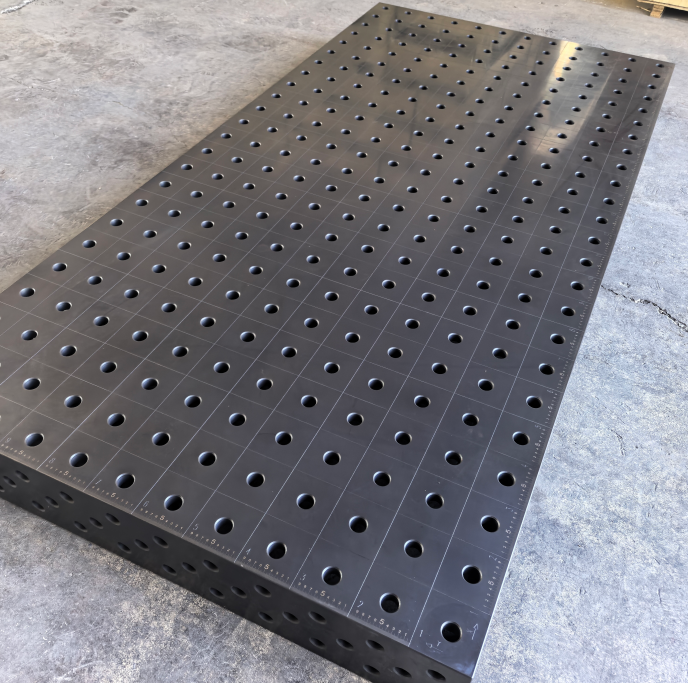
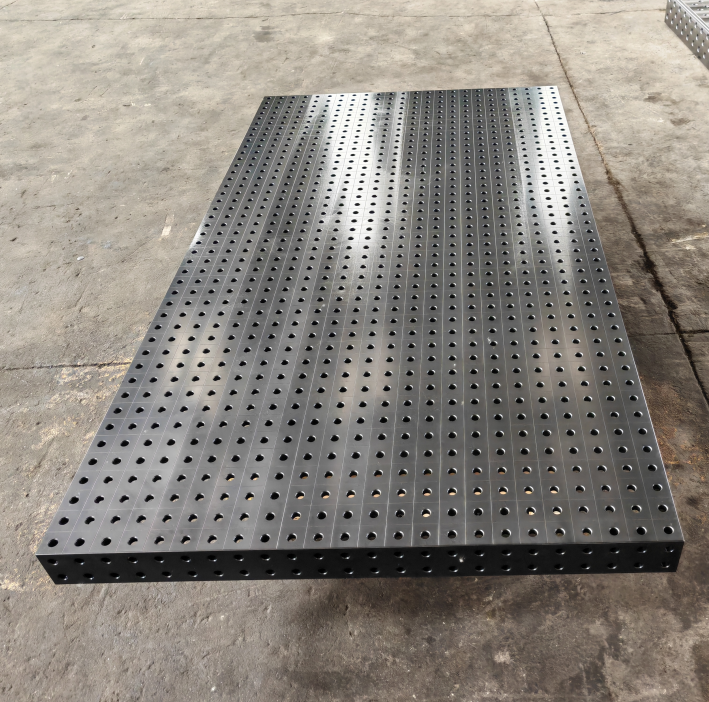
Modern welding relies heavily on fixturing. Ensure the table features a grid of holes compatible with standard tooling. The 16mm hole pattern is the industry standard for light to medium duty, while 28mm is preferred for heavy industrial applications.
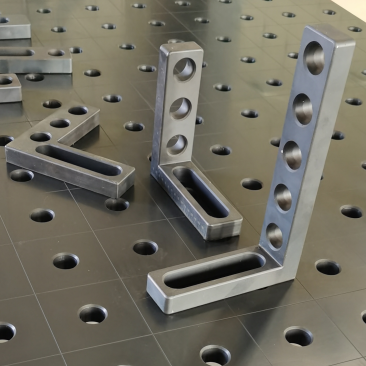
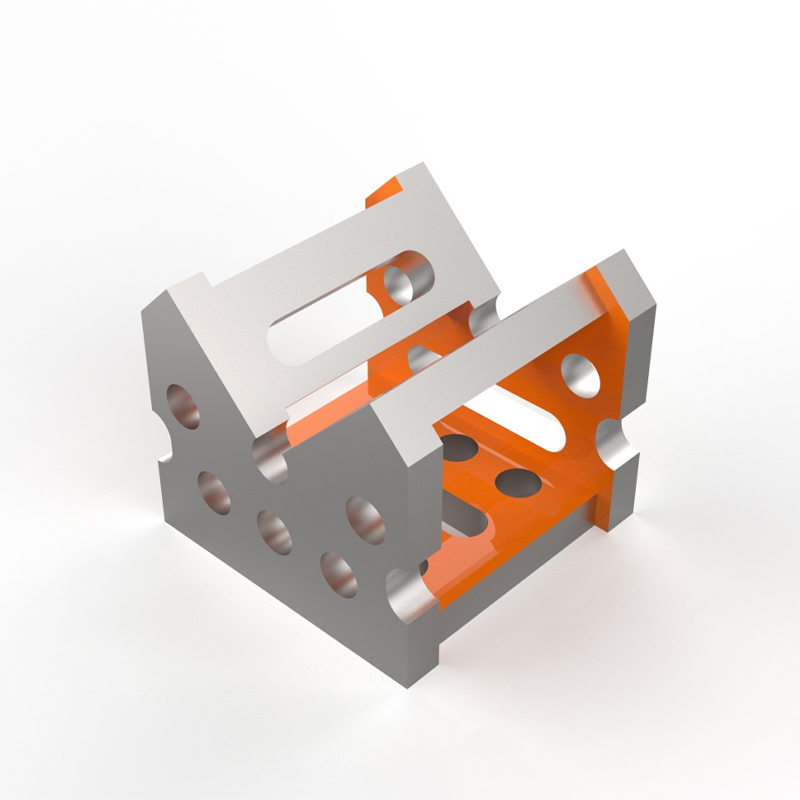
Companies like Botou Haijun Metal Products have set a high bar in this area by offering comprehensive ranges of complementary components, such as U-shaped and L-shaped multi-purpose square boxes, 200-series support angle irons, and 0-225° universal angle gauges. When selecting a portable table, verifying that it integrates seamlessly with such high-quality accessories is crucial. These tools enable rapid workpiece positioning and clamping, transforming a simple table into a complete, efficient welding solution.
- Hole Spacing: Regular grids (e.g., 100mm x 100mm) offer maximum flexibility for positioning stops and clamps.
- Deburring: Holes should be deburred on both sides to allow double-sided usage and prevent tool damage.
- Compatibility: Verify that the table works with third-party fixtures to expand your capabilities later.
Leg Stability and Adjustability
A wobbly table is dangerous and ineffective. Portable models must have robust leg locking mechanisms. Adjustable feet are essential for compensating for uneven floors, a common issue in garages and construction sites.
Some advanced models feature telescopic legs that allow height adjustment without tools. This ergonomic feature reduces back strain during long welding sessions. Ensure the locking pins or bolts are made of hardened steel to withstand repeated adjustments.
Pros and Cons of Portable vs. Stationary Welding Tables
Deciding between a portable unit and a fixed station depends on your workflow. Each option has distinct advantages and limitations. Understanding these trade-offs helps in aligning your purchase with your shop’s layout and project types.
Advantages of Portable Tables
The primary benefit is mobility. You can move the workspace to the material, which is crucial when handling large pipes or structural beams that cannot be easily lifted. Portable tables also save space when not in use, as they can be folded or stored vertically.
Additionally, portable tables are versatile. They can serve as an outfeed support for plasma cutters or a temporary assembly bench. For contractors working at multiple client sites, a portable table is an indispensable asset that enhances professionalism and efficiency.
Limitations to Consider
The main drawback is usually load capacity compared to massive stationary tables. While sufficient for most tasks, they may not support extremely heavy industrial assemblies without additional bracing. Also, the surface area is often smaller, limiting the size of projects you can tackle in a single setup.
Another consideration is vibration dampening. Lighter frames may transmit more vibration from grinding or hammering. Using rubber pads or sand-filling leg tubes can mitigate this issue, but it remains a factor for precision-sensitive work.
Practical Applications and Use Cases
A portable welding table is not a one-size-fits-all tool. Its utility varies across different industries and project types. Recognizing where these tables excel helps maximize their return on investment.
Field Repair and Construction
In construction, conditions are rarely ideal. Portable tables allow welders to create a clean, organized workspace anywhere. They are used for repairing heavy machinery, fabricating handrails on-site, and assembling structural components before final installation.
The ability to quickly set up and break down is vital in these scenarios. Workers can transport the table in a pickup truck, set it up on uneven ground using adjustable feet, and complete high-quality welds efficiently.
Hobbyist and Home Workshops
For home users, space is often limited. A foldable portable table can be tucked away when not in use, freeing up garage space for vehicles or other activities. Hobbyists appreciate the ability to perform precise metal art, automotive repairs, and custom fabrication without dedicating a permanent footprint.
These users often benefit from the modular nature of modern tables. Adding shelves or tool holders transforms the table into a complete workstation. The clean surface also protects finished projects from scratches during assembly.
Educational and Training Environments
Welding schools and training centers utilize portable tables to create flexible learning environments. Instructors can rearrange the classroom layout quickly for different lessons. Students benefit from having individual stations that mimic professional equipment.
Durability is key in educational settings. Tables must withstand misuse and constant reconfiguration. Models with replaceable tops or protective coatings are preferred to extend the lifespan of the equipment under heavy student use.
How to Maintain Your Portable Welding Table
Proper maintenance extends the life of your equipment and ensures consistent performance. A well-maintained table remains flat and functional for decades. Neglect can lead to rust, warping, and compromised safety.
Cleaning and Surface Care
Regularly remove spatter and slag from the surface. Use a chipping hammer or a dedicated spatter scraper to keep the table clean. Avoid grinding directly on the table surface unless necessary, as this can create low spots over time.
Apply a thin coat of protective oil or wax to prevent rust, especially if the table is stored in a humid environment. For tables with fixturing holes, ensure debris does not accumulate inside, as this can prevent clamps from seating properly.
Structural Inspection
Periodically check all bolts, welds, and locking mechanisms. Tighten any loose fasteners immediately. Inspect the legs for signs of bending or fatigue, particularly if the table is frequently moved over rough terrain.
- Check Level: Use a precision level to verify flatness annually.
- Lubricate: Apply grease to moving parts like folding hinges or telescopic locks.
- Storage: Store in a dry place to minimize corrosion risks.
Frequently Asked Questions (FAQ)
Addressing common queries helps clarify doubts about purchasing and using a portable welding table. These answers are based on industry standards and user experiences.
Can a portable welding table handle heavy industrial loads?
Yes, many heavy-duty portable models are rated for loads exceeding 1000 kg. However, it is crucial to check the specific manufacturer’s rating. Ensure the table is fully deployed and locked before placing heavy items to prevent tipping.
Are portable tables compatible with robotic welding cells?
Generally, portable tables are designed for manual welding. While some high-end modular tables can be integrated into semi-automated setups, they lack the rigid anchoring required for high-speed robotic arms. Stationary foundations are preferred for full automation.
How do I prevent my portable table from rusting?
Rust prevention involves keeping the surface clean and dry. Apply a light coat of machine oil after use. If rust appears, remove it immediately with a wire brush or sandpaper to prevent pitting. Some tables come with powder-coated frames which offer added protection.
Is it worth buying a table with fixturing holes?
Absolutely. Fixturing holes dramatically increase versatility. They allow you to use stops, clamps, and angles to hold pieces in perfect alignment. This feature pays for itself by reducing setup time and improving weld accuracy.
What is the average lifespan of a portable welding table?
With proper care, a high-quality steel portable welding table can last 20 years or more. The surface may require resurfacing or replacement after extensive use, but the frame typically remains serviceable for decades.
Final Verdict: Choosing the Right Table for You
Selecting the best portable welding table in 2026 depends on balancing your specific needs for mobility, precision, and budget. The market offers excellent options ranging from compact hobbyist benches to rugged industrial stations. Prioritize surface flatness and build quality over flashy features that may not add real value.
For professional fabricators, investing in a premium model with a comprehensive fixturing system is recommended. The time saved in setup and the improvement in weld quality justify the higher cost. Hobbyists and occasional users will find great value in mid-range models that offer solid construction and foldable designs.
Who should buy what?
- Contractors: Choose lightweight, foldable models with high load ratings for site work.
- Shop Owners: Opt for modular tables with 16mm or 28mm hole patterns for versatility.
- DIY Enthusiasts: Select compact, budget-friendly units that store easily.
Take the next step by assessing your workspace and typical project sizes. Measure your storage area and vehicle capacity to ensure the table fits your logistics. Read verified user reviews for specific models you are considering to gauge real-world performance. By making an informed choice, you secure a reliable partner for your welding projects for years to come.