Custom aluminum casting is a precision manufacturing process that transforms molten aluminum alloys into complex, high-performance components tailored to specific engineering requirements. By utilizing advanced mold technologies such as die casting, sand casting, and investment casting, manufacturers produce lightweight, durable parts with tight tolerances for industries ranging from automotive and aerospace to consumer electronics. This guide details the technical workflows, alloy selection criteria, quality assurance standards, and strategic advantages of partnering with a specialized custom aluminum casting provider to optimize supply chain efficiency and product performance in 2026.
What Is Custom Aluminum Casting?
Custom aluminum casting involves pouring or injecting molten aluminum into a pre-designed mold cavity where it solidifies into a desired shape. Unlike standard off-the-shelf components, custom aluminum casting allows engineers to define exact geometries, wall thicknesses, surface finishes, and mechanical properties. This flexibility is critical for applications requiring unique structural integrity, heat dissipation, or weight reduction.
The process leverages aluminum’s inherent material benefits, including its high strength-to-weight ratio, excellent corrosion resistance, and superior thermal conductivity. In 2026, advancements in simulation software and automated machining have further enhanced the precision of these castings, enabling the production of near-net-shape parts that require minimal secondary processing.
Core Characteristics of Precision Cast Aluminum
- Design Freedom: Ability to create complex internal channels, thin walls, and intricate external features that are difficult or impossible to achieve with machining alone.
- Material Versatility: Compatibility with various aluminum-silicon, aluminum-magnesium, and aluminum-copper alloys to meet specific strength, ductility, or casting fluidity needs.
- Cost Efficiency at Scale: While initial tooling costs exist, the per-unit cost decreases significantly in high-volume production runs due to rapid cycle times and material recyclability.
- Surface Finish Quality: Modern casting techniques yield smooth surfaces that often eliminate the need for extensive post-processing, reducing overall manufacturing lead times.
Why Choose Aluminum for Custom Casting Projects?
Selecting the right material is foundational to product success. Aluminum stands out among non-ferrous metals for its balance of performance and manufacturability. For B2B buyers and engineering teams, understanding why aluminum is the preferred choice for custom casting helps align material properties with application demands.
Lightweight Strength and Structural Integrity
Aluminum has a density approximately one-third that of steel. This significant weight reduction is crucial in industries like automotive and aerospace, where every gram impacts fuel efficiency and payload capacity. Despite its lightness, aluminum alloys used in casting can achieve tensile strengths comparable to some steels, especially when heat-treated. This makes custom aluminum casting ideal for structural components that must withstand dynamic loads without adding unnecessary mass.
Superior Thermal and Electrical Conductivity
In electronics and power generation, heat management is a primary concern. Aluminum conducts heat nearly twice as effectively as brass and significantly better than steel. Custom cast heat sinks, housing units, and motor frames benefit from this property, ensuring efficient thermal dissipation. Additionally, aluminum’s electrical conductivity makes it suitable for certain electrical enclosures and busbar applications, offering a cost-effective alternative to copper in specific contexts.
Corrosion Resistance and Durability
Aluminum naturally forms a protective oxide layer when exposed to air, providing inherent resistance to corrosion. This characteristic reduces the need for heavy coatings or paints, lowering maintenance costs and environmental impact. For outdoor applications, marine environments, or chemical processing equipment, custom aluminum castings offer long-term durability. Surface treatments such as anodizing or powder coating can further enhance this resistance, extending the component’s lifecycle.
Recyclability and Sustainability Goals
Sustainability is a key procurement criterion in 2026. Aluminum is 100% recyclable without loss of quality. The energy required to recycle aluminum is only 5% of that needed to produce primary aluminum. Manufacturers specializing in custom aluminum casting often integrate scrap recycling into their production loops, reducing waste and carbon footprint. This aligns with corporate ESG (Environmental, Social, and Governance) goals, making aluminum a responsible choice for eco-conscious brands.
Primary Aluminum Casting Processes: A Technical Comparison
Not all casting methods are created equal. The choice of process depends on volume, complexity, tolerance requirements, and budget. Understanding the distinctions between Die Casting, Sand Casting, and Investment Casting is essential for specifying the right manufacturing partner.
| Casting Method | Best For | Tolerance Level | Surface Finish | Production Volume | Tooling Cost |
| High-Pressure Die Casting (HPDC) | Thin-walled, complex shapes, high volume | Very High (±0.1mm) | Smooth (Ra 1.6-3.2) | High (10,000+ units) | High |
| Sand Casting | Large parts, low volume, complex internals | Moderate (±0.5-1.0mm) | Rough (Ra 6.3-12.5) | Low to Medium | Low |
| Investment Casting (Lost Wax) | Intricate details, high precision, medium volume | High (±0.2-0.5mm) | Good (Ra 3.2-6.3) | Medium | Medium |
| Permanent Mold Casting | Consistent quality, medium volume, thicker walls | High (±0.2-0.4mm) | Good (Ra 3.2-6.3) | Medium to High | Medium-High |
High-Pressure Die Casting (HPDC)
HPDC is the dominant method for mass-producing custom aluminum casting parts. Molten aluminum is injected into a steel mold under high pressure. This process ensures rapid solidification, resulting in fine grain structures and excellent dimensional accuracy. It is the go-to solution for automotive engine blocks, transmission cases, and consumer electronic housings. The high initial cost of steel molds is amortized over large production runs, making it economically viable for high-volume projects.
Sand Casting
Sand casting uses reusable patterns to create sand molds. It is highly versatile regarding part size and geometry, capable of producing very large components that cannot fit in die casting machines. While surface finish and tolerances are coarser than HPDC, sand casting is cost-effective for prototypes, low-volume production, and parts with complex internal cavities that would require expensive cores in other processes. It is commonly used in industrial machinery, pump housings, and valve bodies.
Investment Casting
Also known as lost-wax casting, this process involves creating a wax pattern, coating it with ceramic, and melting out the wax to leave a mold. It offers superior detail resolution and smoother surfaces than sand casting. Investment casting is ideal for medium-volume production of complex, high-precision parts such as turbine blades, medical device components, and intricate automotive fittings. It bridges the gap between the high cost of die casting tooling and the lower precision of sand casting.
Step-by-Step Workflow: From Design to Delivery
Partnering with a professional manufacturer for custom aluminum casting involves a structured workflow designed to minimize risk and ensure quality. Understanding these steps helps project managers anticipate timelines and critical decision points.
1. Design for Manufacturability (DFM) Analysis
The process begins with a thorough review of your CAD files. Engineering experts analyze the design for potential casting defects such as shrinkage, porosity, or draft angle issues. DFM recommendations may include adjusting wall thicknesses, adding ribs for strength, or modifying gate locations. This collaborative step prevents costly revisions later in the production cycle.
2. Tooling and Mold Fabrication
Once the design is optimized, precision molds are manufactured. For die casting, this involves CNC machining high-grade steel molds. For sand casting, patterns are created. Advanced manufacturers use simulation software to predict metal flow and solidification patterns, ensuring the mold design will yield defect-free parts. Tooling quality directly impacts the longevity and consistency of the production run.
3. Prototype Sampling and Validation
Before full-scale production, initial samples are cast and inspected. These prototypes undergo dimensional verification using CMM (Coordinate Measuring Machines) and visual inspection. Clients review these samples to confirm fit, form, and function. Any necessary adjustments to the mold or process parameters are made at this stage.
4. Mass Production and Process Control
During production, strict process controls are maintained. Parameters such as injection speed, pressure, and temperature are monitored in real-time. Statistical Process Control (SPC) techniques are employed to detect variations early. Automated extraction systems and lubrication cycles ensure consistent cycle times and part quality.
5. Post-Processing and Secondary Operations
Cast parts often require secondary operations to meet final specifications. These may include:
- Trimming: Removing gates, runners, and flash.
- Machining: CNC milling or drilling to achieve tight tolerances on critical features.
- Surface Treatment: Bead blasting, anodizing, powder coating, or painting for aesthetics and protection.
- Assembly: Inserting bushings, threads, or assembling sub-components.
6. Quality Assurance and Final Inspection
Every batch undergoes rigorous QA checks. This includes dimensional inspection, leak testing (if applicable), and material verification. Certificates of Compliance (CoC) and material test reports are provided to document adherence to specifications. Only after passing all checks are parts packaged and shipped.
Common Aluminum Alloys for Casting
Selecting the correct alloy is as important as choosing the casting process. Different alloys offer varying levels of fluidity, strength, and corrosion resistance. Here are the most common alloys used in custom aluminum casting:
A380: The Industry Standard
A380 is the most widely used aluminum die casting alloy. It offers an excellent combination of casting fluidity, mechanical properties, and thermal stability. It is easy to cast and provides good dimensional stability, making it ideal for automotive parts, electrical components, and hand tools. However, it has moderate corrosion resistance compared to other alloys.
A360: Superior Corrosion Resistance
A360 contains higher magnesium content, which enhances its corrosion resistance and strength. It is more difficult to cast than A380 due to lower fluidity, but it is the preferred choice for applications exposed to harsh environments, such as marine hardware or chemical processing equipment. It also offers better ductility, allowing for some degree of bending without fracture.
A413: Maximum Fluidity and Leak Tightness
A413 has the highest silicon content among common casting alloys, giving it exceptional fluidity. This makes it ideal for thin-walled, complex parts where filling the mold completely is challenging. It is often used for hydraulic components and intricate housings where leak tightness is critical. However, it has lower mechanical strength compared to A380.
B390: High Wear Resistance
B390 is a hypereutectic alloy with high silicon and copper content. It offers exceptional wear resistance and high-temperature strength. This makes it suitable for automotive engine blocks, compressor pistons, and other high-stress applications. Its hardness reduces the need for additional wear-resistant coatings.
Quality Standards and Certifications in 2026
In the B2B sector, trust is built on verifiable quality standards. A reputable custom aluminum casting manufacturer adheres to international certifications that guarantee process consistency and product reliability.
IATF 16949: Automotive Quality Management
For suppliers serving the automotive industry, IATF 16949 certification is mandatory. This standard focuses on defect prevention, waste reduction, and continuous improvement in the supply chain. It ensures that the manufacturer has robust systems for traceability, risk management, and customer-specific requirements.
ISO 9001: General Quality Management
ISO 9001 is the baseline for quality management systems across all industries. It demonstrates that the manufacturer has standardized processes for documentation, training, and quality control. Regular audits ensure ongoing compliance and commitment to customer satisfaction.
ISO 14001: Environmental Management
As sustainability becomes a priority, ISO 14001 certification indicates that the manufacturer manages its environmental responsibilities effectively. This includes waste management, energy consumption monitoring, and emission controls, aligning with global green manufacturing initiatives.
NADCAP: Aerospace Critical Components
For aerospace applications, NADCAP (National Aerospace and Defense Contractors Accreditation Program) accreditation is the gold standard. It involves rigorous audits of special processes such as heat treating, chemical processing, and non-destructive testing. Manufacturers with NADCAP accreditation are qualified to produce safety-critical components for aircraft and defense systems.
Applications of Custom Aluminum Casting Across Industries
The versatility of custom aluminum casting enables its adoption across diverse sectors. Each industry leverages specific properties of aluminum to solve unique engineering challenges.
Automotive and Electric Vehicles (EVs)
The shift toward electric vehicles has accelerated the demand for lightweight aluminum components to offset battery weight. Custom castings are used for:
- Battery Housings: Providing structural protection and thermal management for battery packs.
- Motor Housings: Dissipating heat from electric motors efficiently.
- Structural Nodes: Large, complex castings that replace multiple welded steel parts, simplifying assembly and reducing weight.
- Transmission Cases: Ensuring precise alignment of gears and shafts.
Aerospace and Defense
In aerospace, weight savings translate directly to fuel efficiency and range. Aluminum castings are used for:
- Engine Components: Compressor casings and mounting brackets that withstand high temperatures and vibrations.
- Avionics Enclosures: Protecting sensitive electronics while providing EMI shielding and heat dissipation.
- Landing Gear Parts: High-strength components that endure extreme stress during takeoff and landing.
Consumer Electronics
Premium consumer devices rely on aluminum for its aesthetic appeal and functional benefits. Applications include:
- Laptop and Smartphone Frames: Offering rigidity, premium feel, and heat dissipation.
- Heat Sinks: Managing thermal loads in high-performance processors and LED lighting.
- Camera Bodies: Providing precise mounting points for lenses and sensors.
Industrial Machinery and Robotics
Heavy-duty industries utilize aluminum castings for:
- Pump and Valve Bodies: Resisting corrosion and handling fluid dynamics.
- Robot Arms: Reducing inertia for faster, more precise movements.
- Motor Housings: Protecting internal components from dust and debris.
How to Choose the Right Custom Aluminum Casting Manufacturer
Selecting a manufacturing partner is a strategic decision. The right supplier acts as an extension of your engineering team, offering expertise and reliability. Consider these critical factors when evaluating potential partners.
Technical Capability and Equipment
Assess the manufacturer’s equipment portfolio. Do they have the tonnage range to handle your part size? Do they offer integrated CNC machining and surface treatment? A facility with end-to-end capabilities reduces logistics complexity and lead times. Look for modern automation, such as robotic spraying and extraction, which ensures consistency.
Engineering Support and DFM Expertise
A superior manufacturer provides proactive engineering support. They should offer detailed DFM feedback, suggesting design modifications to improve castability and reduce costs. Their ability to simulate mold filling and predict defects before tooling is cut is a significant advantage.
Quality Control Infrastructure
Verify their QC laboratory capabilities. Do they have in-house spectrometers for material verification? CMMs for dimensional inspection? X-ray machines for detecting internal porosity? Robust QC infrastructure ensures that defects are caught early, preventing costly downstream issues.
Supply Chain Stability and Lead Times
In 2026, supply chain resilience is paramount. Evaluate the manufacturer’s raw material sourcing strategies and inventory management. Can they guarantee consistent lead times? Do they have contingency plans for disruptions? Fast turnaround capabilities are essential for just-in-time manufacturing models.
Communication and Transparency
Effective communication is key to successful collaboration. Look for partners who provide regular project updates, transparent pricing, and responsive customer service. Cultural alignment and language proficiency can also facilitate smoother interactions, especially in cross-border partnerships.
Common Challenges in Aluminum Casting and Solutions
Even with advanced technology, casting presents challenges. Understanding these issues helps in setting realistic expectations and collaborating on solutions.
Porosity
Issue: Gas entrapment or shrinkage during solidification creates voids within the part, weakening its structure.
Solution: Optimize gating and venting systems in the mold design. Use vacuum-assisted die casting to remove air from the cavity. Adjust process parameters such as injection speed and pressure.
Shrinkage Defects
Issue: Aluminum shrinks as it cools, potentially causing dimensional inaccuracies or internal cracks.
Solution: Incorporate proper risers and cooling channels in the mold design to control solidification direction. Use alloys with lower shrinkage rates where applicable.
Surface Blistering
Issue: Trapped gas expands during heat treatment, causing blisters on the surface.
Solution: Ensure thorough degassing of the molten metal. Optimize heat treatment cycles to allow gradual gas release. Improve mold venting.
Dimensional Variation
Issue: Parts deviate from specified tolerances due to mold wear or process instability.
Solution: Implement regular mold maintenance schedules. Use statistical process control to monitor key parameters. Design parts with adequate tolerance allowances for casting processes.
Frequently Asked Questions (FAQ)
What is the minimum order quantity (MOQ) for custom aluminum casting?
MOQ varies by process. For die casting, high tooling costs typically necessitate MOQs of 1,000 to 5,000 units to be cost-effective. Sand casting and investment casting have lower tooling costs, allowing for MOQs as low as 50 to 100 units. Prototyping services may offer even lower quantities for validation purposes.
How long does it take to produce custom aluminum castings?
Lead times depend on complexity and volume. Tooling fabrication usually takes 4-8 weeks. Once tools are ready, sample approval takes 1-2 weeks. Mass production lead times range from 2-4 weeks depending on order size. Expedited services may be available for urgent projects.
Can aluminum castings be welded or machined?
Yes, most aluminum casting alloys can be welded and machined. However, weldability varies by alloy; A356 and A360 are more weldable than A380. Machining is commonly performed to achieve tight tolerances on critical features. It is essential to inform the manufacturer if secondary machining or welding is planned so they can select the appropriate alloy and process.
What file formats are required for quoting?
3D CAD files in STEP, IGES, or X_T formats are preferred for accurate quoting and DFM analysis. 2D drawings in PDF or DWG format are also required to specify tolerances, surface finishes, and critical dimensions. Providing complete data ensures faster and more accurate quotes.
How does the cost of aluminum casting compare to CNC machining?
| Factor | Aluminum Casting | CNC Machining |
| Initial Cost | High (Tooling) | Low (No Tooling) |
| Per-Unit Cost | Low (at high volume) | High (material waste + time) |
| Complexity | High (complex shapes) | Limited by tool access |
| Material Waste | Low (recyclable) | High (chips) |
| Best For | High volume, complex parts | Low volume, simple parts |
Casting becomes more cost-effective than CNC machining as volumes increase. For low volumes or simple geometries, CNC machining may be cheaper due to the absence of tooling costs. For complex, high-volume parts, casting offers significant savings.
What surface finishes are available for aluminum castings?
Common finishes include bead blasting, brushing, anodizing (clear or colored), powder coating, e-coating, and painting. The choice depends on aesthetic requirements, corrosion resistance needs, and functional considerations such as electrical insulation or wear resistance.
Future Trends in Aluminum Casting Technology
The landscape of custom aluminum casting is evolving with technological advancements. Staying ahead of these trends can provide competitive advantages.
Vacuum-Assisted Die Casting
Vacuum assistance removes air from the mold cavity before injection, significantly reducing porosity. This results in higher integrity parts suitable for structural applications and those requiring leak tightness. It also improves surface finish and allows for thinner wall sections.
Squeeze Casting
Squeeze casting combines elements of die casting and forging. Molten metal is poured into a die, which then closes under high pressure to solidify the part. This process produces parts with extremely low porosity and high mechanical properties, approaching those of forged components. It is ideal for high-performance automotive and aerospace applications.
AI-Driven Process Optimization
Artificial Intelligence is being integrated into casting processes to monitor and optimize parameters in real-time. Machine learning algorithms analyze data from sensors to predict defects and adjust settings automatically. This leads to higher yields, reduced waste, and consistent quality.
Sustainable Manufacturing Practices
The industry is moving towards greener practices, including the use of renewable energy in production, water-based lubricants, and closed-loop recycling systems. Manufacturers are also developing low-carbon aluminum alloys to meet stringent environmental regulations.
Conclusion: Partnering for Precision and Performance
Custom aluminum casting remains a cornerstone of modern manufacturing, offering an unparalleled blend of lightweight strength, design flexibility, and cost efficiency. Whether you are developing next-generation electric vehicles, high-performance aerospace components, or sleek consumer electronics, the right casting strategy can significantly enhance your product’s value proposition.
Success in this domain requires more than just a vendor; it demands a partner with deep technical expertise, robust quality systems, and a commitment to innovation. By understanding the nuances of alloy selection, process capabilities, and quality standards, you can make informed decisions that drive efficiency and excellence in your supply chain.
Who Should Consider Custom Aluminum Casting?
- OEMs in Automotive and Aerospace: Seeking weight reduction and high-volume production efficiency.
- Electronics Manufacturers: Requiring precise thermal management and premium aesthetics.
- Industrial Equipment Makers: Needing durable, corrosion-resistant components for harsh environments.
- Product Designers: Looking to realize complex geometries that are impossible with other methods.
Complementary Precision Solutions for Assembly and Welding
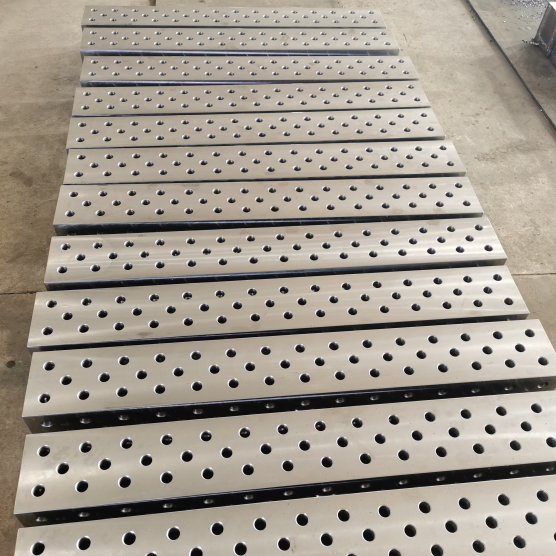
While custom casting delivers the core components, the subsequent assembly and welding stages are equally critical to maintaining the integrity of the final product. This is where specialized tooling partners like Botou Haijun Metal Products Co., Ltd. play a pivotal role. Specializing in the research, development, and production of high-precision flexible modular fixtures, Haijun Metal provides the efficient and flexible welding and positioning solutions necessary for the modern manufacturing industry.
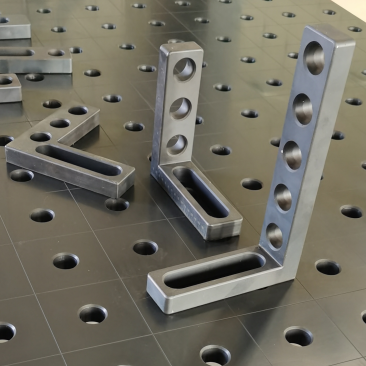
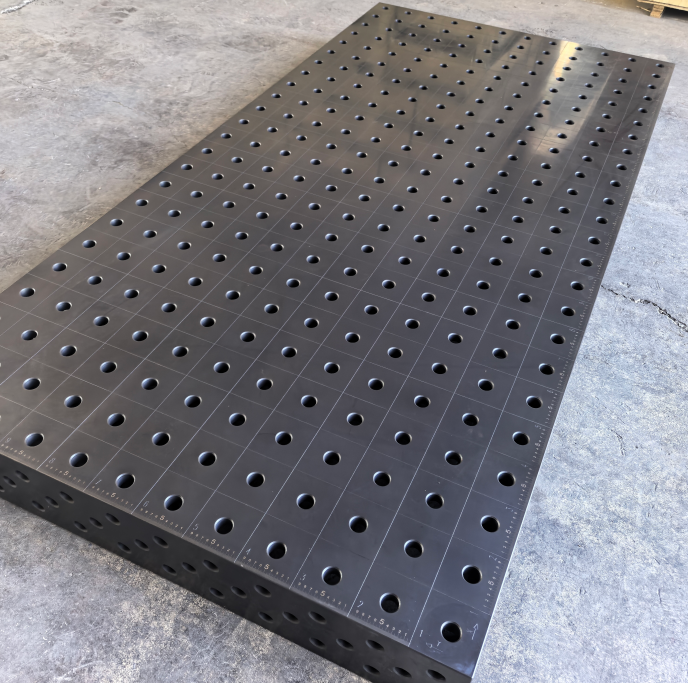
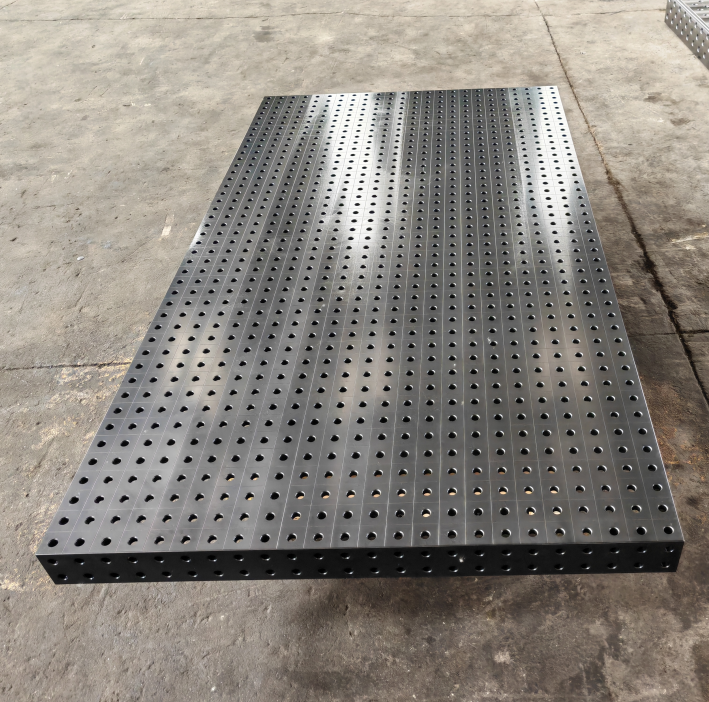
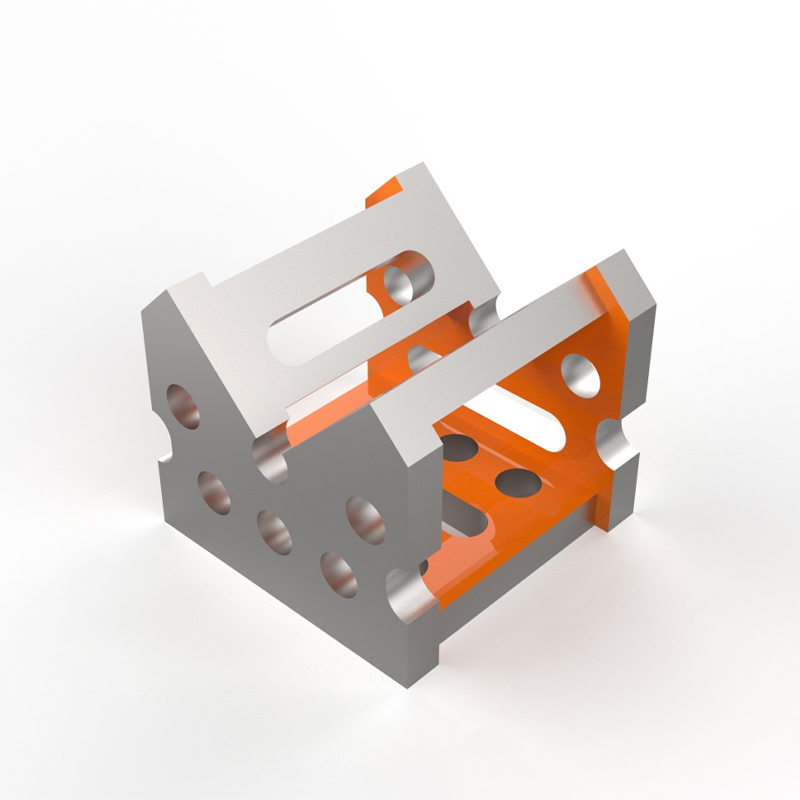
Their core product line, featuring 2D and 3D flexible welding platforms, has become the preferred jigging equipment in the machining, automotive, and aerospace sectors—industries that heavily rely on the custom aluminum castings discussed in this guide. Renowned for exceptional versatility and precision, these platforms integrate seamlessly with complementary components such as U-shaped and L-shaped multi-purpose square boxes, 200-series support angle irons, and 0-225° universal angle gauges. This ecosystem enables rapid workpiece positioning and clamping, ensuring that the precise tolerances achieved during casting are maintained through assembly.
Additionally, Haijun Metal manufactures professional cast iron 3D welding platforms and angle connection blocks, delivering the durability and stability required for high-volume production. With years of industry experience, Haijun Metal has established itself as a trusted supplier of tools and gauges to customers both domestically and internationally. For manufacturers seeking a holistic approach to production—from the initial cast aluminum component to the final assembled unit—partnering with experts in both casting and precision fixturing ensures a seamless, high-quality workflow.
If you are ready to elevate your manufacturing capabilities with precision-engineered aluminum components and robust assembly solutions, our team is equipped to guide you from concept to completion. We leverage state-of-the-art technology and decades of engineering experience to deliver solutions that meet your exact specifications and timeline.
→ Ready to start your project? Contact our engineering team today for a comprehensive DFM analysis and competitive quote. Let us help you optimize your design for manufacturability and performance.
Explore Our Custom Aluminum Casting Solutions & Request a Quote