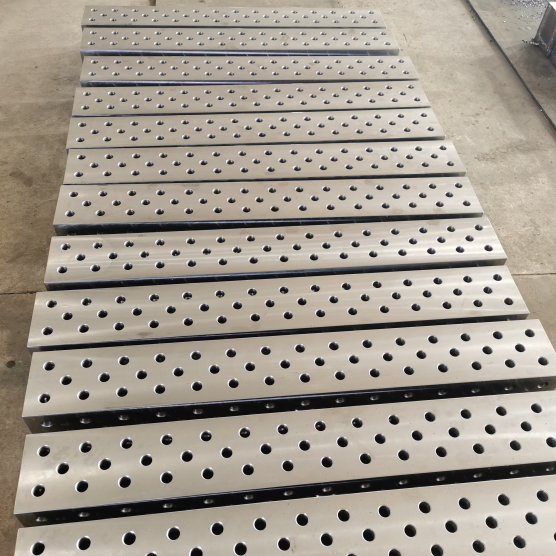
In 2026, the welding table price from top China factory suppliers typically ranges between $150 and $800 for standard professional models, depending on thickness, material grade, and surface precision. A welding table is a specialized workbench designed with a flat, durable surface featuring a grid of holes or slots to securely clamp and position metal pieces during fabrication. Sourcing directly from Chinese manufacturers offers the lowest quotes due to streamlined production scales and reduced overhead costs, making it the preferred choice for global buyers seeking cost-effective yet high-quality equipment.
Understanding Welding Table Price Factors in 2026
The final welding table price is not a single fixed number but a result of several engineering and material variables. In 2026, market dynamics have shifted slightly due to raw material fluctuations and advanced manufacturing techniques. Understanding these components helps buyers negotiate better deals and avoid overpaying for unnecessary features.
Primary cost drivers include the grade of steel used, the thickness of the tabletop, the precision of the machining process, and the complexity of the leg structure. Heavy-duty tables designed for industrial automation command higher prices than light-duty hobbyist benches. Additionally, surface treatments like nitriding or specialized coatings to prevent spatter adhesion add to the manufacturing cost but significantly extend the product’s lifespan.
Buyers must also consider logistics. While the factory gate price might be low, shipping heavy steel items internationally involves substantial freight costs. However, even with shipping included, direct sourcing from China often remains 30% to 50% cheaper than purchasing from local distributors who add significant markups for inventory holding and retail operations.
Material Quality and Steel Grades
The core determinant of any welding table price is the quality of the steel. In 2026, most reputable Chinese factories utilize Q345B or equivalent high-strength low-alloy steel for professional tables. This material offers superior resistance to warping under intense heat compared to standard mild steel (Q235).
- Standard Mild Steel: Economical and suitable for light DIY projects, but prone to warping over time under heavy industrial use.
- High-Strength Alloy Steel: The industry standard for 2026, offering excellent thermal stability and durability, justifying a mid-range price point.
- Stainless Steel Options: Reserved for specialized industries like food processing or pharmaceuticals where corrosion resistance is critical, resulting in the highest price tier.
Choosing the right grade is crucial. Opting for the cheapest option often leads to premature failure, where the table surface becomes uneven, ruining the precision of future welds. Investing in higher-grade steel ensures the table remains a flat reference plane for years.
Tabletop Thickness and Precision Machining
Thickness directly correlates with rigidity and heat dissipation. In the current market, tabletops range from 10mm for light duty to 30mm or more for heavy industrial applications. Thicker plates absorb more heat without distorting, which is vital for maintaining dimensional accuracy.
Precision machining is another hidden cost factor. High-end tables undergo milling processes to ensure flatness within tight tolerances, often less than 0.5mm across the entire surface. This level of precision requires advanced CNC machinery and rigorous quality control, increasing the welding table price but providing essential value for precision fabricators.
- 10mm – 16mm: Ideal for hobbyists and light repair work; lower cost but limited load capacity.
- 19mm – 25mm: The sweet spot for professional shops; balances cost, weight, and rigidity.
- 28mm – 30mm+: Designed for heavy structural steel fabrication and robotic welding cells; highest price category.
Comparing Welding Table Types and Costs
Navigating the myriad of options available from Chinese suppliers can be daunting. To simplify the decision-making process, it is essential to categorize tables based on their intended application. Each type comes with distinct features and pricing structures tailored to specific user needs.
The market in 2026 is dominated by three main categories: modular fixture tables, solid plate tables, and portable folding units. Modular tables have seen a surge in popularity due to their versatility in complex jigging setups, while solid plates remain the go-to for heavy beating and hammering.
| Table Type | Key Characteristics | Typical Price Range (FOB China) | Best Application |
| Modular Fixture Table | Grid of holes (D16/D28), compatible with clamps, high precision | $400 – $800 | Complex fabrication, jigs, robotics |
| Solid Plate Table | No holes, thick steel slab, extremely durable | $200 – $500 | Heavy cutting, grinding, general welding |
| Portable/Folding Table | Lightweight, collapsible legs, compact storage | $150 – $300 | On-site repairs, hobbyists, limited space |
| Custom Industrial Cell | Tailored dimensions, integrated grounding, special coatings | $1000+ | Automated production lines, specialized sectors |
This comparison highlights that while modular tables carry a premium due to the machining of the hole pattern and hardening treatments, they offer unparalleled flexibility. Conversely, solid plate tables provide raw durability at a more accessible welding table price, making them ideal for rougher work environments.
Modular Fixture Tables: The Precision Choice
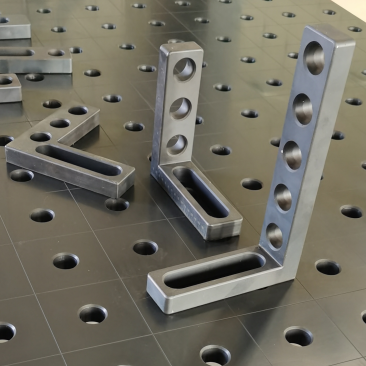
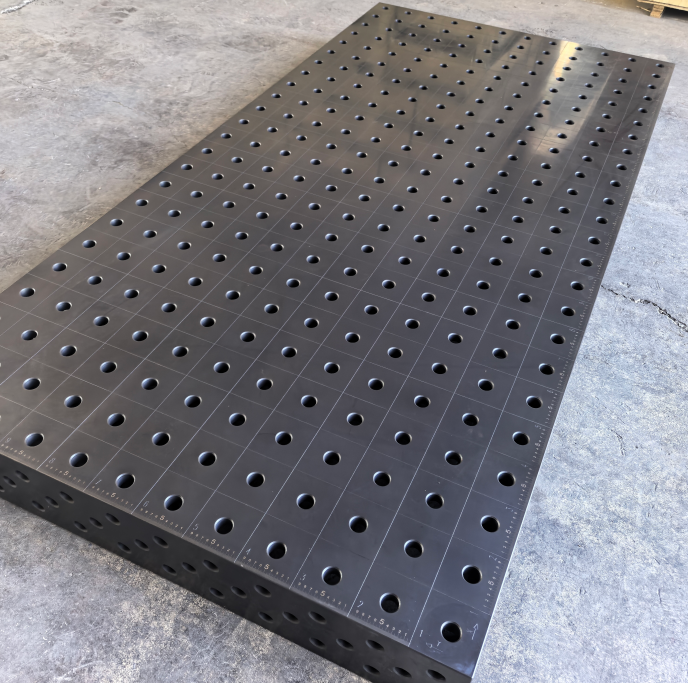
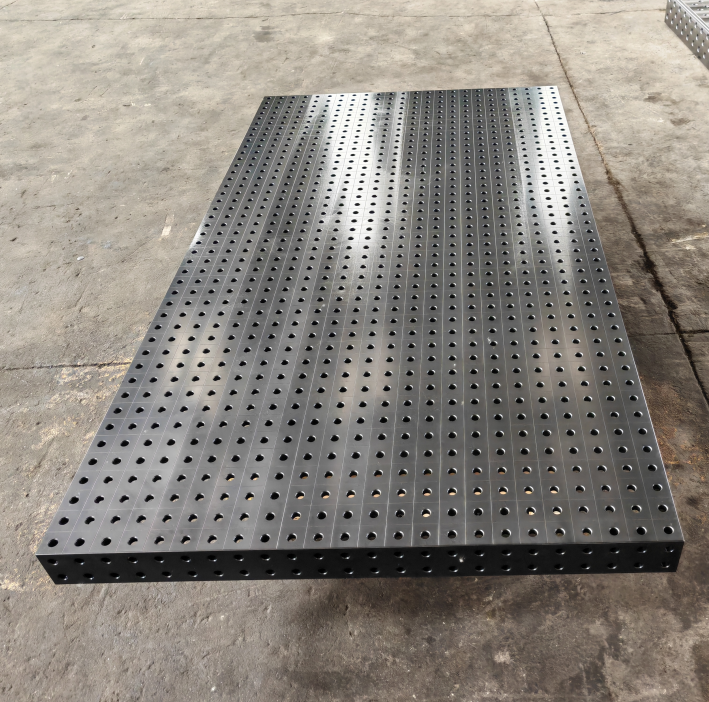
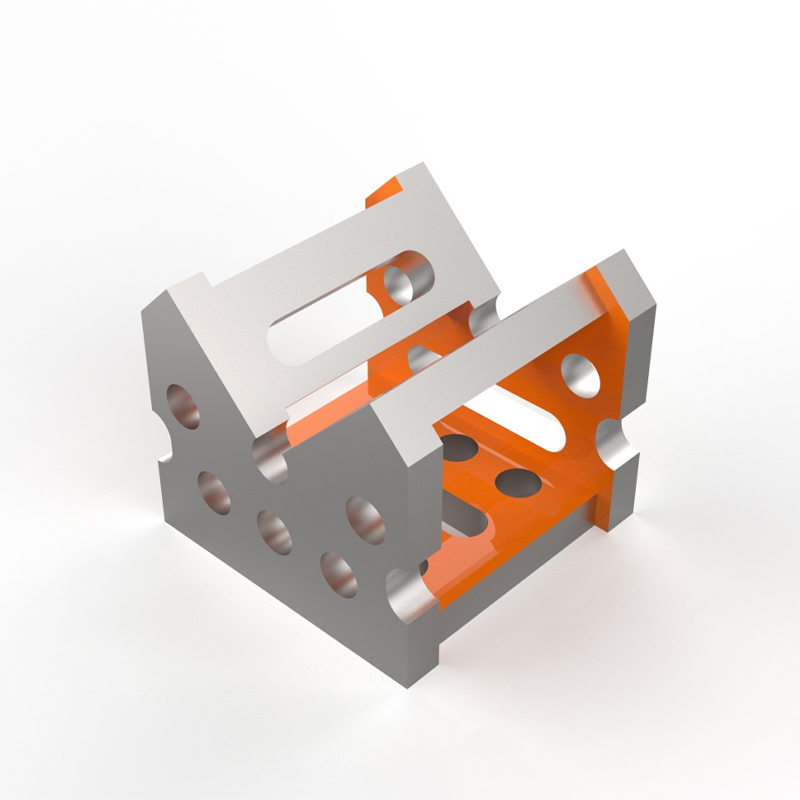
Modular tables, often referred to as 3D welding tables, feature a precise grid of holes on the surface and sometimes on the sides. These holes allow for the attachment of various stops, clamps, and angles, enabling users to build complex 3D structures with high repeatability.
In 2026, the D16 and D28 systems are the global standards. D16 is suitable for lighter materials up to 10mm thickness, while D28 is designed for heavier structural steel. The cost difference reflects the tooling required to drill and harden these patterns accurately. Buyers should verify that the holes are hardened to prevent wear from repeated clamping.
- Versatility: Allows for infinite positioning possibilities.
- Accuracy: Ensures parts are square and aligned perfectly every time.
- Scalability: Multiple tables can be bolted together to create larger work surfaces.
Solid Plate Tables: Durability Over Features
For workshops focused on cutting, grinding, and heavy structural welding, a solid plate table is often the pragmatic choice. Without the perforated grid, these tables offer a continuous surface that supports large sheets of metal without sagging through holes.
The absence of drilling and hardening processes keeps the welding table price lower. These tables are essentially massive blocks of steel on sturdy legs. They are less about precise jigging and more about providing a stable, sacrificial surface that can withstand sparks, slag, and heavy impacts without damage.
Why Source Welding Tables Directly from China?
Sourcing directly from a China factory supplier is the most effective strategy for securing the lowest welding table price without compromising on quality. By 2026, Chinese manufacturing has evolved from producing cheap imitations to leading in advanced metal fabrication technologies.
The primary advantage is the elimination of middlemen. Traditional supply chains involve importers, distributors, and retailers, each adding a markup that can double the final cost. Direct factory engagement allows buyers to pay solely for production and logistics, capturing significant savings.
Furthermore, Chinese factories benefit from a complete local supply chain. Raw steel, hardware, and coating materials are all sourced domestically, reducing input costs. This vertical integration enables them to offer competitive pricing that Western manufacturers struggle to match.
- Cost Efficiency: Lower labor and overhead costs translate to better pricing.
- Manufacturing Scale: Massive production volumes allow for economies of scale.
- Technological Advancement: Adoption of automated welding robots and CNC machining ensures consistent quality.
- Customization: Factories are often more willing to customize dimensions and features for direct buyers.
Navigating the Supply Chain Landscape
While the benefits are clear, navigating the Chinese supply chain requires diligence. Not all suppliers are created equal. Some are trading companies masquerading as factories, while others are genuine manufacturers with decades of experience.
In 2026, the distinction is clearer due to digital transparency. Genuine factories often showcase live production feeds, detailed machinery lists, and certification documents. Buyers should prioritize suppliers who specialize in welding equipment rather than general metalworkers who dabble in tables as a side product.
Communication is also key. Leading Chinese suppliers now have English-speaking sales teams and engineers who understand international standards like ISO and AWS. This reduces the risk of misunderstandings regarding specifications and ensures the final product meets expectations.
Step-by-Step Guide to Ordering from a China Factory
Securing the best welding table price involves a structured approach to sourcing. Following a systematic process minimizes risks and ensures a smooth transaction from inquiry to delivery.
The first step is defining your requirements clearly. Determine the size, thickness, hole pattern (if any), and load capacity needed. Vague inquiries often lead to generic quotes that may not fit your specific needs. Once specifications are set, you can begin the supplier vetting process.
- Step 1: Define Specifications: Create a detailed document outlining dimensions, material grade, surface finish, and any custom features.
- Step 2: Supplier Vetting: Contact multiple suppliers. Request business licenses, factory photos, and references from past international clients.
- Step 3: Request Quotations: Ask for FOB (Free on Board) prices to compare base costs accurately. Ensure the quote includes packaging details.
- Step 4: Sample Evaluation: If possible, order a sample unit or visit the factory. Inspect the weld quality, flatness, and hole precision personally.
- Step 5: Negotiate Terms: Discuss payment terms, lead times, and warranty conditions. Secure a formal contract detailing all agreed specifications.
- Step 6: Logistics Planning: Arrange for freight forwarding. Decide between LCL (Less than Container Load) or FCL (Full Container Load) based on quantity.
Payment security is paramount. Use secure methods like Letters of Credit (L/C) or escrow services for large orders. Avoid full upfront payments via wire transfer unless you have established trust with the supplier. A typical arrangement involves a 30% deposit and the balance before shipment.
Quality Control and Inspection
Never skip the quality control phase. Even with reputable factories, defects can occur. Hiring a third-party inspection agency in China to check the goods before they leave the factory is a wise investment.
Inspectors should verify the tabletop flatness using precision levels, check the hardness of the surface if specified, and ensure all welds are clean and free of cracks. They should also verify the packaging to ensure the heavy table is secured properly to prevent damage during ocean transit.
- Visual Inspection: Check for surface defects, paint quality, and structural integrity.
- Dimensional Check: Verify length, width, height, and hole spacing against the blueprint.
- Functional Test: Test the fit of clamps and accessories in the holes to ensure compatibility.
Hidden Costs and Logistics Considerations
When calculating the total landed cost, the initial welding table price is only part of the equation. Shipping heavy steel products involves various fees that can impact the overall budget. Understanding these hidden costs prevents financial surprises.
Ocean freight rates fluctuate based on fuel prices and global demand. In 2026, while rates have stabilized compared to previous years, they remain a significant portion of the cost for heavy items. Weight and volume both matter; dense steel tables often hit weight limits before filling a container, affecting the cost per unit.
Import duties and taxes vary by destination country. Buyers must research the HS code for welding tables to determine the applicable tariff rate. Some countries have free trade agreements with China that can reduce or eliminate these duties, further enhancing the cost advantage.
- Freight Charges: Can range from $200 to $1000+ depending on destination and shipping method.
- Customs Duties: Typically 2% to 5% but varies widely by region and trade policies.
- Port Handling Fees: Local charges at the destination port for unloading and processing.
- Last-Mile Delivery: Transport from the port to your workshop, which requires heavy-lift trucks due to the weight.
Packaging and Damage Prevention
Proper packaging is critical for welding tables. Due to their weight and susceptibility to cosmetic damage, they require robust crating. Reputable Chinese suppliers use wooden crates reinforced with steel bands to protect the table during the rough handling of sea freight.
The tabletop surface should be coated with a rust-preventative oil and covered with protective film or cardboard. Legs should be detached or braced securely to prevent bending. Confirming the packaging method in the contract ensures the product arrives in pristine condition, ready for immediate use.
Pros and Cons of Buying from China
Making an informed decision requires weighing the advantages against the potential challenges. While the cost benefits are undeniable, there are logistical and communication hurdles to consider.
Advantages:
- Unbeatable Pricing: Direct factory prices are significantly lower than domestic retail.
- Wide Selection: Access to a vast array of models, sizes, and customization options.
- High Quality Potential: Top-tier factories produce equipment matching or exceeding Western standards.
- Scalability: Easy to scale orders from single units to bulk shipments for distributors.
Disadvantages:
- Long Lead Times: Production and shipping can take several weeks to months.
- Communication Barriers: Time zone differences and language nuances can cause delays.
- Quality Variance: The market includes low-quality providers; vetting is essential.
- After-Sales Support: Returning defective items is impractical due to shipping costs; local repair may be needed.
Despite the drawbacks, the pros heavily outweigh the cons for buyers who do their homework. The key is to treat the purchase as a partnership, investing time in building a relationship with a reliable supplier.
Future Trends in Welding Table Technology
As we progress through 2026, welding table technology continues to evolve. Manufacturers are integrating smart features and sustainable practices to meet modern workshop demands. Staying ahead of these trends ensures your investment remains relevant.
One emerging trend is the integration of IoT sensors for monitoring table usage and structural health in automated cells. While currently niche, this technology helps predict maintenance needs and optimize workflow in high-volume production environments.
Sustainability is also driving changes. Factories are adopting eco-friendly powder coating processes and recycling steel scraps more efficiently. Buyers increasingly prefer suppliers who demonstrate a commitment to environmental responsibility, aligning with global corporate sustainability goals.
- Smart Surfaces: Embedded sensors for real-time temperature and stress monitoring.
- Eco-Friendly Coatings: Non-toxic, durable finishes that reduce environmental impact.
- Modular Expansion: Enhanced connectivity systems for easier table linking and reconfiguration.
Making the Final Decision
Selecting the right welding table is a strategic investment in your fabrication capabilities. By focusing on the welding table price relative to value, you can acquire a tool that enhances productivity and precision for years to come.
Prioritize suppliers who offer transparency, proven quality, and responsive communication. Do not let the lowest price dictate your choice if it compromises critical factors like flatness and material integrity. The goal is to find the optimal balance between cost and performance.
In 2026, the opportunity to source high-quality welding tables from China has never been better. With the right approach, you can secure professional-grade equipment at a fraction of the local cost, empowering your workshop to compete effectively in the global market.
Remember, a welding table is the foundation of your work. Investing in a robust, precise, and durable table from a trusted China factory supplier sets the stage for superior craftsmanship and operational efficiency. Take the time to research, verify, and negotiate to unlock the best possible deal for your business.