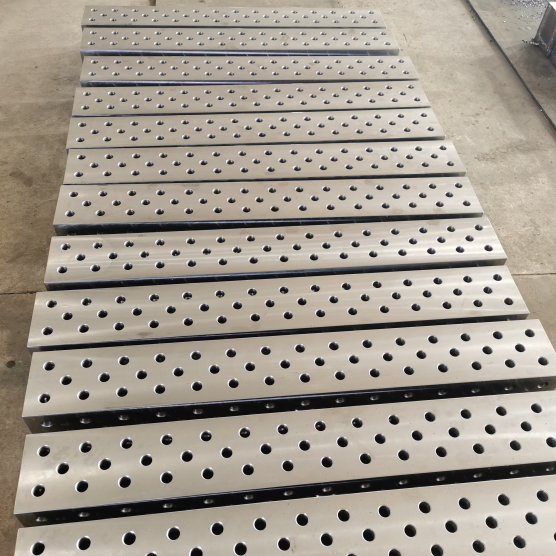
A 4×8 welding table is a standard-sized industrial workbench measuring 4 feet by 8 feet, designed for precision metal fabrication, modular fixturing, and heavy-duty welding tasks. In 2026, prices for high-quality Chinese-manufactured models typically range based on material grade, hole patterns, and load capacity, offering a cost-effective solution for automotive, aerospace, and construction sectors seeking scalable workspace.
Understanding the 4×8 Welding Table Standard in 2026
The 4×8 welding table has become the gold standard for professional fabricators who require maximum surface area without sacrificing structural integrity. This specific dimension aligns perfectly with standard sheet metal sizes and allows for the assembly of large structures like trailer frames, boat hulls, and automotive chassis.
In the current manufacturing landscape of 2026, these tables are no longer just flat surfaces. They have evolved into modular systems featuring precision-drilled hole grids. These grids enable users to insert clamps, stops, and fixtures at any point on the table, ensuring repeatable accuracy for both one-off prototypes and mass production runs.
Manufacturers in China have refined the production processes for these tables, focusing on hardened steel plates and advanced heat treatment methods. This ensures that the tabletop remains flat even after exposure to intense welding heat, a critical factor for maintaining dimensional stability in complex projects.
The demand for 4×8 welding table units has surged due to the growth in DIY heavy machinery projects and small-scale industrial shops. Buyers are increasingly looking for versatility, preferring tables that can be expanded or reconfigured as their business needs change.
When selecting a table, understanding the core specifications is vital. The thickness of the top plate, the diameter of the fixture holes, and the grid spacing are the primary determinants of the table’s utility and price point in the global market.
Key Dimensions and Surface Area Benefits
The 4-foot by 8-foot footprint provides 32 square feet of usable workspace. This is significantly larger than the common 2×4 or 4×4 alternatives, allowing multiple welders to work on a single project simultaneously.
- Sheet Metal Compatibility: Standard steel sheets often come in 4×8 or 4×10 sizes. A 4×8 table supports full sheets without overhang, reducing sagging and improving cut quality.
- Large Assembly Capacity: Ideal for constructing large frames, gates, and structural beams that require long, straight reference edges.
- Modular Expansion: Many 2026 models allow multiple 4×8 tables to be bolted together, creating massive work surfaces for oversized industrial components.
This size also fits well within standard shipping containers, making international logistics from Chinese manufacturing hubs more efficient and cost-effective for global buyers.
Evolution of Hole Patterns and Grid Systems
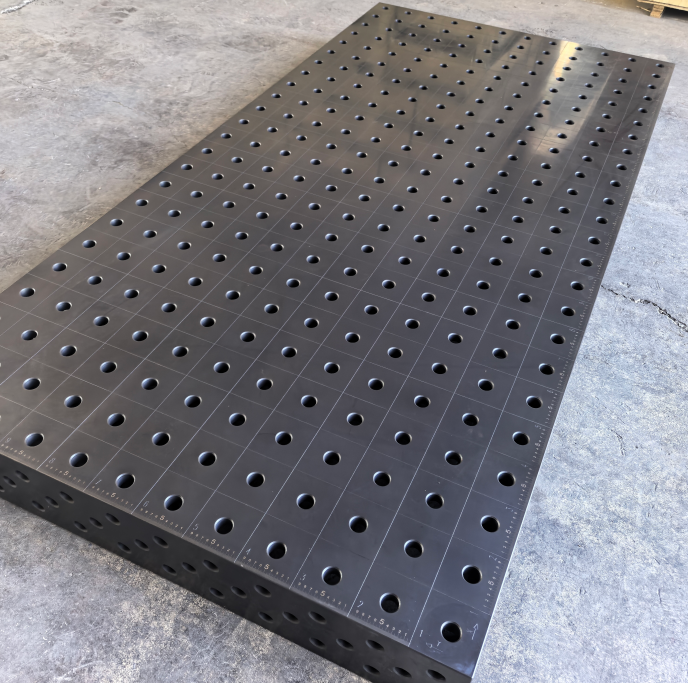
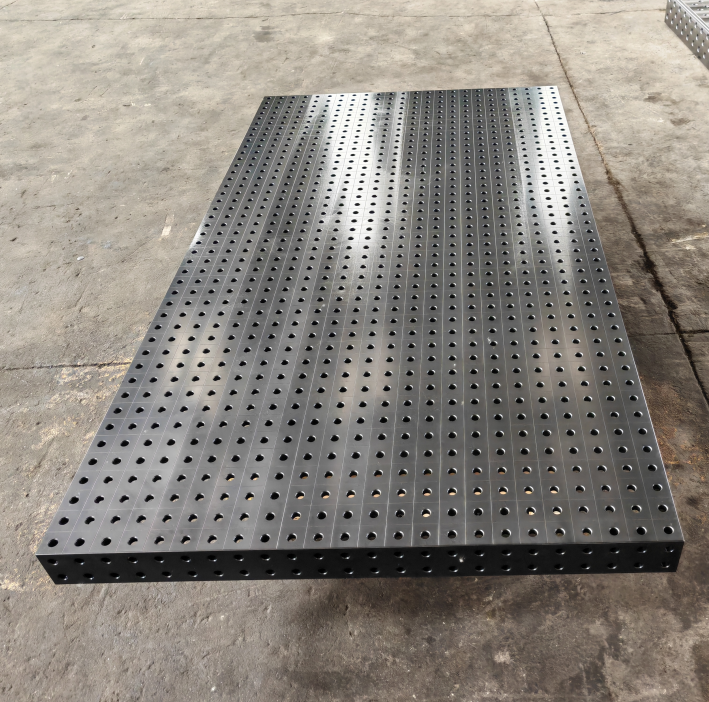
The defining feature of a modern 4×8 welding table is its hole pattern. In 2026, the industry has largely standardized around specific grid configurations to ensure compatibility with a wide range of tooling.
The most common configuration is the 2-inch by 2-inch grid with 5/8-inch or 16mm holes. This spacing offers an optimal balance between structural strength and fixture density. It allows clamps to be placed close enough to secure small parts while leaving enough material between holes to prevent deformation under heavy loads.
Some premium models now feature dual-pattern holes or threaded inserts alongside standard through-holes. This hybrid approach provides flexibility for both quick-release clamping systems and permanent fixture mounting.
Precision machining is critical here. High-end tables boast hole tolerances within fractions of a millimeter, ensuring that fixtures slide in smoothly without binding. This level of precision is essential for industries like aerospace where part alignment must be exact.
Material Standards and Construction Quality
The longevity and performance of a 4×8 welding table depend heavily on the materials used in its construction. In 2026, Chinese manufacturers utilize advanced metallurgy to produce tables that resist warping, cracking, and wear.
The tabletop is typically made from low-carbon steel or specialized alloy steel that undergoes a hardening process. This treatment increases surface hardness, making it resistant to sparks, spatter, and physical impact from heavy tools.
Leg structures are usually fabricated from heavy-gauge square tubing, providing a rigid base that minimizes vibration. The connection between the legs and the top is reinforced with gussets or internal bracing to ensure the table can support several tons of weight without buckling.
Steel Grades and Heat Treatment Processes
Not all steel is created equal. The best 4×8 welding table options use Q345B or equivalent high-strength low-alloy (HSLA) steel. These grades offer superior yield strength compared to standard mild steel.
- Hardened Top Plates: Surfaces are often heat-treated to achieve a specific Rockwell hardness, preventing denting from hammer strikes or dropped equipment.
- Stress Relieving: After welding the frame, the entire unit undergoes stress-relieving ovens to remove internal tensions. This step is crucial for preventing the table from twisting over time.
- Corrosion Resistance: Many 2026 models come with powder-coated finishes or oil treatments that protect against rust while allowing easy cleaning of welding spatter.
Buyers should verify the material certification provided by the supplier. Reputable manufacturers in hubs like Botou and Jiangsu provide detailed specs on steel composition and treatment methods.
Cast Iron vs. Fabricated Steel Tables
While fabricated steel is the norm for modular tables, cast iron remains a viable option for specific applications. Understanding the difference helps buyers choose the right tool for their workshop.
Fabricated steel tables are lighter, more modular, and generally less expensive. They excel in scenarios requiring frequent reconfiguration and portability. The hollow leg designs also allow for storage of tools or materials underneath.
Cast iron tables, predominantly sourced from foundry capitals like Botou City, offer exceptional damping properties. They absorb vibration better than steel, which is beneficial for precision machining operations performed alongside welding.
| Feature | Fabricated Steel Table | Cast Iron Table |
| Weight | Moderate, easier to move | Very Heavy, stationary |
| Modularity | High (grid holes, expandable) | Low (usually solid surface) |
| Vibration Damping | Standard | Excellent |
| Cost Efficiency | High for general fabrication | High for precision machining |
| Heat Resistance | High (with treatment) | Very High |
For most welding applications in 2026, the fabricated steel 4×8 welding table with a hole grid is the preferred choice due to its versatility and compatibility with modern fixturing systems.
2026 Pricing Trends and Cost Factors
The price of a 4×8 welding table in 2026 varies significantly based on specifications, origin, and included accessories. Global supply chain resilience has stabilized costs, but material quality remains the primary driver of price differences.
Entry-level models, often featuring thinner top plates and basic leg structures, are priced for hobbyists and light commercial use. Mid-range options provide the sweet spot for professional contractors, offering hardened tops and robust frames.
Premium tables, designed for aerospace or heavy industrial automation, command higher prices due to tighter tolerances, specialized coatings, and integrated T-slot systems. Buying directly from Chinese manufacturers can reduce costs by 30-50% compared to local distributors.
Breakdown of Price Determinants
Several factors influence the final quote for a 4×8 welding table. Understanding these helps buyers negotiate better deals and avoid overpaying for unnecessary features.
- Top Plate Thickness: Thicker plates (e.g., 1 inch vs. 5/8 inch) increase material costs and shipping weight but offer greater durability and heat sink capacity.
- Hole Machining Precision: Laser-cut and CNC-machined holes cost more than drilled holes but provide the accuracy needed for high-tolerance work.
- Finish and Coating: Powder coating adds to the cost but extends the table’s life. Bare oil-finished tables are cheaper but require more maintenance.
- Leg Design: Adjustable feet, caster wheels, and cross-bracing add complexity and cost to the manufacturing process.
Shipping costs are also a major component. Since a 4×8 table is bulky and heavy, sea freight is the most economical method for international orders. Local delivery within China or neighboring regions may utilize trucking networks.
Bulk Purchasing and Customization Options
For businesses equipping entire workshops, bulk purchasing offers significant savings. Manufacturers often provide tiered pricing for orders of ten or more units.
Customization is another key value proposition. Buyers can request specific hole patterns, custom cutouts for machinery integration, or branded finishes. Some suppliers even offer modular kits where additional plates can be added later to extend the table length beyond 8 feet.
The ability to join multiple tables together is a popular feature in 2026. This scalability allows companies to start with a single 4×8 unit and expand their workspace as production volumes grow, protecting their initial investment.
Industrial Applications and Use Cases
The versatility of the 4×8 welding table makes it indispensable across various sectors. From automotive repair to skyscraper construction, these tables provide the foundation for quality metalwork.
In the automotive industry, they are used for chassis alignment and custom bodywork. The flat surface ensures that frames are not twisted during assembly, which is critical for vehicle safety and handling.
Construction firms rely on these tables for fabricating structural steel components like beams and trusses. The stability of the table prevents warping during long welds, ensuring that structures fit together correctly on-site.
Automotive Fabrication and Repair
Automotive technicians value the 4×8 welding table for its ability to hold complex jigs. Whether building a roll cage or repairing a unibody frame, the grid system allows for precise positioning of tubes and panels.
Mobile repair units often utilize collapsible versions of these tables. These can be folded down to fit into service vans and quickly deployed at a customer’s location, combining portability with professional-grade stability.
The heat resistance of the table surface allows for direct welding without the need for excessive protective covers, speeding up the workflow. Spatter falls through the holes or sits on the hardened surface, easy to chip off later.
Aerospace and Precision Manufacturing
In aerospace applications, tolerance is everything. A high-precision 4×8 welding table serves as a granite-like reference plane for assembling aircraft components.
Engineers use these tables to build fixtures that hold parts in exact orientations during welding. The repeatability ensured by the hole grid means that every produced part matches the design specifications perfectly.
The rigidity of the table also supports robotic welding cells. Robots can be programmed to weld relative to the table’s coordinate system, knowing that the workpiece will remain stable throughout the automated process.
DIY and Hobbyist Projects
The rise of the maker movement has brought industrial-grade tools to home garages. A 4×8 welding table is a centerpiece for serious hobbyists working on trailers, art installations, or custom furniture.
For DIYers, the table acts as a multi-purpose station. It serves as a cutting table, an assembly bench, and a welding platform all in one. The large surface area accommodates big projects that would otherwise be impossible to manage on smaller benches.
Community forums and social media groups frequently showcase projects built on these tables, highlighting techniques for using clamps and stops to achieve professional results without a factory setting.
How to Choose the Right 4×8 Welding Table
Selecting the best 4×8 welding table requires a clear understanding of your specific needs. Not every project demands the highest spec table, but cutting corners on quality can lead to frustration and poor results.
Start by evaluating the types of materials you will be welding. Thin sheet metal requires different features than thick structural steel. Consider the frequency of use; a table used daily needs a harder surface than one used occasionally.
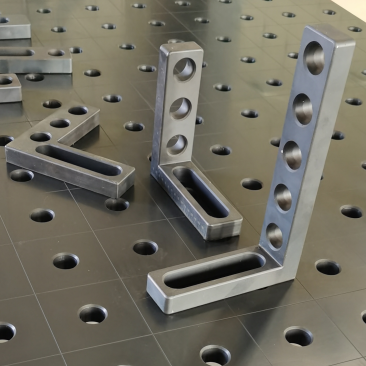
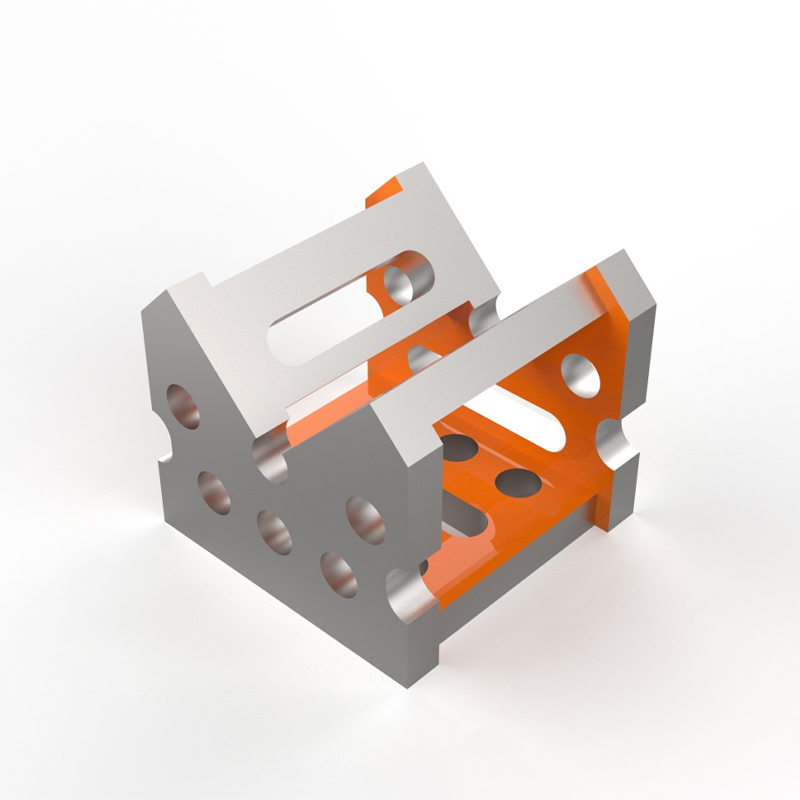
Also, think about future growth. Investing in a modular system now can save money later if you need to expand your workspace. Check the availability of compatible accessories like clamps and angles from the same manufacturer.
Evaluating Load Capacity and Stability
Load capacity is a critical specification often overlooked. A true industrial 4×8 welding table should support thousands of pounds distributed evenly across the surface.
- Static Load: The weight the table can hold without moving. Look for ratings above 2,000 lbs for serious work.
- Dynamic Load: The capacity while welding or hammering. Vibration and impact forces require a sturdier frame.
- Leg Bracing: Ensure the legs have cross-braces or gussets. Unbraced legs can wobble, affecting weld quality and safety.
Stability is also influenced by the floor contact points. Adjustable leveling feet are essential for uneven shop floors, ensuring the table sits perfectly flat regardless of the ground conditions.
Compatibility with Fixturing Systems
The value of a welding table is multiplied by the tools you can attach to it. Before buying, verify the hole size and pattern match the clamps and fixtures you intend to use.
The 5/8-inch hole with a 2-inch grid is the most universal standard in 2026. Sticking to this standard ensures you can buy accessories from multiple vendors, fostering competition and lower prices for tooling.
Some tables offer threaded holes, which are great for securing heavy fixtures that might lift off during vigorous welding. However, through-holes are generally preferred for their flexibility and ease of cleaning.
Sourcing from China: A Strategic Guide
China remains the world’s leading producer of 4×8 welding table units, offering a blend of competitive pricing and improving quality. Sourcing directly from Chinese manufacturers can provide significant cost advantages for global buyers.
Key manufacturing hubs include Botou City in Hebei Province, known as the “Foundry Capital,” and Jiangsu Province, renowned for precision engineering. Each region offers distinct advantages depending on your specific requirements.
Botou suppliers excel in high-volume production of cast iron and heavy steel components, leveraging economies of scale. Jiangsu factories often focus on higher-tolerance machined parts and automated production lines.
Identifying Reliable Suppliers
Finding a trustworthy partner is the most important step in the sourcing process. Look for suppliers with verified credentials, such as ISO certifications and a history of exporting to your region.
- Factory Audits: Request video tours or third-party audit reports to verify production capabilities and quality control measures.
- Sample Testing: Order a sample unit before committing to a large shipment. Inspect the flatness, hole alignment, and weld quality personally.
- Communication: Responsive and clear communication is a strong indicator of good service. Ensure they understand your technical specifications.
Alibaba.com and similar B2B platforms have enhanced their verification processes in 2026, making it easier to identify reputable suppliers. Look for badges indicating verified status and check recent buyer reviews.
Navigating Logistics and Import Regulations
Shipping a 4×8 welding table involves careful planning due to its weight and dimensions. Most suppliers offer FOB (Free on Board) terms, where you handle the shipping from the Chinese port.
Sea freight is the standard method for international transport. A 4×8 table typically ships disassembled or with legs detached to optimize container space. Reassembly is straightforward with provided instructions and hardware.
Be aware of import duties and taxes in your country. Classifying the product correctly under the Harmonized System (HS) code is essential to avoid delays at customs. Working with a experienced freight forwarder can streamline this process.
Maintenance and Longevity Tips
To maximize the lifespan of your 4×8 welding table, regular maintenance is required. Proper care ensures the surface remains flat and the holes stay clear for years of reliable service.
Clean the table after each use to remove spatter and debris. While the surface is hardened, accumulated slag can interfere with fixture placement and affect the flatness of future projects.
Periodically check the tightness of bolts and connections, especially if the table is moved frequently. Vibration from welding can loosen fasteners over time, compromising stability.
Cleaning and Surface Care
Use a wire brush or scraper to remove welding spatter. Avoid using grinding wheels on the table surface unless necessary, as this can create low spots and ruin the flatness.
Apply a thin coat of oil or a specialized anti-rust spray if the table is not powder-coated. This protects the steel from humidity and corrosion, particularly in unheated workshops.
If holes become clogged with spatter, use a dedicated reaming tool or a correctly sized drill bit to clean them out gently. Forcing fixtures into clogged holes can damage both the tool and the table.
Inspecting for Warping and Damage
Regularly inspect the tabletop for signs of warping. Place a straightedge across the surface to check for gaps. Minor warping can sometimes be corrected, but severe distortion may require professional resurfacing.
Check the legs for cracks or bends, especially near the welds. Structural integrity is paramount for safety. If damage is found, reinforce or replace the affected components immediately.
Keep the area under the table clear to allow for air circulation and easy inspection. This also prevents accidental trips and falls in a busy workshop environment.
Future Trends in Welding Table Technology
The 4×8 welding table market continues to evolve with advancements in materials and smart manufacturing. Future models may integrate sensors for real-time monitoring of temperature and load.
Sustainability is becoming a focus, with manufacturers exploring recycled steel options and eco-friendly coating processes. The goal is to reduce the carbon footprint of production without compromising performance.
Modularity will likely advance further, with magnetic locking systems and quick-release mechanisms replacing traditional bolts. This will enable even faster setup times and greater flexibility for dynamic production environments.
Integration with Automation and Robotics
As automation becomes more accessible, welding tables are being designed with robotics in mind. Features like embedded power tracks and data ports allow robots to interact directly with the workstation.
Standardized interface points on the table surface enable quick swapping of end-effectors and fixtures. This modularity supports flexible manufacturing systems where product lines change frequently.
The synergy between advanced 4×8 welding table designs and collaborative robots (cobots) is expected to drive productivity in small and medium-sized enterprises, democratizing high-tech fabrication.
Smart Materials and Coatings
Research into self-healing coatings and ultra-hard composites promises to extend the life of welding tables even further. These materials could automatically repair minor scratches and resist extreme thermal shocks.
Lightweight alloys are also being tested to reduce the overall weight of the tables without sacrificing strength. This would make large 4×8 units easier to move and reconfigure manually.
The integration of IoT (Internet of Things) capabilities could allow tables to track usage statistics and predict maintenance needs, adding a layer of intelligence to this fundamental workshop tool.
Frequently Asked Questions
Buyers often have specific questions regarding the purchase and use of a 4×8 welding table. Addressing these common concerns helps clarify the decision-making process.
Questions range from shipping logistics to technical specifications. Providing clear answers builds trust and ensures customers select the right product for their needs.
Below are some of the most frequently asked questions based on current market trends and user inquiries in 2026.
What is the average weight of a 4×8 welding table?
The weight varies by model, but a standard heavy-duty 4×8 welding table typically weighs between 400 and 600 lbs (180-270 kg). Lighter hobbyist models may weigh less, while industrial-grade units with thicker tops can exceed 800 lbs.
Can I connect two 4×8 tables together?
Yes, many modern tables are designed with connecting hardware. You can bolt two 4×8 units side-by-side or end-to-end to create a larger 8×8 or 4×16 workspace. Ensure the hole patterns align perfectly for seamless fixture usage.
Are replacement parts available for Chinese tables?
Most reputable manufacturers offer spare parts like legs, leveling feet, and hardware. Since the hole patterns are standardized, clamps and fixtures from third-party vendors are also widely compatible.
How long does shipping from China take?
Sea freight typically takes 4 to 8 weeks depending on the destination port and customs clearance. Air freight is faster but prohibitively expensive for heavy items like welding tables.
Is assembly difficult?
Assembly is generally straightforward. Most tables arrive with pre-drilled holes and all necessary hardware. Two people can usually assemble a 4×8 welding table in under an hour with basic tools.
Conclusion
Investing in a 4×8 welding table is a strategic decision that enhances productivity, precision, and safety in any metalworking environment. As we navigate through 2026, the availability of high-quality, cost-effective options from Chinese manufacturers has never been better.
Whether you are running a large-scale automotive plant or a home garage workshop, the right table provides the stable foundation necessary for exceptional results. Focus on material quality, hole pattern standards, and supplier reliability when making your choice.
The evolution of modular designs and advanced materials ensures that today’s 4×8 welding table is a long-term asset capable of adapting to future challenges. By choosing wisely, you equip your business with a tool that delivers value for decades.
Take the time to evaluate your specific needs and explore the diverse offerings in the global market. With the right partner and the right equipment, your fabrication capabilities will reach new heights.