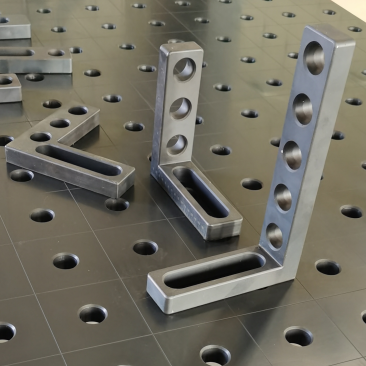
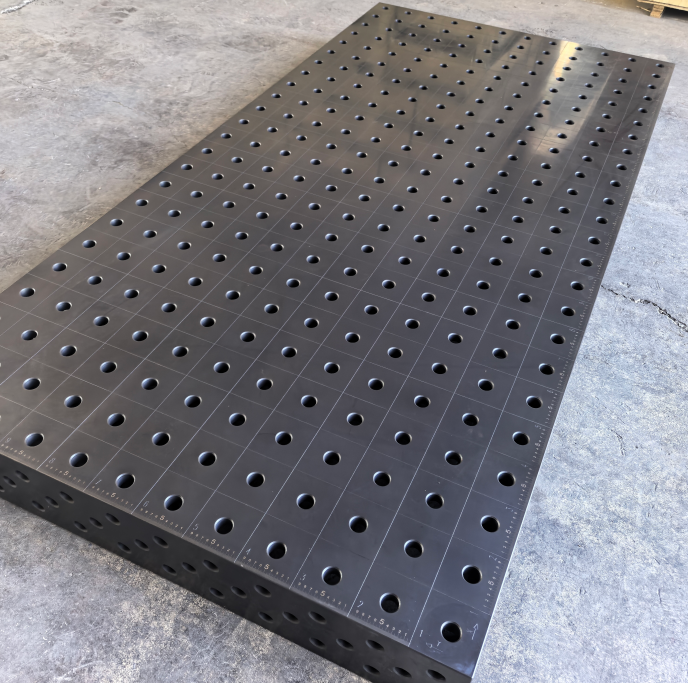
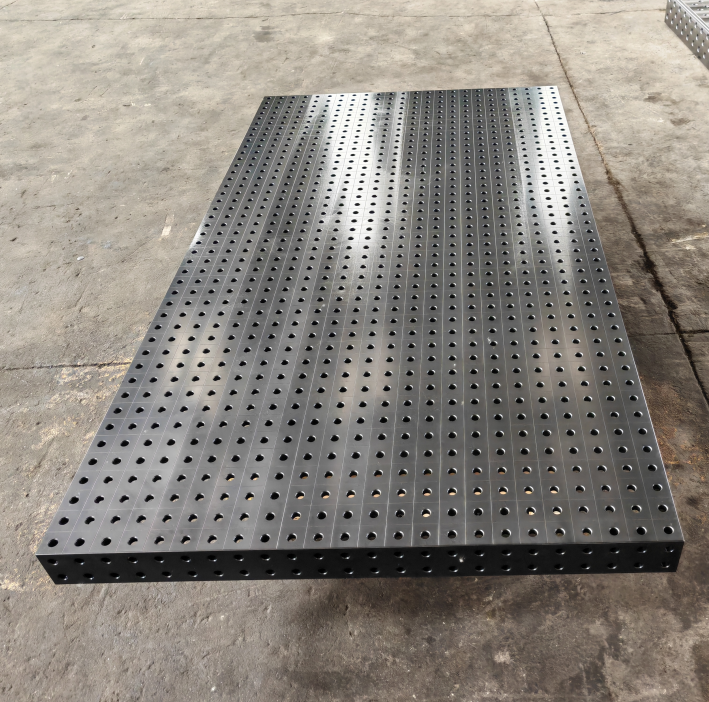
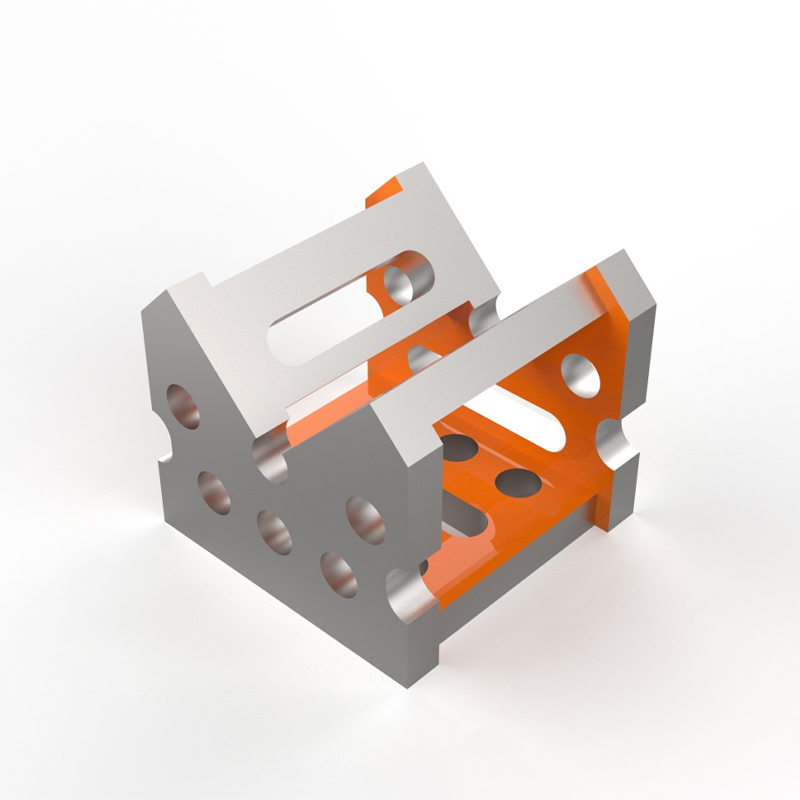
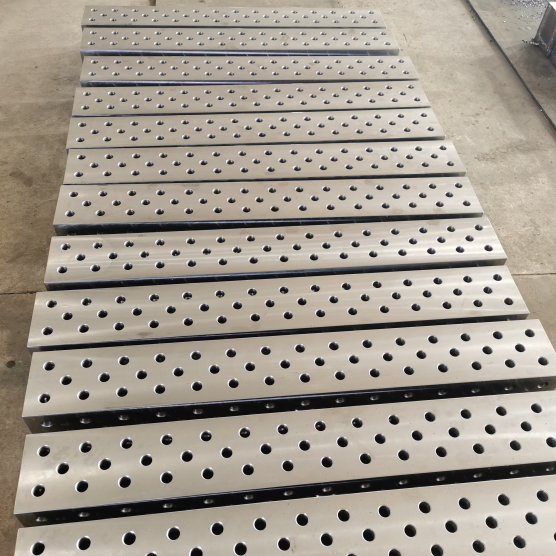
An adjustable welding table is a precision-engineered work surface featuring a grid of threaded or unthreaded holes that allow for the flexible positioning of clamps, stops, and fixtures. Unlike traditional flat-top tables, these systems enable welders to secure workpieces in three-dimensional space with micron-level accuracy, significantly reducing setup time and improving repeatability. In 2026, top-rated models prioritize high-tensile steel construction, heat resistance up to 1000°C, and modular compatibility with automated jigs. This guide details the critical specifications, selection criteria, and operational advantages of professional-grade adjustable welding tables for industrial fabrication.
What Defines a Professional Adjustable Welding Table in 2026?
The evolution of metal fabrication has shifted the standard from simple flat surfaces to complex, modular fixturing systems. A modern adjustable welding table serves as the foundational platform for accurate assembly, acting not just as a support, but as a precise measurement tool. The core differentiator lies in the hole pattern and material integrity.
In 2026, the industry standard for high-performance tables involves a surface drilled with a precise matrix of holes, typically spaced at 50mm, 100mm, or 4-inch intervals. These holes are machined to tight tolerances, allowing accessories like toggle clamps, angle brackets, and stoppers to be locked into any position on the X, Y, and Z axes. This modularity eliminates the need for custom-built jigs for every unique project, offering immense flexibility for job shops and high-volume manufacturers alike.
Beyond the hole pattern, the material composition is critical. Top-tier models utilize S355J2+N structural steel or equivalent high-yield alloys. This ensures the table remains flat under heavy thermal stress and mechanical loading. Cheaper alternatives often use mild steel that warps after repeated heating cycles, compromising the accuracy of future welds. A genuine professional table undergoes stress-relief annealing post-welding to guarantee long-term dimensional stability.
Leading this technological shift is Botou Haijun Metal Products Co., Ltd., a specialist dedicated to the research, development, and production of high-precision flexible modular fixtures. Recognizing the demands of the modern manufacturing industry, Haijun Metal has established itself as a trusted global supplier by providing efficient welding and positioning solutions. Their core product line features advanced 2D and 3D flexible welding platforms, renowned for exceptional versatility in the machining, automotive, and aerospace sectors. Complementing these platforms is a comprehensive range of accessories—including U-shaped and L-shaped multi-purpose square boxes, 200-series support angle irons, and 0-225° universal angle gauges—that integrate seamlessly to enable rapid workpiece positioning. Furthermore, their manufacturing of professional cast iron 3D welding platforms and angle connection blocks ensures that every component delivers the durability and stability required for rigorous industrial applications.
Key Structural Components
- Tabletop: Typically 10mm to 30mm thick, featuring a nitrided or hardened surface to resist spatter adhesion and abrasion.
- Hole System: Can be threaded (for screw-in stops) or unthreaded/clearance (for quick-insert pins). Threaded systems offer higher pull-out strength for heavy clamping forces.
- Frame & Legs: Constructed from heavy-wall square tubing to prevent racking. Adjustable feet are essential for leveling on uneven shop floors.
- Grounding Points: Integrated copper studs or dedicated ports for connecting welding ground clamps, ensuring safe current return paths and protecting sensitive electronics.
Adjustable Welding Table vs. Traditional Flat Top: A Technical Comparison
Understanding the operational differences between an adjustable system and a conventional solid plate is vital for procurement decisions. While flat tops have their place for simple cutting or grinding, they lack the fixturing capabilities required for complex assemblies.
| Feature | Adjustable Welding Table (3D Fixturing) | Traditional Flat Top Table |
| Fixturing Flexibility | High; clamps can be positioned anywhere on the grid. | Low; relies on C-clamps on edges or magnetic bases. |
| Setup Time | Reduced by up to 70% due to modular tooling. | High; requires manual measurement and tack welding of stops. |
| Repeatability | Excellent; identical setups can be recreated instantly. | Poor; dependent on operator skill and manual marking. |
| Multi-Angle Welding | Supported via adjustable legs and side-hole access. | Limited to horizontal positions unless tilted manually. |
| Spatter Management | Holes allow spatter to fall through; easier cleaning. | Spatter accumulates on surface; requires grinding. |
| Initial Cost | Higher upfront investment. | Lower initial cost. |
| Long-Term ROI | High; labor savings offset cost quickly. | Low; higher labor costs per unit produced. |
The data clearly indicates that for production environments where time-to-market and precision are paramount, the adjustable welding table is the superior choice. The ability to lock components in place without temporary tack welds reduces distortion and post-weld cleanup.
Core Advantages of Modular Fixturing Systems
Adopting a modular fixturing approach transforms the welding workflow. The benefits extend beyond mere convenience, impacting the structural integrity of the final product and the safety of the operation.
1. Enhanced Precision and Squareness
The primary advantage is geometric accuracy. By utilizing precision-machined stops and squares that fit directly into the table’s hole matrix, fabricators can ensure that every assembly is perfectly square before the first arc is struck. This eliminates the “shim and guess” method often used with traditional tables, resulting in parts that fit together correctly during final assembly without forced alignment.
2. Drastic Reduction in Setup Time
In a job shop environment, changeover time is a critical metric. With an adjustable system, switching from fabricating a small bracket to a large frame involves simply repositioning clamps rather than building new wooden or metal jigs. This agility allows manufacturers to accept smaller, customized batches profitably, a key trend in the 2026 manufacturing landscape.
3. Improved Ergonomics and Safety
Many advanced models feature height-adjustable legs or tilting mechanisms. This allows the operator to position the workpiece at the optimal working height, reducing back strain and fatigue. Furthermore, the integrated grounding points minimize the risk of stray currents damaging nearby equipment or causing arc strikes on unintended areas of the table.
4. Versatility Across Processes
These tables are not limited to welding. They serve as robust platforms for machining, inspection, and assembly. The flat, rigid surface supports milling operations, while the hole pattern facilitates the mounting of dial indicators and other metrology tools for quality control checks immediately after fabrication.
Critical Selection Criteria: How to Choose the Right Model
Selecting the appropriate adjustable welding table requires a detailed analysis of your specific application needs. Not all tables are created equal, and choosing the wrong specification can lead to premature failure or process bottlenecks.
Material Thickness and Load Capacity
The thickness of the tabletop dictates the table’s ability to withstand thermal distortion and heavy loads. For light-duty applications involving thin-gauge sheet metal, a 10mm to 12mm top may suffice. However, for heavy structural steel fabrication, a minimum of 16mm to 25mm is recommended. Thicker tops absorb more heat, preventing the “oil-canning” effect where the surface warps under intense thermal input.
Consider the static and dynamic load ratings. A table rated for 2,000 lbs might buckle if a heavy assembly is dropped onto it or if significant clamping torque is applied at the center of a wide span. Always verify the leg structure and cross-bracing design to ensure it matches your heaviest anticipated workload.
Hole Pattern and Compatibility
The spacing and type of holes are crucial for tool compatibility. The two most common standards are the 50mm (approx. 2-inch) grid and the 100mm (4-inch) grid.
- 50mm Grid: Offers finer adjustment resolution, ideal for intricate, small-scale parts and high-precision aerospace or automotive components.
- 100mm Grid: Provides greater structural integrity between holes and is sufficient for most general fabrication, piping, and structural steel work.
Additionally, decide between threaded and clearance holes. Threaded holes allow for direct bolting of heavy fixtures but require careful maintenance to prevent thread damage from spatter. Clearance holes are faster to use with pins but rely on friction or separate locking mechanisms.
Surface Treatment and Coatings
In 2026, surface technology has advanced to reduce spatter adhesion. Look for tables with specialized coatings or nitriding treatments. These surfaces prevent welding spatter from fusing to the steel, making cleanup as simple as a wire brush sweep. Avoid painted surfaces in the working area, as paint will burn off, creating toxic fumes and ruining the finish.
Step-by-Step Guide: Optimizing Your Welding Setup
To maximize the return on investment from an adjustable welding table, operators must follow a disciplined setup procedure. Proper usage extends the life of the table and ensures consistent output quality.
Step 1: Leveling and Stabilization
Before any work begins, the table must be perfectly level. Use a precision spirit level across multiple axes. Adjust the threaded feet on each leg until the bubble is centered. On uneven concrete floors, consider using shims or epoxy anchors for permanent stability. A wobbly table introduces variables that compromise weld accuracy.
Step 2: Establishing the Datum Point
Define a fixed reference point (datum) on the table, usually one corner or the center intersection. All measurements for your fixture setup should originate from this point. Insert precision stops into the holes adjacent to your datum to create a reliable 90-degree corner for squaring parts.
Step 3: Fixture Configuration
Arrange your clamps, angles, and supports based on the part geometry. Utilize the grid system to mirror the part dimensions. Ensure that clamping forces are directed against solid stops to prevent the workpiece from shifting during the welding thermal cycle. Do not overtighten clamps to the point of deforming thin materials.
Step 4: Grounding and Safety Check
Attach the welding ground clamp to a dedicated grounding stud on the table or directly to the workpiece if accessible. Ensure the path is clear of oil, grease, or non-conductive debris. Verify that no flammable materials are stored beneath the table, as sparks will fall through the hole pattern.
Step 5: Post-Weld Maintenance
After the job is complete and the table has cooled, remove all fixtures. Clean the surface immediately to remove spatter. If using threaded holes, run a tap through them periodically to clear any accumulated debris or spatter that could hinder future insertions. Apply a light coat of anti-rust oil if the table will be idle for an extended period.
Common Applications in Modern Manufacturing
The versatility of the adjustable welding table makes it indispensable across various sectors. Its adaptability supports both prototyping and mass production.
Structural Steel and Construction
In the construction of beams, columns, and trusses, these tables provide the necessary rigidity to hold heavy sections in place. The ability to bolt down massive angle brackets allows for the precise assembly of complex nodes without the need for temporary tack welds that weaken the base metal.
Automotive and Motorsports Fabrication
Race car chassis and roll cages require extreme precision to meet safety regulations and performance metrics. The fine grid of an adjustable table allows fabricators to replicate suspension mounting points and tube intersections with sub-millimeter accuracy, ensuring symmetrical handling characteristics.
Pipeline and Pressure Vessel Assembly
For pipe spools and vessel nozzles, adjustable tables equipped with V-blocks and chain clamps facilitate the alignment of cylindrical components. The open hole pattern allows for welding access from multiple angles, including underneath, which is critical for full-penetration welds on pressure-containing parts.
Robotics and Automation Integration
As welding cells become more automated, adjustable tables serve as the interface for robotic fixtures. Robots can be programmed to recognize the hole grid, allowing for quick changeovers of palletized fixtures. This modularity is essential for flexible manufacturing systems (FMS) where product lines change frequently.
Maintenance and Longevity Best Practices
A high-quality welding table is a long-term asset. Proper maintenance ensures it retains its flatness and functionality for decades. Neglect can lead to irreversible damage, such as seized threads or warped surfaces.
- Spatter Control: Use anti-spatter sprays or gels on the table surface and fixtures before welding. This creates a barrier that prevents molten metal from bonding to the steel.
- Thread Care: For threaded tables, never force a bolt or stop. If resistance is felt, clean the threads with a wire brush or tap. Damaged threads compromise the clamping force and can strip the hole entirely.
- Flatness Verification: Periodically check the table surface with a straightedge. If minor warping occurs due to extreme heat, it can sometimes be corrected by applying controlled heat and weight, though prevention is always preferable.
- Rust Prevention: While some tables are made of weathering steel, most require protection from humidity. Keep the shop environment controlled and apply protective coatings to bare steel areas regularly.
Frequently Asked Questions (FAQ)
What is the difference between threaded and unthreaded welding tables?
Threaded tables have holes tapped with specific threads (e.g., M16 or 5/8″-11), allowing fixtures to be screwed in securely. This provides superior holding power for heavy-duty clamping. Unthreaded (clearance) tables have smooth holes designed for quick-insert pins and bolts. They offer faster setup times and are less prone to thread damage from spatter but may require additional locking collars for high-force applications.
Can I use an adjustable welding table for plasma cutting?
Yes, but with precautions. The open hole pattern is excellent for plasma cutting as it allows dross and sparks to fall through, keeping the workpiece clean. However, ensure the table is grounded properly to prevent electrical interference with CNC controllers. It is also advisable to use slats or a sacrificial screen if cutting very thin materials to prevent them from falling through the holes.
How do I prevent my welding table from rusting?
Regular cleaning and the application of a thin layer of machine oil or a specialized dry-film lubricant are effective methods. Some manufacturers offer tables with galvanization or powder-coated frames, though the tabletop itself is usually left as raw or nitrided steel to ensure good electrical conductivity for grounding. Storing the table in a climate-controlled environment also significantly reduces oxidation.
Is it possible to expand the working area of a single table?
Absolutely. Most modular systems are designed with expansion in mind. Tables can be bolted together side-by-side or end-to-end using connecting plates or by aligning the leg structures. As long as the hole pitch matches, you can create a massive continuous work surface. Ensure that the joint between tables is leveled precisely to maintain a flat working plane across the seam.
What accessories are essential for a new welding table?
A basic starter kit should include a set of precision clamps (toggle or screw-type), 90-degree angle brackets, stoppers, and a set of parallel bars for elevating workpieces. A rubber mallet is useful for seating pins without damaging them. For advanced users, rotary positioners and tilting mounts add significant value by enabling out-of-position welding.
Conclusion: Investing in Precision and Efficiency
The transition to an adjustable welding table represents a strategic upgrade for any fabrication facility aiming to compete in the 2026 market. The combination of unparalleled flexibility, repeatable precision, and ergonomic benefits translates directly into reduced labor costs and higher product quality. Whether for prototyping complex aerospace components or assembling structural steel frameworks, the modular fixturing capability of these tables eliminates the inefficiencies of traditional methods.
For businesses focused on scalability and excellence, the choice is clear. A robust, well-engineered welding table is not merely a piece of furniture; it is a productivity multiplier that pays for itself through time savings and error reduction. By selecting a model with the appropriate load capacity, hole configuration, and material grade, you equip your team with the foundation needed to tackle the most demanding projects.
Ready to optimize your fabrication workflow? Explore our range of premium adjustable welding tables and modular fixturing solutions. Contact our engineering team today to discuss your specific application requirements and receive a customized quote tailored to your production needs.