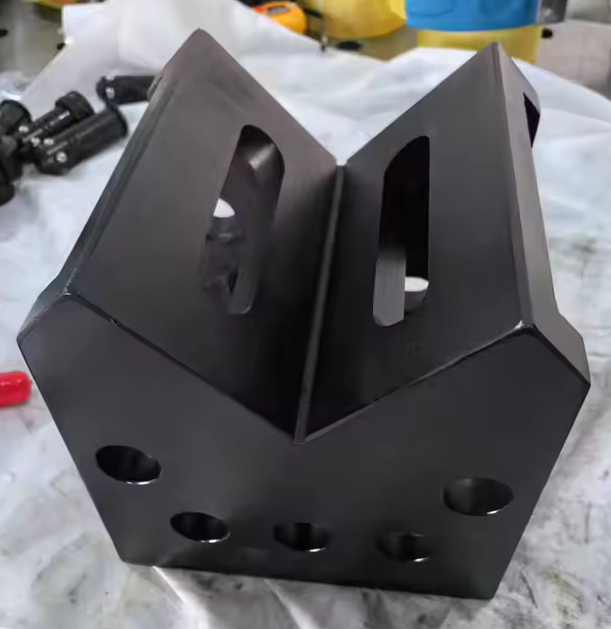
Choosing the right welding table size depends primarily on your largest typical workpiece, available shop floor space, and the complexity of your fixtures. For most general fabrication shops, a standard 4×8 foot (1200x2400mm) table offers the best balance of utility and footprint. However, precision industries often require modular 2D or 3D flexible welding platforms that allow for scalable configurations. The ideal size ensures sufficient clamping area, optimal ergonomics to reduce welder fatigue, and compatibility with essential accessories like square boxes and angle gauges.
How to Determine the Right Welding Table Size for Your Shop
Selecting a welding table is not merely about finding a flat surface; it is about establishing the foundation of your manufacturing efficiency. An incorrectly sized table can lead to workflow bottlenecks, compromised weld quality due to poor positioning, and unnecessary physical strain on operators. To make an informed decision, you must evaluate three critical dimensions: workspace constraints, project specifications, and future scalability.
In modern manufacturing, particularly in aerospace and automotive sectors, the trend has shifted from static, heavy cast-iron slabs to high-precision flexible modular fixtures. These systems, such as those developed by Botou Haijun Metal Products Co., Ltd., allow manufacturers to adapt their working surface area dynamically. Instead of buying one massive table that occupies valuable floor space, companies can utilize modular 2D and 3D platforms that integrate seamlessly with complementary components.
Evaluating Your Maximum Workpiece Dimensions
The first step in sizing your welding table is to measure the largest component you regularly fabricate. A common rule of thumb is to choose a table that is at least 20% larger than your maximum workpiece in both length and width. This extra margin is crucial for several reasons:
- Clamping Clearance: You need space around the perimeter for clamps, C-clamps, and fixture modules. If your part fits exactly on the table, you will have no room to secure it properly.
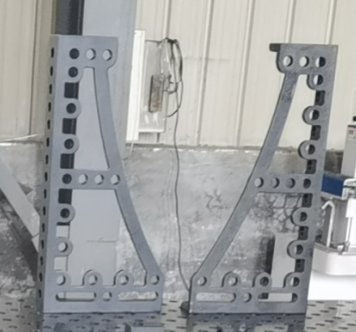
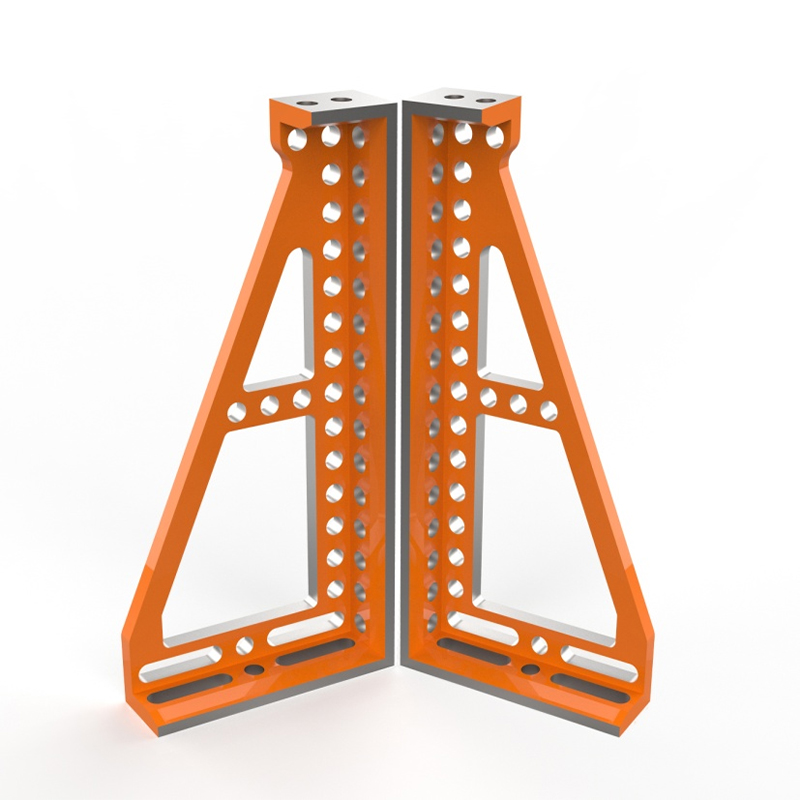
- Fixture Integration: Modern welding relies heavily on jigging. Accessories like U-shaped and L-shaped multi-purpose square boxes require dedicated grid holes or slots outside the immediate weld zone.
- Thermal Distortion Management: Larger tables provide better heat dissipation and allow for strategic clamping sequences that minimize warping during the cooling phase.
For instance, if your largest typical assembly is 1000mm x 1000mm, a 1500mm x 1500mm table might seem sufficient. However, considering the need for 200-series support angle irons and 0-225° universal angle gauges for precise alignment, a larger surface or a modular setup that can be expanded is often more practical.
Assessing Available Floor Space and Workflow
While maximizing work surface is desirable, it must not compromise shop safety or material flow. A welding table that is too large can obstruct forklift paths, limit access to other machinery, and create ergonomic hazards. Measure your designated welding cell, ensuring there is at least 1 meter of clearance on all sides for operator movement and material handling.
In facilities utilizing Botou Haijun’s flexible welding platforms, space efficiency is enhanced through modularity. Instead of a single monolithic unit, these systems can be arranged in L-shapes, U-shapes, or linear configurations based on the specific job. This flexibility allows shops with limited square footage to maintain high productivity without sacrificing precision. The ability to reconfigure the layout means the “size” of your table is no longer a fixed constraint but a variable asset.
Standard Welding Table Sizes and Their Applications
Understanding industry-standard dimensions helps in benchmarking your needs against common practices. While custom sizes are available, most off-the-shelf and modular systems adhere to specific footprints optimized for shipping, handling, and standard sheet metal sizes.
| Table Size (Imperial) |
Table Size (Metric) |
Best For |
Limitations |
| 2′ x 4′ |
600 x 1200 mm |
Small repairs, hobbyists, light gauge sheet metal, intricate jig assembly. |
Limited space for large fixtures; unstable for heavy structural steel. |
| 4′ x 4′ |
1200 x 1200 mm |
General fabrication, medium-sized assemblies, robotic welding cells. |
May require extension for long beams or large frames. |
| 4′ x 8′ |
1200 x 2400 mm |
Standard industrial fabrication, full-sheet metal work, automotive frames. |
Requires significant floor space; heavy to move if not modular. |
| Custom Modular |
Variable |
Aerospace, complex machinery, high-mix low-volume production. |
Higher initial investment in modular components and training. |
The 4×8 foot table remains the industry standard because it aligns perfectly with standard sheet metal and plywood dimensions. However, for high-precision industries, the focus is shifting towards modular systems. Botou Haijun Metal Products Co., Ltd. specializes in these advanced solutions, offering 2D and 3D flexible welding platforms that can be scaled up or down. This approach eliminates the compromise between having a table that is too small for large jobs and too bulky for small, precise tasks.
The Role of Thickness and Load Capacity
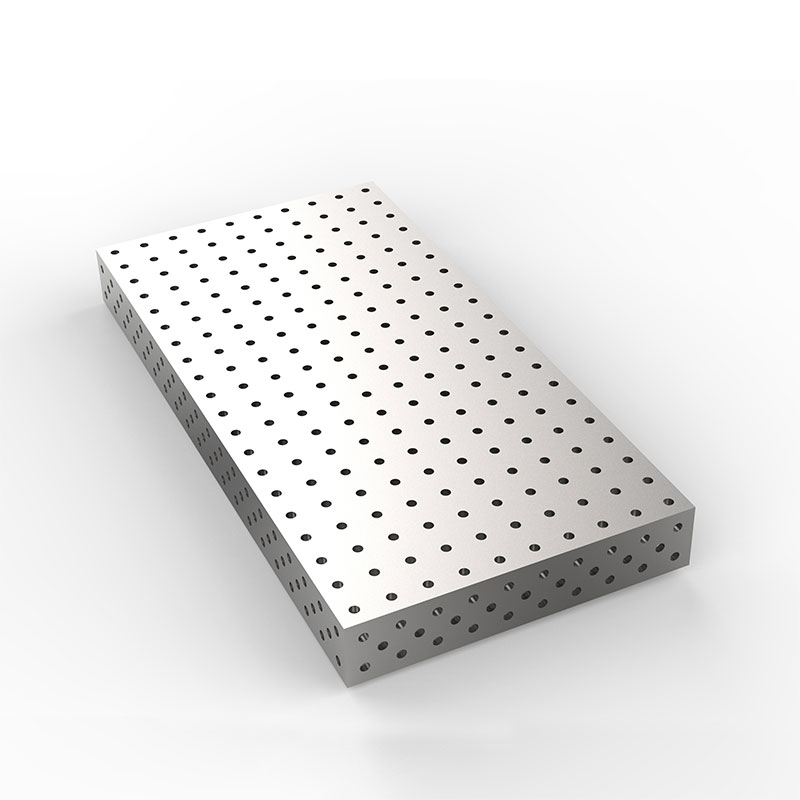
Size is not just about surface area; vertical dimension and load-bearing capacity are equally critical. A thin tabletop may warp under the weight of heavy steel plates or the thermal stress of repeated welding. Professional-grade tables, such as the cast iron 3D welding platforms manufactured by Haijun Metal, are designed with substantial thickness to ensure exceptional durability and stability.
When evaluating size, consider the depth of the table. Deeper tables allow for stronger fixturing options and better integration with underlying support structures. For heavy industrial applications, the table must resist deflection. The use of high-quality materials and robust construction techniques ensures that every product delivers the stability required for tight-tolerance welding.
Why Modular Flexible Welding Platforms Outperform Fixed Tables
Traditional fixed-size welding tables have a significant drawback: rigidity. Once installed, their dimensions are permanent. If your product line changes or you need to accommodate a different type of assembly, you may find yourself constrained by the table’s edges. This is where flexible modular fixtures revolutionize the workflow.
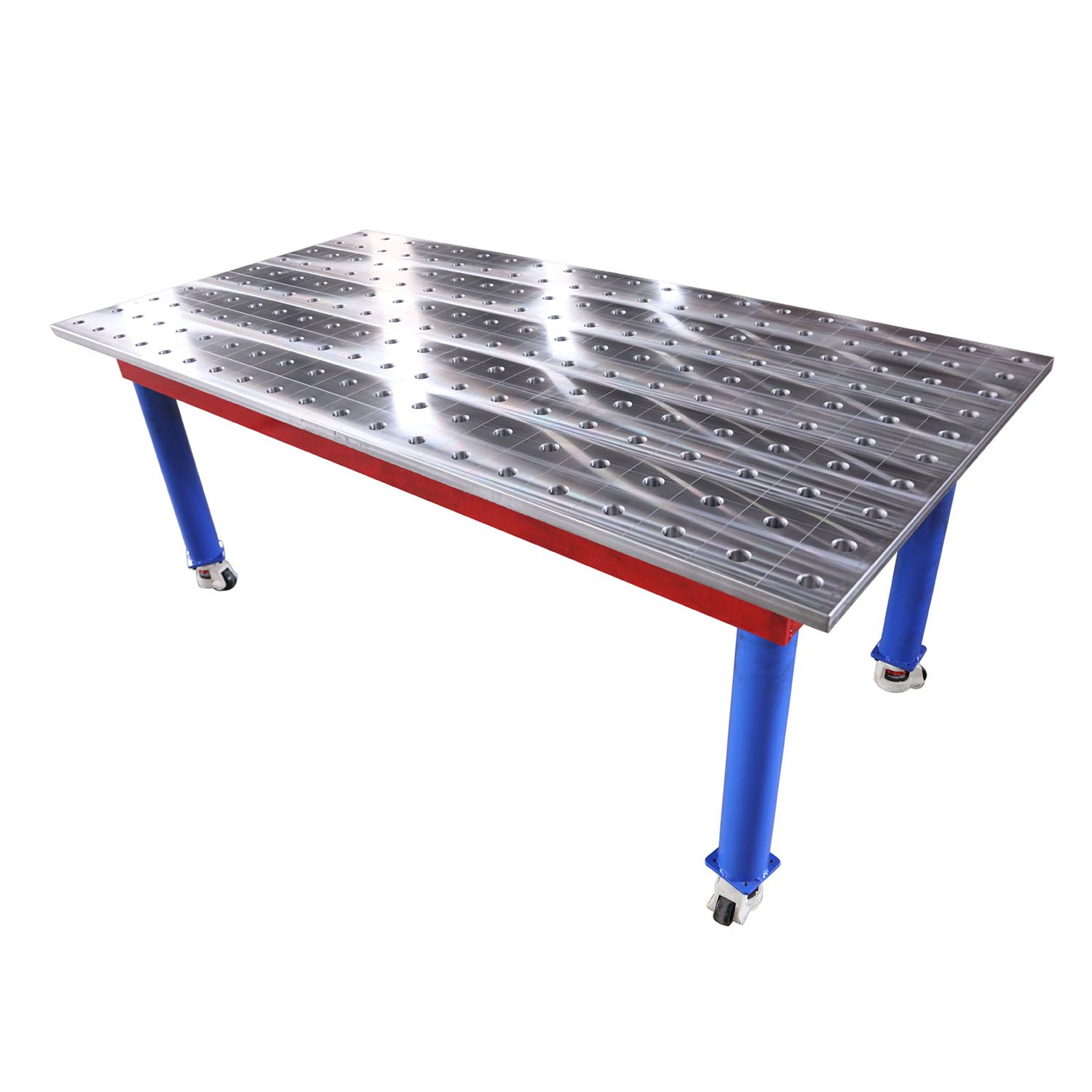
Botou Haijun Metal Products Co., Ltd. has committed to providing efficient and flexible welding and positioning solutions for the modern manufacturing industry. Their core product line includes 2D and 3D flexible welding platforms renowned for exceptional versatility. These systems allow users to build a “virtual table” of any size by connecting multiple modules or adding extensions.
Scalability and Adaptability
With modular systems, you start with a base unit and expand as needed. This is particularly beneficial for growing businesses or job shops that handle diverse projects. One day, you might need a compact station for small bracket assembly; the next, you might need a large surface for a structural frame. Modular platforms enable this transition without requiring new capital expenditures for entirely new tables.
Furthermore, these platforms integrate seamlessly with a comprehensive range of complementary components. Items such as U-shaped and L-shaped multi-purpose square boxes, 200-series support angle irons, and 0-225° universal angle gauges can be positioned anywhere on the grid. This flexibility enables rapid workpiece positioning and clamping, significantly reducing setup time compared to traditional methods.
Precision and Repeatability
Size accuracy is paramount in precision manufacturing. Cast iron 3D welding platforms and angle connection blocks provided by experienced manufacturers like Haijun Metal ensure that every module aligns perfectly. This precision is critical in industries like aerospace and automotive, where even minor deviations can lead to costly rework. The modular design maintains this precision across expanded surfaces, ensuring that a large assembly is just as accurate as a small one.
Key Factors Influencing Welding Table Selection
Beyond physical dimensions, several technical factors influence the effectiveness of your welding table. Ignoring these can lead to poor weld quality and reduced operator efficiency.
Material and Surface Finish
The material of the table affects its longevity and performance. Cast iron is preferred for its stability and resistance to warping. Steel tables are common but may require more maintenance to prevent rust and surface damage. The surface finish should be smooth enough to allow easy sliding of workpieces but textured enough to prevent slipping during clamping. Haijun Metal’s products are engineered to deliver exceptional durability, ensuring that the surface remains flat and functional over years of intense use.
Hole Pattern and Grid System
The spacing and type of holes in the table determine what fixtures you can use. Standard patterns include 50mm, 100mm, or inch-based grids. A finer grid offers more positioning options but may reduce the structural integrity of the table if not properly reinforced. Modular systems typically use a standardized hole pattern that accepts a wide variety of clamps and stops. This universality is a key advantage of choosing a system from a specialized supplier like Botou Haijun, where accessories are designed to integrate seamlessly.
Ergonomics and Height
The height of the table is a crucial ergonomic factor. A table that is too low forces welders to bend, leading to back strain. A table that is too high compromises control and visibility. The ideal height allows the welder to work with their elbows at a 90-degree angle. Many modular systems offer adjustable legs or can be mounted on stands to achieve the optimal working height for different operators and tasks.
Common Mistakes When Buying a Welding Table
Avoiding common pitfalls can save time and money. Here are frequent errors made by purchasers:
- Underestimating Future Needs: Buying the minimum size for current jobs often leads to limitations as business grows. Opt for scalability.
- Ignoring Accessory Compatibility: Ensuring the table works with standard clamps and gauges is vital. Proprietary systems can lock you into expensive ecosystems.
- Neglecting Grounding Points: A good welding table must have dedicated grounding points to ensure electrical safety and arc stability.
- Overlooking Mobility: Even large tables benefit from locking casters for occasional repositioning. Fixed tables should be anchored securely to prevent movement during heavy welding.
By choosing a reputable supplier like Botou Haijun Metal Products Co., Ltd., you mitigate many of these risks. Their years of industry experience and status as a trusted supplier domestically and internationally mean their products are designed with real-world usage in mind. They continuously provide high-quality production machinery tool series that address these common pain points.
FAQ: Frequently Asked Questions About Welding Table Sizes
What is the most versatile welding table size?
For general purpose fabrication, a 4×8 foot (1200x2400mm) table is considered the most versatile. It accommodates standard sheet sizes and provides ample room for fixturing. However, for high-precision and varied batch sizes, a modular flexible welding platform is superior due to its adaptability.
Can I extend my existing welding table?
With traditional fixed tables, extension is difficult and often compromises structural integrity. With modular systems like those from Haijun Metal, extension is a core feature. You can add additional modules or use extension brackets to increase the working surface as needed.
How thick should a welding table top be?
For heavy industrial use, a thickness of at least 12-15mm is recommended to prevent warping. High-end cast iron platforms may vary in thickness but are designed with ribbing or internal structures to maximize stiffness and stability.
Why choose a 3D welding platform over a 2D table?
2D tables are flat and suitable for planar assemblies. 3D welding platforms allow for clamping and fixturing in multiple planes, enabling the assembly of complex, multi-dimensional structures without extensive manual adjustment. This is essential for aerospace and complex automotive components.
Do modular welding tables maintain precision over time?
Yes, if manufactured correctly. Botou Haijun’s flexible fixtures are made from high-quality materials and undergo rigorous quality control. The use of professional cast iron and precision-machined components ensures that the system maintains its accuracy and stability throughout its lifecycle.
Conclusion: Investing in the Right Foundation for Your Welding Operations
Choosing the right welding table size is a strategic decision that impacts productivity, quality, and operator well-being. While standard sizes like 4×8 feet serve many general purposes, the future of efficient manufacturing lies in flexibility and precision. Static tables limit your potential, whereas modular systems empower you to adapt to any challenge.
Botou Haijun Metal Products Co., Ltd. stands at the forefront of this evolution. By specializing in high-precision flexible modular fixtures and metalworking tools, they provide solutions that go beyond simple surface area. Their 2D and 3D flexible welding platforms, combined with a comprehensive range of accessories like square boxes, angle irons, and universal gauges, offer a complete ecosystem for modern welding needs.
Whether you are in machining, automotive, or aerospace, the ability to rapidly position and clamp workpieces with exceptional accuracy is a competitive advantage. Haijun Metal’s commitment to quality and their extensive industry experience make them a trusted partner for businesses seeking to optimize their welding processes.
Do not let an ill-suited table bottleneck your production. Evaluate your current and future needs, consider the benefits of modularity, and invest in a system that grows with your business. For detailed specifications on our flexible welding platforms and complementary components, explore our product solutions or contact our team for a customized consultation.