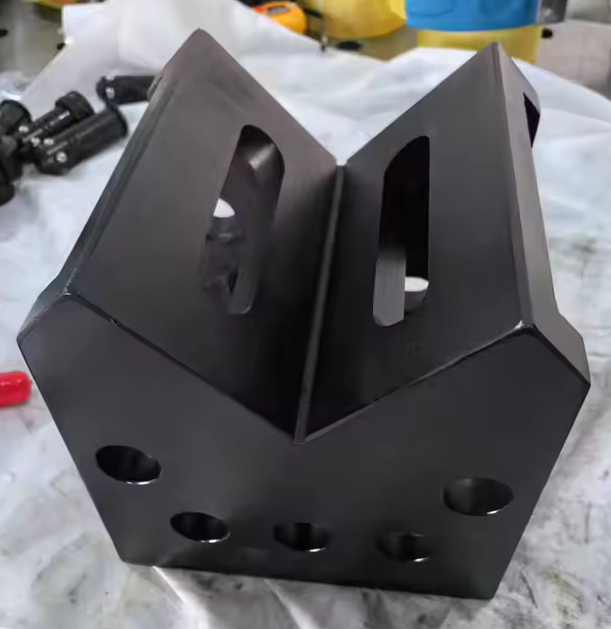
A welding table is a specialized workbench designed to provide a flat, heat-resistant, and stable surface for metal fabrication tasks. Unlike standard workbenches, it features integrated clamping systems, such as grid holes or slots, allowing welders to securely fixture workpieces in precise positions. You need one to ensure dimensional accuracy, improve workflow efficiency, and maintain safety by grounding equipment and containing sparks. For professional results, especially in complex assemblies, a high-precision flexible welding table is essential.
What Is a Welding Table? Core Definition and Function
At its most basic level, a welding table is the foundation of any metalworking shop. It is not merely a surface to rest metal on; it is an active tool that participates in the fabrication process. A proper welding table is constructed from materials that can withstand extreme temperatures, heavy impacts, and the spatter generated during MIG, TIG, or Stick welding.
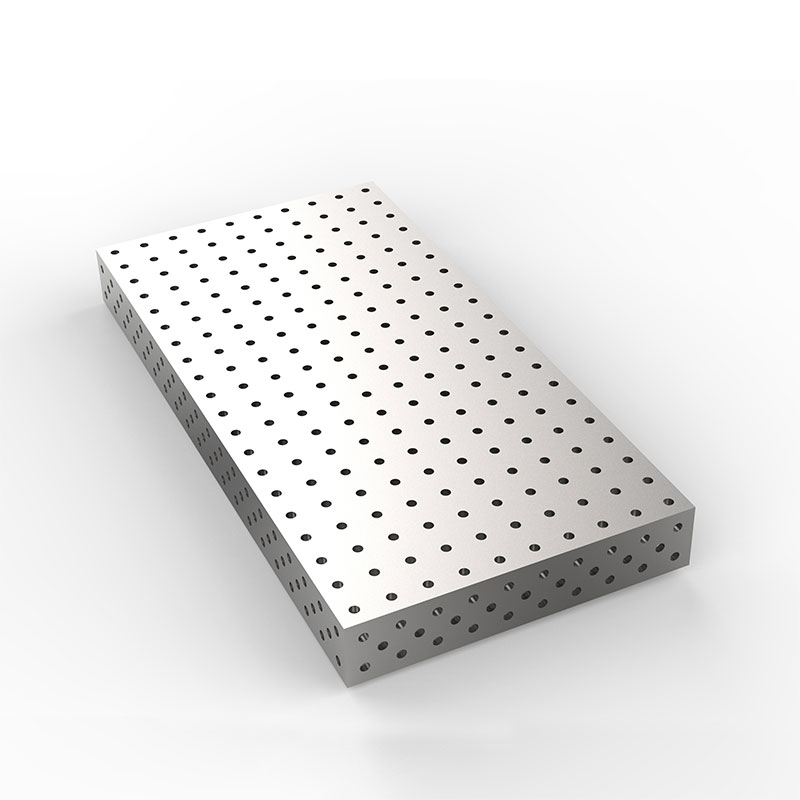
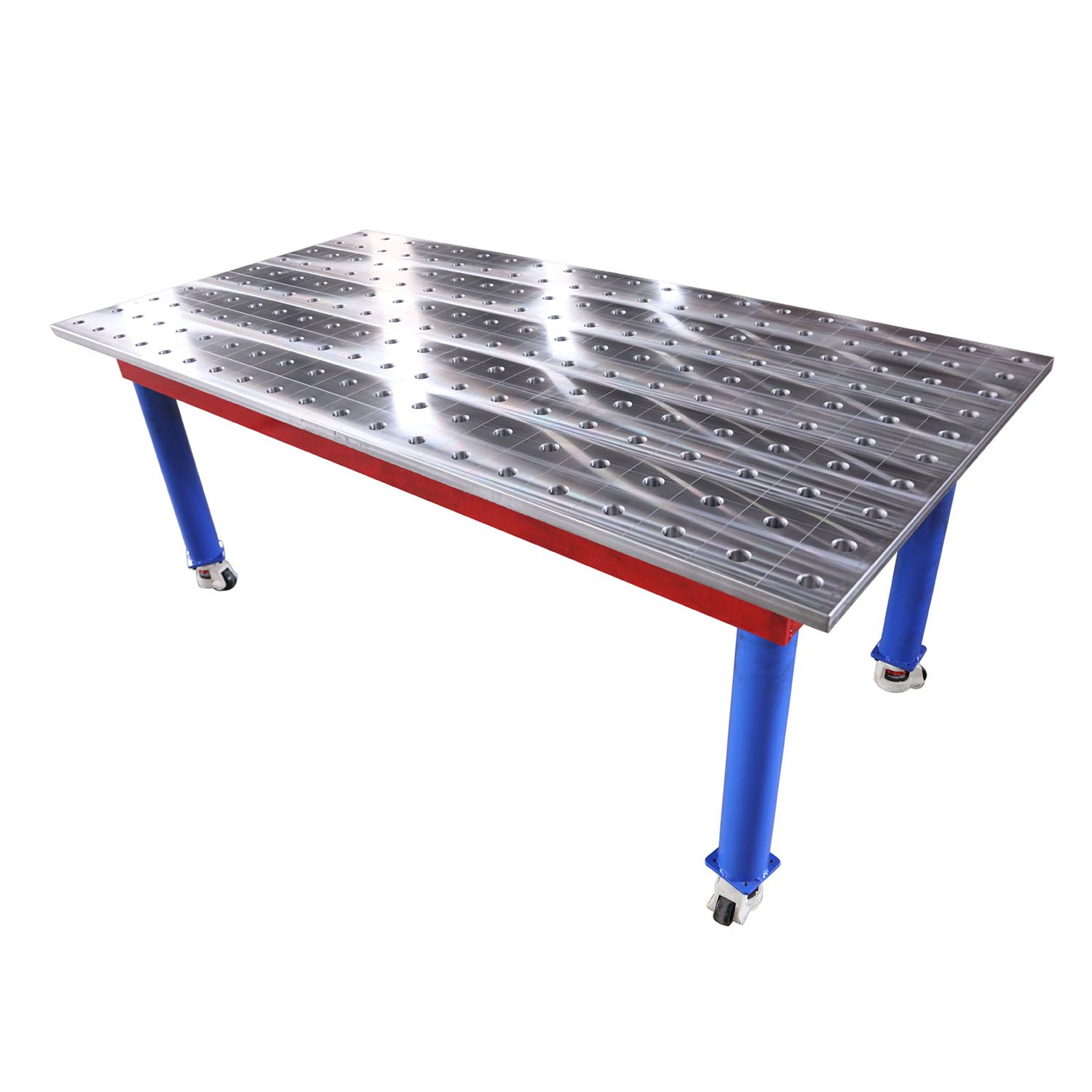
The defining characteristic of a modern professional welding table is its modularity. Traditional tables are simple flat plates. However, advanced solutions, such as the 2D and 3D flexible welding platforms developed by Botou Haijun Metal Products Co., Ltd., transform the table into a versatile jigging system. These platforms feature precision-drilled hole patterns or slots that accept various clamps, stops, and squares. This allows fabricators to build custom fixtures directly on the table, ensuring that every part is held at the exact required angle and position before the arc is struck.
Key Components of a Professional Welding Station
To understand why a dedicated table is necessary, one must look at its constituent parts. A high-quality welding station typically includes:
- The Base Frame: Usually made from heavy-duty steel tubing or cast iron legs to provide mass and stability, preventing vibration during grinding or hammering.
- The Top Surface: Made from mild steel, stainless steel, or cast iron. It must be thick enough to resist warping under heat stress.
- The Fixturing Grid: A pattern of holes (commonly 16mm, 28mm, or 50mm spacing) or T-slots. This is the interface for clamping tools.
- Grounding Point: A dedicated lug to attach the welding return clamp, ensuring a clean electrical circuit and protecting the table structure from stray currents.
Why Do You Need a Welding Table? The Critical Benefits
Many hobbyists start by welding on the floor or on makeshift stands. While this might work for simple repairs, it fails completely in professional manufacturing or precision fabrication. Here is why investing in a proper welding table is non-negotiable for serious metalworkers.
1. Precision and Dimensional Accuracy
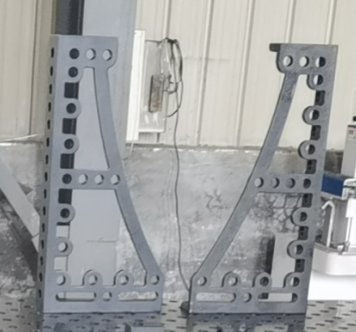
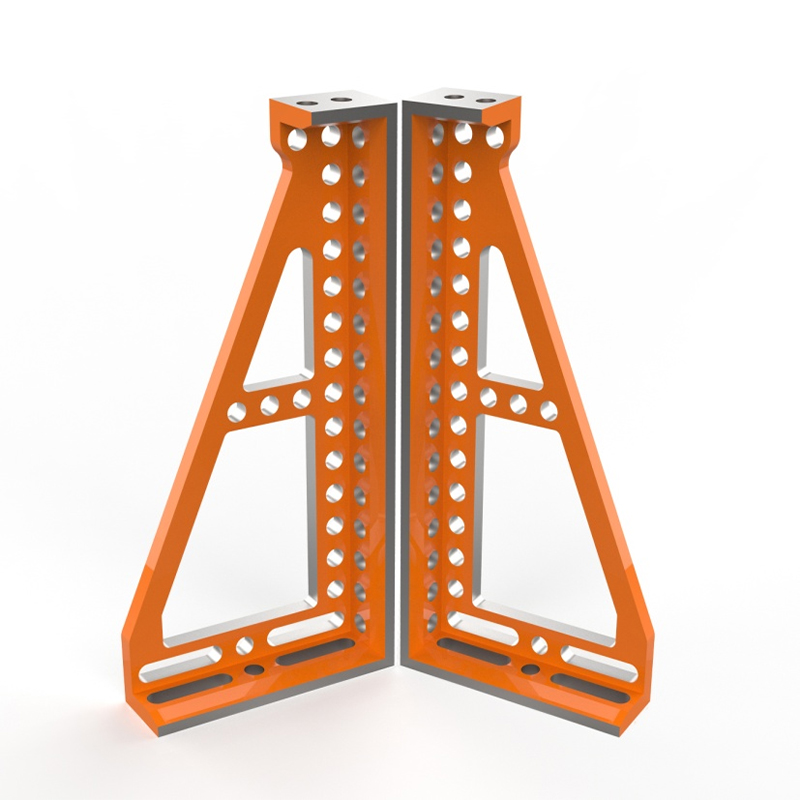
The primary reason to use a welding table is accuracy. When metal is heated, it expands and contracts, leading to distortion. If a workpiece is not rigidly fixed, it will move as it cools, resulting in out-of-square assemblies. A precision welding table allows you to square up parts using trusted references. For instance, using U-shaped and L-shaped multi-purpose square boxes in conjunction with the table’s grid ensures that two pieces of metal are joined at a perfect 90-degree angle. Without this rigidity, achieving tight tolerances required in automotive or aerospace applications is nearly impossible.
2. Enhanced Workflow Efficiency
Time is money in fabrication. A modular welding table reduces setup time significantly. Instead of measuring and tacking each joint individually, you can set up a fixture once and repeat the process for multiple parts. This repeatability is crucial for batch production. The ability to rapidly position and clamp workpieces using accessories like 200-series support angle irons means less time spent adjusting and more time welding. In high-mix, low-volume environments, this flexibility translates directly to higher throughput.
3. Improved Safety and Ergonomics
Welding involves intense heat, UV radiation, and heavy materials. Working on the floor forces welders into awkward positions, leading to fatigue and increased risk of injury. A welding table raises the work to a comfortable height, reducing back strain. Furthermore, a dedicated table contains sparks and spatter within a controlled zone, reducing fire hazards in the workshop. The integrated grounding also prevents electrical shocks by ensuring the workpiece is properly earthed.
4. Protection of Tools and Floor
Grinding discs, hammers, and dropped heavy steel can damage concrete floors. Conversely, welding on a dirty or uneven floor can contaminate the weld pool with dust and moisture. A welding table protects your facility’s infrastructure and provides a clean surface that minimizes weld defects like porosity caused by contaminants.
Types of Welding Tables: Choosing the Right Solution
Not all welding tables are created equal. The choice depends on the complexity of your projects and the required precision. Understanding the differences helps in selecting the right equipment for your specific needs.
| Table Type |
Best For |
Key Features |
Limitations |
| Basic Steel Plate Table |
Hobbyists, simple repairs, heavy structural steel |
Low cost, durable, simple construction |
No fixturing options, prone to warping, hard to square parts |
| Cast Iron Table |
Machining, high-precision layout, heavy casting work |
Extremely flat, dampens vibration, wear-resistant |
Very heavy, brittle (can crack if dropped), expensive |
| 2D Flexible Welding Platform |
Flat assemblies, sheet metal, frame building |
Modular clamping, quick setup, versatile accessories |
Limited to planar (flat) geometries |
| 3D Flexible Welding Platform |
Complex geometries, aerospace, automotive frames, pipes |
Clamping from all angles, spherical or cubic hole patterns, maximum versatility |
Higher initial investment, requires training to master fixturing |
The Advantage of Flexible Modular Systems
In modern manufacturing, the trend is shifting towards flexible modular systems. Botou Haijun Metal Products Co., Ltd. specializes in these advanced solutions. Their 2D and 3D flexible welding platforms are renowned for exceptional versatility. Unlike static tables, these systems allow you to reconfigure the workspace for every new project. Whether you are building a simple gate or a complex aerospace component, the same table can adapt. This eliminates the need for building dedicated, single-use jigs, saving storage space and material costs.
Deep Dive: 2D vs. 3D Welding Platforms
When upgrading from a basic table, the choice between 2D and 3D systems is critical. Both offer significant advantages over traditional benches, but they serve different geometric needs.
2D Flexible Welding Platforms
A 2D platform is designed for flat assemblies. The hole pattern is typically on a single plane. It is ideal for:
- Frame fabrication where all members lie in one plane.
- Sheet metal work.
- Door and gate construction.
These tables are generally more affordable and easier to learn. Accessories like straight clamps and right-angle stops slide into the grid to hold parts firmly against the table surface. For many general fabrication shops, a high-quality 2D table is sufficient for 80% of their work.
3D Flexible Welding Platforms
A 3D platform takes modularity to the next level. The hole pattern exists on multiple faces (top and sides) or uses a spherical/cubic grid that allows clamping from any angle. This is essential for:
- Complex pipe structures.
- Automotive roll cages.
- Aerospace components with curved surfaces.
- Assemblies that require vertical clamping pressure.
Botou Haijun’s 3D welding platforms, including their professional cast iron models, enable rapid workpiece positioning in three-dimensional space. Using accessories like 0-225° universal angle gauges and angle connection blocks, welders can secure parts at any arbitrary angle, not just 90 degrees. This capability is indispensable for industries requiring high-precision complex geometries.
Essential Accessories for Your Welding Table
A welding table is only as good as its fixturing capabilities. To maximize the utility of your platform, you need the right complementary components. Botou Haijun offers a comprehensive range of accessories that integrate seamlessly with their platforms.
Clamping and Positioning Tools
Multi-purpose Square Boxes: U-shaped and L-shaped square boxes are fundamental. They act as reliable references for squaring corners. By placing them in the table grid, you create a permanent 90-degree stop that ensures every frame you build is perfectly square.
Support Angle Irons: The 200-series support angle irons provide elevated support for workpieces. This is crucial when welding long beams or pipes, as it keeps them level and allows access for clamping from below. They bridge the gap between the table surface and the workpiece, maintaining alignment over long distances.
Universal Angle Gauges: For non-orthogonal joints, standard squares are useless. A 0-225° universal angle gauge allows you to set and lock any angle precisely. This is vital for architectural metalwork or machinery repair where unique angles are common.
Durability and Stability Components
Angle Connection Blocks: These blocks reinforce the structural integrity of the fixtures you build on the table. They ensure that the clamping forces are transferred correctly into the table base, preventing slippage during heavy welding.
Cast Iron Components: For high-wear areas, cast iron accessories offer superior durability. They resist spatter adhesion better than mild steel and maintain their dimensional stability over years of use. Botou Haijun’s cast iron 3D welding platforms exemplify this commitment to longevity and stability.
How to Choose the Right Welding Table for Your Business
Selecting the correct welding table involves analyzing your production requirements, material types, and precision needs. Here is a step-by-step guide to making the right decision.
Step 1: Assess Your Workpiece Size and Weight
Measure the largest part you intend to weld. Your table must be large enough to accommodate the part plus the clamps. Consider the weight as well; heavy parts require a table with a high load-bearing capacity and a robust base frame to prevent tipping.
Step 2: Determine Precision Requirements
If you are doing structural steel for buildings, slight deviations may be acceptable. However, if you are supplying parts to the automotive or aerospace industries, tolerances are tight. In these cases, a high-precision flexible modular fixture system is mandatory. Look for tables with machined surfaces and tight tolerance hole patterns.
Step 3: Evaluate Material Variety
Do you weld only flat plates, or do you handle pipes, curves, and complex assemblies? If your work is predominantly flat, a 2D system suffices. If you deal with complex 3D shapes, invest in a 3D platform. The versatility of 3D systems future-proofs your shop against diverse project demands.
Step 4: Consider Future Scalability
Choose a system that can grow with your business. Modular systems like those from Botou Haijun allow you to start with a basic platform and add accessories as needed. This modular approach is more cost-effective than buying multiple dedicated jigs.
Maintenance and Care for Longevity
A welding table is a long-term investment. Proper maintenance ensures it remains flat and functional for decades.
- Clean Spatter Regularly: Use a chisel or grinder to remove weld spatter from the table surface and holes. Clogged holes render the fixturing system useless.
- Check Flatness: Periodically check the table for flatness using a straight edge. If warping occurs, it may need resurfacing.
- Protect from Rust: Apply a thin coat of oil or anti-spatter spray to the surface when not in use. This prevents rust, which can contaminate welds.
- Inspect Accessories: Check clamps and squares for wear. Worn accessories lead to inaccurate setups. Replace damaged components promptly to maintain precision.
Frequently Asked Questions (FAQ)
What is the difference between a welding table and a welding jig?
A welding table is the base platform that provides a flat, stable surface. A welding jig is a specific device used to hold a particular part in place. Modern flexible welding tables combine both functions by allowing you to build custom jigs directly on the table surface using modular components.
Can I use a regular steel table for welding?
You can, but it is not recommended for precision work. Regular tables lack the fixturing holes for clamps, making it difficult to hold parts accurately. They also warp easily under heat and do not offer the same level of durability or safety features as dedicated welding tables.
Why are cast iron welding tables preferred for high-precision work?
Cast iron has excellent damping properties, meaning it absorbs vibration better than steel. It is also more resistant to warping under heat and maintains its flatness over time. This makes it ideal for machining and high-precision welding applications where stability is paramount.
How do I ground my welding table?
Most professional welding tables come with a dedicated grounding lug. You should attach your welding machine’s work clamp directly to this lug. Ensure the connection is clean and tight to establish a proper electrical circuit. Never rely on the table legs alone for grounding, as paint or rust can interrupt the connection.
Is a 3D welding table worth the extra cost?
For shops handling complex geometries, pipes, or multi-plane assemblies, a 3D welding table is absolutely worth the investment. It drastically reduces setup time and improves accuracy for complex parts. For simple flat work, a 2D table may be more cost-effective. Evaluate your typical project complexity to decide.
Conclusion: Elevate Your Fabrication Capabilities
A welding table is far more than a piece of furniture; it is a critical productivity tool that defines the quality and efficiency of your metalworking operations. By providing a stable, precise, and safe environment, it enables welders to produce consistent, high-quality results. Whether you are in machining, automotive, or aerospace, the right table transforms chaotic fabrication into a streamlined, professional process.
For businesses seeking to enhance their manufacturing capabilities, investing in high-precision flexible modular fixtures is a strategic move. Botou Haijun Metal Products Co., Ltd. stands out as a trusted supplier, offering state-of-the-art 2D and 3D flexible welding platforms and a comprehensive suite of accessories. Their commitment to durability, precision, and versatility ensures that your welding station meets the rigorous demands of modern industry.
If you are ready to upgrade your workshop with reliable, high-performance welding solutions, consider the extensive product line from Botou Haijun. From cast iron platforms to universal angle gauges, their tools are designed to deliver exceptional value and performance.
Ready to optimize your welding workflow? Explore our full range of flexible welding platforms and accessories to find the perfect fit for your production needs. Contact us today for detailed specifications and customized solutions.
View Related Products and Technical Solutions