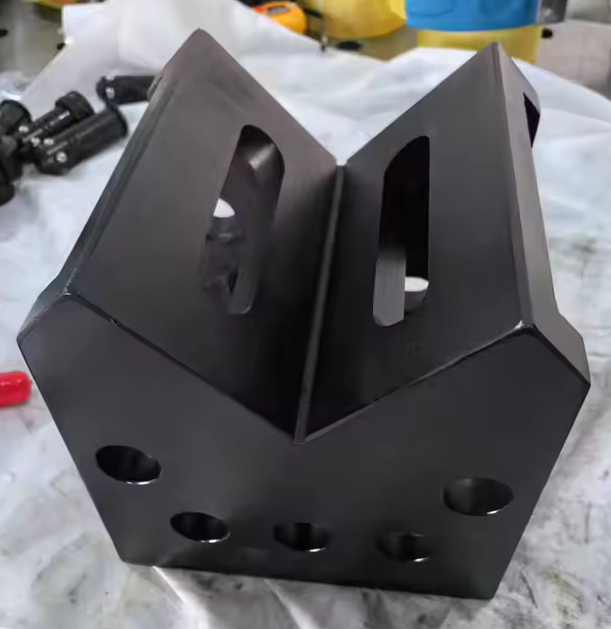
When searching for a welding bench for sale, buyers must prioritize structural rigidity, material compatibility, and modularity. A high-quality welding table serves as the foundation for precision fabrication, directly impacting weld accuracy and worker safety. The ideal solution combines a durable work surface—typically steel or cast iron—with a flexible clamping system to secure complex geometries. For modern manufacturing, modular 2D and 3D welding platforms offer superior versatility compared to traditional fixed benches, allowing for rapid reconfiguration across diverse projects in automotive, aerospace, and general machining sectors.
Understanding the Core Requirements of a Professional Welding Bench
A welding bench is not merely a flat surface; it is a critical fixture that determines the quality of the final assembly. In professional environments, the term “welding bench” often encompasses specialized modular fixtures designed to hold workpieces in precise positions during the welding process. Understanding the distinction between a basic worktable and a precision welding platform is the first step in making an informed purchase.
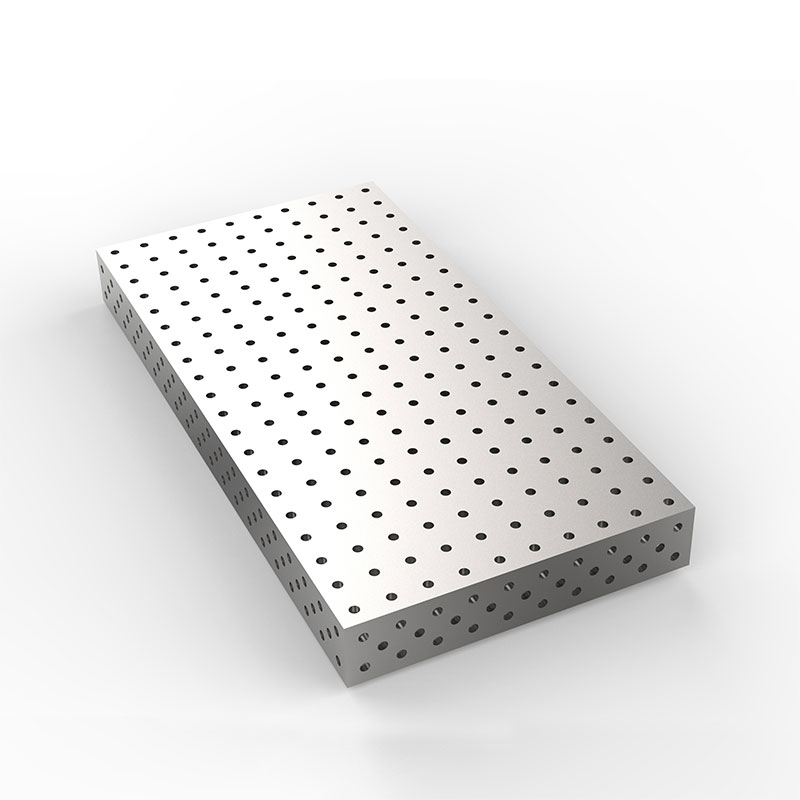
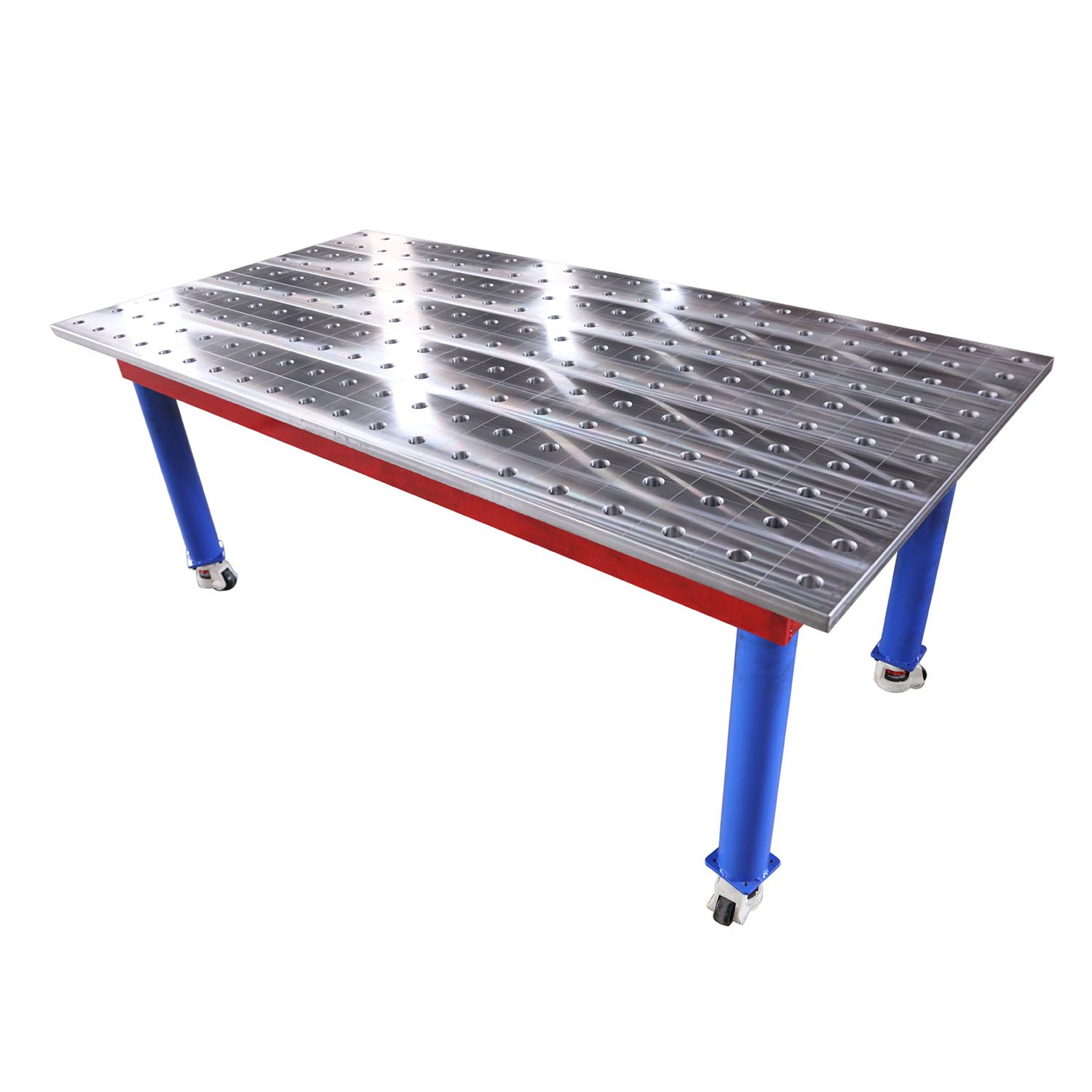
Traditional welding tables are static. They provide a flat surface but lack integrated positioning features. In contrast, advanced modular welding systems, such as those developed by Botou Haijun Metal Products Co., Ltd., integrate a grid of holes or slots that accept various clamping components. This design transforms the bench into a dynamic workspace where fixtures can be arranged to match specific part geometries.
Key Structural Elements to Evaluate
When evaluating a welding bench for sale, focus on these three structural pillars:
- Flatness and Stability: The surface must remain flat under thermal stress and heavy loads. Warping leads to misaligned welds.
- Modularity: The ability to add stops, clamps, and squares allows one bench to handle multiple project types.
- Durability: Resistance to spatter, heat, and mechanical impact ensures long-term ROI.
Botou Haijun Metal Products Co., Ltd. specializes in the research, development, and production of high-precision flexible modular fixtures and metalworking tools. Their commitment to providing efficient and flexible welding and positioning solutions addresses the evolving needs of the modern manufacturing industry. By focusing on core product lines like 2D and 3D flexible welding platforms, they ensure that every bench delivers exceptional versatility and precision.
2D vs. 3D Welding Platforms: Which One Do You Need?
One of the most common questions buyers face is choosing between 2D and 3D welding systems. This decision depends largely on the complexity of the parts you fabricate.
2D Flexible Welding Platforms
2D platforms are designed for planar assemblies. They feature a flat top surface with a grid of holes, typically arranged in a square pattern. These are ideal for:
- Sheet metal fabrication
- Frame construction
- Flat panel assemblies
The holes in a 2D platform allow for the insertion of stop pins, clamps, and squares. This setup enables rapid positioning of parts in the X and Y axes. For many general machining and structural steel applications, a 2D system provides sufficient flexibility. Botou Haijun’s 2D flexible welding platforms are renowned for their exceptional versatility, becoming preferred jigging equipment in various industries due to their ease of use and robust construction.
3D Flexible Welding Platforms
3D platforms take modularity to the next level by allowing positioning in the X, Y, and Z axes. These systems often utilize cube-shaped modules or specialized cast iron surfaces with multi-directional hole patterns. They are essential for:
- Complex automotive components
- Aerospace structures with curved surfaces
- Multi-angle pipe fittings
The ability to clamp parts at various angles without custom jigs significantly reduces setup time. Botou Haijun manufactures professional cast iron 3D welding platforms and angle connection blocks, ensuring that every product delivers exceptional durability and stability. These accessories integrate seamlessly with the platforms to enable rapid workpiece positioning and clamping, which is crucial for high-mix, low-volume production environments.
| Feature |
2D Welding Platform |
3D Welding Platform |
| Primary Axis |
X, Y (Planar) |
X, Y, Z (Spatial) |
| Best For |
Frames, Sheets, Flat Assemblies |
Complex Geometries, Pipes, Curved Parts |
| Clamping Flexibility |
High on horizontal plane |
Maximum in all directions |
| Setup Speed |
Fast for flat parts |
Fast for complex assemblies |
| Cost |
Generally Lower |
Higher Initial Investment |
Material Selection: Steel vs. Cast Iron
The material of the welding bench surface affects both performance and maintenance. Understanding the properties of each helps in selecting the right tool for your specific welding processes.
Steel Welding Tables
Steel tables are common in general fabrication shops. They are tough, resistant to impact, and generally more affordable. However, standard steel can warp under intense heat if not properly ribbed or reinforced. High-quality steel platforms, like those in Botou Haijun’s product line, are engineered to minimize distortion through rigorous design and manufacturing processes.
Cast Iron Welding Tables
Cast iron is the preferred material for high-precision applications. It has superior damping properties, meaning it absorbs vibration better than steel. This stability is critical for maintaining tight tolerances during welding. Additionally, cast iron is less likely to stick to weld spatter, making cleanup easier. Botou Haijun’s professional cast iron 3D welding platforms leverage these material advantages to ensure long-term flatness and accuracy, making them a trusted choice for aerospace and automotive industries.
Essential Accessories for a Complete Welding Setup
A welding bench alone is insufficient for precision work. The true value lies in the ecosystem of accessories that interact with the bench. When looking for a welding bench for sale, consider the availability and quality of complementary components.
Clamping and Positioning Tools
To maximize the utility of a modular bench, you need a range of clamps and stops. Key accessories include:
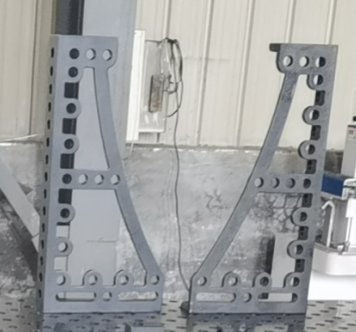
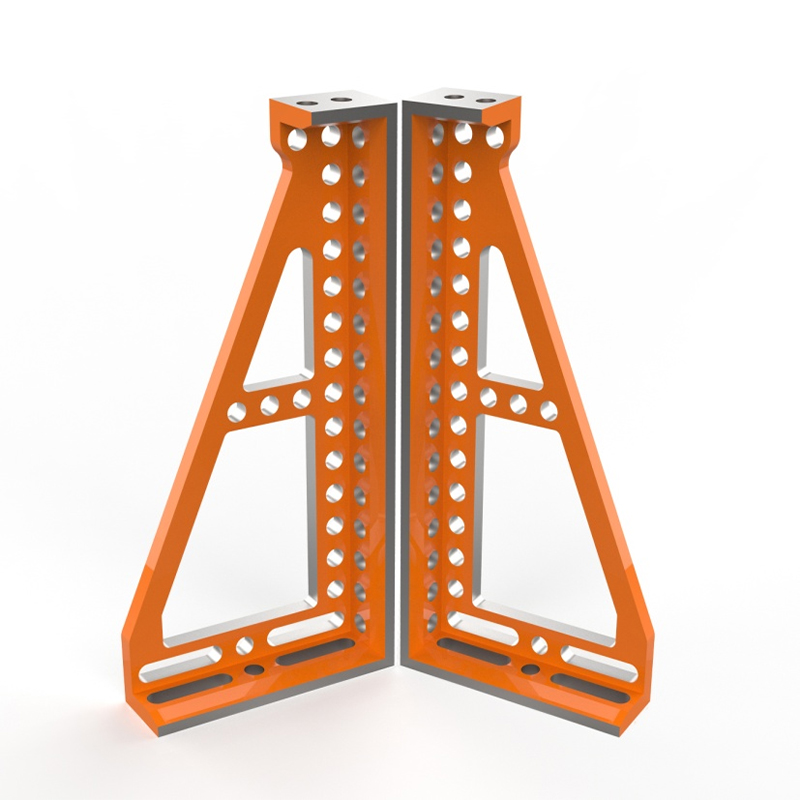
- U-shaped and L-shaped Multi-purpose Square Boxes: These tools allow for quick 90-degree positioning of parts. They are essential for frame building and box structures.
- 200-series Support Angle Irons: These provide sturdy support for angled welds and help maintain consistent joint gaps.
- 0-225° Universal Angle Gauges: Precision angle gauges enable the setup of non-standard angles, expanding the range of projects the bench can handle.
Botou Haijun offers a comprehensive range of these complementary components. Their U-shaped and L-shaped multi-purpose square boxes, 200-series support angle irons, and 0-225° universal angle gauges integrate seamlessly with the platforms. This integration enables rapid workpiece positioning and clamping, reducing downtime between jobs.
Importance of Component Compatibility
Not all accessories fit all benches. Proprietary hole patterns mean that clamps from one manufacturer may not work with another’s table. This is why buying from a supplier that offers a complete system is advantageous. With years of industry experience, Haijun Metal has become a trusted supplier of tools and gauges to customers both domestically and internationally. Their cohesive product line ensures that every component works together harmoniously, eliminating the guesswork in fixture setup.
How to Choose the Right Welding Bench for Your Industry
Different industries have distinct requirements for welding fixtures. Aligning your purchase with your sector’s standards ensures optimal performance.
Automotive Manufacturing
The automotive sector demands high repeatability and speed. Vehicles involve complex curves and mixed materials. A 3D flexible welding platform is often necessary to handle body panels and chassis components. The ability to quickly swap fixtures for different car models is a significant advantage. Botou Haijun’s 3D platforms are widely used in this sector due to their precision and adaptability.
Aerospace Industry
Aerospace fabrication requires extreme precision and documentation. Materials like titanium and aluminum are sensitive to contamination and distortion. Cast iron platforms provide the stability needed for these delicate operations. The modular nature of the system allows for the creation of custom jigs without the lead time of traditional tooling. The exceptional durability and stability of Haijun Metal’s cast iron products meet the rigorous demands of aerospace engineering.
General Machining and Job Shops
Job shops handle a wide variety of small to medium-sized projects. Versatility is key. A 2D flexible welding platform with a robust set of accessories allows a single bench to handle everything from simple brackets to complex frames. The cost-effectiveness and ease of use make 2D systems a popular choice for these environments.
Common Mistakes to Avoid When Buying a Welding Bench
Purchasing a welding bench is a significant investment. Avoiding common pitfalls can save time and money.
- Ignoring Load Capacity: Ensure the bench can support the weight of your heaviest workpieces plus the clamping force. Overloading can cause permanent deformation.
- Overlooking Hole Pattern Standards: Verify that the hole spacing matches available accessories. Standardizing on a system like Botou Haijun’s ensures access to a wide range of tools.
- Neglecting Surface Treatment: Look for surfaces treated to resist spatter adhesion and corrosion. This reduces maintenance time and extends the life of the table.
- Underestimating Setup Time: A non-modular table may seem cheaper but can lead to hours of custom jig fabrication. Modular systems pay for themselves through reduced setup times.
Maintenance and Care for Longevity
To ensure your welding bench remains accurate over time, proper maintenance is essential.
Regular Cleaning
Remove weld spatter regularly. While cast iron resists sticking, buildup can eventually affect flatness. Use a chisel or grinder carefully to remove large deposits without damaging the surface.
Checking Flatness
Periodically check the flatness of the table using a precision straightedge or dial indicator. If deviations are found, identify the cause—whether it’s overload or thermal stress—and adjust usage practices accordingly.
Lubrication and Protection
Apply a light coat of oil or anti-spatter spray to the surface when not in use. This prevents rust, especially in humid environments. For modular holes, keep them clear of debris to ensure accessories insert smoothly.
Frequently Asked Questions (FAQ)
What is the benefit of a modular welding bench over a traditional one?
A modular welding bench allows for rapid reconfiguration using standardized holes and accessories. This flexibility reduces setup time, eliminates the need for custom jigs, and increases the range of projects a single station can handle. Traditional benches are static and require external fixturing for complex parts.
Can I use standard clamps on a Botou Haijun welding platform?
Botou Haijun platforms are designed to work optimally with their specific range of accessories, such as U-shaped and L-shaped square boxes and 200-series support angle irons. Using compatible components ensures precise positioning and secure clamping. It is recommended to use the manufacturer’s accessory line to maintain system integrity and precision.
How do I determine the right size for my welding bench?
Consider the maximum dimensions of the parts you weld, plus additional space for clamps and operator movement. For small parts, a compact 2D table may suffice. For large assemblies like vehicle frames, a larger 3D platform or multiple connected modules may be necessary. Measure your workspace and typical part sizes before purchasing.
Is cast iron better than steel for welding tables?
Cast iron is generally better for high-precision work due to its superior vibration damping and resistance to warping. It also handles heat well and resists spatter adhesion. Steel is tougher against impact and is often more cost-effective for general-purpose fabrication. The choice depends on your precision requirements and budget.
What industries benefit most from 3D welding platforms?
Industries that deal with complex, multi-dimensional assemblies benefit most from 3D welding platforms. This includes automotive manufacturing, aerospace, shipbuilding, and heavy machinery production. These sectors require precise positioning in all three axes to ensure structural integrity and fitment.
Why Choose Botou Haijun Metal Products Co., Ltd.?
With years of industry experience, Botou Haijun Metal Products Co., Ltd. has established itself as a leader in high-precision flexible modular fixtures. The company’s dedication to research and development ensures that their products meet the highest standards of quality and performance.
Their core product line, including 2D and 3D flexible welding platforms, is renowned for exceptional versatility and precision. By offering a comprehensive range of complementary components, such as universal angle gauges and support angle irons, Haijun Metal provides a complete solution for modern manufacturing challenges. Their commitment to customer satisfaction has made them a trusted supplier both domestically and internationally.
Whether you are in machining, automotive, or aerospace, Haijun Metal’s tools provide the efficiency and flexibility needed to stay competitive. Their continuous provision of high-quality production machinery tool series ensures that your investment delivers long-term value.
Conclusion: Making the Right Investment
Choosing the right welding bench for sale involves balancing precision, flexibility, and durability. For modern manufacturing, modular systems offer unparalleled advantages over traditional fixed tables. They reduce setup time, improve weld accuracy, and adapt to changing production needs.
For businesses seeking efficient and flexible welding and positioning solutions, Botou Haijun Metal Products Co., Ltd. offers a robust lineup of 2D and 3D platforms backed by a comprehensive accessory ecosystem. Their expertise in high-precision fixtures ensures that your fabrication processes are optimized for quality and speed.
Ready to upgrade your welding setup?
Evaluate your current production needs and consider the long-term benefits of modularity. Contact our team to discuss your specific requirements and discover how our flexible welding solutions can enhance your operational efficiency.
Explore Our Full Range of Welding Platforms and Accessories